Chapterبەش 1 · Lectureوانە 1.1
What Is Cybersecurity?ئاسایشی سایبەر چییە؟
The first lesson of the course: what cybersecurity protects and why it matters to you; why it is about people, processes, technology, law and risk, not only machines; why humans are the weakest link; how attackers prepare and how defenders think; why attacks keep getting cheaper; where the word '' comes from; and a map of the whole field, the NIST Cybersecurity Framework 2.0.
یەکەم وانەی کۆرسەکە: چی دەپارێزێت و بۆچی بۆ تۆ گرنگە؛ بۆچی پەیوەندیی بە خەڵک، ڕێکار، تەکنەلۆجیا، یاسا و هەیە نەک تەنها ئامێر؛ بۆچی مرۆڤ لاوازترین ئەڵقەیە؛ چۆن خۆیان ئامادە دەکەن و بەرگریکار چۆن بیر دەکاتەوە؛ بۆچی بەردەوام هەرزانتر دەبن؛ وشەی «» لە کوێوە هاتووە؛ هەروەها نەخشەیەکی هەموو بوارەکە: 2.0.
What you will learnچی فێر دەبیت
- Explain in your own words what cybersecurity protects, and why it matters to students and organisations in Kurdistan.
- Name the five things cybersecurity deals with (people, processes, technology, laws and regulations, risk management) and give an example of each.
- Explain why humans are called the weakest link, how attackers prepare, and how a defender should think.
- Tell the story of the word '' correctly, and tell personal data and intellectual property apart.
- Use the six functions of the NIST Cybersecurity Framework 2.0 as a map of the field and of this course.
- بە وشەی خۆت ڕوونی بکەیتەوە چی دەپارێزێت و بۆچی بۆ خوێندکاران و ڕێکخراوەکانی کوردستان گرنگە.
- ناوی ئەو پێنج شتە بهێنیت کە پەیوەندیی پێیانەوە هەیە (خەڵک، ڕێکار، تەکنەلۆجیا، یاسا و ڕێنمایی، ) و بۆ هەریەکەیان نموونەیەک بهێنیتەوە.
- ڕوونی بکەیتەوە بۆچی بە مرۆڤ دەوترێت لاوازترین ئەڵقە، چۆن خۆیان ئامادە دەکەن و بەرگریکار دەبێت چۆن بیر بکاتەوە.
- چیرۆکی وشەی «» بە دروستی بگێڕیتەوە و و لە یەک جیا بکەیتەوە.
- شەش ئەرکەکەی 2.0 وەک نەخشەی بوارەکە و نەخشەی ئەم کۆرسە بەکار بهێنیت.
Why cybersecurity matters to youبۆچی ئاسایشی سایبەر بۆ تۆ گرنگە
Think of an ordinary day. You check your exam results on the university website. Your salary or a grant arrives on a bank card. You send money to a friend with an e-wallet app and chat with your family. Each of these is a service that runs on a computer somewhere. If somebody breaks into it, changes it or switches it off, real people lose money, privacy or time.
ڕۆژێکی ئاسایی بهێنە پێش چاوت. ئەنجامی تاقیکردنەوەکانت لە زانکۆ دەبینیت. مووچە یان پشتگیرییەکی دارایی دەگاتە سەر کارتی بانکییەکەت. بە جزدانی ئەلیکترۆنی پارە بۆ هاوڕێیەکت دەنێریت و لەگەڵ خێزانەکەت چات دەکەیت. هەریەک لەمانە خزمەتگوزارییەکە کە لە شوێنێک لەسەر کار دەکات. ئەگەر کەسێک دزە بکاتە ناوی، بیگۆڕێت یان بیکوژێنێتەوە، خەڵکی ڕاستەقینە پارە، یان کات لەدەست دەدەن.
In Kurdistan, as everywhere, more and more of life has moved online: salaries paid through bank cards, university registration, and shops and clinics that keep their customers' records on computers. Every new online service is useful, and every one is also a new door that somebody may try to open. Many organisations still have no trained person who looks after these doors. That is why this course exists, and why every IT student needs at least the basics.
لە کوردستانیش وەک هەموو شوێنێک، بەشێکی زیاتر و زیاتری ژیان چووەتە سەر : مووچە لە ڕێی کارتی بانکییەوە، ناونووسینی زانکۆ، هەروەها دوکان و نۆرینگە کە تۆماری کڕیارەکانیان لەسەر هەڵدەگرن. هەر خزمەتگوزارییەکی ئۆنلاینی نوێ بەسوودە، بەڵام هەریەکەیان دەرگایەکی نوێشە کە ڕەنگە کەسێک هەوڵی کردنەوەی بدات. هێشتا زۆر ڕێکخراو هیچ کەسێکی ڕاهێنراویان نییە کە ئاگای لەم دەرگایانە بێت. لەبەر ئەمەیە ئەم کۆرسە هەیە و هەر خوێندکارێکی IT پێویستی بە بنەماکانی هەیە.
What is cybersecurity?ئاسایشی سایبەر چییە؟
Protecting computers, , programs and from attacks, damage and access by people who are not allowed. It covers people, processes, technology and laws, and at its heart it is managing .
بریتییە لە پاراستنی کۆمپیوتەر، ، و لە هێرش، زیان و دەستڕاگەیشتنی ئەو کەسانەی ڕێگەیان پێنەدراوە. خەڵک، ڕێکارەکان، تەکنەلۆجیا و یاساکان دەگرێتەوە و لە بنەڕەتدا بەڕێوەبردنی .
Our course material puts it simply: cybersecurity is the protection of computers, communications (networks), data and information from attackers, threats and damage.
کەرەستەی کۆرسەکەمان بە سادەیی دەڵێت: بریتییە لە پاراستنی ، پەیوەندی ()، و لە ، و زیان.
Take the definition word by word. Computers means laptops and desktops, but also phones, servers and the small computers inside cameras and routers. Communications are the networks that carry data: Wi-Fi, the mobile network, the Internet. Data and information are what people care about most: marks, medical records, money, messages. Attackers are people who want to cause harm; threats are anything that could cause harm, including accidents such as a fire or a careless click (see Threats, Vulnerabilities, Attacks and Risk); damage is what happens when protection fails.
پێناسەکە وشە بە وشە وەربگرە. واتە لاپتۆپ و ، بەڵام هەروەها مۆبایل، و ئەو کۆمپیوتەرە بچووکانەی ناو کامێرا و ڕاوتەر. پەیوەندی ئەو کە دەگوازنەوە: Wi-Fi، ، . و ئەو شتانەن کە خەڵک زیاتر گرنگییان پێ دەدات: نمرە، تۆماری پزیشکی، پارە، نامە. ئەو کەسانەن کە دەیانەوێت زیان بگەیەنن؛ هەر شتێکن کە دەکرێت زیان بگەیەنێت، ڕووداوی ناخوازراویش لەخۆ دەگرێت وەک ئاگر یان کرتەیەکی بێئاگایانە (بڕوانە هەڕەشەکان، خاڵە لاوازەکان، هێرشەکان و مەترسی)؛ زیان ئەوەیە کە ڕوو دەدات کاتێک پاراستن شکست دەهێنێت.
Why we need cybersecurity, and its definition: protecting the confidentiality (secrecy), integrity and availability of systems and data against threats.
بۆچی پێویستمان بە هەیە و پێناسەکەی چییە: پاراستنی ، و سیستەم و لە بەرامبەر .
Segment 0:00-2:54: why we need cybersecurity, the definition (secrecy = confidentiality, integrity, availability) with one attack on each, then threat models and attack vectors. Stops before authentication and the 2017 password advice.
لە 0:00 تا 2:54 پەخش دەبێت: بۆچی پێویستە، پێناسەکەی (secrecy واتە ، لەگەڵ و ) و نموونەی لەسەر هەر یەکەیان، پاشان مۆدێلی (کێ دەکات و چۆن) و . پێش و ئامۆژگارییە کۆنەکانی ساڵی 2017 دەربارەی ڕادەوەستێت.
What is cybersecurity?ئاسایشی سایبەر چییە؟
Protecting and restoringپاراستن و گەڕاندنەوە
NIST, the US standards institute whose documents are used worldwide, adds one more idea: cybersecurity also means restoring systems after something goes wrong. Good security is not only a strong lock; it is also being able to get back to work after a break-in.
NIST، دامەزراوەی ستانداردەکانی ئەمریکا کە بەڵگەنامەکانی لە هەموو جیهاندا بەکار دەهێنرێن، بیرۆکەیەکی تر زیاد دەکات: واتە گەڕاندنەوەی سیستەمەکانیش دوای ئەوەی شتێک تێک دەچێت. باش تەنها قفڵێکی بەهێز نییە؛ توانای گەڕانەوە بۆ سەر کاریشە دوای دزەکردنێک.
People, processes, technology, law and riskخەڵک، ڕێکار، تەکنەلۆجیا، یاسا و مەترسی
Many people think cybersecurity is a technical job: install a program and you are safe. The course notes say something wiser: cybersecurity deals with people, processes and technology, laws and regulations, and risk management. Remove any one of the five and the protection has a hole.
زۆر کەس پێیان وایە کارێکی تەکنیکییە: بەرنامەیەک دابمەزرێنە و پارێزراو دەبیت. تێبینییەکانی کۆرسەکە شتێکی ژیرانەتر دەڵێن: پەیوەندیی بە خەڵک، ڕێکار و تەکنەلۆجیا، یاسا و ڕێنمایی، هەروەها هەیە. هەر یەکێک لەم پێنجانە لاببە، کونێک دەکەوێتە ناو پاراستنەکەوە.
- People: customers, users, staff, supervisors and managers. They make decisions, type passwords and open e-mails, so they need training and awareness.
- Processes: the agreed steps of daily work. Who may open a new account, and who closes it when an employee leaves? How often are backups taken? Whom do you call when a laptop is stolen?
- Technology: the hardware and software that protect: firewalls, encryption, antivirus, updates, backups.
- خەڵک: کڕیار، ، فەرمانبەر، سەرپەرشتیار و بەڕێوەبەر. ئەوان بڕیار دەدەن، دەنووسن و دەکەنەوە، بۆیە پێویستیان بە ڕاهێنان و هەیە.
- ڕێکار: هەنگاوە ڕێککەوتووەکانی کاری ڕۆژانە. کێ بۆی هەیە هەژمارێکی نوێ بکاتەوە و کێ دایدەخات کاتێک فەرمانبەرێک دەڕوات؟ چەند جار وەردەگیرێت؟ کاتێک لاپتۆپێک دەدزرێت پەیوەندی بە کێوە دەکەیت؟
- تەکنەلۆجیا: و کە پاراستن دەکەن: ، ، ، ، .
People, processes, technology, law and riskخەڵک، ڕێکار، تەکنەلۆجیا، یاسا و مەترسی
Law, and risk managementیاسا و بەڕێوەبردنی مەترسی
The last two parts are not technical at all, which is exactly why they are easy to forget.
دوو بەشی کۆتایی هیچ تەکنیکی نین، هەر بۆیە ئاسان لەبیر دەکرێن.
- Laws and regulations (rules): here 'legislation' means making laws that protect people and that everyone must obey, so that people ask themselves 'what is legal and what is illegal?' before they act. Regulations are the detailed rules that a government body or the organisation itself writes. Why laws and training matter as much as technology is explained in Security by legislation.
- Risk management: no one can protect everything perfectly, so you decide which dangers matter most and how much protection is worth paying for. The chapter Risk and the Cost of Attacks teaches how.
- یاسا و ڕێنمایی (ڕێسا): لێرەدا «یاسادانان» واتە دانانی ئەو یاسایانەی خەڵک دەپارێزن و هەمووان دەبێت پابەندیان بن، بۆ ئەوەی خەڵک پێش هەر کارێک لە خۆیان بپرسن «چی یاساییە و چی نایاسایی؟». ڕێنماییەکان ئەو ڕێسا وردانەن کە دەزگایەکی حکومی یان خودی ڕێکخراوەکە دەیاننووسێت. بۆچی یاسا و ڕاهێنان هێندەی تەکنەلۆجیا گرنگن لە ئاسایش بە یاسادانان ڕوون کراوەتەوە.
- : هیچ کەس ناتوانێت هەموو شتێک بە تەواوی بپارێزێت، بۆیە بڕیار دەدەیت کام مەترسییانە گرنگترن و چەند پاراستن شایەنی پارە خەرجکردنە. بەشی مەترسی و تێچووی هێرشەکان فێرت دەکات چۆن.
People, processes, technology, law and riskخەڵک، ڕێکار، تەکنەلۆجیا، یاسا و مەترسی
All five in one shopهەر پێنجەکە لە یەک دوکاندا
Think of a money-exchange shop. People: the cashier is trained never to open the safe for a stranger who says 'the owner sent me'. Processes: the safe needs two keys held by two people, and the cash is counted every evening. Technology: the safe, the camera and the alarm. Law: robbery is a crime and the police will act. Risk management: the owner decides how much to spend on guards compared with how much money he keeps in the shop. A shop with a great safe but a cashier who opens it for anyone is not safe.
دوکانێکی ئاڵوگۆڕی پارە بهێنە پێش چاوت. خەڵک: کاشێرەکە ڕاهێنراوە کە هەرگیز قاسەکە بۆ کەسێکی نەناسراو نەکاتەوە کە دەڵێت «خاوەن دوکان منی ناردووە». ڕێکار: قاسەکە پێویستی بە دوو هەیە کە لای دوو کەسن و هەموو ئێوارەیەک پارەکە دەژمێردرێت. تەکنەلۆجیا: قاسەکە، کامێراکە و زەنگی ئاگادارکردنەوەکە. یاسا: دزی تاوانە و پۆلیس کار دەکات. : خاوەن دوکان بڕیار دەدات چەند بۆ پاسەوان خەرج بکات بەراورد بەو پارەیەی لە دوکانەکەدا دایدەنێت. دوکانێک کە قاسەیەکی زۆر باشی هەبێت بەڵام کاشێرەکەی بۆ هەر کەسێک بیکاتەوە، پارێزراو نییە.
Where the analogy stops workingسنووری ئەم نموونەیە
In cyberspace the 'robber' does not need to walk into the shop: he can try from another country, at three in the morning, a thousand times a minute. And copying data leaves the original in place, so a theft can go unnoticed for months.
لە «دزەکە» پێویست ناکات بچێتە ناو دوکانەکەوە: دەتوانێت لە وڵاتێکی ترەوە، کاتژمێر سێی بەیانی، هەزار جار لە خولەکێکدا هەوڵ بدات. هەروەها کۆپیکردنی ئەسڵەکە لە شوێنی خۆی دەهێڵێتەوە، بۆیە دەکرێت دزییەک بۆ چەند مانگێک ئاشکرا نەبێت.
People, processes, technology, law and riskخەڵک، ڕێکار، تەکنەلۆجیا، یاسا و مەترسی
Humans: the weakest linkمرۆڤ: لاوازترین ئەڵقە
The notes add a short sentence that experts repeat everywhere: the weakest link in security is humans. People click links, reuse the same password, trust a friendly voice on the phone and hurry when a message says 'urgent'. An attacker knows that fooling one person is often easier than breaking a well-built system.
تێبینییەکان ڕستەیەکی کورت زیاد دەکەن کە پسپۆڕان لە هەموو شوێنێک دووبارەی دەکەنەوە: لاوازترین ئەڵقە لە مرۆڤە. خەڵک کرتە لە بەستەر دەکەن، هەمان دووبارە بەکار دەهێننەوە، متمانە بە دەنگێکی میهرەبان لە تەلەفۆندا دەکەن و کاتێک نامەیەک دەڵێت «بەپەلە» پەلە دەکەن. دەزانێت فریودانی یەک کەس زۆرجار ئاسانترە لە شکاندنی سیستەمێکی باش دروستکراو.
Real data agrees. Verizon's 2026 Data Breach Investigations Report, which studies thousands of real breaches every year (this edition: November 2024 to October 2025), found a human element (a mistake, a trick that worked, a stolen password) in about 62% of breaches.
ڕاستەقینە هەمان شت دەڵێت. ڕاپۆرتی Verizon بۆ لێکۆڵینەوە لە لە ساڵی 2026 (کە دزەکردنەکانی نێوان تشرینی دووەمی 2024 و تشرینی یەکەمی 2025 دەگرێتەوە)، کە هەموو ساڵێک هەزاران دزەکردنی ڕاستەقینە دەخوێنێتەوە، لە نزیکەی 62%ی دزەکردنەکاندا ڕۆڵی مرۆڤی دۆزیەوە (هەڵەیەک، فێڵێک کە سەرکەوت، دزراو).
The answer is not to blame people. Good security trains people and designs systems that forgive mistakes: multi-factor authentication so that a stolen password alone is not enough, backups so that one wrong click is not a disaster. A trained person who reports a strange e-mail becomes the first line of defence instead of the weakest link (more in Building a Security Culture).
وەڵامەکە تاوانبارکردنی خەڵک نییە. باش خەڵک ڕادەهێنێت و سیستەم بە شێوەیەک دیزاین دەکات کە لە هەڵە ببوورێت: پشتڕاستکردنەوەی فرەهۆکاری بۆ ئەوەی دزراو بە تەنها بەس نەبێت، بۆ ئەوەی کرتەیەکی هەڵە کارەسات نەبێت. کەسێکی ڕاهێنراو کە سەیر ڕاپۆرت دەکات دەبێتە یەکەم هێڵی بەرگری لە جیاتی لاوازترین ئەڵقە (زیاتر لە بونیادنانی کولتووری ئاسایش).
What does cybersecurity protect?ئاسایشی سایبەر چی دەپارێزێت؟
Anything that has value for a person or an organisation is an asset: hardware (laptops, servers, phones), software, data, networks and online services, and the people who know how everything works. You cannot protect an asset you do not know you have, so the first job of any defender is to list them.
هەر شتێک کە بۆ کەسێک یان ڕێکخراوێک بەهای هەبێت : (لاپتۆپ، ، مۆبایل)، ، ، و خزمەتگوزارییە ئۆنلاینەکان، هەروەها ئەو کەسانەی دەزانن هەموو شتێک چۆن کار دەکات. ناتوانیت بپارێزیت کە نازانیت هەتە، بۆیە یەکەم کاری هەر بەرگریکارێک لیستکردنیانە.
| Kindجۆر | What it isچییە | Examplesنموونە |
|---|---|---|
| Personal data | information about a person who can be identified دەربارەی کەسێک کە دەناسرێتەوە | name, phone number, ID card number, medical record, photosناو، ژمارەی مۆبایل، ژمارەی ناسنامە، تۆماری پزیشکی، وێنە |
| Financial data دارایی | information about money دەربارەی پارە | card numbers, account balances, salariesژمارەی کارت، باڵانسی هەژمار، مووچە |
| Intellectual property | creations of the mind that a person or company ownsبەرهەمی بیر و هزر کە کەسێک یان کۆمپانیایەک خاوەنیەتی | the source code of an app, a new product design, a secret recipe, a brand ، دیزاینی بەرهەمێکی نوێ، ڕەچەتەیەکی نهێنی، ناوێکی بازرگانی |
| Operational data کارپێکردن | information the organisation needs to keep workingئەو ڕێکخراوەکە پێویستی پێیەتی بۆ ئەوەی کار بکات | timetables, stock lists, system settingsخشتەی کات، لیستی کاڵا، ڕێکخستنەکانی سیستەم |
What does cybersecurity protect?ئاسایشی سایبەر چی دەپارێزێت؟
Personal data or intellectual property?دراوەی کەسی یان موڵکی هزری؟
How attackers prepareهێرشبەرەکان چۆن خۆیان ئامادە دەکەن
The notes describe a hacker (in this sentence: an attacker) as someone who knows every point of the target, especially its weak points. A serious attacker studies the target for some time before acting. They never step in blindly.
تێبینییەکان (لەم ڕستەیەدا: ) وەک کەسێک وەسف دەکەن کە شارەزای هەموو خاڵێکی ئامانجەکەیە، بەتایبەتی . جددی ماوەیەک پێش ئەوەی کار بکات لە ئامانجەکە دەکۆڵێتەوە. هەرگیز بە کوێرانە هەنگاو نانێت.
Before a big football match, a good coach watches videos of the other team. Which defender is slow? Which side of the pitch is open? Then he plans the attack around those weak points. An attacker does the same with a company: which software and which versions it uses, which employees post about their work on social media, which login pages are open to the Internet. The course notes give a similar picture: someone who wants to fight another person first finds out whether he is brave or afraid and how strong he is; without that knowledge he may lose.
پێش یارییەکی گەورەی تۆپی پێ، ڕاهێنەرێکی باش ڤیدیۆی تیمەکەی تر سەیر دەکات. کام بەرگریکاریان خاوە؟ کام لای یاریگاکە کراوەیە؟ پاشان پلانی هێرش لەسەر ئەو خاڵە لاوازانە دادەنێت. هەمان شت لەگەڵ کۆمپانیایەک دەکات: کام و کام وەشانی بەکار دەهێنێت، کام فەرمانبەر لە تۆڕە کۆمەڵایەتییەکاندا باسی کارەکەی دەکات، کام پەڕەی چوونەژوورەوە بۆ کراوەیە. تێبینییەکانی کۆرسەکە وێنەیەکی هاوشێوە دەدەن: کەسێک کە دەیەوێت لەگەڵ کەسێکی تر شەڕ بکات، سەرەتا دەزانێت ئایا ئازایە یان ترسنۆک و چەند بەهێزە؛ بەبێ ئەو زانیارییە لەوانەیە بدۆڕێت.
Where the analogy stops workingسنووری ئەم نموونەیە
In football both teams know a match is coming. In cyberspace the target usually never notices that it is being studied. That is why defenders keep their own records (logs) and watch for unusual visitors.
لە تۆپی پێدا هەردوو تیم دەزانن یارییەک دێت. لە ئامانجەکە زۆرجار هەرگیز ئاگای لێ نییە کە لێی دەکۆڵرێتەوە. لەبەر ئەمەیە بەرگریکاران تۆماری خۆیان () دەهێڵنەوە و چاودێری میوانی نائاسایی دەکەن.
How attackers prepareهێرشبەرەکان چۆن خۆیان ئامادە دەکەن
Hacker or attacker?هاکەر یان هێرشبەر؟
The word 'hacker' first meant a skilled person who loves exploring how systems work. Today the news uses it mostly for criminals. In this course we say attacker for someone who attacks without permission. Ethical (white-hat) hackers do the same research legally, with written permission, to find weaknesses before criminals do; you meet them, with the white, black and grey 'hats', in Cyber Ethics and Ethical Hacking.
وشەی «» لە سەرەتادا واتای کەسێکی شارەزا بوو کە حەزی لە دۆزینەوەی چۆنیەتیی کارکردنی سیستەمەکانە. ئەمڕۆ هەواڵەکان زیاتر بۆ تاوانباران بەکاری دەهێنن. لەم کۆرسەدا بە کەسێک کە بەبێ مۆڵەت هێرش دەکات دەڵێین . هەمان لێکۆڵینەوە بە یاسایی و بە مۆڵەتی نووسراو دەکەن بۆ ئەوەی پێش تاوانباران بدۆزنەوە؛ لەگەڵ «کڵاو»ە سپی، ڕەش و خۆڵەمێشییەکان لە ئەخلاقی سایبەری و هاککردنی ئەخلاقی دەیانبینیت.
How attackers prepareهێرشبەرەکان چۆن خۆیان ئامادە دەکەن
How defenders thinkبەرگریکار چۆن بیر دەکاتەوە
The lecturer's advice: a cybersecurity specialist must be suspicious at work, doubting everything and everyone, but only to protect, for nothing else. (The owner of these notes calls this person «سیستەمپارێز», 'system protector'.) In practice this means check before you trust: an urgent e-mail from 'the manager' asking for a money transfer, a USB stick found in the car park, an unknown device on the office Wi-Fi. You check calmly; you do not accuse anyone.
ئامۆژگاریی مامۆستا: دەبێت لە کاتی کارەکەیدا بەگومان بێت، گومان لە هەموو شتێک و هەموو کەسێک بکات، بەڵام تەنها بۆ پاراستن، نەک بۆ شتێکی تر. (خاوەنی ئەم تێبینییانە بەم کەسە دەڵێت «سیستەمپارێز».) بە کردەوە ئەمە واتە پێش متمانەکردن بپشکنە: بەپەلە لە «بەڕێوەبەر»ەوە کە داوای ناردنی پارە دەکات، فلاشێک کە لە شوێنی وەستانی ئۆتۆمبێل دۆزراوەتەوە، ئامێرێکی نەناسراو لەسەر Wi-Fiـی فەرمانگە. بە ئارامی دەپشکنیت؛ کەس تاوانبار ناکەیت.
The notes also say: the more cybersecurity professionals an organisation has, the fewer chances there are to hack it. Even one trained person who keeps systems updated, checks backups and reads the logs makes a place much harder to attack.
تێبینییەکان هەروەها دەڵێن: هەتا ڕێکخراوێک پسپۆڕی زیاتری هەبێت، دەرفەتی هاککردنی کەمتر دەبێتەوە. تەنانەت یەک کەسی ڕاهێنراو کە سیستەمەکان نوێ دەکاتەوە، دەپشکنێت و دەخوێنێتەوە، شوێنێک زۆر قورستر دەکات بۆ هێرشکردن.
Attacks get cheaper, systems get more complexهێرشەکان هەرزانتر دەبن، سیستەمەکان ئاڵۆزتر
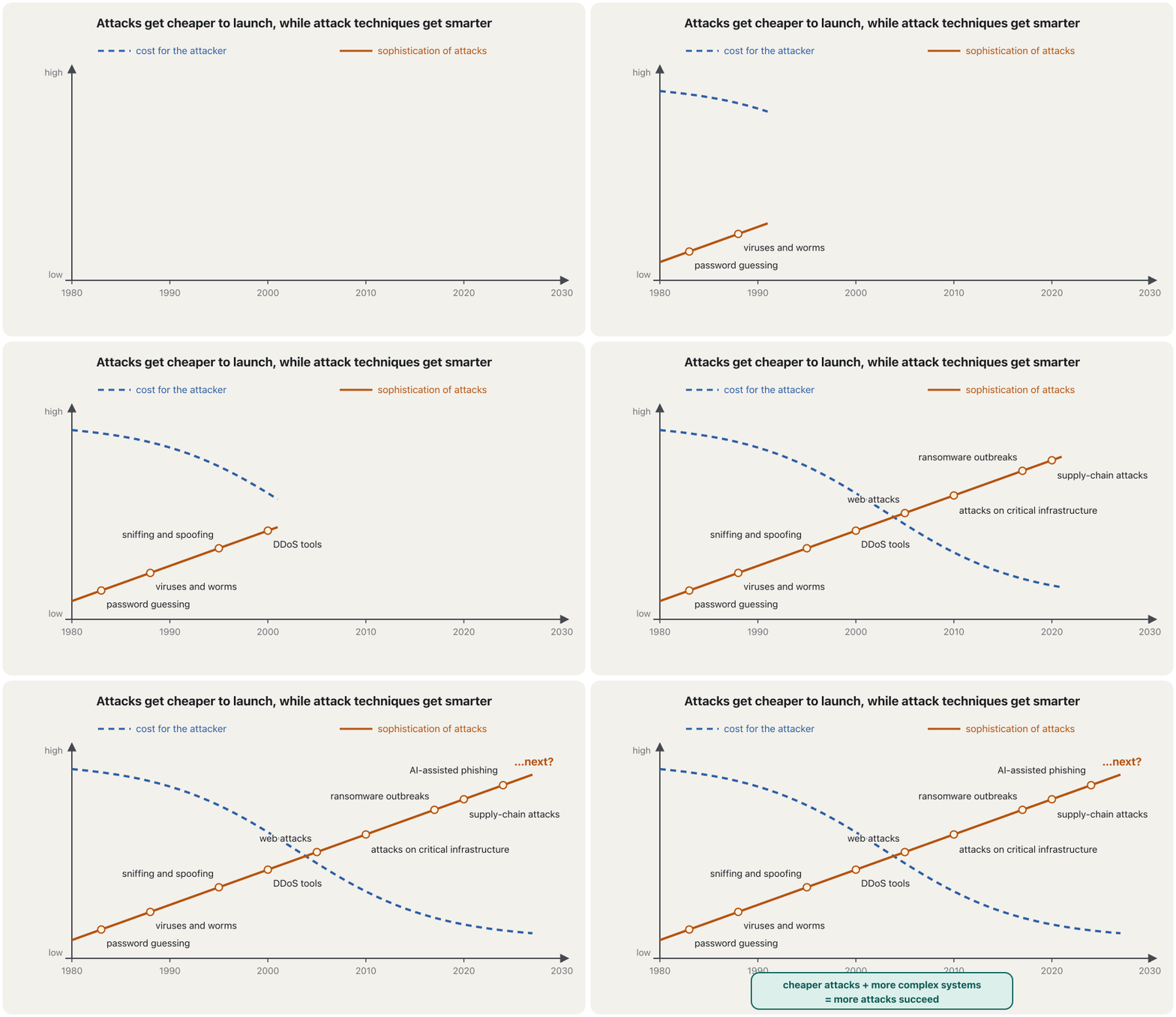
The lecture showed a famous kind of chart with two lines over time. One line is the cost of launching an attack: the money, skill and time an attacker needs. It falls. The other line is the sophistication of attack techniques: from guessing passwords in the 1980s to supply-chain attacks today. It rises. Watch the chart grow:
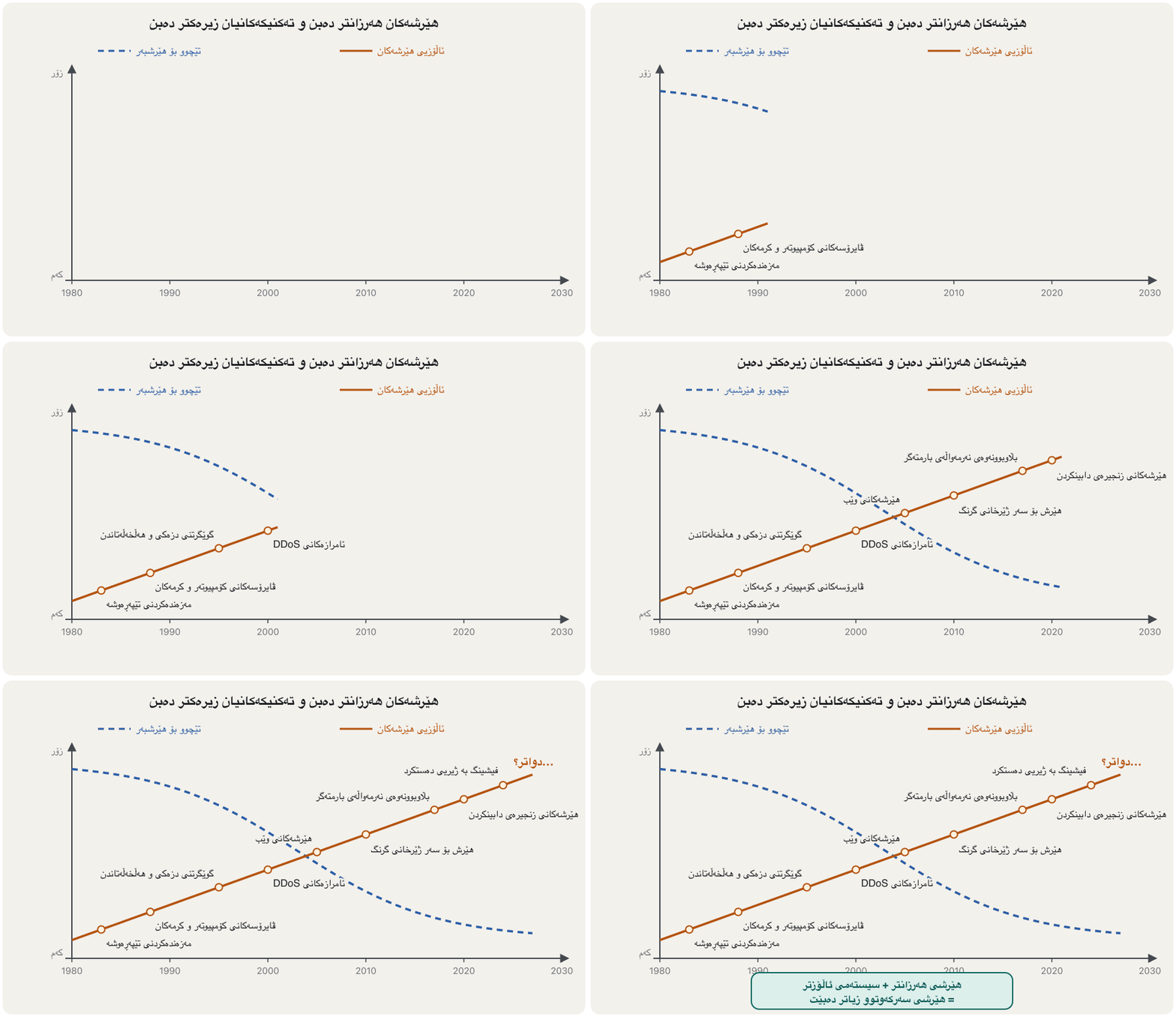
وانەکە جۆرە هێڵکارییەکی ناسراوی پیشان دا کە دوو هێڵی بە درێژایی کات تێدایە. هێڵێکیان تێچووی ئەنجامدانی : ئەو پارە، شارەزایی و کاتەی پێویستی پێیەتی. ئەم هێڵە دادەبەزێت. هێڵەکەی تر ئاڵۆزیی تەکنیکەکانی : لە مەزەندەکردنی لە ساڵانی 1980ـەوە تا لە ئەمڕۆدا. ئەم هێڵە بەرز دەبێتەوە. سەیری گەشەکردنی هێڵکارییەکە بکە:
Attacks get cheaper, systems get more complexهێرشەکان هەرزانتر دەبن، سیستەمەکان ئاڵۆزتر
Why attacks get cheaper, and why more succeedبۆچی هێرشەکان هەرزانتر دەبن و زیاتر سەردەکەون
Why do attacks get cheaper? Ready-made attack tools and phishing kits are shared or sold online, criminal groups rent out their malware 'as a service', and artificial intelligence helps to write convincing fake messages. The UK's National Cyber Security Centre wrote in 2024 that AI 'lowers the barrier' for novice criminals. Why do more attacks succeed? Our networks are bigger, more connected and more important to daily life every year, so one successful attack can stop a hospital, a bank or a whole city, and attackers are paid more for it.
بۆچی هەرزانتر دەبن؟ ئامرازی ئامادەی هێرش و کەرەستەی لە بڵاو دەکرێنەوە یان دەفرۆشرێن، گرووپە تاوانکارەکان «وەک خزمەتگوزاری» بە کرێ دەدەن، هەروەها یارمەتی نووسینی نامەی ساختەی باوەڕپێکراو دەدات. ناوەندی نیشتیمانیی بەریتانیا لە 2024 نووسی کە «بەربەست نزم دەکاتەوە» بۆ تاوانبارانی نوێ. بۆچی زیاتر سەردەکەون؟ هەموو ساڵێک گەورەتر، پەیوەستتر و گرنگتر دەبن بۆ ژیانی ڕۆژانە، بۆیە یەک سەرکەوتوو دەتوانێت نەخۆشخانەیەک، بانکێک یان هەموو شارێک ڕابگرێت و پارەی زیاتری لەسەر وەردەگرن.
Where does the word 'cyber' come from?وشەی «سایبەر» لە کوێوە هاتووە؟
The story starts in ancient Greek. The word κυβερνήτης (kybernētēs) meant the steersman or pilot: the person who steers a ship.
چیرۆکەکە لە زمانی گریکیی کۆنەوە دەست پێ دەکات. وشەی κυβερνήτης (کیبەرنێتێس) واتای سوکانبەدەست یان ڕێنیشاندەری کەشتی بوو: ئەو کەسەی کەشتی ئاڕاستە دەکات.
In the 1940s the American mathematician Norbert Wiener borrowed the Greek root for a new science. In 1948 he published the book Cybernetics, about control and communication in animals and machines: systems that steer themselves by watching the result of what they do (feedback). A ship's steering engine is an early example; a computer that does a job automatically is another. Such a machine 'holds its own steering wheel'.
لە ساڵانی 1940ـدا بیرکاریزانی ئەمریکی نۆربێرت وینەر ڕەگە گریکییەکەی بۆ زانستێکی نوێ وەرگرت. لە 1948 کتێبی Cyberneticsـی بڵاو کردەوە، دەربارەی کۆنترۆڵ و پەیوەندی لە گیانلەبەر و ئامێردا: ئەو سیستەمانەی بە سەیرکردنی ئەنجامی کارەکەیان خۆیان ئاڕاستە دەکەن. بزوێنەری سوکانی کەشتی نموونەیەکی کۆنە؛ کە کارێک بە شێوەیەکی خۆکار دەکات نموونەیەکی ترە. ئەم جۆرە ئامێرە «سوکانی خۆی بە دەستەوەیە».
Where does the word 'cyber' come from?وشەی «سایبەر» لە کوێوە هاتووە؟
From 'cyberspace' to a prefixلە بۆشایی سایبەرەوە تا پێشگرێک
In 1982 the writer William Gibson used the word 'cyberspace' in a short story, Burning Chrome; his 1984 novel Neuromancer made it famous. In the 1990s, as the Internet spread, 'cyber-' became a prefix meaning 'to do with computers and the Internet': cybersecurity, cybercrime, cyberattack, cyberspace.
لە 1982 نووسەر ویلیام گیبسن وشەی «»ی لە چیرۆکێکی کورتدا بەکار هێنا، Burning Chrome؛ ڕۆمانەکەی ساڵی 1984ـی، Neuromancer، وشەکەی ناودار کرد. لە ساڵانی 1990ـدا، لەگەڵ بڵاوبوونەوەی ، «» بوو بە پێشگرێک بە واتای «پەیوەست بە و »: ، ، ، .
A map of the field: the NIST Cybersecurity Framework 2.0نەخشەیەکی بوارەکە: NIST CSF 2.0
Cybersecurity is a big field. To see it as a whole, many organisations use the NIST Cybersecurity Framework, a free guide from NIST. Version 2.0 was released on 26 February 2024. It is written for organisations of every size, from a small school or shop to a ministry, and it sorts all security work into six functions:
بوارێکی گەورەیە. بۆ ئەوەی وەک یەک تەواو ببینرێت، زۆر ڕێکخراو بەکار دەهێنن، ڕێبەرێکی بێبەرانبەر لە NISTـەوە. وەشانی 2.0 لە 26ی شوباتی 2024 بڵاو کرایەوە. بۆ ڕێکخراوی هەموو قەبارەیەک نووسراوە، لە قوتابخانە یان دوکانێکی بچووکەوە تا وەزارەتێک، هەموو کاری لە شەش ئەرکدا ڕێک دەخات:
Notice that only one of the six, PROTECT, is about stopping attacks before they happen. A mature organisation also expects that something will one day get through, and prepares to notice it, react and recover.
سەرنج بدە کە تەنها یەکێک لە شەشەکە، پاراستن، دەربارەی ڕێگرتنە لە پێش ئەوەی ڕوو بدەن. ڕێکخراوێکی پێگەیشتوو چاوەڕێی ئەوەش دەکات کە ڕۆژێک شتێک تێپەڕ دەبێت، بۆیە خۆی ئامادە دەکات بۆ ئەوەی بیبینێت، کاردانەوەی هەبێت و بگەڕێتەوە سەر کار.
The NIST Cybersecurity Framework 2.0 walked through function by function: Govern, Identify, Protect, Detect, Respond and Recover, with simple examples.
2.0 ئەرک بە ئەرک: بەڕێوەبردن (Govern)، ناسینەوە (Identify)، پاراستن (Protect)، دۆزینەوە (Detect)، وەڵامدانەوە (Respond) و گەڕاندنەوە (Recover)، بە نموونەی سادە.
Whole video (8:26): CSF 2.0 starting with Govern (0:52), then Identify (1:47), Protect (3:01), Detect (4:23), Respond (5:45) and Recover (6:50). Matches the six functions on this screen.
هەموو ڤیدیۆکە (8:26): 2.0 بە بەڕێوەبردن (Govern، 0:52) دەست پێدەکات، پاشان ناسینەوە (1:47)، پاراستن (3:01)، دۆزینەوە (4:23)، وەڵامدانەوە (5:45) و گەڕاندنەوە (6:50). هەمان ئەو شەش ئەرکەیە کە لەم شاشەیەدا هەن.
A map of the field: the NIST Cybersecurity Framework 2.0نەخشەیەکی بوارەکە: NIST CSF 2.0
The six functions in a small clinicشەش ئەرکەکە لە نۆرینگەیەکی بچووکدا
| Functionئەرک | Meaningواتا | In a small clinicلە نۆرینگەیەکی بچووکدا | In this courseلەم کۆرسەدا |
|---|---|---|---|
| GOVERN | set the strategy, the roles and the rules, and check that they are followedدانانی ستراتیژ، ڕۆڵ و ڕێساکان و پشکنینی ئەوەی پەیڕەو دەکرێن | the owner names one person responsible for security and writes simple rulesخاوەنەکە کەسێک وەک بەرپرسی دیاری دەکات و ڕێسای سادە دەنووسێت | Achieving Security, Risk Assessment, Cyber Ethics and Computer-Crime Lawsگەیشتن بە ئاسایش، هەڵسەنگاندنی مەترسی، ئەخلاقی سایبەری و یاساکانی تاوانی سایبەری |
| IDENTIFY | know your assets and the risks to themناسینی و | a list of computers, the patient database and who can open itلیستی ، نەخۆشان و ئەوەی کێ دەتوانێت بیکاتەوە | Risk Assessment, Where Vulnerabilities Come Fromهەڵسەنگاندنی مەترسی، خاڵە لاوازەکان لە کوێوە دێن |
| PROTECT | put safeguards in placeدانانی ڕێوشوێنی پاراستن | passwords with MFA, updates, backups, staff training لەگەڵ MFA، ، ، ڕاهێنانی کارمەندان | Malware, Passwords, MFA and Access Control, Encryptionنەرمەواڵەی زیانبەخش، تێپەڕەوشەکان، MFA و کۆنترۆڵی دەستڕاگەیشتن، شفرەکردن |
| DETECT | find attacks and problems quicklyدۆزینەوەی خێرای و کێشەکان | an alert when someone logs in at 3 a.m. from another countryئاگادارکردنەوەیەک کاتێک کەسێک کاتژمێر 3ی شەو لە وڵاتێکی ترەوە دەچێتە ژوورەوە | Vulnerability Scanning, Security Operations Centresپشکنینی خاڵە لاوازەکان، ناوەندی کارەکانی ئاسایش |
| RESPOND | act when an incident happensکارکردن کاتێک ڕووداوێک ڕوو دەدات | disconnect the infected PC, call the responsible person, inform patients if neededپچڕاندنی تووشبووەکە، پەیوەندیکردن بە بەرپرسەکەوە، ئاگادارکردنەوەی نەخۆشان ئەگەر پێویست بوو | Incident Responseوانەی وەڵامدانەوەی ڕووداو |
| RECOVER | restore normal workگەڕاندنەوەی کاری ئاسایی | restore the patient database from yesterday's backupگەڕاندنەوەی نەخۆشان لە دوێنێوە | Incident Response: recovery, Backup and Recoveryقۆناغی گەڕاندنەوە، باکئەپ و گەڕاندنەوە |
Common mistakesهەڵە باوەکان
| Mistakeهەڵە | Why it is wrongبۆچی هەڵەیە | Think this insteadلە جیاتی ئەوە وا بیر بکەرەوە |
|---|---|---|
| 'Cybersecurity is the IT department's problem.'« کێشەی بەشی ITـیە.» | Most attacks reach a system through ordinary people and everyday processes.زۆربەی لە ڕێی خەڵکی ئاسایی و ڕێکاری ڕۆژانەوە دەگەنە سیستەم. | People, processes, technology, law and risk: everyone has a part.خەڵک، ڕێکار، تەکنەلۆجیا، یاسا و : هەمووان بەشێکیان هەیە. |
| 'We have antivirus, so we are safe.'« هەیە، کەواتە پارێزراوین.» | One tool covers one kind of danger; a fake e-mail or a lost laptop passes straight by it.یەک ئامراز یەک جۆر مەترسی دەگرێتەوە؛ ساختە یان لاپتۆپێکی ونبوو ڕاستەوخۆ لە تەنیشتیەوە تێدەپەڕێت. | Use several layers, and plan for detection and recovery too.چەند چینێک بەکار بهێنە و پلان بۆ دۆزینەوە و گەڕاندنەوەش دابنێ. |
| 'We are too small to be attacked.'«ئێمە زۆر بچووکین بۆ ئەوەی بکرێتە سەر.» | Many attacks are automatic: tools scan the whole Internet for any weak system, big or small.زۆر خۆکارن: ئامرازەکان هەموو دەپشکنن بۆ هەر سیستەمێکی لاواز، گەورە بێت یان بچووک. | Small organisations are easy targets precisely because they think this.ڕێکخراوە بچووکەکان ڕێک لەبەر ئەم بیرکردنەوەیە ئامانجی ئاسانن. |
| 'Hacker' always means 'criminal'.«» هەمیشە واتە «تاوانبار». | Ethical hackers test systems legally, with permission, to protect them. بە یاسایی و بە مۆڵەت سیستەمەکان تاقی دەکەنەوە بۆ پاراستنیان. | Say 'attacker' for the person who attacks without permission.بەو کەسەی بەبێ مۆڵەت هێرش دەکات بڵێ «». |
| Mixing up personal data and intellectual property.تێکەڵکردنی و . | Personal data is about a person; intellectual property is a creation someone owns. دەربارەی کەسێکە؛ بەرهەمێکە کە کەسێک خاوەنیەتی. | Ask: does it describe a person, or was it created and owned?بپرسە: کەسێک وەسف دەکات، یان دروستکراوە و خاوەنی هەیە؟ |
Exercisesڕاهێنانەکان
A small online shop called 'Shilan Gifts' does these things. For each one, say which part of cybersecurity it belongs to (people, processes, technology, laws and regulations, risk management): (a) staff watch a short video on fake e-mails every six months; (b) a firewall blocks unknown connections; (c) when an employee leaves, her accounts are closed on the same day; (d) the shop follows the country's rules on keeping customers' data; (e) the owner decides that the customer database needs the strongest protection and the shop's photo gallery much less.
دوکانێکی ئۆنلاینی بچووک بە ناوی «دیارییەکانی شیلان» ئەم کارانە دەکات. بۆ هەریەکەیان بڵێ سەر بە کام بەشی (خەڵک، ڕێکار، تەکنەلۆجیا، یاسا و ڕێنمایی، ): (أ) کارمەندان هەموو شەش مانگ جارێک ڤیدیۆیەکی کورت دەربارەی ساختە سەیر دەکەن؛ (ب) پەیوەندییە نەناسراوەکان ڕادەگرێت؛ (ج) کاتێک فەرمانبەرێک دەڕوات، هەژمارەکانی هەمان ڕۆژ دادەخرێن؛ (د) دوکانەکە پەیڕەوی ڕێساکانی وڵات دەکات بۆ هەڵگرتنی کڕیاران؛ (هـ) خاوەنەکە بڕیار دەدات کە کڕیاران پێویستی بە بەهێزترین پاراستن هەیە و پێشانگای وێنەکانی دوکانەکە زۆر کەمتر.
Show answerوەڵامەکە پیشان بدە
- (a) People: training and awareness.
- (b) Technology.
- (c) Processes: an agreed step that happens every time someone leaves.
- (d) Laws and regulations.
- (e) Risk management: deciding what matters most and protecting it most.
- (أ) خەڵک: ڕاهێنان و .
- (ب) تەکنەلۆجیا.
- (ج) ڕێکار: هەنگاوێکی ڕێککەوتوو کە هەموو جارێک کە کەسێک دەڕوات ئەنجام دەدرێت.
- (د) یاسا و ڕێنمایی.
- (هـ) : بڕیاردان لەسەر ئەوەی کامە گرنگترە و زیاتر پاراستنی.
Match each action at a college to one of the six CSF 2.0 functions: (a) the IT office makes a list of every server and what data is on it; (b) an alarm goes off because one account tried 500 passwords in a minute; (c) the dean appoints a security officer and approves a password policy; (d) after a flood, the college runs its systems from a second site; (e) the infected laptop is disconnected and the incident is reported; (f) every account gets multi-factor authentication.
هەر کارێکی کۆلێژێک بە یەکێک لە شەش ئەرکەکەی CSF 2.0 ببەستەوە: (أ) نووسینگەی IT لیستێکی هەموو و ئەو لەسەریانە دروست دەکات؛ (ب) ئاگادارکەرەوەیەک لێ دەدات چونکە هەژمارێک لە خولەکێکدا 500 تاقی کردەوە؛ (ج) ڕاگر بەرپرسێکی دادەنێت و سیاسەتی پەسەند دەکات؛ (د) دوای لافاوێک، کۆلێژەکە سیستەمەکانی لە شوێنێکی دووەمەوە کار پێ دەکات؛ (هـ) لاپتۆپە تووشبووەکە دەپچڕێنرێت و ڕووداوەکە ڕاپۆرت دەکرێت؛ (و) هەموو هەژمارێک وەردەگرێت.
Show answerوەڵامەکە پیشان بدە
(a) IDENTIFY, (b) DETECT, (c) GOVERN, (d) RECOVER, (e) RESPOND, (f) PROTECT.
(أ) ناسینەوە، (ب) دۆزینەوە، (ج) بەڕێوەبردن، (د) گەڕاندنەوە، (هـ) وەڵامدانەوە، (و) پاراستن.
In three or four sentences, explain to a friend where the word 'cybersecurity' comes from. Use these words: steersman, Wiener, cybernetics, Gibson, prefix.
بە سێ یان چوار ڕستە بۆ هاوڕێیەکت ڕوون بکەرەوە وشەی «» لە کوێوە هاتووە. ئەم وشانە بەکار بهێنە: سوکانبەدەست، وینەر، Cybernetics، گیبسن، پێشگر.
Show answerوەڵامەکە پیشان بدە
A model answer: The Greek word kybernētēs meant the steersman of a ship. In 1948 Norbert Wiener used it to name a new science, cybernetics, about machines and living things that steer themselves. 'Cyber-' was later cut from cybernetics; William Gibson's word 'cyberspace' (1982) made it popular, and in the 1990s it became a prefix for anything to do with computers and the Internet. So 'cybersecurity' is security in the world of computers and networks.
وەڵامێکی نموونەیی: وشە گریکییەکەی کیبەرنێتێس واتای سوکانبەدەستی کەشتی بوو. لە 1948 نۆربێرت وینەر بۆ ناونانی زانستێکی نوێ بەکاری هێنا، Cybernetics، دەربارەی ئامێر و زیندەوەر کە خۆیان ئاڕاستە دەکەن. «» دواتر لە Cybernetics وەرگیرا؛ وشەی «»ی ویلیام گیبسن (1982) بڵاوی کردەوە و لە ساڵانی 1990ـدا بوو بە پێشگرێک بۆ هەر شتێک پەیوەست بە و . کەواتە «» لە جیهانی و .
Summary and reviewپوختە و پێداچوونەوە
- Cybersecurity protects computers, networks, data and information from attackers, threats and damage, and restores them when something goes wrong.
- It deals with people, processes, technology, laws and regulations, and risk management. Humans are the weakest link, unless they are trained and the systems forgive mistakes.
- Attackers study their target first; defenders check before they trust and know their own systems from inside.
- Launching attacks gets cheaper while attacks get smarter and our systems more complex, so more attacks succeed.
- 'Cyber-' was cut from Wiener's 'cybernetics' (from the Greek for steersman) and spread with Gibson's 'cyberspace' and the Internet.
- NIST CSF 2.0 maps the field into six functions: Govern, Identify, Protect, Detect, Respond, Recover.
- ، ، و لە ، و زیان دەپارێزێت و کاتێک شتێک تێک دەچێت دەیانگەڕێنێتەوە.
- پەیوەندیی بە خەڵک، ڕێکار، تەکنەلۆجیا، یاسا و ڕێنمایی و هەیە. مرۆڤ لاوازترین ئەڵقەیە، مەگەر ڕاهێنرابێت و سیستەمەکان لە هەڵە ببوورن.
- سەرەتا لە ئامانجەکەیان دەکۆڵنەوە؛ بەرگریکاران پێش متمانەکردن دەپشکنن و سیستەمەکانی خۆیان لە ناوەوە دەناسن.
- ئەنجامدانی هەرزانتر دەبێت لە کاتێکدا زیرەکتر و سیستەمەکانمان ئاڵۆزتر دەبن، بۆیە زیاتر سەردەکەون.
- «» لە Cyberneticsـی وینەر وەرگیراوە (لە وشەی گریکیی سوکانبەدەستەوە) و لەگەڵ «»ی گیبسن و بڵاو بووەوە.
- 2.0 بوارەکە دەکاتە شەش ئەرک: بەڕێوەبردن، ناسینەوە، پاراستن، دۆزینەوە، وەڵامدانەوە، گەڕاندنەوە.
Name the five things cybersecurity deals with.ناوی ئەو پێنج شتە بهێنە کە ئاسایشی سایبەر پەیوەندیی پێیانەوە هەیە.
People, processes, technology, laws and regulations, and risk management.
خەڵک، ڕێکار، تەکنەلۆجیا، یاسا و ڕێنمایی، هەروەها .
Give one personal-data example and one intellectual-property example.نموونەیەکی دراوەی کەسی و نموونەیەکی موڵکی هزری بهێنەوە.
Personal data: a patient's medical record. Intellectual property: the source code of a company's app.
: تۆماری پزیشکیی نەخۆشێک. : کۆمپانیایەک.
Which CSF function sits in the centre, and why?کام ئەرکی CSF لە ناوەڕاستدایە و بۆچی؟
GOVERN: it sets the strategy, roles and policy that guide the other five functions.
بەڕێوەبردن (GOVERN): ستراتیژ، ڕۆڵ و سیاسەت دادەنێت کە ڕێنمایی پێنج ئەرکەکەی تر دەکەن.
Lesson complete!وانەکە تەواو بوو!
Well done. Review the key terms, then go on to the next lesson.دەستخۆش. سەیرێکی زاراوە سەرەکییەکان بکەرەوە، پاشان بڕۆ بۆ وانەی داهاتوو.
Key termsزاراوە سەرەکییەکان
Confidentiality, Integrity and Availabilityبەنهێنی مانەوە، دروستی و بەردەستبوون
Related lecturesوانە پەیوەندیدارەکان
- Confidentiality, Integrity and Availabilityبەنهێنی مانەوە، دروستی و بەردەستبوون
- Threats, Vulnerabilities, Attacks and Riskهەڕەشەکان، خاڵە لاوازەکان، هێرشەکان و مەترسی
- Who Attacks, and Why?کێ هێرش دەکات و بۆچی؟
- Cyber Ethics and Ethical Hackingئەخلاقی سایبەری و هاککردنی ئەخلاقی
- Security Planning and Risk Assessmentپلاندانانی ئاسایش و هەڵسەنگاندنی مەترسی
- Building a Security Cultureبونیادنانی کولتووری ئاسایش
- Security and Online Safetyئاسایش و سەلامەتی لە ئینتەرنێتدا
- Database Security: Threats and Countermeasuresئاسایشی بنکەدراوە: هەڕەشەکان و ڕێوشوێنەکانی بەرگری
References and further readingسەرچاوەکان و خوێندنەوەی زیاتر
- NIST: NIST Releases Version 2.0 of Landmark Cybersecurity Framework (26 February 2024)
- NIST CSWP 29: The NIST Cybersecurity Framework (CSF) 2.0 — the six Functions
- NIST CSRC Glossary: cybersecurity
- NIST CSRC Glossary: information security
- Help Net Security: Lessons for organizations from the Verizon 2026 Data Breach Investigations Report (human element in 62% of breaches)
- Verizon: Data Breach Investigations Report (DBIR) 2026
- UK National Cyber Security Centre: The near-term impact of AI on the cyber threat (24 January 2024)
- Fortian: What is cyber security? The origins of a term that defines our industry
- MIT Libraries, 150 Books: Wiener, Cybernetics (1948)
- The Centre for Computing History: Novelist William Gibson invents the term 'cyberspace'
This lecture is a first edition. The Kurdish text and terminology are waiting for review by Kurdish IT teachers.ئەم وانەیە چاپی یەکەمە. دەقە کوردییەکە و زاراوەکانی چاوەڕێی پێداچوونەوەی مامۆستایانی کوردی بواری IT ن.