Chapterبەش 4 · Lectureوانە 4.5
The Axioms of Probability and the Complement Ruleبەڵگەنەویستەکانی ئەگەر و یاسای تەواوکەر
The three axioms every probability obeys (non-negativity, additivity, normalization), why is a theorem, the theorems that follow with four short proofs, checking a probability model, the complement with the rule , Example (18) and the "at least one" trick.
ئەو سێ کە هەموو پەیڕەویان دەکات (نانەرێنی، کۆکراوەیی، بە یەکەکردن)، بۆچی ، ئەو لێیانەوە دێن لەگەڵ چوار کورت، پشکنینی مۆدێلێکی ، و یاسای ، نموونەی (18) و فێڵی «لانیکەم یەک».
What you will learnچی فێر دەبیت
- State the three axioms of probability and check whether a probability model is valid.
- Explain why and are theorems, and prove the complement rule.
- Use the complement rule, including for "at least one" questions.
- سێ بنووسە و بپشکنە ئایا مۆدێلێکی دروستە.
- ڕوونی بکەرەوە بۆچی و دەسەلمێنرێن و بسەلمێنە.
- بەکاربهێنە، بۆ پرسیارەکانی «لانیکەم یەک»ـیش.
Three rules every probability must obeyسێ یاسا کە هەموو ئەگەرێک دەبێت پەیڕەویان بکات
You have met three ways to get a probability: count equally likely outcomes, repeat an experiment and use the relative frequency, or make a careful personal judgement (Three ways to get a probability). They give different numbers for different situations, but they all behave the same way. In 1933 the mathematician Andrey Kolmogorov wrote down the few rules that every probability must follow. These rules are called the axioms of probability.
سێ ڕێگات بۆ دۆزینەوەی بینیوە: ژماردنی ، دووبارەکردنەوەی تاقیکردنەوەیەک و بەکارهێنانی ، یان بڕیارێکی کەسیی وردبینانە (سێ ڕێگا بۆ دۆزینەوەی ئەگەر). بۆ دۆخی جیاواز ژمارەی جیاواز دەدەن، بەڵام هەموویان بە هەمان شێوە ڕەفتار دەکەن. لە ساڵی 1933 بیرکاریزان ئەندرێی کۆلمۆگۆرۆڤ ئەو چەند یاسایەی نووسی کە هەموو دەبێت پەیڕەویان بکات. ئەم یاسایانە پێیان دەوترێت .
A probability is a function P: it takes an event A (a subset of the sample space ) and gives back a number . The axioms say which numbers are allowed. Everything else you will use (the complement rule, the addition rule, conditional probability) is proved from them.
P، واتە ، : A وەردەگرێت ( ) و ژمارەی دەداتەوە. دەڵێن کام ژمارانە ڕێگە پێدراون. هەموو ئەوانەی تر کە بەکاریان دەهێنیت (، ، ) لێیانەوە دەسەلمێنرێن.
Three rules every probability must obeyسێ یاسا کە هەموو ئەگەرێک دەبێت پەیڕەویان بکات
Axioms are agreed starting rulesبەڵگەنەویستەکان یاسای دەستپێکی ڕێککەوتوون
A basic statement accepted without proof; other results () are proved from axioms.
ڕستەیەکی بنەڕەتییە کە بەبێ سەلماندن قبووڵ دەکرێت؛ ئەنجامەکانی تر لە بەڵگەنەویستەکانەوە دەسەلمێنرێن.
In probability the axioms are not proved; they are the agreed starting point, chosen because counting and long-run frequencies both obey them.
لە ناسەلمێنرێن؛ خاڵی دەستپێکی ڕێککەوتوون و هەڵبژێردراون چونکە هەم ژماردن و هەم دووبارەبوونەوەی درێژخایەن پەیڕەویان دەکەن.
Before a match, everyone accepts a few rules: the ball must cross the whole line to be a goal, a team has 11 players. Nobody proves these rules; they are agreed. Tactics, results and league tables then follow from them. Axioms are the agreed rules of probability; theorems are what follows.
پێش یارییەک هەمووان چەند یاسایەک قبووڵ دەکەن: تۆپەکە دەبێت بە تەواوی هێڵەکە ببڕێت تا ببێتە گۆڵ و هەر تیمێک 11 یاریزانی هەیە. کەس ئەم یاسایانە ناسەلمێنێت؛ لەسەریان ڕێککەوتوون. پاشان تاکتیک، ئەنجام و خشتەی خاڵەکان لێیانەوە دێن. یاسا ڕێککەوتووەکانی ؛ ئەوەن کە لێیانەوە دێن.
Where the analogy stops workingسنووری ئەم نموونەیە
Football rules can be changed by a committee. The probability axioms are not arbitrary: any other choice would disagree with counting and with long-run frequencies.
یاساکانی تۆپی پێ لیژنەیەک دەتوانێت بیانگۆڕێت. هەڕەمەکی هەڵنەبژێردراون: هەر هەڵبژاردنێکی تر لەگەڵ ژماردن و دووبارەبوونەوەی درێژخایەندا ناگونجێت.
The three axiomsسێ بەڵگەنەویستەکە
For every event A of a sample space , a probability P must satisfy:
بۆ هەر A لە ، P دەبێت ئەم سێ مەرجە بپارێزێت:
| Axiom | Formula | In wordsبە وشە | Die exampleنموونەی بەردەزار |
|---|---|---|---|
| 1. Non-negativity1. نانەرێنی | A probability is never negative.هیچ نەرێنی نییە. | ||
| 2. Additivity2. کۆکراوەیی | For events that cannot happen together, probabilities add.بۆ کە ناتوانن پێکەوە ڕوو بدەن، کۆ دەکرێنەوە. | ||
| 3. Normalization3. بە یەکەکردن | Something in the sample space certainly happens.شتێک لە بە دڵنیاییەوە ڕوو دەدات. |
Additivity also holds for an endless sequence of events, as long as no two of them overlap (they are mutually exclusive). The lecture notes state both forms.
کۆکراوەیی بۆ زنجیرەیەکی بێکۆتای ڕاستە، بە مەرجێک هیچ دوو دانەیەکیان یەکتر نەبڕن ( بن). تێبینییەکانی وانە هەردوو شێوەکە دەنووسن.
The three axiomsسێ بەڵگەنەویستەکە
Is this a valid probability model?ئایا ئەمە مۆدێلێکی دروستی ئەگەرە؟
The axioms let you test any assignment of probabilities. For a finite sample space it is enough to check two things: every outcome gets a number , and the numbers add up to 1. Additivity then gives every event's probability.
ڕێگەت پێ دەدەن هەر دابەشکردنێکی تاقی بکەیتەوە. بۆ کۆتادار بەسە دوو شت بپشکنیت: هەر ژمارەیەکی نانەرێنی () وەربگرێت و کۆی ژمارەکان 1 بێت. پاشان کۆکراوەیی هەموو دەدات.
| Model for one dieمۆدێل بۆ یەک بەردەزار | 1, 2, 3, 4, 5, 61، 2، 3، 4، 5، 6 | Sumکۆ | Valid?دروستە؟ |
|---|---|---|---|
| fair dieبەردەزاری دادپەروەر | eachهەر یەکەیان | yesبەڵێ | |
| loaded dieبەردەزاری قورسکراو | yes: unfair, but allowedبەڵێ: دادپەروەر نییە، بەڵام ڕێگە پێدراوە | ||
| broken modelمۆدێلی هەڵە | eachهەر یەکەیان | no: would be 1.2نەخێر: دەبێتە 1.2 | |
| broken modelمۆدێلی هەڵە | no: a negative probabilityنەخێر: نەرێنی |
What follows from the axiomsئەوەی لە بەڵگەنەویستەکانەوە دێت
The notes list seven theorems that are proved from the axioms. Six of them are below; theorem 6, the general addition rule, has its own lesson: Mutually Exclusive Events and the Addition Rule.
تێبینییەکان حەوت دەنووسن کە لە دەسەلمێنرێن. شەشیان لە خوارەوەن؛ 6، بە شێوە گشتییەکەی، وانەی تایبەتی خۆی هەیە: ڕووداوی جیا و یاسای کۆکردنەوەی ئەگەر.
| Theorem | Statementدەق | Die exampleنموونەی بەردەزار |
|---|---|---|
| 1 | If , then : a smaller event is never more likely.گەر ، ئەوا : بچووکتر هەرگیز زیاتر نییە. | : : |
| 2 | for every event A. بۆ هەموو A. | every answer lies between 0 and 1هەموو وەڵامێک لە نێوان 0 و 1دایە |
| 3 | : the impossible event has probability 0.: 0ـە. | |
| 4 | Complement rule: .: . | |
| 5 | If with mutually exclusive parts, .گەر و بەشەکانی بن، . | odd: , تاک: ، |
| 7 | : split A into the part inside B and the part outside B.: A بکە بە دوو بەش، ئەو بەشەی لە ناو Bـدایە و ئەو بەشەی لە دەرەوەی Bـیە. | A = even numbers, : A = ژمارە جووتەکان، : |
Four short proofsچوار سەلماندنی کورت
The notes give the theorems without proof. The proofs are short and show how much follows from three small rules. Each step uses only an axiom or an earlier step.
تێبینییەکان بەبێ دەنووسن. کورتن و پیشان دەدەن چەندە شت لە سێ یاسای بچووکەوە دێت. هەر هەنگاوێک تەنها یان هەنگاوێکی پێشوو بەکاردەهێنێت.
- Complement rule (theorem 4)یاسای تەواوکەر (سەلمێنراوی 4)
A and do not overlap and together make . By additivity and normalization: , so .
A و یەکتر نابڕن و پێکەوە پێک دەهێنن. بە کۆکراوەیی و بە یەکەکردن: ، بۆیە .
- The impossible event (theorem 3)ڕووداوی ئەستەم (سەلمێنراوی 3)
The empty set is the complement of : . So .
ـیە: . بۆیە .
- Never above 1 (theorem 2)هەرگیز سەرووی 1 نییە (سەلمێنراوی 2)
and by axiom 1, so . With axiom 1 again, .
و بە 1 ، بۆیە . دیسان بە 1، .
- Splitting an event (theorem 7), then theorem 1دابەشکردنی ڕووداوێک (سەلمێنراوی 7)، پاشان سەلمێنراوی 1
and do not overlap and together make A, so additivity gives . If , use it with , : .
و یەکتر نابڕن و پێکەوە A پێک دەهێنن، بۆیە کۆکراوەیی دەدات . گەر ، بە ، بەکاری بهێنە: .
The complement of an eventڕووداوی تەواوکەر
The complement of an event A is everything in the sample space that is not in A. It is written , or ; all three mean the same. An event and its complement never happen together, and one of them always happens.
A هەموو ئەو شتانەیە لە کە لە A دا نین. بە ، یان دەنووسرێت؛ هەر سێکیان یەک واتایان هەیە. و هەرگیز پێکەوە ڕوو نادەن و یەکێکیان هەمیشە ڕوو دەدات.
| Experimentتاقیکردنەوە | Event A A | Complement |
|---|---|---|
| toss a coinهەڵدانی دراو | headsشێر | tailsخەت |
| pick a day of the weekهەڵبژاردنی ڕۆژێکی هەفتە | {Monday, Wednesday}{دووشەممە، چوارشەممە} | {Tuesday, Thursday, Friday, Saturday, Sunday}{سێشەممە، پێنجشەممە، هەینی، شەممە، یەکشەممە} |
| draw a card from a 52-card deckدەرهێنانی کارتێک لە دەستەیەکی 52 کارتی | hearts ♥دڵ ♥ | spades ♠, clubs ♣ or diamonds ♦♠، ♣ یان ♦ |
| roll a dieهەڵدانی بەردەزار | {5, 6}{5، 6} | {1, 2, 3, 4}{1، 2، 3، 4} |
Use the complement whenever "not A" is easier to count than A.
بەکاربهێنە هەر کاتێک ژماردنی «نا A» لە ژماردنی A ئاسانتر بێت.
A Kurdish teacher explains complementary events and P(Ā) = 1 − P(A), then reads probabilities from a three-circle Venn diagram.
مامۆستایەکی کورد و ڕوون دەکاتەوە، پاشان لە سێ بازنەیی دەخوێنێتەوە.
Plays 0:00-10:10 in Sorani: complementary events with a coin tossed twice and a die.
لە 0:00 تا 10:10 بە سۆرانی پەخش دەبێت: بە دراوێک کە دوو جار هەڵدەدرێت و بەردەزارێک.
The complement of an eventڕووداوی تەواوکەر
Example (18): graduating or notنموونەی (18): دەرچوون یان نا
Example (18). The probability that a student, Hana, graduates is 0.80. What is the probability that she does not graduate?
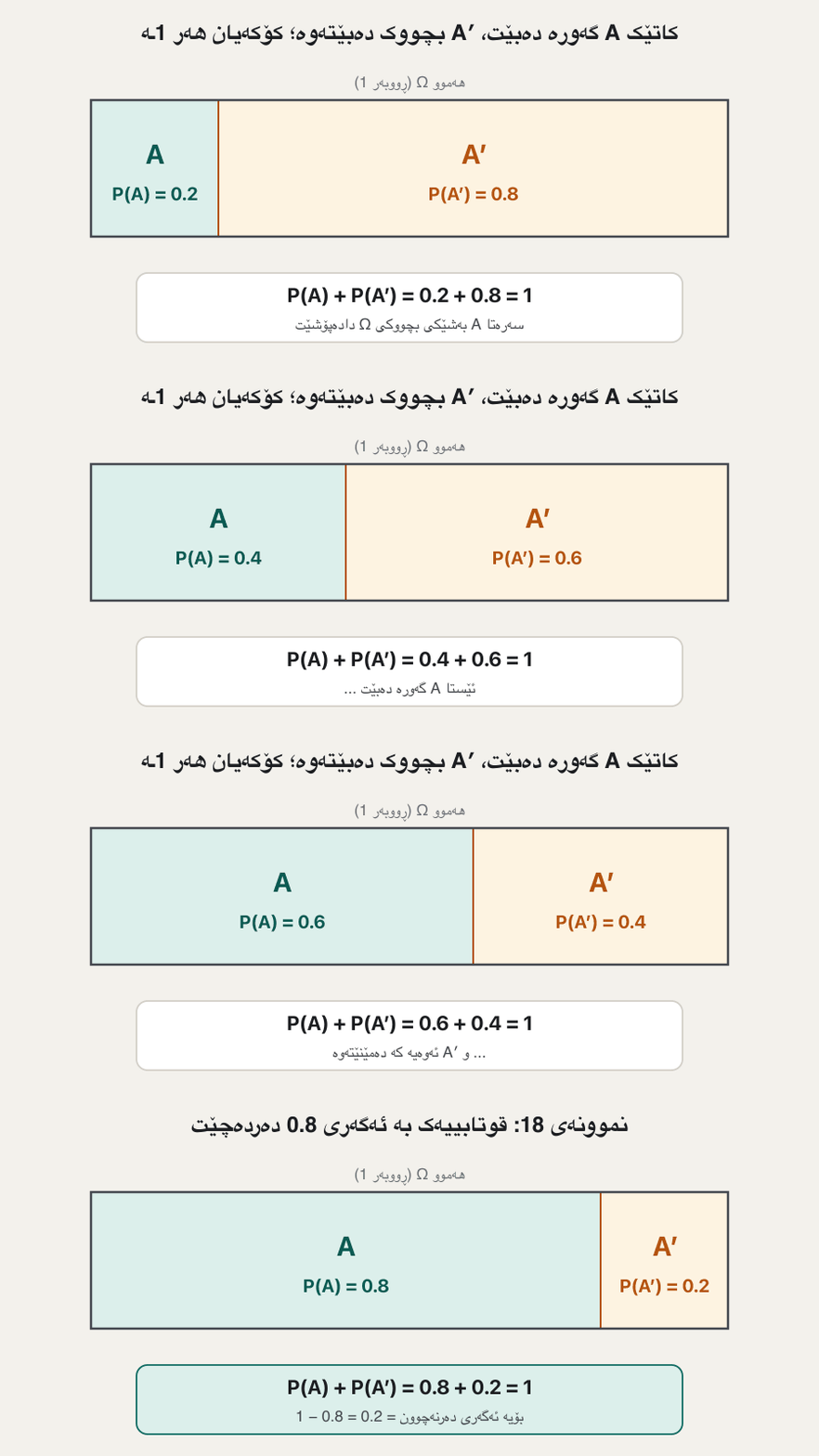
نموونەی (18). ئەوەی قوتابییەک بە ناوی هانا دەربچێت 0.80ـە. ئەوە چەندە کە دەرنەچێت؟
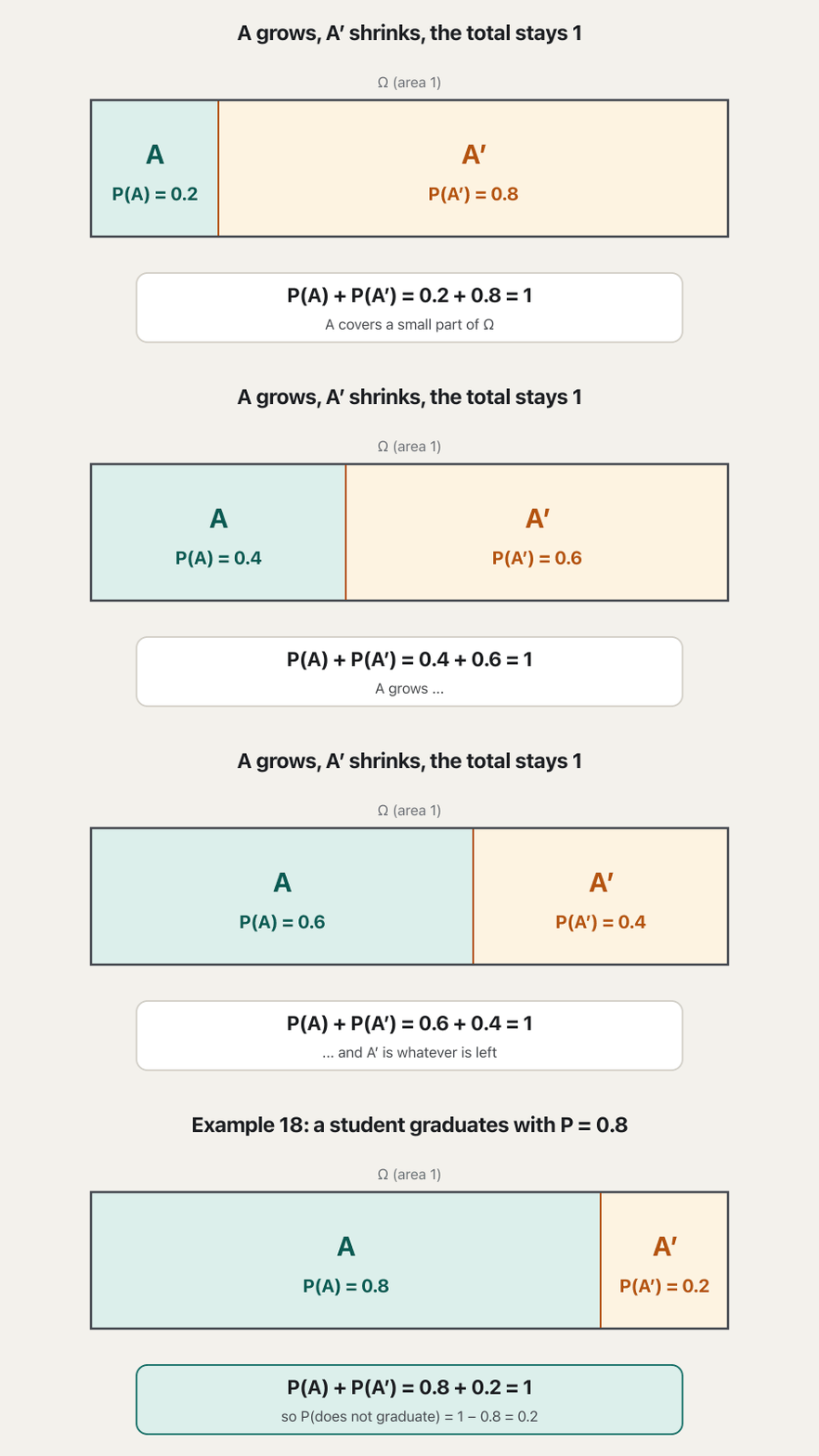
Let G be the event that Hana graduates; its complement is that she does not.
با G ئەو بێت کە هانا دەردەچێت؛ ، ، ئەوەیە کە دەرناچێت.
The complement trick: "at least one"فێڵی ڕووداوی تەواوکەر: «لانیکەم یەک»
"At least one" questions have many cases (one, two, three, …) but their complement has only one: none. So count the complement and subtract from 1.
پرسیارەکانی «لانیکەم یەک» حاڵەتی زۆریان هەیە (یەک، دوو، سێ، …) بەڵام تەنها یەک حاڵەتە: هیچ. بۆیە بژمێرە و لە 1 دەری بکە.
- At least one head in 3 tossesلانیکەم یەک شێر لە 3 هەڵداندا
The complement is "no head" = TTT, one of the 8 equally likely outcomes. .
«هیچ شێرێک» = TTTـە، یەکێک لە 8 کە هەموویان هەمان هەیە. .
- At least one six in 4 rolls of a dieلانیکەم یەک 6 لە 4 جار هەڵدانی بەردەزار
"No six" means 1 to 5 on every roll: of the outcomes. , a little more than a half.
«هیچ 6ـێک» واتە 1 تا 5 لە هەموو هەڵدانێکدا: لە . ، کەمێک زیاتر لە نیوە.
The rolls do not affect each other (they are independent), which is why the counts multiply (, ). Independence is explained in Conditional Probability and Independence.
هەڵدانەکان کار لە یەکتر ناکەن ()، هەر بۆیە ژمارەکان لێک دەدرێن (، ). سەربەخۆیی لە ئەگەری مەرجدار و سەربەخۆیی ڕوون دەکرێتەوە.
Common mistakesهەڵە باوەکان
| Mistakeهەڵە | Why it is wrongبۆچی هەڵەیە | Do this insteadلەبری ئەوە ئەمە بکە |
|---|---|---|
| An answer above 1 or below 0وەڵامێک سەرووی 1 یان خوارووی 0 | Theorem 2: every probability lies in . 2: هەموو لە دایە. | Treat it as an alarm: something was counted twice or a case is missing.وەک ئاگادارکردنەوە سەیری بکە: شتێک دوو جار ژمێردراوە یان حاڵەتێک کەمە. |
| Adding probabilities of events that overlapکۆکردنەوەی کە یەکتر دەبڕن | Axiom 2 is only for mutually exclusive events. 2 تەنها بۆ . | Check first, or use the general addition rule.سەرەتا بپشکنە، یان یاسای کۆکردنەوەی ئەگەر بە شێوە گشتییەکەی بەکاربهێنە. |
| Complement of "at least one" taken as "at most one" «لانیکەم یەک» وەک «لانیزۆر یەک» وەرگیراوە | "At most one" includes "exactly one", which is also in the event.«لانیزۆر یەک» «ڕێک یەک»ـیش دەگرێتەوە کە لە . | The complement of "at least one" is "none". «لانیکەم یەک» «هیچ»ـە. |
| Writing نووسینی | That number is negative or zero.ئەو ژمارەیە نەرێنییە یان سفرە. | .. |
Exercisesڕاهێنانەکان
A spinner has four colours. Which of these is a valid probability model? (a) red 0.4, blue 0.3, green 0.2, yellow 0.1; (b) red 0.5, blue 0.5, green 0.1, yellow ; (c) red 0.3, blue 0.3, green 0.3, yellow 0.3.
سووڕێنەرێک چوار ڕەنگی هەیە. کامیان مۆدێلێکی دروستی ؟ (أ) سوور 0.4، شین 0.3، سەوز 0.2، زەرد 0.1؛ (ب) سوور 0.5، شین 0.5، سەوز 0.1، زەرد ؛ (ج) سوور 0.3، شین 0.3، سەوز 0.3، زەرد 0.3.
Show answerوەڵامەکە پیشان بدە
- (a) Valid: no number is negative and the sum is 1.
- (b) Not valid: the sum is 1, but breaks axiom 1.
- (c) Not valid: the sum is 1.2, so would not be 1.
- (أ) دروستە: هیچ ژمارەیەک نەرێنی نییە و کۆکەی 1ـە.
- (ب) دروست نییە: کۆکەی 1ـە، بەڵام 1 دەشکێنێت.
- (ج) دروست نییە: کۆکەی 1.2ـە، بۆیە نابێتە 1.
For two events, and . Find and .
بۆ دوو ، و . و بدۆزەرەوە.
Show answerوەڵامەکە پیشان بدە
Theorem 7, then the complement rule.
7، پاشان .
Two dice are rolled. Use the complement to find the probability that the two numbers are not the same.
دوو بەردەزار هەڵدەدرێن. بەکاربهێنە بۆ دۆزینەوەی ئەوەی دوو ژمارەکە وەک یەک نەبن.
Hintئاماژە
Count the doubles first.
سەرەتا جووتە وەک یەکەکان بژمێرە.
Show answerوەڵامەکە پیشان بدە
Let D be "a double". The 6 doubles are (1,1), (2,2), …, (6,6) among 36 equally likely pairs.
با D «جووتی وەک یەک» بێت. 6 جووتە وەک یەکەکە (1,1)، (2,2)، …، (6,6)ن لە ناو 36 جووتی .
A die is rolled twice. What is the probability of at least one six? Check your answer by listing.
بەردەزارێک دوو جار هەڵدەدرێت. لانیکەم یەک 6 چەندە؟ وەڵامەکەت بە نووسینی هەمووی بپشکنە.
Show answerوەڵامەکە پیشان بدە
Complement: no six on either roll, of 36 pairs. . Listing: 6 pairs have a six first, 6 have a six second, and (6, 6) was counted in both: .
: هیچ 6ـێک لە هیچ هەڵدانێکدا، لە 36 جووت. . بە نووسین: 6 جووت 6ـیان لە یەکەمدایە، 6 جووت 6ـیان لە دووەمدایە و (6، 6) لە هەردووکیاندا ژمێردراوە: .
Summaryپوختە
- Three axioms: ; for mutually exclusive events probabilities add; .
- is a theorem, not an axiom.
- Proved from them: , , .
- Complement rule ; , and are the same event.
- The probability of "at least one" is 1 minus the probability of "none".
- سێ : ؛ بۆ کۆ دەکرێنەوە؛ .
- ، نەک .
- لێیانەوە دەسەلمێنرێن: ، ، .
- ؛ ، و هەمان .
- «لانیکەم یەک» یەکسانە بە 1 لێدەرکردنی «هیچ».
Why is not needed as an axiom?بۆچی وەک بەڵگەنەویست پێویست نییە؟
Because and , so follows.
چونکە و ، بۆیە لێیەوە دێت.
The probability of graduating is 0.8. What is the probability of not graduating?گەر ئەگەری دەرچوون 0.8 بێت، ئەگەری دەرنەچوون چەندە؟
By the complement rule, .
بە ، .
Videoڤیدیۆ
Watch a videoسەیری ڤیدیۆیەک بکە
A video that viewers liked a lot and praised in their comments, chosen for this lesson.ڤیدیۆیەک کە بینەران زۆریان پێ خۆش بووە و لە کۆمێنتەکانیاندا ستایشیان کردووە، بۆ ئەم وانەیە هەڵبژێردراوە.
What a sample space is, how a tree diagram lists every outcome of two coin flips, the basic rules every probability obeys, and the complement rule.
چییە، چۆن هەموو دوو جار هەڵدانی دراو دەنووسێت، یاسا بنەڕەتییەکانی و .
Plays 4:50-7:30: the rules every probability obeys (always between 0 and 1, all outcomes add up to 1), then the complement rule P(Aᶜ) = 1 − P(A) with a two-coin practice question.
لە 4:50 تا 7:30 پەخش دەبێت: ئەو یاسایانەی هەموو پەیڕەویان دەکات (هەمیشە لە نێوان 0 و 1ـدایە، کۆی هەموو دەکاتە 1)، پاشان لەگەڵ پرسیارێکی ڕاهێنان بە دوو دراو.
Lesson complete!وانەکە تەواو بوو!
Well done. Review the key terms, then go on to the next lesson.دەستخۆش. سەیرێکی زاراوە سەرەکییەکان بکەرەوە، پاشان بڕۆ بۆ وانەی داهاتوو.
Key termsزاراوە سەرەکییەکان
Mutually Exclusive Events and the Addition Ruleڕووداوی جیا و یاسای کۆکردنەوەی ئەگەر
Related lecturesوانە پەیوەندیدارەکان
- Mutually Exclusive Events and the Addition Ruleڕووداوی جیا و یاسای کۆکردنەوەی ئەگەر
- Conditional Probability, Independence and the Multiplication Ruleئەگەری مەرجدار، سەربەخۆیی و یاسای لێکدانی ئەگەر
- Combinationsگونجێنەکان
- Union, Intersection, Difference and Complementیەکگرتن، یەکتربڕین، جیاوازیی کۆمەڵە و تەواوکەر
References and further readingسەرچاوەکان و خوێندنەوەی زیاتر
- H. Pishro-Nik, Introduction to Probability, Statistics and Random Processes: 1.3.2 Probability (the axioms)
- H. Pishro-Nik: 1.3.3 Finding Probabilities (complement rule, P(∅) = 0, P(A) ≤ 1, monotonicity, inclusion-exclusion derived from the axioms)
- OpenStax, Introductory Statistics 2e, 3.2 Independent and Mutually Exclusive Events (complement P(A) + P(A′) = 1)
This lecture is a first edition. The Kurdish text and terminology are waiting for review by Kurdish IT teachers.ئەم وانەیە چاپی یەکەمە. دەقە کوردییەکە و زاراوەکانی چاوەڕێی پێداچوونەوەی مامۆستایانی کوردی بواری IT ن.