Chapterبەش 2 · Lectureوانە 2.4
OSI Layers 6 and 7: Presentation and Applicationچینەکانی 6 و 7ی OSI: چینی پێشکەشکردن و چینی ئەپ
The top two layers of the OSI model. The presentation layer makes both sides read the data in the same format — character codes such as UTF-8 for Kurdish letters, compression and encryption — and the application layer gives programs their network services: the web, e-mail, file transfer, remote login and names. Also: where TLS really sits, OSI's own services and today's protocols, and a one-line summary of all seven layers.
دوو چینی سەرەوەی . وا دەکات هەردوو لا بە هەمان شێوە بخوێننەوە — وەک UTF-8 بۆ پیتە کوردییەکان، و — و خزمەتگوزارییەکانی دەدات بە بەرنامەکان: وێب، ، گواستنەوەی ، و ناو. هەروەها: لە ڕاستیدا لە کوێیە، خزمەتگوزارییەکانی خودی OSI و ئەمڕۆ. لە کۆتاییدا پوختەیەکی یەک دێڕیی هەر حەوت چینەکە.
What you will learnچی فێر دەبیت
- Explain the presentation layer's three jobs — translation (encoding), compression and encryption — with today's examples.
- Show how a Kurdish word travels as UTF-8 bytes, and why a wrong character encoding garbles it.
- Tell lossless from lossy compression, and say why data is compressed before it is encrypted.
- Say where TLS really sits — between the application and TCP, or inside QUIC for HTTP/3 — and why SSL is no longer used.
- Explain what the application layer provides, why a browser uses layer 7 rather than being layer 7, and which protocols give its services today.
- Give the one-line job of each of the seven OSI layers.
- سێ کارەکەی ڕوون بکەیتەوە — وەرگێڕان ()، و — بە نموونەی ئەمڕۆوە.
- پیشان بدەیت وشەیەکی کوردی چۆن وەک UTF-8 دەگوازرێتەوە و بۆچی هەڵە تێکی دەدات.
- جیاوازیی پەستاندنی بێ لەدەستدان و بە لەدەستدان بزانیت و بڵێیت بۆچی پێش دەپەستێنرێت.
- بڵێیت لە ڕاستیدا لە کوێیە — لە نێوان و ، یان لەناو بۆ HTTP/3 — و بۆچی SSL ئیتر بەکار ناهێنرێت.
- ڕوونی بکەیتەوە چی پێشکەش دەکات، بۆچی چینی 7 بەکار دەهێنێت نەک خۆی چینی 7 بێت و ئەمڕۆ کام خزمەتگوزارییەکانی دەدەن.
- کاری هەر یەکێک لە حەوت چینەکەی OSI بە یەک دێڕ بڵێیت.
Layers 6 and 7 at a glanceچینەکانی 6 و 7 بە کورتی
This lesson finishes the walk through the OSI model. Layers 1 to 3 move the data across the network (layers 1–3), layer 4 carries the whole message between two programs and layer 5 manages their conversation (layers 4 and 5). The two layers on top are the closest to the user — a person, or a program that uses the network. Layer 6, presentation, makes sure that both sides understand the data in the same format. Layer 7, application, gives programs the network services they ask for.
ئەم وانەیە گەشتەکەی ناو تەواو دەکات. چینەکانی 1 تا 3 بە ناو دەگوازنەوە (چینەکانی 1 تا 3)، چینی 4 هەموو نامەکە لە نێوان دوو بەرنامەدا دەگەیەنێت و چینی 5 گفتوگۆکەیان بەڕێوە دەبات (چینەکانی 4 و 5). دوو چینەکەی سەرەوە لە هەموو چینەکان نزیکترن لە — کەسێک یان بەرنامەیەک کە بەکار دەهێنێت. چینی 6، ، دڵنیا دەبێتەوە کە هەردوو لا لە بە هەمان شێوە تێدەگەن. چینی 7، ، ئەو خزمەتگوزارییانەی دەدات بە بەرنامەکان کە داوایان دەکەن.
Layer 6: the presentation layerچینی 6: چینی پێشکەشکردن
Two computers may store the same information in different ways: different character codes, number formats or file formats. The presentation layer is responsible for presenting the data in a proper, agreed format, so that what the sender meant is exactly what the receiver gets. It works on the form of the data — its syntax — not on its meaning, so it is sometimes called the syntax layer. At the receiver it prepares the data for the application layer; it is responsible for the representation of data between different hardware and operating systems.
لەوانەیە دوو هەمان زانیاری بە دوو شێوەی جیاواز هەڵبگرن: کۆدی جیاوازی پیت، شێوەی جیاوازی ژمارە یان جیاواز. بەرپرسە لە پیشاندانی بە شێوەیەکی دروست و ڕێککەوتنلەسەرکراو، تاکو ئەوەی نێرەر مەبەستی بوو ڕێک ئەوە بێت کە بە وەرگر دەگات. کار لەسەر شێوەی — شێوەی نووسینەکەی — دەکات، نەک واتاکەی، بۆیە هەندێک جار پێی دەگوترێت syntax layer. لە وەرگردا بۆ ئامادە دەکات؛ بەرپرسە لە نواندنی لە نێوان و جیاوازدا.
So the OSI model lists three jobs for layer 6 — translation (encoding), compression and encryption — and some books add “code formatting”. Its unit of data is still simply called data (some books: formatted data). The next screens take the jobs one by one. The «presentation layer» inside a program's code, its screens, is a different idea: see Layers and Business Logic.
کەواتە سێ کار بۆ چینی 6 دیاری دەکات — وەرگێڕان ()، و — و هەندێک کتێب «ڕێکخستنی کۆد»یش زیاد دەکەن. یەکەی لێرەدا هێشتا تەنیا پێی دەگوترێت (لە هەندێک کتێبدا: ڕێکخراو). شاشەکانی داهاتوو کارەکان یەک یەک باس دەکەن. « پیشاندان» لە ناو کۆدی ، واتە شاشەکانی، بیرۆکەیەکی جیاوازە: بڕوانە چینەکان و لۆجیکی کاروبار.
Layer 6 of the : it makes sure both sides understand the data's format: , and . In TCP/IP these jobs are done by the applications and by .
چینی 6ی : دڵنیا دەبێتەوە کە هەردوو لا لە شێوەی تێدەگەن: ، و . لە ئەم کارانە لەلایەن و دەکرێن.
Layer 6: the presentation layerچینی 6: چینی پێشکەشکردن
Job 1: translation — one shared codeکاری 1: وەرگێڕان — یەک کۆدی هاوبەش
Text travels as numbers, and a character encoding says which number stands for which letter. IBM mainframes use , while most other computers use codes based on , so text that moves between them must be translated. ASCII has English letters only. Today almost every system uses , which gives every letter of every writing system its own number, its code point, stored as bytes with UTF-8. Kurdish letters arrive intact only when both sides use the same encoding.
دەق وەک ژمارە دەگوازرێتەوە و دیاری دەکات کام ژمارە بۆ کام پیتە. IBM کۆدی بەکار دەهێنن، کەچی زۆربەی تر کۆدی لەسەر بنەمای ، بۆیە دەبێت ئەو دەقەی لە نێوانیاندا دەگوازرێتەوە وەربگێڕدرێت. تەنیا پیتی ئینگلیزیی تێدایە. ئەمڕۆ نزیکەی هەموو سیستەمێک بەکار دەهێنێت، کە ژمارەیەکی تایبەت، واتە ، دەدات بە هەر پیتێکی هەموو سیستەمەکانی نووسین و بە UTF-8 وەک هەڵدەگیرێت. پیتە کوردییەکان تەنیا کاتێک وەک خۆیان دەگەن کە هەردوو لا هەمان بەکار بهێنن.
A Kurd and a visitor from another country understand each other only when they agree on one language. In the same way, when two devices code their data in different ways, there must be one common way to encode and decode it, and the presentation layer is responsible for it.
کوردێک و میوانێکی وڵاتێکی تر تەنیا کاتێک لە یەکتر تێدەگەن کە لەسەر یەک زمان ڕێک بکەون. بە هەمان شێوە، کاتێک دوو ئامێر بە دوو ڕێگەی جیاواز دەکەنە کۆد، دەبێت ڕێگەیەکی هاوبەش هەبێت بۆ کۆدکردن و کۆدکردنەوەی. بەرپرسە لەمە.
Where the analogy stops workingسنووری ئەم نموونەیە
People can guess a meaning from the situation; a computer cannot. One wrong code turns a whole text into nonsense.
مرۆڤ دەتوانێت لە بارودۆخەکەوە مەبەستەکە بزانێت؛ ناتوانێت. یەک کۆدی هەڵە هەموو دەقێک دەکات بە شتێکی بێواتا.
The garbled سڵاو is UTF-8 read with the wrong code: every byte arrived, but the two sides disagreed on the presentation. UTF-8 is explained in Unicode and UTF-8.
نووسینە تێکچووەکەی سڵاو UTF-8ـە کە بە کۆدێکی هەڵە خوێنراوەتەوە: هەموو گەیشت، بەڵام دوو لایەنەکە لەسەر شێوەی پیشاندان ڕێک نەکەوتبوون. UTF-8 لە Unicode و UTF-8ـدا ڕوون کراوەتەوە.
Layer 6: the presentation layerچینی 6: چینی پێشکەشکردن
Formats and labels: ASCII, JPEG, AVIشێوە و نیشانەکان: ASCII، JPEG، AVI
Classic examples of the presentation idea are standard formats: ASCII for text, JPEG (JPG) for pictures and AVI for video — today also UTF-8, PNG, MP4 and JSON. A format is an agreement on how the bytes are arranged, so that any program can read them. OSI's layer 6 also adds a header with information about the transmission: the type of data, its parameters and its length. On today's Internet the application protocol carries such labels itself: a web server sends Content-Type: text/html; charset=utf-8 (the and the character code), Content-Encoding and Content-Length.
نموونە کلاسیکییەکانی بیرۆکەی پیشاندان شێوە ستانداردەکانن (): بۆ دەق، JPEG (JPG) بۆ وێنە و AVI بۆ ڤیدیۆ — ئەمڕۆش UTF-8، PNG، MP4 و . ڕێککەوتنێکە لەسەر چۆنییەتیی ڕیزکردنی ، بۆ ئەوەی هەر بەرنامەیەک بتوانێت بیانخوێنێتەوە. چینی 6ی OSI سەردێڕێکیش زیاد دەکات کە زانیاری لەسەر گواستنەوەکە هەڵدەگرێت: جۆری ، ڕێکخستنەکانی و درێژییەکەی. لە ئەمڕۆدا خۆی ئەم نیشانانە هەڵدەگرێت: Content-Type: text/html; charset=utf-8 دەنێرێت ( و کۆدی پیتەکان)، هەروەها Content-Encoding و Content-Length.
Layer 6: the presentation layerچینی 6: چینی پێشکەشکردن
Job 2: compressionکاری 2: پەستاندنی دراوە
Compression stores the same data in fewer bits, so it travels faster and costs less; the receiver expands (decompresses) it again. Lossless compression gives back every bit: ZIP, PNG, and gzip or Brotli on the web, where the browser lists the methods it understands (Accept-Encoding: gzip, br) and the server names the one it used (Content-Encoding: br). Some documents shrink by up to about 70 %. Lossy compression throws away details people hardly notice — JPEG photos, MP3 music, MP4 video — and those details never come back.
هەمان بە کەمتر هەڵدەگرێت، بۆیە خێراتر دەگات و هەرزانتر دەکەوێت؛ وەرگر دووپاتە دەیکاتەوە. جۆری بێ لەدەستدان () هەموو دەگەڕێنێتەوە: ZIP و PNG، هەروەها gzip یان Brotli لە وێبدا، کە ئەو ڕێگانە ڕیز دەکات کە تێیان دەگات (Accept-Encoding: gzip, br) و ناوی ئەوەیان دەڵێت کە بەکاری هێناوە (Content-Encoding: br). هەندێک بەڵگەنامە تا نزیکەی 70٪ بچووک دەبنەوە. جۆری بە لەدەستدان () هەندێک وردەکاری فڕێ دەدات کە خەڵک بە زەحمەت هەستیان پێ دەکەن — وێنەی JPEG، مۆسیقای MP3، ڤیدیۆی MP4 — و ئەو وردەکارییانە هەرگیز ناگەڕێنەوە.
Layer 6: the presentation layerچینی 6: چینی پێشکەشکردن
Job 3: encryptionکاری 3: شفرەکردن
Encryption turns readable data (plaintext) into ciphertext that only someone with the right key can turn back; decryption does that at the receiver. It protects the data from anyone on the way — for example a stranger on the same café Wi-Fi. The OSI model gives this job to the presentation layer, so that data is encrypted and decrypted to protect it. How keys and ciphers work is taught in Plaintext, ciphertext and the key.
خوێنراوە () دەکات بە کە تەنیا خاوەنی دروست دەتوانێت بیگەڕێنێتەوە؛ ئەمە لە وەرگردا دەکات. لە هەر کەسێک دەپارێزێت کە لە ڕێگادایە — بۆ نموونە کەسێکی نەناسراو لەسەر هەمان چایخانەیەک. ئەم کارە دەداتە ، تاکو بۆ پاراستنی شفرە بکرێت و شفرەکەی بکرێتەوە. چۆنییەتیی کارکردنی و لە دەقی ئاشکرا، دەقی شفرەکراو و کلیلـدا فێر دەبیت.
Layer 6: the presentation layerچینی 6: چینی پێشکەشکردن
Where TLS really sitsTLS لە ڕاستیدا لە کوێدایە
On the Internet the encryption protocol is TLS, Transport Layer Security. Some books place it in OSI's presentation layer, but TCP/IP has no presentation layer: TLS runs between the application and TCP. It needs only a reliable, in-order stream below it, and any application protocol can run on top of it — HTTP over TLS is HTTPS (port 443), and e-mail and calls use it too. HTTP/3 goes further: it runs over QUIC, which has TLS 1.3 built in and travels in UDP. As of November 2026, the TLS 1.3 standard is RFC 9846 (July 2026), which replaced RFC 8446 (2018).
لە ، Transport Layer Security. هەندێک کتێب دەیخەنە OSI، بەڵام نییە: لە نێوان و کار دەکات. تەنیا ڕەوتێکی متمانەپێکراو و ڕیزکراوی لە ژێر خۆیەوە پێویستە و هەر دەتوانێت لەسەری کار بکات — HTTP لەسەر واتە ( 443)، هەروەها و پەیوەندییە دەنگییەکانیش بەکاری دەهێنن. HTTP/3 هەنگاوێکی تر دەڕوات: لەسەر کار دەکات، کە TLS 1.3 لەناو خۆیدایە و بە دەگوازرێتەوە. تا تشرینی دووەمی 2026، ستانداردی TLS 1.3 RFC 9846ـە (تەممووزی 2026)، کە جێگەی RFC 8446ـی (2018) گرتەوە.
Layer 6: the presentation layerچینی 6: چینی پێشکەشکردن
Down and back up: the order mattersدابەزین و سەرکەوتنەوە: ڕیزبەندی گرنگە
At the sender, layer 6 takes the data from layer 7 and works in this order: it translates it into a standard code, compresses it and then encrypts it. In the OSI model it adds its header, H6, and passes the result to layer 5. At the receiver the steps run backwards: layer 6 reads and removes H6, decrypts, decompresses and turns the bytes back into the original form for layer 7.
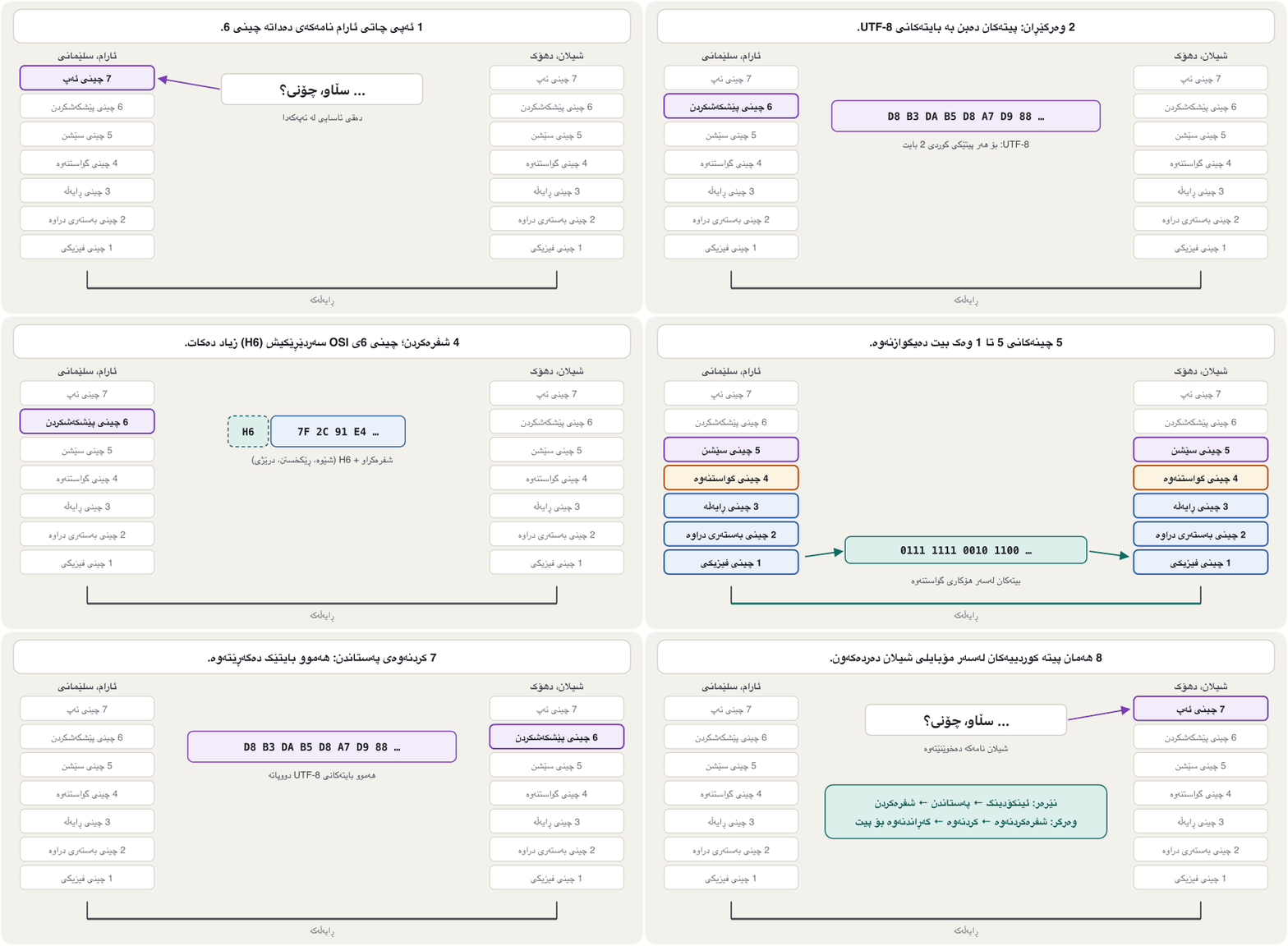
لە نێرەردا، چینی 6 لە چینی 7 وەردەگرێت و بەم ڕیزە کار دەکات: دەیکاتە کۆدێکی ستاندارد، دەیپەستێنێت و پاشان شفرەی دەکات. لە سەردێڕەکەی خۆی، H6، زیاد دەکات و ئەنجامەکە دەداتە چینی 5. لە وەرگردا هەنگاوەکان بە پێچەوانەوە دەڕۆن: چینی 6 H6 دەخوێنێتەوە و لای دەبات، دەکات، پەستاندنەکە دەکاتەوە و دەگەڕێنێتەوە بۆ شێوە ئەسڵییەکەیان بۆ چینی 7.
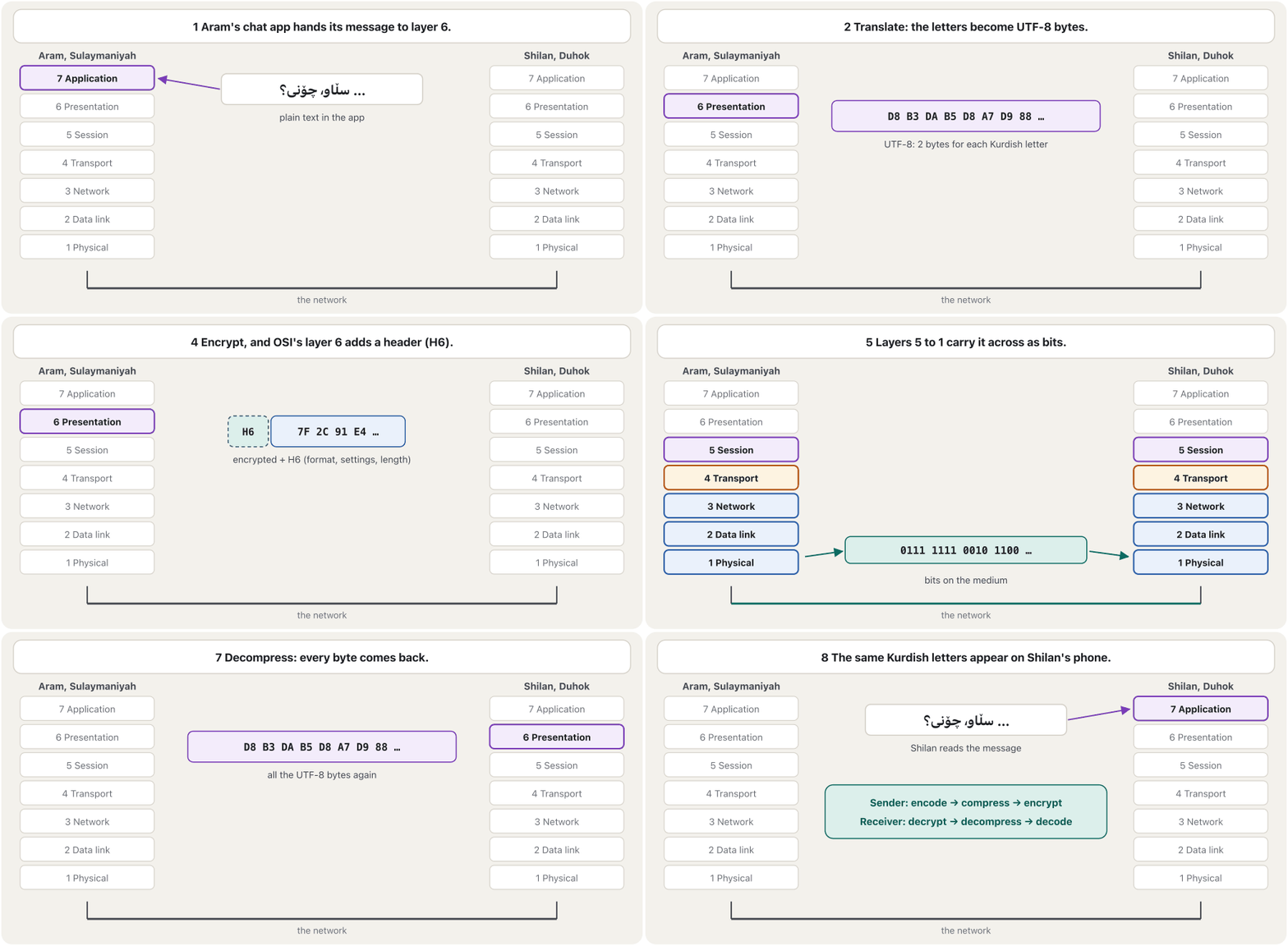
Why compress before encrypting? Good encryption makes data look random, and random data hardly shrinks. TLS 1.3 does not compress at all any more; web servers compress the page first and TLS then encrypts it.
بۆچی پێش دەپەستێنرێت؟ باش وەک شتێکی هەڕەمەکی دەردەخات و هەڕەمەکی بە زەحمەت بچووک دەبێتەوە. TLS 1.3 ئیتر هەرگیز ناپەستێنێت؛ سەرەتا لاپەڕەکە دەپەستێنن و پاشان شفرەی دەکات.
Layer 7: the application layerچینی 7: چینی ئەپ
Layer 7 is what most users see — the layer closest to the end user. It lets the user, whether a person or a program, access the network: it takes what the user asks for, hands it to the layers below, and gives the incoming data back to be shown. In one line, it allows access to network resources and provides services to the user. Each everyday program has a protocol of its own at this layer: a web browser uses HTTP, and an e-mail program uses SMTP to send mail (and IMAP or POP3 to read it).
چینی 7 ئەوەیە کە زۆربەی دەیبینن — ئەو چینەی لە هەموویان نزیکترە لە . ڕێگە دەدات ، چ کەس بێت چ بەرنامە، دەستی بە بگات: داواکەی وەردەگرێت، دەیداتە چینەکانی خوارەوە و ئەو دێتەوە بۆ پیشاندان دەیگەڕێنێتەوە. بە یەک دێڕ، ڕێگە دەدات بە دەستگەیشتن بە سەرچاوەکانی و خزمەتگوزاری پێشکەشی دەکات. هەر بەرنامەیەکی ڕۆژانە تایبەتی خۆی لەم چینەدا هەیە: بەکار دەهێنێت و بۆ ناردنی نامە بەکار دەهێنێت (و یان بۆ خوێندنەوەی).
Careful: the program you click — Chrome, Firefox, Safari, Outlook — is not itself the application layer. Its window and buttons are the part you see; its network code, which speaks HTTP or SMTP, is layer 7, and the operating system offers more of that code to every network-aware program. So when an exam says that “the software users employ to access the network resides at layer 7”, it means this protocol part.
ئاگادار بە: ئەو بەرنامەیەی کلیکی لێ دەکەیت — Chrome، Firefox، Safari، Outlook — خۆی نییە. پەنجەرە و دوگمەکانی ئەو بەشەن کە دەیبینیت؛ کۆدی ، کە بە یان قسە دەکات، چینی 7ـە و زیاتر لەو کۆدە پێشکەشی هەموو بەرنامەیەکی ئاگا لە دەکات. بۆیە کاتێک لە تاقیکردنەوەدا دەگوترێت «ئەو بۆ دەستگەیشتن بە بەکاری دەهێنن لە چینی 7دایە»، مەبەست ئەم بەشە .
The top layer of a layered network or IoT model, where the programs that people use work: in the OSI model protocols such as and ; in an IoT system the app that shows readings and sends commands.
سەرەوەترین چینی مۆدێلێکی چینداری ڕایەڵە یان IoTـە، کە ئەو بەرنامانەی خەڵک بەکاریان دەهێنن تێیدا کار دەکەن: لە مۆدێلی OSIـدا پرۆتۆکۆڵی وەک و ؛ لە سیستەمێکی IoTـدا ئەو ئەپەی خوێندنەوەکان پیشان دەدات و فەرمان دەنێرێت.
Layer 7: the application layerچینی 7: چینی ئەپ
What layer 7 offersچینی 7 چی پێشکەش دەکات
Layer 7 contains standard protocols of general use. Textbooks list these services:
چینی 7 ستانداردی بەکارهێنانی گشتیی تێدایە. کتێبەکان ئەم خزمەتگوزارییانە ڕیز دەکەن:
- Network virtual terminal — log in to a distant computer as if you sat at it. Telnet defined a standard imaginary terminal for this (RFC 854, 1983); today SSH does the job with encryption.
- File transfer, access and management — copy, read or change files on another computer: FTP, SFTP, shared folders.
- Mail services — send mail with SMTP; keep and read it with IMAP or POP3.
- Directory services — find names and addresses: DNS for Internet names, LDAP directories inside companies.
- Remote file access, shared databases and other distributed services — and today the web (HTTP) and voice and video calls.
- تێرمیناڵی گریمانەیی — چوونەژوورەوە بۆ دوور وەک ئەوەی لە بەردەمیدا دانیشتبیت. Telnet بۆ ئەمە تێرمیناڵێکی خەیاڵیی ستانداردی دانا (RFC 854، 1983)؛ ئەمڕۆ هەمان کار بە دەکات.
- گواستنەوە، دەستگەیشتن و بەڕێوەبردنی — کۆپیکردن، خوێندنەوە یان گۆڕینی لەسەر تر: ، ، .
- خزمەتگوزاریی — ناردنی نامە بە ؛ هەڵگرتن و خوێندنەوەی بە یان .
- خزمەتگوزاریی ڕێبەر — دۆزینەوەی ناو و ناونیشان: بۆ ناوەکانی ، ڕێبەری LDAP لەناو کۆمپانیاکاندا.
- دەستگەیشتن بە لە دوورەوە، هاوبەش و خزمەتگوزارییە دابەشکراوەکانی تر — و ئەمڕۆ وێب () و پەیوەندیی دەنگی و ڤیدیۆیی.
Because these services live at layer 7, you can choose between several programs for the same job: any browser opens the same page, and any mail app reads the same mailbox.
چونکە ئەم خزمەتگوزارییانە لە چینی 7دان، دەتوانیت لە نێوان چەند بەرنامەیەک بۆ هەمان کار هەڵبژێریت: هەر هەمان لاپەڕە دەکاتەوە و هەر هەمان سندووقی نامە دەخوێنێتەوە.
How clients, servers and peers talk to each other at this layer is taught in Clients, servers and peer-to-peer.
، و چۆن لەم چینەدا لەگەڵ یەکتر قسە دەکەن لە ڕاژەخواز، ڕاژەکار و تاکەکانـدا فێر دەبیت.
Layer 7: the application layerچینی 7: چینی ئەپ
OSI's own services, and today's protocolsخزمەتگوزارییەکانی خودی OSI و پرۆتۆکۆڵەکانی ئەمڕۆ
The OSI model came with its own application services: X.400 for messages (e-mail), X.500 for directories and FTAM for file transfer, access and management; in OSI's own example a user sends an e-mail with X.400. These services lost to the Internet's simpler protocols — SMTP and IMAP, DNS and LDAP, FTP and HTTP — and are history now. One part lives on: X.509, X.500's certificate format, is inside every HTTPS certificate.
خزمەتگوزارییەکانی تایبەت بە خۆی هەبوو: X.400 بۆ نامە ()، X.500 بۆ ڕێبەر و FTAM بۆ گواستنەوە، دەستگەیشتن و بەڕێوەبردنی ؛ لە نموونەکەی خودی OSIـدا بە X.400 دەنێرێت. ئەم خزمەتگوزارییانە لە بەرانبەر دۆڕان، کە سادەتر بوون — و ، و LDAP، و — و ئێستا مێژوون. بەشێکیان ماوەتەوە: X.509، شێوەی بڕوانامەی X.500، لەناو هەموو HTTPSـدایە.
Layer 7: the application layerچینی 7: چینی ئەپ
Layer 7 lives in the end systemsچینی 7 لە سیستەمە کۆتاییەکاندا دەژی
The application layer is implemented in the end systems — the hosts at the two ends of a conversation, such as Aram's phone and a web server. RFC 1122 says it in its own words: an Internet host is what OSI calls an end system, and a router is an intermediate system. A router forwards the packet that carries a web page without reading the page; it uses only layers 1–3. You will draw this in the worked example from X to Y.
لە سیستەمە کۆتاییەکاندا جێبەجێ دەکرێت — ئەو لە دوو سەری گفتوگۆیەکدان، وەک مۆبایلی ئارام و . RFC 1122 بە وشەی خۆی دەیڵێت: ئەوەیە کە OSI پێی دەڵێت سیستەمی کۆتایی و سیستەمێکی نێوەندییە. ئەو لاپەڕەیەکی وێب هەڵدەگرێت پێش دەخات بەبێ ئەوەی لاپەڕەکە بخوێنێتەوە؛ تەنیا چینەکانی 1 تا 3 بەکار دەهێنێت. ئەمە لە نموونە کارپێکراوەکەی X بۆ Yـدا دەکێشیت.
The seven layers in one tableحەوت چینەکە لە یەک خشتەدا
That completes the OSI model. Here is the job of each layer in one line — worth knowing by heart:
بەمە تەواو دەبێت. ئەمە کاری هەر چینێکە بە یەک دێڕ — شایەنی لەبەرکردنە:
In the textbook wording: application — to allow access to network resources; presentation — to translate, encrypt and compress data; session — to establish, manage and terminate sessions; transport — to provide reliable process-to-process message delivery and error recovery; network — to move packets from source to destination and to provide internetworking; data link — to organise bits into frames and to provide hop-to-hop delivery; physical — to transmit bits over a medium and to provide the mechanical and electrical specifications.
بە وشەکانی کتێب: — ڕێگەدان بە دەستگەیشتن بە سەرچاوەکانی ؛ — وەرگێڕان، و پەستاندنی ؛ — دامەزراندن، بەڕێوەبردن و کۆتاییهێنانی ؛ — گەیاندنی متمانەپێکراوی نامە لە بۆ و چاککردنەوەی هەڵە؛ — گواستنەوەی لە سەرچاوەوە بۆ مەبەست و بەستنەوەی بە یەکەوە؛ — ڕێکخستنی لە و گەیاندن بە ؛ — ناردنی بە و دیاریکردنی تایبەتمەندییە میکانیکی و کارەباییەکان.
Common mistakesهەڵە باوەکان
- “The browser is the application layer.” The browser is the user's program; it uses layer-7 protocols such as HTTP.
- “Encryption happens only in layer 6.” On the Internet TLS runs between the application and TCP, and QUIC has TLS built in.
- Calling today's protocol “SSL”. SSL is prohibited; TLS 1.2 and 1.3 are used.
- Encrypting first, then compressing. Encrypted data does not shrink; compress first.
- “The presentation layer draws the page on the screen.” It looks after the form of the data — codes, compression, encryption — not the display.
- Blaming the network for garbled Kurdish text.
سڵاوmeans two programs used different character encodings; the bytes arrived correctly. - “Layer 7 never adds a header.” HTTP and DNS do; some applications send plain data.
- « .» بەرنامەی ؛ چینی 7ی وەک بەکار دەهێنێت.
- « تەنیا لە چینی 6دا دەکرێت.» لە لە نێوان و کار دەکات و TLSـی لەناو خۆیدایە.
- ناونانی ئەمڕۆ بە «SSL». SSL قەدەغەیە؛ TLS 1.2 و 1.3 بەکار دەهێنرێن.
- سەرەتا و پاشان پەستاندن. شفرەکراو بچووک نابێتەوە؛ سەرەتا بیپەستێنە.
- « لاپەڕەکە لەسەر شاشە دەکێشێت.» ئاگای لە شێوەی — کۆد، پەستاندن، — نەک پیشاندان لەسەر شاشە.
- تاوانبارکردنی بۆ دەقی کوردیی تێکچوو.
سڵاوواتە دوو بەرنامە جیاوازیان بەکار هێناوە؛ بە دروستی گەیشتوون. - «چینی 7 هەرگیز سەردێڕ زیاد ناکات.» و زیادی دەکەن؛ هەندێک ڕووت دەنێرن.
Exercisesڕاهێنانەکان
Hana sends a photo through an encrypted chat app. Put layer 6's steps in order, first at Hana's phone and then at the receiver: decrypt, compress, encode, decompress, encrypt, decode.
هانا وێنەیەک بە چاتی شفرەکراو دەنێرێت. هەنگاوەکانی چینی 6 ڕیز بکە، سەرەتا لە مۆبایلی هانا و پاشان لە وەرگردا: ، پەستاندن، کۆدکردن، کردنەوەی پەستاندن، ، کۆدکردنەوە.
Show answerوەڵامەکە پیشان بدە
- At Hana's phone: encode → compress → encrypt.
- At the receiver: decrypt → decompress → decode.
- Compression comes before encryption, because encrypted data no longer shrinks.
- لە مۆبایلی هانا: کۆدکردن ← پەستاندن ← .
- لە وەرگردا: ← کردنەوەی پەستاندن ← کۆدکردنەوە.
- پەستاندن پێش دێت، چونکە شفرەکراو ئیتر بچووک نابێتەوە.
Karwan types «دهۆک» (Duhok). (a) How many bytes does it take in UTF-8? (b) How many bytes does “Duhok” take in ASCII? (c) A receiver decodes the UTF-8 bytes D8 AF D9 87 DB 86 DA A9 with Windows-1252. What does it show, and which layer's job went wrong?
کاروان «دهۆک» دەنووسێت. (أ) لە UTF-8ـدا چەند دەگرێت؟ (ب) «Duhok» لە چەند دەگرێت؟ (ج) وەرگرێک UTF-8ـی D8 AF D9 87 DB 86 DA A9 بە Windows-1252 دەخوێنێتەوە. چی پیشان دەدات و کاری کام چین هەڵە بوو؟
Show answerوەڵامەکە پیشان بدە
- (a) 4 letters × 2 bytes = 8 bytes: D8 AF D9 87 DB 86 DA A9.
- (b) 5 letters, 5 bytes: 44 75 68 6F 6B.
- (c) It shows
دهۆک. The bytes arrived; the presentation (the character encoding) did not match.
- (أ) 4 پیت × 2 = 8 : D8 AF D9 87 DB 86 DA A9.
- (ب) 5 پیت، 5 : 44 75 68 6F 6B.
- (ج)
دهۆکپیشان دەدات. گەیشتن؛ پیشاندانەکە () یەکی نەدەگرتەوە.
Sort these into presentation-layer jobs and application-layer protocols: UTF-8, HTTP, gzip, SMTP, JPEG, DNS, encryption with TLS, SSH. Which one does not fit neatly into one OSI layer?
ئەمانە بکە بە کاری و : UTF-8، HTTP، gzip، SMTP، JPEG، DNS، بە TLS، SSH. کامیان بە ڕێکی لە یەک چینی OSIـدا جێی نابێتەوە؟
Show answerوەڵامەکە پیشان بدە
- Presentation jobs (formats, compression, encryption): UTF-8, gzip, JPEG, encryption with TLS.
- Application protocols: HTTP, SMTP, DNS, SSH.
- TLS does not fit neatly: OSI books call encryption a layer-6 job, but on the Internet TLS is a protocol between the application and TCP.
- کاری پیشاندان (، پەستاندن، ): UTF-8، gzip، JPEG، بە TLS.
- : HTTP، SMTP، DNS، SSH.
- بە ڕێکی جێی نابێتەوە: کتێبەکانی OSI بە کاری چینی 6 دادەنێن، بەڵام لە لە نێوان و .
The application layer is implemented in ___ (end system, NIC, Ethernet or packet transport)?چینی ئەپ لە ___دا جێبەجێ دەکرێت (سیستەمی کۆتایی، کارتی ڕایەڵە، Ethernet یان گواستنەوەی پاکێت)؟
In the end system: layer 7 runs in the hosts at the two ends.
لە سیستەمی کۆتاییدا: چینی 7 لە دوو سەرەتا و کۆتاییدا کار دەکات.
Which OSI layer refers to the code built into operating systems that lets network-aware programs work?کام چینی OSI ئاماژەیە بۆ ئەو کۆدەی لەناو سیستەمەکانی وەگەڕخەر دانراوە و ڕێگە دەدات بەرنامەکانی ئاگا لە ڕایەڵە کار بکەن؟
The application layer (layer 7): the services that programs use, not the programs themselves.
(چینی 7): ئەو خزمەتگوزارییانەی بەرنامەکان بەکاریان دەهێنن، نەک خودی بەرنامەکان.
On a working network, the software users employ to access the network resides at which OSI layer?لە ڕایەڵەیەکی کارادا، ئەو نەرمەواڵەیەی بەکارهێنەرەکان بۆ دەستگەیشتن بە ڕایەڵە بەکاری دەهێنن لە کام چینی OSIـدایە؟
Layer 7, the application layer — meaning the protocol part of the software.
چینی 7، — مەبەست بەشە .
Name the three jobs of the presentation layer, and one example of each today.سێ کارەکەی چینی پێشکەشکردن ناو بهێنە و بۆ هەر یەکەیان نموونەیەکی ئەمڕۆ بدە.
Translation (UTF-8 for Kurdish letters), compression (gzip, Brotli, JPEG) and encryption (TLS).
وەرگێڕان (UTF-8 بۆ پیتە کوردییەکان)، پەستاندن (gzip، Brotli، JPEG) و (TLS).
Summaryپوختە
- Layers 6 and 7 are the closest to the user and run only in the end systems.
- The presentation layer makes both sides read the data in the same format: translation (character codes such as UTF-8), compression and encryption; OSI adds a header H6 with the type, settings and length.
- Lossless compression gives back every bit; lossy compression throws details away. Compress first, then encrypt.
- On the Internet, TLS runs between the application and TCP (TLS 1.3: RFC 9846, 2026); HTTP/3 uses QUIC, with TLS built in, over UDP. SSL is not used.
- The application layer gives users and programs network services — remote login, file transfer, mail, directories, the web — through protocols such as HTTP, SMTP, IMAP, DNS and SSH; the program uses layer 7 but is not layer 7.
- OSI's own services (X.400, X.500, FTAM) are history; X.500 lives on in X.509 certificates.
- چینەکانی 6 و 7 لە هەموو چینەکان نزیکترن لە و تەنیا لە سیستەمە کۆتاییەکاندا کار دەکەن.
- وا دەکات هەردوو لا بە هەمان شێوە بخوێننەوە: وەرگێڕان ( وەک UTF-8)، پەستاندن و ؛ OSI سەردێڕی H6 زیاد دەکات کە جۆر، ڕێکخستن و درێژی هەڵدەگرێت.
- پەستاندنی بێ لەدەستدان هەموو دەگەڕێنێتەوە؛ پەستاندنی بە لەدەستدان وردەکاری فڕێ دەدات. سەرەتا بپەستێنە، پاشان شفرەی بکە.
- لە لە نێوان و کار دەکات (TLS 1.3: RFC 9846، 2026)؛ HTTP/3 بەکار دەهێنێت، کە TLSـی لەناودایە، لەسەر . SSL بەکار ناهێنرێت.
- خزمەتگوزارییەکانی دەدات بە و بەرنامەکان — ، گواستنەوەی ، ، ڕێبەر، وێب — لە ڕێگەی وەک HTTP، SMTP، IMAP، DNS و SSH؛ بەرنامەکە چینی 7 بەکار دەهێنێت، بەڵام خۆی چینی 7 نییە.
- خزمەتگوزارییەکانی خودی OSI (X.400، X.500، FTAM) مێژوون؛ X.500 لە X.509ـدا ماوەتەوە.
Videoڤیدیۆ
Watch a videoسەیری ڤیدیۆیەک بکە
A video that viewers liked a lot and praised in their comments, chosen for this lesson.ڤیدیۆیەک کە بینەران زۆریان پێ خۆش بووە و لە کۆمێنتەکانیاندا ستایشیان کردووە، بۆ ئەم وانەیە هەڵبژێردراوە.
Each of the seven OSI layers with real devices, protocols and examples, from cables and signals up to the application.
هەر یەک لە حەوت چینەکەی بە ئامێر، و نموونەی ڕاستەقینە، لە کێبڵ و تا .
Watch 28:12–31:40: layers 6 and 7; stops before the course advert.
لە 28:12 تا 31:40 سەیر بکە: و ؛ پێش ڕیکلامی خولەکە ڕادەوەستێت.
Lesson complete!وانەکە تەواو بوو!
Well done. Review the key terms, then go on to the next lesson.دەستخۆش. سەیرێکی زاراوە سەرەکییەکان بکەرەوە، پاشان بڕۆ بۆ وانەی داهاتوو.
Key termsزاراوە سەرەکییەکان
The TCP/IP Model and How It Maps to OSIمۆدێلی TCP/IP و چۆنییەتیی یەکگرتنەوەی لەگەڵ OSI
Related lecturesوانە پەیوەندیدارەکان
- Protocols, Layers and the OSI Ideaپرۆتۆکۆڵەکان، چینەکان و بیرۆکەی OSI
- OSI Layers 1–3: Physical, Data Link and Networkچینەکانی 1 تا 3ی OSI: چینی فیزیکی، چینی بەستەری دراوە و چینی ڕایەڵە
- The TCP/IP Model and How It Maps to OSIمۆدێلی TCP/IP و چۆنییەتیی یەکگرتنەوەی لەگەڵ OSI
- Encapsulation, PDUs and Addresses at Each Layerپێچانەوە، یەکەکانی دراوەی پرۆتۆکۆڵ و ناونیشانەکان لە هەر چینێکدا
- Clients, Servers and Peer-to-Peer: The Application Layerڕاژەخواز، ڕاژەکار و تاکەکان: چینی ئەپ
- Web and E-mail Protocols: HTTP, HTTPS, SMTP, POP3 and IMAPپرۆتۆکۆڵەکانی وێب و ئیمەیڵ: HTTP، HTTPS، SMTP، POP3 و IMAP
- DNS: How Names Become AddressesDNS: ناو چۆن دەبێتە ناونیشان
- File Transfer and Remote Access: FTP, Telnet, SSH and RDPگواستنەوەی فایل و دەستڕاگەیشتن لە دوورەوە: FTP، Telnet، SSH و RDP
- Encryption, Hashing and Digital Signaturesشفرەکردن، هاشکردن و واژووە دیجیتاڵییەکان
- ASCII and Character CodesASCII و کۆدەکانی نووسە
- HTTP and the Request–Response CycleHTTP و سووڕی داواکاری و وەڵام
- Data Communication: Modes, Switching and Protocolsپەیوەندیی دراوە: شێوازەکانی ناردن، سویچکردن و پرۆتۆکۆڵەکان
References and further readingسەرچاوەکان و خوێندنەوەی زیاتر
- RFC 9846: The Transport Layer Security (TLS) Protocol Version 1.3 (July 2026; obsoletes RFC 8446) — section 1: TLS needs only a reliable, in-order stream and is application-protocol independent; compression removed
- RFC 7568: Deprecating Secure Sockets Layer Version 3.0 (June 2015) — “SSLv3 MUST NOT be used”
- RFC 8996: Deprecating TLS 1.0 and TLS 1.1 (2021)
- RFC 9114: HTTP/3 (2022) — HTTP over QUIC, which incorporates TLS 1.3
- RFC 9000: QUIC, a UDP-based multiplexed and secure transport (2021)
- RFC 854: Telnet Protocol Specification (May 1983) — the Network Virtual Terminal
- RFC 1122: Requirements for Internet Hosts — Communication Layers (October 1989): hosts are OSI end systems; the application layer combines OSI's top layers
- MDN Web Docs: Compression in HTTP (Accept-Encoding, Content-Encoding; gzip and Brotli; lossless and lossy formats)
- ITU-T Recommendation X.200 (07/94): Open Systems Interconnection — Basic Reference Model (same text as ISO/IEC 7498-1)
- Wikipedia: OSI model — presentation layer (EBCDIC to ASCII, compression, encryption) and why TLS does not fit one layer
- Wikipedia: X.500 — directory services (1988), LDAP and X.509 certificates
This lecture is a first edition. The Kurdish text and terminology are waiting for review by Kurdish IT teachers.ئەم وانەیە چاپی یەکەمە. دەقە کوردییەکە و زاراوەکانی چاوەڕێی پێداچوونەوەی مامۆستایانی کوردی بواری IT ن.