Chapterبەش 5 · Lectureوانە 5.7
IPv6 Addresses: Format and Typesناونیشانەکانی IPv6: شێوە و جۆرەکان
Why IPv6 came, how its 128-bit addresses are written in hexadecimal groups and shortened to RFC 5952's canonical form, the prefix and the interface ID (/48, /56, /64), the address types — global unicast, unique local, link-local, multicast, anycast, loopback and unspecified, with no broadcast — and where interface IDs come from: EUI-64, and the random IDs that replaced it for privacy.
بۆچی هات، ناونیشانە 128 چۆن بە گرووپی دەنووسرێن و بۆ شێوەی یەکگرتووی RFC 5952 کورت دەکرێنەوە، پێشگر و (/48، /56، /64)، جۆرەکانی ناونیشان — ، ، ، ، ، و دیارینەکراو، بەبێ — و لە کوێوە دێت: و ئەو ناسێنەرە هەڕەمەکییانەی بۆ تایبەتێتی جێگەیان گرتەوە.
What you will learnچی فێر دەبیت
- Explain why IPv6 was needed and how big its address space is.
- Write IPv6 addresses in full and in RFC 5952 canonical form, and expand short forms.
- Split an address into global routing prefix, subnet ID and interface ID.
- Recognise global unicast, unique local, link-local, multicast, anycast, loopback and unspecified addresses.
- Build an EUI-64 interface ID and explain why random IDs replaced it.
- ڕوونی بکەیتەوە بۆچی پێویست بوو و بۆشایی ناونیشانەکەی چەندە گەورەیە.
- ناونیشانی بە شێوەی تەواو و بە شێوەی یەکگرتووی RFC 5952 بنووسیت و شێوە کورتەکان درێژ بکەیتەوە.
- ناونیشانێک دابەش بکەیت بۆ پێشگری گشتی، ژمارەی و .
- ، ، ، ، ، و ناونیشانی دیارینەکراو بناسیتەوە.
- دروست بکەیت و ڕوونی بکەیتەوە بۆچی ناسێنەری هەڕەمەکی جێگەی گرتەوە.
Why IPv6?بۆچی IPv6؟
IPv4 has 32-bit addresses: about 4.3 billion, fewer than the people on Earth. IANA handed out its last free IPv4 blocks on 3 February 2011, and RIPE NCC — the registry for Iraq — ran out on 25 November 2019 (IPv4 ran out). NAT and carrier-grade NAT stretch IPv4 by sharing addresses (NAT), but they are a stop-gap.
ناونیشانی 32 هەیە: نزیکەی 4.3 ملیار، کەمتر لە ژمارەی خەڵکی سەر زەوی. لە 3ی شوباتی 2011دا دوایین بلۆکە بەتاڵەکانی دابەش کرد و RIPE NCC — تۆماری عێراق — لە 25ی تشرینی دووەمی 2019دا تەواو بوو (IPv4 تەواو بوو). و بە هاوبەشکردنی ناونیشان درێژ دەکەنەوە (وەرگێڕانی ناونیشانی ڕایەڵە)، بەڵام چارەسەرێکی کاتین.
IPv6 is the long-term answer. Its first specification appeared in 1995 (RFC 1883); today's, RFC 8200, has been an Internet Standard since July 2017. An address is 128 bits: only four times longer than IPv4, but it holds times as many addresses. Its simpler packet header is previewed in The Network Layer and the IPv4 Packet, and the short recap is in IP and MAC addresses.
وەڵامی درێژخایەنە. یەکەم پێناسەی لە 1995دا دەرچوو (RFC 1883)؛ ئەوەی ئەمڕۆ، RFC 8200، لە تەممووزی 2017ـەوە ستانداردی . ناونیشانێک 128 : تەنیا چوار هێندەی درێژترە، بەڵام هێندە ناونیشانی زیاتر دەگرێت. سادەترەکەی لە چینی ڕایەڵە و پاکێتی IPv4 پێشاندراوە و کورتەکەشی لە ناونیشانەکانی IP و ناونیشانەکانی MACـدایە.
128 bits in eight hexadecimal groups128 بیت لە هەشت گرووپی شانزەییدا
An IPv6 address is written as eight groups of 16 bits, separated by colons. Each group is four hexadecimal digits (0–9 and a–f), because one hex digit stands for 4 bits (Hex to binary). So a full address has 32 hex digits: 2001:0db8:4b2a:0010:0000:0000:0000:0025.
ناونیشانێکی وەک هەشت گرووپی 16 دەنووسرێت کە بە دووخاڵ لە یەک جیا دەکرێنەوە. هەر گرووپێک چوار هێمای (0 تا 9 و a تا f)، چونکە هەر هێمایەکی جێگەی 4 دەگرێتەوە (شانزەیی بۆ دووانی). بۆیە ناونیشانێکی تەواو 32 هێمای هەیە: 2001:0db8:4b2a:0010:0000:0000:0000:0025.
Every example in CêIT uses 2001:db8::/32, the block reserved for documentation (RFC 3849), so no example points at a real network. Since 2024 a second documentation block, 3fff::/20, exists too (RFC 9637). Base subscripts and the 0x prefix are explained in Notation in Computing.
هەموو نموونەیەک لە CêIT بلۆکی 2001:db8::/32 بەکار دەهێنێت، کە بۆ نموونەی نووسین تەرخان کراوە (RFC 3849)، بۆ ئەوەی هیچ نموونەیەک ئاماژە بە ڕاستەقینە نەکات. لە 2024ـەوە بلۆکێکی دووەمی نموونەش هەیە، 3fff::/20 (RFC 9637). ژمارەی بنکە بە ژێرنووس و پێشگری 0x لە هێماکان لە کۆمپیوتەردا ڕوون کراونەتەوە.
Shortening: two rules and one canonical formکورتکردنەوە: دوو یاسا و یەک شێوەی یەکگرتوو
Two rules make addresses shorter (recap): drop the leading zeros in each group (0db8 → db8, 0000 → 0), and replace one run of all-zero groups with ::. Many short forms are still possible for the same address, so RFC 5952 (2010) fixes one canonical form: lowercase letters; no leading zeros; :: for the longest run of zero groups; the first run when two are equally long; and never :: for a single zero group.
دوو یاسا ناونیشان کورتتر دەکەن (بیرخستنەوە): سفرەکانی سەرەتای هەر گرووپێک لاببە (0db8 دەبێتە db8، 0000 دەبێتە 0) و یەک زنجیرەی گرووپی سفر بکە بە ::. هێشتا چەندین شێوەی کورت بۆ هەمان ناونیشان دەکرێت، بۆیە RFC 5952 (2010) یەک شێوەی یەکگرتوو دیاری دەکات: پیتی بچووک؛ بێ سفری سەرەتا؛ :: بۆ درێژترین زنجیرەی گرووپی سفر؛ یەکەم زنجیرە کاتێک دووان یەکسانن؛ هەرگیز :: بۆ تاکە گرووپێکی سفر.
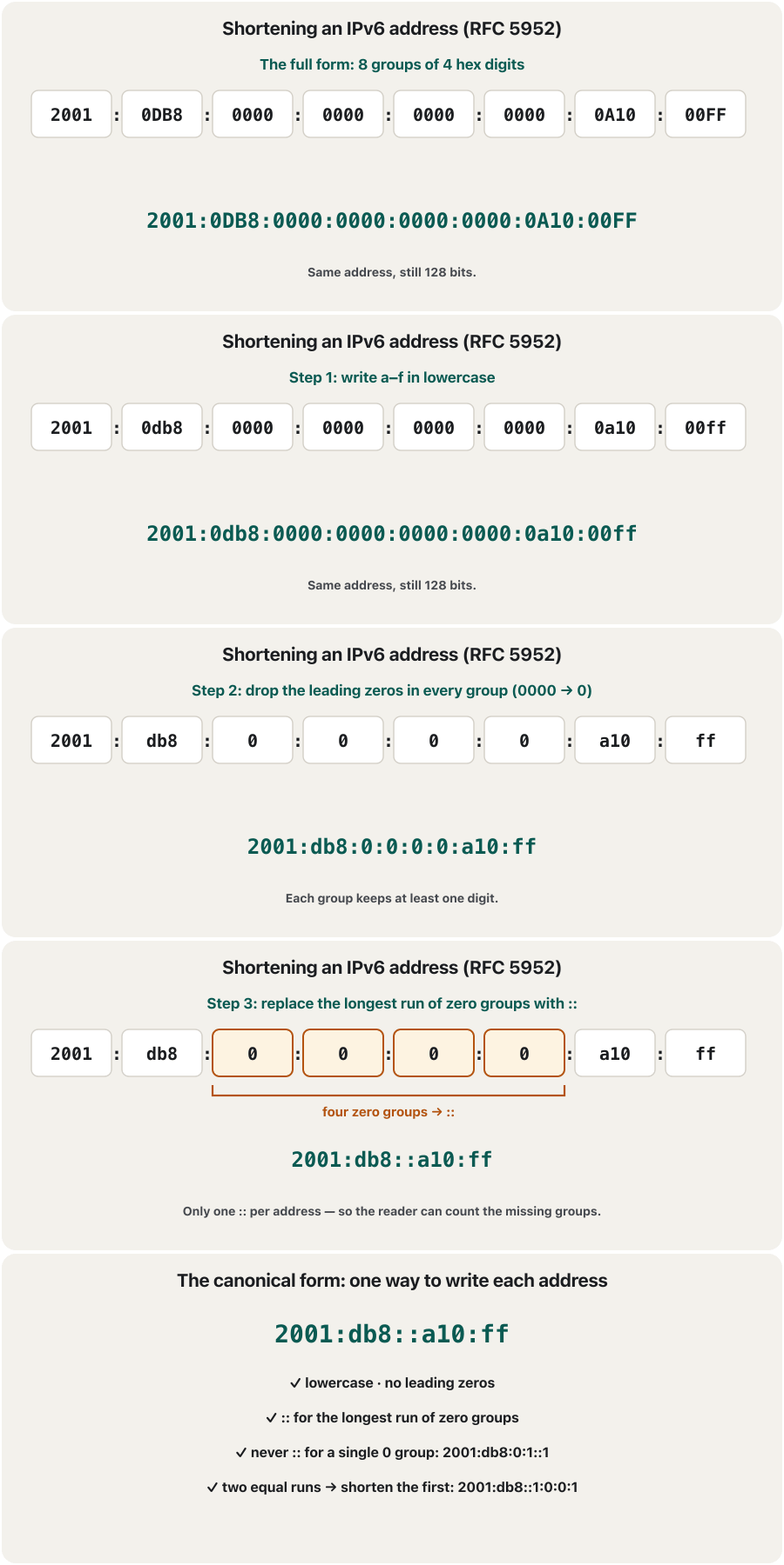
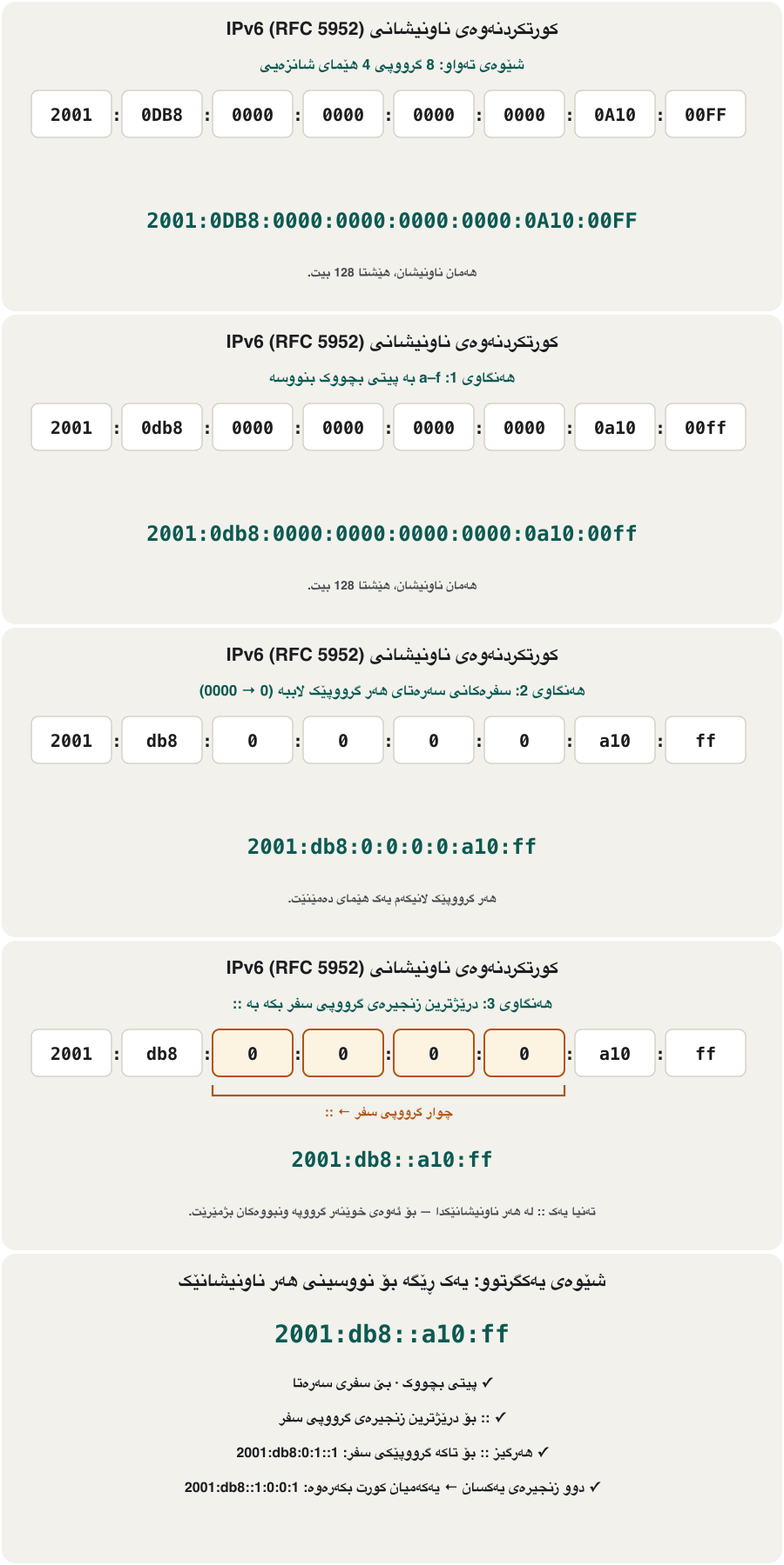
:: تەنیا جارێک — بۆ درێژترین زنجیرەی سفر.CêITShortening: two rules and one canonical formکورتکردنەوە: دوو یاسا و یەک شێوەی یەکگرتوو
Expanding a short addressدرێژکردنەوەی ناونیشانێکی کورت
To expand, count the groups you can see; :: stands for the missing ones. 2001:db8:a::1 shows 4 groups, so :: hides 8 − 4 = 4 zero groups: 2001:0db8:000a:0000:0000:0000:0000:0001. This is why only one :: is allowed — with two, nobody could tell how many zeros each one hides.
بۆ درێژکردنەوە، ئەو گرووپانە بژمێرە کە دەیانبینیت؛ :: جێگەی ونبووەکان دەگرێتەوە. 2001:db8:a::1 چوار گرووپ پیشان دەدات، بۆیە :: گرووپی سفر دەشارێتەوە: 2001:0db8:000a:0000:0000:0000:0000:0001. هەر بۆیە تەنیا یەک :: ڕێگەپێدراوە — بە دووان، کەس نازانێت هەریەکەیان چەند سفر دەشارێتەوە.
In a web address an IPv6 address goes in square brackets, because its colons would mix with the port: http://[2001:db8::1]:8080/ (RFC 5952 §6).
لە ناونیشانی وێبدا ناونیشانی دەخرێتە ناو کەوانەی چوارگۆشەوە، چونکە دووخاڵەکانی لەگەڵ تێکەڵ دەبن: http://[2001:db8::1]:8080/ (RFC 5952 §6).
(a) Expand fe80::1c2b:3a4d:5e6f:7a8b and ff02::1. (b) Write the canonical form of 2001:0db8:0000:0000:0001:0000:0000:0001 and of FD3C:91E2:7B40:0010:0000:0000:0000:0001.
(a) fe80::1c2b:3a4d:5e6f:7a8b و ff02::1 درێژ بکەرەوە. (b) شێوەی یەکگرتووی 2001:0db8:0000:0000:0001:0000:0000:0001 و FD3C:91E2:7B40:0010:0000:0000:0000:0001 بنووسە.
Show answerوەڵامەکە پیشان بدە
- (a) fe80:0000:0000:0000:1c2b:3a4d:5e6f:7a8b and ff02:0000:0000:0000:0000:0000:0000:0001.
- (b) 2001:db8::1:0:0:1 — two runs of two zero groups, so the first one is shortened — and fd3c:91e2:7b40:10::1.
- (a)
fe80:0000:0000:0000:1c2b:3a4d:5e6f:7a8bوff02:0000:0000:0000:0000:0000:0000:0001. - (b)
2001:db8::1:0:0:1— دوو زنجیرەی دوو گرووپی سفر، بۆیە یەکەمیان کورت دەکرێتەوە — وfd3c:91e2:7b40:10::1.
Prefix and interface IDپێشگر و ناسێنەری نێوبەستە
IPv6 is classless, like CIDR: an address carries a prefix length, 2001:db8:4b2a:10::25/64. On a LAN the first 64 bits are the network prefix — a global routing prefix from the ISP plus a subnet ID the company chooses — and the last 64 bits are the interface ID of one device.
بێپۆلە، وەک : ناونیشانێک هەڵدەگرێت، 2001:db8:4b2a:10::25/64. لەسەر یەکەم 64 پێشگری — پێشگری گشتی لە لەگەڵ ژمارەی کە کۆمپانیاکە هەڵیدەبژێرێت — و دوایین 64 ـی یەک ئامێرە.
Typical sizes: IANA gives each RIR a /12; an RIR gives an ISP a /32 or more; ISPs give a company a /48 and a home a /56 (RIPE-690); every LAN is a /64. So a /48 holds 65,536 LANs and a /56 holds 256. Keep LANs at /64: SLAAC builds the 64-bit interface ID itself (IPv6 in practice).
قەبارە باوەکان: بە هەر /12 دەدات؛ بە /32 یان زیاتر دەدات؛ بە کۆمپانیایەک /48 و بە ماڵێک /56 دەدەن (RIPE-690)؛ هەر /64ـە. بۆیە /48 65,536 دەگرێت و /56 256. بە /64 بهێڵەرەوە: خۆی 64 دروست دەکات (IPv6 لە کرداردا).
Address types at a glanceجۆرەکانی ناونیشان بە یەک سەیرکردن
The first bits tell the type of an IPv6 address (RFC 4291). An interface normally has several IPv6 addresses at once — always a link-local one, usually one or more global ones. There is no broadcast: multicast does that job.
سەرەتا جۆری ناونیشانێکی دیاری دەکەن (RFC 4291). بە ئاسایی لە یەک کاتدا چەندین ناونیشانی هەیە — هەمیشە ، زۆرجار یەک یان چەند ناونیشانێکی گشتی. نییە: ئەو کارە دەکات.
Two special addresses: ::1 is the loopback — 'this computer' — like 127.0.0.1, but just one address instead of a /8. :: (all zeros) is the unspecified address: 'no address yet'. A host uses it as the source while it checks that its new address is unique (duplicate address detection).
دوو ناونیشانی تایبەت: ::1 — «ئەم » — وەک 127.0.0.1، بەڵام تەنیا یەک ناونیشانە نەک /8ـێک. :: (هەمووی سفر) ناونیشانی دیارینەکراوە: «هێشتا ناونیشانی نییە». وەک سەرچاوە بەکاری دەهێنێت کاتێک دڵنیا دەبێتەوە کە ناونیشانە نوێیەکەی بێوێنەیە (دۆزینەوەی ناونیشانی دووپاتە).
Address types at a glanceجۆرەکانی ناونیشان بە یەک سەیرکردن
Global unicast: the public addressesناونیشانی تاکپەخشی گشتی: ناونیشانە گشتییەکان
Global unicast addresses (2000::/3, today starting with 2 or 3) are unique on the whole Internet and routed everywhere — IPv6's public addresses. IANA hands blocks to the RIRs: RIPE NCC, the registry for Iraq, received 2a00::/12 in 2006 and 2a10::/12 in 2019, so many addresses from Kurdistan's ISPs start with 2a0 or 2a1. They need no NAT: every device can have its own public address.
(2000::/3، ئەمڕۆ بە 2 یان 3 دەست پێ دەکەن) لە هەموو بێوێنەن و لە هەموو شوێنێک دەگوازرێنەوە — ناونیشانە گشتییەکانی . بلۆکەکان دەداتە : RIPE NCC، تۆماری عێراق، لە 2006دا 2a00::/12 و لە 2019دا 2a10::/12ـی وەرگرت، بۆیە زۆرێک لە ناونیشانەکانی کوردستان بە 2a0 یان 2a1 دەست پێ دەکەن. پێویستیان بە نییە: هەموو ئامێرێک دەتوانێت ناونیشانی گشتیی خۆی هەبێت.
Address types at a glanceجۆرەکانی ناونیشان بە یەک سەیرکردن
Link-local: every interface has oneناونیشانی بەستەری ناوخۆیی: هەموو نێوبەستەیەک یەکێکی هەیە
Every IPv6 interface makes a link-local address for itself, fe80::/10 (in practice fe80::/64 plus an interface ID), before anything else. It works only on its own link — routers never forward it — and Neighbor Discovery and routing protocols talk with it. Unlike IPv4's 169.254.x.x, it does not mean that something failed.
هەموو پێش هەموو شتێک بۆ خۆی دروست دەکات، fe80::/10 (لە کرداردا fe80::/64 لەگەڵ ). تەنیا لەسەر بەستەری خۆی کار دەکات — هەرگیز نایپەڕێننەوە — و و پێی قسە دەکەن. بە پێچەوانەی 169.254.x.xـی ، واتای ئەوە نییە کە شتێک سەرنەکەوتووە.
Because every link uses the same fe80:: prefix, the router's fe80::1 can exist on every link, so a computer adds a zone index after %: fe80::1%12 means 'fe80::1 on interface 12'. The default gateway of an IPv6 host is usually such a link-local address; administrators often give a router a short one such as fe80::1 by hand (IPv6 on a router interface).
لەبەر ئەوەی هەموو بەستەرێک هەمان پێشگری fe80:: بەکار دەهێنێت، fe80::1ـی دەکرێت لەسەر هەموو بەستەرێک هەبێت، بۆیە دوای % ژمارەی ناوچە زیاد دەکات: fe80::1%12 واتە «fe80::1 لەسەر 12». زۆرجار ناونیشانێکی لەو جۆرەیە؛ بەڕێوەبەران زۆرجار ناونیشانێکی کورتی وەک fe80::1 بە دەست بۆ دادەنێن (IPv6 لەسەر نێوبەستەی ڕێدۆز).
fe80::1 لەسەر دوو بەستەر: %zone لە یەکیان جیا دەکاتەوە.CêITAddress types at a glanceجۆرەکانی ناونیشان بە یەک سەیرکردن
Unique local: IPv6 private addressesناونیشانی بێوێنەی ناوخۆیی: ناونیشانە تایبەتەکانی IPv6
Unique local addresses (fc00::/7; in practice fd00::/8) are IPv6's private addresses, like 10.0.0.0/8 or 192.168.0.0/16: used inside a site and never routed on the Internet. After fd comes a random 40-bit Global ID (RFC 4193), so two companies almost never choose the same prefix and can join their networks without renumbering.
(fc00::/7؛ لە کرداردا fd00::/8) ناونیشانە تایبەتەکانی ، وەک 10.0.0.0/8 یان 192.168.0.0/16: لە ناو شوێنێکدا بەکار دێن و هەرگیز لەسەر ناگوازرێنەوە. دوای fd ناسێنەرێکی گشتیی هەڕەمەکیی 40 دێت (RFC 4193)، بۆیە دوو کۆمپانیا بە دەگمەن هەمان پێشگر هەڵدەبژێرن و دەتوانن بەبێ گۆڕینی ناونیشان پێکەوە ببەستن.
fd + ناسێنەرێکی گشتیی هەڕەمەکی: تایبەت، بەڵام بە دەگمەن تێکهەڵدەچێت.CêITAddress types at a glanceجۆرەکانی ناونیشان بە یەک سەیرکردن
Multicast and anycast instead of broadcastفرەپەخش و هەرپەخش لە جیاتی پەخشکردن
Multicast (ff00::/8) sends one packet to a group: ff02::1 is 'all nodes on this link' — what a broadcast did in IPv4 — and ff02::2 is 'all routers'. Anycast gives one unicast address to several servers; routing delivers each packet to the nearest one. The DNS root servers answer this way from 2,048 server instances around the world (as of November 2026).
(ff00::/8) بۆ گرووپێک دەنێرێت: ff02::1 واتە «هەموو گرێکانی سەر ئەم بەستەرە» — ئەو کارەی لە دەیکرد — و ff02::2 واتە «هەموو ». یەک ناونیشانی دەدات بە چەند ؛ هەر دەگەیەنێتە نزیکترینیان. بەم شێوەیە لە 2,048 هاوشێوەوە لە سەرانسەری جیهاندا وەڵام دەدەنەوە (تا تشرینی دووەمی 2026).
Where the interface ID comes from: EUI-64ناسێنەری نێوبەستە لە کوێوە دێت: EUI-64
The 64-bit interface ID can be made from the 48-bit MAC address with the modified EUI-64 method (RFC 4291, appendix A): split the MAC in the middle, insert FF-FE, and flip the 7th bit of the first byte — the universal/local bit you met in MAC addresses.
64 دەکرێت لە 48 بە ڕێگەی دەستکاریکراو دروست بکرێت (RFC 4291، پاشکۆی A): لە ناوەڕاستەوە دابەش بکە، FF-FE بخە ناوەڕاستەوە و حەوتەمی یەکەم پێچەوانە بکەرەوە — گشتی/ناوخۆیی کە لە ناونیشانەکانی MAC ناسیت.
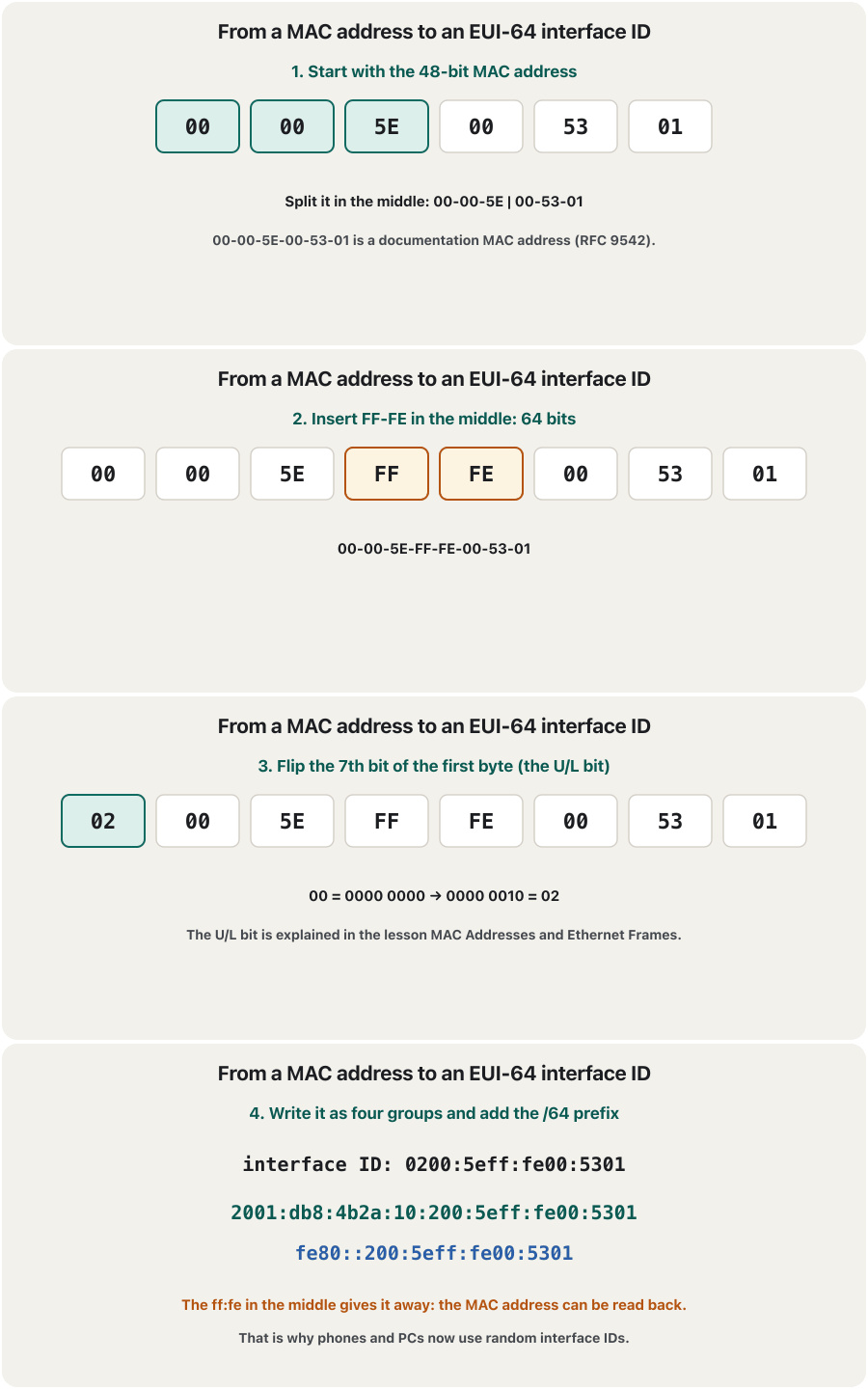
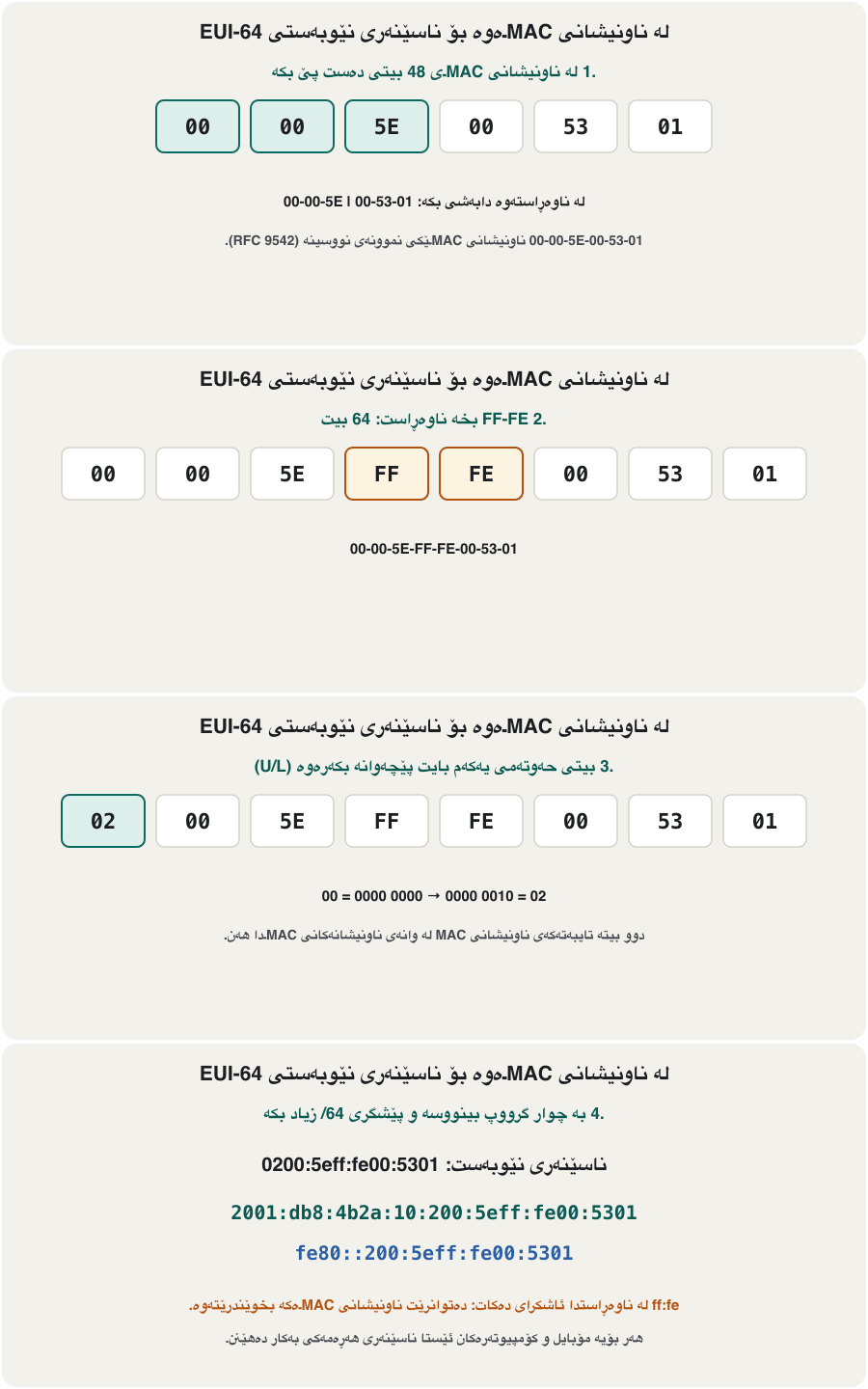
FF-FE ← پێچەوانەکردنی U/L ← .CêITPrivacy: random interface IDsتایبەتێتی: ناسێنەری نێوبەستەی هەڕەمەکی
An EUI-64 ID stays the same wherever the device goes, so websites and networks can recognise it again — at home, at university, in a café. RFC 8064 (2017) therefore says hosts should not embed the MAC address. Instead they use a stable random ID per network (RFC 7217) for incoming connections, plus temporary addresses with random IDs for outgoing connections, replaced about once a day (RFC 8981, 2021).
لە هەر شوێنێک ئامێرەکە بچێت وەک خۆی دەمێنێتەوە، بۆیە و دەتوانن دووپاتە بیناسنەوە — لە ماڵ، لە زانکۆ، لە چایخانە. بۆیە RFC 8064 (2017) دەڵێت نابێت بخەنە ناو ناونیشانەکەوە. لە جیاتی ئەوە بۆ پەیوەندییە هاتووەکان ناسێنەرێکی هەڕەمەکیی جێگیر بۆ هەر بەکار دەهێنن (RFC 7217)، لەگەڵ بە ناسێنەری هەڕەمەکی بۆ پەیوەندییە دەرچووەکان کە نزیکەی ڕۆژی جارێک دەگۆڕێن (RFC 8981، 2021).
You will see both kinds on a Windows PC as 'IPv6 Address' and 'Temporary IPv6 Address' (what ipconfig shows). Routers are different: Cisco IOS still builds an interface's link-local address with EUI-64 unless you set one by hand.
هەردوو جۆرەکە لەسەر Windows وەک IPv6 Address و Temporary IPv6 Address دەبینیت (ئەوەی ipconfig پیشانی دەدات). جیاوازن: Cisco IOS هێشتا بە دروست دەکات، مەگەر بە دەست یەکێک دابنێیت.
IPv4 and IPv6 side by sideIPv4 و IPv6 شان بە شانی یەک
| Featureبابەت | IPv4 | IPv6 |
|---|---|---|
| Sizeقەبارە | 32 bits, about 4.3 billion32 ، نزیکەی 4.3 ملیار | 128 bits, about 3.4 × 10³⁸128 ، نزیکەی |
| Written asنووسین | dotted decimal: 192.0.2.10: 192.0.2.10 | hexadecimal groups: 2001:db8::10گرووپی : 2001:db8::10 |
| Network part | mask or prefix, any length یان ، هەر درێژییەک | prefix; /64 on every LANپێشگر؛ /64 لەسەر هەموو |
| Broadcast | yesبەڵێ | no — multicast ff02::1نەخێر — ff02::1 |
| Private addressesناونیشانی تایبەت | 10/8, 172.16/12, 192.168/16 + NAT10/8، 172.16/12، 192.168/16 + | fd00::/8, no NAT neededfd00::/8، پێویستی بە نییە |
| Link-local | 169.254/16, only when DHCP fails169.254/16، تەنیا کاتێک سەرنەکەوێت | fe80::/10, always presentfe80::/10، هەمیشە هەیە |
| Loopback | 127.0.0.0/8بلۆکی 127.0.0.0/8 | ::1 (one address)::1 (یەک ناونیشان) |
| Getting an addressوەرگرتنی ناونیشان | by hand or DHCPبە دەست یان | by hand, SLAAC or DHCPv6بە دەست، یان DHCPv6 |
| Finding MAC addressesدۆزینەوەی | ARP (broadcast) () | Neighbor Discovery (multicast) () |
| Documentation rangeبلۆکی نموونە | 192.0.2.0/24 and two more192.0.2.0/24 و دوانی تر | 2001:db8::/32 (and 3fff::/20)2001:db8::/32 (و 3fff::/20) |
How hosts get these addresses, how Neighbor Discovery replaces ARP and how both versions run side by side is the next lesson: IPv6 in Practice.
چۆن ئەم ناونیشانانە وەردەگرن، چۆن جێگەی دەگرێتەوە و هەردوو وەشان چۆن شان بە شانی یەک کار دەکەن، وانەی داهاتووە: IPv6 لە کرداردا.
Common mistakesهەڵە باوەکان
| Mistakeهەڵە | What is trueڕاستییەکە |
|---|---|
Using :: twice: 2001:db8::1::1.دووجار ::: 2001:db8::1::1. | Only one :: per address; otherwise the hidden groups cannot be counted.تەنیا یەک :: لە هەر ناونیشانێکدا؛ ئەگینا گرووپە شاراوەکان ناژمێردرێن. |
Dropping trailing zeros: 2001:db8:a00:: written as 2001:db8:a::.لابردنی سفری کۆتایی: 2001:db8:a00:: وەک 2001:db8:a::. | Only leading zeros may go; a00 and a are different groups.تەنیا سفری سەرەتا لادەبرێت؛ a00 و a دوو گرووپی جیاوازن. |
Writing :: for a single zero group.نووسینی :: بۆ تاکە گرووپێکی سفر. | The canonical form keeps it as 0: 2001:db8:0:1::1.شێوەی یەکگرتوو وەک 0 دەیهێڵێتەوە: 2001:db8:0:1::1. |
'An fe80 address means DHCP failed.'«ناونیشانی fe80 واتە سەرنەکەوت.» | Every IPv6 interface always has one; it is IPv4's 169.254.x.x that signals a failure.هەموو هەمیشە یەکێکی هەیە؛ ئەوە 169.254.x.xـی کە سەرنەکەوتن نیشان دەدات. |
| 'IPv6 has a broadcast address.'« هەیە.» | It has none; ff02::1 (all nodes) is used instead.هیچی نییە؛ ff02::1 (هەموو گرێکان) لە جیاتی ئەو بەکار دێت. |
Making a LAN smaller than /64. لە /64 بچووکتر کردن. | Keep /64 on every LAN: SLAAC needs a 64-bit interface ID./64 لەسەر هەموو بهێڵەرەوە: پێویستی بە 64 هەیە. |
| Using real addresses in documents and slides.بەکارهێنانی ناونیشانی ڕاستەقینە لە بەڵگەنامە و سلایددا. | Use 2001:db8::/32 (or 3fff::/20).2001:db8::/32 (یان 3fff::/20) بەکار بهێنە. |
Exercisesڕاهێنانەکان
Name the type of each address: 2001:db8:4b2a:10::25, fe80::200:5eff:fe00:5301, fd3c:91e2:7b40:10::1, ff02::2, ::1, ::, 3fff:c80::1.
جۆری هەر ناونیشانێک بڵێ: 2001:db8:4b2a:10::25، fe80::200:5eff:fe00:5301، fd3c:91e2:7b40:10::1، ff02::2، ::1، ::، 3fff:c80::1.
Show answerوەڵامەکە پیشان بدە
- 2001:db8:4b2a:10::25 — documentation (looks like global unicast).
- fe80::200:5eff:fe00:5301 — link-local, with an EUI-64 interface ID (ff:fe).
- fd3c:91e2:7b40:10::1 — unique local.
- ff02::2 — multicast, all routers on the link.
- ::1 — loopback; :: — unspecified.
- 3fff:c80::1 — documentation too: 3fff::/20 (RFC 9637), the newer example block, also inside 2000::/3.
2001:db8:4b2a:10::25— نموونەی نووسین (لە دەچێت).fe80::200:5eff:fe00:5301— ، بە (ff:fe).fd3c:91e2:7b40:10::1— .ff02::2— ، هەموو سەر بەستەرەکە.::1— ؛::— ناونیشانی دیارینەکراو.3fff:c80::1— ئەویش نموونەی نووسینە:3fff::/20(RFC 9637)، بلۆکە نوێیەکەی نموونە، ئەویش لە ناو2000::/3ـدایە.
A company receives 2001:db8:4b2a::/48. (a) How many /64 LANs can it make? (b) Write the prefix of LAN number 0x0010 and of LAN 0x00ff.
کۆمپانیایەک 2001:db8:4b2a::/48 وەردەگرێت. (a) چەند /64 دەتوانێت دروست بکات؟ (b) پێشگری ژمارە 0x0010 و 0x00ff بنووسە.
Show answerوەڵامەکە پیشان بدە
(a) 64 − 48 = 16 subnet bits: LANs. (b) 2001:db8:4b2a:10::/64 and 2001:db8:4b2a:ff::/64.
(a) : . (b) 2001:db8:4b2a:10::/64 و 2001:db8:4b2a:ff::/64.
Build the EUI-64 interface ID and the link-local address for the MAC address 00-00-5E-00-53-2A.
و بۆ 00-00-5E-00-53-2A دروست بکە.
Show answerوەڵامەکە پیشان بدە
Split: 00-00-5E | 00-53-2A → insert FF-FE → 00-00-5E-FF-FE-00-53-2A → flip the U/L bit: 02-00-5E-FF-FE-00-53-2A → interface ID 0200:5eff:fe00:532a → link-local fe80::200:5eff:fe00:532a.
دابەشکردن: 00-00-5E | 00-53-2A ← FF-FE دابنێ ← 00-00-5E-FF-FE-00-53-2A ← U/L پێچەوانە بکەرەوە: 02-00-5E-FF-FE-00-53-2A ← 0200:5eff:fe00:532a ← fe80::200:5eff:fe00:532a.
Why does a home router get a /56 and not just one /64?بۆچی ڕێدۆزی ماڵ /56 وەردەگرێت نەک تەنیا یەک /64؟
So the home can have several LANs (guest Wi-Fi, cameras, a lab) — 256 of them — each a full /64.
بۆ ئەوەی ماڵەکە چەند هەبێت ( میوان، کامێرا، تاقیگە) — 256 دانە — هەریەکە /64ـێکی تەواو.
Is 2001:DB8::1 a correct address?ئایا 2001:DB8::1 ناونیشانێکی دروستە؟
Yes — software accepts capitals — but the canonical form is lowercase: 2001:db8::1.
بەڵێ — پیتی گەورە وەردەگرێت — بەڵام شێوەی یەکگرتوو بە پیتی بچووکە: 2001:db8::1.
Summaryپوختە
- IPv6 addresses have 128 bits, written as eight groups of four hex digits; examples use 2001:db8::/32.
- Canonical form (RFC 5952): lowercase, no leading zeros, one :: for the longest zero run (the first if equal), never for a single group.
- On a LAN: a 64-bit prefix (global routing prefix + subnet ID) and a 64-bit interface ID; /48 for a company, /56 for a home.
- Types: global unicast 2000::/3, unique local fc00::/7, link-local fe80::/10, multicast ff00::/8, loopback ::1, unspecified ::; anycast; no broadcast.
- Interface IDs: EUI-64 from the MAC is history on hosts; random stable IDs and temporary addresses protect privacy.
- ناونیشانەکانی 128 و وەک هەشت گرووپی چوار هێمای دەنووسرێن؛ نموونەکان
2001:db8::/32بەکار دەهێنن. - شێوەی یەکگرتوو (RFC 5952): پیتی بچووک، بێ سفری سەرەتا، یەک
::بۆ درێژترین زنجیرەی سفر (یەکەمیان ئەگەر یەکسان بوون)، هەرگیز بۆ تاکە گرووپێک. - لەسەر : پێشگری 64 (پێشگری گشتی + ژمارەی ) و 64 ؛
/48بۆ کۆمپانیا،/56بۆ ماڵ. - جۆرەکان:
2000::/3،fc00::/7،fe80::/10،ff00::/8،::1، دیارینەکراو::؛ ؛ بێ . - : لە لەسەر مێژووە؛ ناسێنەری هەڕەمەکیی جێگیر و تایبەتێتی دەپارێزن.
Lesson complete!وانەکە تەواو بوو!
Well done. Review the key terms, then go on to the next lesson.دەستخۆش. سەیرێکی زاراوە سەرەکییەکان بکەرەوە، پاشان بڕۆ بۆ وانەی داهاتوو.
Key termsزاراوە سەرەکییەکان
IPv6 in Practice: SLAAC, Neighbour Discovery and Dual StackIPv6 لە کرداردا: SLAAC، دۆزینەوەی دراوسێ و ستاکی دووانە
Related lecturesوانە پەیوەندیدارەکان
- IPv6 in Practice: SLAAC, Neighbour Discovery and Dual StackIPv6 لە کرداردا: SLAAC، دۆزینەوەی دراوسێ و ستاکی دووانە
- The Network Layer and the IPv4 Packetچینی ڕایەڵە و پاکێتی IPv4
- MAC Addresses and Ethernet Framesناونیشانەکانی MAC و فرەیمەکانی Ethernet
- Address Classes, and Why CIDR Replaced Themپۆلەکانی ناونیشانی IP و بۆچی CIDR جێگەیانی گرتەوە
- NAT and PAT: Sharing Public Addressesوەرگێڕانی ناونیشانی ڕایەڵە و وەرگێڕانی ناونیشانی پۆرت: هاوبەشکردنی ناونیشانی گشتی
- Binary, Octal and Hex Shortcutsڕێگا کورتەکانی دووانی، هەشتی و شانزەیی
- Notation in Computing: mod, Bases, Big-O and Code Operatorsهێماکان لە کۆمپیوتەردا: mod، بنچینەکان، نیشانەی O-ی گەورە و کارپێکەرەکانی کۆد
- More Subnetting: Bigger Networks, Exam Questions and VLSMژێرڕایەڵەسازیی زیاتر: ڕایەڵە گەورەکان، پرسیاری تاقیکردنەوە و VLSM
References and further readingسەرچاوەکان و خوێندنەوەی زیاتر
- RFC 8200 (STD 86, July 2017): Internet Protocol, Version 6 (IPv6) Specification
- RFC 4291 (2006): IP Version 6 Addressing Architecture — text forms, prefixes, address types, no broadcast, anycast, modified EUI-64
- RFC 5952 (2010): A Recommendation for IPv6 Address Text Representation
- RFC 4193 (2005): Unique Local IPv6 Unicast Addresses
- RFC 9637 (2024): Expanding the IPv6 Documentation Space (3fff::/20); RFC 3849: 2001:db8::/32
- RFC 8064 (2017): Recommendation on Stable IPv6 Interface Identifiers
- RFC 8981 (2021): Temporary Address Extensions for Stateless Address Autoconfiguration in IPv6
- IANA IPv6 Special-Purpose Address Registry (last updated 2025-10-09)
- IANA IPv6 Global Unicast Address Assignments (RIPE NCC: 2a00::/12 in 2006, 2a10::/12 in 2019)
- RIPE-690 (2017): IPv6 prefix assignment for end-users — /48 for business, /56 for residential
- root-servers.org: the root server system — 2,048 instances of 13 identities run by 12 operators (read 8 November 2026)
This lecture is a first edition. The Kurdish text and terminology are waiting for review by Kurdish IT teachers.ئەم وانەیە چاپی یەکەمە. دەقە کوردییەکە و زاراوەکانی چاوەڕێی پێداچوونەوەی مامۆستایانی کوردی بواری IT ن.