Chapterبەش 4 · Lectureوانە 4.4
Collision Domains and Broadcast Domainsپاوانەکانی پێکدادان و پاوانەکانی پەخش
Two questions decide how a LAN behaves: whose frames can crash into mine, and who hears my broadcasts? A collision domain is the part of a network where two senders at once collide; a broadcast domain is every device that receives a broadcast, such as an ARP question or a DHCP Discover. Hubs and repeaters extend both; switches and bridges give every port its own collision domain but pass broadcasts on; routers stop broadcasts, so every router interface is its own broadcast domain; VLANs split one switch into several. With network segments, the history from hubs to switches and two counting exercises.
دوو پرسیار ڕەفتاری هەر دیاری دەکەن: کێ دەتوانن لەگەڵ هی مندا پێکدا بدەن؟ کێ گوێی لە دەبێت؟ ئەو بەشەی کە تێیدا دوو نێرەر لە یەک کاتدا پێکدا دەدەن؛ هەموو ئەو ئامێرانەن کە وەردەگرن، وەک پرسیاری یان Discoverـی . و هەردووکیان گەورە دەکەن؛ و خۆی دەدەنە هەر بەڵام تێدەپەڕێنن؛ ڕادەگرێت، بۆیە هەر خۆیەتی؛ یەک دەکات بە چەند . لەگەڵ ، مێژووی گواستنەوە لە بۆ و دوو ڕاهێنانی ژماردن.
What you will learnچی فێر دەبیت
- Explain what a collision domain and a broadcast domain are, and why collisions happen only on shared, half-duplex links.
- Describe broadcast messages — FF:FF:FF:FF:FF:FF and 255.255.255.255 — and name the protocols that need them.
- Say how hubs and repeaters, bridges and switches, routers and VLANs change the two domains.
- Count the collision domains and broadcast domains in a network diagram.
- ڕوونی بکەیتەوە و چین و بۆچی تەنیا لەسەر بەستەری هاوبەشی ڕوو دەدات.
- پەیامی وەسف بکەیت — FF:FF:FF:FF:FF:FF و 255.255.255.255 — و ئەو ناو ببەیت کە پێویستیان پێیەتی.
- بڵێیت و ، و ، هەروەها و چۆن ئەم دوو پاوانە دەگۆڕن.
- و لە بژمێریت.
Who hears whom? Two kinds of domainکێ گوێی لە کێ دەبێت؟ دوو جۆر پاوان
This lesson closes the devices chapter with two questions you can ask about any LAN. First: if two devices send at the same moment, do their signals crash? The part of the network where that can happen is a collision domain. Second: when one device sends a message to everyone, who receives it? That part is a broadcast domain. Hubs, switches and routers each change these areas in their own way (Repeaters and Hubs, Bridges and Switches, Modems and Routers).
ئەم وانەیە بەشی ئامێرەکان بە دوو پرسیار کۆتایی پێ دەهێنێت کە دەتوانیت لەسەر هەر بیکەیت. یەکەم: ئەگەر دوو ئامێر لە هەمان ساتدا بنێرن، پێکدا دەدەن؟ ئەو بەشەی کە ئەمەی تێدا ڕوو دەدات پێی دەگوترێت . دووەم: کاتێک ئامێرێک پەیامێک بۆ هەمووان دەنێرێت، کێ وەری دەگرێت؟ ئەو بەشەیان پێی دەگوترێت . ، و هەریەکەیان بە شێوەی خۆی ئەم ناوچانە دەگۆڕن (دووپاتەکەرەوەکان و هەبەکان، پردەکانی ڕایەڵە و سویچەکان، مۆدێمەکان و ڕێدۆزەکان).
Why domain? In English a domain is an area that belongs to someone. The Kurdish names use «پاوان», a protected, fenced-in area — a good picture: what happens inside a collision domain or a broadcast domain stays inside it.
بۆچی «پاوان»؟ domain لە ئینگلیزیدا ناوچەیەکە کە هی کەسێکە. لە کوردیدا «پاوان» واتە ناوچەیەکی پارێزراو و سنووردار — وێنەیەکی باشە: ئەوەی لە ناو یان ڕوو دەدات، لە ناو خۆیدا دەمێنێتەوە.
In one classroom, if two pupils speak at the same moment, nobody understands either of them: they must take turns. One classroom is like a collision domain. When the head teacher speaks through the loudspeaker, every classroom in the building hears it — but the school next door does not. The building is like a broadcast domain, and its outer wall is like a router.
لە پۆلێکدا، ئەگەر دوو قوتابی لە هەمان ساتدا قسە بکەن، کەس لە هیچیان تێناگات: دەبێت بە نۆرە قسە بکەن. یەک پۆل وەک وایە. کاتێک بەڕێوەبەری قوتابخانە لە بڵندگۆوە قسە دەکات، هەموو پۆلەکانی باڵەخانەکە گوێیان لێ دەبێت — بەڵام قوتابخانەی تەنیشت گوێی لێ نابێت. باڵەخانەکە وەک وایە و دیواری دەرەوەی وەک .
Where the analogy stops workingسنووری ئەم نموونەیە
In a modern switched network collisions have disappeared — every ‘pupil’ has a private line to the switch — while broadcasts are still sent on purpose, for example to find an address.
لە نوێی سویچداردا نەماوە — هەر ‘قوتابییەک’ هێڵی تایبەتی خۆی بۆ هەیە — بەڵام هێشتا بە ئەنقەست دەنێردرێت، بۆ نموونە بۆ دۆزینەوەی ناونیشانێک.
Collision domain: where frames can crashپاوانی پێکدادان: لە کوێ فرەیمەکان پێکدا دەدەن
A collision domain is the part of a network in which a collision can happen: two devices send at the same moment, their signals meet on the shared cable, and both frames are destroyed. Every device in the domain must notice every frame — even frames that are not for it — and wait until the cable is quiet. After a collision both senders stop and send again, at different times: the CSMA/CD rules of shared Ethernet (Ethernet: From 10Base-2 to 800 Gigabit).
ئەو بەشەی کە تێیدا ڕوو دەدات: دوو ئامێر لە هەمان ساتدا دەنێرن، لەسەر کێبڵە هاوبەشەکە بەیەک دەگەن و هەردوو لەناو دەچن. هەموو ئامێرێکی ناو ئەم پاوانە دەبێت ئاگای لە هەموو بێت — تەنانەت ئەوانەی بۆ ئەو نین — و چاوەڕێ بکات تا کێبڵەکە بێدەنگ دەبێت. دوای ، هەردوو نێرەر دەوەستن و لە دوو کاتی جیاوازدا دووپاتە دەنێرنەوە: یاساکانی هاوبەش (Ethernet: لە 10Base-2ـەوە بۆ 800 گیگابیت).
Collisions are possible only in half duplex, where a device either sends or receives over a cable it shares. That is why they happened on hubs and old coaxial cables, but not on the full-duplex ports of switches and routers. A modern switch port is full duplex: one wire pair for each direction and only two devices on the link. If PC A sends to PC B through a switch while B sends to A at the same moment, nothing collides — each direction has its own pair, and the switch keeps frames in its buffer until the outgoing port is free (full duplex).
تەنیا لە باری ڕوو دەدات، کە تێیدا ئامێر لەسەر کێبڵێکی هاوبەش یان دەنێرێت یان وەردەگرێت. بۆیە لەسەر و کۆن ڕوویان دەدا، بەڵام لەسەر و کە ڕوو نادەن. نوێ : بۆ هەر ئاڕاستەیەک جووتە وایەرێک و تەنیا دوو ئامێر لەسەر بەستەرەکە. ئەگەر PC A لە ڕێگەی بۆ PC B بنێرێت و هەر لەو ساتەدا B بۆ A بنێرێت، هیچ ڕوو نادات — هەر ئاڕاستەیەک جووتە وایەری خۆی هەیە و لە ڕادەگرێت تا دەرچوون بەتاڵ دەبێت (دوولایەنەی هاوکات).
Broadcast domain: who receives a message for everyoneپاوانی پەخش: کێ پەیامێک وەردەگرێت کە بۆ هەمووانە
A broadcast domain is the limited area of a network in which a broadcast can travel: all the devices that receive a frame sent to everyone. Put four computers on a hub, and they are one broadcast domain: whatever one of them broadcasts reaches the other three through the hub. Put them on a switch, and they are still one broadcast domain, because a switch sends broadcasts out of every port.
ئەو ناوچە سنووردارەی کە دەتوانێت تێیدا بگوازرێتەوە: هەموو ئەو ئامێرانەی وەردەگرن کە بۆ هەمووان نێردراوە. چوار بە ببەستە، دەبنە یەک : هەرچی یەکێکیان پەخشی بکات، لە ڕێگەی دەگاتە سێیەکەی تر. بیانبەستە بە ، هێشتا یەک ، چونکە لە هەموو خۆیەوە دەنێرێت.
Keep the two ideas apart. A collision domain is about an accident: two signals on one cable at once. A broadcast domain is about a purpose: a frame meant for everyone. A hub copies even unicast frames to every port (flooding), but that does not turn them into broadcasts; a broadcast is a frame whose destination address means ‘all devices’.
ئەم دوو بیرۆکەیە لە یەک جیا بکەرەوە. پەیوەندی بە ڕووداوێکی ناخۆشەوە هەیە: دوو لە یەک کاتدا لەسەر یەک کێبڵ. پەیوەندی بە مەبەستێکەوە هەیە: کە بۆ هەمووان دانراوە. تەنانەت بۆ هەموو کۆپی دەکات ()، بەڵام ئەمە نایانکات بە ؛ ئەو کە ناونیشانی مەبەستەکەی واتە ‘هەموو ئامێرەکان’.
Broadcast messages: FF:FF:FF:FF:FF:FF and 255.255.255.255پەیامی پەخشکردن: FF:FF:FF:FF:FF:FF و 255.255.255.255
A broadcast is one message sent to every device at once. In everyday life, think of a text message that a mobile operator sends to all of its subscribers at the same moment. In a LAN, a broadcast frame carries the destination MAC address FF:FF:FF:FF:FF:FF — six pairs of F, all 48 bits set to 1 — and every network card accepts it and passes it up. In IPv4, 255.255.255.255 (all 32 bits 1) is the limited broadcast: ‘everyone on this network’.
واتە ناردنی یەک پەیام بۆ هەموو ئامێرەکان بە یەکجار. لە ژیانی ڕۆژانەدا، بهێنە پێش چاوت کە کۆمپانیایەکی مۆبایل لە یەک ساتدا بۆ هەموو بەشداربووانی دەنێرێت. لە ، مەبەستی FF:FF:FF:FF:FF:FF هەڵدەگرێت — شەش جووتە F، هەموو 48 1ـن — و هەموو وەریدەگرێت و دەیداتە چینی سەرەوە. لە ، 255.255.255.255 (هەموو 32 1) سنووردارە: ‘هەمووان لەسەر ئەم ’.
Who needs broadcasts? A device that does not yet know whom to ask. ARP asks ‘Who has 192.168.1.1? Tell 192.168.1.10’ when a computer knows an IP address but not the MAC address that goes with it (ARP). A DHCP Discover comes from a computer that has no address yet: from 0.0.0.0 to 255.255.255.255, looking for any DHCP server (DHCP).
کێ پێویستی بە هەیە؟ ئامێرێک کە هێشتا نازانێت لە کێ بپرسێت. دەپرسێت ‘192.168.1.1 هی کێیە؟ بە 192.168.1.10 بڵێ’، کاتێک دەزانێت بەڵام ئەو نازانێت (ARP). پەیامی Discoverـی لە دێت کە هێشتا هیچ ناونیشانێکی نییە: لە 0.0.0.0ـەوە بۆ 255.255.255.255، بەدوای هەر DHCPـدا دەگەڕێت (DHCP).
Broadcast messages: FF:FF:FF:FF:FF:FF and 255.255.255.255پەیامی پەخشکردن: FF:FF:FF:FF:FF:FF و 255.255.255.255
Try it: ping a broadcast addressتاقیی بکەرەوە: پینگ بۆ ناسەپەخشێک
You can watch a broadcast in Packet Tracer. Build a LAN 192.168.0.0/24 with a few PCs on a switch, open one PC’s Command Prompt and ping the network’s broadcast address — for 192.168.0.0/24 it is 192.168.0.255 (the four key numbers):
دەتوانیت لە Packet Tracerـدا ببینیت. بە ناونیشانی 192.168.0.0/24 دروست بکە و چەند PCـیەک بە ببەستە؛ پاشان Command Promptـی یەکێکیان بکەرەوە و پینگ بۆ بکە — بۆ 192.168.0.0/24 بریتییە لە 192.168.0.255 (چوار ژمارە سەرەکییەکە):
C:\>ping 192.168.0.255In Simulation mode you will see one echo request leave the PC and the switch copy it out of every port; the other PCs answer one by one. Real networks are stricter: most computers ignore pings sent to a broadcast address (Linux, for example, does so by default), and routers do not forward broadcasts aimed at another network unless an administrator allows it (RFC 2644, 1999) — attackers once used them to multiply traffic in ‘smurf’ attacks.
لە باری Simulationـدا دەبینیت یەک echo request لە PCـەکە دەردەچێت و لە هەموو خۆیەوە کۆپی دەکات؛ PCـەکانی تر یەک لە دوای یەک وەڵام دەدەنەوە. ڕاستەقینە توندترن: زۆربەی گوێ بەو نادەن کە بۆ نێردراون (بۆ نموونە Linux بە شێوەی بنەڕەتی وا دەکات)؛ ئەو نانێرن کە ئاڕاستەی تر کراون، مەگەر بەڕێوەبەرێک ڕێگە بدات (RFC 2644، 1999) — جاران هێرشبەران بەکاریان دەهێنان بۆ چەند هێندە کردنی هاتوچۆ لە هێرشی ‘smurf’ـدا.
Network segmentsبڕەڕایەڵەکان
A network segment is a part of a network that a bridge, a switch or a router separates from the rest — a ‘cut piece’ of the network. A segment holds a group of devices — computers, servers, printers and other network devices — that share the same link.
بەشێکی کە ، یان لە باقی جیای دەکاتەوە — واتە بڕاو. هەر کۆمەڵێک ئامێری تێدایە — ، ، و ئامێرەکانی تری — کە هەمان بەستەر بەش دەکەن.
The word is used at two levels. Between bridge or switch ports, a segment is one collision domain — in old Ethernet, one stretch of coaxial cable or everything on one hub — and all the segments together are still one network. Between router interfaces, each segment is a separate IP network with its own network address, such as 192.168.10.0/24 and 192.168.20.0/24, and a separate broadcast domain (IPv4 Addresses in Depth).
ئەم وشەیە لە دوو ئاستدا بەکار دێت. لە نێوان یان ، هەر یەک — لە کۆندا یەک پارچە ، یان هەرچی لەسەر یەک — و هەموو پێکەوە هێشتا یەک . لە نێوان ، هەر IPـی جیایە بە خۆیەوە، وەک 192.168.10.0/24 و 192.168.20.0/24، هەروەها جیایە (ناونیشانەکانی IPv4 بە وردی).
Layer 1: hubs and repeaters share everythingچینی 1: هەب و دووپاتەکەرەوە هەموو شتێک هاوبەش دەکەن
Hubs and repeaters work at the physical layer: they copy bits and read no addresses (Repeaters and Hubs). So everything they join is one collision domain and also one broadcast domain: on a hub the two areas are exactly the same size. When one host sends while another host sends too, the signals collide; with many busy hosts, collisions pile up and almost nothing gets through. A hub can divide neither kind of domain — adding a hub or a repeater only makes both areas bigger.
و لە کار دەکەن: کۆپی دەکەن و هیچ ناونیشانێک ناخوێننەوە (دووپاتەکەرەوەکان و هەبەکان). بۆیە هەرچی ئەمانە پێکەوەی دەبەستن یەک و هەروەها یەک : لەسەر قەبارەی ئەم دوو پاوانە ڕێک وەک یەکە. کاتێک دەنێرێت و تریش لە هەمان کاتدا دەنێرێت، پێکدا دەدەن؛ کاتێک زۆر و چالاک بن، کەڵەکە دەبن و نزیکەی هیچ شتێک ناگات. ناتوانێت هیچ جۆرێکی پاوان دابەش بکات — زیادکردنی یان تەنیا هەردوو ناوچەکە گەورەتر دەکات.
Layer 2: switches and bridges split collisions, not broadcastsچینی 2: سویچ و پردی ڕایەڵە پێکدادان دابەش دەکەن، نەک پەخشکردن
A switch or a bridge reads MAC addresses and gives every port its own collision domain — this is called microsegmentation. A frame sent to one port causes no collision on the others. Every port of a switch or a bridge is a separate collision domain; the ports of a hub never are — they all share one.
یان دەخوێنێتەوە و هەر خۆی پێ دەدات — پێی دەگوترێت microsegmentation، واتە دابەشکردنی ورد. کە بۆ بنێردرێت، لەسەر ئەوانی تر هیچ دروست ناکات. هەر یان جیایە؛ بەڵام هەرگیز وا نین — هەموویان یەک پاوان بەش دەکەن.
The broadcast domain does not shrink, though. A broadcast that reaches a switch is sent out of all its other ports, just as on a hub, because all the ports are in one broadcast domain — unless the switch is divided into VLANs. So four PCs on one switch make four collision domains and one broadcast domain.
بەڵام بچووک نابێتەوە. کە دەگاتە لە هەموو ترییەوە دەنێردرێت — هەر وەک لەسەر — چونکە هەموو لە یەک ، مەگەر بە دابەش کرابێت. کەواتە چوار لەسەر یەک دەبنە چوار و یەک .
Layer 3: routers stop broadcastsچینی 3: ڕێدۆز پەخشکردن ڕادەگرێت
A router separates not only collision domains but also broadcast domains. It joins two or more different networks, and it never forwards a broadcast from one network into another: the broadcast domain ends at the router. So every router interface is its own broadcast domain — and, like a switch port, its own collision domain.
نەک تەنیا جیا دەکاتەوە، بەڵکو جیا دەکاتەوە. دوو جیاواز یان زیاتر پێکەوە دەبەستێت و هەرگیز لە بۆ تر نانێرێت: لە کۆتایی دێت. بۆیە هەر خۆیەتی — هەروەها، وەک ، خۆیشیەتی.
The figure shows a router with two switches behind it. Each link is a collision domain — six in all — and each side of the router is a broadcast domain: two. This is why routers are added as a network grows: smaller broadcast domains mean less traffic that every device must read, and a clear border between groups of devices. Cutting one network into smaller IP networks like this is subnetting (What subnets give you).
وێنەکە نیشان دەدات کە دوو لە پشتە. هەر بەستەرێک — بە گشتی شەش — و هەر لایەکی : دوو. بۆیە کاتێک گەورە دەبێت زیاد دەکرێت: بچووکتر واتە هاتوچۆی کەمتر کە هەموو ئامێرێک دەبێت بیخوێنێتەوە، هەروەها سنوورێکی ڕوون لە نێوان گرووپەکانی ئامێردا. دابەشکردنی بەم شێوەیە بۆ چەند IPـی بچووکتر پێی دەگوترێت (ژێرڕایەڵەکان چیت پێ دەدەن).
Layer 3: routers stop broadcastsچینی 3: ڕێدۆز پەخشکردن ڕادەگرێت
Watch a broadcast stop at the routerسەیری وەستانی پەخشکردن لە ڕێدۆزدا بکە
Follow one ARP request. PC1 wants to send to its default gateway, 192.168.10.1, but does not know the gateway’s MAC address, so it broadcasts: ‘Who has 192.168.10.1?’. The switch floods the frame to every port. PC2 and PC3 read it and drop it — not their address. The router reads it, sees its own address and answers PC1 alone (unicast). The PCs behind the router’s other interface never see the question.
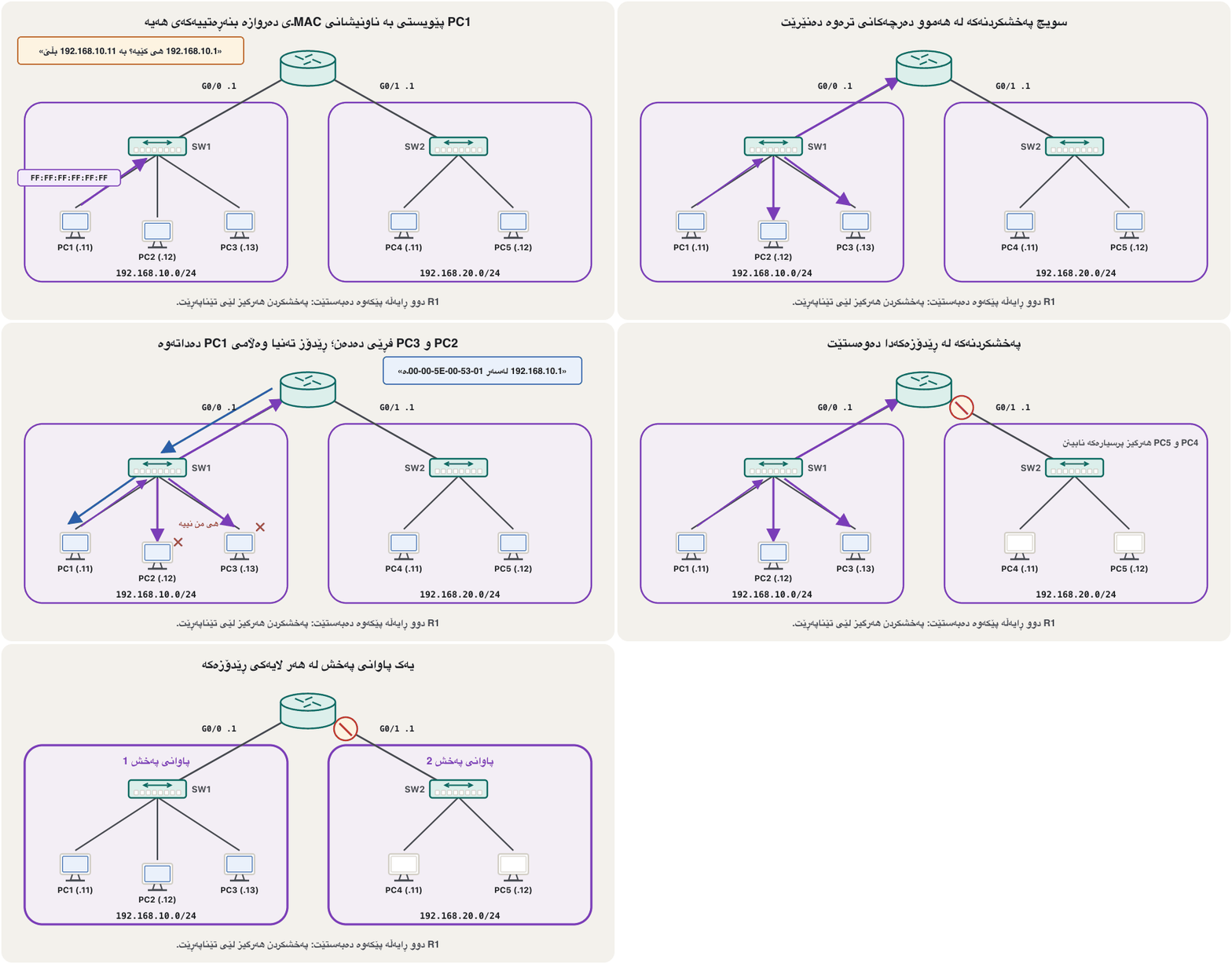
بەدوای داواکارییەکی بڕۆ. PC1 دەیەوێت بۆ (192.168.10.1) بنێرێت، بەڵام ئەو نازانێت، بۆیە پەخشی دەکات: ‘192.168.10.1 هی کێیە؟’. بۆ هەموو دەنێرێت. PC2 و PC3 دەیخوێننەوە و فڕێی دەدەن — ناونیشانی ئەوان نییە. دەیخوێنێتەوە، ناونیشانی خۆی دەبینێت و تەنیا وەڵامی PC1 دەداتەوە (). ئەو PCـانەی لە پشت تری هەرگیز پرسیارەکە نابینن.
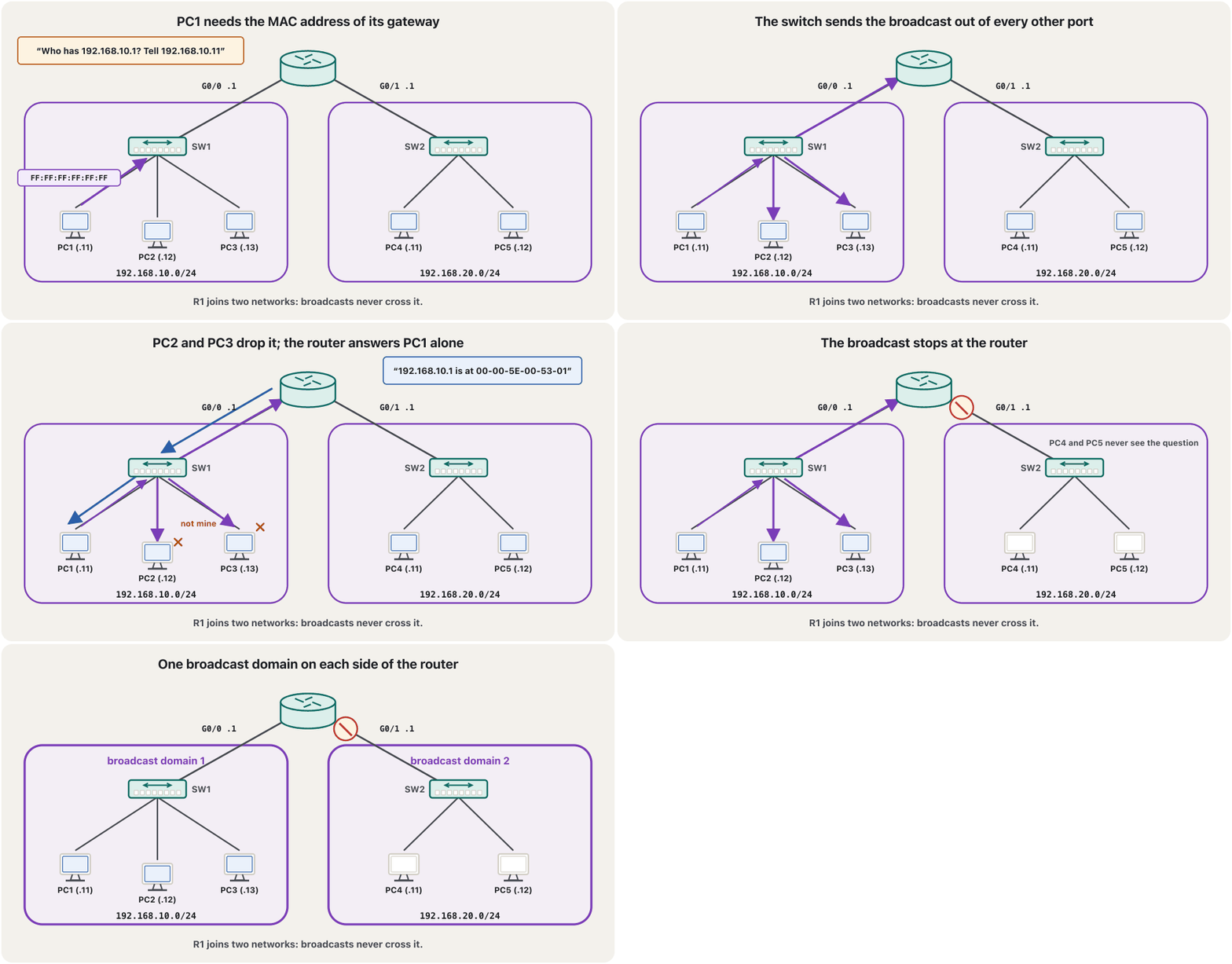
Try it in the CêIT network lab: open the example ‘Two networks joined by a router’ and ping from PC1 to PC3. The ‘What happened’ log shows the ARP question going to FF:FF:FF:FF:FF:FF on PC1’s side only; the router then asks its own question on the other side.
لە تاقیگەی ڕایەڵەی CêIT تاقیی بکەرەوە: نموونەی ‘دوو کە پێکیانەوە دەبەستێت’ بکەرەوە و لە PC1ـەوە بۆ PC3 بکە. بەشی ‘چی ڕوویدا’ نیشان دەدات کە پرسیاری تەنیا لە لای PC1 بۆ FF:FF:FF:FF:FF:FF دەچێت؛ پاشان لە لاکەی تر پرسیاری خۆی دەکات.
Devices by layer: the whole pictureئامێرەکان بەپێی چین: وێنە تەواوەکە
Put the devices on the OSI layers, and their effect on the domains follows from what they can read. A host — a computer or a server — uses all seven layers; its network card works at layers 1 and 2. The same table with more examples is on GeeksforGeeks: Collision Domain and Broadcast Domain.
ئامێرەکان لەسەر چینەکانی دابنێ؛ کاریگەرییان لەسەر پاوانەکان لەوەوە دێت کە دەتوانن چی بخوێننەوە. — یان — هەر حەوت چینەکە بەکار دەهێنێت؛ لە چینی 1 و 2دا کار دەکات. هەمان خشتە بە نموونەی زیاترەوە لە GeeksforGeeks هەیە (بە ئینگلیزی): Collision Domain and Broadcast Domain.
| Deviceئامێر | Layerچین | Readsدەخوێنێتەوە | Collision domains | Broadcast domains |
|---|---|---|---|---|
| Hub, repeater، | 1 physical1، | nothing — just bitsهیچ — تەنیا | one for everything plugged inیەک بۆ هەرچی پێوەی بەستراوە | oneیەک |
| Bridge, switch، | 2 data link2، | MAC addresses | one per portیەکێک بۆ هەر | one (VLANs can split it)یەک ( دەتوانێت دابەشی بکات) |
| Router | 3 network3، | IP addresses | one per interfaceیەکێک بۆ هەر | one per interfaceیەکێک بۆ هەر |
From hubs to switches: how collisions disappearedلە هەبەوە بۆ سویچ: پێکدادان چۆن نەما
Before switches and VLANs, Ethernet LANs were joined with hubs. A hub put every host on one Ethernet segment — electrically, one shared cable. Even so, the hub’s star was better than the older bus and ring designs, in which one broken cable or connector could stop the whole network: on a hub, a broken cable cut off only one computer.
پێش و ، بە پێکەوە دەبەسترانەوە. هەموو دەخستە سەر یەک — لە ڕووی کارەباوە، یەک کێبڵی هاوبەش. لەگەڵ ئەوەشدا، شێوە ئەستێرەییەکەی باشتر بوو لە دیزاینە کۆنەکانی و ، کە تێیاندا یەک کێبڵ یان سەرەپەیوەندیی پچڕاو دەیتوانی هەموو ڕابگرێت: لەسەر ، کێبڵێکی پچڕاو تەنیا یەک دادەبڕی.
One of the main reasons hubs were dropped was that all the devices on a hub were in the same collision domain: when two of them wanted to send at the same time, the data collided and had to be sent again. The switch came to solve this: each switch port has its own collision domain, instead of all the ports sharing one. Full duplex then removed collisions completely. Today collision domains matter mostly in exam questions and old equipment — broadcast domains still matter every day.
یەکێک لە هۆکارە سەرەکییەکانی وازهێنان لە ئەوە بوو کە هەموو ئامێرە بەستراوەکانی سەر لە ناو هەمان بوون: کاتێک دووانیان دەیانویست لە هەمان کاتدا بگوازنەوە، بەر یەکتر دەکەوت و دەبوو دووپاتە بنێردرێتەوە. هات تا ئەم کێشەیە چارەسەر بکات: هەر خۆی هەیە، نەک وەک کە هەموو یەک پاوانیان هەبێت. پاشان بە تەواوی نەهێشت. ئەمڕۆ زیاتر لە پرسیاری تاقیکردنەوە و ئامێری کۆندا گرنگن — بەڵام هێشتا هەموو ڕۆژێک گرنگن.
VLANs: one switch, several broadcast domainsVLAN: یەک سویچ، چەند پاوانی پەخشێک
A LAN built only from switches is one big broadcast domain: every ARP question and every DHCP Discover reaches every device. A loop between switches can even turn broadcasts into a broadcast storm that stops the whole LAN (What goes wrong in a loop). Managed switches can be divided into VLANs (virtual LANs): a VLAN makes one switch behave like several separate switches, and each VLAN is its own broadcast domain. A small unmanaged switch cannot do this, so all its hosts stay in one broadcast domain.
کە تەنیا بە دروست کرابێت، یەک گەورەیە: هەموو پرسیارێکی و هەموو Discoverـێکی دەگاتە هەموو ئامێرێک. ئەڵقەیەکیش لە نێوان دەتوانێت بکات بە کە هەموو ڕادەگرێت (لە ئەڵقەدا چی تێک دەچێت). دەتوانرێت بە دابەش بکرێن (virtual LAN): وا لە یەک دەکات وەک چەند جیا کار بکات و هەر خۆیەتی. بچووکی بەڕێوەنەبراو ئەمە ناتوانێت، بۆیە هەموو لە یەک دەمێننەوە.
Example: a school in Sulaymaniyah has one 48-port switch. The teachers’ computers are put in VLAN 10 and the students’ lab in VLAN 20. A broadcast from a student PC reaches only VLAN 20. Traffic between the VLANs must go through a router or a layer-3 switch, where it can be controlled. Configuring VLANs belongs to the Routing and Switching course: VLANs. One cable can carry several VLANs (Trunks and 802.1Q Tags), and one router port can route between them (Router-on-a-Stick).
نموونە: قوتابخانەیەک لە سلێمانی بە 48 هەیە. مامۆستایان دەخرێنە ناو VLAN 10 و تاقیگەی قوتابیان دەخرێتە ناو VLAN 20. لە PCـی قوتابییەکەوە تەنیا دەگاتە VLAN 20. هاتوچۆی نێوان دەبێت بە یان تێپەڕێت، کە لەوێ دەتوانرێت کۆنترۆڵ بکرێت. ڕێکخستنی بەشێکە لە کۆرسی و : VLAN. یەک کێبڵ دەتوانێت چەند هەڵبگرێت (ترەنکەکان و تاگەکانی 802.1Q) و یەک دەتوانێت لە نێوانیاندا بکات (ڕێدۆزی تاکقۆڵ).
Counting domains, step by stepژماردنی پاوانەکان، هەنگاو بە هەنگاو
Exam questions often show a diagram and ask how many collision domains and broadcast domains it has. Three steps work every time:
پرسیارەکانی تاقیکردنەوە زۆرجار نیشان دەدەن و دەپرسن چەند و چەند تێدایە. سێ هەنگاو هەمیشە کار دەکەن:
- Broadcast domainsپاوانەکانی پەخش
The routers cut the diagram into areas. Count the areas: each one is a broadcast domain — every router interface starts one, and a link between two routers is an area of its own. No router at all? Then everything is one broadcast domain, unless VLANs split it.
بۆ چەند ناوچەیەک دەبڕن. ناوچەکان بژمێرە: هەریەکەیان — هەر یەکێک دەست پێ دەکات و بەستەرێکی نێوان دوو ناوچەیەکی جیایە. هیچ نییە؟ کەواتە هەمووی یەک ، مەگەر دابەشی بکات.
- Collision domainsپاوانەکانی پێکدادان
Count every link that ends on a switch, bridge or router port: each is one collision domain. A hub and everything plugged into it count together as one.
هەر بەستەرێک بژمێرە کە لەسەر ، یان کۆتایی دێت: هەریەکەیان یەک . و هەرچی پێوەی بەستراوە پێکەوە یەک دەژمێردرێن.
- Checkپشکنین
Draw the bubbles on the diagram, then check that every device sits in exactly one broadcast domain and every link in exactly one collision domain.
بازنەکان لەسەر بکێشە، پاشان دڵنیا ببەوە کە هەموو ئامێرێک لە ناو تەنیا یەک و هەموو بەستەرێک لە ناو تەنیا یەک .
Worked example: a switch with two PCs is joined to a router, and the router’s other interface goes to a hub with three PCs. Broadcast domains: 2 — one on each side of the router. Collision domains: 4 — switch–PC1, switch–PC2 and switch–router make three; the hub side (the hub, its three PCs and its link to the router) is one. More counting practice with diagrams: Collision and broadcast domain (study-ccna.com).
نموونەی کارپێکراو: بە دوو بە بەستراوە و تری دەچێتە کە سێ پێوەیە. : 2 — یەکێک لە هەر لایەکی . : 4 — –PC1، –PC2 و – دەبنە سێ؛ لای (، سێ و بەستەرەکەی بۆ ) یەکێکە. ڕاهێنانی زیاتری ژماردن بە (بە ئینگلیزی): Collision and Broadcast Domain (study-ccna.com).
More practice: two routers, a hub and a serial linkڕاهێنانی زیاتر: دوو ڕێدۆز، هەبێک و بەستەرێکی زنجیرەیی
A bigger diagram. Router R1 has a hub with PC1 on one interface and a serial link to router R2 on the other. R2 has two switches, each with two PCs. Count the broadcast domains and the collision domains before you open the answer.
گەورەتر. R1 لەسەر هەیە کە PC1ـی پێوەیە و لەسەر تر بەستەرێکی زنجیرەیی بۆ R2. R2 دوو هەیە و هەریەکەیان دوو پێوەیە. پێش ئەوەی وەڵامەکە بکەیتەوە، و بژمێرە.
How many broadcast domains and how many collision domains does the diagram have?
چەند و چەند تێدایە؟
Show answerوەڵامەکە پیشان بدە
Broadcast domains: 4 — R1’s hub side; the serial link between R1 and R2 (a network of its own, with its own network address); and one behind each of R2’s two Ethernet interfaces.
: 4 — لای R1؛ بەستەرە زنجیرەییەکەی نێوان R1 و R2 ( سەربەخۆیە بە خۆیەوە)؛ و یەکێک لە پشت هەر یەکێک لە دوو Ethernetـی R2.
Collision domains: 8 — the hub side (R1’s interface, the hub and PC1) is 1; the serial link is counted as 1; each switch has three links (to R2 and to its two PCs): 3 + 3 = 6. Total 1 + 1 + 6 = 8.
: 8 — لای ( R1، و PC1) 1ـە؛ بەستەرە زنجیرەییەکە وەک 1 دەژمێردرێت؛ هەر سێ بەستەری هەیە (بۆ R2 و بۆ دوو ): 3 + 3 = 6. کۆی گشتی 1 + 1 + 6 = 8.
Common mistakesهەڵە باوەکان
| Mistakeهەڵە | What is trueڕاستییەکە |
|---|---|
| “Every port of a hub is its own collision domain.”«هەر خۆیەتی.» | All the ports of a hub share one collision domain; every port of a switch or bridge is its own.هەموو یەک بەش دەکەن؛ هەر یان هی خۆیەتی. |
| “A switch stops broadcasts.”« ڕادەگرێت.» | A switch sends broadcasts out of every port; only routers and VLAN borders stop them. لە هەموو خۆیەوە دەنێرێت؛ تەنیا و سنووری ڕایدەگرن. |
| “On a switch, A→B and B→A at the same moment collide.”«لەسەر ، ناردنی A بۆ B و B بۆ A لە یەک ساتدا پێکدا دەدەن.» | Not on full-duplex ports: each direction has its own pair, and the switch buffers frames.لەسەر نا: هەر ئاڕاستەیەک جووتی خۆی هەیە و لە ڕادەگرێت. |
| “A broadcast domain is where any data can travel.”« ئەو شوێنەیە کە هەر دەتوانێت تێیدا بڕوات.» | It is the set of devices that receive a broadcast. Unicast packets also cross routers.ئەو ئامێرانەن کە وەردەگرن. لە تێدەپەڕن. |
| “Flooding is the same as a broadcast.”« هەمان .» | Flooding is copying a frame to all ports (a hub, or an unknown address); a broadcast is addressed to everyone on purpose. کۆپیکردنی بۆ هەموو (، یان ناونیشانێکی نەناسراو)؛ بە ئەنقەست بۆ هەمووان دەنێردرێت. |
| “Every port that has an IP address also has a MAC address.”«هەر کە هەبێت، هەیە.» | Ethernet and Wi-Fi interfaces do; serial interfaces (HDLC, PPP) have none. Ethernet و بەڵێ؛ زنجیرەیی (، ) هیچیان نییە. |
| “A ping to the broadcast address always gets answers from every host.”« بۆ هەمیشە لە هەموو وەڵام وەردەگرێت.» | Packet Tracer answers; real hosts usually ignore it, and routers do not forward directed broadcasts by default.Packet Tracer وەڵام دەداتەوە؛ ڕاستەقینە زۆربەی جار گوێی پێ نادەن و بە شێوەی بنەڕەتی ئاڕاستەکراو نانێرن. |
| “More hubs or repeaters make the network faster.”« یان زیاتر خێراتر دەکات.» | They only make the collision domain and the broadcast domain bigger.تەنیا و گەورەتر دەکەن. |
Exercisesڕاهێنانەکان
A router has two interfaces in use. Interface 1 goes to a switch with five PCs; interface 2 goes to a hub with four PCs. How many broadcast domains and collision domains are there?
دوو بەکارهاتووی هەیە. 1 دەچێتە بە پێنج ؛ 2 دەچێتە بە چوار . چەند و چەند هەیە؟
Hintئاماژە
Count switch links one by one; a hub counts once.
بەستەرەکانی یەک یەک بژمێرە؛ یەک جار دەژمێردرێت.
Show answerوەڵامەکە پیشان بدە
Broadcast domains: 2, one per router interface. Collision domains: the switch side has five PC links + the router link = 6; the hub side is 1. Total 7.
: 2، یەکێک بۆ هەر . : لای پێنج بەستەری + بەستەری = 6؛ لای 1ـە. کۆی گشتی 7.
Explain: “A bridge forwards broadcast frames.”
ڕوونی بکەرەوە: « دەنێرێتە پێشەوە.»
Show answerوەڵامەکە پیشان بدە
True. A bridge — like a switch — sends a broadcast out of all its other ports, so both sides of a bridge are one broadcast domain. Only routers and VLAN borders stop broadcasts.
ڕاستە. — وەک — لە هەموو تری خۆیەوە دەنێرێت، بۆیە هەردوو لای یەک . تەنیا و سنووری ڕادەگرن.
A school network of 400 PCs on switches, with no VLANs and no routers inside, is slowed down by broadcast traffic. Suggest two ways to make its broadcast domains smaller.
قوتابخانەیەک بە 400 لەسەر ، بەبێ و بەبێ لە ناوەوە، بەهۆی هاتوچۆی خاو بووە. دوو ڕێگا پێشنیار بکە بۆ بچووککردنەوەی .
Show answerوەڵامەکە پیشان بدە
- Divide the switches into VLANs — for example teachers, students and offices, or one VLAN per floor — and join the VLANs with a router or a layer-3 switch.
- Or split the network into separate IP networks joined by a router: every router interface becomes a broadcast domain of its own.
- بە دابەش بکە — بۆ نموونە مامۆستایان، قوتابیان و ئۆفیسەکان، یان یەک بۆ هەر نهۆمێک — و بە یان پێکەوە ببەستە.
- یان بۆ چەند IPـی جیا دابەش بکە کە پێکیانەوە دەبەستێت: هەر دەبێتە خۆی.
In Packet Tracer, PC1 (in 192.168.0.0/24) pings 192.168.0.255. What kind of address is this, which devices does the request reach, and does it cross the router to other networks?
لە Packet Tracerـدا، PC1 (لە 192.168.0.0/24) بۆ 192.168.0.255 دەکات. ئەمە چ جۆرە ناونیشانێکە، داواکارییەکە دەگاتە کام ئامێرانە و ئایا لە تێدەپەڕێت بۆ تر؟
Show answerوەڵامەکە پیشان بدە
192.168.0.255 is the broadcast address of 192.168.0.0/24 (all host bits 1). The switch floods the request to every device of that LAN; the router does not forward it into other networks.
192.168.0.255 192.168.0.0/24ـە (هەموو 1ـن). داواکارییەکە بۆ هەموو ئامێرێکی ئەو دەنێرێت؛ ناینێرێتە ناو ترەوە.
What is the difference between a collision domain and a broadcast domain?جیاوازیی نێوان پاوانی پێکدادان و پاوانی پەخش چییە؟
A collision domain is where two frames sent at once can crash (shared, half duplex). A broadcast domain is the set of devices that receive a broadcast. Switches split the first; routers and VLANs split the second.
ئەو شوێنەیە کە دوو کە پێکەوە نێردراون دەتوانن پێکدا بدەن (هاوبەش، ). ئەو ئامێرانەن کە وەردەگرن. یەکەمیان دابەش دەکات؛ و دووەمیان.
Name two protocols that send broadcasts, and why they do.دوو پرۆتۆکۆڵ ناو ببە کە پەخشکردن دەنێرن و بڵێ بۆچی.
ARP, to find the MAC address that belongs to an IP address; DHCP Discover, because a new client has no address and does not know the server.
، بۆ دۆزینەوەی ئەو هی ؛ Discoverـی ، چونکە نوێ هیچ ناونیشانێکی نییە و ناناسێت.
What does each router interface give you, in domain terms?هەر نێوبەستەیەکی ڕێدۆز بە زمانی پاوانەکان چی دەدات؟
Its own broadcast domain and its own collision domain.
خۆی و خۆی.
Summaryپوختە
- A collision domain is where two frames sent at once can collide — only on shared, half-duplex links. A broadcast domain is every device that receives a broadcast.
- Broadcasts go to FF:FF:FF:FF:FF:FF (MAC) and 255.255.255.255 (IPv4); ARP and DHCP Discover use them.
- Hub, repeater (layer 1): one collision domain, one broadcast domain. Switch, bridge (layer 2): one collision domain per port, one broadcast domain. Router (layer 3): every interface its own broadcast domain.
- Switches and full duplex ended collisions; VLANs and routers keep broadcast domains small.
- A network segment is one collision domain between bridge/switch ports, or a separate network between router interfaces.
- To count: routers cut the diagram into broadcast areas; every switch, bridge or router link is a collision domain; a whole hub counts once.
- ئەو شوێنەیە کە دوو کە پێکەوە نێردراون دەتوانن پێکدا بدەن — تەنیا لەسەر بەستەری هاوبەشی . هەموو ئەو ئامێرانەن کە وەردەگرن.
- بۆ FF:FF:FF:FF:FF:FF (MAC) و 255.255.255.255 (IPv4) دەچێت؛ و Discoverـی بەکاری دەهێنن.
- ، (چینی 1): یەک ، یەک . ، (چینی 2): یەک بۆ هەر ، یەک . (چینی 3): هەر خۆی.
- و نەهێشت؛ و بچووک ڕادەگرن.
- یەک لە نێوان /، یان جیایە لە نێوان .
- بۆ ژماردن: بۆ ناوچەکانی دەبڕن؛ هەر بەستەرێکی ، یان ؛ بە تەواوی یەک جار دەژمێردرێت.
Lesson complete!وانەکە تەواو بوو!
Well done. Review the key terms, then go on to the next lesson.دەستخۆش. سەیرێکی زاراوە سەرەکییەکان بکەرەوە، پاشان بڕۆ بۆ وانەی داهاتوو.
Key termsزاراوە سەرەکییەکان
The Network Layer and the IPv4 Packetچینی ڕایەڵە و پاکێتی IPv4
Related lecturesوانە پەیوەندیدارەکان
- Ethernet: From 10Base-2 to 800 GigabitEthernet: لە 10Base-2ـەوە بۆ 800 گیگابیت
- MAC Addresses and Ethernet Framesناونیشانەکانی MAC و فرەیمەکانی Ethernet
- The Network Layer and the IPv4 Packetچینی ڕایەڵە و پاکێتی IPv4
- IPv4 Addresses in Depthناونیشانەکانی IPv4 بە وردی
- ARP: From IP Address to MAC AddressARP: لە ناونیشانی IP بۆ ناونیشانی MAC
- DHCP: Automatic Addresses, DORA and LeasesDHCP: ناونیشانی خۆکار، DORA و کرێکانی DHCP
- VLANs: Many Networks on One SwitchVLAN: چەند ڕایەڵەیەک لەسەر یەک سویچ
- OSI Layers 1–3: Physical, Data Link and Networkچینەکانی 1 تا 3ی OSI: چینی فیزیکی، چینی بەستەری دراوە و چینی ڕایەڵە
- Network Hardware: NICs, Switches and Routersڕەقەواڵەی ڕایەڵە: کارتی ڕایەڵە، سویچ و ڕێدۆز
References and further readingسەرچاوەکان و خوێندنەوەی زیاتر
- Wikipedia: Collision domain (shared medium and repeaters; switch ports; collisions eliminated on full-duplex links; Gigabit Ethernet has no hubs)
- Wikipedia: Broadcast domain (reach of a layer-2 broadcast; bounded by routers and layer-3 devices; VLANs divide it)
- Wikipedia: VLAN (a broadcast domain partitioned at layer 2; inter-VLAN traffic needs a router; IEEE 802.1Q 12-bit VLAN ID)
- RFC 2644 (BCP 34, 1999): Changing the Default for Directed Broadcasts in Routers
- IANA IPv4 Special-Purpose Address Registry (255.255.255.255 = limited broadcast)
- Linux kernel documentation: IP sysctl (icmp_echo_ignore_broadcasts, default 1)
- B. A. Forouzan, Data Communications and Networking with TCP/IP Protocol Suite, 6th ed., McGraw Hill (ch. 6, Connecting Devices and Virtual LANs)
This lecture is a first edition. The Kurdish text and terminology are waiting for review by Kurdish IT teachers.ئەم وانەیە چاپی یەکەمە. دەقە کوردییەکە و زاراوەکانی چاوەڕێی پێداچوونەوەی مامۆستایانی کوردی بواری IT ن.