Chapterبەش 3 · Lectureوانە 3.3
Fibre-Optic Cables: Single-Mode and Multimodeکێبڵەکانی فایبەر ئۆپتیک: تاکمۆد و فرەمۆد
Fibre beyond the basics: the layers and their sizes, why light in glass travels at about two thirds of c, the advantages and disadvantages of fibre, single-mode and multimode fibre with their wavelengths, OS and OM types and colours, why the two must never be mixed, LC, SC, ST and MPO connectors, SFP transceivers, a loss budget, fibre to the home, and safety.
فایبەر لە سەرووی بنەماکانەوە: چینەکان و قەبارەکانیان، بۆچی ڕووناکی لە شووشەدا بە نزیکەی دوو لەسەر سێی c دەڕوات، سوود و کەموکورتییەکانی فایبەر، و بە ، جۆرەکانی OS و OM و ڕەنگەکانیان، بۆچی نابێت هەرگیز تێکەڵ بکرێن، LC، SC، ST و MPO، مۆدیولەکانی ، بودجەی ، فایبەر تا ماڵ و سەلامەتی.
What you will learnچی فێر دەبیت
- Name the layers of a fibre cable and read sizes such as 9/125 and 50/125.
- Explain why light in a fibre travels at about two thirds of c, and why fibre is still the fastest medium.
- List the advantages and disadvantages of fibre.
- Compare single-mode and multimode fibre: core, light source, wavelength, reach, OS/OM types and colours — and explain why they must not be mixed.
- Recognise LC, SC, ST and MPO connectors and SFP transceivers, work out a simple loss budget, and describe fibre to the home.
- چینەکانی ناو ببەیت و قەبارەی وەک 9/125 و 50/125 بخوێنیتەوە.
- ڕوونی بکەیتەوە بۆچی ڕووناکی لە فایبەردا بە نزیکەی دوو لەسەر سێی c دەڕوات و بۆچی فایبەر هێشتا خێراترین .
- سوود و کەموکورتییەکانی فایبەر بژمێریت.
- و بەراورد بکەیت: ناوک، سەرچاوەی ڕووناکی، ، دووری، جۆرەکانی OS/OM و ڕەنگەکان — و ڕوونی بکەیتەوە بۆچی نابێت تێکەڵ بکرێن.
- LC، SC، ST و MPO و مۆدیولەکانی بناسیتەوە، بودجەیەکی سادەی حیساب بکەیت و فایبەر تا ماڵ وەسف بکەیت.
Data as light: a quick recapدراوە وەک ڕووناکی: بیرخستنەوەیەکی خێرا
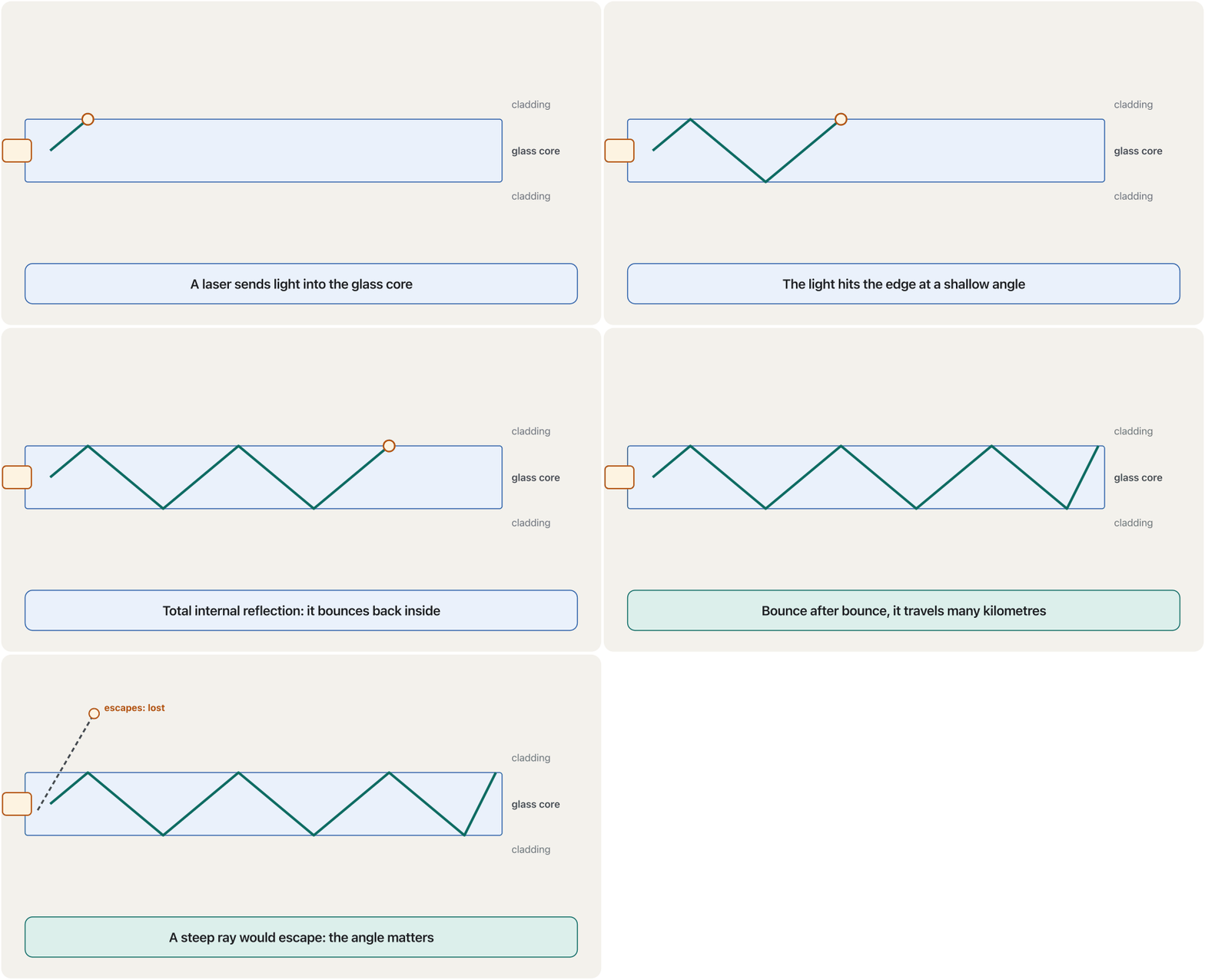
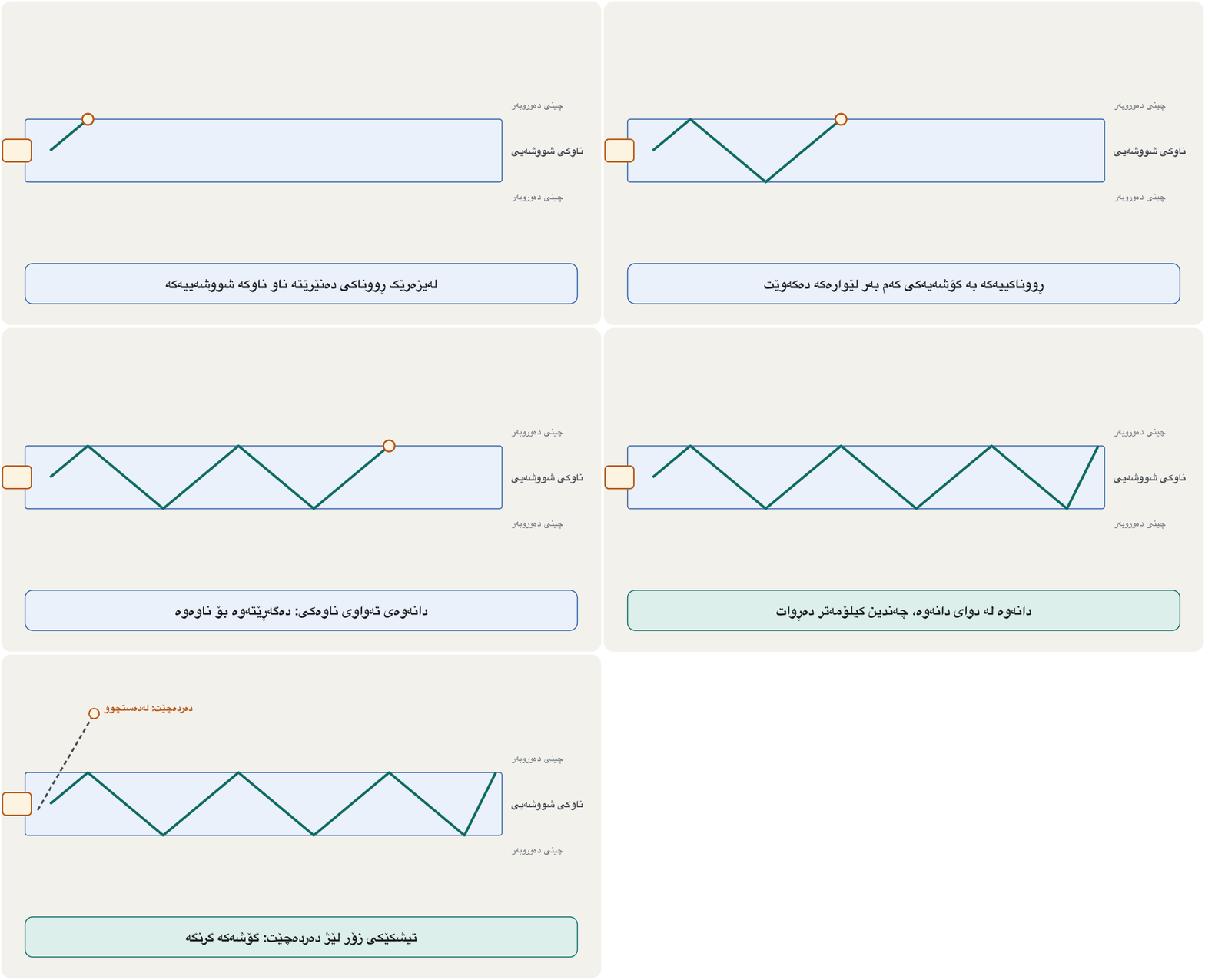
A fibre-optic cable carries data as pulses of light through a glass core thinner than a hair. The light stays inside because the cladding around the core has a lower refractive index: light that meets the boundary at a shallow angle is reflected back completely — total internal reflection. The basics are in Fibre-optic cable: data as light; this lesson looks at the real cables, their types, sizes, colours and connectors.
وەک لێدانی ڕووناکی بە ناو ناوکێکی شووشەییدا دەبات کە لە موو باریکترە. ڕووناکییەکە لە ناوەوە دەمێنێتەوە چونکە چینی دەوروبەری ناوکەکە کەمترە: ئەو ڕووناکییەی بە گۆشەیەکی کەم بەر سنوورەکە دەکەوێت بە تەواوی دەداتەوە — . بنەماکان لە کێبڵی فایبەر ئۆپتیک: دراوە وەک ڕووناکیدان؛ ئەم وانەیە سەیری کێبڵە ڕاستەقینەکان، جۆرەکانیان، قەبارە، ڕەنگ و دەکات.
Inside a fibre: the layers and their sizesناوەوەی فایبەرێک: چینەکان و قەبارەکانیان
From the centre out, a fibre cable has: the core, where the light travels; the cladding, glass with a lower refractive index that keeps the light in; a plastic coating (250 µm) against scratches and damp; a colour-coded buffer — a 900 µm tight buffer or a gel-filled loose tube — that cushions the fibre against crushing and small bends; strength members of aramid yarn that take the pull; and the outer jacket.
لە ناوەڕاستەوە بۆ دەرەوە، ئەمانەی هەیە: ناوک، کە ڕووناکی تێیدا دەڕوات؛ چینی دەوروبەر، شووشەیەک بە کەمتر کە ڕووناکی لە ناوەوە دەهێڵێتەوە؛ ڕووپۆشێکی پلاستیکی (250 µm) دژی خەت و شێ؛ بەرگێکی پارێزەری ڕەنگکراو — بەرگێکی توندی 900 µm یان بۆرییەکی شلی پڕ لە جێل — کە فایبەرەکە لە پەستان و چەمانەوەی بچووک دەپارێزێت؛ ڕیشاڵی پتەوکەر لە دەزووی ئارامید کە ڕاکێشان هەڵدەگرن؛ و بەرگی دەرەوە.
The sizes are written as core/cladding in micrometres (µm): 9/125 for single-mode, 50/125 and 62.5/125 for multimode. The cladding is 125 µm in every case — about the thickness of a thin hair — so connectors and tools fit both kinds.
قەبارەکان وەک ناوک/چینی دەوروبەر بە مایکرۆمەتر (µm) دەنووسرێن: 9/125 بۆ تاکمۆد، 50/125 و 62.5/125 بۆ فرەمۆد. چینی دەوروبەر لە هەموو حاڵەتێکدا 125 µmـە — نزیکەی ئەستووریی موویەکی باریک — بۆیە و ئامرازەکان بۆ هەردوو جۆرەکە دەگونجێن.
How fast is light in a fibre?ڕووناکی لە فایبەردا چەند خێرایە؟
Fibre is often called fast "because it uses the speed of light" — but glass slows light down. The refractive index n of a material tells how much: light in a vacuum travels at c ≈ 299 792 km/s, and in the glass of a fibre n ≈ 1.47, so light covers about 204 000 km/s — two thirds of *c*. Every kilometre of fibre adds about 5 µs of delay (propagation delay).
زۆرجار دەوترێت فایبەر خێرایە "چونکە خێرایی ڕووناکی بەکار دەهێنێت" — بەڵام شووشە ڕووناکی خاو دەکاتەوە. ماددەیەک، n، دەڵێت چەند: ڕووناکی لە بۆشاییدا بە c ≈ 299 792 km/s دەڕوات و لە شووشەی فایبەردا n ≈ 1.47ـە، بۆیە ڕووناکی نزیکەی 204 000 km/s دەبڕێت — دوو لەسەر سێی *c*. هەر کیلۆمەترێک فایبەر نزیکەی 5 µs زیاد دەکات (دواکەوتنی بڵاوبوونەوە).
So 10 km of fibre takes about 49 µs, and 150 km (about Erbil to Sulaymaniyah) about 0.73 ms.
کەواتە 10 km فایبەر نزیکەی 49 µs دەخایەنێت و 150 km (نزیکەی هەولێر تا سلێمانی) نزیکەی 0.73 ms.
Why fibre? Its advantagesبۆچی فایبەر؟ سوودەکانی
- Huge bandwidth: tens to hundreds of Gb/s on one fibre — the reason it gives the highest transmission speed of all media.
- Low attenuation: single-mode loses only about 0.3–0.4 dB per km, so links run for kilometres without a repeater.
- Immune to EMI: it carries light, so motors, power cables and lightning cannot disturb it.
- More secure: no signal leaks out, and tapping a fibre means bending or cutting it, which drops the light and can be noticed — it is the most secure wired medium, though not impossible to tap.
- Cheaper over long distances than copper: fewer repeaters and thin, light cables.
- No grounding needed: glass carries no electricity, so it is safe between buildings.
- Light in weight, and resistant to water and corrosion.
- زۆر گەورە: دەیان تا سەدان Gb/s لەسەر یەک فایبەر — هۆکاری ئەوەی لە نێوان هەموو خێراترین گواستنەوە دەدات.
- کەم: تاکمۆد بۆ هەر کیلۆمەترێک تەنیا نزیکەی 0.3 تا 0.4 dB لەدەست دەدات، بۆیە بەستەرەکان چەندین کیلۆمەتر بێ دەڕۆن.
- بێ کاریگەریی : ڕووناکی هەڵدەگرێت، بۆیە ماتۆڕ، کێبڵی کارەبا و هەورەبروسکە ناتوانن تێکی بدەن.
- ئاسایشی زیاتر: هیچ دزە ناکات و گوێگرتن لە فایبەرێک واتە چەماندنەوە یان بڕینی، کە ڕووناکییەکە کەم دەکاتەوە و دەکرێت هەستی پێ بکرێت — پارێزراوترین تەلدارە، هەرچەندە گوێگرتنی مەحاڵ نییە.
- بۆ دووریی درێژ لە مس هەرزانترە: کەمتر و کێبڵی باریک و سووک.
- پێویست نییە: شووشە کارەبا ناگوازێتەوە، بۆیە لە نێوان بیناکاندا سەلامەتە.
- سووکە و بەرگەی ئاو و ژەنگ دەگرێت.
Why fibre? Its advantagesبۆچی فایبەر؟ سوودەکانی
The other side: disadvantagesلایەنەکەی تر: کەموکورتییەکان
Fibre has costs too. The glass breaks or leaks light if it is bent too tightly — keep the bend radius at least 10 times the cable diameter, and 20 times while pulling. Joining and terminating fibres needs special tools and training. Connectors must be perfectly clean: a speck of dust on a 9 µm core blocks the light. The optics at each end cost more than copper ports for short links, and fibre cannot carry power to a device the way PoE does.
فایبەریش تێچووی هەیە. شووشەکە ئەگەر زۆر بە توندی بچەمێنرێتەوە دەشکێت یان ڕووناکی دزە دەکات — نیوەتیرەی چەمانەوە لانیکەم 10 هێندەی تیرەی کێبڵەکە بهێڵەرەوە و لە کاتی ڕاکێشاندا 20 هێندە. لکاندن و کۆتاییپێهێنانی فایبەر ئامرازی تایبەت و ڕاهێنانی پێویستە. دەبێت تەواو پاک بن: دەنکە تۆزێک لەسەر ناوکێکی 9 µm ڕێگە لە ڕووناکی دەگرێت. نێرەر-وەرگرەکانی هەر سەرێک بۆ بەستەری کورت لە مس گرانترن و فایبەر ناتوانێت کارەبا بگەیەنێتە ئامێرێک وەک دەیکات.
Why fibre? Its advantagesبۆچی فایبەر؟ سوودەکانی
Joining fibres: splicingپێکەوەلکاندنی فایبەر
Two fibres can be joined permanently by splicing. A fusion splicer lines the two cut ends up under a camera and melts them together with an electric arc; a good single-mode fusion splice loses less than 0.05 dB. A mechanical splice holds the ends together in a small sleeve with gel and loses more. Where a link must be opened again — at patch panels and on equipment — connectors are used instead; each mated pair loses up to 0.75 dB (TIA limit).
دوو فایبەر دەتوانرێت بە شێوەیەکی هەمیشەیی بە لکاندن پێکەوە ببەسترێن. ئامێری لکاندنی گەرمی (fusion splicer) دوو سەرە بڕاوەکە لە ژێر کامێرایەکدا ڕێک دەخات و بە کڵپەیەکی کارەبایی پێکەوەیان دەتوێنێتەوە؛ لکاندنێکی گەرمیی باشی تاکمۆد کەمتر لە 0.05 dB لەدەست دەدات. لکاندنی میکانیکی سەرەکان لە ناو بۆرییەکی بچووکی جێلداردا پێکەوە ڕادەگرێت و زیاتر لەدەست دەدات. لەو شوێنانەی بەستەرێک دەبێت دووپاتە بکرێتەوە — لە و لەسەر ئامێرەکان — لە جیاتی ئەوە بەکار دێن؛ هەر جووتێکی پێکەوەبەستراو تا 0.75 dB لەدەست دەدات (سنووری TIA).
Single-mode and multimode: one path or manyتاکمۆد و فرەمۆد: یەک ڕێگا یان زۆر
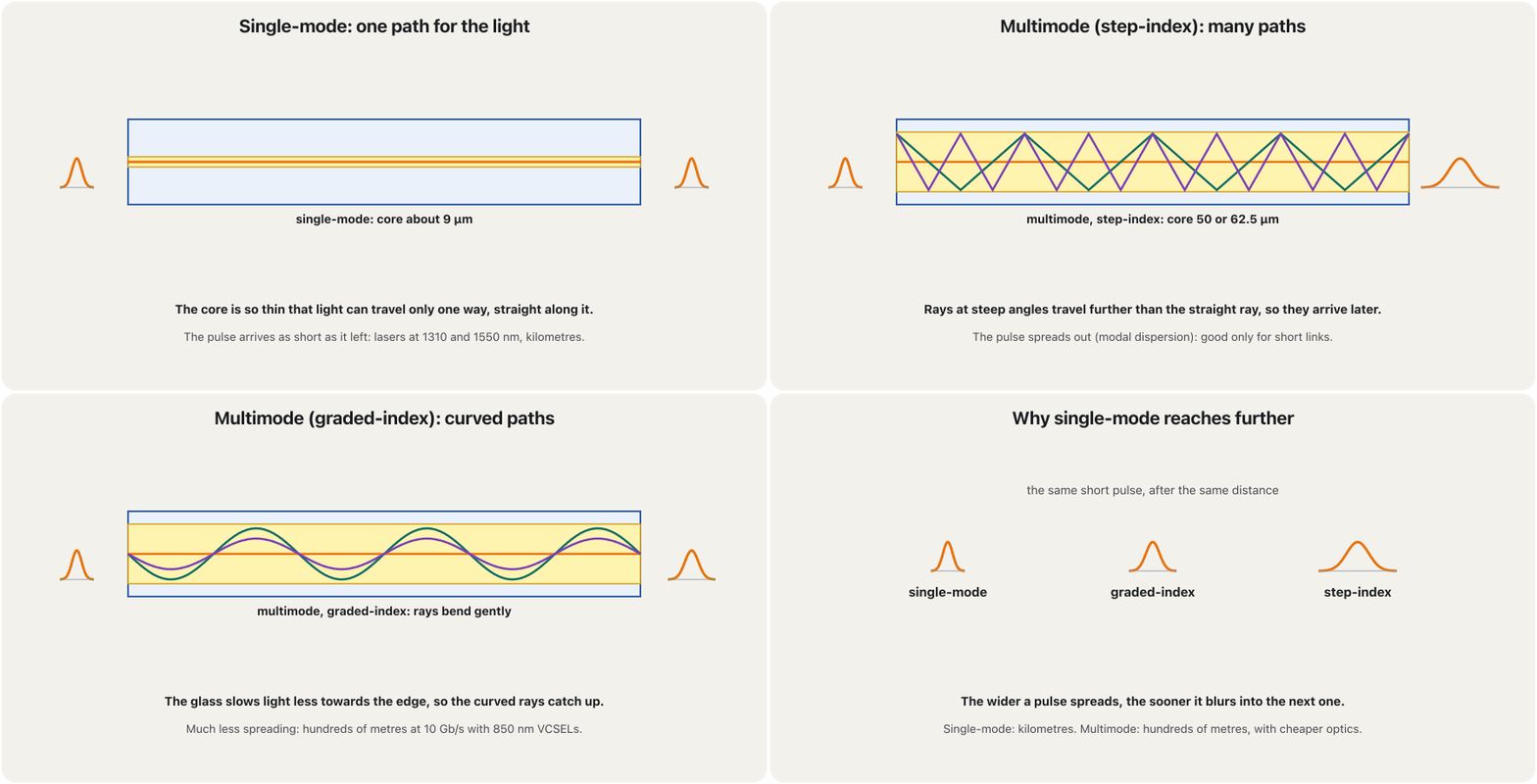
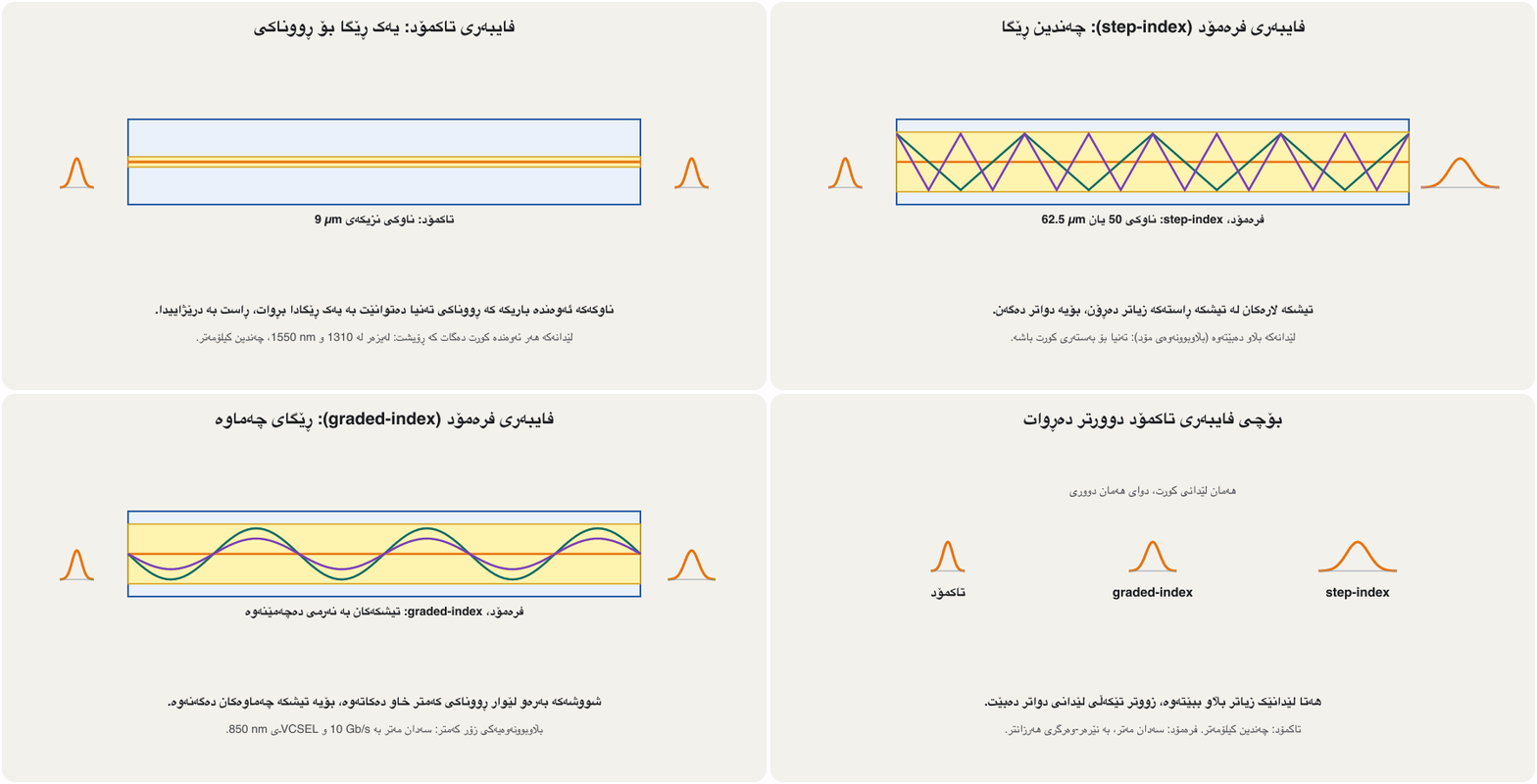
A mode is one path that light can take through the core. Single-mode fibre has a core so thin (about 9 µm) that only one path fits: the light goes straight along the fibre and a short pulse arrives short. Multimode fibre has a wider core (50 or 62.5 µm) in which light takes many paths at once; steep zig-zag paths are longer than the straight one, so their light arrives later and the pulse spreads out (modal dispersion). Graded-index multimode glass reduces the spreading, but it still limits multimode to short links.
مۆد یەک ڕێگایە کە ڕووناکی دەتوانێت بە ناو ناوکەکەدا بیگرێت. ناوکێکی ئەوەندە باریکی هەیە (نزیکەی 9 µm) کە تەنیا یەک ڕێگا جێی دەبێتەوە: ڕووناکییەکە ڕاست بە درێژایی فایبەرەکەدا دەڕوات و لێدانێکی کورت هەر کورت دەگات. ناوکێکی پانتری هەیە (50 یان 62.5 µm) کە ڕووناکی تێیدا لە یەک کاتدا چەندین ڕێگا دەگرێت؛ ڕێگا زیگزاگە لارەکان لە ڕێگا ڕاستەکە درێژترن، بۆیە ڕووناکییەکەیان دواتر دەگات و لێدانەکە بڵاو دەبێتەوە (بڵاوبوونەوەی مۆد). شووشەی graded-index بڵاوبوونەوەکە کەم دەکاتەوە، بەڵام هێشتا فرەمۆد بۆ بەستەری کورت سنووردار دەکات.
Single-mode fibre: lasers and long distancesفایبەری تاکمۆد: لەیزەر و دووریی درێژ
Single-mode fibre (9/125; strictly a core of 8–10 µm) is fed by lasers at 1310 nm or 1550 nm, invisible infrared light. Its loss is only about 0.4 dB/km at 1310 nm and 0.25 dB/km at 1550 nm, so it reaches far: 10 km for 10GBASE-LR, 40 km for 10GBASE-ER, and with optical amplifiers it crosses countries and oceans. It is the fibre of provider networks, links between cities, campus backbones, fibre to the home and the cables on the sea floor.
(9/125؛ بە وردی ناوکێکی 8 تا 10 µm) بە لە 1310 nm یان 1550 nm دەدرێت، ڕووناکیی نەبینراو. لە 1310 nmـدا تەنیا نزیکەی 0.4 dB/km و لە 1550 nmـدا 0.25 dB/kmـە، بۆیە دوور دەڕوات: 10 km بۆ 10GBASE-LR، 40 km بۆ 10GBASE-ER و بە بەهێزکەری ڕووناکی وڵاتان و زەریاکان دەبڕێت. فایبەری دابینکەران، بەستەری نێوان شارەکان، زانکۆکان، فایبەر تا ماڵ و کێبڵەکانی سەر بنی دەریاـیە.
TIA-568 names cabled single-mode fibre OS1 (indoor, tight-buffered) and OS2 (outdoor, loose tube, low water peak). The glass itself follows ITU-T recommendations such as G.652 (the standard single-mode fibre) and G.657 (bend-insensitive, for FTTH). Single-mode optics used to be expensive, but their prices keep falling, so many new short links are single-mode too. Its jacket is yellow.
TIA-568 ناوی کێبڵکراو دەنێت OS1 (ناوخۆ، بەرگی توند) و OS2 (دەرەوە، بۆریی شل، کەمئاو). خودی شووشەکە شوێن ڕاسپاردەکانی ITU-T دەکەوێت وەک G.652 ( ستاندارد) و G.657 (بەرگەگری چەمانەوە، بۆ FTTH). نێرەر-وەرگری تاکمۆد پێشتر گران بوو، بەڵام نرخەکەی بەردەوام دادەبەزێت، بۆیە زۆرێک لە بەستەرە کورتە نوێیەکانیش تاکمۆدن. بەرگەکەی زەردە.
Multimode fibre: OM1 to OM5فایبەری فرەمۆد: OM1 تا OM5
Multimode fibre has a 50 µm or 62.5 µm core. Old, slow LANs used cheap LEDs at 850 and 1300 nm; Gigabit and faster use small, cheap lasers called VCSELs at 850 nm. Because of modal dispersion, multimode reaches hundreds of metres, not kilometres: at 10 Gb/s about 300 m on OM3 and 400 m on OM4. That is enough inside buildings and data centres, where its cheaper optics save money.
ناوکێکی 50 µm یان 62.5 µmـی هەیە. کۆن و خاو هەرزانیان لە 850 و 1300 nmـدا بەکار دەهێنا؛ Gigabit و خێراتر لەیزەری بچووک و هەرزانی VCSEL لە 850 nmـدا بەکار دەهێنن. بەهۆی بڵاوبوونەوەی مۆدەوە، فرەمۆد سەدان مەتر دەڕوات، نەک کیلۆمەتر: بە 10 Gb/s نزیکەی 300 m لەسەر OM3 و 400 m لەسەر OM4. ئەمە بۆ ناو بینا و بەسە، کە نێرەر-وەرگرە هەرزانترەکانی پارە دەگەڕێننەوە.
| Typeجۆر | Coreناوک | Light sourceسەرچاوەی ڕووناکی | 10GBASE-SR reachدووریی 10GBASE-SR | Jacketبەرگ |
|---|---|---|---|---|
| OM1 | 62.5 µm | LED | 33 m | orangeپرتەقاڵی |
| OM2 | 50 µm | LED | 82 m | orangeپرتەقاڵی |
| OM3 | 50 µm | 850 nm VCSELVCSELـی 850 nm | 300 m | aquaشینی ئاوی |
| OM4 | 50 µm | 850 nm VCSELVCSELـی 850 nm | 400 m | aqua (some makers: violet)شینی ئاوی (هەندێک دروستکەر: مۆر) |
| OM5 | 50 µm | VCSELs at 850–953 nm (wideband)VCSEL لە 850 تا 953 nm (باندفراوان) | 400 m | lime greenسەوزی لیمۆیی |
Single-mode or multimode? Side by sideتاکمۆد یان فرەمۆد؟ لە تەنیشت یەکتر
| Single-modeتاکمۆد | Multimodeفرەمۆد | |
|---|---|---|
| Core / claddingناوک / چینی دەوروبەر | 9/125 µm | 50/125 · 62.5/125 µm |
| Light pathsڕێگاکانی ڕووناکی | oneیەک | many (modal dispersion)زۆر (بڵاوبوونەوەی مۆد) |
| Light sourceسەرچاوەی ڕووناکی | lasers, 1310 / 1550 nmلەیزەر، 1310 / 1550 nm | VCSEL lasers 850 nm (LEDs on old links)لەیزەری VCSELـی 850 nm (LED لە بەستەری کۆندا) |
| Lossلاوازبوون | about 0.4 / 0.25 dB/kmنزیکەی 0.4 / 0.25 dB/km | about 3 dB/km at 850 nmنزیکەی 3 dB/km لە 850 nmـدا |
| Reach at 10 Gb/sدووری بە 10 Gb/s | 10–40 km and more10 تا 40 km و زیاتر | 300–400 m300 تا 400 m |
| Costتێچوو | cable similar; optics dearerکێبڵ نزیکە؛ نێرەر-وەرگر گرانتر | cable similar; optics cheaperکێبڵ نزیکە؛ نێرەر-وەرگر هەرزانتر |
| Jacketبەرگ | yellowزەرد | orange, aqua, limeپرتەقاڵی، شینی ئاوی، سەوزی لیمۆیی |
| Typical useبەکارهێنانی ئاسایی | providers, between buildings and cities, FTTHدابینکەران، نێوان بینا و شارەکان، FTTH | inside buildings and data centresناو بینا و |
The cable itself costs about the same; the total system cost — mostly the transceivers — and the distance decide. For very short, cheap links, such as the TOSLINK audio cable of a TV, there is also plastic optical fibre (POF): a core about 1 mm wide, red LED light at 650 nm, and a reach of a few metres to tens of metres.
خودی کێبڵەکە نزیکەی هەمان نرخی هەیە؛ تێچووی گشتیی سیستەمەکە — زۆربەی نێرەر-وەرگرەکان — و دووری بڕیار دەدەن. بۆ بەستەری زۆر کورت و هەرزان، وەک کێبڵی دەنگی TOSLINKـی تیڤی، فایبەری ڕووناکیی پلاستیکی (POF)ـیش هەیە: ناوکێک بە پانیی نزیکەی 1 mm، ڕووناکیی سووری LED لە 650 nmـدا و دووریی چەند مەترێک تا دەیان مەتر.
Never mix the twoهەرگیز هەردووکیان تێکەڵ مەکە
A single-mode and a multimode fibre cannot simply be joined. Light from a 50 µm multimode core mostly misses a 9 µm single-mode core: about 20 dB is lost. Even 62.5 µm into 50 µm loses 3 dB or more. Transceivers are made for one type too: an SR module is for multimode at 850 nm, an LR module for single-mode at 1310 nm. Check the jacket colour and the print before you connect.
و ناتوانرێت بە ئاسانی پێکەوە ببەسترێن. ڕووناکیی ناوکێکی 50 µmـی فرەمۆد زۆربەی ناوکی 9 µmـی تاکمۆد ناپێکێت: نزیکەی 20 dB لەدەست دەچێت. تەنانەت لە 62.5 µmـەوە بۆ 50 µm ـ 3 dB یان زیاتر لەدەست دەچێت. نێرەر-وەرگرەکانیش بۆ یەک جۆر دروست دەکرێن: مۆدیولی SR بۆ فرەمۆدە لە 850 nmـدا، مۆدیولی LR بۆ تاکمۆدە لە 1310 nmـدا. پێش بەستنەوە ڕەنگی بەرگ و نووسینەکەی بپشکنە.
A decibel (dB) counts loss on a ratio scale: every 10 dB divides the power by ten. A 20 dB mistake leaves just 1 % of the light.
دێسیبێل (dB) بە پێوەری ڕێژە دەژمێرێت: هەر 10 dB هێز دابەش بە دە دەکات. هەڵەیەکی 20 dB تەنیا 1%ی ڕووناکییەکە دەهێڵێتەوە.
Fibre connectors: LC, SC, ST and MPOسەرەکانی کێبڵی فایبەر: LC، SC، ST و MPO
A fibre connector holds the fibre in a precise ceramic tube, the ferrule, so that two cores meet face to face. LC is small, with a latch and a 1.25 mm ferrule; a duplex LC pair is the usual plug of SFP modules. SC is square and push-pull with a 2.5 mm ferrule, common on fibre panels and FTTH equipment. ST is round with a twist-lock bayonet — the main multimode connector until about 2005. MPO holds 12 or 16 fibres in a row for 40 and 100 Gb/s links in data centres.
فایبەر فایبەرەکە لە ناو بۆرییەکی سیرامیکی وردی ناو فێرولدا ڕادەگرێت، بۆ ئەوەی دوو ناوکەکە ڕووبەڕوو بگەنە یەک. LC بچووکە، بە قولاپ و فێرولێکی 1.25 mm؛ جووتێکی LC سەرە ئاساییەکەی مۆدیولەکانی . SC چوارگۆشە و پاڵنان-ڕاکێشانە بە فێرولێکی 2.5 mm، باو لەسەر پانێڵی فایبەر و ئامێرەکانی FTTH. ST خڕە و بە سووڕاندن قفڵ دەبێت — تا نزیکەی 2005 سەری سەرەکیی فرەمۆد بوو. MPO ـ 12 یان 16 فایبەر لە یەک ڕیزدا هەڵدەگرێت بۆ بەستەری 40 و 100 Gb/s لە .
Colours help again: blue = single-mode with a flat (UPC) polish, green = single-mode with an angled (APC) end — never plug green into blue — and beige, black, aqua or lime = multimode. Keep the dust caps on and clean the end face before every connection.
ڕەنگ دیسان یارمەتی دەدات: شین = تاکمۆد بە سەری ڕێک (UPC)، سەوز = تاکمۆد بە سەری لار (APC) — هەرگیز سەوز مەخەرە ناو شینەوە — و قاوەیی کاڵ، ڕەش، شینی ئاوی یان سەوزی لیمۆیی = فرەمۆد. سەرپۆشی تۆزەکان لەسەریان بهێڵەرەوە و پێش هەموو بەستنەوەیەک ڕووی سەرەکە پاک بکەرەوە.
Transceivers: from electricity to light and backنێرەر-وەرگر: لە کارەباوە بۆ ڕووناکی و بە پێچەوانەوە
A switch turns its electrical signal into light with a small plug-in transceiver, usually an SFP (1 Gb/s) or SFP+ (10 Gb/s) module. A link uses two fibres: the Tx (transmit) of one end must reach the Rx (receive) of the other, which is why duplex patch cords are crossed A-to-B. The module's name tells its fibre, wavelength and reach, and both ends must match. The lasers in these modules are Class 1, safe under normal use — but see the safety rules below.
کارەباییەکەی بە نێرەر-وەرگرێکی بچووکی لێکراو دەکاتە ڕووناکی، زۆرجار مۆدیولی (1 Gb/s) یان SFP+ (10 Gb/s). بەستەرێک دوو فایبەر بەکار دەهێنێت: Txـی (ناردن) سەرێک دەبێت بگاتە Rxـی (وەرگرتن) سەرەکەی تر، بۆیە کێبڵە پاچە جووتەکان بە شێوەی A بۆ B خاچکراون. ناوی مۆدیولەکە فایبەر، و دوورییەکەی دەڵێت و دەبێت هەردوو سەرەکە یەک بگرنەوە. ئەم مۆدیولانە پۆلی 1ـن، لە بەکارهێنانی ئاساییدا سەلامەتن — بەڵام یاساکانی سەلامەتیی خوارەوە ببینە.
Worked example: will enough light arrive?نموونەی کارپێکراو: ڕووناکیی پێویست دەگات؟
A university in Erbil joins two buildings 2 km apart with single-mode fibre at 1310 nm. On the way the light passes two patch-panel connections and one splice. A loss budget adds up every loss and compares it with what the transceivers can tolerate.
زانکۆیەک لە هەولێر دوو بینا کە 2 km لە یەکترەوە دوورن بە لە 1310 nmـدا دەبەستێتەوە. ڕووناکییەکە لە ڕێگادا بە دوو بەستنەوەی پانێڵی فایبەر و یەک لکاندندا تێدەپەڕێت. بودجەی هەموو لەدەستچوونێک کۆ دەکاتەوە و بەراوردی دەکات لەگەڵ ئەوەی نێرەر-وەرگرەکان بەرگەی دەگرن.
- Fibreفایبەر
2 km × 0.4 dB/km = 0.8 dB.
فایبەرەکە: 2 km × 0.4 dB/km = 0.8 dB.
- Connectionsبەستنەوەکان
2 mated pairs × 0.75 dB (the TIA maximum) = 1.5 dB.
2 جووتی پێکەوەبەستراو × 0.75 dB (بەرزترینی TIA) = 1.5 dB.
- Spliceلکاندن
1 splice × 0.3 dB = 0.3 dB.
1 لکاندن × 0.3 dB = 0.3 dB.
- Total and marginکۆ و پەراوێز
0.8 + 1.5 + 0.3 = 2.6 dB. If the transmitter sends −13 dBm and the receiver still works at −21 dBm, the link may lose 8 dB: the margin is 8 − 2.6 = 5.4 dB, more than the recommended 3 dB. The link will work.
0.8 + 1.5 + 0.3 = 2.6 dB. ئەگەر نێرەرەکە −13 dBm بنێرێت و وەرگرەکە هێشتا لە −21 dBmـدا کار بکات، بەستەرەکە دەتوانێت 8 dB لەدەست بدات: پەراوێزەکە 8 − 2.6 = 5.4 dBـە، زیاتر لە 3 dBـی ڕاسپێردراو. بەستەرەکە کار دەکات.
Fibre to the homeفایبەر تا ماڵ
Most homes connected by fibre use a passive optical network (PON). From the provider's OLT, one single-mode fibre runs to an unpowered splitter that serves up to 32 or 64 homes. In each home the fibre ends in an ONT, which turns the light into Ethernet for the router — how the ONT and the router work together is in Modems and Routers. The common standard, GPON, gives 2.488 Gb/s down and 1.244 Gb/s up, shared by the homes on one splitter, using 1490 nm downstream and 1310 nm upstream on the same fibre; the newer XGS-PON gives up to 10 Gb/s both ways.
زۆربەی ئەو ماڵانەی بە فایبەر بەستراون ڕووناکیی ناچالاک (PON) بەکار دەهێنن. لە OLTـی ، یەک دەچێت بۆ دابەشکەرێکی بێ کارەبا کە تا 32 یان 64 ماڵ دەگرێتەوە. لە هەر ماڵێکدا فایبەرەکە لە ـێکدا کۆتایی دێت کە ڕووناکییەکە دەکاتە Ethernet بۆ — چۆنیەتی کارکردنی ONT و پێکەوە لە مۆدێمەکان و ڕێدۆزەکاندایە. ستانداردە باوەکە، GPON، 2.488 Gb/s و 1.244 Gb/s دەدات، کە ماڵەکانی سەر یەک دابەشکەر هاوبەشی دەکەن، بە 1490 nm بۆ خوارەوە و 1310 nm بۆ سەرەوە لەسەر هەمان فایبەر؛ XGS-PONـی نوێتر تا 10 Gb/s بە هەردوو ئاڕاستە دەدات.
FTTH is spreading fast in the region: in June 2024 the Kurdistan Region's Minister of Transport and Communications said fibre had reached 400,000 homes, and in January 2026 Iraq's Ministry of Communications said only about a quarter of citizens had fibre internet at home. The ways a home can connect are compared in Fibre to the home and fixed wireless.
FTTH لە ناوچەکەدا بە خێرایی بڵاو دەبێتەوە: لە حوزەیرانی 2024دا وەزیری گواستنەوە و گەیاندنی هەرێمی کوردستان گوتی فایبەر گەیشتووەتە 400,000 ماڵ و لە کانوونی دووەمی 2026دا وەزارەتی گەیاندنی عێراق گوتی تەنیا نزیکەی چارەکێکی هاووڵاتیان لە ماڵەوە فایبەریان هەیە. ڕێگاکانی بەستنەوەی ماڵ لە فایبەر تا ماڵ و بێتەلی جێگیردا بەراورد کراون.
Safety with fibreسەلامەتی لەگەڵ فایبەر
Common mistakesهەڵە باوەکان
| Mistakeهەڵە | What is trueڕاستییەکە |
|---|---|
| “Light in a fibre moves at the speed of light.”«ڕووناکی لە فایبەردا بە خێرایی ڕووناکی دەڕوات.» | Glass slows it to about 204 000 km/s, two thirds of c (refractive index ≈ 1.47).شووشە خاوی دەکاتەوە بۆ نزیکەی 204 000 km/s، دوو لەسەر سێی c ( ≈ 1.47). |
| “Single-mode reaches about 3 km and multimode about 2 km.”«تاکمۆد نزیکەی 3 km و فرەمۆد نزیکەی 2 km دەڕوات.» | Single-mode: 10–40 km with ordinary 10G modules, far more with amplifiers. Multimode: about 300–400 m at 10 Gb/s; 2 km only at 100 Mb/s.تاکمۆد: 10 تا 40 km بە مۆدیولی ئاسایی 10G، بە بەهێزکەری ڕووناکی زۆر زیاتر. فرەمۆد: نزیکەی 300 تا 400 m بە 10 Gb/s؛ 2 km تەنیا بە 100 Mb/s. |
| “A single-mode core is 5–8 µm.”«ناوکی تاکمۆد 5 تا 8 µmـە.» | It is about 9 µm (8–10 µm mode field); the cladding is 125 µm.نزیکەی 9 µmـە (8 تا 10 µm)؛ چینی دەوروبەر 125 µmـە. |
| “Multimode always uses LEDs.”«فرەمۆد هەمیشە LED بەکار دەهێنێت.» | Only old, slow links; Gigabit and faster use 850 nm VCSEL lasers.تەنیا بەستەری کۆن و خاو؛ Gigabit و خێراتر لەیزەری VCSELـی 850 nm بەکار دەهێنن. |
| “Fibre cannot be tapped at all.”«گوێگرتن لە فایبەر هەرگیز ناکرێت.» | It is the most secure wired medium and a tap can be noticed, but tapping is not impossible — sensitive data still needs encryption.پارێزراوترین تەلدارە و گوێگرتن هەستی پێ دەکرێت، بەڵام مەحاڵ نییە — هەستیار هێشتا پێویستە. |
| Mixing single-mode and multimodeتێکەڵکردنی تاکمۆد و فرەمۆد | About 20 dB (99 %) of the light is lost; match the colours and the module types (SR vs LR).نزیکەی 20 dB (99%)ی ڕووناکییەکە لەدەست دەچێت؛ ڕەنگەکان و جۆری مۆدیولەکان (SR یان LR) یەک بخە. |
| Looking into a fibre to see if it worksسەیرکردنی ناو فایبەر بۆ زانینی ئەوەی کار دەکات | The light is invisible infrared: use a power meter, never your eye.ڕووناکییەکە نەبینراوە: پێوەری هێز بەکار بهێنە، هەرگیز چاوت. |
Exercisesڕاهێنانەکان
Fill in the blank: the most secure wired transmission medium is ___ . Then give two reasons.
بۆشاییەکە پڕ بکەرەوە: پارێزراوترین تەلدار ___ـە. پاشان دوو هۆکار بنووسە.
Show answerوەڵامەکە پیشان بدە
Fibre optics. It sends no electromagnetic signal out of the cable, and tapping it means bending or cutting the fibre, which lowers the light and can be detected. (It is still wise to encrypt sensitive data.)
. هیچ ئەلیکترۆموگناتیسی لە کێبڵەکە دەرناچێت و گوێگرتن لێی واتە چەماندنەوە یان بڕینی فایبەرەکە، کە ڕووناکییەکە کەم دەکاتەوە و دەدۆزرێتەوە. (هێشتا ژیرانەیە هەستیار بکرێت.)
Choose the fibre (and, where useful, the module) for each link: (a) between two racks 60 m apart in a data centre at 10 Gb/s; (b) between two campus buildings 1.5 km apart; (c) from a provider's splitter to a house in Erbil; (d) from Erbil to a town 35 km away.
بۆ هەر بەستەرێک فایبەر (و ئەگەر بەسوود بوو مۆدیول) هەڵبژێرە: (a) لە نێوان دوو کە 60 m لە یەکترەوە دوورن لە بە 10 Gb/s؛ (b) لە نێوان دوو بینای زانکۆ کە 1.5 km لە یەکترەوە دوورن؛ (c) لە دابەشکەری بۆ ماڵێک لە هەولێر؛ (d) لە هەولێرەوە بۆ شارۆچکەیەک کە 35 km دوورە.
Show answerوەڵامەکە پیشان بدە
- (a) Multimode OM3/OM4 with 10GBASE-SR (300–400 m) — cheapest optics; single-mode would also work.
- (b) Single-mode (OS2) with LR modules: 1.5 km is beyond multimode at 10 Gb/s.
- (c) Single-mode — a GPON or XGS-PON drop fibre ending in an ONT.
- (d) Single-mode at 1550 nm, for example 10GBASE-ER (40 km).
- (a) فرەمۆدی OM3/OM4 لەگەڵ 10GBASE-SR (300 تا 400 m) — هەرزانترین نێرەر-وەرگر؛ تاکمۆدیش کار دەکات.
- (b) تاکمۆد (OS2) لەگەڵ مۆدیولی LR: 1.5 km لە توانای فرەمۆد بە 10 Gb/s زیاترە.
- (c) تاکمۆد — فایبەرێکی GPON یان XGS-PON کە لە کۆتایی دێت.
- (d) تاکمۆد لە 1550 nmـدا، بۆ نموونە 10GBASE-ER (40 km).
Light travels about 204 000 km/s in fibre. How long does it take to cross (a) 10 km and (b) the roughly 4,000 km of fibre from Erbil to Frankfurt?
ڕووناکی لە فایبەردا نزیکەی 204 000 km/s دەڕوات. چەندی پێ دەچێت بۆ بڕینی (a) 10 km و (b) نزیکەی 4,000 km فایبەری نێوان هەولێر و فرانکفۆرت؟
Show answerوەڵامەکە پیشان بدە
About 20 ms one way, which matches the propagation delay in Worked example: one packet from Erbil to Frankfurt.
نزیکەی 20 ms بۆ یەک ئاڕاستە، کە لەگەڵ نموونەی کارپێکراو: یەک پاکێت لە هەولێرەوە بۆ فرانکفۆرت یەک دەگرێتەوە.
A 300 m multimode link has 2 connector pairs and no splices. Using 3 dB/km at 850 nm and 0.75 dB per connector pair, what is its loss budget?
بەستەرێکی 300 مەتریی فرەمۆد 2 جووت بەستنەوەی هەیە و هیچ لکاندنێکی نییە. بە 3 dB/km لە 850 nmـدا و 0.75 dB بۆ هەر جووتێک بەستنەوە، بودجەی چەندە؟
Show answerوەڵامەکە پیشان بدە
On short multimode links the connectors, not the fibre, cause most of the loss — keep them clean.
لە بەستەری کورتی فرەمۆددا ، نەک فایبەرەکە، زۆربەی لاوازبوونەکە دروست دەکەن — پاکیان ڕابگرە.
Name the layers of a fibre cable from the centre out.چینەکانی کێبڵی فایبەر ئۆپتیک لە ناوەڕاستەوە بۆ دەرەوە ناو ببە.
Core, cladding, coating, buffer (tight buffer or loose tube), strength members, jacket.
ناوک، چینی دەوروبەر، ڕووپۆش، بەرگی پارێزەر (بەرگی توند یان بۆریی شل)، ڕیشاڵی پتەوکەر، بەرگی دەرەوە.
List four advantages and three disadvantages of fibre.چوار سوود و سێ کەموکورتیی فایبەر بنووسە.
Advantages: high bandwidth, low attenuation, immune to EMI, more secure, cheaper over long distances, no grounding, light, resists water. Disadvantages: fragile in tight bends, needs special tools and splicing skills, dirty connectors cause loss, dearer optics for short links, cannot carry power.
سوودەکان: بەرز، کەم، بێ کاریگەریی ، ئاسایشی زیاتر، هەرزانتر بۆ دووریی درێژ، بێ ، سووک، بەرگەی ئاو دەگرێت. کەموکورتییەکان: لە چەمانەوەی توندا ناسکە، ئامرازی تایبەت و شارەزایی لکاندنی پێویستە، پیس لاوازبوون دروست دەکات، نێرەر-وەرگری گرانتر بۆ بەستەری کورت، ناتوانێت کارەبا بگوازێتەوە.
What light sources and wavelengths do single-mode and multimode use?تاکمۆد و فرەمۆد کام سەرچاوەی ڕووناکی و درێژییەکانی شەپۆل بەکار دەهێنن؟
Single-mode: lasers at 1310 and 1550 nm. Multimode: 850 nm VCSEL lasers (old slow links: LEDs at 850 and 1300 nm).
تاکمۆد: لە 1310 و 1550 nmـدا. فرەمۆد: لەیزەری VCSELـی 850 nm (بەستەری کۆنی خاو: LED لە 850 و 1300 nmـدا).
Summaryپوختە
- Light stays in the core by total internal reflection at the cladding; the layers are core, cladding (125 µm), coating, buffer, strength members and jacket.
- Glass slows light to about two thirds of c (n ≈ 1.47): about 5 µs per km. Fibre wins on bandwidth and low loss.
- Single-mode (9/125, OS1/OS2, yellow): one path, lasers at 1310/1550 nm, kilometres. Multimode (50 or 62.5/125, OM1–OM5, orange/aqua/lime): many paths, 850 nm VCSELs, hundreds of metres.
- Never mix the two (about 20 dB lost). Connectors: LC (SFP modules), SC (panels, FTTH), ST (older), MPO (12/16 fibres). Tx must meet Rx.
- A loss budget adds fibre, connector and splice losses and keeps at least 3 dB of margin.
- FTTH uses single-mode PON (GPON 2.488/1.244 Gb/s; XGS-PON 10 Gb/s) ending in an ONT. Never look into a fibre.
- ڕووناکی بە لە سنووری چینی دەوروبەردا لە ناوکدا دەمێنێتەوە؛ چینەکان: ناوک، چینی دەوروبەر (125 µm)، ڕووپۆش، بەرگی پارێزەر، ڕیشاڵی پتەوکەر و بەرگی دەرەوە.
- شووشە ڕووناکی بۆ نزیکەی دوو لەسەر سێی c خاو دەکاتەوە (n ≈ 1.47): نزیکەی 5 µs بۆ هەر کیلۆمەترێک. فایبەر بە و کەم دەباتەوە.
- (9/125، OS1/OS2، زەرد): یەک ڕێگا، لەیزەر لە 1310/1550 nm، چەندین کیلۆمەتر. (50 یان 62.5/125، OM1 تا OM5، پرتەقاڵی/شینی ئاوی/سەوزی لیمۆیی): چەندین ڕێگا، VCSELـی 850 nm، سەدان مەتر.
- هەرگیز هەردووکیان تێکەڵ مەکە (نزیکەی 20 dB لەدەست دەچێت). : LC (مۆدیولی )، SC (پانێڵ، FTTH)، ST (کۆنتر)، MPO (12/16 فایبەر). Tx دەبێت بگاتە Rx.
- بودجەی لاوازبوونی فایبەر، و لکاندن کۆ دەکاتەوە و لانیکەم 3 dB پەراوێز دەهێڵێتەوە.
- FTTH ـ PONـی تاکمۆد بەکار دەهێنێت (GPON 2.488/1.244 Gb/s؛ XGS-PON 10 Gb/s) کە لە کۆتایی دێت. هەرگیز سەیری ناو فایبەرێک مەکە.
Lesson complete!وانەکە تەواو بوو!
Well done. Review the key terms, then go on to the next lesson.دەستخۆش. سەیرێکی زاراوە سەرەکییەکان بکەرەوە، پاشان بڕۆ بۆ وانەی داهاتوو.
Key termsزاراوە سەرەکییەکان
Ethernet: From 10Base-2 to 800 GigabitEthernet: لە 10Base-2ـەوە بۆ 800 گیگابیت
Related lecturesوانە پەیوەندیدارەکان
- Lab: Straight-Through, Crossover and Rollover Cablesتاقیگە: کێبڵی ڕاستەوخۆ، کێبڵی خاچی و کێبڵی rollover
- Ethernet: From 10Base-2 to 800 GigabitEthernet: لە 10Base-2ـەوە بۆ 800 گیگابیت
- Modems and Routersمۆدێمەکان و ڕێدۆزەکان
- How Fast Is a Network? Delay, Bandwidth and Throughputڕایەڵە چەند خێرایە؟ دواکەوتن، پانایی باند و ڕێژەی تێپەڕین
- OSI Layers 1–3: Physical, Data Link and Networkچینەکانی 1 تا 3ی OSI: چینی فیزیکی، چینی بەستەری دراوە و چینی ڕایەڵە
- LANs, MANs, WANs and the Internetڕایەڵەی ناوچەیی، ڕایەڵەی شاری، ڕایەڵەی فراوان و ئینتەرنێت
- Cables and Wireless: Transmission Mediaکێبڵ و بێتەل: هۆکارەکانی گواستنەوە
- Computer Communicationsپەیوەندیی کۆمپیوتەر
References and further readingسەرچاوەکان و خوێندنەوەی زیاتر
- The Fiber Optic Association: Optical fiber (core and cladding sizes, LED/VCSEL/laser sources, attenuation, OM/OS types, mixing loss)
- The Fiber Optic Association: Fiber optic cable (250 µm coating, 900 µm tight buffer, aramid yarn, bend radius 10× / 20×)
- The Fiber Optic Association: Fiber optic cable and connector colour codes (TIA-598)
- The Fiber Optic Association: Connector identifier (ST, SC, LC, MPO)
- The Fiber Optic Association: Loss budget (method, TIA maximum connector and splice losses)
- The Fiber Optic Association: Safety (eye safety, fibre scraps, cleaning chemicals)
- Corning: SMF-28 Ultra optical fiber product information (effective group index 1.4676 at 1310 nm, 1.4682 at 1550 nm)
- Cisco: 10GBASE SFP+ modules data sheet (dual LC; SR 300 m OM3 / 400 m OM4; LR 10 km; ER 40 km; Class 1 lasers)
- Wikipedia: Multi-mode optical fiber (OM1–OM5 bandwidths, colours and Ethernet reach)
- Wikipedia: Gigabit Ethernet (1000BASE-SX and 1000BASE-LX reach)
- Wikipedia: Passive optical network (OLT, ONT, splitters, GPON 2.488/1.244 Gb/s at 1490/1310 nm, XGS-PON)
- Shafaq News (9 June 2024): Kurdistan Region minister — fibre to the home has reached 400,000 homes
- Rudaw (28 January 2026): Iraq's Ministry of Communications — only 25% of citizens have fibre-optic internet (Kurdish)
This lecture is a first edition. The Kurdish text and terminology are waiting for review by Kurdish IT teachers.ئەم وانەیە چاپی یەکەمە. دەقە کوردییەکە و زاراوەکانی چاوەڕێی پێداچوونەوەی مامۆستایانی کوردی بواری IT ن.