Chapterبەش 5 · Lectureوانە 5.2
IPv4 Addresses in Depthناونیشانەکانی IPv4 بە وردی
An IPv4 address is 32 bits in four octets, written in dotted decimal. It has a network part and a host part, and every network has four key numbers: the network address, the first and last usable host addresses and the broadcast address. Unicast, broadcast and multicast; the special-purpose blocks (loopback, link-local, shared CGNAT space, documentation ranges, multicast, reserved); private (RFC 1918) and public addresses; who hands them out — IANA, the five RIRs (RIPE NCC for Iraq), ISPs — and how IPv4 ran out.
ناونیشانێکی 32 لە چوار ، بە دەنووسرێت. و هەیە و هەموو چوار ژمارەی سەرەکی هەیە: ، یەکەم و دوایین ناونیشانی بەکارهاتوو و . ، و ؛ بلۆکە تەرخانکراوەکان (، ، بۆشایی هاوبەشی CGNAT، بلۆکەکانی نموونە، ، تەرخانکراو)؛ (RFC 1918) و ؛ کێ دابەشیان دەکات — ، پێنج (RIPE NCC بۆ عێراق)، — و چۆن تەواو بوو.
What you will learnچی فێر دەبیت
- Read and write an IPv4 address in dotted decimal and in binary, octet by octet.
- Split an address into its network and host parts and find a network’s four key numbers.
- Tell unicast, broadcast and multicast addresses apart, and recognise the special-purpose blocks.
- Explain private and public addresses, carrier-grade NAT, and who assigns public addresses (IANA → RIR → ISP).
- Explain why IPv4 ran out and how networks cope.
- ناونیشانێکی بە و بە بخوێنیتەوە و بنووسیت، بە .
- ناونیشانێک بۆ و دابەش بکەیت و چوار ژمارە سەرەکییەکەی بدۆزیتەوە.
- ناونیشانی ، و لە یەک جیا بکەیتەوە و بلۆکە تەرخانکراوەکان بناسیتەوە.
- و ، و ئەوەی کێ دەدات (، پاشان ، پاشان ) ڕوون بکەیتەوە.
- ڕوونی بکەیتەوە بۆچی تەواو بوو و چۆن بەردەوام دەبن.
IPv4 addresses: a quick recapناونیشانەکانی IPv4: پێداچوونەوەیەکی خێرا
You met IPv4 addresses in IP Addresses and MAC Addresses; this lesson goes deeper. An IPv4 address is a 32-bit number — 4 bytes. It is cut into four groups of 8 bits called octets, each written as a decimal number with dots between them: dotted decimal, such as 198.51.100.77. Two versions of IP are in use, IPv4 and IPv6 (IPv6 Addresses); this lesson is about IPv4.
ناونیشانەکانی لە ناونیشانەکانی IP و ناونیشانەکانی MAC ناسیت؛ ئەم وانەیە قووڵتر دەڕوات. ناونیشانێکی ژمارەیەکە بە درێژیی 32 — 4 . دەکرێتە چوار گرووپی 8 کە پێیان دەگوترێت ؛ هەریەکەیان وەک ژمارەیەکی دەنووسرێت و خاڵ دەکەوێتە نێوانیانەوە: ، وەک 198.51.100.77. دوو وەشانی بەکار دێن، IPv4 و IPv6 (ناونیشانەکانی IPv6)؛ ئەم وانەیە لەبارەی IPv4ـە.
An octet holds the values 0 to 255 — 256 different values. 255 is the largest because 11111111 in binary is ; 0 is 00000000. A group of 8 bits is also called a byte; networking prefers octet because it always means exactly 8 bits. With 32 bits there are addresses — about 4.3 billion.
بەهاکانی 0 تا 255 هەڵدەگرێت — 256 بەهای جیاواز. 255 گەورەترینە، چونکە 11111111 لە دەکاتە ؛ 0 دەکاتە 00000000. گرووپێکی 8 هەروەها پێی دەگوترێت ؛ لە وشەی باشترە، چونکە هەمیشە ڕێک واتای 8 دەدات. بە 32 ، ناونیشان هەیە — نزیکەی 4.3 ملیار.
Between decimal and binaryلە نێوان دەیی و دووانیدا
Masks, network addresses and subnetting are worked out in binary, so you must switch quickly between the two. Each octet is converted on its own. Decimal to binary: subtract the place values 128, 64, 32 … from left to right, or divide by 2 again and again (Decimal to binary). Binary to decimal: add the place values of the 1s (Binary to decimal).
ماسکەکان، و بە حیساب دەکرێن، بۆیە دەبێت بە خێرایی لە نێوانیاندا بگۆڕیت. هەر بە جیا دەگۆڕدرێت. لە بۆ : لە چەپەوە 128، 64، 32 … لێ دەربکە، یان چەند جار دابەشی 2 بکە (دەیی بۆ دووانی). لە بۆ : 1ـەکان کۆ بکەرەوە (دووانی بۆ دەیی).
What an IP address isناونیشانی IP چییە
Every device that sends and receives data on a network needs its own address — just as you need a friend’s phone number to call them, or an address to post a letter. That address is the IP address: a number that identifies a device’s network interface, in a closed local network or on the Internet. Without one, a device cannot exchange data with other IP devices; IP works at layer 3, where routers read it.
هەموو ئامێرێک کە لەسەر دەنێرێت و وەردەگرێت، پێویستی بە ناونیشانی خۆی هەیە — وەک چۆن بۆ پەیوەندیکردن بە هاوڕێیەکەوە پێویستت بە ژمارەی تەلەفۆنەکەیەتی، یان بۆ ناردنی نامەیەک پێویستت بە ناونیشانە. ئەو ناونیشانە : ژمارەیەک کە ئامێرێک دیاری دەکات، چ لە ناوخۆیی داخراودا بێت یان لەسەر . بەبێ ئەو، ئامێرەکە ناتوانێت لەگەڵ ئامێرەکانی تری IPدار ئاڵوگۆڕ بکات؛ لە چینی 3دا کار دەکات، کە تێیدا دەیخوێننەوە.
Three precise points. (1) IP is the protocol — the network layer’s Internet Protocol; an IP address is the address it uses, not a protocol itself. (2) The address belongs to an interface: a router with three interfaces has three addresses. (3) It must be unique where it is used — a public address on the whole Internet, a private address only inside its own network. Any device that uses an IP address is a host; it gets its address by hand (static) or automatically from a DHCP server (DHCP).
سێ خاڵی ورد. (1) — Internet Protocolـی ؛ ئەو ناونیشانەیە کە ئەو بەکاری دەهێنێت، خۆی نییە. (2) ناونیشانەکە هی : کە سێ هەبێت، سێ ناونیشانی هەیە. (3) دەبێت لەو شوێنەی بەکار دێت تاک بێت — لە هەموو ، تەنیا لە ناو خۆیدا. هەر ئامێرێک کە بەکار بهێنێت ؛ ناونیشانەکەی یان بە دەست دادەنرێت (جێگیر) یان خۆکارانە لە DHCPـەوە وەردەگیرێت (DHCP).
Network part and host partبەشی ڕایەڵە و بەشی میوانگر
A 4-byte IP address is made of two parts: a network part (the network address) and a host part (the host address). All devices on one network share the same network part and differ in the host part — like the houses of one street. How many bits belong to each part is set by the prefix length — /24 means the first 24 bits are the network — or by the subnet mask (Subnet Masks).
کە 4 لە دوو بەش پێک دێت: () و (ناونیشانی ). هەموو ئامێرەکانی سەر یەک هەمان هەیە و لە جیاوازن — وەک ماڵەکانی یەک شەقام. چەند هی هەر بەشێکە، دیاری دەکات — /24 واتە یەکەم 24 — یان (ماسکی ژێرڕایەڵە).
Example: in 198.51.100.77/24 the network part is 198.51.100 and the host part is 77. A device uses this split every time it sends: if the destination has the same network part, it delivers directly; otherwise it sends the packet to its default gateway (the default gateway). Cutting a network into smaller subnets moves the split to the right — that is subnetting (Subnetting Step by Step).
نموونە: لە 198.51.100.77/24ـدا 198.51.100ـە و 77ـە. ئامێرەکە هەموو جارێک کە دەنێرێت ئەم دابەشکردنە بەکار دەهێنێت: ئەگەر مەبەستەکە هەمان هەبێت، ڕاستەوخۆ دەیگەیەنێت؛ ئەگەرنا بۆ دەنێرێت (دەروازەی بنەڕەتی). دابەشکردنی بۆ چەند بچووکتر ئەم هێڵە جیاکەرەوەیە بەرەو ڕاست دەبات — ئەمە (ژێرڕایەڵەسازی هەنگاو بە هەنگاو).
The four key numbers of every networkچوار ژمارە سەرەکییەکەی هەموو ڕایەڵەیەک
Every network has four key numbers. Take 192.0.2.0/24: its host part has 8 bits, so it holds 256 addresses:
هەموو چوار ژمارەی سەرەکی هەیە. 192.0.2.0/24 وەربگرە: 8 ، بۆیە 256 ناونیشان دەگرێتەوە:
- Network address (network ID): host bits all 0 → 192.0.2.0. It names the network itself — as a neighbourhood is known by its name — and is never given to a device.
- First usable address: network address + 1 → 192.0.2.1.
- Last usable address: broadcast address − 1 → 192.0.2.254.
- Broadcast address: host bits all 1 → 192.0.2.255. A packet sent to it reaches every host of this network.
- : هەموو 0 ← 192.0.2.0. ناوی خودی — وەک چۆن گەڕەکێک بە ناوەکەی دەناسرێتەوە — و هەرگیز نادرێت بە هیچ ئامێرێک.
- یەکەم ناونیشانی بەکارهاتوو: + 1 ← 192.0.2.1.
- دوایین ناونیشانی بەکارهاتوو: − 1 ← 192.0.2.254.
- : هەموو 1 ← 192.0.2.255. کە بۆی بنێردرێت دەگاتە هەموو ئەم .
H = the number of host bits. Two addresses are taken: the network address and the broadcast address.
H = ژمارەی . دوو ناونیشان دەگیرێن: و .
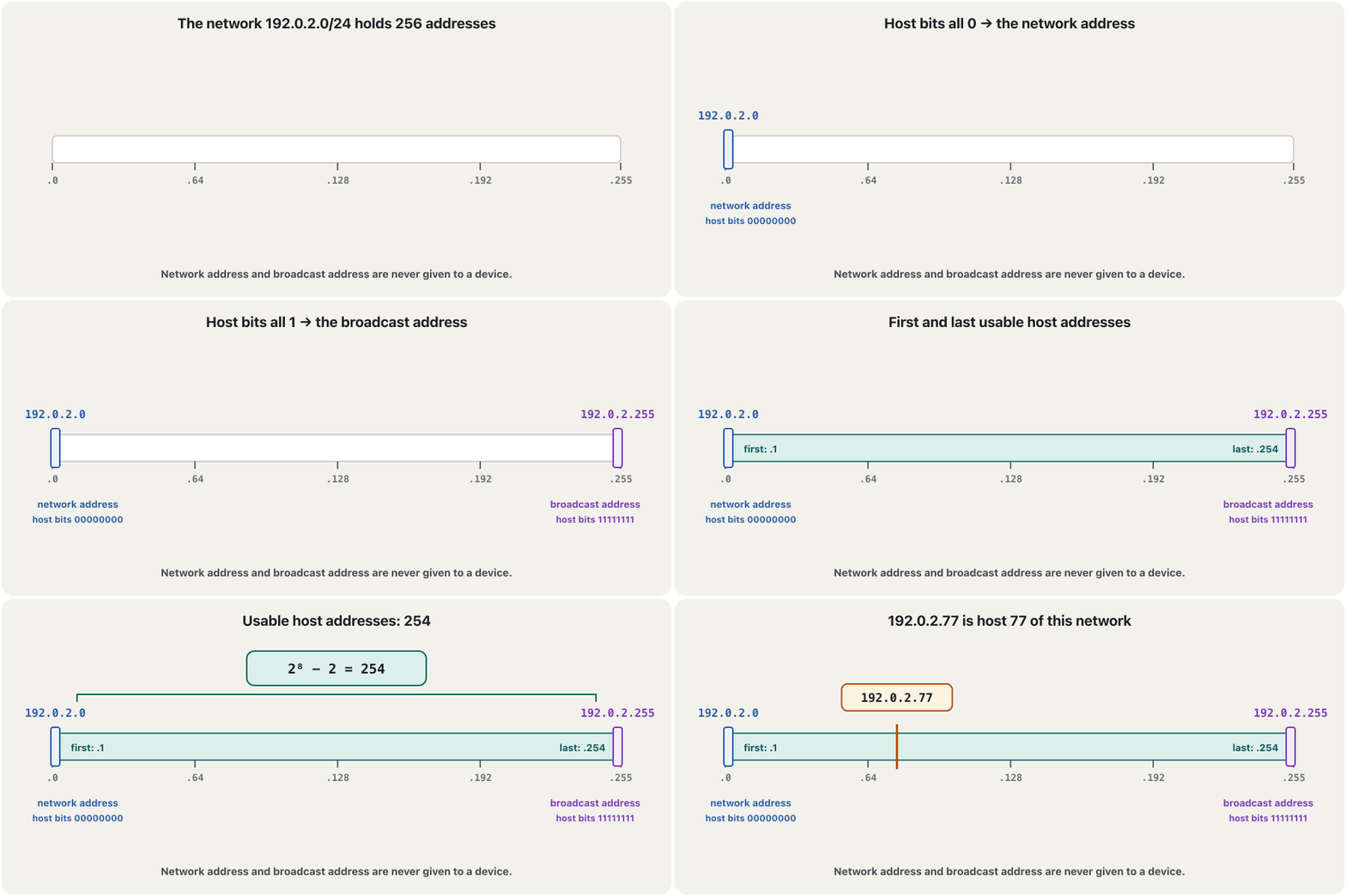
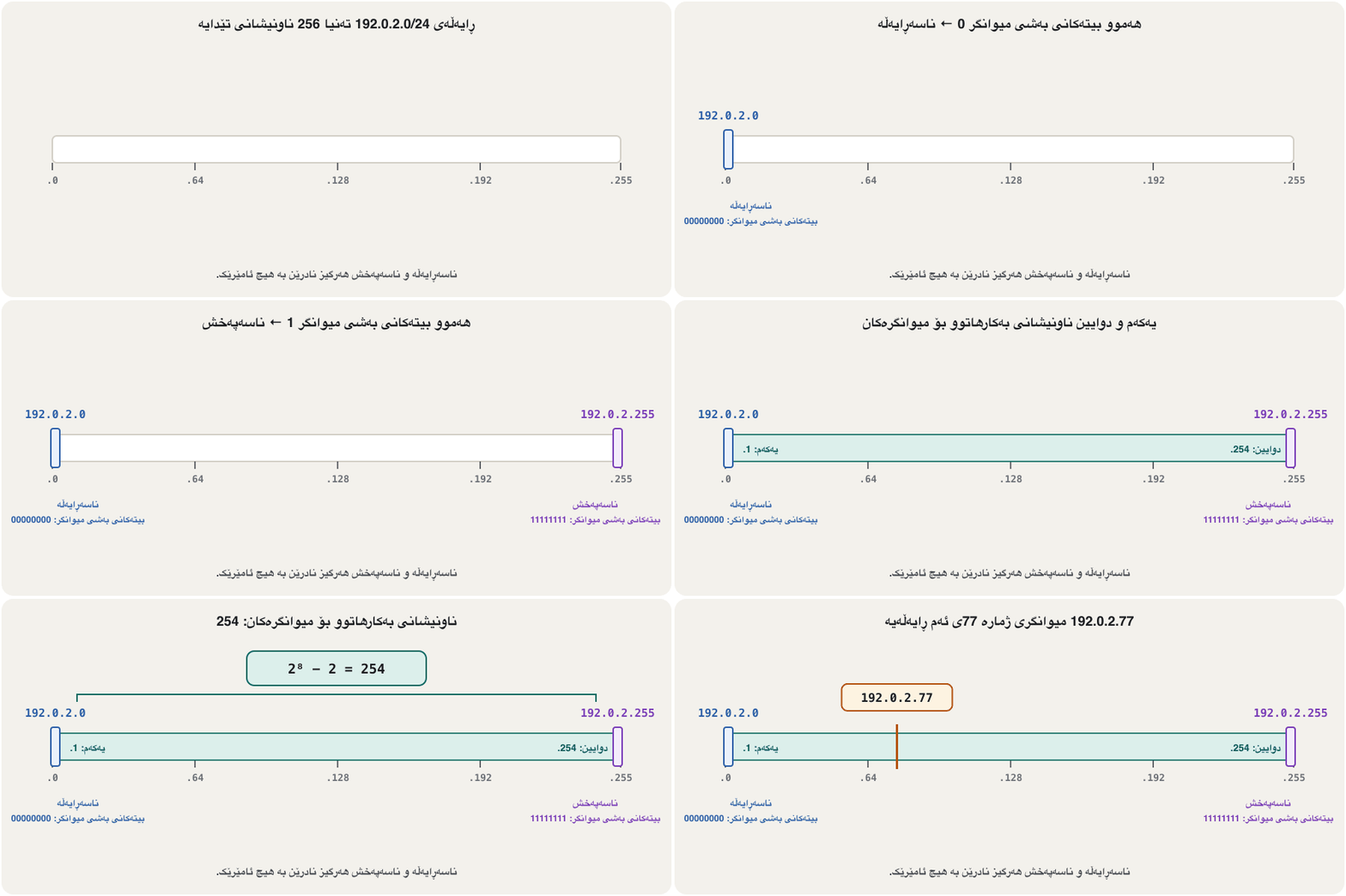
The four key numbers of every networkچوار ژمارە سەرەکییەکەی هەموو ڕایەڵەیەک
Practice: /8, /16 and /24 networksڕاهێنان: ڕایەڵەکانی /8، /16 و /24
The rule works for any prefix: keep the network part, then fill the host part with all 0s (network address), 0…01 (first usable), 1…10 (last usable) and all 1s (broadcast). Three networks with 24, 16 and 8 host bits:
یاساکە بۆ هەر کار دەکات: وەک خۆی بهێڵەرەوە، پاشان پڕ بکەرەوە بە هەموو 0 ()، 0…01 (یەکەمی بەکارهاتوو)، 1…10 (دوایینی بەکارهاتوو) و هەموو 1 (). سێ بە 24، 16 و 8 :
| Addressناونیشان | Network address | First usableیەکەمی بەکارهاتوو | Last usableدوایینی بەکارهاتوو | Broadcast | Usable hosts |
|---|---|---|---|---|---|
| 10.9.8.1/8 | 10.0.0.0 | 10.0.0.1 | 10.255.255.254 | 10.255.255.255 | 16,777,214 |
| 172.22.21.5/16 | 172.22.0.0 | 172.22.0.1 | 172.22.255.254 | 172.22.255.255 | 65,534 |
| 198.51.100.12/24 | 198.51.100.0 | 198.51.100.1 | 198.51.100.254 | 198.51.100.255 | 254 |
Older exam questions often give no prefix and expect /8, /16 or /24 from the first octet — the old address classes: 1–126 class A (/8), 128–191 class B (/16), 192–223 class C (/24), 224–239 class D (multicast) and 240–255 class E (reserved). Classes have been history since 1993; why CIDR replaced them is the next lesson: Address Classes, and Why CIDR Replaced Them.
پرسیارە کۆنەکانی تاقیکردنەوە زۆرجار هیچ نادەن و چاوەڕێ دەکەن /8، /16 یان /24 لە یەکەمەوە بزانیت — ئەمانە کۆنەکانن: 1–126 پۆلی A (/8)، 128–191 پۆلی B (/16)، 192–223 پۆلی C (/24)، 224–239 پۆلی D () و 240–255 پۆلی E (تەرخانکراو). پۆلەکان لە 1993ـەوە مێژوون؛ بۆچی CIDR جێی گرتنەوە لە وانەی داهاتوودا فێر دەبیت: پۆلەکانی ناونیشانی IP و بۆچی CIDR جێی گرتنەوە.
Unicast, broadcast and multicastتاکپەخش، پەخشکردن و فرەپەخش
An IPv4 destination address is one of three kinds:
ناونیشانی مەبەستی یەکێکە لەم سێ جۆرە:
- Unicast — one to one. The packet is for exactly one interface, and it is by far the most common kind. Clicking a link in a web browser sends a unicast HTTP request to the server in the link, and the server’s answer comes back as unicast to your browser.
- Broadcast — one to all on one network. 255.255.255.255 (the limited broadcast) means everyone on this local network and never crosses a router; a network’s own broadcast address, such as 192.0.2.255, is a directed broadcast, and routers do not forward it from other networks by default.
- Multicast — one to a group. Addresses 224.0.0.0 to 239.255.255.255 (224.0.0.0/4, once called class D) reach only the hosts that joined the group: OSPF routers listen on 224.0.0.5, and IPTV channels use multicast groups.
- — یەک بۆ یەک. تەنیا بۆ یەک و بە دوور باوترین جۆرە. کلیککردن لەسەر لە داواکارییەکی دەنێرێت بۆ ئەو لە بەستەرەکەدایە و وەڵامی وەک دەگەڕێتەوە بۆ .
- — یەک بۆ هەمووان لەسەر یەک . 255.255.255.255 ( سنووردار) واتە هەمووان لەسەر ئەم ناوخۆییە و هەرگیز لە تێناپەڕێت؛ خودی ، وەک 192.0.2.255، ئاڕاستەکراوە و بە شێوەی بنەڕەتی لە ترەوە ناینێرن.
- — یەک بۆ گرووپێک. ناونیشانەکانی 224.0.0.0 تا 239.255.255.255 (224.0.0.0/4، کە جاران پێی دەگوترا پۆلی D) تەنیا دەگەنە ئەو بەشداری گرووپەکەیان کردووە: OSPF گوێ لە 224.0.0.5 دەگرن و کەناڵەکانی IPTV گرووپی بەکار دەهێنن.
IPv6 has no broadcast at all and uses multicast instead. The same three kinds exist for MAC addresses (MAC Addresses and Ethernet Frames), and where broadcasts can travel is in Collision Domains and Broadcast Domains. Why devices use broadcast and multicast to find each other is in Finding each other on a LAN.
هیچ نییە و لە جیاتی ئەو بەکار دەهێنێت. هەمان سێ جۆر بۆ هەیە (ناونیشانەکانی MAC و فرەیمەکانی Ethernet)؛ تا کوێ دەڕوات لە پاوانەکانی پێکدادان و پاوانەکانی پەخش ڕوون کراوەتەوە. هەروەها بۆچی ئامێرەکان و بۆ دۆزینەوەی یەکتر بەکار دەهێنن لە دۆزینەوەی یەکتر لە ڕایەڵەی ناوچەییدادا ڕوون کراوەتەوە.
Addresses with a special jobناونیشانە تەرخانکراوەکان
Some IPv4 blocks are reserved for special jobs. IANA keeps them in its IPv4 Special-Purpose Address Registry (RFC 6890; last updated on 9 October 2025 and still current in November 2026). The map shows where they sit; the next screen lists them. The three documentation blocks — 192.0.2.0/24, 198.51.100.0/24 and 203.0.113.0/24 (RFC 5737) — are made for examples, and every public-looking address in CêIT comes from them, so no real person’s address is ever shown.
هەندێک بلۆکی بۆ کاری تایبەت تەرخان کراون. لە تۆماری ناونیشانە تەرخانکراوەکانی IPv4ـدا دەیانپارێزێت (RFC 6890؛ دوایین نوێکردنەوە 9ی تشرینی یەکەمی 2025، کە لە تشرینی دووەمی 2026دا هێشتا هەمان وەشانە). نەخشەکە نیشان دەدات لە کوێدان؛ لاپەڕەی داهاتوو لیستیان دەکات. سێ بلۆکی نموونە — 192.0.2.0/24، 198.51.100.0/24 و 203.0.113.0/24 (RFC 5737) — بۆ نموونەی نووسین دانراون و هەموو ناونیشانێکی گشتیئاسا لە CêITـدا لەوانەوە هاتووە، بۆیە هەرگیز ناونیشانی کەسێکی ڕاستەقینە نیشان نادرێت.
Addresses with a special jobناونیشانە تەرخانکراوەکان
The special-purpose blocksبلۆکە تەرخانکراوەکان
| Blockبلۆک | Nameناو | What it is forبۆ چییە |
|---|---|---|
| 0.0.0.0/8 | “this network”«ئەم » | 0.0.0.0 = this host before it has an address — the source of a DHCP Discover; in routing tables 0.0.0.0/0 means every destination (the default route).0.0.0.0 = ئەم پێش ئەوەی ناونیشانی هەبێت — سەرچاوەی Discoverـی ؛ لە 0.0.0.0/0 واتە هەموو مەبەستێک (). |
| 10.0.0.0/8 · 172.16.0.0/12 · 192.168.0.0/16 | private-useبەکارهێنانی تایبەت | Your own networks (RFC 1918) — next screens. خۆت (RFC 1918) — لاپەڕەکانی داهاتوو. |
| 100.64.0.0/10 | shared address spaceبۆشایی ناونیشانی هاوبەش | ISPs’ carrier-grade NAT (RFC 6598).بۆ لای (RFC 6598). |
| 127.0.0.0/8 | loopback | This computer itself: 127.0.0.1 = localhost; never leaves the device.خودی ئەم : 127.0.0.1 = ؛ هەرگیز لە ئامێرەکە دەرناچێت. |
| 169.254.0.0/16 | link-local | A host that gets no DHCP answer gives itself one (APIPA); works only on the local link. کە وەڵامی وەرنەگرێت یەکێک بە خۆی دەدات ()؛ تەنیا لەسەر بەستەری ناوخۆیی کار دەکات. |
| 192.0.2.0/24 · 198.51.100.0/24 · 203.0.113.0/24 | documentation (TEST-NET-1, 2, 3)نموونە (TEST-NET-1، 2، 3) | Examples in books and lessons (RFC 5737); never on the real Internet.نموونە لە کتێب و وانەکاندا (RFC 5737)؛ هەرگیز لەسەر ڕاستەقینە نین. |
| 198.18.0.0/15 | benchmarkingتاقیکردنەوەی کارایی | Testing network equipment in a lab (RFC 2544).تاقیکردنەوەی ئامێرەکانی لە تاقیگەدا (RFC 2544). |
| 224.0.0.0/4 | multicast | Groups (once class D).گرووپەکان (جاران پۆلی D). |
| 240.0.0.0/4 | reservedتەرخانکراو | Kept for future use (once class E).بۆ داهاتوو هەڵگیراوە (جاران پۆلی E). |
| 255.255.255.255/32 | limited broadcast سنووردار | Everyone on this network; routers never forward it.هەمووان لەسەر ئەم ؛ هەرگیز نایگوازنەوە. |
Addresses with a special jobناونیشانە تەرخانکراوەکان
Try it: loopback and APIPAتاقیی بکەرەوە: ناونیشانی خۆگەڕانەوە و APIPA
Two special addresses you can see on your own computer. ping 127.0.0.1 answers even with the network cable unplugged, because the packet never leaves the computer: it tests the computer’s own TCP/IP software. On Windows the output looks like this:
دوو ناونیشانی تەرخانکراو کە دەتوانیت لەسەر خۆت ببینیت. ping 127.0.0.1 تەنانەت بە کێبڵی دەرهێنراویش وەڵام دەداتەوە، چونکە هەرگیز لە دەرناچێت: TCP/IPـی خودی تاقی دەکاتەوە. لە Windowsـدا دەرچوونەکەی بەم شێوەیەیە:
ping 127.0.0.1Pinging 127.0.0.1 with 32 bytes of data:
Reply from 127.0.0.1: bytes=32 time<1ms TTL=128
Reply from 127.0.0.1: bytes=32 time<1ms TTL=128
Reply from 127.0.0.1: bytes=32 time<1ms TTL=128
Reply from 127.0.0.1: bytes=32 time<1ms TTL=128
Ping statistics for 127.0.0.1:
Packets: Sent = 4, Received = 4, Lost = 0 (0% loss),
Approximate round trip times in milli-seconds:
Minimum = 0ms, Maximum = 0ms, Average = 0msIf ipconfig shows an IPv4 address that starts with 169.254, the computer asked for an address by DHCP, got no answer and gave itself a link-local address (APIPA; how and why in No answer: APIPA). It can reach only neighbours on the same link — check the cable, the Wi-Fi or the DHCP server.
ئەگەر ipconfig ناونیشانێکی IPv4 نیشان بدات کە بە 169.254 دەست پێ دەکات، لە ڕێگەی داوای ناونیشانی کردووە، وەڵامی وەرنەگرتووە و بە خۆی داوە (؛ چۆن و بۆچی لە وەڵام نییە: APIPAدا). تەنیا دەگاتە دراوسێکانی سەر هەمان بەستەر — کێبڵەکە، یان DHCP بپشکنە.
Private addresses (RFC 1918)ناونیشانەکانی IPـی تایبەت (RFC 1918)
Three blocks are set aside for private use (RFC 1918, 1996). Anyone may use them inside their own network without asking anyone; they are not registered on the Internet, and routers on the Internet do not carry them — so millions of homes use 192.168.1.0/24 at the same time. A private address is unique only inside its own network. Here they are, with the old class names some exams still use:
سێ بلۆک بۆ بەکارهێنانی تایبەت دانراون (RFC 1918، 1996). هەر کەسێک دەتوانێت لە ناو خۆیدا بەکاریان بهێنێت بەبێ ئەوەی ڕێگە لە کەس وەربگرێت؛ لەسەر تۆمار نەکراون و نایانگوازنەوە — بۆیە ملیۆنان ماڵ لە هەمان کاتدا 192.168.1.0/24 بەکار دەهێنن. تەنیا لە ناو خۆیدا تاکە. ئەمە ئەوانن، لەگەڵ ناوە کۆنەکانی پۆل کە هەندێک تاقیکردنەوە هێشتا بەکاریان دەهێنن:
| Blockبلۆک | Rangeمەودا | Addressesژمارەی ناونیشان | In old class termsبە زمانی پۆلە کۆنەکان |
|---|---|---|---|
| 10.0.0.0/8 | 10.0.0.0 – 10.255.255.255 | 16,777,216 | 1 class A network1 پۆلی A |
| 172.16.0.0/12 | 172.16.0.0 – 172.31.255.255 | 1,048,576 | 16 class B networks16 پۆلی B |
| 192.168.0.0/16 | 192.168.0.0 – 192.168.255.255 | 65,536 | 256 class C networks256 پۆلی C |
To reach the Internet, a private address needs NAT in a router, which swaps it for a public address (NAT Concepts; the idea in IP and MAC addresses). Watch out: 127.0.0.0/8 is not a private range — it is loopback, and its packets never leave the computer.
بۆ گەیشتن بە ، پێویستی بە هەیە لە ، کە دەیگۆڕێت بۆ (چەمکەکانی وەرگێڕانی ناونیشانی ڕایەڵە؛ بیرۆکەکە لە ناونیشانەکانی IP و ناونیشانەکانی MAC). ئاگاداربە: 127.0.0.0/8 بلۆکێکی تایبەت نییە — و هەرگیز لە دەرناچن.
Public addresses are unique on the internet, private ones are reused inside homes, and NAT in the router swaps between them.
لەسەر تاکن، لەناو ماڵەکاندا دووپاتە بەکار دەهێنرێنەوە و لەناو لە نێوانیاندا دەیانگۆڕێتەوە.
Watch 1:11–3:49: private addresses and NAT; stops before the class table, which has wrong masks.
لە 1:11 تا 3:49 سەیر بکە: و ؛ پێش خشتەی کلاسەکان ڕادەوەستێت، کە ماسکەکانی تێیدا هەڵەن.
Public addresses, and who gives you oneناونیشانەکانی IPـی گشتی و کێ یەکێکت پێ دەدات
A public address is part of a registered block: it is unique on the whole Internet, only the organisation it is registered to may use it, and routers on the Internet carry routes to all public networks. Your home has one public address, on the Internet side of the router — and it is your ISP that assigns it, by DHCP or PPPoE when the router connects; the router does not make it up. It is often dynamic and may change. Inside, the router gives every device its own private address.
بەشێکە لە بلۆکێکی تۆمارکراو: لە هەموو تاکە، تەنیا ئەو دامەزراوەیەی بۆی تۆمار کراوە دەتوانێت بەکاری بهێنێت و ڕێگایان بۆ هەموو گشتی هەیە. ماڵەکەت یەک هەیە، لە لای — و ئەوە کە دەیدات، بە DHCP یان PPPoE کاتێک پەیوەندی دەکات؛ خۆی دروستی ناکات. زۆرجار بزۆکە و لەوانەیە بگۆڕێت. لە ناوەوە، دەداتە هەر ئامێرێک.
Public addresses, and who gives you oneناونیشانەکانی IPـی گشتی و کێ یەکێکت پێ دەدات
Carrier-grade NAT: sharing one public addressNATـی ئاستی دابینکەر: هاوبەشکردنی یەک ناونیشانی IPـی گشتی
Many ISPs — mobile operators above all — no longer have a public address for every customer. They give the customer’s router an address from the shared address space 100.64.0.0/10 (RFC 6598) and translate again inside their own network: carrier-grade NAT (CGNAT). Many customers then share one public address. Browsing works; running a server at home or opening a port for a game usually does not. If your router’s WAN address is between 100.64.0.0 and 100.127.255.255, you are behind CGNAT. How the two translations work is in Carrier-grade NAT: translated twice.
زۆرێک لە — بە تایبەتی کۆمپانیاکانی مۆبایل — ئیتر بۆ هەموو بەشداربوویەک نییە. ناونیشانێک لە بۆشایی ناونیشانی هاوبەشی 100.64.0.0/10 (RFC 6598) دەدەنە بەشداربوو و لە ناو خۆیاندا دیسان وەردەگێڕن: (CGNAT). ئیتر چەندین بەشداربوو یەک بەش دەکەن. گەڕان لە کار دەکات؛ ڕاگرتنی لە ماڵەوە یان کردنەوەی بۆ یارییەک زۆربەی جار کار ناکات. ئەگەر ناونیشانی WANـی لە نێوان 100.64.0.0 و 100.127.255.255 بێت، تۆ لە پشت CGNATـەوەیت. دوو وەرگێڕانەکە چۆن کار دەکەن لە NATـی ئاستی دابینکەر: دوو جار وەرگێڕاندا ڕوون کراوەتەوە.
From IANA to your routerلە IANAـەوە بۆ ڕێدۆزەکەت
Public addresses are handed out in a chain. IANA, the Internet Assigned Numbers Authority, keeps the world’s pool and gives large blocks to the five Regional Internet Registries (RIRs): AFRINIC (Africa), APNIC (Asia–Pacific), ARIN (North America), LACNIC (Latin America and the Caribbean) and RIPE NCC (Europe, the Middle East and Central Asia — Iraq and the Kurdistan Region included). Each RIR gives blocks to its members — ISPs and large organisations, called LIRs — and the ISP gives an address to your router.
بە زنجیرەیەک دابەش دەکرێن. (Internet Assigned Numbers Authority) کۆگای جیهانی دەپارێزێت و بلۆکی گەورە دەداتە پێنج : AFRINIC (ئەفریقا)، APNIC (ئاسیا و پاسیفیک)، ARIN (ئەمریکای باکوور)، LACNIC (ئەمریکای لاتین و کاریبی) و RIPE NCC (ئەوروپا، ڕۆژهەڵاتی ناوەڕاست و ئاسیای ناوەڕاست — عێراق و هەرێمی کوردستانیش). هەر RIRـێک بلۆک دەداتە ئەندامەکانی — و دامەزراوە گەورەکان، کە پێیان دەگوترێت LIR — و ناونیشانێک دەداتە .
IANA itself grew from the lists of numbers that Jon Postel began keeping in 1972. ICANN was founded in 1998 to take over this work; the stewardship transition that ended the US government’s oversight role was completed in October 2016, and today the IANA functions are run by PTI, an affiliate of ICANN. Besides addresses, IANA coordinates the DNS root zone and protocol numbers — such as the 1, 6 and 17 of the protocol field.
خۆی لەو لیستە ژمارانەوە سەری هەڵدا کە Jon Postel لە 1972ـەوە دەستی کرد بە ڕێکخستنیان. ICANN لە 1998دا دامەزرا تا ئەم کارە وەربگرێت؛ گواستنەوەی سەرپەرشتی، کە ڕۆڵی چاودێریی حکومەتی ئەمریکای کۆتایی پێ هێنا، لە تشرینی یەکەمی 2016دا تەواو بوو و ئەمڕۆ ئەرکەکانی لەلایەن PTIـەوە بەڕێوە دەبرێن، کە سەر بە ICANNـە. جگە لە ناونیشان، ڕەگی و ژمارەکانی ڕێک دەخات — وەک 1، 6 و 17ـی خانەی .
IPv4 ran outIPv4 تەواو بوو
With 32 bits there are only about 4.3 billion IPv4 addresses — fewer than the people on Earth, and many blocks are reserved. When IPv4 was designed in 1981, nobody expected billions of phones. On 3 February 2011 IANA handed out its last five free /8 blocks, one to each RIR. On 25 November 2019 RIPE NCC made its last /22 allocation and ran out; since then (and still in November 2026), new members can only join a waiting list for recovered /24 blocks.
بە 32 تەنیا نزیکەی 4.3 ملیار ناونیشانی هەیە — کەمتر لە ژمارەی خەڵکی سەر زەوی، زۆر بلۆکیش تەرخان کراون. کاتێک لە 1981دا دیزاین کرا، کەس چاوەڕێی ملیارەها مۆبایلی نەدەکرد. لە 3ی شوباتی 2011دا دوایین پێنج بلۆکی بەتاڵی /8 دابەش کرد، بۆ هەر یەکێک. لە 25ی تشرینی دووەمی 2019دا RIPE NCC دوایین بەخشینی /22ـی کرد و ناونیشانەکانی تەواو بوون؛ لەوەتەوە (و هێشتا لە تشرینی دووەمی 2026دا) ئەندامە نوێیەکان تەنیا دەتوانن بچنە سەر لیستی چاوەڕوانی بۆ بلۆکی /24ـی گەڕێنراوە.
How the Internet copes: private addresses with NAT, carrier-grade NAT at ISPs, buying and selling address blocks — and the real answer, IPv6, with addresses (Why IPv6?).
چۆن بەردەوام دەبێت: لەگەڵ ، لای ، کڕین و فرۆشتنی بلۆکی ناونیشان — و وەڵامی ڕاستەقینە، ، بە ناونیشان (بۆچی IPv6؟).
Common mistakesهەڵە باوەکان
| Mistakeهەڵە | What is trueڕاستییەکە |
|---|---|
| “An IP address is a protocol.”« .» | IP is the protocol; the IP address is the number IP uses (32 bits in IPv4). ؛ ئەو ژمارەیەیە کە بەکاری دەهێنێت (لە IPv4ـدا 32 ). |
| “Each octet goes from 1 to 255.”«هەر لە 1ـەوە تا 255ـە.» | From 0 to 255: 256 values.لە 0 تا 255، واتە 256 بەها. |
| “127.0.0.1 is a private address.”«127.0.0.1 .» | It is loopback (127.0.0.0/8). The private ranges are 10/8, 172.16/12 and 192.168/16. (127.0.0.0/8). بلۆکە تایبەتەکان 10/8، 172.16/12 و 192.168/16ـن. |
| “The router assigns its own public address automatically.”« خۆکارانە بە خۆی دەدات.» | The ISP assigns it (by DHCP or PPPoE); the router only uses it. دەیدات (بە یان PPPoE)؛ تەنیا بەکاری دەهێنێت. |
| “A private address must be unique on the Internet.”« دەبێت لە تاک بێت.» | Only inside its own network; the same private ranges are reused everywhere.تەنیا لە ناو خۆیدا؛ هەمان بلۆکە تایبەتەکان لە هەموو شوێنێک دووپاتە بەکار دێنەوە. |
| “The network address can be given to a PC.”« دەکرێت بدرێت بە .» | Network and broadcast addresses are never given to devices: are usable. و هەرگیز نادرێن بە ئامێر: بەکار دێن. |
| “172.32.0.1 is private.”«172.32.0.1 تایبەتە.» | The 172 private range ends at 172.31.255.255.بلۆکی تایبەتی 172 لە 172.31.255.255دا کۆتایی دێت. |
| “Any public address will do in an example.”«هەر بۆ نموونە دەشێت.» | Use the documentation ranges 192.0.2.0/24, 198.51.100.0/24 and 203.0.113.0/24, so no real network is named.بلۆکەکانی نموونە بەکار بهێنە: 192.0.2.0/24، 198.51.100.0/24 و 203.0.113.0/24، تا هیچ ڕاستەقینە ناو نەبرێت. |
Exercisesڕاهێنانەکان
Find the network address, the first and last usable addresses and the broadcast address of (a) 192.0.2.130/24, (b) 172.20.7.9/16 and (c) 10.200.3.4/8.
، یەکەم و دوایین ناونیشانی بەکارهاتوو و بدۆزەرەوە بۆ (a) 192.0.2.130/24، (b) 172.20.7.9/16 و (c) 10.200.3.4/8.
Hintئاماژە
Keep the network part; host bits all 0 = network, all 1 = broadcast.
بهێڵەرەوە؛ هەموو 0 = ، هەمووی 1 = .
Show answerوەڵامەکە پیشان بدە
| Addressناونیشان | Network | Firstیەکەم | Lastدوایین | Broadcast |
|---|---|---|---|---|
| 192.0.2.130/24 | 192.0.2.0 | 192.0.2.1 | 192.0.2.254 | 192.0.2.255 |
| 172.20.7.9/16 | 172.20.0.0 | 172.20.0.1 | 172.20.255.254 | 172.20.255.255 |
| 10.200.3.4/8 | 10.0.0.0 | 10.0.0.1 | 10.255.255.254 | 10.255.255.255 |
Name the kind of each address: 127.0.0.5, 169.254.10.20, 100.72.1.9, 10.20.30.40, 192.0.2.10, 224.0.0.251, 255.255.255.255, 172.32.0.1.
جۆری هەر ناونیشانێک بڵێ: 127.0.0.5، 169.254.10.20، 100.72.1.9، 10.20.30.40، 192.0.2.10، 224.0.0.251، 255.255.255.255، 172.32.0.1.
Show answerوەڵامەکە پیشان بدە
- 127.0.0.5 — loopback (all of 127.0.0.0/8).
- 169.254.10.20 — link-local (APIPA: DHCP failed).
- 100.72.1.9 — shared address space (carrier-grade NAT).
- 10.20.30.40 — private (RFC 1918).
- 192.0.2.10 — documentation (TEST-NET-1).
- 224.0.0.251 — multicast.
- 255.255.255.255 — limited broadcast.
- 172.32.0.1 — public: it is outside 172.16.0.0/12.
- 127.0.0.5 — (هەموو 127.0.0.0/8).
- 169.254.10.20 — (: سەرنەکەوت).
- 100.72.1.9 — بۆشایی ناونیشانی هاوبەش ().
- 10.20.30.40 — تایبەت (RFC 1918).
- 192.0.2.10 — نموونە (TEST-NET-1).
- 224.0.0.251 — .
- 255.255.255.255 — سنووردار.
- 172.32.0.1 — گشتی: لە دەرەوەی 172.16.0.0/12ـە.
Write 198.51.100.9 in binary, and 11001011.00000000.01110001.00001010 in dotted decimal.
198.51.100.9 بە بنووسە و 11001011.00000000.01110001.00001010 بە .
Show answerوەڵامەکە پیشان بدە
198.51.100.9 = 11000110.00110011.01100100.00001001, and 11001011.00000000.01110001.00001010 = 203.0.113.10.
198.51.100.9 = 11000110.00110011.01100100.00001001؛ هەروەها 11001011.00000000.01110001.00001010 = 203.0.113.10.
Write a short, complete answer to the exam question “Explain IP”.
وەڵامێکی کورت و تەواو بۆ پرسیاری تاقیکردنەوەی «IP ڕوون بکەرەوە» بنووسە.
Hintئاماژە
Cover the protocol, the address, how it is given, its two parts, public vs private and classful vs classless.
باسی ، ناونیشانەکە، چۆن دەدرێت، دوو بەشەکەی، گشتی و تایبەت و پۆلدار و بێپۆل بکە.
Show answerوەڵامەکە پیشان بدە
- IP (Internet Protocol) is the network-layer protocol that addresses and routes packets between networks; it is connectionless and best effort.
- An IP address identifies an interface: IPv4 has 32 bits (4 bytes) in dotted decimal; IPv6 has 128 bits.
- It is set by hand (static) or given automatically by DHCP.
- It has a network part and a host part, set by the mask or the prefix length.
- Public addresses are unique on the Internet (IANA → RIR → ISP); private ones (10/8, 172.16/12, 192.168/16) need NAT.
- Classful addressing (classes A–E, fixed sizes) is history; classless addressing (CIDR, since 1993) uses any prefix length and is more flexible for subnetting.
- (Internet Protocol) کە ناونیشان دەکات و لە نێوان بۆ دەکات؛ و بەکار دەهێنێت.
- دیاری دەکات: IPv4 32 (4 ) بە ؛ IPv6 128 هەیە.
- بە دەست دادەنرێت (جێگیر) یان خۆکارانە دەیدات.
- و هەیە، کە ماسک یان دیاری دەکات.
- لە تاکن (، پاشان ، پاشان )؛ (10/8، 172.16/12، 192.168/16) پێویستیان بە هەیە.
- (پۆلی A تا E، قەبارەی جێگیر) مێژووە؛ (لە 1993ـەوە) هەر بەکار دەهێنێت و بۆ نەرمترە.
Why are 2 addresses subtracted in ?بۆچی لە دا 2 ناونیشان لادەبرێن؟
Because the network address (host bits all 0) and the broadcast address (all 1) cannot be given to devices.
چونکە (هەموو 0) و (هەمووی 1) نادرێن بە ئامێر.
Why does CêIT use 192.0.2.x, 198.51.100.x and 203.0.113.x in examples?بۆچی CêIT لە نموونەکاندا 192.0.2.x، 198.51.100.x و 203.0.113.x بەکار دەهێنێت؟
They are reserved for documentation (RFC 5737), so they belong to nobody and never appear on the real Internet.
بۆ نموونەی نووسین تەرخان کراون (RFC 5737)، بۆیە هی هیچ کەس نین و هەرگیز لەسەر ڕاستەقینە دەرناکەون.
Summaryپوختە
- An IPv4 address is 32 bits in four octets (0–255 each), written in dotted decimal; there are about 4.3 billion.
- IP is the protocol; the IP address identifies an interface and must be unique where it is used.
- Network part + host part, split by the prefix length or mask. Four key numbers: network address (host bits 0), first and last usable, broadcast address (host bits 1); hosts.
- Unicast (one), broadcast (all on one network), multicast (224.0.0.0/4, a group).
- Special blocks: 0.0.0.0/8, 127.0.0.0/8 loopback, 169.254.0.0/16 link-local, 100.64.0.0/10 CGNAT, documentation 192.0.2.0/24 · 198.51.100.0/24 · 203.0.113.0/24, 240.0.0.0/4, 255.255.255.255.
- Private (RFC 1918): 10/8, 172.16/12, 192.168/16 — need NAT. Public: given by the ISP, from IANA → RIR (RIPE NCC for Iraq) → ISP.
- IPv4 ran out: IANA on 3 February 2011, RIPE NCC on 25 November 2019 — NAT, CGNAT and IPv6 are the answers.
- ناونیشانێکی 32 لە چوار (هەریەکە 0–255)، بە دەنووسرێت؛ نزیکەی 4.3 ملیار هەن.
- ؛ دیاری دەکات و دەبێت لەو شوێنەی بەکار دێت تاک بێت.
- + ، بە یان ماسک جیا دەکرێنەوە. چوار ژمارەی سەرەکی: ( 0)، یەکەم و دوایینی بەکارهاتوو، ( 1)؛ .
- (یەک)، (هەمووان لەسەر یەک )، (224.0.0.0/4، گرووپێک).
- بلۆکە تەرخانکراوەکان: 0.0.0.0/8، 127.0.0.0/8 ، 169.254.0.0/16 ، 100.64.0.0/10 CGNAT، نموونە 192.0.2.0/24 · 198.51.100.0/24 · 203.0.113.0/24، 240.0.0.0/4، 255.255.255.255.
- تایبەت (RFC 1918): 10/8، 172.16/12، 192.168/16 — پێویستیان بە هەیە. گشتی: دەیدات؛ زنجیرەکە ، پاشان (RIPE NCC بۆ عێراق)، پاشان .
- تەواو بوو: لە 3ی شوباتی 2011، RIPE NCC لە 25ی تشرینی دووەمی 2019 — ، CGNAT و وەڵامەکانن.
Lesson complete!وانەکە تەواو بوو!
Well done. Review the key terms, then go on to the next lesson.دەستخۆش. سەیرێکی زاراوە سەرەکییەکان بکەرەوە، پاشان بڕۆ بۆ وانەی داهاتوو.
Key termsزاراوە سەرەکییەکان
Address Classes, and Why CIDR Replaced Themپۆلەکانی ناونیشانی IP و بۆچی CIDR جێگەیانی گرتەوە
Related lecturesوانە پەیوەندیدارەکان
- Address Classes, and Why CIDR Replaced Themپۆلەکانی ناونیشانی IP و بۆچی CIDR جێگەیانی گرتەوە
- Subnet Masks: Binary, Dotted Decimal and Prefixماسکی ژێرڕایەڵە: دووانی، شێوەی دەییخاڵدار و پێشگر
- Subnetting Step by Stepژێرڕایەڵەسازی هەنگاو بە هەنگاو
- IPv6 Addresses: Format and Typesناونیشانەکانی IPv6: شێوە و جۆرەکان
- NAT and PAT: Sharing Public Addressesوەرگێڕانی ناونیشانی ڕایەڵە و وەرگێڕانی ناونیشانی پۆرت: هاوبەشکردنی ناونیشانی گشتی
- DHCP: Automatic Addresses, DORA and LeasesDHCP: ناونیشانی خۆکار، DORA و کرێکانی DHCP
- Collision Domains and Broadcast Domainsپاوانەکانی پێکدادان و پاوانەکانی پەخش
- MAC Addresses and Ethernet Framesناونیشانەکانی MAC و فرەیمەکانی Ethernet
- From Decimal to Binary, Octal and Hexلە دەییەوە بۆ دووانی، هەشتی و شانزەیی
- From Binary, Octal and Hex to Decimalلە دووانی، هەشتی و شانزەییەوە بۆ دەیی
- Number Systems and Place Valueسیستەمە ژمارەییەکان و بەهای خانەیی
References and further readingسەرچاوەکان و خوێندنەوەی زیاتر
- IANA IPv4 Special-Purpose Address Registry (RFC 6890; last updated 2025-10-09)
- RFC 1918 (BCP 5, 1996): Address Allocation for Private Internets
- RFC 6598 (BCP 153, 2012): IANA-Reserved IPv4 Prefix for Shared Address Space (100.64.0.0/10)
- RFC 5737 (2010): IPv4 Address Blocks Reserved for Documentation
- IANA: Number Resources (pools to the five RIRs; RIPE NCC serves Europe, the Middle East and Central Asia)
- IANA: About us (the IANA functions are performed by PTI, an affiliate of ICANN)
- ICANN: History (Jon Postel from 1972; ICANN founded 1998; IANA stewardship transition completed October 2016)
- NRO: Free pool of IPv4 address space depleted (3 February 2011)
- RIPE NCC: The RIPE NCC has run out of IPv4 addresses (25 November 2019)
- RFC 791 (1981): Internet Protocol (32-bit addresses)
- RFC 2644 (BCP 34, 1999): Changing the Default for Directed Broadcasts in Routers
This lecture is a first edition. The Kurdish text and terminology are waiting for review by Kurdish IT teachers.ئەم وانەیە چاپی یەکەمە. دەقە کوردییەکە و زاراوەکانی چاوەڕێی پێداچوونەوەی مامۆستایانی کوردی بواری IT ن.