Chapterبەش 1 · Lectureوانە 1.6
How Fast Is a Network? Delay, Bandwidth and Throughputڕایەڵە چەند خێرایە؟ دواکەوتن، پانایی باند و ڕێژەی تێپەڕین
Why a packet takes time: store-and-forward and the four delays at every router — processing, queuing, transmission (L/R) and propagation (d/s) — with worked examples from a classic exam question and from Erbil to Frankfurt; round-trip time and ping; bandwidth versus throughput and the bottleneck link; speed tests; bits, bytes and prefixes; and the bandwidth–delay product.
بۆچی کاتی پێویستە: و چوار جۆری لە هەر — چارەسەرکردن، سەرەگرتن، ناردن (L/R) و بڵاوبوونەوە (d/s) — بە نموونەی چارەسەرکراو لە پرسیارێکی ناسراوی تاقیکردنەوە و لە هەولێرەوە بۆ فرانکفۆرت؛ و ؛ بەرانبەر بە و ؛ تاقیکردنەوەی خێرایی؛ ، و پێشگرەکان؛ و .
What you will learnچی فێر دەبیت
- Explain store-and-forward and compute N × L/R for a packet crossing N links.
- Name the four nodal delays, say what each depends on and compute L/R and d/s with correct units.
- Estimate the one-way delay and the round-trip time of a long path such as Erbil–Frankfurt.
- Tell bandwidth from throughput and find the bottleneck link of a path.
- Convert between bits and bytes and use the prefixes k, M, G and T correctly.
- ڕوون بکەیتەوە و N × L/R بۆ بژمێریت کە N بەستنەوە دەبڕێت.
- چوار جۆرەکەی ناو ببەیت، بڵێیت هەریەکە بەندە بە چی و L/R و d/s بە یەکەی دروست بژمێریت.
- یەک ئاڕاستە و ڕێگایەکی درێژ وەک هەولێر–فرانکفۆرت بخەمڵێنیت.
- جیاوازیی و بکەیت و ڕێگایەک بدۆزیتەوە.
- لە نێوان و بگۆڕیت و پێشگرەکانی k، M، G و T بە دروستی بەکاربهێنیت.
How long, and how much?چەند دەخایەنێت و چەند دەگات؟
Aram in Erbil opens a video that comes from a server in Frankfurt. Two different questions decide how good that feels:
ئارام لە هەولێر ڤیدیۆیەک دەکاتەوە کە لە لە فرانکفۆرتەوە دێت. دوو پرسیاری جیاواز دیاری دەکەن ئەمە چەند باش هەست پێ دەکرێت:
- How long? The delay, or latency: the time a piece of data is held back on its way, from the moment it leaves the source until it reaches the destination — the time the packet spends travelling. It is measured in milliseconds (ms).
- How much? The throughput: how many bits actually arrive each second. It is measured in bits per second (b/s, Mb/s, Gb/s).
- چەند دەخایەنێت؟ : ئەو ماوەیەی پارچەیەک لە ڕێگادا دوا دەکەوێت، لەو ساتەوەی لە سەرچاوە دەردەچێت تا دەگاتە مەبەست — واتە ئەو ماوەیەی بە ڕێگاوە دەبێت. بە ملیچرکە (ms) دەپێورێت.
- چەند دەگات؟ : لە هەر چرکەیەکدا بە ڕاستی چەند دەگات. بە لە چرکەیەکدا دەپێورێت (b/s، Mb/s، Gb/s).
In networking, latency and delay mean the same thing. A first look at both numbers is in Bandwidth and latency. This lesson opens the box: where the delay comes from, how to compute it, and what limits the throughput.
لە ئینگلیزیدا هەردوو وشەی latency و delay بۆ هەمان شت بەکاردێن: . یەکەم سەیرکردنی هەردوو ژمارەکە لە پانایی باند و دواکەوتندایە. ئەم وانەیە سندووقەکە دەکاتەوە: لە کوێوە دێت، چۆن دەژمێردرێت و چی سنووردار دەکات.
Routers store, then forwardهەڵگرتن و پێشڕۆکردن
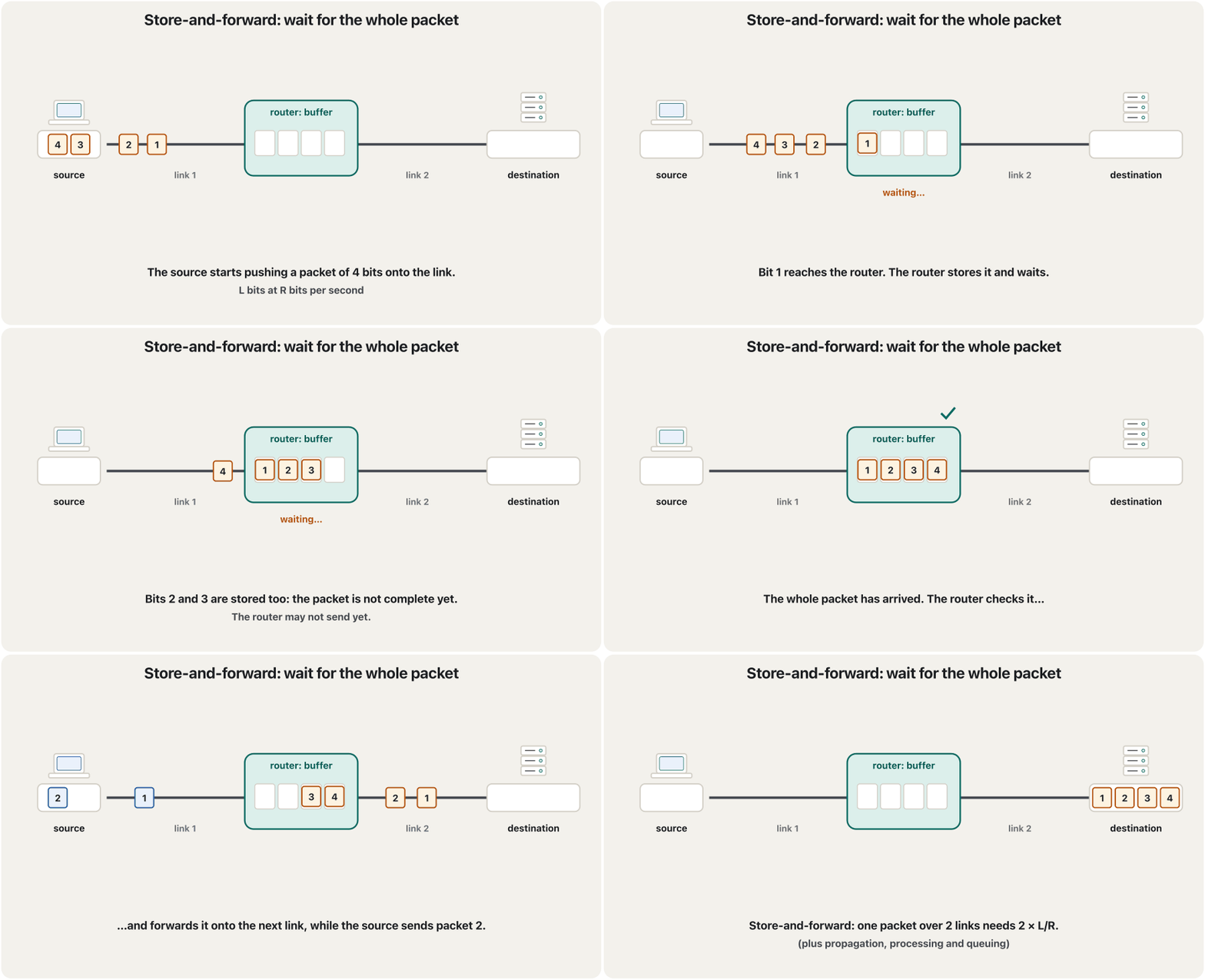
On the Internet, data travels in packets, and almost every router and switch on the way works by store-and-forward: it must receive the entire packet before it can send the first bit of it onto the next link. Only then can it check the packet for errors and send it on whole. It is like a box that waits until the whole message is inside before passing it on: a little slower, but nothing broken or missing goes further.
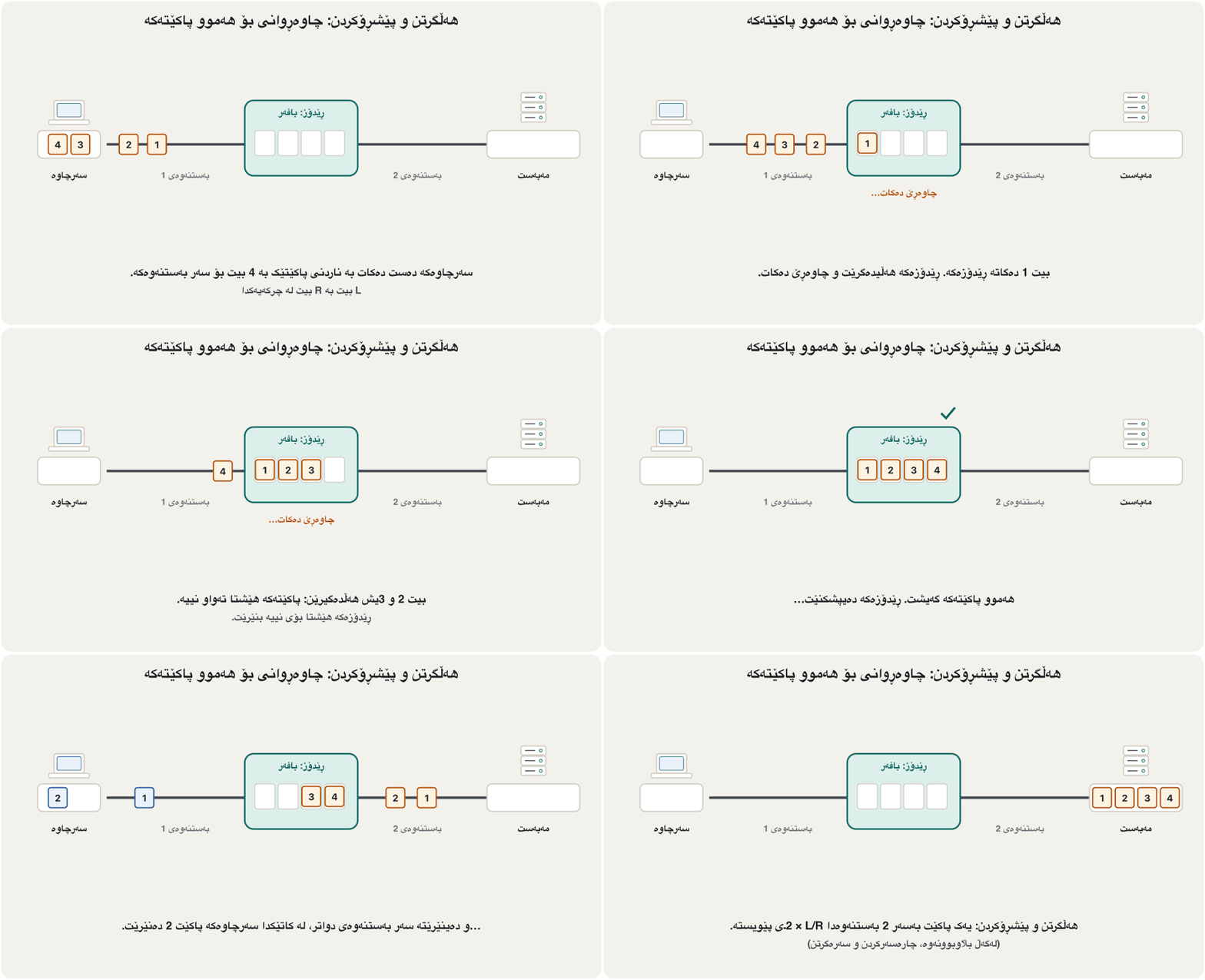
لە بە دەڕوات و نزیکەی هەموو و سەر ڕێگا بە کار دەکات: دەبێت هەموو وەربگرێت پێش ئەوەی بتوانێت یەکەم بنێرێتە سەر بەستنەوەی دواتر. تەنیا ئەو کاتە دەتوانێت لە هەڵە بپشکنێت و بە تەواوی بینێرێت. وەک سندووقێک وایە کە چاوەڕێ دەکات تا هەموو پەیامەکە دەچێتە ناوی، پاشان دەینێرێت: کەمێک خاوترە، بەڵام هیچ شتێکی شکاو یان ناتەواو بەرەو پێش ناچێت.
So a packet of L bits needs L/R seconds to be pushed onto each link of rate R, and over N such links in a row, store-and-forward costs N × L/R — when nothing else is in the way. How packets share the links: Packet switching.
بۆیە بە L بۆ هەر بەستنەوەیەک بە ڕێژەی R پێویستی بە L/R چرکە هەیە تا بخرێتە سەری و بەسەر N بەستنەوەی لەم جۆرەدا بە دوای یەکدا، N × L/R دەخایەنێت — کاتێک هیچ شتێکی تر لە ڕێگادا نییە. چۆن بەستنەوەکان بە هاوبەشی بەکاردەهێنن: سویچکردنی پاکێت.
Example: a 1,500-byte packet (12,000 bits) over 3 links of 10 Mb/s: 3 × 1.2 ms = 3.6 ms.
نموونە: 1,500 (12,000 ) بەسەر 3 بەستنەوەی 10 Mb/sـدا: 3 × 1.2 ms = 3.6 ms.
Four delays at every routerچوار جۆر دواکەوتن لە هەر ڕێدۆزێکدا
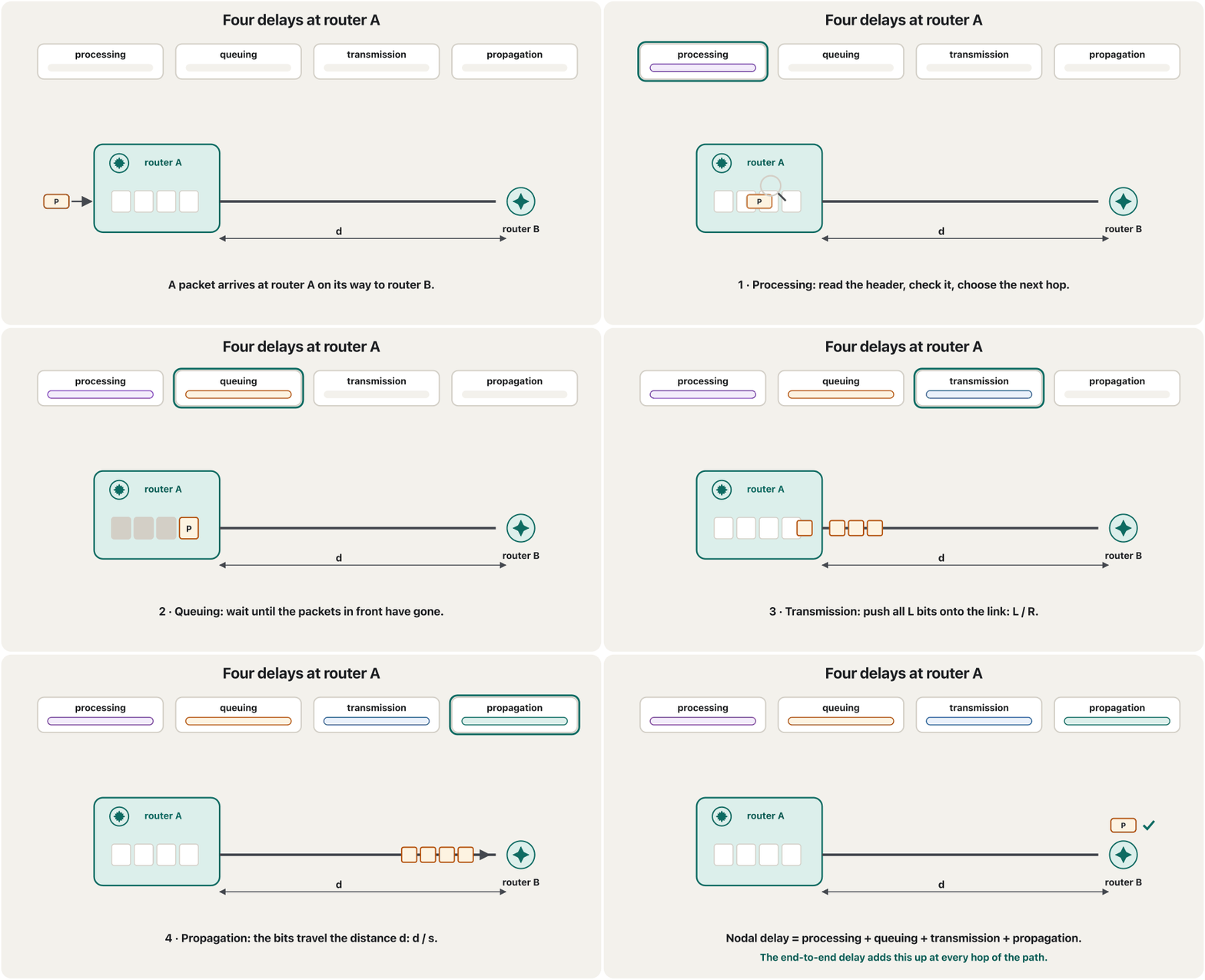
The network delay, or end-to-end delay, is the time one packet needs from its source to its destination. At every router on the path the packet meets four delays, one after another:
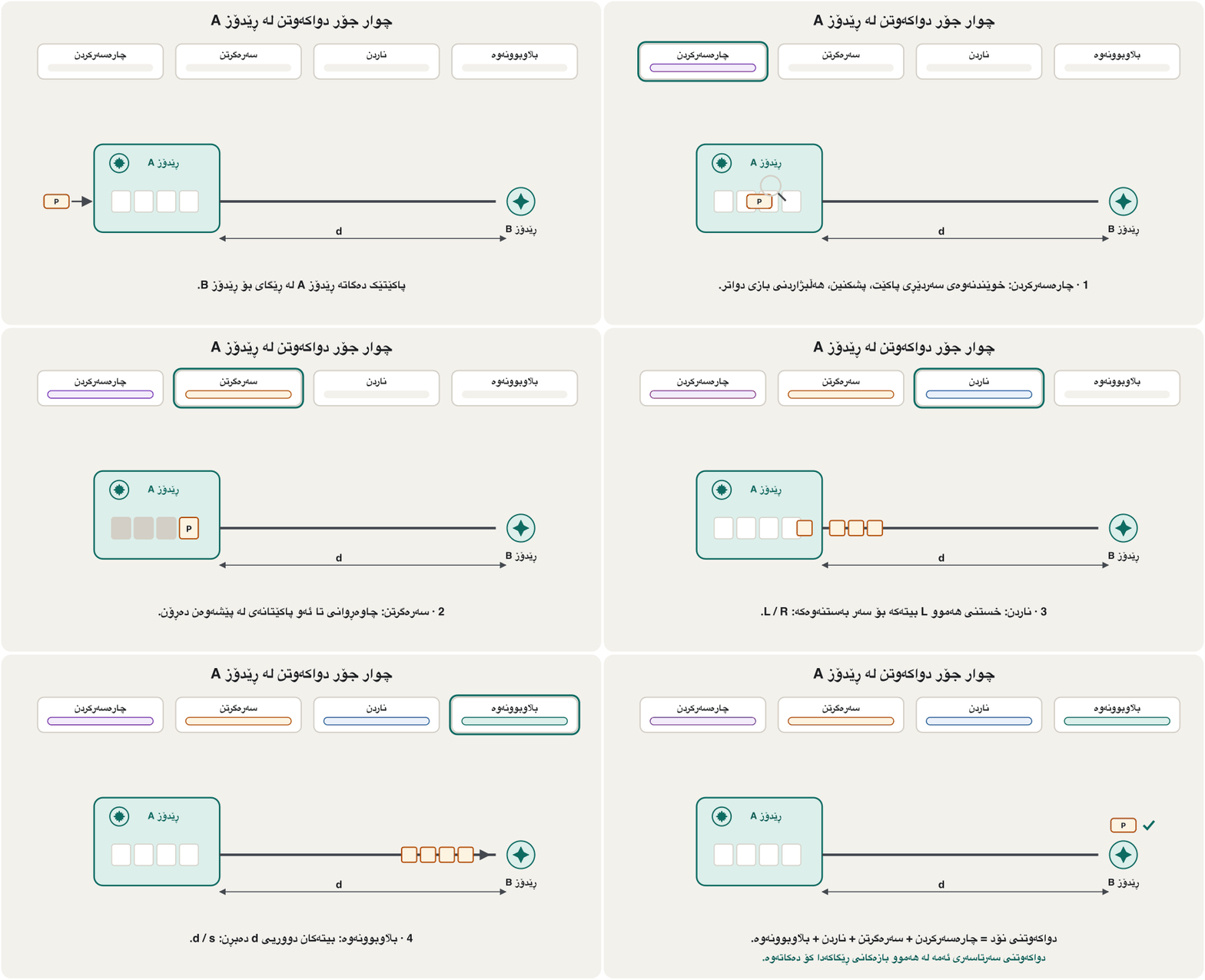
ئەو کاتەیە کە یەک پێویستیەتی لە سەرچاوەکەیەوە تا مەبەستەکەی. لە هەر سەر ڕێگاکەدا بە دوای یەکدا تووشی چوار جۆر دەبێت:
- Processing: the router reads the header, checks for errors and decides where the packet goes.
- Queuing: the packet waits until the packets in front of it have been sent.
- Transmission: the router pushes all the packet’s bits onto the outgoing link.
- Propagation: the bits travel along the link to the next router.
- چارەسەرکردن: دەخوێنێتەوە، هەڵەکان دەپشکنێت و بڕیار دەدات بۆ کوێ بچێت.
- سەرەگرتن: چاوەڕێ دەکات تا ئەو لە پێشیەوەن دەنێردرێن.
- ناردن: هەموو دەخاتە سەر بەستنەوەی دەرچوون.
- بڵاوبوونەوە: بە درێژایی بەستنەوەکەدا دەڕۆن بۆ دواتر.
This is the nodal delay at one router. The end-to-end delay is the sum of the nodal delays of every hop on the path.
ئەمە لە یەک . کۆی هەموو سەر ڕێگاکەیە.
Processing delayدواکەوتنی چارەسەرکردن
When a packet arrives, the router examines its header, checks the bits for errors and finds the best next hop in its routing table. Then the packet goes to the queue of the outgoing link. In high-speed routers this takes a few microseconds or less, because special forwarding chips do the work in hardware. A home router or a PC that routes in software needs more CPU power and more time.
کاتێک دەگات، دەپشکنێت، لە هەڵە دەپشکنێت و باشترین لە دەدۆزێتەوە. پاشان دەچێتە بەستنەوەی دەرچوون. لە خێرادا ئەمە چەند مایکرۆچرکەیەک یان کەمتر دەخایەنێت، چونکە چیپی تایبەتی ناردن کارەکە بە دەکەن. ماڵەوە یان PCـیەک کە بە دەکات، توانای و کاتی زیاتری پێویستە.
So the processing delay depends on the speed of the router’s processor or forwarding chips — not on the length of the link, and hardly on the size of the packet.
بۆیە بەندە بە خێرایی پرۆسێسەر یان چیپە ناردنەکانی — نەک بە درێژیی بەستنەوەکە و بە زەحمەت بە قەبارەی .
Queuing delay, and lost packetsدواکەوتنی سەرەگرتن و ونبوونی پاکێت
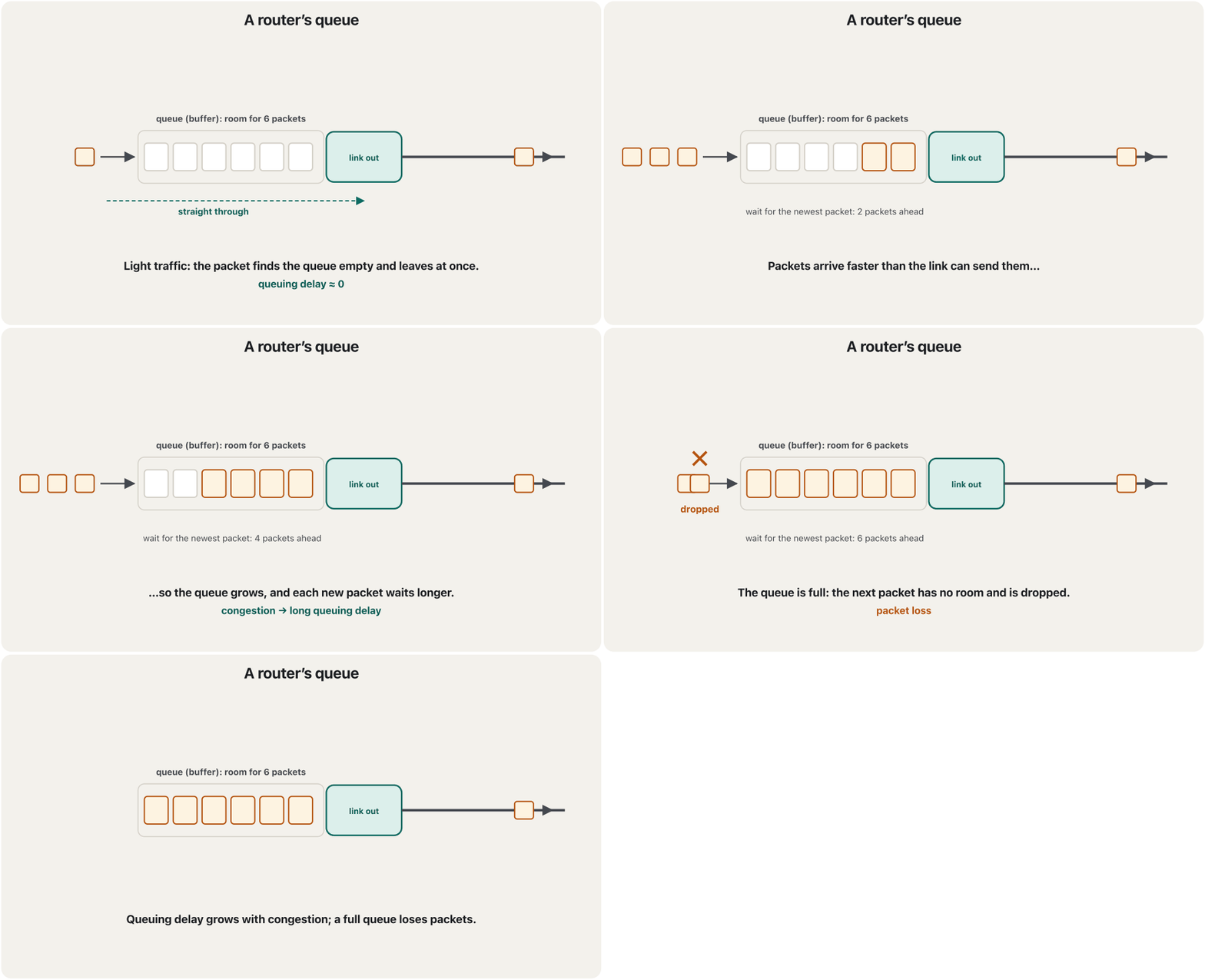
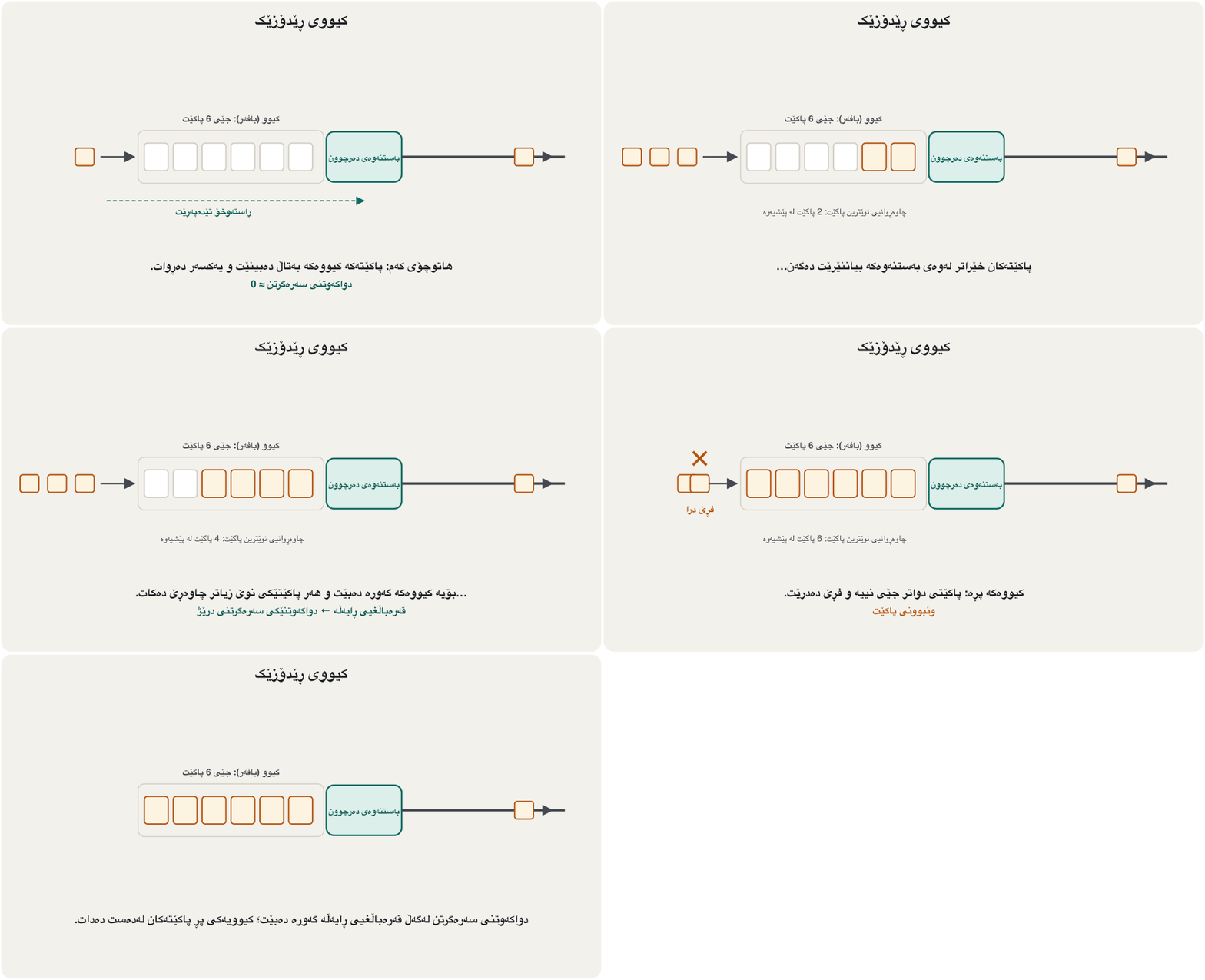
An outgoing link sends one packet at a time; packets that arrive meanwhile wait in a queue. If the queue is empty and no other packet is being sent, the queuing delay is zero. When traffic is heavy and many packets are waiting, it is long — in practice from microseconds to milliseconds. The more congestion in the queue, the longer the wait.
بەستنەوەیەکی دەرچوون لە هەر جارێکدا یەک دەنێرێت؛ ئەو لەو کاتەدا دەگەن لە چاوەڕێ دەکەن. ئەگەر بەتاڵ بێت و هیچ تر نەنێردرێت، سفرە. کاتێک هاتوچۆ قورسە و زۆر چاوەڕێن، درێژ دەبێت — لە ڕاستیدا لە مایکرۆچرکەوە تا ملیچرکە. تا لە زیاتر بێت، چاوەڕوانییەکە درێژتر دەبێت.
A queue has limited memory, a buffer. When it is full, a newly arriving packet has no place to wait and is dropped: packet loss. TCP notices the loss and sends the packet again — see TCP Connections.
بیرگەیەکی سنوورداری هەیە، . کاتێک پڕ دەبێت، کە تازە دەگات شوێنی چاوەڕوانیی نییە و فڕێ دەدرێت: . هەست بە ونبوونەکە دەکات و دووپاتە دەنێرێتەوە — بڕوانە پەیوەندییەکانی TCP.
Transmission delay: L / Rدواکەوتنی ناردن: L / R
Packets leave a link first-come-first-served: our packet can be transmitted only after all the packets that arrived before it. Then the router pushes its bits onto the link one after another. The time needed to push all the bits out is the transmission delay:
بە نۆرە بەسەر بەستنەوەیەکدا دەڕۆن، هەرکەس پێشتر بێت پێشتر: تەنیا دوای هەموو ئەو پێش ئەو گەیشتوون دەتوانێت بنێردرێت. پاشان یەک لە دوای یەک دەخاتە سەر بەستنەوەکە. ئەو کاتەی بۆ دەرکردنی هەموو پێویستە :
L = length of the packet in bits; R = transmission rate of the link in bits per second.
L = درێژیی بە ؛ R = ڕێژەی ناردنی بەستنەوەکە بە لە چرکەیەکدا.
A 1,500-byte packet is 12,000 bits. On 10 Mb/s Ethernet it needs 12,000 ÷ 10,000,000 = 1.2 ms; on 100 Mb/s, 0.12 ms; on 10 Gb/s, only 1.2 µs. The transmission delay depends on the packet’s length and the link’s rate — not on the distance.
1,500 12,000 . لەسەر 10 Mb/s پێویستی بە 12,000 ÷ 10,000,000 = 1.2 ms هەیە؛ لەسەر 100 Mb/s، 0.12 ms؛ لەسەر 10 Gb/s تەنیا 1.2 µs. بەندە بە درێژیی و ڕێژەی بەستنەوەکە — نەک بە دووری.
Propagation delay: d / sدواکەوتنی بڵاوبوونەوە: d / s
Once a bit is on the link, it must travel to the next router. The time it needs is the propagation delay: the distance between the two routers divided by the propagation speed of the medium.
کاتێک خرایە سەر بەستنەوەکە، دەبێت بڕوات بۆ دواتر. ئەو کاتەی پێویستیەتی : دووریی نێوان هەردوو دابەش بەسەر خێرایی بڵاوبوونەوەی .
d = distance between the routers in metres; s = propagation speed of the medium in metres per second.
d = دووریی نێوان بە مەتر؛ s = خێرایی بڵاوبوونەوەی بە مەتر لە چرکەیەکدا.
In copper and in fibre a signal travels at about m/s, about two thirds of the speed of light in a vacuum (0.59 to 0.77 of it, depending on the material). So 150 km of fibre from Erbil to Sulaimani takes 0.75 ms, and 4,000 km to Frankfurt takes 20 ms. The propagation delay depends on the distance and the medium — not on the packet’s size or the link’s rate. Why light is slower in glass than in a vacuum: How fast is light in a fibre?
لە مس و فایبەردا بە نزیکەی m/s دەڕوات، نزیکەی دوو لەسەر سێی خێرایی ڕووناکی لە بۆشاییدا (0.59 تا 0.77ـی، بەپێی کەرەستەکە). بۆیە 150 km فایبەر لە هەولێرەوە بۆ سلێمانی 0.75 ms دەخایەنێت و 4,000 km بۆ فرانکفۆرت 20 ms. بەندە بە دووری و — نەک بە قەبارەی یان ڕێژەی بەستنەوەکە. بۆچی ڕووناکی لە شووشەدا لە بۆشایی خاوترە: ڕووناکی لە فایبەردا چەند خێرایە؟
Transmission or propagation? The wedding convoyناردن یان بڵاوبوونەوە؟ کاروانی بووک
Ten cars of a wedding convoy leave Sulaimani for Erbil. At the city gate each car needs 12 seconds to pass, so the whole convoy needs 10 × 12 = 120 seconds to get through: that is the transmission delay — the cars are the bits, and the gate decides the rate. Then the cars drive about 180 km at 90 km/h: two hours of propagation delay. At Erbil the convoy waits until every car has arrived, then moves on together: store-and-forward.
دە ئۆتۆمبێلی کاروانی بووکێک لە سلێمانییەوە بەرەو هەولێر دەڕۆن. لە دەروازەی شاردا هەر ئۆتۆمبێلێک 12 چرکەی پێویستە تا تێپەڕێت، بۆیە هەموو کاروانەکە 10 × 12 = 120 چرکەی پێویستە بۆ تێپەڕین: ئەمە — ئۆتۆمبێلەکان و دەروازەکە ڕێژەکە دیاری دەکات. پاشان ئۆتۆمبێلەکان نزیکەی 180 km بە 90 km/h لێدەخوڕن: دوو کاتژمێر . لە هەولێر کاروانەکە چاوەڕێ دەکات تا هەموو ئۆتۆمبێلێک دەگات، پاشان پێکەوە بەردەوام دەبن: .
Where the analogy stops workingسنووری ئەم نموونەیە
Real bits do not wait at the start: the first bit already travels while the others are still being pushed out, and bits move at two thirds of the speed of light, not 90 km/h.
لە سەرەتادا چاوەڕێ ناکەن: یەکەم لە ڕێگادایە لە کاتێکدا ئەوانی تر هێشتا دەخرێنە سەر بەستنەوەکە و بە دوو لەسەر سێی خێرایی ڕووناکی دەڕۆن، نەک 90 km/h.
Worked example: 1,000 bytes over 2,500 kmنموونەی چارەسەرکراو: 1,000 بایت بەسەر 2,500 kmـدا
A classic exam question: How long does it take a packet of length 1,000 bytes to propagate over a link of distance 2,500 km, propagation speed m/s, and transmission rate 2 Mb/s?
پرسیارێکی ناسراوی تاقیکردنەوە: بە درێژیی 1,000 چەند دەخایەنێت تا بەسەر بەستنەوەیەکدا بڵاو ببێتەوە کە دووریی 2,500 km، خێرایی بڵاوبوونەوەی m/s و ڕێژەی ناردنی 2 Mb/sـە؟
- Propagation is askedبڵاوبوونەوە پرسیارە
The question asks how long the packet takes to propagate: d/s. Change km into metres first: 2,500 km = m, so d/s = ÷ = 0.01 s = 10 ms.
پرسیارەکە دەپرسێت چەند دەخایەنێت تا بڵاو ببێتەوە: d/s. سەرەتا km بگۆڕە بۆ مەتر: 2,500 km = m، بۆیە d/s = ÷ = 0.01 s = 10 ms.
- Spot the distractorفریودەرەکە بدۆزەرەوە
The packet length and the rate do not change the propagation delay: here 2 Mb/s is a distractor.
درێژیی و ڕێژەکە ناگۆڕن: لێرەدا 2 Mb/s تەنیا بۆ فریودانە.
- Extend: the whole packetدرێژکردنەوە: هەموو پاکێتەکە
How long until the whole packet has arrived? Add the transmission delay: 1,000 bytes = 8,000 bits, and 8,000 ÷ () = 0.004 s = 4 ms.
چەند دەخایەنێت تا هەموو دەگات؟ زیاد بکە: 1,000 = 8,000 و 8,000 ÷ () = 0.004 s = 4 ms.
- Add them upکۆیان بکەرەوە
For this one link: 4 ms + 10 ms = 14 ms, plus the processing and queuing at the router.
بۆ ئەم یەک بەستنەوەیە: 4 ms + 10 ms = 14 ms، لەگەڵ چارەسەرکردن و سەرەگرتن لە .
Worked example: one packet from Erbil to Frankfurtنموونەی چارەسەرکراو: یەک پاکێت لە هەولێرەوە بۆ فرانکفۆرت
Aram’s laptop in Erbil sends a 1,500-byte packet (12,000 bits) to a server in Frankfurt. Assume: about 4,000 km of fibre (the straight line is about 3,200 km, but cables follow roads, pipelines and coasts); 13 links, the first at 100 Mb/s and the other 12 at 10 Gb/s; 12 routers that each need about 5 µs; and quiet links with empty queues.
لاپتۆپەکەی ئارام لە هەولێر 1,500 (12,000 ) دەنێرێت بۆ لە فرانکفۆرت. وا دابنێ: نزیکەی 4,000 km فایبەر (هێڵی ڕاست نزیکەی 3,200 kmـە، بەڵام کێبڵەکان بەدوای ڕێگا، بۆری و کەنارەکاندا دەڕۆن)؛ 13 بەستنەوە، یەکەمیان 100 Mb/s و 12ـەکەی تر 10 Gb/s؛ 12 کە هەریەکەیان نزیکەی 5 µsـیان پێویستە؛ و بەستنەوەی ئارام بە بەتاڵ.
| Delay | Workingژماردن | Resultئەنجام |
|---|---|---|
| Propagationبڵاوبوونەوە | 20 ms | |
| Transmissionناردن | s | 0.12 + 0.0144 ≈ 0.13 ms |
| Processingچارەسەرکردن | 0.06 ms | |
| Queuingسەرەگرتن | quiet linksبەستنەوەی ئارام | 0 ms (busy links: several ms more)0 ms (بەستنەوەی قەرەباڵغ: چەند ms زیاتر) |
| Total, one wayکۆ، یەک ئاڕاستە | about 20.2 msنزیکەی 20.2 ms |
On long paths propagation dominates; on slow links transmission does. There and back, the round trip is at least about 40 ms.
لە ڕێگا درێژەکاندا بڵاوبوونەوە زاڵە؛ لە بەستنەوە خاوەکاندا ناردن. بۆ چوون و گەڕانەوە، لانیکەم نزیکەی 40 msـە.
What each delay depends onهەر دواکەوتنێک بەندە بە چی
| Delay | Depends onبەندە بە | Typical sizeقەبارەی باو | Smaller with…بچووکتر دەبێت بە… |
|---|---|---|---|
| Processing | the speed of the router’s CPU or forwarding chipsخێرایی یان چیپە ناردنەکانی | microsecondsمایکرۆچرکە | faster routers, forwarding in hardware خێراتر، ناردن بە |
| Queuing | the level of congestion: how many packets waitئاستی : چەند چاوەڕێن | 0 to milliseconds0 تا ملیچرکە | less traffic, faster linksهاتوچۆی کەمتر، بەستنەوەی خێراتر |
| Transmission, L/R، L/R | the packet length L and the link rate Rدرێژیی L و ڕێژەی بەستنەوە R | µs on fast links, ms on slow onesµs لەسەر بەستنەوەی خێرا، ms لەسەر خاو | a faster link, shorter packetsبەستنەوەی خێراتر، کورتتر |
| Propagation, d/s، d/s | the distance d and the propagation speed s of the mediumدووری d و خێرایی بڵاوبوونەوەی s | 5 µs per km5 µs بۆ هەر km | a shorter route, a server nearer to you (CDN)ڕێگایەکی کورتتر، نزیکتر لە تۆوە () |
Remember the two pairs that students mix up most: transmission ↔ length and rate (L/R); propagation ↔ distance and speed (d/s).
ئەو دوو جووتەی قوتابیان زیاتر تێکەڵیان دەکەن لە بیر بێت: ناردن ↔ درێژی و ڕێژە (L/R)؛ بڵاوبوونەوە ↔ دووری و خێرایی (d/s).
There and back: round-trip timeچوون و گەڕانەوە: کاتی چوون و گەڕانەوە
Most measurements count the delay there and back. The round-trip time (RTT) is the time from sending a small message until its answer comes back: about twice the one-way delay, plus the time the other side needs to answer. The ping command measures it (ICMP, Ping and Traceroute).
زۆربەی پێوانەکان بە چوون و گەڕانەوە دەژمێرن. (RTT) ئەو کاتەیە لە ناردنی پەیامێکی بچووکەوە تا وەڵامەکەی دەگەڕێتەوە: نزیکەی دوو ئەوەندەی یەک ئاڕاستە، لەگەڵ ئەو کاتەی لایەکەی تر بۆ وەڵامدانەوە پێویستیەتی. فەرمانی ping دەیپێوێت (ICMP، پینگ و بەدواداچوونی ڕێگە).
A real measurement: from Frankfurt to a server in Baghdad, the hourly averages of the pings were mostly 72–90 ms and never below 71 ms (WonderNetwork, 24 October – 7 November 2026). If those 71 ms were all propagation, the signal would have travelled about 7,100 km each way — twice the straight line of about 3,450 km. Real routes wind through other countries, and queues add the rest.
پێوانەیەکی ڕاستەقینە: لە فرانکفۆرتەوە بۆ لە بەغدا، تێکڕای کاتژمێرانەی زۆربەی جار 72–90 ms بوو و هەرگیز لە 71 ms کەمتر نەبوو (WonderNetwork، 24ی ئۆکتۆبەر – 7ی نۆڤەمبەری 2026). ئەگەر هەموو ئەو 71 msـە بڵاوبوونەوە بوایە، بۆ هەر ئاڕاستەیەک نزیکەی 7,100 kmـی دەبڕی — دوو ئەوەندەی هێڵی ڕاستی نزیکەی 3,450 km. ڕێگا ڕاستەقینەکان بە ناو وڵاتانی تردا پێچ دەخۆن و ئەوەی تر زیاد دەکەن.
Bandwidth and throughputپانایی باند و ڕێژەی تێپەڕین
Bandwidth is the maximum data transfer rate of a link or an Internet connection: what it can carry at best. Throughput is the amount of data actually transferred successfully each second. Both are measured in bits per second (Mb/s, Gb/s).
زۆرترین ڕێژەی گواستنەوەی بەستنەوەیەک یان پەیوەندییەکی : لە باشترین حاڵەتدا چەند دەتوانێت هەڵبگرێت. ئەو بڕە کە لە هەر چرکەیەکدا بە ڕاستی و بە سەرکەوتوویی دەگوازرێتەوە. هەردووکیان بە لە چرکەیەکدا دەپێورێن (Mb/s، Gb/s).
Throughput can never be more than the bandwidth, and in practice it is almost always less: headers and acknowledgements use part of the capacity, other users share the link, Wi-Fi radios take turns, and lost packets must be sent again.
هەرگیز لە زیاتر نابێت و لە ڕاستیدا نزیکەی هەمیشە کەمترە: و پشتڕاستکردنەوەکان بەشێک لە تواناکە بەکاردەهێنن، بەکارهێنەرانی تر بەستنەوەکە بە هاوبەشی بەکاردەهێنن، ڕادیۆکانی نۆرە دەگرن و کە ون دەبن دەبێت دووپاتە بنێردرێنەوە.
The slowest link decidesخاوترین بەستنەوە بڕیار دەدات
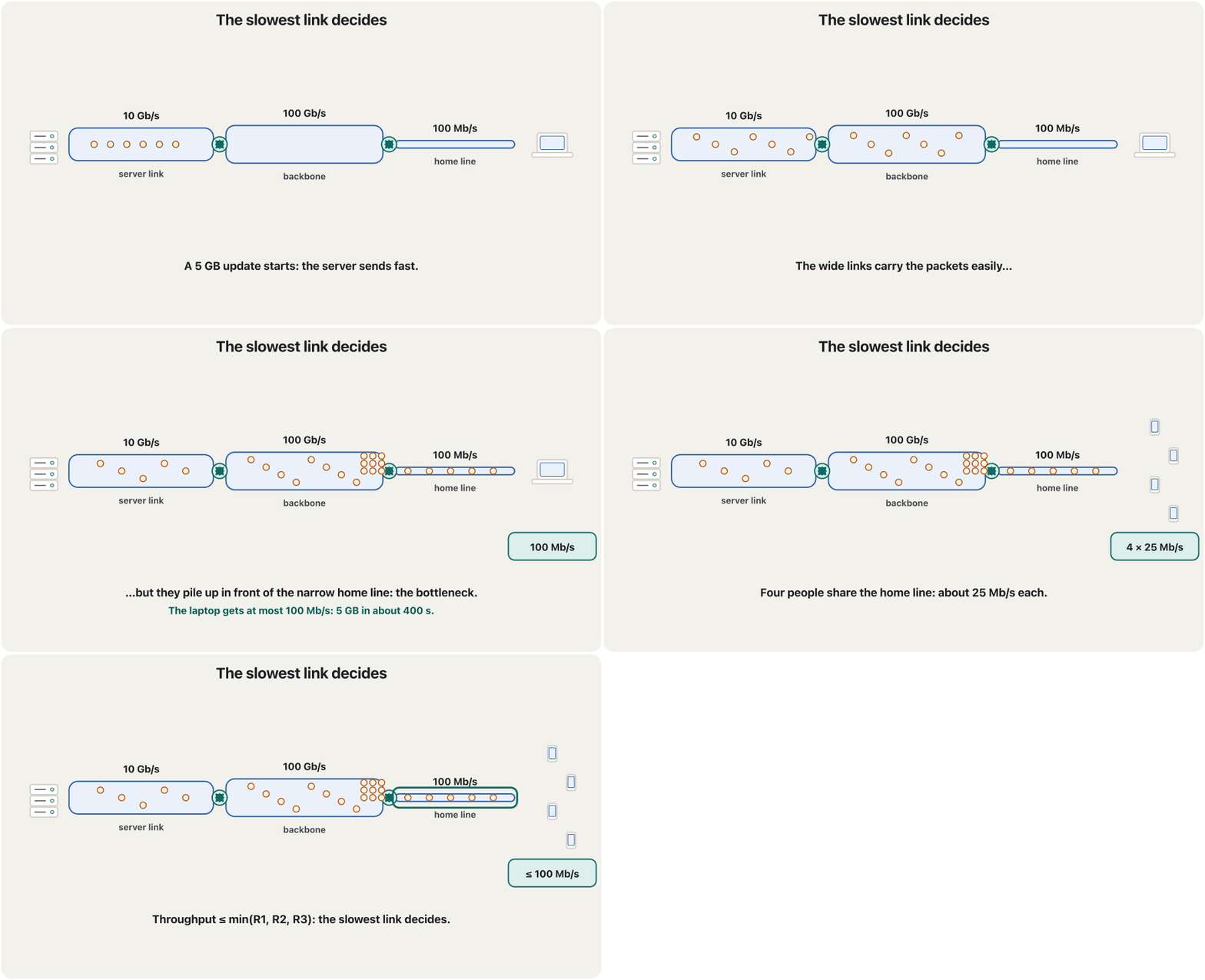
A download crosses many links, and its throughput can be no higher than the slowest of them: the bottleneck link.
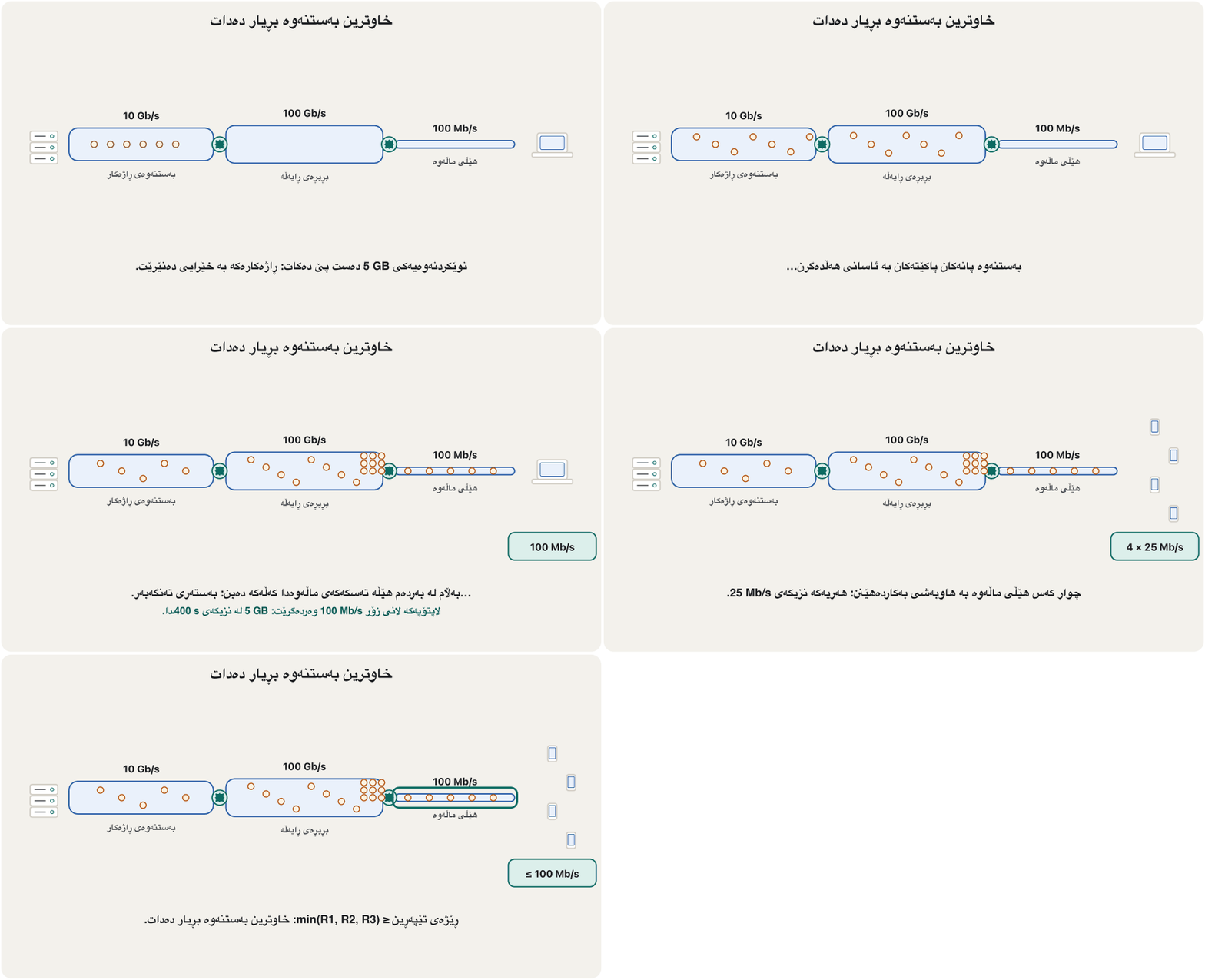
بە ناو زۆر بەستنەوەدا تێدەپەڕێت و ناتوانێت لە خاوترینیان بەرزتر بێت: .
R1 … RN are the rates of the links on the path.
R1 … RN ڕێژەی بەستنەوەکانی سەر ڕێگاکەن.
Example: a 5 GB game update comes from a server on a 10 Gb/s link, over 100 Gb/s backbones, into a home fibre line of 100 Mb/s. The bottleneck is the home line: 5 GB = bits, and ÷ = 400 s, almost 7 minutes. If four people in the house download at the same time and share the line equally, each gets 25 Mb/s and the same update takes about 27 minutes.
نموونە: نوێکردنەوەیەکی یاری بە قەبارەی 5 GB لە لەسەر بەستنەوەیەکی 10 Gb/s دێت، بەسەر 100 Gb/sـدا، بۆ ناو هێڵی فایبەری ماڵێک بە 100 Mb/s. هێڵی ماڵەکەیە: 5 GB = و ÷ = 400 s، نزیکەی 7 خولەک. ئەگەر چوار کەس لە ماڵەکەدا لە هەمان کاتدا بکەن و هێڵەکە بە یەکسانی دابەش بکەن، هەریەکە 25 Mb/s وەردەگرێت و هەمان نوێکردنەوە نزیکەی 27 خولەک دەخایەنێت.
Is my connection fast? Speed testsئایا پەیوەندییەکەم خێرایە؟ تاقیکردنەوەی خێرایی
People say “speed” and usually mean the data rate in Mb/s — the bandwidth: how much information arrives every second. But how fast a page or a game feels also depends on latency: how long each bit takes. A small web page needs several round trips before it appears, so a 200 Mb/s line with 150 ms latency shows it later than a 50 Mb/s line with 10 ms.
خەڵک دەڵێن «خێرایی» و زۆرجار مەبەستیان ڕێژەی بە Mb/s — : لە هەر چرکەیەکدا چەند زانیاری دەگات. بەڵام لاپەڕەیەک یان یارییەک چەند خێرا هەست پێ دەکرێت بەندە بە : هەر چەند دەخایەنێت. بچووک پێش دەرکەوتنی پێویستی بە چەند جار چوون و گەڕانەوە هەیە، بۆیە هێڵێکی 200 Mb/s بە 150 ms درەنگتر نیشانی دەدات لە هێڵێکی 50 Mb/s بە 10 ms.
A speed test sends data to and from a nearby test server and reports: download and upload throughput (Mb/s); latency, the round-trip time (ms), often also under load, when the full line makes the queues grow; and jitter, how much the latency changes (Jitter).
تاقیکردنەوەی خێرایی بۆ تاقیکردنەوەی نزیک دەنێرێت و لێیەوە وەردەگرێت و ڕاپۆرت دەکات: و (Mb/s)؛ ، واتە (ms)، زۆرجار لە کاتی بارگرانیشدا، کاتێک هێڵە پڕەکە گەورە دەکات؛ و ، کە چەند دەگۆڕێت (لەرزینی دواکەوتن).
Units: bits, bytes and prefixesیەکەکان: بیت، بایت و پێشگرەکان
| Prefixپێشگر | Valueبەها | Exampleنموونە |
|---|---|---|
| k (kilo) | = 1,000 | 56 kb/s: an old dial-up modem56 kb/s: مۆدێمێکی dial-upـی کۆن |
| M (mega) | = 1,000,000 | 100 Mb/s: a home fibre line100 Mb/s: هێڵێکی فایبەری ماڵ |
| G (giga) | 1 Gb/s: a GigabitEthernet port1 Gb/s: GigabitEthernet | |
| T (tera) | 1.6 Tb/s: the next Ethernet standard1.6 Tb/s: داهاتووی |
Speeds use bits (small b), file sizes use bytes (capital B), and 1 B = 8 b. So 100 Mb/s carries at most 100 ÷ 8 = 12.5 MB/s, a “GigabitEthernet” port means 1 gigabit ( bits) per second — not a gigabyte — and a modem sold as “56 KB” really ran at 56 kb/s. Network speeds always use powers of ten; for file sizes some programs use 1 KiB = 1,024 B instead (KB or KiB?). Time goes down the same way: 1 ms = s, 1 µs = s.
خێرایی بە دەنووسرێت (b بچووک) و قەبارەی بە (B گەورە) و 1 B = 8 b. بۆیە 100 Mb/s لانی زۆر 100 ÷ 8 = 12.5 MB/s هەڵدەگرێت، «GigabitEthernet» واتە 1 Gb/s، واتە لە چرکەیەکدا — نەک — و مۆدێمێک کە بە «56 KB» دەفرۆشرا لە ڕاستیدا بە 56 kb/s کاری دەکرد. خێرایی هەمیشە توانی دە بەکاردەهێنێت؛ بۆ قەبارەی هەندێک لە جیاتی ئەوە 1 KiB = 1,024 B بەکاردەهێنن (KB یان KiB؟). کاتیش بە هەمان شێوە دادەبەزێت: 1 ms = s، 1 µs = s.
How many bits are on the wire?چەند بیت لەسەر وایەرەکەن؟
Multiply a link’s rate by its delay and you get the number of bits that are on their way at the same moment: the bandwidth–delay product.
ڕێژەی بەستنەوەیەک لێک بدە لە و ژمارەی دەردەچێت کە لە هەمان ساتدا لە ڕێگادان: .
R = rate in bits per second; d_prop = one-way propagation delay in seconds.
R = ڕێژە بە لە چرکەیەکدا؛ d_prop = یەک ئاڕاستە بە چرکە.
On a 100 m LAN cable at 1 Gb/s (propagation 0.5 µs), only 500 bits are on the cable at once. On a 1 Gb/s fibre from Erbil to Frankfurt (20 ms), × 0.02 = bits — 20 megabits, or 2.5 MB — travel inside the glass at the same moment.
لەسەر کێبڵێکی 100 مەتریی بە 1 Gb/s (بڵاوبوونەوە 0.5 µs) تەنیا 500 لە یەک کاتدا لەسەر کێبڵەکەن. لەسەر فایبەرێکی 1 Gb/s لە هەولێرەوە بۆ فرانکفۆرت (20 ms)، × 0.02 = — 20 Mb، یان 2.5 MB — لە هەمان ساتدا لە ناو شووشەکەدا دەڕۆن.
Usually the product is taken with the round-trip time, R × RTT: the data a sender must have in flight before the first acknowledgement can come back. At 100 Mb/s and an RTT of 40 ms that is bits = 500 kB. A sender that keeps less in flight never fills the line — one reason long, fast links need large TCP windows (The sliding window).
زۆرجار ئەم لێکدانە بە دەکرێت، R × RTT: ئەو نێرەر دەبێت لە ڕێگادا هەیبێت پێش ئەوەی یەکەم پشتڕاستکردنەوە بگەڕێتەوە. بە 100 Mb/s و RTTـی 40 ms ئەمە = 500 kBـە. نێرەرێک کە کەمتر لە ڕێگادا بهێڵێتەوە هەرگیز هێڵەکە پڕ ناکات — یەکێک لە هۆکارەکانی ئەوەی بەستنەوە درێژ و خێراکان پێویستیان بە گەورەی هەیە (پەنجەرەی خزۆک).
Common mistakesهەڵە باوەکان
| Mistakeهەڵە | What is trueڕاستییەکە |
|---|---|
| Transmission delay and propagation delay are the same thing. و هەمان شتن. | Transmission = pushing all the bits onto the link (L/R); propagation = one bit travelling the distance (d/s).ناردن = خستنی هەموو بۆ سەر بەستنەوە (L/R)؛ بڵاوبوونەوە = یەک کە دوورییەکە دەبڕێت (d/s). |
| A faster link (more Mb/s) makes the signal travel faster.بەستنەوەی خێراتر (Mb/sـی زیاتر) خێراتر دەبات. | It only shortens the transmission delay. The propagation speed is set by the medium: about m/s.تەنیا کورت دەکاتەوە. خێرایی بڵاوبوونەوە دیاری دەکات: نزیکەی m/s. |
| Using bytes in L/R.بەکارهێنانی لە L/Rـدا. | Change bytes into bits first: 1,000 bytes = 8,000 bits.سەرەتا بگۆڕە بۆ : 1,000 = 8,000 . |
| Throughput can beat the bandwidth on a good day. لە ڕۆژێکی باشدا دەتوانێت لە زیاتر بێت. | Never: throughput ≤ bandwidth, and usually less.هەرگیز: ≤ و زۆرجار کەمترە. |
| Mb/s and MB/s are the same.Mb/s و MB/s هەمان شتن. | 1 MB/s = 8 Mb/s: a 100 Mb/s line gives at most 12.5 MB/s.1 MB/s = 8 Mb/s: هێڵێکی 100 Mb/s لانی زۆر 12.5 MB/s دەدات. |
| “GigabitEthernet” means one gigabyte per second.«GigabitEthernet» واتە یەک لە چرکەیەکدا. | One gigabit per second ( bits), about 125 MB/s.1 Gb/s، واتە لە چرکەیەکدا، نزیکەی 125 MB/s. |
| Rates add up along a path.ڕێژەکان بە درێژایی ڕێگا کۆ دەبنەوە. | The slowest link, the bottleneck, sets the throughput.خاوترین بەستنەوە، ، دیاری دەکات. |
| The ping time is the one-way delay.کاتی یەک ئاڕاستەیە. | Ping shows the round trip: about twice the one-way delay. چوون و گەڕانەوە نیشان دەدات: نزیکەی دوو ئەوەندەی یەک ئاڕاستە. |
Exercisesڕاهێنانەکان
A 1,500-byte packet crosses three links of 10 Mb/s each, through two store-and-forward routers. The cables are short and the queues empty. How long does the trip take?
1,500 سێ بەستنەوەی 10 Mb/s دەبڕێت، بە ناو دوو کە بەکاردەهێنن. کێبڵەکان کورتن و بەتاڵن. گەشتەکە چەند دەخایەنێت؟
Show answerوەڵامەکە پیشان بدە
L/R = 12,000 ÷ 10,000,000 = 1.2 ms per link; three links: 3 × 1.2 = 3.6 ms.
L/R = 12,000 ÷ 10,000,000 = 1.2 ms بۆ هەر بەستنەوەیەک؛ سێ بەستنەوە: 3 × 1.2 = 3.6 ms.
You download a 600 MB file through links of 1 Gb/s, 20 Mb/s and 300 Mb/s. What is the bottleneck, and how long does the download take at best?
فایلێکی 600 MB دەکەیت بە ناو بەستنەوەی 1 Gb/s، 20 Mb/s و 300 Mb/sـدا. کامەیە و لە باشترین حاڵەتدا چەند دەخایەنێت؟
Show answerوەڵامەکە پیشان بدە
The bottleneck is the 20 Mb/s link. 600 MB = bits; ÷ = 240 s = 4 minutes.
بەستنەوەی 20 Mb/sـە. 600 MB = ؛ ÷ = 240 s = 4 خولەک.
Convert into bytes per second: 56 kb/s, 8 Mb/s and 1 Gb/s.
بیانگۆڕە بۆ لە چرکەیەکدا: 56 kb/s، 8 Mb/s و 1 Gb/s.
Show answerوەڵامەکە پیشان بدە
Divide by 8: 7 kB/s, 1 MB/s and 125 MB/s.
دابەش بکە بەسەر 8دا: 7 kB/s، 1 MB/s و 125 MB/s.
Your ping to a server in Istanbul is 30 ms. If all of it were propagation in fibre, how long could the cable path be? The straight line from Erbil to Istanbul is about 1,400 km.
بۆ لە ئیستانبوڵ 30 msـە. ئەگەر هەمووی بڵاوبوونەوە بوایە لە فایبەردا، ڕێگای کێبڵەکە چەند درێژ دەبوو؟ هێڵی ڕاست لە هەولێرەوە بۆ ئیستانبوڵ نزیکەی 1,400 kmـە.
Show answerوەڵامەکە پیشان بدە
One way: 15 ms × m/s = m = 3,000 km at most — the real path can be up to about twice the straight line, and part of the 30 ms is queuing and processing.
یەک ئاڕاستە: 15 ms × m/s = m = لانی زۆر 3,000 km — ڕێگا ڕاستەقینەکە دەکرێت تا نزیکەی دوو ئەوەندەی هێڵی ڕاست بێت و بەشێک لە 30 msـەکە سەرەگرتن و چارەسەرکردنە.
Name the four nodal delays and what each depends on.چوار جۆرەکەی دواکەوتنی نۆد ناو ببە و بڵێ هەریەکە بەندە بە چی.
Processing — the router’s CPU or forwarding chips; queuing — the level of congestion; transmission — the packet length and the link rate (L/R); propagation — the distance and the propagation speed of the medium (d/s).
چارەسەرکردن — یان چیپە ناردنەکانی ؛ سەرەگرتن — ئاستی ؛ ناردن — درێژیی و ڕێژەی بەستنەوە (L/R)؛ بڵاوبوونەوە — دووری و خێرایی بڵاوبوونەوەی (d/s).
What is the difference between bandwidth and throughput, and which is larger?جیاوازیی نێوان پانایی باند و ڕێژەی تێپەڕین چییە و کامیان گەورەترە؟
Bandwidth is the maximum rate; throughput is what is actually transferred. Throughput is never larger, and usually smaller.
زۆرترین ڕێژەیە؛ ئەوەیە کە بە ڕاستی دەگوازرێتەوە. هەرگیز گەورەتر نییە و زۆرجار بچووکترە.
“Bandwidth is how much information you receive every second, while speed is how fast that information is received.” Explain this sentence in correct networking terms.«پانایی باند ئەوەیە کە لە هەر چرکەیەکدا چەند زانیاری وەردەگریت، بەڵام خێرایی ئەوەیە کە ئەو زانیارییە چەند بە خێرایی دەگات.» ئەم ڕستەیە بە زاراوەی دروستی ڕایەڵە ڕوون بکەرەوە.
The “speed” sold for a line is its data rate, the bandwidth. How fast information arrives after you ask for it is the latency. A good connection needs both: enough bandwidth and low latency.
ئەو «خێرایی»یەی بۆ هێڵێک دەفرۆشرێت ڕێژەی ، واتە . ئەوەی زانیاری دوای داواکردن چەند خێرا دەگات . پەیوەندیی باش هەردووکیانی پێویستە: بەس و کەم.
When is the queuing delay zero?دواکەوتنی سەرەگرتن کەی سفرە؟
When the queue is empty and no other packet is being transmitted.
کاتێک بەتاڵە و هیچ تر نانێردرێت.
Summaryپوختە
- Delay (latency) = how long data takes on its way; throughput = how many bits per second actually arrive.
- Routers store-and-forward: a packet of L bits costs L/R on every link it crosses.
- Nodal delay = processing + queuing + transmission (L/R) + propagation (d/s); end-to-end delay = the sum over all hops.
- Queues grow with congestion; a full queue drops packets.
- Signals in copper and fibre travel at about m/s: 5 µs per km, 20 ms from Erbil to Frankfurt. Ping shows the round trip.
- Throughput ≤ bandwidth, and throughput ≤ the rate of the bottleneck link.
- Speeds in bits (b), sizes in bytes (B): divide by 8. k, M, G, T = , , , .
- Rate × delay = the bits in flight (bandwidth–delay product).
- = چەند لە ڕێگادا دەخایەنێت؛ = لە هەر چرکەیەکدا چەند بە ڕاستی دەگات.
- دەکەن: بە L لەسەر هەر بەستنەوەیەک کە دەیبڕێت L/R دەخایەنێت.
- = چارەسەرکردن + سەرەگرتن + ناردن (L/R) + بڵاوبوونەوە (d/s)؛ = کۆیان بە درێژایی هەموو .
- لەگەڵ گەورە دەبن؛ پڕ فڕێ دەدات.
- لە مس و فایبەردا بە نزیکەی m/s دەڕۆن: 5 µs بۆ هەر km، 20 ms لە هەولێرەوە بۆ فرانکفۆرت. چوون و گەڕانەوە نیشان دەدات.
- ≤ ، هەروەها ≤ ڕێژەی .
- خێرایی بە (b)، قەبارە بە (B): دابەش بکە بەسەر 8دا. k، M، G، T = ، ، ، .
- ڕێژە × = ئەو لە ڕێگادان ().
Lesson complete!وانەکە تەواو بوو!
Well done. Review the key terms, then go on to the next lesson.دەستخۆش. سەیرێکی زاراوە سەرەکییەکان بکەرەوە، پاشان بڕۆ بۆ وانەی داهاتوو.
Key termsزاراوە سەرەکییەکان
Protocols, Layers and the OSI Ideaپرۆتۆکۆڵەکان، چینەکان و بیرۆکەی OSI
Related lecturesوانە پەیوەندیدارەکان
- Data Communication: Modes, Switching and Protocolsپەیوەندیی دراوە: شێوازەکانی ناردن، سویچکردن و پرۆتۆکۆڵەکان
- The Questions Behind Every IoT Designئەو پرسیارانەی لە پشت هەموو دیزاینێکی IoTـەوەن
- LANs, MANs, WANs and the Internetڕایەڵەی ناوچەیی، ڕایەڵەی شاری، ڕایەڵەی فراوان و ئینتەرنێت
- ICMP, Ping and TracerouteICMP، پینگ و بەدواداچوونی ڕێگە
- Inside a TCP Connection: Handshake, Windows and Reliabilityناو پەیوەندییەکی TCP: سێ ڕێی تەوقەکردن، پەنجەرەکان و پشتپێبەستراوی
- Bridges and Switchesپردەکانی ڕایەڵە و سویچەکان
References and further readingسەرچاوەکان و خوێندنەوەی زیاتر
- Kurose & Ross, Computer Networking: A Top-Down Approach, 9th ed. (Pearson, 2025) — chapter 1: delay, loss and throughput in packet-switched networks
- Wikipedia: Network delay (processing, queuing, transmission and propagation delay)
- Wikipedia: Propagation delay (signal speed 0.59 c to 0.77 c in copper and fibre)
- Wikipedia: Network throughput (throughput vs bandwidth; the bottleneck)
- Wikipedia: Bandwidth-delay product (capacity × round-trip time; long fat networks)
- WonderNetwork: ping times Frankfurt – Baghdad (hourly measurements, 24 October – 7 November 2026)
- Measurement Lab: NDT speed test (download, upload and latency)
This lecture is a first edition. The Kurdish text and terminology are waiting for review by Kurdish IT teachers.ئەم وانەیە چاپی یەکەمە. دەقە کوردییەکە و زاراوەکانی چاوەڕێی پێداچوونەوەی مامۆستایانی کوردی بواری IT ن.