Chapterبەش 1 · Lectureوانە 1.5
LANs, MANs, WANs and the Internetڕایەڵەی ناوچەیی، ڕایەڵەی شاری، ڕایەڵەی فراوان و ئینتەرنێت
Networks by size — PAN, LAN, CAN, MAN and WAN — compared by area, owner, cost, speed and today’s technologies; how WAN links are built in 2026; the difference between an internet and the Internet; the Internet as a global mesh of networks joined at ISPs and exchange points; how Iraq and the Kurdistan Region reach the world; a short history; who is online; network, Internet and Web; and what the Internet gives and costs.
بەپێی قەبارە — ، ، ، و — بەراورد بەپێی ناوچە، خاوەن، تێچوون، خێرایی و تەکنەلۆجیاکانی ئەمڕۆ؛ بەستنەوەکانی لە 2026دا چۆن دروست دەکرێن؛ جیاوازیی internet و ؛ وەک جیهانی لە کە لە و پێکەوە دەبەسترێن؛ عێراق و هەرێمی کوردستان چۆن دەگەنە جیهان؛ مێژوویەکی کورت؛ کێ ئۆنلاینە؛ ، و ؛ و چی دەدات و چی لێ دەسەنێت.
What you will learnچی فێر دەبیت
- Name the network categories by size and give an example of each.
- Compare LANs, MANs and WANs by area, owner, cost, speed and technology in 2026.
- Choose a WAN link — leased line, MPLS, VPN/SD-WAN or 4G/5G — for a site and explain why.
- Explain the difference between an internet and the Internet, and between the Internet and the Web.
- Describe the Internet as a network of networks joined at ISPs and exchange points, and how Iraq connects to it.
- پۆلەکانی بەپێی قەبارە ناو ببەیت و نموونەیەک بۆ هەریەکە بهێنیتەوە.
- ، و بەپێی ناوچە، خاوەن، تێچوون، خێرایی و تەکنەلۆجیا لە 2026دا بەراورد بکەیت.
- بەستنەوەیەکی — ، ، / یان 4G/5G — بۆ شوێنێک هەڵبژێریت و هۆکارەکەی ڕوون بکەیتەوە.
- جیاوازیی internet و ، هەروەها و ڕوون بکەیتەوە.
- وەک وەسف بکەیت کە لە و پێکەوە دەبەسترێن و بڵێیت عێراق چۆن پێیەوە دەبەسترێت.
Networks by size: a quick recapڕایەڵەکان بەپێی قەبارە: بیرخستنەوەیەکی خێرا
Networks are named after the area they cover. Three categories are the classic ones — the LAN, the MAN and the WAN — and two more are common: the PAN around one person and the CAN on one campus. Each size fits inside the next:
بەپێی ئەو ناوچەیەی دەیگرنەوە ناو دەنرێن. سێ پۆل پۆلە ناسراوەکانن — ، و — و دوو پۆلی تریش باون: بە دەوری یەک کەسدا و لەسەر یەک کەمپەس. هەر قەبارەیەک لە ناو قەبارەی دواتردا جێی دەبێتەوە:
- PAN (personal area network): a few metres around one person — a phone, earbuds and a watch joined by Bluetooth.
- LAN (local area network): computers in one room, building, house or office.
- CAN (campus area network): the LANs of several buildings on one site.
- MAN (metropolitan area network): computers in many buildings and offices across a city or town.
- WAN (wide area network): from one city to another, one country to another, one continent to another.
- : چەند مەترێک بە دەوری یەک کەسدا — مۆبایلێک، گوێگرێک و کاتژمێرێک کە بە پێکەوە بەستراون.
- : لە یەک ژوور، باڵەخانە، خانوو یان فەرمانگەدا.
- : چەند باڵەخانەیەک لەسەر یەک شوێن.
- : لە زۆر باڵەخانە و فەرمانگەدا بە درێژایی شارێک یان شارۆچکەیەک.
- : لە شارێکەوە بۆ شارێکی تر، لە وڵاتێکەوە بۆ وڵاتێکی تر، لە کیشوەرێکەوە بۆ کیشوەرێکی تر.
Networks are also classified by the relationship between their computers: peer-to-peer or client/server — see Two architectures. The full size table is in Networks by size.
بەپێی پەیوەندیی نێوان پۆلێن دەکرێن: یان / — بڕوانە دوو تەلارسازی. خشتەی تەواوی قەبارەکان لە ڕایەڵەکان بەپێی قەبارەدایە.
LAN: one owner, one placeڕایەڵەی ناوچەیی: یەک خاوەن، یەک شوێن
A local area network (LAN) is a group of network devices that work within a small area: a room, a house, an office or a school building. It is usually one individual network that serves the people of one organisation — one business, one school, one family — with its services and applications. The owner lays the cables and runs the switches, so a LAN is cheap to build and very fast.
کۆمەڵێک ئامێری کە لە ناوچەیەکی بچووکدا کار دەکەن: ژوورێک، خانوویەک، فەرمانگەیەک یان باڵەخانەی قوتابخانەیەک. زۆرجار یەک تاکە کە خزمەتگوزاری و خۆی پێشکەشی خەڵکی یەک ڕێکخراو دەکات — یەک کۆمپانیا، یەک قوتابخانە، یەک خێزان. خاوەنەکەی کێبڵەکان ڕادەکێشێت و بەڕێوە دەبات، بۆیە هەرزان دروست دەبێت و زۆر خێرایە.
A wireless LAN (WLAN) is a LAN, or the part of one, that uses radio (Wi-Fi) instead of wires. When one organisation joins the LANs of several buildings on one site — a university, a hospital, a factory — it builds a campus area network (CAN), still with one owner.
(WLAN) ، یان بەشێکی، کە لە جیاتی وایەر ڕادیۆ () بەکاردەهێنێت. کاتێک ڕێکخراوێک چەند باڵەخانەیەک لەسەر یەک شوێن پێکەوە دەبەستێت — زانکۆیەک، نەخۆشخانەیەک، کارگەیەک — دروست دەکات، هێشتا بە یەک خاوەنەوە.
MAN: a network for a cityڕایەڵەی شاری: ڕایەڵەیەک بۆ شارێک
A metropolitan area network (MAN) joins the LANs of one city or town, over distances of a few to tens of kilometres. It is a high-speed network that carries the bulk of the data traffic across that area. A company may rent it from a provider — for example a fibre ring through Sulaimani that joins its head office, two branches and its data centre — or a city may build one for its offices and schools.
یەک شار یان شارۆچکە پێکەوە دەبەستێت، بە دووریی چەند تا دەیان کیلۆمەتر. خێرایە کە زۆربەی هاتوچۆی لەو ناوچەیەدا هەڵدەگرێت. کۆمپانیایەک دەتوانێت لە دابینکەرێکەوە بە کرێی بگرێت — بۆ نموونە ئەڵقەیەکی فایبەر بە ناو سلێمانیدا کە نووسینگەی سەرەکی، دوو لق و پێکەوە دەبەستێت — یان شارەوانییەک دەتوانێت یەکێک بۆ فەرمانگە و قوتابخانەکانی دروست بکات.
Rules of thumb: a LAN reaches about 1 km, a MAN about 100 km. A company’s warehouse 20 km away and its factory 10 km away can be on its MAN; a branch 160 km away is in another city, so its link is a WAN link.
یاسای نزیکەیی: تا نزیکەی 1 km دەڕوات و تا نزیکەی 100 km. کۆگای کۆمپانیایەک لە 20 km دوورتر و کارگەکەی لە 10 km دوورتر دەتوانن لەسەر بن؛ لقێک لە 160 km دوورتر لە شارێکی ترە، بۆیە بەستنەوەکەی بەستنەوەی .
WAN: joining distant placesڕایەڵەی فراوان: پێکەوەبەستنی شوێنە دوورەکان
LANs that are far apart — in different cities, countries or continents — are connected by a wide area network (WAN). A WAN combines many kinds of media: fibre under roads and seas, microwave and radio links, satellites. Its long links usually belong to telecom companies, and organisations rent them.
کە لە یەکەوە دوورن — لە شار، وڵات یان کیشوەری جیاوازدا — بە پێکەوە دەبەسترێن. زۆر جۆری تێکەڵ دەکات: فایبەر لە ژێر ڕێگا و دەریاکاندا، بەستنەوەی مایکرۆوەیڤ و ڕادیۆیی، مانگی دەستکرد. بەستنەوە درێژەکانی زۆرجار هی کۆمپانیاکانی پەیوەندین و ڕێکخراوەکان بە کرێیان دەگرن.
Example: a company has a LAN in its Sulaimani office and another in Erbil, about 150 km away. Router R1 in Sulaimani and router R2 in Erbil are joined by a WAN link rented from a provider. The largest WAN of all is the Internet.
نموونە: کۆمپانیایەک لە نووسینگەی سلێمانی و یەکێکی تر لە هەولێر هەیە، بە دووریی نزیکەی 150 km. R1 لە سلێمانی و R2 لە هەولێر بە بەستنەوەیەکی پێکەوە بەستراون کە لە دابینکەرێکەوە بە کرێ گیراوە. گەورەترین .
LAN, MAN and WAN side by sideڕایەڵەی ناوچەیی، ڕایەڵەی شاری و ڕایەڵەی فراوان لە تەنیشت یەکەوە
| Featureتایبەتمەندی | LAN | MAN | WAN |
|---|---|---|---|
| Areaناوچە | a room, building, house, office or schoolژوور، باڵەخانە، خانوو، فەرمانگە یان قوتابخانە | a city or townشار یان شارۆچکە | a country, a continent, the worldوڵات، کیشوەر، جیهان |
| Range (rule of thumb)مەودا (نزیکەیی) | up to about 1 kmتا نزیکەی 1 km | up to about 100 kmتا نزیکەی 100 km | beyond 100 kmزیاتر لە 100 km |
| Who owns the linksخاوەنی بەستنەوەکان | the organisation itselfخودی ڕێکخراوەکە | usually a provider or the city; companies rentزۆرجار دابینکەر یان شارەوانی؛ کۆمپانیاکان بە کرێ دەگرن | telecom companies; organisations rent capacityکۆمپانیاکانی پەیوەندی؛ ڕێکخراوەکان توانا بە کرێ دەگرن |
| Set-up costتێچووی دامەزراندن | low: little hardwareکەم: کەم | higherزیاتر | the highestزۆرترین |
| Typical speed (2026)خێرایی باو (2026) | 1–10 Gb/s per desk; Wi-Fi up to several Gb/s1–10 Gb/s بۆ هەر مێزێک؛ تا چەند Gb/s | 10–100 Gb/s on the fibre ring10–100 Gb/s لەسەر ئەڵقە فایبەرەکە | from tens of Mb/s (4G) to many Gb/sلە دەیان Mb/s (4G)ـەوە تا زۆر Gb/s |
| Typical technology (2026)تەکنەلۆجیای باو (2026) | Ethernet, Wi-Fi، | metro Ethernet over fibre شار بەسەر فایبەردا | leased lines, MPLS, VPN/SD-WAN over the Internet, 4G/5G, submarine cables, satellites، ، / بەسەر ، 4G/5G، ، مانگی دەستکرد |
“A LAN has the highest bandwidth” is a tendency, not a law: short LAN links are cheap to make fast, while long-distance capacity must be paid for — yet the fibre of an Internet backbone carries far more than any LAN. All these distances and speeds are rules of thumb, not standards.
« زۆرترین هەیە» ئاراستەیەکە، نەک یاسا: بەستنەوە کورتەکانی بە هەرزانی خێرا دەکرێن، بەڵام توانای دوورمەودا پارەی دەوێت — لەگەڵ ئەوەشدا فایبەری زۆر زیاتر لە هەر هەڵدەگرێت. هەموو ئەم دووری و خێراییانە یاسای نزیکەیین، نەک .
Old numbers, new numbersژمارە کۆنەکان، ژمارە نوێیەکان
Older lists say: LANs are “high speed, up to 10 Gb/s” with Ethernet, Fast Ethernet, Gigabit and 10 Gigabit Ethernet and ATM; MANs reach “up to 40 Gb/s” with Metro Ethernet and ATM over SONET/SDH; WANs are “slow, up to 155 or 622 Mb/s” over analog and digital dial-up (ISDN), leased lines, X.25, DSL, Frame Relay and ATM. Those were the numbers of the mid-2000s. In 2026:
لیستە کۆنەکان دەڵێن: «خێران، تا 10 Gb/s» بە ، Fast Ethernet، Gigabit و 10 Gigabit Ethernet و ATM؛ «تا 40 Gb/s» دەگەن بە Metro Ethernet و ATM بەسەر SONET/SDHـدا؛ «خاون، تا 155 یان 622 Mb/s» بە dial-upـی ئەنالۆگ و دیجیتاڵ (ISDN)، ، X.25، ، Frame Relay و ATM. ئەوانە ژمارەکانی ناوەڕاستی ساڵانی 2000 بوون. لە 2026دا:
- LAN: Ethernet is standardised up to 800 Gb/s (IEEE 802.3df, approved on 16 February 2024), and, as of November 2026, 1.6 Tb/s (IEEE P802.3dj) is in its last approval stage, expected at the end of 2026. 1 Gb/s to each desk is normal and 2.5–10 Gb/s is spreading; data centres run 400 and 800 Gb/s.
- MAN: metro Ethernet over fibre rings, commonly 10–100 Gb/s; ATM and SONET/SDH are being retired.
- WAN: fibre leased lines, MPLS and encrypted tunnels over the Internet (SD-WAN) at 1 Gb/s and more, plus 4G/5G. Dial-up, ISDN, X.25, Frame Relay and ATM are history, and DSL is giving way to fibre.
- : تا 800 Gb/s هەیە (IEEE 802.3df، لە 16ی شوباتی 2024 پەسەند کرا) و تا نۆڤەمبەری 2026، 1.6 Tb/s (IEEE P802.3dj) لە دوایین قۆناغی پەسەندکردندایە و چاوەڕوان دەکرێت لە کۆتایی 2026دا پەسەند بکرێت. 1 Gb/s بۆ هەر مێزێک ئاساییە و 2.5–10 Gb/s بڵاو دەبێتەوە؛ 400 و 800 Gb/s بەکاردەهێنن.
- : شار بەسەر ئەڵقەی فایبەردا، زۆرجار 10–100 Gb/s؛ ATM و SONET/SDH خەریکە لە کار دەخرێن.
- : فایبەر، و تونێلی شفرەکراو بەسەر () بە 1 Gb/s و زیاتر، لەگەڵ 4G/5G. dial-up، ISDN، X.25، Frame Relay و ATM بوونەتە مێژوو و جێگای خۆی بۆ فایبەر چۆڵ دەکات.
How WAN links are built in 2026بەستنەوەکانی ڕایەڵەی فراوان لە 2026دا چۆن دروست دەکرێن
A company that needs to join its offices has four main choices:
کۆمپانیایەک کە پێویستی بە پێکەوەبەستنی نووسینگەکانیەتی چوار هەڵبژاردەی سەرەکیی هەیە:
- Leased line: a private point-to-point line, usually fibre, rented from an operator. Fast and predictable, but expensive.
- MPLS: the provider’s own network carries many customers, and labels on the packets keep each customer’s traffic apart, as if each had a private network.
- VPN or SD-WAN over the Internet: ordinary Internet links plus an encrypted tunnel; SD-WAN software picks the best link for each application. Cheap and flexible.
- 4G/5G: a mobile link, often the backup when the fibre is cut.
- : هێڵێکی تایبەتیی ، زۆرجار فایبەر، کە لە کۆمپانیایەکی پەیوەندی بە کرێ دەگیرێت. خێرا و جێگیرە، بەڵام گرانە.
- : خودی دابینکەر زۆر کڕیار هەڵدەگرێت و نیشانەی سەر هاتوچۆی هەر کڕیارێک جیا دەکاتەوە، وەک ئەوەی هەریەکەیان تایبەتیی هەبێت.
- یان بەسەر : بەستنەوەی ئاسایی لەگەڵ تونێلێکی شفرەکراو؛ باشترین بەستنەوە بۆ هەر هەڵدەبژێرێت. هەرزان و نەرمە.
- 4G/5G: بەستنەوەیەکی مۆبایل، زۆرجار یەدەگ کاتێک فایبەرەکە دەپچڕێت.
A VPN (virtual private network) extends a private network across a public network such as the Internet. How it protects the data: VPN and VPN: a safe tunnel through the Internet.
تایبەت بەسەر گشتیدا، وەک ، درێژ دەکاتەوە. چۆن دەپارێزێت: VPN و VPN: تونێلێکی سەلامەت بە ناو ئینتەرنێتدا.
internet with a small iinternet بە i بچووک
Connect two or more networks and you get an internetwork, or an internet with a small i. Each network keeps its own technology — Ethernet, Wi-Fi, a city’s fibre ring, leased lines — and routers pass packets from one network to the next. Do not confuse it with the Internet with a capital I: the name of one particular internet, the worldwide public one. In short: an internet is any set of interconnected networks; the Internet is the largest of them.
دوو یان زیاتر پێکەوە ببەستە و دەبێت، یان internet بە i بچووک. هەر تەکنەلۆجیای خۆی دەپارێزێت — ، ، ئەڵقەی فایبەری شارێک، — و لە بۆ دواتر دەگوازنەوە. تێکەڵی مەکە لەگەڵ Internet بە I گەورە، واتە : ئەمە ناوی تایبەتی یەک ، ئەوەی جیهانی و گشتییە. بە کورتی: internet هەر کۆمەڵێک کە پێکەوە بەسترابن؛ گەورەترینیانە.
The Internet: a global mesh of networksئینتەرنێت: ڕایەڵەیەکی چنراوی جیهانی لە ڕایەڵەکان
The Internet is a global mesh of interconnected networks: a public, worldwide collection of networks that links businesses, government agencies, universities and individuals. Its English name is short for inter-networking, working between networks. As of November 2026 it joins about 80,000 independent networks and billions of phones, computers and other devices — probably the largest system people have ever built.
جیهانییە لە : کۆمەڵێکی جیهانی لە کە بۆ هەمووان کراوەیە و کۆمپانیاکان، دامەزراوە حکومییەکان، زانکۆکان و تاکەکەسەکان پێکەوە دەبەستێت. ناوە ئینگلیزییەکەی کورتکراوەی inter-networkingـە، واتە کارکردن لە نێوان . تا نۆڤەمبەری 2026 نزیکەی 80,000 سەربەخۆ و ملیاران مۆبایل، و ئامێری تر پێکەوە دەبەستێت — لەوانەیە گەورەترین سیستەم بێت کە مرۆڤ تا ئێستا دروستی کردبێت.
No one owns all of it. Your phone reaches it through an ISP (Internet service provider); ISPs connect to each other and to large content companies; transit providers carry traffic between countries and continents. Every network has its own owner and is joined to the others by agreements.
کەس خاوەنی هەمووی نییە. مۆبایلەکەت لە ڕێگای پێی دەگات؛ بە یەکترەوە و بە کۆمپانیا گەورەکانی ناوەڕۆکەوە دەبەسترێن؛ دابینکەرانی گواستنەوە هاتوچۆ لە نێوان وڵاتان و کیشوەرەکاندا هەڵدەگرن. هەر خاوەنی خۆی هەیە و بە ڕێککەوتن بە ئەوانی ترەوە بەستراوە.
Follow a video's data from a data center, through undersea cables and routers, to your phone. Shows that the Internet is a real network of networks.
بەدوای ڤیدیۆیەکدا بڕۆ لە ناوەندی ، بەناو کێبڵەکانی ژێر دەریا و ، تا دەگاتە مۆبایلەکەت. دەبینیت ڕاستەقینەیە کە لە زۆر پێکدێت.
Whole video: data travels from a data centre, through undersea cables and routers, to your phone.
هەموو ڤیدیۆکە: لە ، بەناو و ، تا مۆبایلەکەت دەڕوات.
Where networks meet: exchange pointsئەو شوێنانەی ڕایەڵەکان تێیدا یەک دەگرن: خاڵەکانی ئاڵوگۆڕی ئینتەرنێت
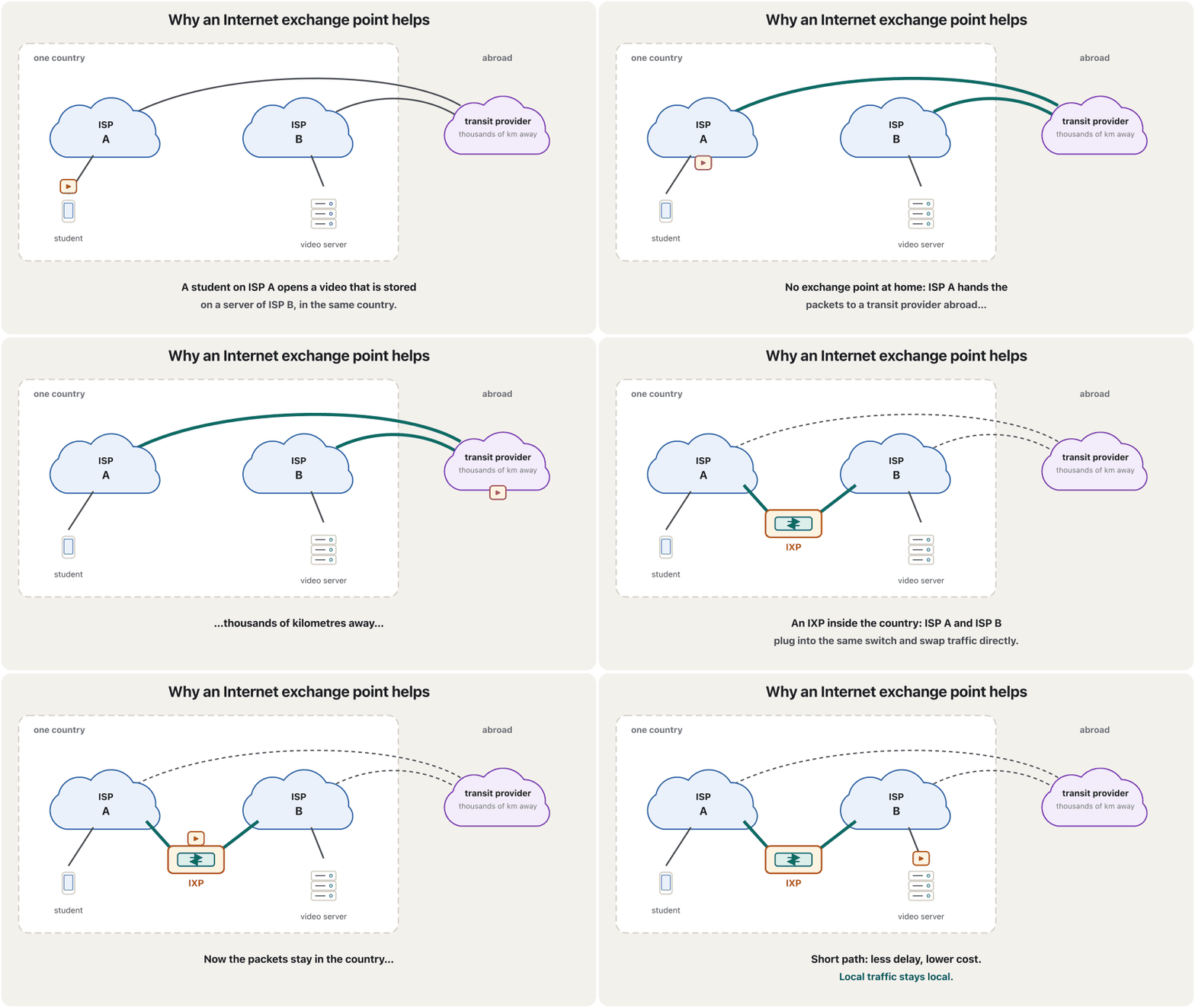
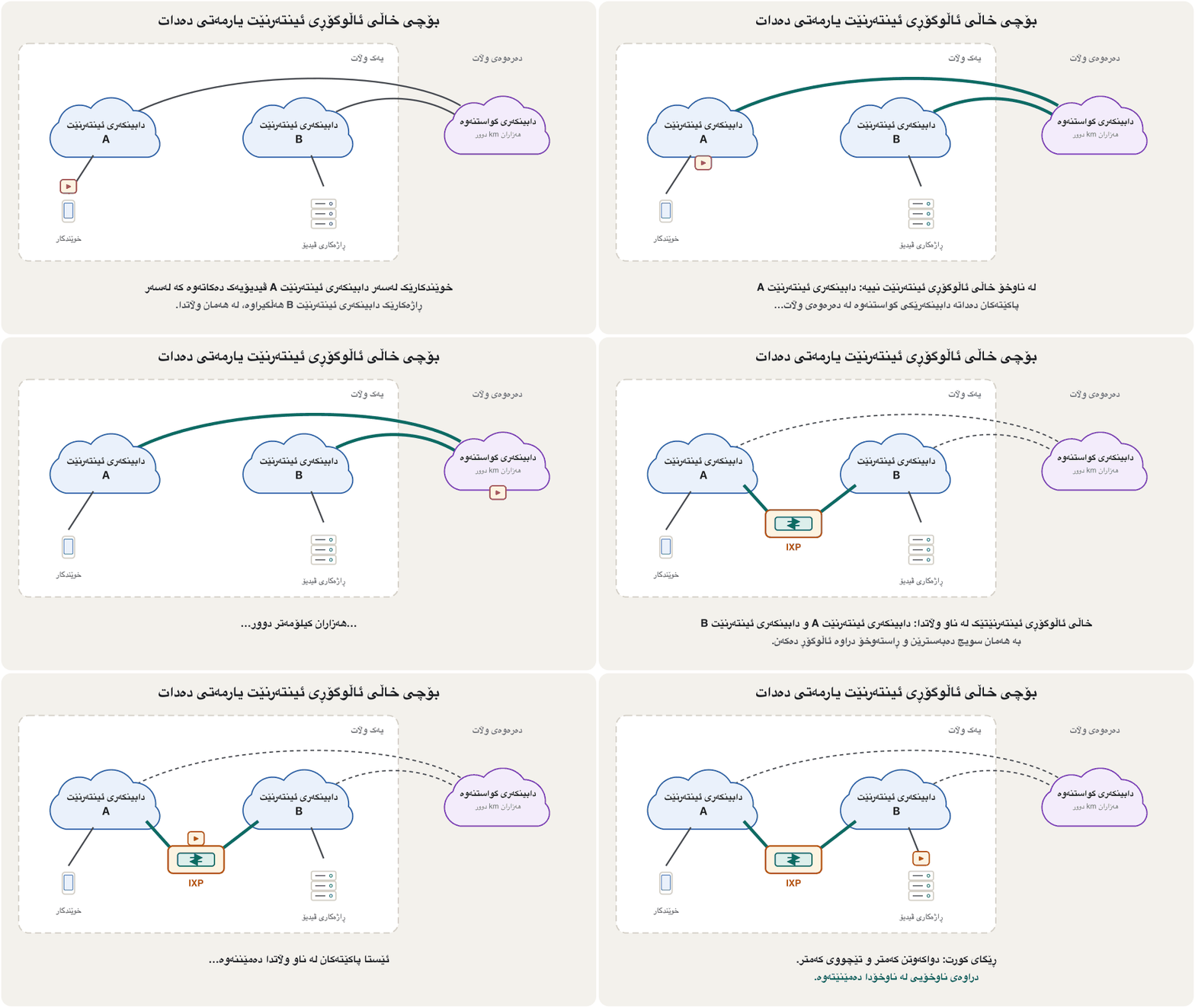
Where do two networks meet? Without a meeting point at home, two ISPs in the same country may hand their traffic to a transit provider abroad and get it back the long way, through thousands of kilometres of cable. An Internet exchange point (IXP) fixes this: many networks plug into the same large switches in one building and swap traffic directly, which is called peering. Local traffic stays local, so it arrives faster and costs less. Which network carries whose traffic is decided by agreements and BGP policy (Policy: the owner decides what “best” means).
دوو لە کوێ یەک دەگرن؟ ئەگەر لە ناو وڵاتدا شوێنی یەکگرتن نەبێت، دوو لە هەمان وڵاتدا لەوانەیە هاتوچۆکەیان بدەنە دابینکەرێکی گواستنەوە لە دەرەوەی وڵات و بە ڕێگا درێژەکەدا، بە ناو هەزاران کیلۆمەتر کێبڵدا، وەریبگرنەوە. (IXP) ئەمە چارەسەر دەکات: زۆر لە یەک باڵەخانەدا بە هەمان دەبەسترێن و ڕاستەوخۆ هاتوچۆ ئاڵوگۆڕ دەکەن، کە پێی دەوترێت peering. هاتوچۆی ناوخۆیی لە ناوخۆدا دەمێنێتەوە، بۆیە خێراتر دەگات و کەمتر تێدەچێت. کام هاتوچۆی کێ هەڵدەگرێت بە ڕێککەوتن و سیاسەتی بڕیار دەدرێت (سیاسەت: خاوەنەکە بڕیار دەدات «باشترین» چییە).
How Iraq and the Kurdistan Region reach the worldعێراق و هەرێمی کوردستان چۆن دەگەنە جیهان
Iraq and the Kurdistan Region reach the rest of the Internet by several routes (as of November 2026):
عێراق و هەرێمی کوردستان بە چەند ڕێگایەک دەگەنە بەشەکانی تری (تا نۆڤەمبەری 2026):
- Submarine cables come ashore at Al-Faw, near Basra: GBI and FALCON have served Iraq since 2012, and more cables are planned.
- Overland fibre crosses the borders to Turkey and Iran — much of it through the Kurdistan Region — and to Jordan.
- Since November 2023 a fibre route has run along the whole country, from the Gulf to the Turkish border, so traffic between the Gulf and Europe can cross Iraq by land.
- IRAQ-IXP, Iraq’s first neutral exchange point, opened in Baghdad in February 2024; by its first birthday, in April 2025, 28 networks were connected or connecting.
- لە فاو، نزیک بەسرە، دێنە وشکانی: GBI و FALCON لە 2012ـەوە خزمەتی عێراق دەکەن و کێبڵی زیاتریش لە پلاندان.
- فایبەری وشکانی سنوورەکان دەبڕێت بۆ تورکیا و ئێران — زۆربەی بە ناو هەرێمی کوردستاندا — هەروەها بۆ ئوردن.
- لە نۆڤەمبەری 2023ـەوە ڕێگایەکی فایبەر بە درێژایی هەموو وڵات کار دەکات، لە کەنداوەوە بۆ سنووری تورکیا، بۆیە هاتوچۆی نێوان کەنداو و ئەوروپا دەتوانێت بە وشکانیدا بە ناو عێراقدا تێپەڕێت.
- IRAQ-IXP، یەکەم بێلایەنی عێراق، لە شوباتی 2024 لە بەغدا کرایەوە؛ تا یەکەم ساڵیادی، لە نیسانی 2025، 28 پێیەوە بەسترابوون یان خەریکی بەستنەوە بوون.
Routes in several directions make the connection more reliable: when one cable is cut, traffic can take another — the mesh idea of Physical and Logical Topologies.
ڕێگا لە چەند ئاڕاستەیەکەوە پەیوەندییەکە متمانەپێکراوتر دەکات: کاتێک کێبڵێک دەپچڕێت، هاتوچۆ دەتوانێت ڕێگایەکی تر بگرێت — بیرۆکەی لە تۆپۆلۆجیی فیزیکی و تۆپۆلۆجیی لۆجیکی.
Cables on the sea floorکێبڵ لەسەر بنی دەریا
Almost all traffic between countries and continents travels through submarine cables lying on the sea floor; satellites carry only a very small share. As of 2026 there are more than 600 active and planned submarine cables and over 1.5 million km in service. For most of its way a cable is only as thick as a garden hose: inside, hair-thin glass fibres carry the data as light, protected by steel wires, copper and plastic. Near the shore it is thicker and buried.
نزیکەی هەموو هاتوچۆی نێوان وڵاتان و کیشوەرەکان بە ناو دەڕوات کە لەسەر بنی دەریا ڕاکشاون؛ مانگی دەستکرد تەنیا بەشێکی زۆر بچووک هەڵدەگرێت. تا 2026 زیاتر لە 600 هەیە کە کار دەکەن یان لە پلاندان و زیاتر لە 1.5 ملیۆن km لە کاردایە. بۆ زۆربەی ڕێگاکەی کێبڵێک تەنیا هێندەی بۆرییەکی ئاوی باخچە ئەستوورە: لە ناویدا ڕیشاڵی شووشەی هێندەی موو باریک وەک ڕووناکی دەگوازنەوە و بە وایەری پۆڵا، مس و پلاستیک پارێزراون. لە نزیک کەنار ئەستوورترە و لە ژێر خۆڵدا دەنێژرێت.
Where a cable comes ashore there is a cable landing station, the building that connects it to the country’s land network — Iraq’s is at Al-Faw. A cable is built to last at least 25 years, but newer, faster cables often replace it sooner. How light travels in a fibre: Fibre-Optic Cables.
لەو شوێنەی کێبڵێک دێتە وشکانی وێستگەی گەیشتنی کێبڵ هەیە، ئەو باڵەخانەیەی کە بە وشکانیی وڵاتەکەوە دەیبەستێت — هی عێراق لە فاوە. کێبڵێک بۆ لانیکەم 25 ساڵ دروست دەکرێت، بەڵام زۆرجار کێبڵی نوێتر و خێراتر زووتر جێی دەگرنەوە. ڕووناکی چۆن لە فایبەردا دەڕوات: کێبڵەکانی فایبەر ئۆپتیک.
From four computers to six billion peopleلە چوار کۆمپیوتەرەوە بۆ شەش ملیار کەس
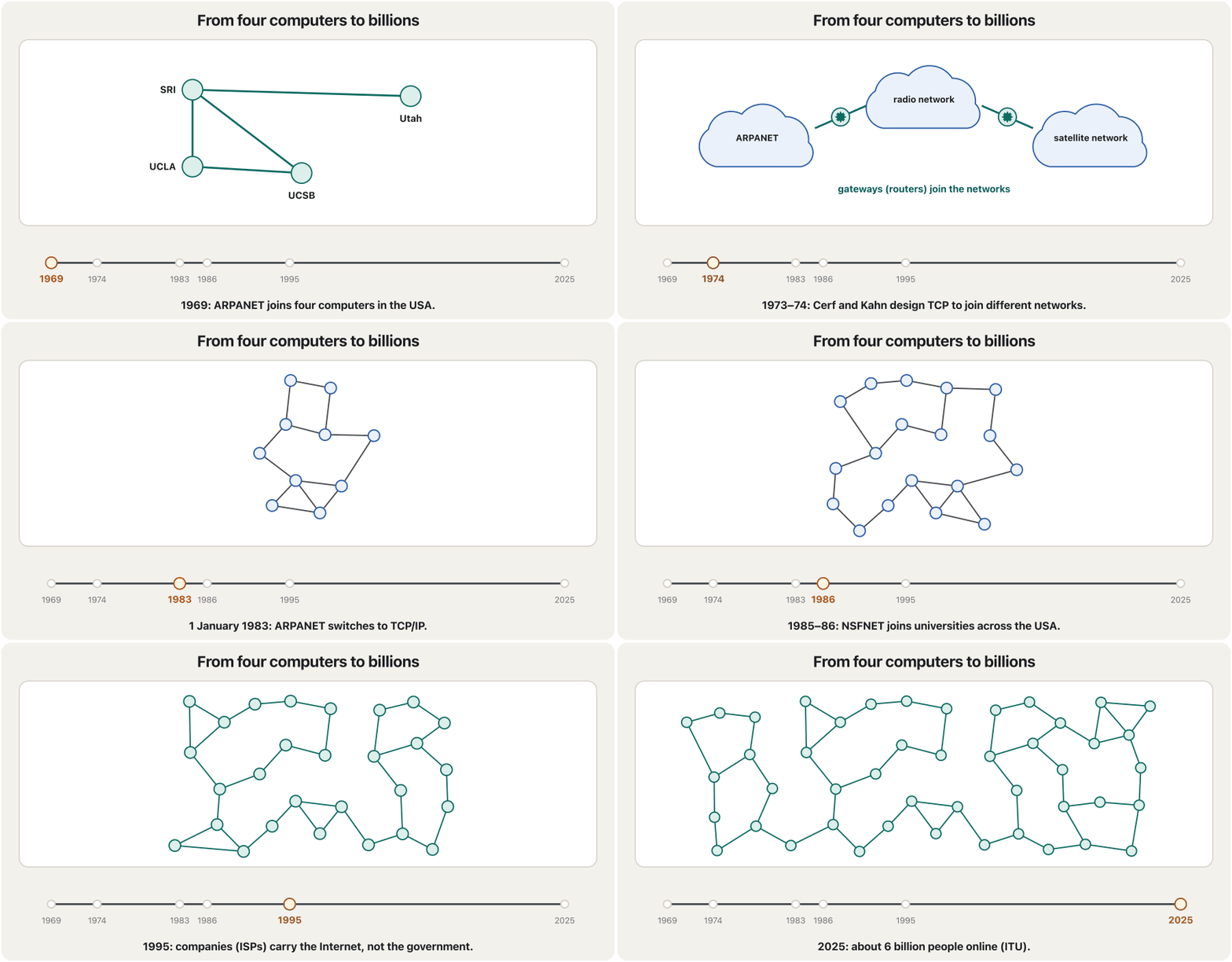
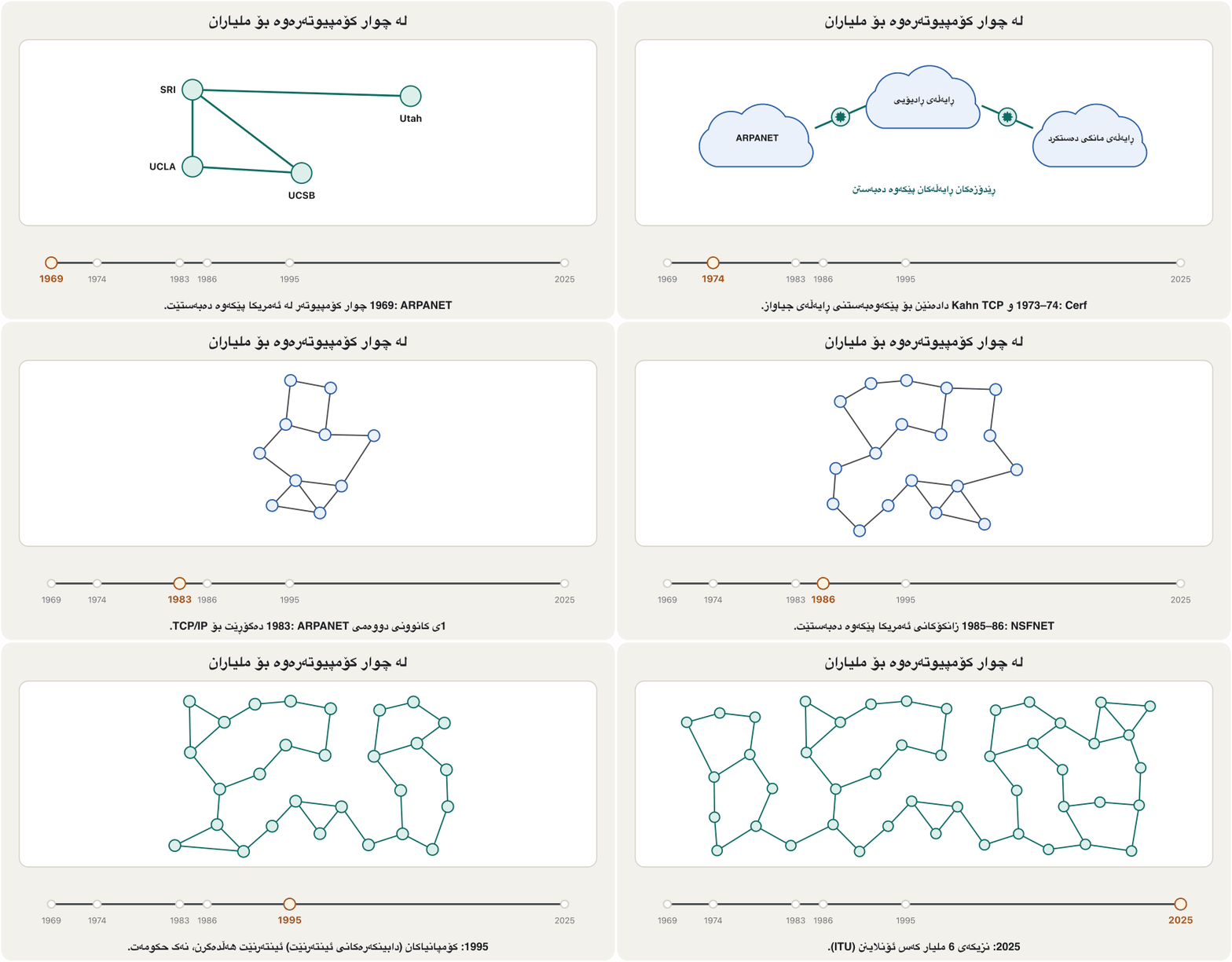
The Internet did not start as a giant network. It grew step by step, like circles that keep getting wider: two computers, then a group in one place, nearby buildings, a whole city, many cities, countries and finally the whole world. The real milestones:
وەک زەبەلاح دەستی پێ نەکرد. هەنگاو بە هەنگاو گەورە بوو، وەک بازنە کە بەردەوام فراوانتر دەبن: دوو ، پاشان کۆمەڵێک لە یەک شوێندا، باڵەخانە نزیکەکان، شارێکی تەواو، چەند شارێک، وڵاتان و لە کۆتاییدا هەموو جیهان. وێستگە ڕاستەقینەکان:
- 1969: ARPANET begins; by the end of the year it joins four computers in the USA (UCLA, SRI, UC Santa Barbara and the University of Utah).
- 1973–1974: Vint Cerf and Bob Kahn design TCP, to join different networks into one.
- 1 January 1983: ARPANET switches to TCP/IP in one day.
- 1985–1986: NSFNET joins universities across the USA.
- 1995: the NSFNET backbone closes and private companies carry the Internet.
- 1969: ARPANET دەست پێ دەکات؛ تا کۆتایی ساڵەکە چوار لە ئەمریکا پێکەوە دەبەستێت (UCLA، SRI، UC Santa Barbara و زانکۆی Utah).
- 1973–1974: Vint Cerf و Bob Kahn دادەڕێژن، بۆ ئەوەی بکەنە یەک.
- 1ی کانوونی دووەمی 1983: ARPANET لە یەک ڕۆژدا دەگۆڕێت بۆ .
- 1985–1986: NSFNET زانکۆکانی سەرانسەری ئەمریکا پێکەوە دەبەستێت.
- 1995: NSFNET دادەخرێت و کۆمپانیا تایبەتەکان هەڵدەگرن.
The rest of the story — e-mail, DNS, the Web and Wi-Fi — is in From ARPANET to Wi-Fi.
بەشەکەی تری چیرۆکەکە — ، ، و — لە ARPANETـەوە بۆ وایفایدایە.
Who is online?کێ ئۆنلاینە؟
How many people use this network of networks? In 2025, 6 billion people — 74 % of the world’s population — used the Internet, up from 5.8 billion a year earlier. But 2.2 billion people were still offline, most of them in low-income countries. In the Arab States region, which includes Iraq, 70 % of people were online (ITU, Facts and Figures 2025).
چەند کەس ئەم بەکاردەهێنن؟ لە 2025دا 6 ملیار کەس — 74%ـی دانیشتووانی جیهان — بەکارهێنا، بەراورد بە 5.8 ملیار لە ساڵی پێشوودا. بەڵام 2.2 ملیار کەس هێشتا ئۆفلاین بوون، زۆربەیان لە وڵاتانی داهات نزمدا. لە ناوچەی وڵاتانی عەرەبیدا، کە عێراقیش دەگرێتەوە، 70%ـی خەڵک ئۆنلاین بوون (ITU، Facts and Figures 2025).
Network, Internet, Web: three different thingsڕایەڵە، ئینتەرنێت، وێب: سێ شتی جیاواز
Three words are often mixed up, but each names a different world:
سێ وشە زۆرجار تێکەڵ دەکرێن، بەڵام هەریەکەیان ناوی جیهانێکی جیاوازە:
- A network is any set of devices tied together so they can share data — see The word: things tied together.
- The Internet is the one worldwide network of networks, built on TCP/IP.
- The Web is one service that runs on the Internet: pages joined by links. E-mail, file transfer, messaging, video calls and streaming are other services on the same Internet (older lists add chat rooms and newsgroups).
- هەر کۆمەڵێک ئامێرە کە پێکەوە بەسترابن بۆ ئەوەی هاوبەش بکەن — بڕوانە وشەکە: شتە پێکەوەبەستراوەکان.
- تاکە جیهانییە، کە لەسەر دروست کراوە.
- یەک خزمەتگوزارییە کە لەسەر کار دەکات: لاپەڕە کە بە پێکەوە بەستراون. ، گواستنەوەی ، نامەناردن، پەیوەندیی ڤیدیۆیی و خزمەتگوزاریی ترن لەسەر هەمان (لیستە کۆنەکان ژووری چات و newsgroupـیش زیاد دەکەن).
In Kurdish the Web is also called تۆڕ, from تۆڕی جاڵجاڵۆکە, a spider’s web — just as English web comes from the spider’s cobweb: threads joined in every direction. Its family of words: a website () made of web pages (), opened in a web browser (), starting at its home page (). More in The Internet is not the Web.
لە کوردیدا بە دەوترێت «تۆڕ»یش، لە «تۆڕی جاڵجاڵۆکە»ـوە وەرگیراوە — هەروەک وشەی ئینگلیزیی web لە تۆڕی جاڵجاڵۆکە (cobweb) هاتووە: داو کە بە هەموو ئاڕاستەیەکدا پێکەوە بەستراون. خێزانی وشەکانی: کە لە پێک دێت، لە دەکرێتەوە و لە دەست پێ دەکات. زیاتر: جیاوازیی ئینتەرنێت و وێب.
What the Internet gives, and what it costsئینتەرنێت چی دەدات و چی لێ دەسەنێت
What it gives
ئەوەی دەیدات
- Time: a letter to Europe once cost money, took weeks and could get lost; today a message arrives in seconds, free of charge.
- Information from many websites, learning from courses and video lessons (YouTube, CêIT), news from your own city and from other continents, and health information.
- Communication with anyone, however far away; entertainment — videos, games, music, books; and jobs to find and to do online.
- کات: جاران نامەیەک بۆ ئەوروپا پارەی تێدەچوو، چەند هەفتەیەکی دەخایاند و لەوانە بوو ون ببێت؛ ئەمڕۆ پەیامێک لە چەند چرکەیەکدا و بێبەرانبەر دەگات.
- زانیاری لە زۆر ، فێربوون لە کۆرس و وانەی ڤیدیۆیی (YouTube، CêIT)، هەواڵ لە شاری خۆت و لە کیشوەرەکانی تر و زانیاریی تەندروستی.
- پەیوەندی لەگەڵ هەر کەسێک، هەرچەند دوور بێت؛ کات بەسەربردن — ڤیدیۆ، یاری، مۆسیقا، کتێب؛ و هەلی کار کە لە ئۆنلایندا دەدۆزرێتەوە و ئەنجام دەدرێت.
What it can cost
ئەوەی دەکرێت لێی بسەنێت
- Wasted time and addiction: endless feeds and short-video apps can eat hours every day.
- Cyberbullying: insulting and threatening people with videos, messages and comments.
- False information: not everything online is true, especially news.
- Harmful content, such as pornography, which is not suitable for children.
- بەفیڕۆدانی کات و ئاڵوودەبوون: پەیجە بێکۆتاکان و ڤیدیۆی کورت دەتوانن ڕۆژانە چەند کاتژمێرێک بخۆن.
- : سووکایەتی و هەڕەشەکردن لە خەڵک بە ڤیدیۆ، نامە و کۆمێنت.
- زانیاریی ناڕاست: هەموو شتێکی ئۆنلاین ڕاست نییە، بەتایبەتی هەواڵ.
- ناوەڕۆکی زیانبەخش، وەک پۆرنۆگرافی، کە بۆ منداڵان گونجاو نییە.
How to protect yourself — check before you share, report bullying, manage your screen time — is taught in Digital citizenship and Cyberbullying.
چۆن خۆت بپارێزیت — پێش هاوبەشکردن بپشکنە، ڕاپۆرتی سووکایەتی بدە، کاتی شاشە ڕێک بخە — لە هاووڵاتیبوونی دیجیتاڵی و ئازاردانی سایبەریدا فێر دەکرێت.
Common mistakesهەڵە باوەکان
| Mistakeهەڵە | What is trueڕاستییەکە |
|---|---|
| A MAN covers a small area. ناوچەیەکی بچووک دەگرێتەوە. | A MAN covers a city or town. The small area is the LAN’s. شارێک یان شارۆچکەیەک دەگرێتەوە. ناوچە بچووکەکە هی . |
| A network of one organisation in a single area is a WAN. یەک ڕێکخراو لە یەک ناوچەدا . | It is a LAN. A WAN joins networks that are far apart.. پێکەوە دەبەستێت کە لە یەکەوە دوورن. |
| WANs are slow: up to 155 or 622 Mb/s. خاون: تا 155 یان 622 Mb/s. | That was the mid-2000s. In 2026 fibre WAN links run at many Gb/s.ئەوە ناوەڕاستی ساڵانی 2000 بوو. لە 2026دا بەستنەوەکانی فایبەر بە زۆر Gb/s کار دەکەن. |
| LAN, MAN and WAN have exact distances.، و دووریی وردیان هەیە. | 1 km and 100 km are rules of thumb, not standards.1 km و 100 km یاسای نزیکەیین، نەک . |
| “internet” and “Internet” mean the same.«internet» و «Internet» هەمان مانایان هەیە. | An internet is any set of joined networks; the Internet is the one worldwide network.internet هەر کۆمەڵێک پێکەوەبەستراوە؛ Internet تاکە جیهانییە. |
| The Internet and the Web are the same. و هەمان شتن. | The Web is one service on the Internet. یەک خزمەتگوزارییە لەسەر . |
| A VPN is a size of network, like a LAN or a WAN. قەبارەیەکی ، وەک یان . | A VPN is a protected tunnel through another network; it has no size of its own. تونێلێکی پارێزراوە بە ناو تردا؛ قەبارەی تایبەتی خۆی نییە. |
| The Internet started as one giant network. وەک یەک زەبەلاح دەستی پێ کرد. | It grew from ARPANET’s four computers (1969) by joining more and more networks.لە چوار ARPANETـەوە (1969) گەورە بوو، بە پێکەوەبەستنی زیاتر و زیاتر. |
Exercisesڕاهێنانەکان
Fill the gap: “___ is a group of network components that work within a small area.”بۆشاییەکە پڕ بکەرەوە: «___ کۆمەڵێک پێکهاتەی ڕایەڵەیە کە لە ناوچەیەکی بچووکدا کار دەکەن.»
LAN (local area network).
.
Fill the gap: “___ is an individual network that usually spans a single geographical area, providing services and applications to people within a common organisational structure.”بۆشاییەکە پڕ بکەرەوە: «___ ڕایەڵەیەکی تاکە کە زۆرجار یەک ناوچەی جوگرافی دەگرێتەوە و خزمەتگوزاری و ئەپەکان پێشکەشی خەڵکی یەک ڕێکخراو دەکات.»
LAN — not WAN: one area, one organisation.
— نەک : یەک ناوچە، یەک ڕێکخراو.
Classify the types of networks.جۆرەکانی ڕایەڵە پۆلێن بکە.
By size: PAN, LAN, CAN, MAN and WAN. By the relationship between the computers: peer-to-peer and client/server.
بەپێی قەبارە: ، ، ، و . بەپێی پەیوەندیی نێوان : و /.
True or false: a network in a small geographical area (a room, a building or a campus) is called a LAN.ڕاست یان هەڵە: ڕایەڵەیەک لە ناوچەیەکی جوگرافیی بچووکدا (ژوورێک، باڵەخانەیەک یان کەمپەسێک) پێی دەوترێت ڕایەڵەی ناوچەیی.
True. A campus of several buildings is also called a CAN.
ڕاستە. کەمپەسێکی چەند باڵەخانەیی پێی دەوترێت .
How does an internet differ from the Internet?internet چ جیاوازییەکی لەگەڵ Internet هەیە؟
An internet (small i) is any set of interconnected networks; the Internet (capital I) is the one worldwide public internet.
internet (i بچووک) هەر کۆمەڵێک پێکەوەبەستراوە؛ Internet (I گەورە) تاکە جیهانی و گشتییە.
The first network was called ___: a) CNNET b) NSFNET c) ASAPNET d) ARPANETیەکەم ڕایەڵە ناوی ___ بوو: a) CNNET b) NSFNET c) ASAPNET d) ARPANET
d) ARPANET (1969). NSFNET came later, in 1985–86.
d) ARPANET (1969). NSFNET دواتر هات، لە 1985–86.
Which of the following networks extends a private network across public networks? a) local area network b) virtual private network c) enterprise private network d) storage area networkکام لەم جۆرانەی ڕایەڵە ڕایەڵەیەکی تایبەت بەسەر ڕایەڵە گشتییەکاندا درێژ دەکاتەوە؟ a) ڕایەڵەی ناوچەیی b) VPN c) ڕایەڵەی تایبەتی کۆمپانیا d) SAN
b) virtual private network (VPN).
b) .
A network that is larger than a LAN and connects clients and servers in several buildings is called a(n) ___.ڕایەڵەیەک کە لە ڕایەڵەی ناوچەیی گەورەترە و ڕاژەخوازەکان و ڕاژەکارەکان لە چەند باڵەخانەیەکدا پێکەوە دەبەستێت پێی دەوترێت ___.
In the three-category scheme (LAN, MAN, WAN) the answer is MAN. If the buildings are on one site, most textbooks call it a CAN (campus area network).
لە پۆلێنی سێ پۆلییدا (، ، ) وەڵامەکە . ئەگەر باڵەخانەکان لەسەر یەک شوێن بن، زۆربەی کتێبەکان پێی دەڵێن .
A company has its head office in Erbil, a branch in Sulaimani that handles all payments, and a small shop in Koya. Choose a WAN link for each site and explain why.
کۆمپانیایەک نووسینگەی سەرەکیی لە هەولێرە، لقێکی لە سلێمانی هەیە کە هەموو پارەدانەکان بەڕێوە دەبات و دوکانێکی بچووکی لە کۆیە هەیە. بۆ هەر شوێنێک بەستنەوەیەکی هەڵبژێرە و هۆکارەکەی بڵێ.
Show answerوەڵامەکە پیشان بدە
- Sulaimani: a leased line (or MPLS), because payments need a fast, predictable link — plus a 4G/5G backup for when the fibre is cut.
- Koya: a VPN (or SD-WAN) over an ordinary Internet line: cheap and good enough for a small shop.
- Erbil: it needs strong links to both, and its own Internet connection with a second provider as a backup.
- سلێمانی: (یان )، چونکە پارەدان پێویستی بە بەستنەوەیەکی خێرا و جێگیر هەیە — لەگەڵ یەدەگی 4G/5G بۆ کاتێک فایبەرەکە دەپچڕێت.
- کۆیە: (یان ) بەسەر هێڵێکی ئاسایی : هەرزانە و بۆ دوکانێکی بچووک بەسە.
- هەولێر: پێویستی بە بەستنەوەی بەهێز هەیە بۆ هەردووکیان، هەروەها بەستنەوەی خۆی لەگەڵ دابینکەرێکی دووەم وەک یەدەگ.
Summaryپوختە
- By size: PAN (a few metres) ⊂ LAN (a room or building, one owner) ⊂ CAN (a campus) ⊂ MAN (a city) ⊂ WAN (cities, countries, the world). The distances are rules of thumb.
- A WLAN is a LAN on radio (Wi-Fi). LANs are cheap and fast; WAN links are rented and cost the most.
- WAN links in 2026: leased lines, MPLS, VPN/SD-WAN over the Internet and 4G/5G; ISDN, X.25, Frame Relay and ATM are history.
- An internet joins networks with routers; the Internet is the one worldwide public internet, a mesh of about 80,000 networks joined at ISPs and exchange points.
- Iraq reaches the world through subsea cables at Al-Faw, land routes to Turkey, Iran and Jordan, and IRAQ-IXP in Baghdad (2024).
- 1969 ARPANET → 1983 TCP/IP → 1985–86 NSFNET → 1995 commercial Internet → 2025: 6 billion people online.
- Network, Internet and Web are three different things: the Web is one service on the Internet.
- بەپێی قەبارە: (چەند مەترێک)، (ژوورێک یان باڵەخانەیەک، یەک خاوەن)، (کەمپەسێک)، (شارێک)، (شار، وڵات، جیهان)؛ هەریەکە لە ناو دواتردا. دوورییەکان نزیکەیین.
- WLAN بە ڕادیۆ (). هەرزان و خێران؛ بەستنەوەکانی بە کرێ دەگیرێن و گرانترینن.
- بەستنەوەکانی لە 2026دا: ، ، / بەسەر و 4G/5G؛ ISDN، X.25، Frame Relay و ATM مێژوون.
- internet بە پێکەوە دەبەستێت؛ تاکە جیهانی و گشتییە، لە نزیکەی 80,000 کە لە و پێکەوە دەبەسترێن.
- عێراق لە ڕێگای فاو، ڕێگای وشکانی بۆ تورکیا، ئێران و ئوردن و IRAQ-IXP لە بەغدا (2024) دەگاتە جیهان.
- 1969 ARPANET ← 1983 ← 1985–86 NSFNET ← 1995 بازرگانی ← 2025: 6 ملیار کەس ئۆنلاین.
- ، و سێ شتی جیاوازن: یەک خزمەتگوزارییە لەسەر .
Lesson complete!وانەکە تەواو بوو!
Well done. Review the key terms, then go on to the next lesson.دەستخۆش. سەیرێکی زاراوە سەرەکییەکان بکەرەوە، پاشان بڕۆ بۆ وانەی داهاتوو.
Key termsزاراوە سەرەکییەکان
How Fast Is a Network? Delay, Bandwidth and Throughputڕایەڵە چەند خێرایە؟ دواکەوتن، پانایی باند و ڕێژەی تێپەڕین
Related lecturesوانە پەیوەندیدارەکان
- Types of Networks: LAN, WAN and Moreجۆرەکانی ڕایەڵە: ڕایەڵەی ناوچەیی، ڕایەڵەی فراوان و زیاتر
- The Internet and the Webئینتەرنێت و وێب
- Mobile Technology and Wireless Networksتەکنەلۆژیای مۆبایل و ڕایەڵە بێتەلەکان
- Network Defences: Firewalls, Segmentation, Monitoring and SIEMبەرگرییەکانی ڕایەڵە: ئاگرەدیوار، بەشبەشکردنی ڕایەڵە، چاودێریی ئاسایش و SIEM
- Digital Citizenship: Footprints, Netiquette and Cyberbullyingهاووڵاتیبوونی دیجیتاڵی: شوێنپێ دیجیتاڵییەکان، ئادابی ئینتەرنێت و ئازاردانی سایبەری
- How Fast Is a Network? Delay, Bandwidth and Throughputڕایەڵە چەند خێرایە؟ دواکەوتن، پانایی باند و ڕێژەی تێپەڕین
- Fibre-Optic Cables: Single-Mode and Multimodeکێبڵەکانی فایبەر ئۆپتیک: تاکمۆد و فرەمۆد
- Modems and Routersمۆدێمەکان و ڕێدۆزەکان
- How a Packet Finds Its Way: Gateways and Routing Tablesپاکێت چۆن ڕێگای خۆی دەدۆزێتەوە: دەروازەی بنەڕەتی و خشتەکانی ڕێدۆزی
- BGP: Routing Between Autonomous SystemsBGP: ڕێدۆزی لە نێوان سیستەمە سەربەخۆکاندا
References and further readingسەرچاوەکان و خوێندنەوەی زیاتر
- IEEE P802.3df Task Force: 400 Gb/s and 800 Gb/s Ethernet (IEEE Std 802.3df-2024, approved 16 February 2024)
- Cisco: What is a WAN? (SD-WAN, leased lines and MPLS; ATM and Frame Relay superseded)
- Internet Society: A Brief History of the Internet (ARPANET 1969, TCP 1973–74, TCP/IP on 1 January 1983, NSFNET, 1995)
- ITU: Facts and Figures 2025 — Internet use (74 %, 6 billion; Arab States 70 %; Africa 36 %)
- ITU press release, 17 November 2025: 2.2 billion people still offline
- Internet Society policy brief: Internet Exchange Points (keeping local traffic local)
- DE-CIX press release, 7 February 2024: First Internet Exchange in Iraq, IRAQ-IXP powered by DE-CIX, is now live
- Submarine Networks: Iraq cable landing station Al-Faw (GBI and FALCON, 2012; planned cables)
- Qatar News Agency, October 2026: OFN signs dark fibre agreement with iQ Networks for the Iraq transit corridor
- TeleGeography: Submarine cable frequently asked questions (2026: more than 600 cables, 1.5 million km)
- CIDR Report, 7 November 2026: 79,849 autonomous systems in the routing system
- DE-CIX press release, 3 April 2025: IRAQ-IXP powered by DE-CIX now the 3rd largest Internet Exchange in the Middle East (28 networks)
- Rest of World, 1 May 2026: Big Tech is moving data out of the Gulf through Iraqi oil pipelines (IQ Networks' Silk Route Transit, running since November 2023)
This lecture is a first edition. The Kurdish text and terminology are waiting for review by Kurdish IT teachers.ئەم وانەیە چاپی یەکەمە. دەقە کوردییەکە و زاراوەکانی چاوەڕێی پێداچوونەوەی مامۆستایانی کوردی بواری IT ن.