Chapterبەش 2 · Lectureوانە 2.3
OSI Layers 4 and 5: Transport and Sessionچینەکانی 4 و 5ی OSI: چینی گواستنەوە و چینی سێشن
The transport layer as OSI describes it — process-to-process delivery with port numbers, segmentation and reassembly, connection, flow and error control, and multiplexing — and the session layer: opening, managing and closing a dialogue, taking turns with tokens (token management) and checkpoints, its protocols past and present, and where its jobs live in today's TCP/IP world.
وەک OSI وەسفی دەکات — گەیاندن لە بۆ بە ژمارەی ، و کۆکردنەوە، کۆنترۆڵی پەیوەندی، ، و — هەروەها : کردنەوە، بەڕێوەبردن و داخستنی گفتوگۆ، نۆرەگرتن بە نیشانە (بەڕێوەبردنی نیشانە) و ، کۆن و ئێستای و ئەوەی ئەمڕۆ لە جیهانی کارەکانی لە کوێ دەکرێن.
What you will learnچی فێر دەبیت
- Explain why the transport layer is called the heart of OSI and why it runs only in the end systems.
- Describe process-to-process delivery, port addressing, segmentation and reassembly, and multiplexing.
- Explain end-to-end flow control and error control, and how they differ from the data link layer's.
- Explain what a session is and the jobs of the session layer: establishing, managing and ending sessions, dialog control with tokens (token management) and synchronisation points.
- Tell the OSI meaning of synchronisation from file sync, and say where session work is done today.
- Say which session-layer protocols are in use and which are history or unsafe.
- ڕوونی بکەیتەوە بۆچی بە دڵی OSI ناو دەبرێت و بۆچی تەنیا لە سیستەمە کۆتاییەکاندا کار دەکات.
- گەیاندن لە بۆ ، ناونیشانکردن بە ، و کۆکردنەوە و وەسف بکەیت.
- و لە سەرێکەوە بۆ سەرەکەی تر ڕوون بکەیتەوە و جیاوازییان لەگەڵ هی بزانیت.
- ڕوونی بکەیتەوە چییە و کارەکانی چین: دامەزراندن، بەڕێوەبردن و کۆتاییهێنانی ، بە نیشانەی نۆرە (بەڕێوەبردنی نیشانە) و .
- جیاوازیی واتای هاوکاتکردن لە OSIـدا و فایل بزانیت و بڵێیت ئەمڕۆ کاری لە کوێ دەکرێت.
- بڵێیت کام بەکار دێن و کامیان مێژوون یان نائاسایشن.
Layer 4: the transport layerچینی 4: چینی گواستنەوە
Some sources call the transport layer the heart of OSI: it sits between the network support layers and the user support layers, and it is responsible for how the data is moved. The network layer delivers individual packets from host to host and sees no relationship between them. The transport layer is responsible for source-to-destination (end-to-end) delivery of the whole message, from a process — a running program — on one host to a process on the other.
لە هەندێک سەرچاوەدا بە دڵی OSI ناو دەبرێت: لە نێوان چینەکانی پشتگیریی و چینەکانی پشتگیریی بەکارهێنەردایە و بەرپرسە لە چۆنییەتیی گواستنەوەی . یەک یەک لە بۆ دەگەیەنێت و هیچ پەیوەندییەک لە نێوانیاندا نابینێت. بەرپرسە لە گەیاندنی هەموو نامەکە لە سەرچاوەوە بۆ جێی مەبەست (لە سەرێکەوە بۆ سەرەکەی تر)، لە — بەرنامەیەکی کارپێکراو — لەسەر بۆ لەسەر ئەوی تر.
Only the two end hosts know about the programs, so the transport layer runs only in the end systems — the computers and phones at the two ends. The routers in between use layers 1–3 and never open a segment. The Internet's two transport protocols are TCP, the Transmission Control Protocol — the TCP in TCP/IP — and UDP, the User Datagram Protocol. Their details are in TCP and UDP.
تەنیا دوو سەرەتا و کۆتایی ئاگایان لە بەرنامەکانە، بۆیە تەنیا لە سیستەمە کۆتاییەکاندا کار دەکات — ئەو و مۆبایلانەی لە دوو سەرەکەدان. نێوان چینەکانی 1 تا 3 بەکار دەهێنن و هەرگیز ناکەنەوە. دوو گواستنەوەی هەیە: ، Transmission Control Protocol — ئەو TCPـیەی لە TCP/IPـدایە — و ، User Datagram Protocol. وردەکارییەکانیان لە TCP و UDPـدایە.
Layer 4 of the and of TCP/IP: it carries data between programs on two hosts, keeps their conversations apart by numbers and cuts the data into segments. adds reliability and flow control; does not.
چینی 4ی و : لە نێوان بەرنامەکانی دوو دەگوازێتەوە، بە ژمارەی گفتوگۆکانیان لە یەک جیا دەکاتەوە و دەکات بە . متمانە و زیاد دەکات؛ نا.
Layer 4: the transport layerچینی 4: چینی گواستنەوە
The jobs of the transport layerکارەکانی چینی گواستنەوە
To move a whole message from one program to another, layer 4 has several jobs. It decides how much data to send, at what rate and to where:
بۆ گواستنەوەی هەموو نامەیەک لە بەرنامەیەکەوە بۆ بەرنامەیەکی تر، چینی 4 چەند کارێکی هەیە. بڕیار دەدات چەند ، بە چ خێراییەک و بۆ کوێ بنێرێت:
- Port (service-point) addressing: a computer runs many programs at once, so the header carries port numbers that say which program the data is for.
- Segmentation and reassembly: a long message is cut into numbered segments and put back together, in order, at the other end.
- Connection control: a connection-oriented protocol first sets up a connection, manages it and then ends it (TCP); a connectionless one sends each piece on its own (UDP).
- Flow control, end to end: the receiver tells the sender how much it can take.
- Error control, end to end: the receiver checks the data and asks again for anything lost or damaged.
- Multiplexing: the segments of many programs share one network connection.
- ناونیشانکردن بە : لە یەک کاتدا چەندین بەرنامە کار پێ دەکات، بۆیە سەردێڕەکە ژمارەی هەڵدەگرێت کە دەڵێن بۆ کام بەرنامەیە.
- و کۆکردنەوە: نامەیەکی درێژ دەکرێتە چەند ژمارەدار و لە سەرەکەی تر بە ڕیز کۆ دەکرێتەوە.
- کۆنترۆڵی پەیوەندی: سەرەتا پەیوەندییەک دادەمەزرێنێت، بەڕێوەی دەبات و پاشان کۆتایی پێ دەهێنێت ()؛ هەر پارچەیەک بە تەنیا دەنێرێت ().
- ، لە سەرێکەوە بۆ سەرەکەی تر: وەرگر بە نێرەر دەڵێت چەندی پێ وەردەگیرێت.
- ، لە سەرێکەوە بۆ سەرەکەی تر: وەرگر دەپشکنێت و داوای هەر شتێکی ونبوو یان تێکچوو دەکاتەوە.
- : چەندین بەرنامە یەک پەیوەندیی بەکار دەهێنن.
Layer 4: the transport layerچینی 4: چینی گواستنەوە
Segments: cut, number, put back togetherبڕەکان: بڕین، ژمارەکردن، کۆکردنەوە
The transport layer takes the data from the session layer and cuts it into smaller pieces called segments — this is segmentation. Each segment gets a header (H4) with the port numbers and a sequence number. The network layer then puts each segment into a packet. The packets can take different paths and arrive in a different order, so the receiving transport layer uses the sequence numbers to put the pieces back in the right order — reassembly — and to notice a missing one.
لە وەردەگرێت و دەیکاتە چەند پارچەیەکی بچووکتر بە ناوی — ئەمە . هەر سەردێڕێک (H4) وەردەگرێت کە ژمارەی و ی تێدایە. پاشان هەر دەخاتە ناو . دەتوانن بە ڕێگای جیاوازدا بڕۆن و بە ڕیزی جیاواز بگەن، بۆیە وەرگر بەکار دەهێنێت بۆ ئەوەی پارچەکان بە ڕیزی دروست کۆ بکاتەوە — کۆکردنەوە — و پارچەیەکی ونبوو بدۆزێتەوە.
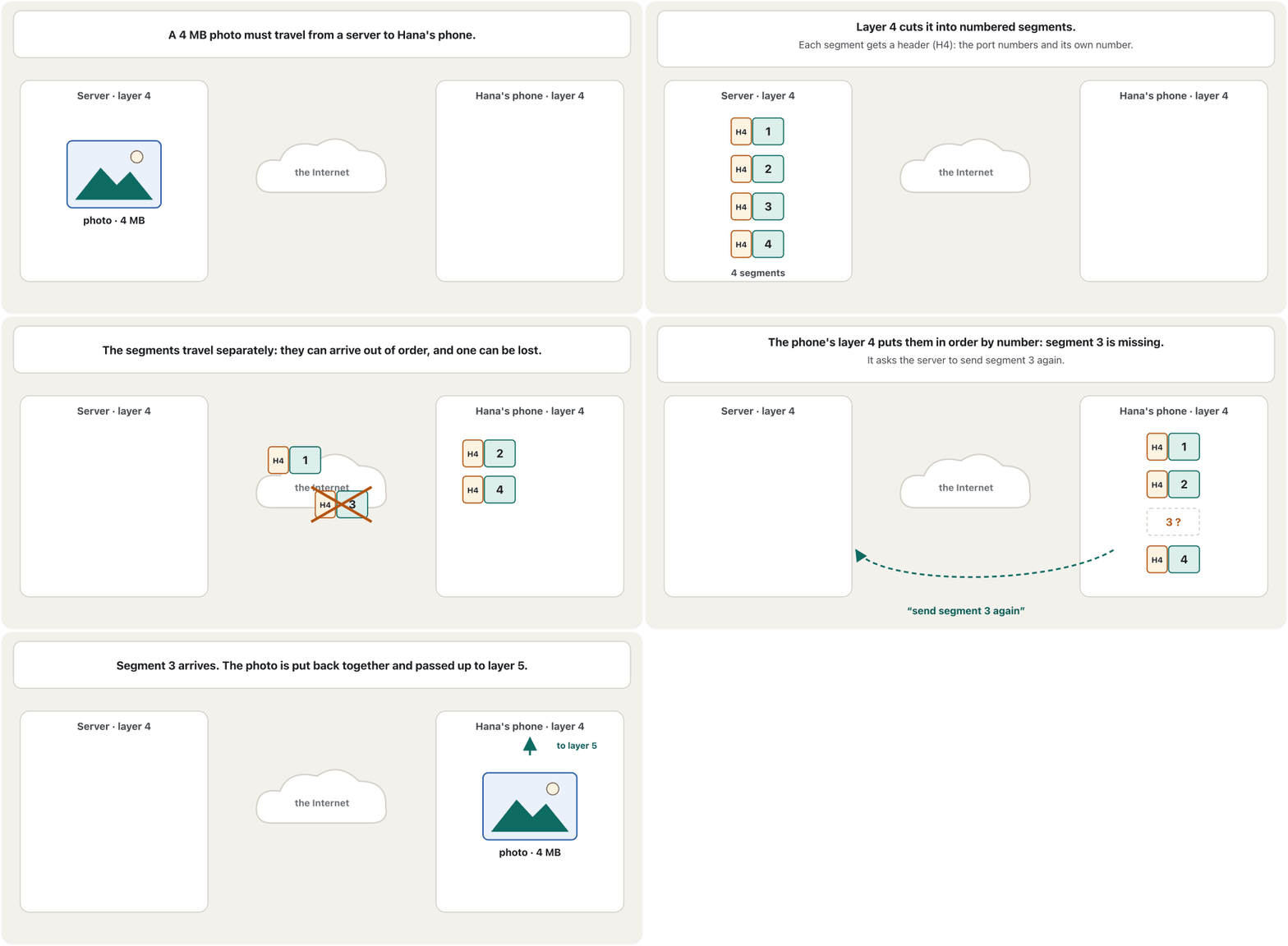
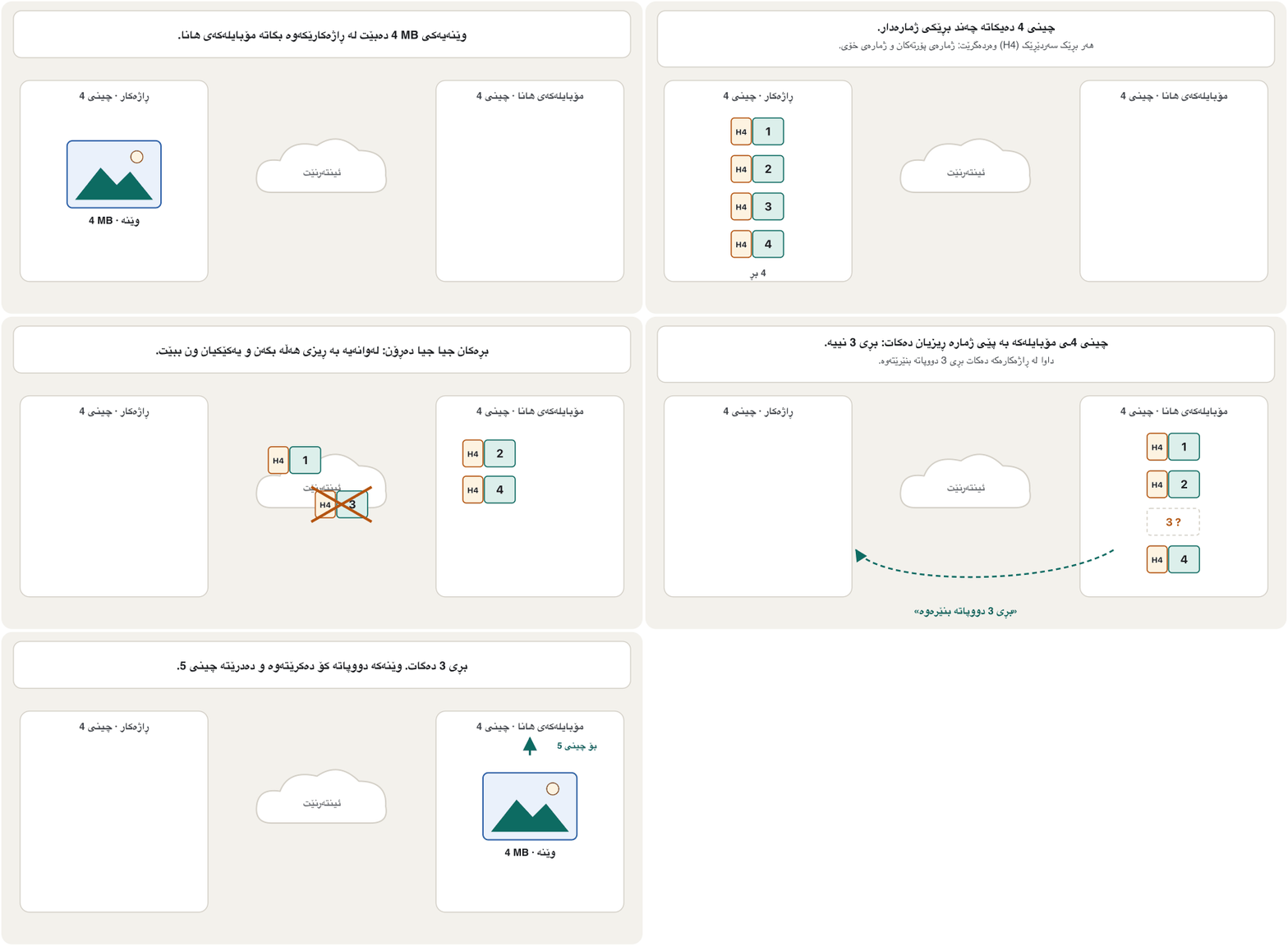
In TCP this unit is called a segment; in UDP it is a datagram. A segment is not a packet: the packet is the network layer's unit, and it carries the segment inside.
لە ئەم یەکەیە پێی دەگوترێت ؛ لە . نییە: یەکەی و لە ناو خۆیدا هەڵدەگرێت.
Layer 4: the transport layerچینی 4: چینی گواستنەوە
Flow control and error control, end to endکۆنترۆڵی ڕەوت و کۆنترۆڵی هەڵە، لە سەرێکەوە بۆ سەرەکەی تر
Flow control stops a fast sender from drowning a slow receiver. The receiver keeps arriving segments in a buffer and keeps telling the sender how much room is left; the sender never sends more than that. Error control checks every segment with a checksum; a segment that is damaged, or that never arrives, is sent again. The receiver's acknowledgements show the sender what has arrived and what is missing.
ڕێگە نادات نێرەرێکی خێرا وەرگرێکی خاو نوقمی بکات. وەرگر ئەو دەگەن لە دا هەڵدەگرێت و بەردەوام بە نێرەر دەڵێت چەند جێی ماوە؛ نێرەر هەرگیز لەوە زیاتر نانێرێت. هەموو بە دەپشکنێت؛ کە تێکچووبێت یان هەرگیز نەگات، دووپاتە دەنێردرێتەوە. وەرگر بە نێرەر پیشان دەدات چی گەیشتووە و چی ون بووە.
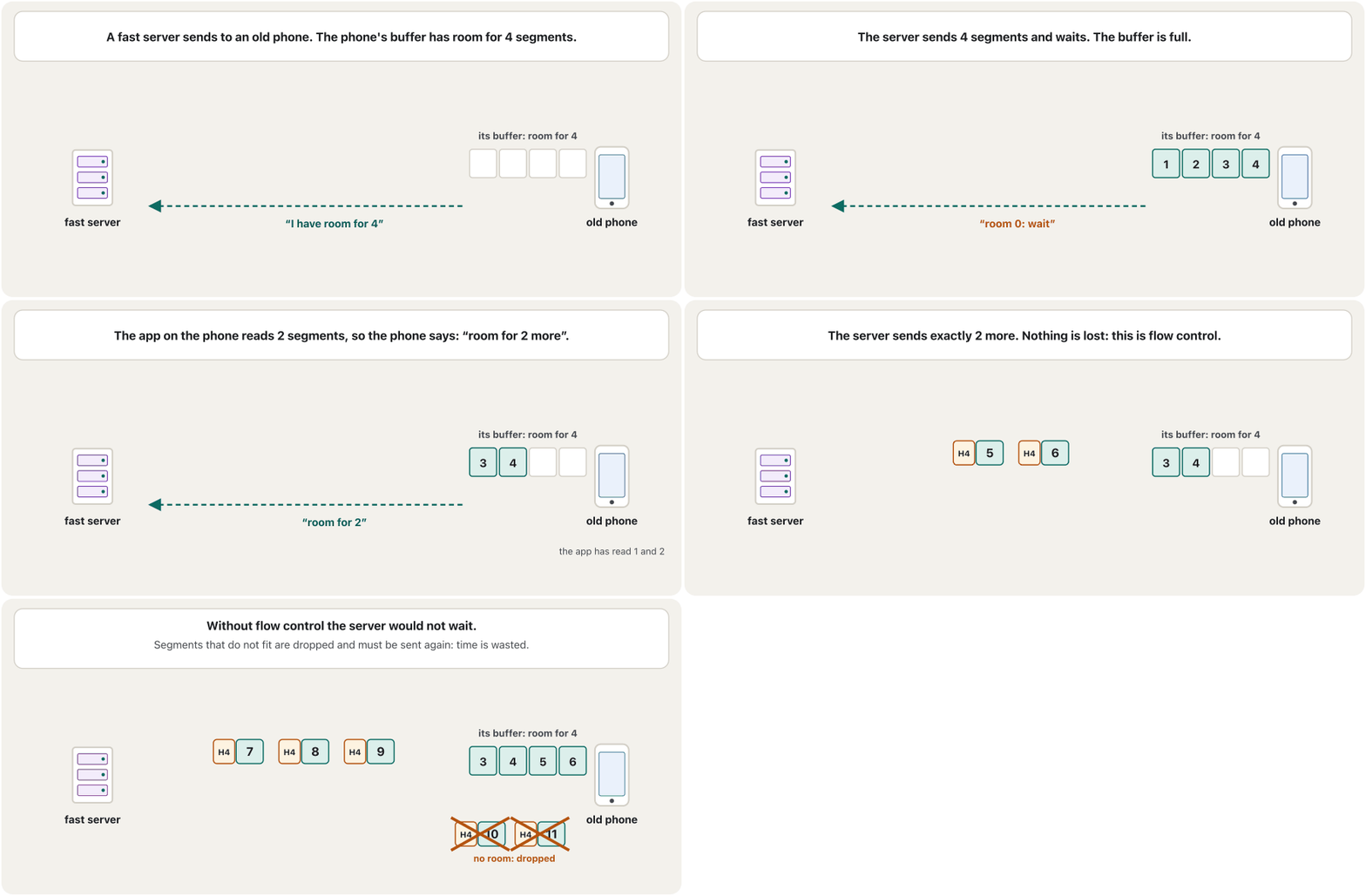
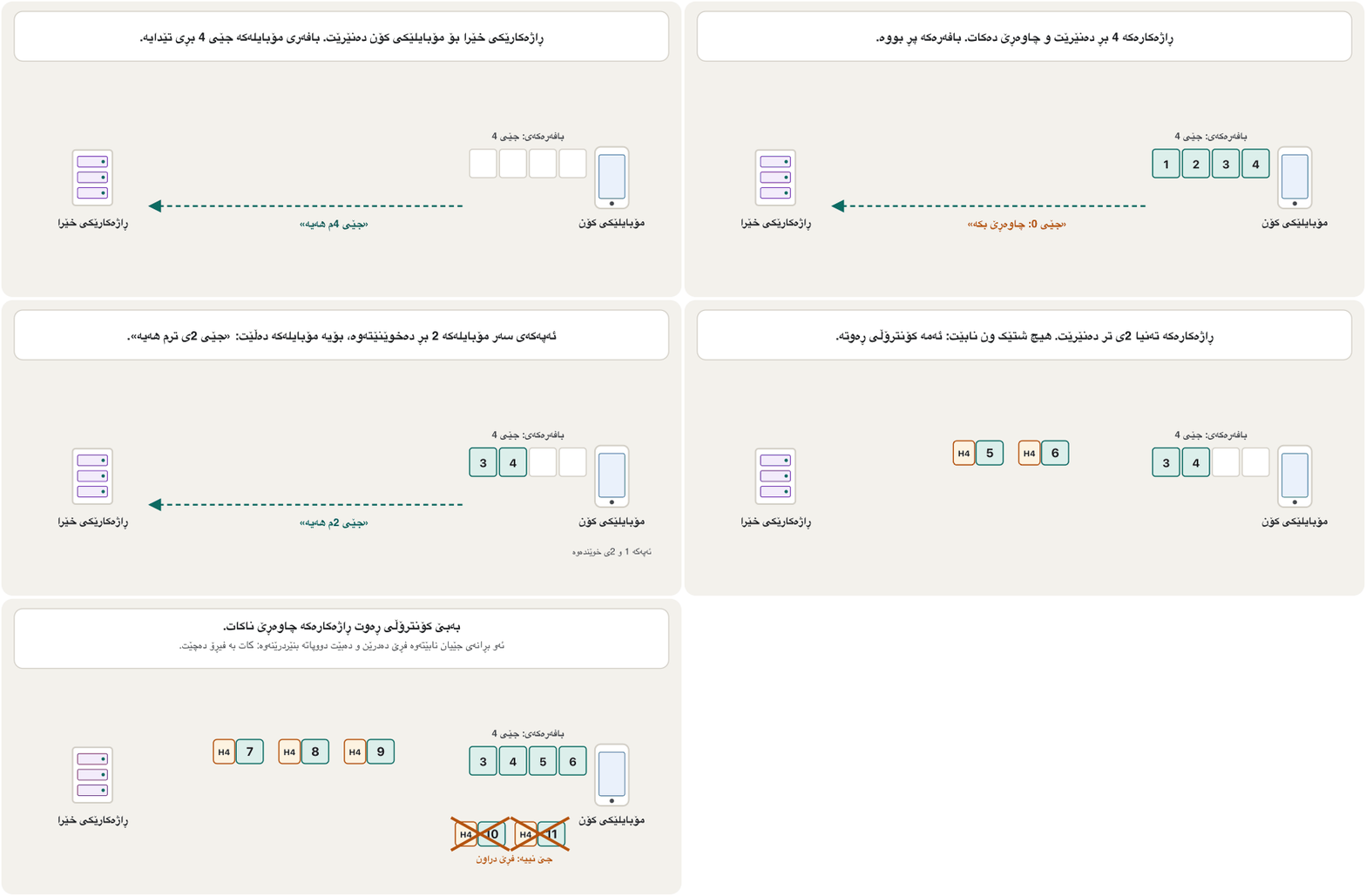
The data link layer does the same two jobs hop to hop, on one link. The transport layer does them end to end, between the two hosts, so it also catches what was lost inside a router on the way. How TCP does it — windows, acknowledgements and timers — is in TCP Connections.
هەمان دوو کار ، لەسەر یەک بەستەر دەکات. لە سەرێکەوە بۆ سەرەکەی تر، لە نێوان دوو دەیانکات، بۆیە ئەوەش دەدۆزێتەوە کە لە ناو سەر ڕێگادا ون بووە. چۆن ئەمە دەکات — پەنجەرە، و کاتژمێر — لە پەیوەندییەکانی TCPـدایە.
Layer 4: the transport layerچینی 4: چینی گواستنەوە
Many programs, one connection: multiplexingچەند بەرنامەیەک، یەک پەیوەندی: مەڵتیپلێکسکردن
Your phone may be playing music, loading a web page and receiving chat messages at the same moment, over one Wi-Fi connection. The transport layer multiplexes: it gathers the data of the different programs, labels every segment with port numbers and hands one stream of segments to the network layer. At the other end it demultiplexes: the port number in each header says which program gets the segment.
لەوانەیە مۆبایلەکەت لە یەک ساتدا مۆسیقا لێ بدات، بکاتەوە و نامەی چات وەربگرێت، بە یەک پەیوەندیی . دەکات: بەرنامە جیاوازەکان کۆ دەکاتەوە، ژمارەی دەخاتە سەر هەموو و یەک ڕیز دەداتە . لە سەرەکەی تر پێچەوانەکەی دەکات: ژمارەی لە سەردێڕی هەر دەڵێت کام بەرنامە وەردەگرێت.
Ports and the sockets built on them are explained in Ports and Sockets.
و ئەو لەسەریان دروست دەکرێن لە پۆرتەکان و سۆکێتەکاندا ڕوون کراونەتەوە.
Layer 5: the session layerچینی 5: چینی سێشن
In computing, a session is a limited period of communication between two systems: the active time in which data is exchanged. It is like the time a traveller spends on a plane from one country to another, or a study session before an exam. Buying something on a shopping website is one session, even though you move through many pages.
لە جیهانی ، ماوەیەکی دیاریکراوی پەیوەندییە لە نێوان دوو سیستەمدا: ئەو ماوە چالاکەی کە تێیدا ئاڵوگۆڕ دەکرێت. وەک ئەو ماوەیەی گەشتیارێک لە فڕۆکەدا لە وڵاتێکەوە بۆ وڵاتێکی تر بەسەری دەبات، یان ماوەی خوێندنی پێش تاقیکردنەوەیەک. کڕینی شتێک لە کڕیندا یەک ، هەرچەندە بە چەندین لاپەڕەدا تێدەپەڕیت.
The session layer is the network's dialog controller. It makes sure that everything needed to open a session is available; it establishes the session, manages it — for example how long a side waits for an answer, and whose turn it is — and ends it properly as soon as the data has arrived, so that no data is wasted and nobody is left hanging. It can also check who wants to connect, with a login and a password. At this layer the unit is still simply data.
کۆنترۆڵکەری گفتوگۆی . دڵنیا دەبێتەوە کە هەموو ئەو شتانەی بۆ کردنەوەی پێویستن ئامادەن؛ دادەمەزرێنێت، بەڕێوەی دەبات — بۆ نموونە لایەک چەند چاوەڕێی وەڵام دەکات و نۆرەی کێیە — و هەر کە گەیشت بە ڕێکوپێکی کۆتایی پێ دەهێنێت، تاکو هیچ بە فیڕۆ نەچێت و کەس بە هەڵواسراوی نەمێنێتەوە. هەروەها دەتوانێت بپشکنێت کێ دەیەوێت پەیوەندی بکات، بە و . لەم چینەدا یەکەکە هێشتا تەنیا .
Layer 5 of the : it starts, manages and ends the dialogue between two applications and can set checkpoints, so that a broken transfer goes on from the last checkpoint. In TCP/IP these jobs are done inside the applications.
چینی 5ی : گفتوگۆی نێوان دوو دەست پێ دەکات، بەڕێوەی دەبات و کۆتایی پێ دەهێنێت، هەروەها دەتوانێت خاڵی پشکنین دابنێت تاکو گواستنەوەیەکی پچڕاو لە دوایین خاڵەوە بەردەوام بێت. لە ئەم کارانە لەناو خودی دەکرێن.
Layer 5: the session layerچینی 5: چینی سێشن
Dialog control: whose turn is it?کۆنترۆڵی گفتوگۆ: نۆرەی کێیە؟
The session layer has two special jobs. The first is dialog control: deciding who may send, and when. A dialogue can be one way (simplex); two-way alternate (half duplex), where only the side holding the token may send and then the token passes to the other side; or two-way simultaneous (full duplex), as in a video call.
دوو کاری تایبەتی هەیە. یەکەمیان : بڕیاردان لەوەی کێ دەتوانێت بنێرێت و کەی. گفتوگۆ دەتوانێت یەک ئاڕاستە بێت ()؛ دوولایەنە بە نۆرە ()، کە تەنیا ئەو لایەی نیشانەی نۆرەی لایە دەتوانێت بنێرێت و پاشان نیشانەکە دەچێتە لای ئەوی تر؛ یان دوولایەنە پێکەوە ()، وەک پەیوەندیی ڤیدیۆیی.
This is not the same as the transmission mode of a link, which you met in Transmission modes: the link may be full duplex while the two programs still agree to take turns.
ئەمە هەمان شت نییە لەگەڵ بەستەرێک، کە لە شێوازەکانی ناردندا ناسیت: لەوانەیە بەستەرەکە بێت و دوو بەرنامەکە هێشتا ڕێک بکەون نۆرە بگرن.
Tokens have a second job, called token management: they stop the two sides from attempting the same critical operation at the same moment — for example, both starting to close the session, or both setting a checkpoint at once. Only the side that holds the token for an operation may perform it; the other side asks for the token and waits until it is handed over. The OSI session protocol (ITU-T X.225) has four tokens: one for sending data in half duplex, one for closing the session, one for minor checkpoints and one for major checkpoints.
نیشانەی نۆرە کارێکی دووەمیشی هەیە، پێی دەڵێن بەڕێوەبردنی نیشانە (token management): ڕێگە نادات هەردوو لا لە یەک کاتدا هەمان کاری هەستیار بکەن — بۆ نموونە هەردووکیان پێکەوە دەست بکەن بە داخستنی ، یان لە یەک کاتدا دابنێن. تەنیا ئەو لایەی نیشانەی ئەو کارەی لایە دەتوانێت ئەنجامی بدات؛ لایەکەی تر داوای نیشانەکە دەکات و چاوەڕێ دەکات تا دەدرێتە دەستی. OSI (ITU-T X.225) چوار نیشانەی هەیە: یەکێک بۆ ناردنی لە ، یەکێک بۆ داخستنی ، یەکێک بۆ بچووک و یەکێک بۆ گەورە.
Layer 5: the session layerچینی 5: چینی سێشن
Synchronisation: checkpointsهاوکاتکردن: خاڵەکانی هاوکاتکردن
The second special job is synchronisation. Imagine sending a 50 MB file: halfway through, the connection breaks, and you have to send it again from the start. Now imagine a 100 GB file! The session layer can put synchronisation points (checkpoints) into the data — for example one every 5 MB; the number is only an example. If the transfer breaks, both sides go back to the last checkpoint they confirmed and continue from there, not from the beginning — like a saved game that you restart from your last save, not from level one.
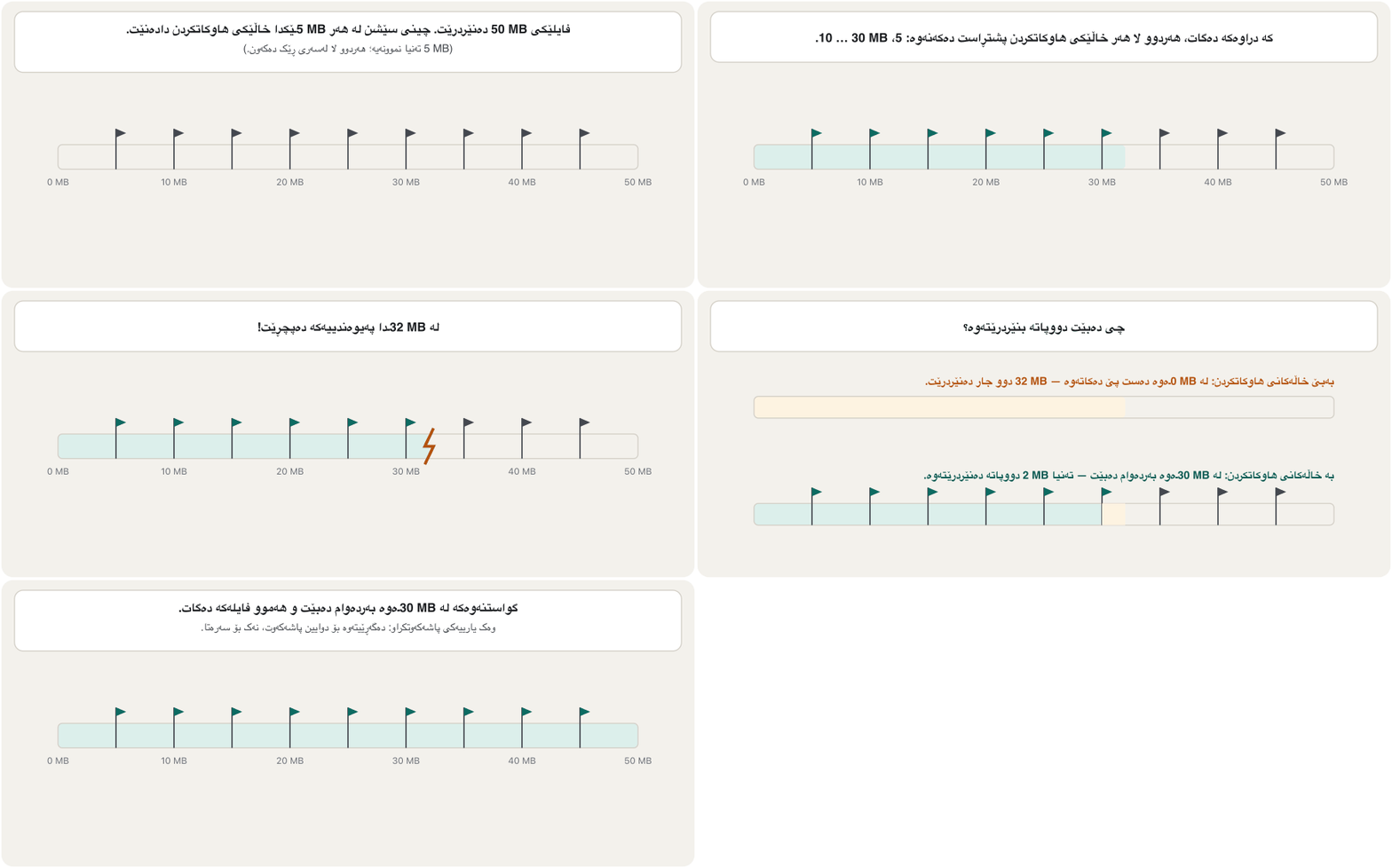
کاری تایبەتی دووەم هاوکاتکردنە. وێنا بکە فایلێکی 50 MB دەنێریت: لە نیوەی ڕێگادا پەیوەندییەکە دەپچڕێت و دەبێت لە سەرەتاوە دووپاتە بینێریتەوە. ئێستا فایلێکی 100 GB وێنا بکە! دەتوانێت بخاتە ناو — بۆ نموونە یەکێک لە هەر 5 MBـێکدا؛ ژمارەکە تەنیا نموونەیە. ئەگەر گواستنەوەکە پچڕا، هەردوو لا دەگەڕێنەوە بۆ دوایین کە پشتڕاستیان کردووەتەوە و لەوێوە بەردەوام دەبن، نەک لە سەرەتاوە — وەک یارییەکی پاشەکەوتکراو کە لە دوایین پاشەکەوتەوە دەستی پێ دەکەیتەوە، نەک لە قۆناغی یەکەمەوە.
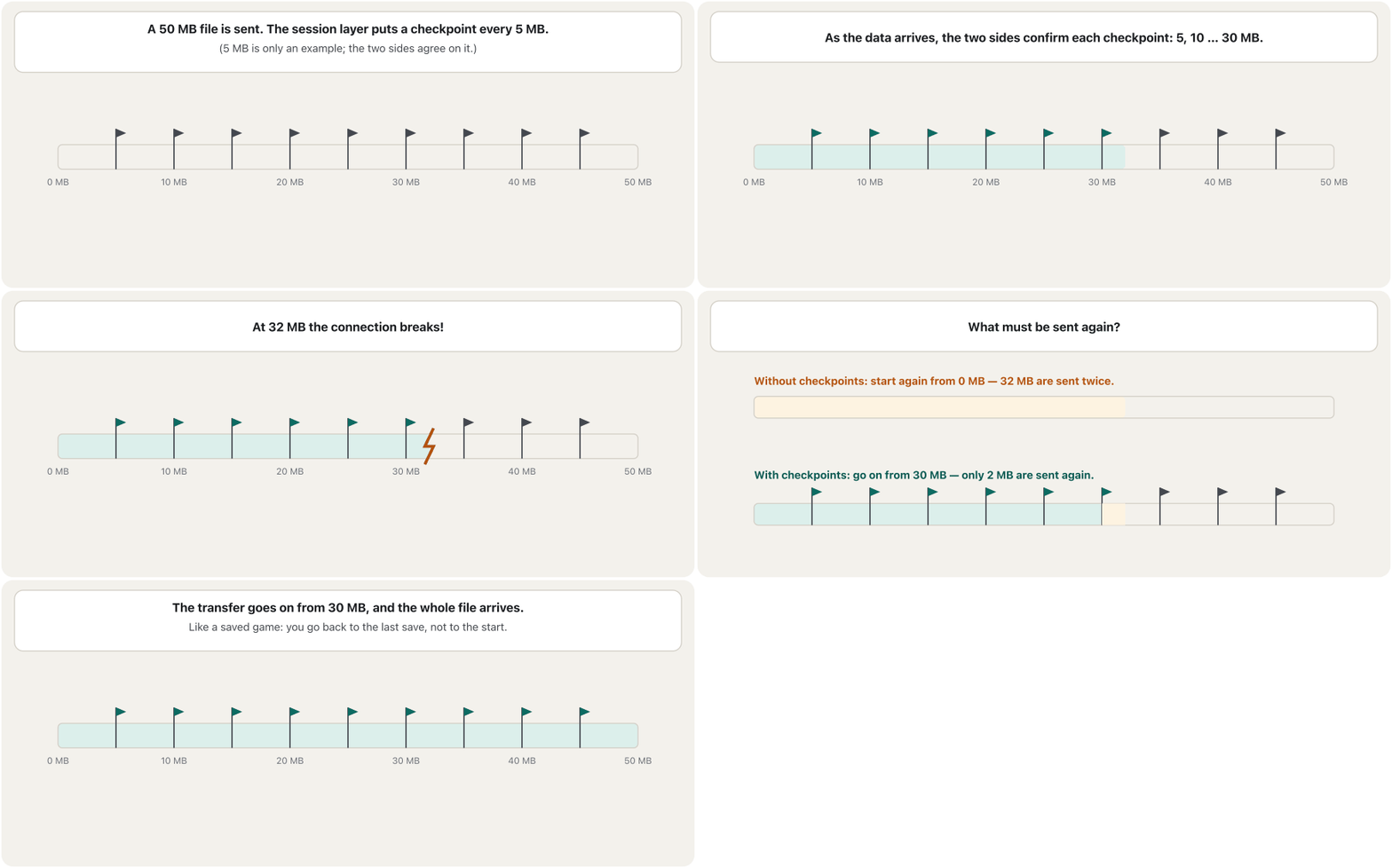
In the OSI model, marking and synchronising a long exchange like this is a session-layer job. Today the same idea is built into applications: a browser or a download manager can ask a web server for “the rest of the file, from byte N” (HTTP range requests), and file-sync apps resume where they stopped.
لە ، نیشانەکردن و هاوکاتکردنی ئاڵوگۆڕێکی درێژی وەک ئەمە کاری . ئەمڕۆ هەمان بیرۆکە لە ناو دروست کراوە: یان بەرنامەیەکی دەتوانێت داوا لە بکات «ئەوەی ماوەتەوە لە فایلەکە، لە N بەدواوە» (داواکاریی بەشی HTTP)، لەو شوێنەوە بەردەوام دەبن کە لێی وەستان.
Layer 5: the session layerچینی 5: چینی سێشن
Two meanings of “sync”دوو واتای «هاوکاتکردن»
Be careful with the word sync. In everyday computing, to sync a phone or a tablet means to make its files match another device, over USB, Bluetooth or the cloud: for example, the photos on your computer are synced with your phone. Or two computers are signed in to the same Google Drive account: a file added on one appears on the other. That is file synchronisation. The session layer's synchronisation points are something else: marks inside one long transfer, so that the transfer can restart from the last mark.
ئاگات لە وشەی (sync) بێت. لە بەکارهێنانی ڕۆژانەی ، مۆبایل یان تابلێت واتە یەکسانکردنی لەگەڵ ئامێرێکی تر، بە USB، یان : بۆ نموونە وێنەکانی سەر لەگەڵ مۆبایلەکەت یەکسان دەکرێن. یان دوو لە هەمان هەژماری Google Drive چوونەتە ژوورەوە: فایلێک کە لەسەر یەکێکیان زیاد دەکرێت لەسەر ئەوی تریش دەردەکەوێت. ئەمە فایلە. شتێکی ترن: نیشانەن لە ناو یەک گواستنەوەی درێژدا، تاکو گواستنەوەکە لە دوایین نیشانەوە دەست پێ بکاتەوە.
Layer 5: the session layerچینی 5: چینی سێشن
Session-layer protocols: today and historyپرۆتۆکۆڵەکانی چینی سێشن: ئەمڕۆ و مێژوو
These protocols are often listed at layer 5, though few fit it exactly. Some are in daily use; others are history or unsafe:
ئەم زۆرجار لە چینی 5دا ڕیز دەکرێن، هەرچەندە کەمیان تەواو لەوێ جێیان دەبێتەوە. هەندێکیان ڕۆژانە بەکار دەهێنرێن؛ هەندێکی تر مێژوون یان مەترسیدارن:
| Protocol | What it doesچی دەکات | As of November 2026تا تشرینی دووەمی 2026 |
|---|---|---|
| RPC — Remote Procedure Call | Runs a procedure on another computer as if it were local: request, reply.کردارێک لەسەر تر کار پێ دەکات وەک ئەوەی ناوخۆیی بێت: داواکاری، وەڵام. | In use everywhere (e.g. gRPC).لە هەموو شوێنێک بەکار دێت (بۆ نموونە gRPC). |
| RTCP — RTP Control Protocol | Reports packets sent and lost in an RTP audio or video stream, so call quality can be watched.ژمارەی نێردراو و ونبووی ڕەوتێکی دەنگ یان ڤیدیۆی RTP ڕاپۆرت دەکات، تاکو جۆریی پەیوەندییەکە چاودێری بکرێت. | In use in calls (RFC 3550).لە پەیوەندییەکاندا بەکار دێت (RFC 3550). |
| SDP — Sockets Direct Protocol | Carried sockets over InfiniBand data-centre networks as a faster TCP. بە InfiniBandـی ناوەندی دەگواستەوە، وەک خێراتر. | History: deprecated. Not the Session Description Protocol (also SDP), which calls still use.مێژوو: وازی لێ هێنراوە. لەگەڵ Session Description Protocol (ئەویش SDP) تێکەڵی مەکە، کە پەیوەندییەکان هێشتا بەکاری دەهێنن. |
| ADSP — AppleTalk Data Stream Protocol | AppleTalk's reliable, TCP-like stream. AppleTalk (Apple, 1985) needed no setup; AARP and NBP were its separate helper protocols.ڕەوتی متمانەپێکراوی AppleTalk، وەک . AppleTalk (Apple، 1985) پێویستی بە ڕێکخستن نەبوو؛ AARP و NBP یاریدەدەری جیای بوون. | History: AppleTalk removed in 2009.مێژوو: AppleTalk لە 2009دا لابرا. |
| PPTP — Point-to-Point Tunneling Protocol | An old VPN: a TCP control channel plus a GRE tunnel carrying PPP. کۆن: کەناڵێکی کۆنترۆڵی لەگەڵ تونێلێکی GRE کە هەڵدەگرێت. | Insecure; deprecated by Microsoft in 2024. Use IKEv2, WireGuard, SSTP or a TLS VPN.نائاسایشە؛ مایکرۆسۆفت لە 2024دا وازی لێ هێنا. IKEv2، WireGuard، SSTP یان TLS بەکار بهێنە. |
| PAP — Password Authentication Protocol | PPP login in two steps: the client sends name and password; the server answers with an acknowledgement. بە دوو هەنگاو: ناو و دەنێرێت؛ بە وەڵام دەداتەوە. | Insecure: the password travels in the clear (RFC 1334). Use an EAP-based login (for example EAP-TLS) or a modern VPN.نائاسایشە: بە ئاشکرا دەڕوات (RFC 1334). لەسەر بنەمای EAP (بۆ نموونە EAP-TLS) یان نوێ بەکار بهێنە. |
Layer 5: the session layerچینی 5: چینی سێشن
Where session work happens todayئەمڕۆ کاری سێشن لە کوێ دەکرێت
TCP/IP has no separate session layer. Its jobs are shared out. TCP opens and closes each connection — closing it gracefully, without losing data. TLS keeps a secure session that can be resumed later (where TLS really sits). The applications do the rest: a website keeps you logged in with a cookie (see What a session is), a download resumes from the last byte, and video-call apps set up and watch the call with SIP, the Session Description Protocol and RTCP.
جیای نییە. کارەکانی دابەش کراون. هەر پەیوەندییەک دەکاتەوە و دایدەخات — بە ڕێکوپێکی و بەبێ ونبوونی . پارێزراو دەهێڵێتەوە کە دواتر دەتوانرێت درێژەی پێ بدرێتەوە (TLS لە ڕاستیدا لە کوێدایە). ئەوانی تر دەکەن: بە لە ژوورەوە دەتهێڵێتەوە (بڕوانە سێشن چییە)، لە دوایین بەردەوام دەبێت و پەیوەندیی ڤیدیۆیی بە SIP، Session Description Protocol و RTCP پەیوەندییەکە ڕێک دەخەن و چاودێری دەکەن.
Common mistakesهەڵە باوەکان
- Putting the transport layer in the network card or the cable. It runs in the software of the two end systems.
- Mixing up the session and the data link layers. The session layer manages dialogues between programs; layer 2 moves frames over one link.
- Calling a segment a packet. Layer 4 makes segments (TCP) or datagrams (UDP); layer 3 puts them into packets.
- “The transport layer always delivers reliably.” Only TCP — and newer protocols such as QUIC — do; UDP does not resend.
- Mixing up the two kinds of sync. File sync copies files between devices; checkpoints restart one transfer.
- Presenting PPTP or PAP as good choices. Both are outdated and unsafe.
- Confusing hop-to-hop and end-to-end control. Layer 2 checks each link; layer 4 checks the whole path between the two hosts.
- دانانی لە یان کێبڵەکەدا. لە دوو سیستەمە کۆتاییەکەدا کار دەکات.
- تێکەڵکردنی و . گفتوگۆی نێوان بەرنامەکان بەڕێوە دەبات؛ چینی 2 بە یەک بەستەردا دەگوازێتەوە.
- ناونانی بە . چینی 4 () یان () دروست دەکات؛ چینی 3 دەیانخاتە ناو .
- « هەمیشە بە متمانەوە دەگەیەنێت.» تەنیا — و نوێی وەک — وا دەکەن؛ دووپاتە نانێرێتەوە.
- تێکەڵکردنی دوو جۆرەکەی . فایل لە نێوان ئامێرەکاندا کۆپی دەکات؛ یەک گواستنەوە دەست پێ دەکەنەوە.
- پیشاندانی PPTP یان PAP وەک هەڵبژاردەی باش. هەردووکیان کۆن و نائاسایشن.
- تێکەڵکردنی کۆنترۆڵی و لە سەرێکەوە بۆ سەرەکەی تر. چینی 2 هەر بەستەرێک دەپشکنێت؛ چینی 4 هەموو ڕێگاکەی نێوان دوو دەپشکنێت.
Exercisesڕاهێنانەکان
A program must send 6,000 bytes. Each segment can carry at most 1,460 bytes of data. (a) How many segments are needed? (b) How many bytes does the last one carry? (c) The receiver gets segments 1, 2, 4 and 5. What does its transport layer do?
بەرنامەیەک دەبێت 6,000 بنێرێت. هەر دەتوانێت لە 1,460 زیاتر هەڵنەگرێت. (أ) چەند پێویستە؟ (ب) دوایین چەند هەڵدەگرێت؟ (ج) وەرگر 1، 2، 4 و 5 وەردەگرێت. چی دەکات؟
Show answerوەڵامەکە پیشان بدە
(a) Four full segments carry only 5,840 bytes, so 5 segments are needed. (b) The last one carries 160 bytes. (c) It keeps 4 and 5 in its buffer, asks the sender for segment 3 again, and passes the data up only when 1 to 5 are complete and in order.
(أ) چوار پڕ تەنیا 5,840 هەڵدەگرن، بۆیە 5 پێویستە. (ب) دوایینیان 160 هەڵدەگرێت. (ج) 4 و 5 لە دەهێڵێتەوە، داوای 3 لە نێرەر دەکاتەوە و تەنیا کاتێک دەداتە سەرەوە کە 1 تا 5 تەواو و بە ڕیز بن.
A 2,000 MB update is sent with a checkpoint every 100 MB. The connection breaks after 1,470 MB. (a) From where does the transfer continue? (b) How much is sent twice? (c) How much would be sent twice without checkpoints?
نوێکردنەوەیەکی 2,000 MB بە لە هەر 100 MBـێکدا دەنێردرێت. پەیوەندییەکە دوای 1,470 MB دەپچڕێت. (أ) گواستنەوەکە لە کوێوە بەردەوام دەبێت؟ (ب) چەندی دوو جار دەنێردرێت؟ (ج) بەبێ چەندی دوو جار دەنێردرا؟
Show answerوەڵامەکە پیشان بدە
- (a) From 1,400 MB, the last confirmed checkpoint.
- (b) 1,470 − 1,400 = 70 MB.
- (c) All 1,470 MB, because the transfer would start again from 0.
- (أ) لە 1,400 MBـەوە، دوایین پشتڕاستکراوە.
- (ب) 1,470 − 1,400 = 70 MB.
- (ج) هەموو 1,470 MBـەکە، چونکە گواستنەوەکە لە 0ـەوە دەستی پێ دەکردەوە.
For each job, say whether it belongs to the transport layer or to the session layer: (1) cutting a file into numbered pieces; (2) deciding whose turn it is to send; (3) the port number 443; (4) a checkpoint every 5 MB; (5) asking again for a lost piece; (6) ending the conversation properly; (7) running only in the end systems while routers ignore it.
بۆ هەر کارێک بڵێ سەر بە یان : (1) کردنی فایلێک بە پارچەی ژمارەدار؛ (2) بڕیاردان لەوەی نۆرەی کێیە بنێرێت؛ (3) ژمارەی 443؛ (4) لە هەر 5 MBـێکدا؛ (5) داواکردنەوەی پارچەیەکی ونبوو؛ (6) کۆتاییهێنانی ڕێکوپێکی گفتوگۆکە؛ (7) تەنیا لە سیستەمە کۆتاییەکاندا کار دەکات و گوێی پێ نادەن.
Show answerوەڵامەکە پیشان بدە
- Transport: 1, 3 and 5.
- Session: 2, 4 and 6.
- (7) is true of both: layers 4 to 7 all run only in the end systems.
- : 1، 3 و 5.
- : 2، 4 و 6.
- (7) بۆ هەردووکیان ڕاستە: چینەکانی 4 تا 7 هەموویان تەنیا لە سیستەمە کۆتاییەکاندا کار دەکەن.
Which layer is responsible for process-to-process delivery?کام چین بەرپرسە لە گەیاندن لە پرۆسێسەوە بۆ پرۆسێس؟
The transport layer.
.
When it receives data from the upper layers, which OSI layer puts the data into smaller pieces called segments?کاتێک دراوە لە چینەکانی سەرەوە وەردەگرێت، کام چینی OSI دراوەکە دەکاتە پارچەی بچووکتر بە ناوی بڕ؟
The transport layer.
.
TCP works at which layer of the OSI model?TCP لە کام چینی مۆدێلی OSIـدا کار دەکات؟
The transport layer.
.
Which layer is called the network's dialog controller?کام چین بە کۆنترۆڵکەری گفتوگۆی ڕایەڵە ناو دەبرێت؟
The session layer: it establishes, maintains and synchronises the interaction between devices.
: پەیوەندیی نێوان ئامێرەکان دادەمەزرێنێت، ڕایدەگرێت و هاوکاتی دەکات.
Summaryپوختە
- The transport layer, “the heart of OSI”, delivers the whole message from a process on one host to a process on another; it runs only in the end systems (TCP and UDP).
- Its jobs: port addressing, segmentation and reassembly with sequence numbers, connection control, flow control and error control end to end, and multiplexing.
- The session layer is the dialog controller: it opens, manages and closes sessions, controls whose turn it is — with tokens, so that the two sides never attempt the same critical operation at once — and sets synchronisation points (checkpoints) so a broken transfer restarts from the last one.
- File sync between devices is a different meaning of “sync”.
- RPC and RTCP are in daily use; ADSP and Sockets Direct Protocol are history; PPTP and PAP are unsafe.
- TCP/IP has no session layer: TCP, TLS and the applications do its jobs.
- ، «دڵی OSI»، هەموو نامەکە لە لەسەر دەگەیەنێتە لەسەر ئەوی تر؛ تەنیا لە سیستەمە کۆتاییەکاندا کار دەکات ( و ).
- کارەکانی: ناونیشانکردن بە ، و کۆکردنەوە بە ، کۆنترۆڵی پەیوەندی، و لە سەرێکەوە بۆ سەرەکەی تر، هەروەها .
- کۆنترۆڵکەری گفتوگۆیە: دەکاتەوە، بەڕێوەیان دەبات و دایاندەخات، بە نیشانەی نۆرە ڕێک دەخات کە نۆرەی کێیە — بۆ ئەوەی هەرگیز هەردوو لا پێکەوە هەمان کاری هەستیار نەکەن — و دادەنێت تاکو گواستنەوەیەکی پچڕاو لە دوایینیانەوە دەست پێ بکاتەوە.
- فایل لە نێوان ئامێرەکاندا واتایەکی ترە بۆ هەمان وشە.
- RPC و RTCP ڕۆژانە بەکار دێن؛ ADSP و Sockets Direct Protocol مێژوون؛ PPTP و PAP نائاسایشن.
- نییە: ، و کارەکانی دەکەن.
Videoڤیدیۆ
Watch a videoسەیری ڤیدیۆیەک بکە
A video that viewers liked a lot and praised in their comments, chosen for this lesson.ڤیدیۆیەک کە بینەران زۆریان پێ خۆش بووە و لە کۆمێنتەکانیاندا ستایشیان کردووە، بۆ ئەم وانەیە هەڵبژێردراوە.
Each of the seven OSI layers with real devices, protocols and examples, from cables and signals up to the application.
هەر یەک لە حەوت چینەکەی بە ئامێر، و نموونەی ڕاستەقینە، لە کێبڵ و تا .
Watch 22:42–28:12: layer 4, the transport layer, and layer 5, the session layer.
لە 22:42 تا 28:12 سەیر بکە: (چینی 4) و (چینی 5).
Lesson complete!وانەکە تەواو بوو!
Well done. Review the key terms, then go on to the next lesson.دەستخۆش. سەیرێکی زاراوە سەرەکییەکان بکەرەوە، پاشان بڕۆ بۆ وانەی داهاتوو.
Key termsزاراوە سەرەکییەکان
OSI Layers 6 and 7: Presentation and Applicationچینەکانی 6 و 7ی OSI: چینی پێشکەشکردن و چینی ئەپ
Related lecturesوانە پەیوەندیدارەکان
- Protocols, Layers and the OSI Ideaپرۆتۆکۆڵەکان، چینەکان و بیرۆکەی OSI
- OSI Layers 6 and 7: Presentation and Applicationچینەکانی 6 و 7ی OSI: چینی پێشکەشکردن و چینی ئەپ
- TCP and UDPTCP و UDP
- Port Numbers and Socketsژمارەی پۆرت و سۆکێتەکان
- Inside a TCP Connection: Handshake, Windows and Reliabilityناو پەیوەندییەکی TCP: سێ ڕێی تەوقەکردن، پەنجەرەکان و پشتپێبەستراوی
- Encapsulation, PDUs and Addresses at Each Layerپێچانەوە، یەکەکانی دراوەی پرۆتۆکۆڵ و ناونیشانەکان لە هەر چینێکدا
- Links: Point-to-Point, Multipoint and Transmission Modesبەستنەوەکان: پەیوەندیی خاڵ بۆ خاڵ، پەیوەندیی فرەخاڵ و شێوازەکانی ناردن
- Sessionsسێشنەکان
- Data Communication: Modes, Switching and Protocolsپەیوەندیی دراوە: شێوازەکانی ناردن، سویچکردن و پرۆتۆکۆڵەکان
- Network Defences: Firewalls, Segmentation, Monitoring and SIEMبەرگرییەکانی ڕایەڵە: ئاگرەدیوار، بەشبەشکردنی ڕایەڵە، چاودێریی ئاسایش و SIEM
References and further readingسەرچاوەکان و خوێندنەوەی زیاتر
- Wikipedia: Transport layer (services: connection-oriented communication, same-order delivery, reliability, flow control, multiplexing; QUIC)
- Wikipedia: Session layer (dialogue control, tokens, synchronisation points; X.225 / ISO 8327; TCP/IP has no session layer)
- RFC 9110: HTTP Semantics, section 14 Range Requests (resuming interrupted transfers)
- RFC 9846: The Transport Layer Security (TLS) Protocol Version 1.3 (2026), section 2.2 Resumption and Pre-Shared Key
- RFC 3550: RTP: A Transport Protocol for Real-Time Applications (RTCP)
- RFC 8866: SDP: Session Description Protocol
- Wikipedia: Sockets Direct Protocol (deprecated, not maintained by OFED)
- Wikipedia: AppleTalk (ADSP, AARP, NBP; removed in Mac OS X 10.6, 2009)
- Microsoft Windows Server blog: PPTP and L2TP deprecation — a new era of secure connectivity (October 2024)
- RFC 1334: PPP Authentication Protocols (PAP sends passwords in the clear)
- ITU-T X.225: Connection-oriented Session protocol (tokens: data, release, synchronize-minor, major/activity)
This lecture is a first edition. The Kurdish text and terminology are waiting for review by Kurdish IT teachers.ئەم وانەیە چاپی یەکەمە. دەقە کوردییەکە و زاراوەکانی چاوەڕێی پێداچوونەوەی مامۆستایانی کوردی بواری IT ن.