Chapterبەش 2 · Lectureوانە 2.6
Encapsulation, PDUs and Addresses at Each Layerپێچانەوە، یەکەکانی دراوەی پرۆتۆکۆڵ و ناونیشانەکان لە هەر چینێکدا
How data is wrapped on the way down and unwrapped on the way up: encapsulation and decapsulation step by step with a web page from Sulaymaniyah to Duhok, the name of the data unit at each layer (data, segment, packet, frame, bits), peers talking through their headers, the address used at each layer, the routers that use only layers 1–3, and how many bytes the headers cost.
چۆن لە دابەزیندا دەپێچرێتەوە و لە سەرکەوتندا دەکرێتەوە: و هەنگاو بە هەنگاو بە لاپەڕەیەکی وێب لە سلێمانییەوە بۆ دهۆک، ناوی یەکەی لە هەر چینێکدا (، ، ، ، )، کە بە سەردێڕەکانیان قسە دەکەن، ئەو ناونیشانەی هەر چینێک بەکاری دەهێنێت، ئەو تەنیا چینەکانی 1 تا 3 بەکار دەهێنن و سەردێڕەکان چەند تێ دەچن.
What you will learnچی فێر دەبیت
- Explain encapsulation and decapsulation, and say which layer adds or removes each header and the trailer.
- Name the PDU at each layer: data, segment or datagram, packet, frame and bits.
- Describe how peer layers communicate through their headers, and when an application adds its own header.
- Match each layer with its address — preamble bits, MAC, IP, port, application names — and say which ones change at every hop.
- Draw the data flow from a host through routers to another host, and work out header overhead in bytes.
- و ڕوون بکەیتەوە و بڵێیت کام چین هەر سەردێڕێک و زیاد دەکات یان لای دەبات.
- لە هەر چینێکدا ناو بهێنیت: ، یان ، ، و .
- وەسفی بکەیت چینە هاوتاکان چۆن بە سەردێڕەکانیان پەیوەندی دەکەن و کەی سەردێڕی خۆی زیاد دەکات.
- هەر چینێک لەگەڵ ناونیشانەکەی یەک بخەیت — ، MAC، IP، ، ناوی — و بڵێیت کامیان لە هەر بازێکدا دەگۆڕێن.
- ڕەوتی لە بە ناو بۆ تر بکێشیت و بارگرانیی سەردێڕەکان بە بژمێریت.
Encapsulation: wrapping data layer by layerپێچانەوە: دراوە چین بە چین دەپێچرێتەوە
Encapsulation is the process of adding control information as data passes down through the layered model. Each layer takes what it gets from the layer above, keeps it whole as its own data, and puts a header in front of it — at the data link layer usually also a trailer at the end. The receiver does the reverse, decapsulation: each layer reads and removes its own part. Down, across and up showed the journey; this lesson opens the packages.
ئەو پرۆسەیەیە کە لە کاتی دابەزینی بە ناو مۆدێلە چینبەندییەکەدا زانیاریی کۆنترۆڵی بۆ زیاد دەکرێت. هەر چینێک ئەوەی لە چینی سەرەوە وەریدەگرێت وەک خۆی وەک خۆی دەهێڵێتەوە و سەردێڕێک دەخاتە پێشی — لە زۆرجار لە کۆتاییدا — وەک ئەوەی لەقتوو بدرێت. وەرگر پێچەوانەکەی دەکات، : هەر چینێک بەشەکەی خۆی دەخوێنێتەوە و لای دەبات. دابەزین، تێپەڕین و سەرکەوتن گەشتەکەی پیشان دا؛ ئەم وانەیە پاکەتەکان دەکاتەوە.
A school sends exam papers: the teacher's letter goes in an envelope with the class's name, that envelope goes in a bigger one with the school's address, and the post office puts it in a bag for the next sorting office.
قوتابخانەیەک پەڕەی تاقیکردنەوە دەنێرێت: نامەکەی مامۆستا دەخرێتە زەرفێکەوە کە ناوی پۆلەکەی لەسەرە، ئەو زەرفە دەخرێتە ناو زەرفێکی گەورەترەوە کە ناونیشانی قوتابخانەکەی لەسەرە و پۆستەخانە دەیخاتە جانتایەکەوە بۆ نووسینگەی ڕیزکردنی دواتر.
Where the analogy stops workingسنووری ئەم نموونەیە
A real envelope is never rewritten on the way; in a network, every router throws away the frame and builds a new one.
زەرفی ڕاستەقینە لە ڕێگادا هەرگیز دووپاتە نانووسرێتەوە؛ لە هەر فڕێ دەدات و یەکێکی نوێ دروست دەکات.
Down the stack: a web page leaves the serverدابەزین بە ستوونەکەدا: لاپەڕەیەک لە ڕاژەکارەکە دەردەچێت
A web server in Sulaymaniyah sends a page to Shilan's laptop in Duhok. The application hands over HTTP data: an HTTP header and the HTML. Transport puts a TCP header in front, with the port numbers — now it is a segment. The internet layer adds an IP header with the IP addresses — now it is a packet. The data link layer adds an Ethernet header with the MAC addresses and, at the end, a trailer with the error check (FCS) — now it is a frame. The physical layer sends it as bits.
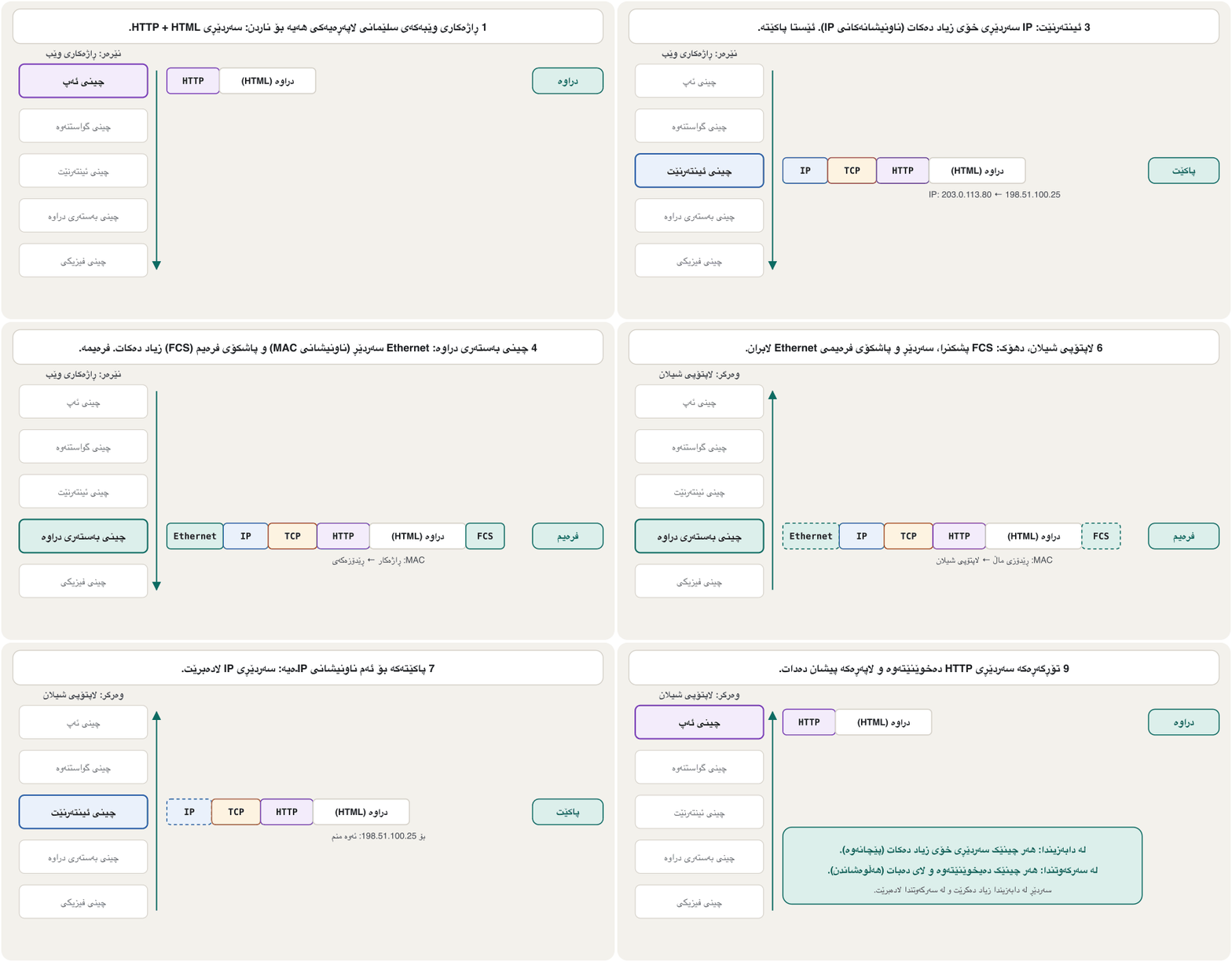
لە سلێمانی لاپەڕەیەک بۆ شیلان لە دهۆک دەنێرێت. HTTP دەداتە دەست: و HTML. سەردێڕێکی TCP دەخاتە پێشی، کە ژمارەی تێدایە — ئێستا . چینی سەردێڕێکی IP زیاد دەکات کە تێدایە — ئێستا . سەردێڕێکی Ethernet زیاد دەکات کە تێدایە و لە کۆتاییشدا بە پشکنینی هەڵە (FCS) — ئێستا . وەک دەینێرێت.
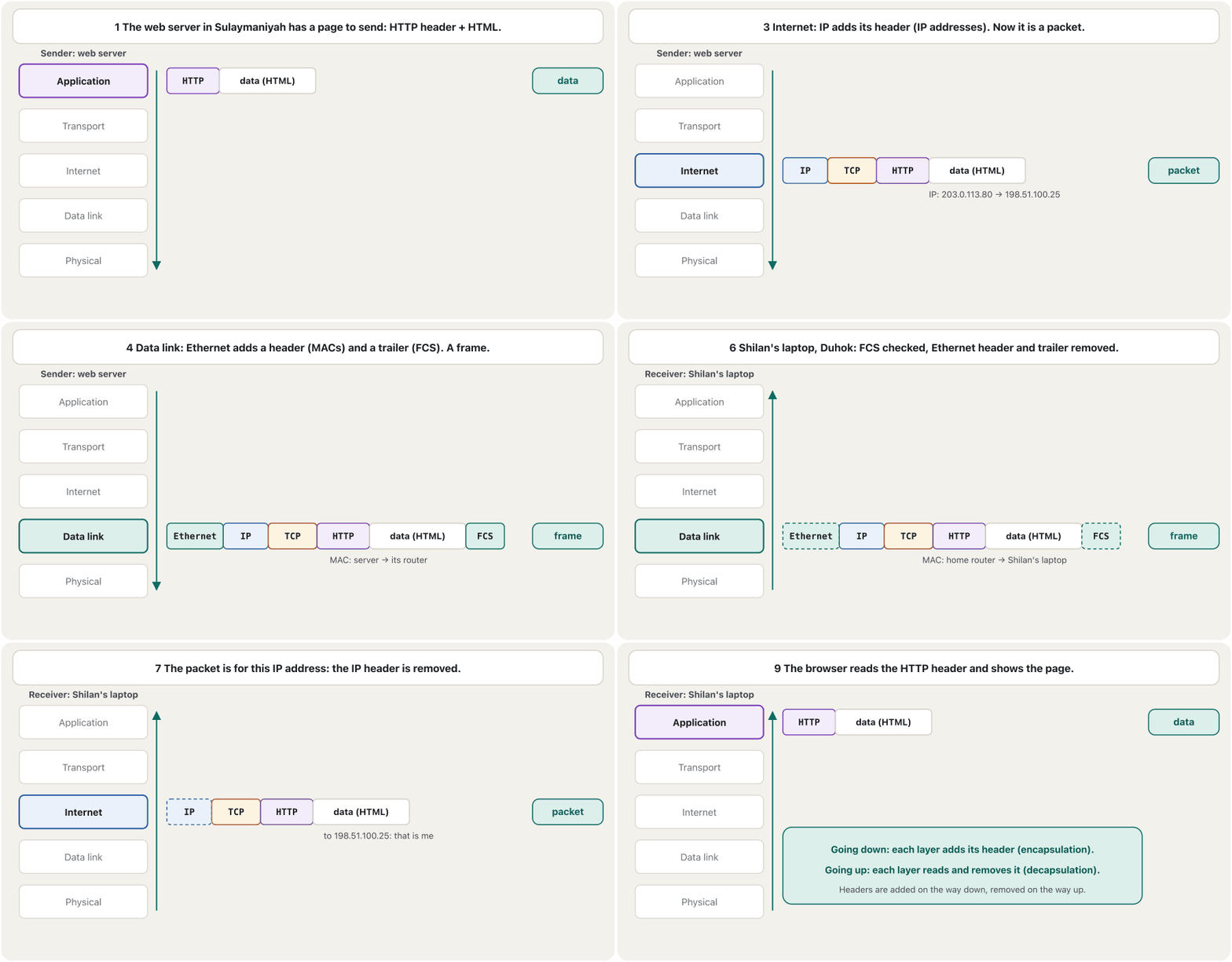
On the wire the frame reads, from front to back: Ethernet header, IP header, TCP header, HTTP header, data, Ethernet trailer. Each header is the label its layer needs; the next screens show who reads which one.
لەسەر وایەرەکە لە پێشەوە بۆ دواوە ئاوایە: سەردێڕی Ethernet، سەردێڕی IP، سەردێڕی TCP، ، ، Ethernet. هەر سەردێڕێک ئەو نیشانەیەیە کە چینەکەی پێویستیەتی؛ شاشەکانی داهاتوو پیشان دەدەن کێ کامیان دەخوێنێتەوە.
Does the application add a header?ئایا ئەپەکە سەردێڕ زیاد دەکات؟
The application's header may or may not exist. HTTP has one: a status line and header lines such as Content-Type and Content-Length, then an empty line, then the page. In HTTP/2 and HTTP/3 the same header fields travel in a compressed binary form. DNS starts every message with a 12-byte header. Some programs send their data with no header of their own. So pictures that show a layer-7 header (H7) and books that say “no header is added at layer 7” are both describing real cases.
سەردێڕی لەوانەیە هەبێت و لەوانەیە نەبێت. سەردێڕی هەیە: دێڕی دۆخ و دێڕەکانی سەردێڕ وەک Content-Type و Content-Length، پاشان دێڕێکی بەتاڵ، پاشان لاپەڕەکە. لە HTTP/2 و HTTP/3ـدا هەمان زانیارییەکانی سەردێڕ بە شێوەیەکی دووانیی پەستێنراو دەڕۆن. هەموو نامەیەک بە سەردێڕێکی 12 دەست پێ دەکات. هەندێک بەرنامە بەبێ سەردێڕی خۆیان دەنێرن. بۆیە ئەو وێنانەی سەردێڕی چینی 7 (H7) پیشان دەدەن و ئەو کتێبانەی دەڵێن «لە چینی 7دا هیچ سەردێڕێک زیاد ناکرێت» هەردووکیان باسی حاڵەتی ڕاستەقینە دەکەن.
Up the stack: decapsulation at the receiverسەرکەوتن بە ستوونەکەدا: هەڵوەشاندن لە وەرگردا
At Shilan's laptop the process runs in reverse, using the information in each PDU. The data link layer checks the frame's FCS and the destination MAC address, then removes the Ethernet header and trailer. The internet layer checks that the IP address is its own and removes the IP header. The transport layer reads the port number, removes the TCP header and hands the data to the right program. The HTTP data reaches the browser. If a check fails — a bad FCS, a foreign address — the data is dropped there.
لە شیلاندا پرۆسەکە بە پێچەوانەوە دەڕوات، بە بەکارهێنانی زانیارییەکانی ناو هەر . FCSـی و مەبەست دەپشکنێت، پاشان سەردێڕ و Ethernet لادەبات. چینی دەپشکنێت کە هی خۆیەتی و سەردێڕی IP لادەبات. ژمارەی دەخوێنێتەوە، سەردێڕی TCP لادەبات و دەداتە بەرنامەی دروست. HTTP دەگاتە . ئەگەر پشکنینێک سەرنەکەوێت — FCSـی هەڵە، ناونیشانی بیانی — لەوێ فڕێ دەدرێت.
The reverse of : at the receiver, on the way up the layers, each layer reads and removes its own header (and trailer) and passes the rest to the layer above.
پێچەوانەی : لە وەرگردا، لە کاتی سەرکەوتن بە چینەکاندا، هەر چینێک سەردێڕی خۆی (و کۆتاییەکەی) دەخوێنێتەوە و لای دەبات، ئەوەی دەمێنێتەوە دەداتە چینی سەرەوە.
A new name at every layer: PDUsناوێکی نوێ لە هەر چینێکدا: یەکەکانی دراوەی پرۆتۆکۆڵ
A protocol data unit (PDU) is the form a piece of data takes at one layer. At every stage it gets a different name to show its new shape, named after the TCP/IP protocols: data at the application layer (in OSI, the top three layers all handle data), a segment at the transport layer (with UDP, a datagram), a packet at the internet layer, a frame at the network access layer — its shape depends on the medium — and bits while it crosses the medium.
ئەو شێوەیەیە کە پارچەیەک لە یەک چیندا وەریدەگرێت. لە هەر قۆناغێکدا ناوێکی جیاواز وەردەگرێت بۆ پیشاندانی شێوە نوێیەکەی، بەپێی TCP/IP: لە (لە OSIـدا سێ چینە سەرەوەکە هەموویان دەگرنە ئەستۆ)، لە (لەگەڵ ، )، لە چینی ، لە چینی دەستگەیشتن بە — شێوەکەی بەندە بە — و لە کاتی تێپەڕین بە .
Why TCP's unit is a segment and UDP's a datagram, and why neither is a packet, is explained in Segment, datagram, packet: the right words.
بۆچی یەکەی و یەکەی و بۆچی هیچیان نین، لە بڕ، داتاگرام، پاکێت: وشە دروستەکانـدا ڕوون کراوەتەوە.
The name of the unit of data at each layer: that layer's header (sometimes also a trailer) plus the data from the layer above. The PDUs are data, segment or datagram, packet, frame and bits.
ناوی یەکەی لە هەر چینێکدا: سەردێڕی ئەو چینە (هەندێک جار کۆتاییەکیش) لەگەڵ چینی سەرەوە. یەکەکان بریتین لە ، یان ، ، و .
Peers talk through their headersتاکەکان بە سەردێڕەکانیان قسە دەکەن
Each layer of host A talks to the same layer of host B: application, presentation and session exchange data; transport exchanges segments; network exchanges packets; data link exchanges frames; physical exchanges bits. The PDUs are how these peers keep in contact: the TCP header that A's transport layer writes is read only by B's transport layer. Only the physical layers are really joined by a wire; every other conversation goes down, across and up (peers and interfaces).
هەر چینێکی A لەگەڵ هەمان چینی B قسە دەکات: ، و ئاڵوگۆڕ دەکەن؛ ؛ ؛ ؛ . ئەو ڕێگایەن کە ئەم پێی پەیوەندییان دەپارێزن: ئەو سەردێڕە TCPـیەی A دەینووسێت تەنیا B دەیخوێنێتەوە. تەنیا بە ڕاستی بە وایەرێک بەیەکەوە بەستراون؛ هەموو گفتوگۆکانی تر دادەبەزن، تێدەپەڕن و سەردەکەونەوە (تاکەکان و نێوبەستەکان).
An address at every layerناونیشانێک لە هەر چینێکدا
The labels in the headers are what manage the communication. The physical layer adds timing and synchronisation bits — in Ethernet the preamble, so the receiver can lock on to the signal. The data link header holds the destination and source physical (MAC) addresses; the network header the destination and source logical (IP) addresses; the transport header the destination and source process numbers (ports). The upper layers carry the encoded application data, with names such as a web address.
نیشانەکانی ناو سەردێڕەکان پەیوەندییەکە بەڕێوە دەبەن. کات و هاوکاتکردن زیاد دەکات — لە Ethernetـدا ، تاکو وەرگر خۆی لەگەڵ ڕێک بخات. سەردێڕی ناونیشانی فیزیکی ()ی مەبەست و سەرچاوە هەڵدەگرێت؛ سەردێڕی ناونیشانی لۆجیکی ()ی مەبەست و سەرچاوە؛ سەردێڕی ژمارەی ()ی مەبەست و سەرچاوە. چینەکانی سەرەوە کۆدکراوی هەڵدەگرن، لەگەڵ ناوی وەک ناونیشانی وێب.
A home router that does NAT is the one exception you meet every day: it rewrites the private source address and port (see NAT). How the next MAC address is found is in ARP, and the port numbers themselves in Port numbers and sockets.
ماڵ کە دەکات تاکە جیاوازییە کە ڕۆژانە دەیبینیت: ناونیشانی تایبەتی سەرچاوە و دەگۆڕێت (بڕوانە NAT). چۆنییەتیی دۆزینەوەی دواتر لە ARPـدایە و خودی ژمارەکانی لە ژمارەی پۆرت و سۆکێتەکانـدا.
The OSI story: seven steps down, seven steps upچیرۆکی OSI: حەوت هەنگاو بۆ خوارەوە، حەوت هەنگاو بۆ سەرەوە
Data flows when two devices share a medium. The OSI model tells it in seven steps each way:
ڕەوتی ڕوو دەدات کاتێک دوو ئامێر بەش دەکەن. بە حەوت هەنگاو بۆ هەر لایەک دەیگێڕێتەوە:
An application on the source creates the data (application layer).
لەسەر سەرچاوەکە دروست دەکات ().
The data is encrypted (presentation layer).
شفرە دەکرێت ().
A session ID is added (session layer).
زیاد دەکرێت ().
Transport cuts it into segments, each with the receiving program's port.
دەیکات بە ، هەر یەکەیان بە بەرنامەی وەرگر.
Network adds the source and destination IP addresses: the segment becomes a packet.
سەرچاوە و مەبەست زیاد دەکات: دەبێتە .
Data link adds the MAC addresses and the CRC: now it is a frame.
و CRC زیاد دەکات: ئێستا .
Physical turns the frame into a signal of bits.
دەکاتە .
The destination reads the bits as a frame.
مەبەست وەک دەخوێنێتەوە.
It removes the MAC addresses and CRC and passes the rest up.
و CRC لادەبات و ئەوەی ماوە دەیداتە سەرەوە.
The IP addresses are removed and the packet goes up to transport.
لادەبرێن و بۆ دەچێتە سەرەوە.
The port number picks the program that gets the segment.
ژمارەی ئەو بەرنامەیە هەڵدەبژێرێت کە وەردەگرێت.
The session ID is used.
بەکار دەهێنرێت.
The encryption is removed.
شفرەکە دەکرێتەوە.
The original data reaches the application.
ئەسڵییەکە دەگاتە .
Worked example: from X to Y through three routersنموونەی کارپێکراو: لە X بۆ Y بە سێ ڕێدۆزدا
Exam task: draw the data flow when host X sends to host Y through routers A, B and C. X uses all seven layers on the way down, and Y uses all seven on the way up. Each router uses only layers 1–3: it receives the bits, rebuilds the frame, reads the IP header to choose the next hop, and sends a new frame down to its physical layer. So between the sending host and the receiving host, the data flow involves only layers one, two and three.
ئەرکی تاقیکردنەوە: ڕەوتی بکێشە کاتێک X بە ناو A، B و Cـدا بۆ Y دەنێرێت. X هەر حەوت چینەکە لە دابەزیندا بەکار دەهێنێت و Y هەر حەوتەکە لە سەرکەوتندا. هەر تەنیا چینەکانی 1 تا 3 بەکار دەهێنێت: وەردەگرێت، دروست دەکاتەوە، سەردێڕی IP دەخوێنێتەوە بۆ هەڵبژاردنی و نوێ دەنێرێتە خوارەوە بۆ . کەواتە لە نێوان نێرەر و وەرگردا ڕەوتی تەنیا چینەکانی یەک، دوو و سێ دەگرێتەوە.
Which MAC addresses go into each new frame is the A-to-P example in OSI layers 1–3; how routers choose the next hop is in how packets are routed. Try it in the CêIT network lab: build “three networks and two routers” and send a ping.
کام دەچنە ناو هەر نوێوە لە نموونەی A بۆ Pـی چینەکانی 1 تا 3ی OSIـدایە؛ چۆنییەتیی هەڵبژاردنی لەلایەن لە پاکێتەکان چۆن ڕێگا دەدۆزنەوەـدایە. لە تاقیگەی ڕایەڵەی CêIT تاقی بکەرەوە: «سێ و دوو » دروست بکە و بنێرە.
How many bytes are headers?چەند بایت سەردێڕن؟
An Ethernet frame carries at most 1,500 bytes of packet: its MTU. Around it go a 14-byte header and a 4-byte FCS (1,518 bytes), and on the wire an 8-byte preamble before it and a gap of 12 byte-times after it. Inside, IPv4 and TCP headers take at least 20 bytes each, so a full frame carries at most 1,460 bytes of TCP data:
Ethernet لە 1,500 زیاتر هەڵناگرێت: ئەمە . لە دەوریدا سەردێڕێکی 14 و FCSـێکی 4 دێت (1,518 ) و لەسەر وایەریش 8 پێشی دەکەوێت و بۆشاییەکی 12 دوای دێت. لە ناویدا سەردێڕەکانی IPv4 و TCP هەر یەکەیان لانیکەم 20 دەگرن، بۆیە پڕ لە 1,460 زیاتر TCP هەڵناگرێت:
A full frame spends about 95 % of the wire's time on your data.
پڕ نزیکەی 95٪ی کاتی وایەرەکە بۆ خۆت بەکار دەهێنێت.
Every field of the frame is shown in Inside an Ethernet II frame, and why other links have other MTUs in Media independent — but every link has an MTU.
هەموو بەشەکانی لە ناو فرەیمێکی Ethernet IIـدا دەبینیت و بۆچی بەستەرەکانی تر جیاوازیان هەیە لە MTU لە هەر بەستەرێکداـدا.
Common mistakesهەڵە باوەکان
- “Headers are added at the receiver.” They are added going down at the sender and removed going up at the receiver.
- Mixing up the PDU names. Segment (transport), packet (network/internet), frame (data link), bits (physical).
- Putting the trailer on every layer. Only the data link layer adds a trailer (the FCS).
- “Routers open the segment.” Routers stop at layer 3; only the end hosts read TCP and the application data.
- “The IP address changes at every router.” The MAC addresses do; the IP addresses stay (except where NAT rewrites them).
- “Every application adds a header.” HTTP and DNS do; some applications send plain data.
- «سەردێڕ لە وەرگردا زیاد دەکرێت.» لە نێرەردا لە دابەزیندا زیاد دەکرێت و لە وەرگردا لە سەرکەوتندا لادەبرێت.
- تێکەڵکردنی ناوی . ()، ( / چینی )، ()، ().
- دانانی بۆ هەموو چینێک. تەنیا (FCS) زیاد دەکات.
- « دەکەنەوە.» لە چینی 3دا دەوەستن؛ تەنیا سەرەتا و کۆتایی TCP و دەخوێننەوە.
- « لە هەر دەگۆڕێت.» دەگۆڕێن؛ وەک خۆیان دەمێننەوە (جگە لەو شوێنەی دەیانگۆڕێت).
- «هەموو سەردێڕ زیاد دەکات.» و زیادی دەکەن؛ هەندێک ڕووت دەنێرن.
Exercisesڕاهێنانەکان
A browser sends an HTTP message of 300 bytes over TCP, IPv4 and Ethernet (20-byte TCP and IP headers). How big are (a) the segment, (b) the packet, (c) the frame, (d) the time on the wire in byte-times, with the 8-byte preamble and the 12-byte gap? (e) What share of that time is the HTTP message?
پەیامێکی HTTPـی 300 بە TCP، IPv4 و Ethernet دەنێرێت (سەردێڕی 20 TCP و IP). قەبارەی (أ) ، (ب) ، (ج) ، (د) کاتی سەر وایەر بە کاتی ، لەگەڵ 8 و بۆشایی 12 ، چەندە؟ (هـ) چەند لەو کاتە پەیامی HTTPـەکەیە؟
Show answerوەڵامەکە پیشان بدە
(a) 320 bytes, (b) 340 bytes, (c) 358 bytes, (d) 378 byte-times, (e) about 79 %.
(أ) 320 ، (ب) 340 ، (ج) 358 ، (د) 378 کاتی ، (هـ) نزیکەی 79٪.
A frame holds an IP header, an HTTP header, an Ethernet header, a TCP header, the data and an FCS. Put them in order from the first byte on the wire to the last, and say which layer removes each part at the receiver.
سەردێڕێکی IP، ، سەردێڕێکی Ethernet، سەردێڕێکی TCP، و FCSـێکی تێدایە. ڕیزیان بکە لە یەکەم سەر وایەرەوە تا دوایین و بڵێ لە وەرگردا کام چین هەر بەشێک لادەبات.
Show answerوەڵامەکە پیشان بدە
- Ethernet header → IP header → TCP header → HTTP header → data → FCS.
- Data link removes the Ethernet header and FCS; internet removes the IP header; transport removes the TCP header; the browser reads the HTTP header and the data.
- سەردێڕی Ethernet ← سەردێڕی IP ← سەردێڕی TCP ← ← ← FCS.
- سەردێڕی Ethernet و FCS لادەبات؛ چینی سەردێڕی IP؛ سەردێڕی TCP؛ و دەخوێنێتەوە.
In the OSI model, as a data packet moves from the lower to the upper layers, headers are ___ (added, removed, rearranged, randomised).لە مۆدێلی OSIـدا، کاتێک پاکێتێکی دراوە لە چینەکانی خوارەوە بۆ سەرەوە دەڕوات، سەردێڕەکان ___ (زیاد دەکرێن، لادەبرێن، ڕیز دەکرێنەوە، هەڕەمەکی دەکرێن).
Removed.
لادەبرێن.
And from the upper to the lower layers?و لە چینەکانی سەرەوە بۆ خوارەوە؟
Added.
زیاد دەکرێن.
True or false: as a packet moves from the lower to the upper layers, headers are added.ڕاست یان هەڵە: کاتێک پاکێتێک لە چینەکانی خوارەوە بۆ سەرەوە دەڕوات، سەردێڕ زیاد دەکرێت.
False: going up they are removed.
هەڵەیە: لە سەرکەوتندا لادەبرێن.
Name the PDU at each layer, top to bottom.یەکەی دراوەی پرۆتۆکۆڵ لە هەر چینێکدا ناو بهێنە، لە سەرەوە بۆ خوارەوە.
Data, segment (or datagram), packet, frame, bits.
، (یان )، ، ، .
Summaryپوختە
- Encapsulation: going down, each layer adds its control information — a header, and at the data link layer a trailer. Decapsulation: going up, each layer checks and removes its own part.
- PDUs: data (application), segment or datagram (transport), packet (internet), frame (data link), bits (physical).
- The application header may or may not exist: HTTP and DNS have one.
- Peers talk through their headers: the header a layer writes is read by the same layer on the other side.
- An address at every layer: timing bits (preamble), MAC addresses (change every hop), IP addresses and ports (end to end), application names.
- Hosts use all the layers; routers use layers 1–3 and build a new frame for every hop. A full Ethernet frame carries at most 1,460 bytes of TCP data (about 95 % of the wire time).
- : لە دابەزیندا هەر چینێک زانیاریی کۆنترۆڵی خۆی زیاد دەکات — سەردێڕێک و لە . : لە سەرکەوتندا هەر چینێک بەشەکەی خۆی دەپشکنێت و لای دەبات.
- : ()، یان ()، (چینی )، ()، ().
- سەردێڕی لەوانەیە هەبێت و لەوانەیە نەبێت: و هەیانە.
- بە سەردێڕەکانیان قسە دەکەن: ئەو سەردێڕەی چینێک دەینووسێت هەمان چین لە لاکەی تر دەیخوێنێتەوە.
- ناونیشانێک لە هەر چینێکدا: کات ()، (لە هەر بازێکدا دەگۆڕێن)، و (لە سەرێکەوە بۆ سەرەکەی تر)، ناوی .
- هەموو چینەکان بەکار دەهێنن؛ چینەکانی 1 تا 3 بەکار دەهێنن و بۆ هەر بازێک نوێ دروست دەکەن. Ethernetـی پڕ لە 1,460 زیاتر TCP هەڵناگرێت (نزیکەی 95٪ی کاتی وایەر).
Lesson complete!وانەکە تەواو بوو!
Well done. Review the key terms, then go on to the next lesson.دەستخۆش. سەیرێکی زاراوە سەرەکییەکان بکەرەوە، پاشان بڕۆ بۆ وانەی داهاتوو.
Key termsزاراوە سەرەکییەکان
Copper Cables, Connectors and Cabling Hardwareکێبڵی مس، سەرەکانی کێبڵ و کەرەستەکانی کێبڵکاری
Related lecturesوانە پەیوەندیدارەکان
- Protocols, Layers and the OSI Ideaپرۆتۆکۆڵەکان، چینەکان و بیرۆکەی OSI
- OSI Layers 1–3: Physical, Data Link and Networkچینەکانی 1 تا 3ی OSI: چینی فیزیکی، چینی بەستەری دراوە و چینی ڕایەڵە
- OSI Layers 6 and 7: Presentation and Applicationچینەکانی 6 و 7ی OSI: چینی پێشکەشکردن و چینی ئەپ
- MAC Addresses and Ethernet Framesناونیشانەکانی MAC و فرەیمەکانی Ethernet
- How a Packet Finds Its Way: Gateways and Routing Tablesپاکێت چۆن ڕێگای خۆی دەدۆزێتەوە: دەروازەی بنەڕەتی و خشتەکانی ڕێدۆزی
- ARP: From IP Address to MAC AddressARP: لە ناونیشانی IP بۆ ناونیشانی MAC
- TCP and UDPTCP و UDP
- HTTP and the Request–Response CycleHTTP و سووڕی داواکاری و وەڵام
- IP Addresses and MAC Addressesناونیشانەکانی IP و ناونیشانەکانی MAC
- The Internet and the Webئینتەرنێت و وێب
References and further readingسەرچاوەکان و خوێندنەوەی زیاتر
- Wikipedia: Ethernet frame — preamble 7 + SFD 1, header 14, payload up to 1,500 (MTU), FCS 4, interpacket gap 12 octets
- RFC 1035: Domain Names — Implementation and Specification, section 4.1.1 (the 12-octet DNS header)
- RFC 1122: Requirements for Internet Hosts — Communication Layers (October 1989)
- RFC 9114: HTTP/3 (2022)
- Cisco Press: Introduction to Networks Companion Guide (CCNAv7) — chapter 3, data encapsulation and PDUs
- Kurose and Ross, Computer Networking: A Top-Down Approach, 9th edition (Pearson, 2025) — section 1.5, encapsulation
This lecture is a first edition. The Kurdish text and terminology are waiting for review by Kurdish IT teachers.ئەم وانەیە چاپی یەکەمە. دەقە کوردییەکە و زاراوەکانی چاوەڕێی پێداچوونەوەی مامۆستایانی کوردی بواری IT ن.