Chapterبەش 1 · Lectureوانە 1.1
The Internet and the Webئینتەرنێت و وێب
What the Internet is and the TCP/IP rules behind it, online and offline applications, private networks (intranet, extranet) protected by firewalls and VPNs, why the Web is not the Internet, a short history from ARPANET and how the Web changed from Web 1.0 to Web 3.0, and the skills a web developer needs.
چییە و چ یاسایەکی لە پشتیەتی، و ، ( و ) کە بە و دەپارێزرێن، بۆچی هەمان نییە، مێژوویەکی کورت لە ARPANETـەوە، چۆن لە Web 1.0ـەوە بۆ Web 3.0 گۆڕا و پێویستی بە چ لێهاتووییەک هەیە.
What you will learnچی فێر دەبیت
- Explain what the Internet is and how TCP/IP lets different devices talk to each other.
- Compare online and offline applications.
- Tell an intranet, an extranet and the Internet apart, and say what a firewall and a VPN do.
- Explain why the Internet and the Web are not the same thing.
- List the practical skills and subject areas a web developer needs.
- ڕوونی بکەیتەوە چییە و چۆن ڕێگە دەدات ئامێرە جیاوازەکان قسە لەگەڵ یەکتر بکەن.
- و بەراورد بکەیت.
- جیاوازیی نێوان ، و بزانیت و بڵێیت و چی دەکەن.
- ڕوونی بکەیتەوە بۆچی و یەک شت نین.
- ئەو لێهاتوویی و بوارانە بژمێریت کە پێویستی پێیانە.
Start here: the map before the journeyلێرەوە دەست پێبکە: نەخشە پێش گەشت
Welcome to web programming! In this course you will build web pages that change for each visitor, using PHP and a database. But before you write any code, you need to know where your code will live and how it travels to the people who use it.
بەخێربێیت بۆ وێب! لەم کۆرسەدا بە و دروست دەکەیت کە بۆ هەر سەردانکەرێک دەگۆڕێت. بەڵام پێش ئەوەی هیچ کۆدێک بنووسیت، پێویستە بزانیت کۆدەکەت لە کوێ دەژی و چۆن دەگاتە ئەو کەسانەی بەکاری دەهێنن.
In this lecture you will learn:
لەم وانەیەدا فێری ئەمانە دەبیت:
- What the Internet is, and the rules (TCP/IP) that hold it together.
- Why people use the Internet, and the difference between online and offline applications.
- Private networks: intranet, extranet, and how a firewall and a VPN protect them.
- What the World Wide Web is, and why it is not the same thing as the Internet.
- A short history, from ARPANET in 1969 to Wi-Fi, and how the Web changed from Web 1.0 to Web 3.0.
- The skills a web developer needs.
- چییە و ئەو یاسایانە () چین کە پێکەوەی دەبەستنەوە.
- خەڵک بۆچی بەکار دەهێنن و جیاوازیی نێوان و .
- : ، و و چۆن دەیانپارێزن.
- چییە و بۆچی هەمان شتی نییە.
- مێژوویەکی کورت، لە ARPANETـی ساڵی ١٩٦٩ەوە تا و چۆن لە Web 1.0ـەوە بۆ Web 3.0 گۆڕا.
- ئەو لێهاتووییانەی پێویستی پێیانە.
What is the Internet?ئینتەرنێت چییە؟
A network of networksڕایەڵەی ڕایەڵەکان
First, a simple word: a network is a group of computers and other devices that are joined together, by cables or by radio (Wi-Fi), so they can share data. Your home Wi-Fi is a small network. Your university has a bigger one. A mobile phone company has a very big one.
سەرەتا وشەیەکی سادە: کۆمەڵێک کۆمپیوتەر و ئامێری ترە کە بە کێبڵ یان بە شەپۆلی ڕادیۆ (Wi-Fi) پێکەوە بەستراون، بۆ ئەوەی بتوانن دراوە هاوبەش بکەن. Wi-Fiـی ماڵەکەت بچووکە. زانکۆکەت یەکێکی گەورەتری هەیە. کۆمپانیایەکی مۆبایلیش یەکێکی زۆر گەورەی هەیە.
The Internet is a global system of interconnected . All of these networks use the same standard set of rules, the internet protocol suite (), and together they link several billion devices worldwide.
سیستەمێکی جیهانییە کە لە پێکهاتووە کە بەیەکەوە بەستراون. هەموویان هەمان کۆمەڵە یاسای ستاندارد بەکار دەهێنن، کە پێی دەوترێت کۆمەڵەی () و پێکەوە چەندین ملیار ئامێر لە سەرانسەری جیهاندا بەیەکەوە دەبەستن.
A worldwide system of connected . They all follow the rules, so machines made by different companies can talk to each other.
سیستەمێکی جیهانییە کە ملیۆنەها پێکەوە دەبەستێتەوە. هەموویان پەیڕەوی یاساکانی دەکەن، بۆیە ئامێرەکانی کۆمپانیا جیاوازەکان دەتوانن لە یەکتر تێبگەن.
Because it joins so many separate networks, the Internet is often called a network of networks. Special devices called pass the data from one network to the next until it reaches the right place.
چونکە ئەوەندە جیاواز پێکەوە دەبەستێتەوە، زۆرجار بە دەوترێت . هەندێک ئامێری تایبەت کە پێیان دەوترێت ، دراوەکان لە بۆ تر دەگوازنەوە تا دەگەنە شوێنی دروست.
How does your own home join this network of networks? Through an (Internet Service Provider), over a line such as DSL, cable, fibre, mobile 4G/5G or satellite. The IT course compares these lines in Ways to connect to the Internet.
ماڵەکەت چۆن بەم دەبەسترێتەوە؟ لە ڕێگەی ، بە هێڵێکی وەک DSL، کێبڵ، فایبەر، 4G/5Gـی مۆبایل یان مانگی دەستکرد. کۆرسی IT ئەم هێڵانە لە ڕێگاکانی پەیوەستبوون بە ئینتەرنێتەوە بەراورد دەکات.
In Kurdish: how Internet data really travels through fibre-optic cables and how files reach you from servers far away.
بە کوردی: بەڕاستی چۆن بەناو دەڕوات و چۆن لە دوورەوە دەگەنە لات.
Kurdish: watch 11:55–18:53, fibre cables and data from servers
بە کوردی، لە 11:55 تا 18:53 سەیر بکە: و هاتنی لە .
What is the Internet?ئینتەرنێت چییە؟
TCP/IP: the rules everyone followsTCP/IP: ئەو یاسایانەی هەمووان پەیڕەوی دەکەن
How can a phone made by one company talk to a server made by another company, in another country? They both follow the same rules. In networking, an agreed set of rules for communication is called a .
چۆن مۆبایلێک کە کۆمپانیایەک دروستی کردووە دەتوانێت قسە لەگەڵ بکات کە کۆمپانیایەکی تر لە وڵاتێکی تر دروستی کردووە؟ هەردووکیان پەیڕەوی هەمان یاسا دەکەن. لە ، کۆمەڵە یاسایەکی ڕێککەوتوو بۆ پەیوەندیکردن پێی دەوترێت .
is a whole family of protocols. It is named after its two most important members:
خێزانێکی تەواوە لە . ناوەکەی لە دوو گرنگترین ئەندامەکەیەوە هاتووە:
- IP (Internet Protocol) gives every device an address, its , such as
192.168.1.10. Data travels in small pieces called , and IP carries each packet to the right address. - TCP (Transmission Control Protocol) cuts a long message into packets and numbers them. It checks that all the packets arrive, complete and in the right order. If one is lost, TCP has it sent again.
- IP (Internet Protocol) ناونیشانێک دەدات بە هەر ئامێرێک، کە پێی دەوترێت ، وەک
192.168.1.10. دراوەکان بە پارچەی بچووک دەڕۆن کە پێیان دەوترێت و IP هەر دەگەیەنێتە ناونیشانی دروست. - TCP (Transmission Control Protocol) نامەیەکی درێژ دەکات بە چەند و ژمارەیان لەسەر دادەنێت. دڵنیا دەبێتەوە کە هەموو دەگەن، بە تەواوی و بە ڕیزی دروست. ئەگەر یەکێکیان ون بێت، TCP وا دەکات دووبارە بنێردرێتەوە.
Sending a long letter over the Internet is like sending it by post, one page in each envelope. IP is the address written on every envelope. TCP is the careful post-office clerk who numbers the envelopes, checks that every one arrived, puts the pages back in order, and asks the sender again for any envelope that was lost.
ناردنی نامەیەکی درێژ بەسەر وەک ناردنی بە پۆستە وایە، هەر لاپەڕەیەک لە زەرفێکدا. IP ئەو ناونیشانەیە کە لەسەر هەموو زەرفێک نووسراوە. TCP فەرمانبەرە وردەکەی پۆستەخانەیە کە زەرفەکان ژمارە دەکات، دڵنیا دەبێتەوە هەموویان گەیشتوون، لاپەڕەکان ڕێک دەخاتەوە و داوای هەر زەرفێکی ونبوو لە نێرەر دەکاتەوە.
Where the analogy stops workingسنووری ئەم نموونەیە
Real packets travel in thousandths of a second, and packets of the same message may take different roads to arrive.
لە بەشێکی هەزارەمی چرکەیەکدا دەگەن و هەمان نامە لەوانەیە بە ڕێگای جیاواز بگەن.
What is the Internet?ئینتەرنێت چییە؟
Why do people use the Internet?خەڵک بۆچی ئینتەرنێت بەکار دەهێنن؟
People use the Internet for many things. The course lists five main uses:
خەڵک بۆ زۆر شت بەکار دەهێنن. کۆرسەکە پێنج بەکارهێنانی سەرەکی دەژمێرێت:
- Email: sending messages to anyone in the world in a few seconds.
- Uploading and downloading files: an sends a file from your computer to another computer; a copies a file from another computer to yours.
- Information sharing: news, lessons, maps, and encyclopedias like this one.
- Entertainment: games, video and music.
- Device connectivity (): using a computer or another device from far away. For example, a web developer in Erbil can manage a that sits in another country.
- : ناردنی نامە بۆ هەر کەسێک لە جیهاندا لە چەند چرکەیەکدا.
- و فایل: لە فایلێک لە کۆمپیوتەرەکەتەوە دەنێردرێت بۆ کۆمپیوتەرێکی تر؛ لە فایلێک لە کۆمپیوتەرێکی ترەوە بۆ کۆمپیوتەرەکەی خۆت کۆپی دەکرێت.
- هاوبەشکردنی زانیاری: هەواڵ، وانە، نەخشە و ئینسایکلۆپیدیای وەک ئەمە.
- کات بەسەربردن: یاری، ڤیدیۆ و مۆسیقا.
- پەیوەستکردنی ئامێرەکان (): بەکارهێنانی کۆمپیوتەرێک یان ئامێرێکی تر لە دوورەوە. بۆ نموونە، لە هەولێر دەتوانێت بەڕێوە ببات کە لە وڵاتێکی تردایە.
The Internet also has a darker side. The course names four risks, and the Cybersecurity course explains each one:
لایەنێکی تاریکیشی هەیە. کۆرسەکە چوار مەترسی ناو دەبات و کۆرسی هەر یەکەیان ڕوون دەکاتەوە:
- Threats to personal information: someone may steal your passwords, your photos or even your identity (identity theft).
- Spam: unwanted messages sent to thousands of people at once, often adverts or traps (phishing).
- Malware: viruses and other harmful programs that come with downloads, links or attachments (Malware).
- Cybercrime: crimes done with computers, such as online fraud, stealing data or asking for money with threats.
- هەڕەشە لە : لەوانەیە کەسێک ، وێنەکان یان تەنانەت ناسنامەکەت بدزێت (دزینی ناسنامە).
- : نامەی نەویستراو کە بە یەکجار بۆ هەزاران کەس دەنێردرێت، زۆرجار ڕیکلامە یان داوە (فیشینگ).
- : و بەرنامەی زیانبەخشی تر کە لەگەڵ ، یان دێن (نەرمەواڵەی زیانبەخش).
- : ئەو تاوانانەی بە کۆمپیوتەر دەکرێن، وەک فێڵی ئۆنلاین، دزینی یان داواکردنی پارە بە هەڕەشە.
Online and offline applicationsبەرنامە ئۆنلاینەکان و بەرنامە ئۆفلاینەکان
Two ways to deliver a programدوو ڕێگا بۆ گەیاندنی بەرنامەیەک
There are two ways to deliver a program to a user.
دوو ڕێگا هەیە بۆ گەیاندنی بە بەکارهێنەر.
- An online application runs on a . You use it through a over the Internet: for example webmail, an online dictionary, or your university's student portal. Another name for it is a .
- An offline application is installed on your own computer and runs there, for example a photo editor or a word processor that you install from a setup file.
- لەسەر کار دەکات. لە ڕێگەی و بەسەر بەکاری دەهێنیت: بۆ نموونە سەر وێب، فەرهەنگێکی ئۆنلاین، یان پۆرتاڵی خوێندکارانی زانکۆکەت. ناوێکی تری .
- لەسەر کۆمپیوتەرەکەی خۆت دادەمەزرێت و لەوێ کار دەکات، بۆ نموونە دەستکاریکردنی وێنە یان نووسین کە لە فایلێکی دامەزراندنەوە دایدەمەزرێنیت.
An offline application is like cooking at home: you need your own kitchen tools (you install the program), and you can cook even when the shops are closed (no Internet). An online application is like eating at a restaurant: you bring nothing, the kitchen (the server) does the work, and when the chef improves a recipe, every customer gets the new dish the same day.
وەک چێشتلێنان لە ماڵەوە وایە: پێویستت بە کەلوپەلی چێشتخانەی خۆت هەیە ( دادەمەزرێنیت) و تەنانەت کاتێک دوکانەکان داخراون دەتوانیت چێشت لێبنێیت (بەبێ ). وەک نانخواردن لە چێشتخانەیەک وایە: هیچ شتێک لەگەڵ خۆت ناهێنیت، چێشتخانەکە () کارەکە دەکات و کاتێک چێشتلێنەرەکە خواردنێک باشتر دەکات، هەموو میوانێک هەمان ڕۆژ خواردنە نوێیەکە وەردەگرێت.
Where the analogy stops workingسنووری ئەم نموونەیە
Unlike a restaurant, a web application can serve millions of people at the same moment, and it usually costs the user nothing extra.
بە پێچەوانەی چێشتخانەوە، دەتوانێت لە هەمان ساتدا خزمەتی ملیۆنان کەس بکات و زۆرجار هیچ تێچوویەکی زیادەی بۆ بەکارهێنەر نییە.
Online and offline applicationsبەرنامە ئۆنلاینەکان و بەرنامە ئۆفلاینەکان
Online vs offline, side by sideئۆنلاین و ئۆفلاین لە تەنیشت یەکتر
| Questionپرسیار | Online application | Offline application |
|---|---|---|
| Do I install it?دەبێت دایبمەزرێنم؟ | No need to install: just log in and use it.پێویست بە دامەزراندن ناکات: تەنها بچۆ ژوورەوە و بەکاری بهێنە. | You need to install it.پێویستە دایبمەزرێنیت. |
| Where can I use it?لە کوێ دەتوانم بەکاری بهێنم؟ | From anywhere, wherever the Internet is available.لە هەر شوێنێک کە هەبێت. | Only on the computer where it is installed (but it works without the Internet).تەنها لەسەر ئەو کۆمپیوتەرەی لەسەری دامەزراوە (بەڵام بەبێ کار دەکات). |
| Which operating system?کام ؟ | Operating-system independent: any device with a browser.سەربەخۆیە لە : هەر ئامێرێک کە تێدا بێت. | Usually made for one operating system: a Windows program does not run on macOS.زۆرجار بۆ یەک دروست دەکرێت: Windows لەسەر macOS کار ناکات. |
| Featuresتواناکان | Often fewer features than a big installed program.زۆرجار توانای کەمترە لە گەورەی دامەزراو. | Generally has more features.بە گشتی توانای زیاترە. |
| Updatingنوێکردنەوە | Easy: it is updated once, on the server.ئاسانە: تەنها یەک جار لەسەر نوێ دەکرێتەوە. | Difficult to update: every user must install the new version.نوێکردنەوەی قورسە: هەموو بەکارهێنەرێک دەبێت وەشانە نوێیەکە دابمەزرێنێت. |
Private networks: intranet, extranet, firewall and VPNڕایەڵە تایبەتەکان: ئینترانێت، ئێکسترانێت، ئاگرەدیوار و VPN
Intranet: a private network inside one organizationئینترانێت: ڕایەڵەیەکی تایبەت لەناو یەک دامەزراوەدا
Not every network is open to the whole world. Companies, universities and hospitals keep many of their computers private. They use the same technology as the Internet, but they control who may come in.
هەموو بۆ هەموو جیهان کراوە نییە. کۆمپانیا، زانکۆ و نەخۆشخانەکان زۆرێک لە کۆمپیوتەرەکانیان بە تایبەتی دەهێڵنەوە. هەمان تەکنەلۆژیای بەکار دەهێنن، بەڵام کۆنترۆڵی ئەوە دەکەن کێ دەتوانێت بێتە ژوورەوە.
An intranet is a private network of computers within an organization, with its own and .
کۆمپیوتەرەکانە لەناو دامەزراوەیەکدا، کە و تایبەت بە خۆی هەیە.
- In an intranet, many PCs are networked so they can connect to each other.
- The PCs in an intranet are not available to the world outside the intranet.
- Usually each company or organization has its own intranet. Its members or employees reach the company's computers through it.
- Each computer in an intranet is identified by an that is unique among the computers in that intranet.
- لە ، چەندین کۆمپیوتەر بە پێکەوە بەستراون بۆ ئەوەی بتوانن پەیوەندی بە یەکترەوە بکەن.
- کۆمپیوتەرەکانی ناو بۆ جیهانی دەرەوەی بەردەست نین.
- بە زۆری هەر کۆمپانیا یان دامەزراوەیەک خۆی هەیە. ئەندامان یان کارمەندانی لە ڕێگەیەوە دەگەنە کۆمپیوتەرەکانی کۆمپانیاکە.
- هەر کۆمپیوتەرێک لە بە دەناسرێتەوە کە لە نێوان کۆمپیوتەرەکانی ئەو بێهاوتایە.
Examples: a university intranet where staff share timetables and exam rooms; a hospital system for patient records; a bank's internal system for its branches. Visitors from the Internet cannot open any of these.
نموونە: زانکۆیەک کە کارمەندان کاتی وانەکان و هۆڵەکانی تاقیکردنەوە تێیدا هاوبەش دەکەن؛ سیستەمی نەخۆشخانەیەک بۆ زانیاریی نەخۆشەکان؛ سیستەمی ناوخۆیی بانکێک بۆ لقەکانی. سەردانکەرانی سەر ناتوانن هیچ کامیان بکەنەوە.
Private networks: intranet, extranet, firewall and VPNڕایەڵە تایبەتەکان: ئینترانێت، ئێکسترانێت، ئاگرەدیوار و VPN
Firewall: the door of a private networkئاگرەدیوار: دەرگای ڕایەڵە تایبەتەکە
Every intranet has a "door" to the outside world. That door is the firewall: it decides what is allowed in and out of the private network.
هەر "دەرگایەکی" بۆ جیهانی دەرەوە هەیە. ئەو دەرگایە ـە: بڕیار دەدات چی ڕێگەی پێدەدرێت بێتە ناو یان لێی بچێتە دەرەوە.
A firewall can be a special device or a program. It checks the traffic going in and out, compares it with its rules, and lets it pass or blocks it. For example, a rule can say: "people on the Internet may open the company's public website, but not the staff timetable system".
دەتوانێت ئامێرێکی تایبەت یان بێت. ئەو هاتوچۆیەی دێتە ژوورەوە و دەچێتە دەرەوە دەپشکنێت، بە یاساکانی خۆی بەراوردی دەکات و ڕێگەی پێدەدات یان ڕێگری لێ دەکات. بۆ نموونە، یاسایەک دەتوانێت بڵێت: "خەڵکی سەر دەتوانن گشتیی کۆمپانیاکە بکەنەوە، بەڵام سیستەمی کاتی کاری کارمەندان نا".
A program or device that checks network traffic and decides what may go in and out of a private . It works like a guarded door.
بەرنامە یان ئامێرێکە کە هاتوچۆی دراوە دەپشکنێت و بڕیار دەدات چی بۆی هەیە بچێتە ژوورەوە و بچێتە دەرەوەی تایبەت. وەک دەرگایەکی پاسەوانکراو کار دەکات.
A firewall works like the guard at the gate of a university. Students and staff with a card may enter; visitors may go only to the public office; anyone else is stopped at the gate.
وەک پاسەوانی دەرگای زانکۆیەک کار دەکات. خوێندکار و کارمەندانی خاوەن کارت دەتوانن بچنە ژوورەوە؛ میوانەکان تەنها دەتوانن بچنە ئۆفیسی گشتی؛ هەر کەسێکی تر لە دەرگاکە ڕادەگیرێت.
Where the analogy stops workingسنووری ئەم نموونەیە
A firewall only follows its rules. It is not antivirus software, and it cannot stop a harmful file that a staff member opens from an email.
تەنها پەیڕەوی یاساکانی خۆی دەکات. دژەڤایرۆس نییە و ناتوانێت ڕێگری لە فایلێکی زیانبەخش بکات کە کارمەندێک لە دەیکاتەوە.
See how a firewall stands between a private network and the Internet, blocking unwanted traffic and letting allowed traffic through using rules.
ببینە چۆن لە نێوان تایبەت و دەوەستێت و بە پێی چەند یاسایەک هاتوچۆی نەخوازراو ڕادەگرێت و ڕێگە بە هاتوچۆی ڕێگەپێدراو دەدات.
Whole video: what a firewall is and how its rules work
هەموو ڤیدیۆکە: چییە و یاساکانی چۆن کار دەکەن.
Private networks: intranet, extranet, firewall and VPNڕایەڵە تایبەتەکان: ئینترانێت، ئێکسترانێت، ئاگرەدیوار و VPN
Extranet: letting trusted outsiders in, carefullyئێکسترانێت: ڕێگەدان بە کەسانی دەرەوەی متمانەپێکراو، بە وریاییەوە
An extranet is a network within an organization that uses the Internet to connect to outsiders in a controlled way.
ناو دامەزراوەیەکە کە بەکار دەهێنێت بۆ پەیوەندیکردن بە کەسانی دەرەوەوە، بە شێوەیەکی کۆنترۆڵکراو.
It helps to connect businesses with their customers and suppliers, so they can work together (collaborate).
یارمەتی دەدات بازرگانییەکان بە کڕیار و دابینکەرەکانیانەوە ببەسترێنەوە، بۆ ئەوەی پێکەوە کار بکەن (هاوکاری بکەن).
Controlled means: only chosen partners get in, each with their own username and password, and they can open only the parts they need. The connection is usually protected with a (see below).
کۆنترۆڵکراو واتە: تەنها هاوبەشە هەڵبژێردراوەکان دەچنە ژوورەوە، هەر یەکەیان بە و خۆی و تەنها دەتوانن ئەو بەشانە بکەنەوە کە پێویستیانە. پەیوەندییەکە بە زۆری بە دەپارێزرێت (لە خوارەوە سەیر بکە).
Examples: a medicine distributor lets chosen pharmacies log in to order medicine and see what is in stock; a car factory lets its parts suppliers see how many parts it needs next week.
نموونە: دابەشکەرێکی دەرمان ڕێگە بە دەرمانخانە هەڵبژێردراوەکان دەدات بچنە ژوورەوە بۆ داواکردنی دەرمان و بینینی ئەوەی لە کۆگادا هەیە؛ کارگەیەکی ئۆتۆمبێل ڕێگە بە دابینکەرانی پارچەکانی دەدات ببینن هەفتەی داهاتوو چەند پارچەی پێویستە.
Private networks: intranet, extranet, firewall and VPNڕایەڵە تایبەتەکان: ئینترانێت، ئێکسترانێت، ئاگرەدیوار و VPN
VPN: a safe tunnel through the InternetVPN: تونێلێکی پارێزراو بەناو ئینتەرنێتدا
Extranet partners, and staff who work from home, reach the private network across the public Internet, where other people could watch the traffic. To make this safe, a VPN (Virtual Private Network) is used. It builds a protected tunnel through the Internet: everything inside the tunnel is encrypted, so nobody on the way can read it.
هاوبەشەکانی و ئەو کارمەندانەی لە ماڵەوە کار دەکەن، بەسەر گشتیدا دەگەنە ، کە لەوێ کەسانی تر دەتوانن چاودێریی هاتوچۆکە بکەن. بۆ ئەوەی ئەمە پارێزراو بێت، (Virtual Private Network) بەکار دەهێنرێت. تونێلێکی پارێزراو بەناو دروست دەکات: هەموو شتێکی ناو تونێلەکە بە دەپارێزرێت، بۆیە کەس لە نێوەڕێدا ناتوانێت بیخوێنێتەوە.
A secure tunnel through a public network such as the . It uses so nobody on the way can read the data, and it lets a remote user join a private .
تونێلێکی پارێزراوە لەسەر ڕایەڵە گشتییەکانی وەک . بەکار دەهێنێت تا کەس لە نێوەڕێدا نەتوانێت دراوەکان بخوێنێتەوە و ڕێگە بە بەکارهێنەرێکی دوورەدەست دەدات ببێتە بەشێک لە تایبەت.
One common way to build a VPN is the IPsec protocol (Internet Protocol Security). It provides secure transactions by adding an extra security layer to the protocols.
یەکێک لە ڕێگا باوەکانی دروستکردنی IPsecـە (Internet Protocol Security). مامەڵەی پارێزراو دابین دەکات، بەوەی چینێکی پاراستنی زیادە دەخاتە سەر .
A VPN is one example of encryption in transit. Where encryption is used compares it with HTTPS, Wi-Fi encryption and the encryption of stored data.
نموونەیەکی لە کاتی گواستنەوەدا. شفرەکردن لە کوێ بەکار دێت بەراوردی دەکات لەگەڵ ، و هەڵگیراو.
Private networks: intranet, extranet, firewall and VPNڕایەڵە تایبەتەکان: ئینترانێت، ئێکسترانێت، ئاگرەدیوار و VPN
Encapsulation: a packet inside a packetپێچانەوە: پاکێتێک لەناو پاکێتێکی تردا
The IPsec security layer is created by encapsulating the IP packet into a new IP packet. Encapsulating means wrapping: the original packet is put inside a new, protected packet.
چینی پاراستنی IPsec بە ی IP لەناو IPی نوێدا دروست دەکرێت. واتە شتێک لەناو شتێکی تردا بپێچیتەوە: دەخرێتە ناو نوێ و پارێزراوەوە.
Imagine you post a private letter to a company. You put it in an envelope addressed to the manager, and lock it in a small box. Then you put the box in a big parcel addressed only to the company gate. The post office sees only the outside address. At the gate, the company opens the parcel, unlocks the box with its key, and delivers the letter inside.
وای دابنێ نامەیەکی تایبەت بۆ کۆمپانیایەک دەنێریت. دەیخەیتە ناو زەرفێکەوە کە بۆ بەڕێوەبەرەکە ناونیشان کراوە و لەناو سندوقێکی بچووکدا دایدەخەیت و قوفڵی دەکەیت. پاشان سندوقەکە دەخەیتە ناو پاکەتێکی گەورەوە کە تەنها بۆ دەرگای کۆمپانیاکە ناونیشان کراوە. پۆستەخانە تەنها ناونیشانی دەرەوە دەبینێت. لە دەرگاکەدا، کۆمپانیاکە پاکەتەکە دەکاتەوە، سندوقەکە بە کلیلەکەی خۆی دەکاتەوە و نامەکەی ناوەوە دەگەیەنێت.
Where the analogy stops workingسنووری ئەم نموونەیە
In a real VPN the "lock" is mathematics (), and wrapping and unwrapping happen thousands of times every second.
لە ڕاستەقینەدا "قوفڵەکە" بیرکارییە () و پێچان و کردنەوە هەزاران جار لە هەر چرکەیەکدا ڕوودەدەن.
Private networks: intranet, extranet, firewall and VPNڕایەڵە تایبەتەکان: ئینترانێت، ئێکسترانێت، ئاگرەدیوار و VPN
Intranet, extranet and Internet side by sideئینترانێت، ئێکسترانێت و ئینتەرنێت لە تەنیشت یەکتر
| Network | Who can get inکێ دەتوانێت بچێتە ژوورەوە | Exampleنموونە |
|---|---|---|
| Intranet | Only the company (its staff)تەنها کۆمپانیاکە (کارمەندەکانی) | The staff timetable system of a universityسیستەمی کاتی کاری کارمەندانی زانکۆیەک |
| Extranet | The company plus chosen partnersکۆمپانیاکە لەگەڵ هاوبەشە هەڵبژێردراوەکان | An ordering system for chosen pharmaciesسیستەمی داواکردن بۆ دەرمانخانە هەڵبژێردراوەکان |
| Internet | Everybodyهەموو کەس | The university's public website گشتیی زانکۆکە |
The World Wide Webوێب
What is the World Wide Web?وێب چییە؟
WWW stands for World Wide Web. Most people just say "the Web".
WWW کورتکراوەی World Wide Webـە. زۆربەی خەڵک تەنها دەڵێن "".
The World Wide Web is all the resources and users on the Internet that are using the Hypertext Transfer Protocol (). Resources here means everything you can open on the Web: pages, pictures, videos and other files.
بریتییە لە هەموو ئەو سەرچاوە و بەکارهێنەرانەی سەر کە Hypertext Transfer Protocol () بەکار دەهێنن. سەرچاوە لێرەدا واتە هەموو ئەو شتانەی دەتوانیت لەسەر بیانکەیتەوە: لاپەڕە، وێنە، ڤیدیۆ و فایلی تر.
A broader definition comes from the World Wide Web Consortium (), the organization founded by Tim Berners-Lee, the inventor of the Web: the Web is "the universe of network-accessible information, an embodiment of human knowledge".
پێناسەیەکی فراوانتر لە World Wide Web Consortium ()ـەوە هاتووە، ئەو ڕێکخراوەی کە تیم بێرنەرز-لی، داهێنەری ، دایمەزراند: "گەردوونی ئەو زانیارییانەیە کە لە ڕێگەی دەستیان پێدەگات و بەرجەستەکردنی زانیاریی مرۆڤایەتییە".
In simple terms, the World Wide Web is a way of exchanging information between computers on the Internet. It ties them together into a huge collection of interactive multimedia resources: pages with text, pictures, sound and video.
بە زمانێکی سادە، ڕێگایەکە بۆ ئاڵوگۆڕکردنی زانیاری لە نێوان کۆمپیوتەرەکانی سەر . هەموویان پێکەوە دەبەستێتەوە و دەیانکات بە کۆمەڵەیەکی زۆر گەورە لە سەرچاوەی فرەمیدیای کارلێککار: لاپەڕەی خاوەن نووسین، وێنە، دەنگ و ڤیدیۆ.
All the pages and resources, joined by , that people open with over the . The Web is a service that runs on the Internet; the two are not the same thing.
کۆی ئەو لاپەڕە و سەرچاوانەیە کە بە بەیەکەوە بەستراون و خەڵک بە لەسەر دەیانکاتەوە. وێب تەنها یەکێکە لە خزمەتگوزارییەکانی ئینتەرنێت؛ هەردووکیان یەک شت نین.
The World Wide Webوێب
Why is it called a web?بۆچی پێی دەوترێت وێب؟
Why "hypertext"? Hypertext is text with : you click a word and jump to another page, maybe on a computer on the other side of the world. Pages linked to pages, again and again, look like the threads of a spider's web. That is where the name web comes from.
بۆچی "hypertext"؟ Hypertext نووسینێکە کە تێدایە: کرتە لە وشەیەک دەکەیت و دەچیت بۆ لاپەڕەیەکی تر، لەوانەیە لەسەر کۆمپیوتەرێک لە لای ئەوسەری جیهان. لاپەڕە کە بە لاپەڕەوە بەستراوە، دووبارە و دووبارە، وەک داوەکانی تەونی جاڵجاڵۆکە دەردەکەوێت. ناوی وێب (واتە تەون) لەوەوە هاتووە.
is the HyperText Transfer Protocol: the language browsers and servers use to ask for and send pages. You will study it closely in HTTP and the request–response cycle.
بریتییە لە HyperText Transfer Protocol: ئەو زمانەی و بۆ داواکردن و ناردنی لاپەڕەکان بەکاری دەهێنن. لە وانەیەکی داهاتوودا (HTTP) بە وردی دەیخوێنیت.
The World Wide Webوێب
The Internet is not the Webئینتەرنێت هەمان وێب نییە
The Internet is the network itself: the cables, the routers and the TCP/IP rules. The Web is one service that travels over it. Email, file transfer, video calls and online games are other services that use the same Internet but are not part of the Web.
خودی : کێبڵەکان، و یاساکانی . تەنها یەک خزمەتگوزارییە کە بەسەریدا دەڕوات. ، گواستنەوەی فایل، پەیوەندیی ڤیدیۆیی و یاریی ئۆنلاین خزمەتگوزاریی ترن کە هەمان بەکار دەهێنن، بەڵام بەشێک نین لە .
Learn what a network is, what the Internet is, and why the World Wide Web is only one service that runs on the Internet.
فێر دەبیت چییە، چییە و بۆچی تەنها یەکێکە لەو خزمەتگوزارییانەی لەسەر کار دەکەن.
Whole video: the Internet is the network, the Web runs on it
هەموو ڤیدیۆکە: خودی ، لەسەری کار دەکات.
The World Wide Webوێب
Roads and buses: the two side by sideڕێگا و پاس: هەردووکیان لە تەنیشت یەکتر
The Internet is like the road network of Kurdistan: the roads between Erbil, Sulaymaniyah, Duhok and every village. The Web is like the bus service that uses those roads. Taxis, lorries and ambulances (email, video calls, games) use the same roads, but they are not the bus service.
وەک تۆڕی ڕێگاوبانەکانی کوردستان وایە: ئەو ڕێگایانەی هەولێر، سلێمانی، دهۆک و هەموو گوندێک بەیەکەوە دەبەستن. وەک هێڵی پاسەکان وایە کە ئەو ڕێگایانە بەکار دەهێنن. تەکسی، بارهەڵگر و ئەمبولانس (، پەیوەندیی ڤیدیۆیی، یاری) هەمان ڕێگا بەکار دەهێنن، بەڵام هێڵی پاس نین.
Where the analogy stops workingسنووری ئەم نموونەیە
On the Internet, one message is cut into many packets, and they can travel on different roads and still arrive together.
لەسەر ، یەک نامە دەکرێت بە چەندین و دەتوانن بە ڕێگای جیاواز بڕۆن و هەر پێکەوە بگەن.
| Compareبەراورد | The Internet | The Web |
|---|---|---|
| What is it?چییە؟ | A network of networks: devices, cables and routers : ئامێر، کێبڵ و | A service: pages and files joined by linksخزمەتگوزارییەک: لاپەڕە و فایل کە بە بەستراون |
| Main rulesیاسا سەرەکییەکان | (and ) (و ) | |
| When did it start?کەی دەستی پێکرد؟ | Its first network (ARPANET) began in 1969; TCP/IP became its standard in 1983یەکەم (ARPANET) لە ساڵی ١٩٦٩ دەستی پێکرد؛ لە ساڵی ١٩٨٣ بوو بە ستانداردەکەی | Proposed in 1989 and first running in 1990, at CERNلە ساڵی ١٩٨٩ پێشنیار کرا و لە ساڵی ١٩٩٠ لە CERN بۆ یەکەم جار کاری کرد |
| What does it carry?چی هەڵدەگرێت؟ | Everything: the Web, email, video calls, games…هەموو شتێک: وێب، ، پەیوەندیی ڤیدیۆیی، یاری… | Websites, such as a news site or a university portal، وەک هەواڵ یان پۆرتاڵی زانکۆیەک |
The World Wide Webوێب
From ARPANET to Wi-Fi: a short historyلە ARPANETـەوە بۆ وایفای: مێژوویەکی کورت
The Internet was not built in one day. It grew, step by step, from one small research network in the USA. These are the steps worth knowing:
لە ڕۆژێکدا دروست نەکرا. هەنگاو بە هەنگاو لە بچووکی توێژینەوە لە ئەمریکاوە گەشەی کرد. ئەمانە ئەو هەنگاوانەن کە شایەنی زانینن:
| Yearساڵ | What happenedچی ڕوویدا |
|---|---|
| 1961–1965١٩٦١–١٩٦٥ | The idea of cutting messages into small packets (packet switching)بیرۆکەی پارچەکردنی نامەکان بۆ بچووک (سویچکردنی پاکێت) |
| 1969١٩٦٩ | ARPANET begins: the first node at UCLA (September), SRI a month later, four computers by DecemberARPANET دەست پێدەکات: یەکەم لە UCLA (ئەیلوول)، SRI مانگێک دواتر و چوار کۆمپیوتەر تا کانوونی یەکەم |
| 1971١٩٧١ | The first e-mail between computers on the network; Ray Tomlinson chooses @ to separate the user from the computerیەکەم لە نێوان کۆمپیوتەرەکانی سەر ؛ Ray Tomlinson نیشانەی @ هەڵدەبژێرێت بۆ جیاکردنەوەی لە کۆمپیوتەرەکە |
| 1974١٩٧٤ | The word Internet appears in the TCP specification (RFC 675), short for internetworkوشەی Internet لە پێناسەی TCP (RFC 675)دا دەردەکەوێت، کورتکراوەی internetwork، واتە نێوان |
| 1983١٩٨٣ | On 1 January ARPANET switches to لە ١ی کانوونی دووەمدا ARPANET دەگوازرێتەوە بۆ |
| 1983–1984١٩٨٣–١٩٨٤ | is designed (1983) and the first name servers run (1984): names such as example.com instead of number addresses (DNS) دیزاین دەکرێت (١٩٨٣) و یەکەم کار دەکەن (١٩٨٤): ناوی وەک example.com لە جیاتی ناونیشانی ژمارەیی (DNS) |
| 1986١٩٨٦ | NSFNET joins universities across the USA; the network grows far beyond a few research labsNSFNET زانکۆکانی سەرانسەری ئەمریکا پێکەوە دەبەستێت؛ زۆر لە چەند تاقیگەیەکی توێژینەوە گەورەتر دەبێت |
| 1990١٩٩٠ | The World Wide Web runs for the first time, at CERN (who invented the Web) بۆ یەکەم جار لە CERN کار دەکات (کێ وێبی داهێنا) |
| 1997١٩٩٧ | The first Wi-Fi standard, IEEE 802.11یەکەم ستانداردی ، واتە IEEE 802.11 |
The World Wide Webوێب
What was ARPANET for?ARPANET بۆ چی بوو؟
ARPA was a research agency of the US Department of Defense. It paid for research at many universities, and each place had its own big, expensive computer. ARPANET let researchers share these computers and their results from far away. The Internet Society's history names resource sharing as the main reason for ARPANET, and for the Internet after it.
ARPA دەزگایەکی توێژینەوەی سەر بە وەزارەتی بەرگریی ئەمریکا بوو. پارەی توێژینەوەی لە زۆر زانکۆدا دەدا و هەر شوێنێک کۆمپیوتەرێکی گەورە و گرانی خۆی هەبوو. ARPANET ڕێگەی بە توێژەران دا لە دوورەوە ئەم کۆمپیوتەرانە هاوبەش بکەن و ئەنجامەکانیان بگۆڕنەوە. مێژووی Internet Society هاوبەشکردنی سەرچاوەکان بە هۆی سەرەکیی ARPANET و دواتریش دادەنێت.
The World Wide Webوێب
Who invented the Web?کێ وێبی داهێنا؟
The Web was invented by Tim Berners-Lee, a British scientist who worked at CERN, a large physics laboratory near Geneva. In 1989 he proposed a system of linked documents so that scientists could share their work. By the end of 1990 he had written the first web browser and the first , running on a NeXT computer.
لەلایەن تیم بێرنەرز-لیـەوە داهێنرا، زانایەکی بەریتانی کە لە CERN کاری دەکرد، تاقیگەیەکی گەورەی فیزیا لە نزیک جنێڤ. لە ساڵی ١٩٨٩ سیستەمێکی بەڵگەنامەی بەیەکەوەبەستراوی پێشنیار کرد، بۆ ئەوەی زاناکان بتوانن کارەکانیان هاوبەش بکەن. تا کۆتایی ساڵی ١٩٩٠ یەکەم و یەکەم نووسیبوو، کە لەسەر کۆمپیوتەرێکی NeXT کاریان دەکرد.
The World Wide Webوێب
The W3C: the Web's rule-makersW3C: ئەوانەی یاساکانی وێب دادەنێن
In 1994, at MIT in the United States, Tim Berners-Lee founded the World Wide Web Consortium (). The W3C brings companies, universities and experts together to write the standards of the Web, such as and , so that every browser shows pages in the same way.
لە ساڵی ١٩٩٤، لە زانکۆی MIT لە ئەمریکا، تیم بێرنەرز-لی World Wide Web Consortium ()ـی دامەزراند. کۆمپانیا، زانکۆ و پسپۆڕان کۆدەکاتەوە بۆ نووسینی ستانداردەکانی ، وەک و ، بۆ ئەوەی هەموو لاپەڕەکان بە هەمان شێوە پیشان بدەن.
How the Web changed: Web 1.0, 2.0 and 3.0وێب چۆن گۆڕا: Web 1.0، Web 2.0 و Web 3.0
The Web on your phone today is very different from the Web of 1995. Writers describe its history in three stages: Web 1.0, Web 2.0 and Web 3.0. They are not program versions that someone installed; they are names for periods, and the years are only approximate.
ئەو ئەمڕۆ لەسەر مۆبایلەکەت دەیبینیت زۆر جیاوازە لە ساڵی ١٩٩٥. نووسەران مێژووەکەی بە سێ قۆناغ باس دەکەن: Web 1.0، Web 2.0 و Web 3.0. ئەمانە وەشانی نین کە کەسێک دایمەزراندبێت؛ ناوی سەردەمەکانن و ساڵەکانیان تەنها نزیکەیین.
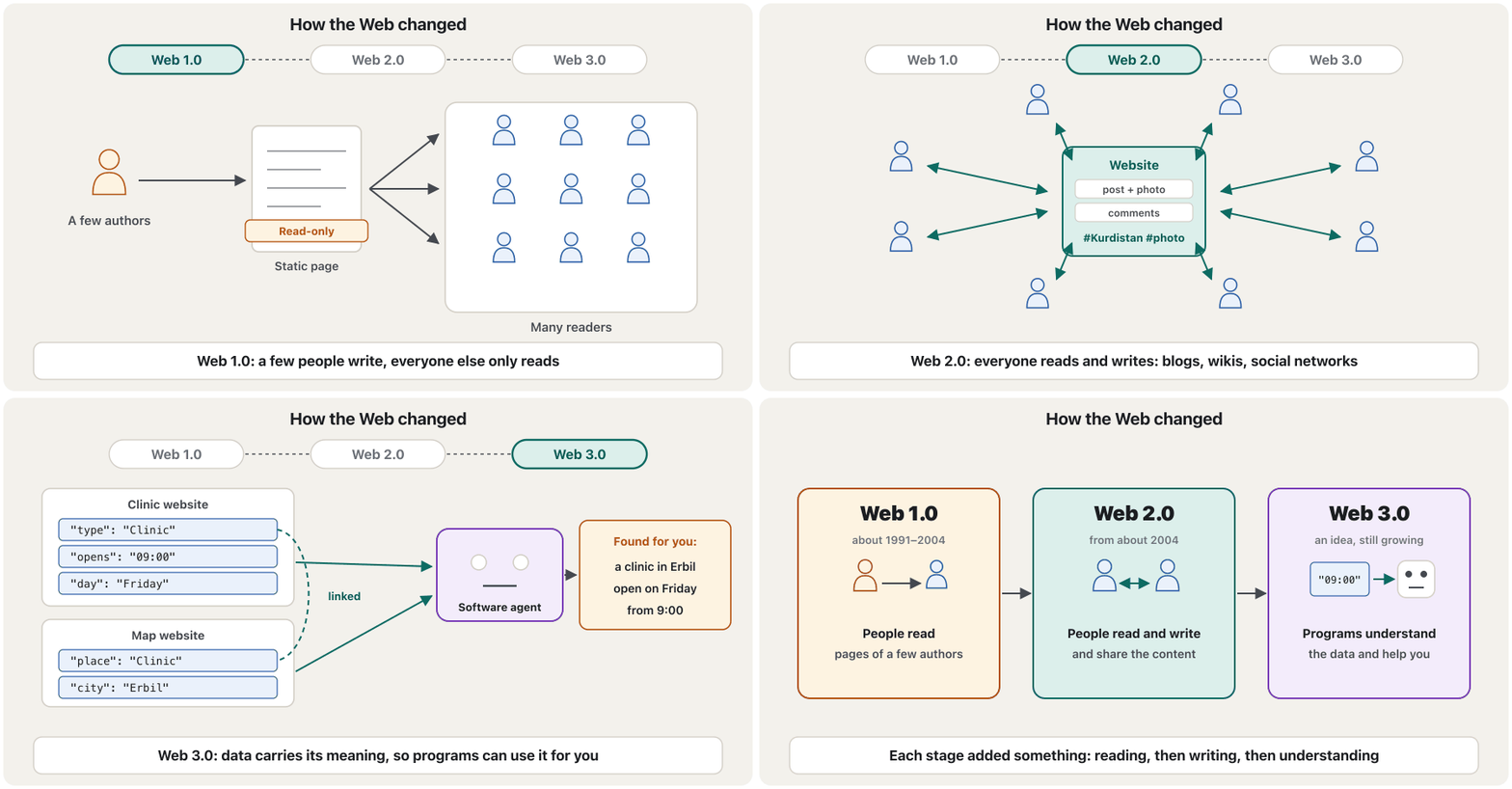
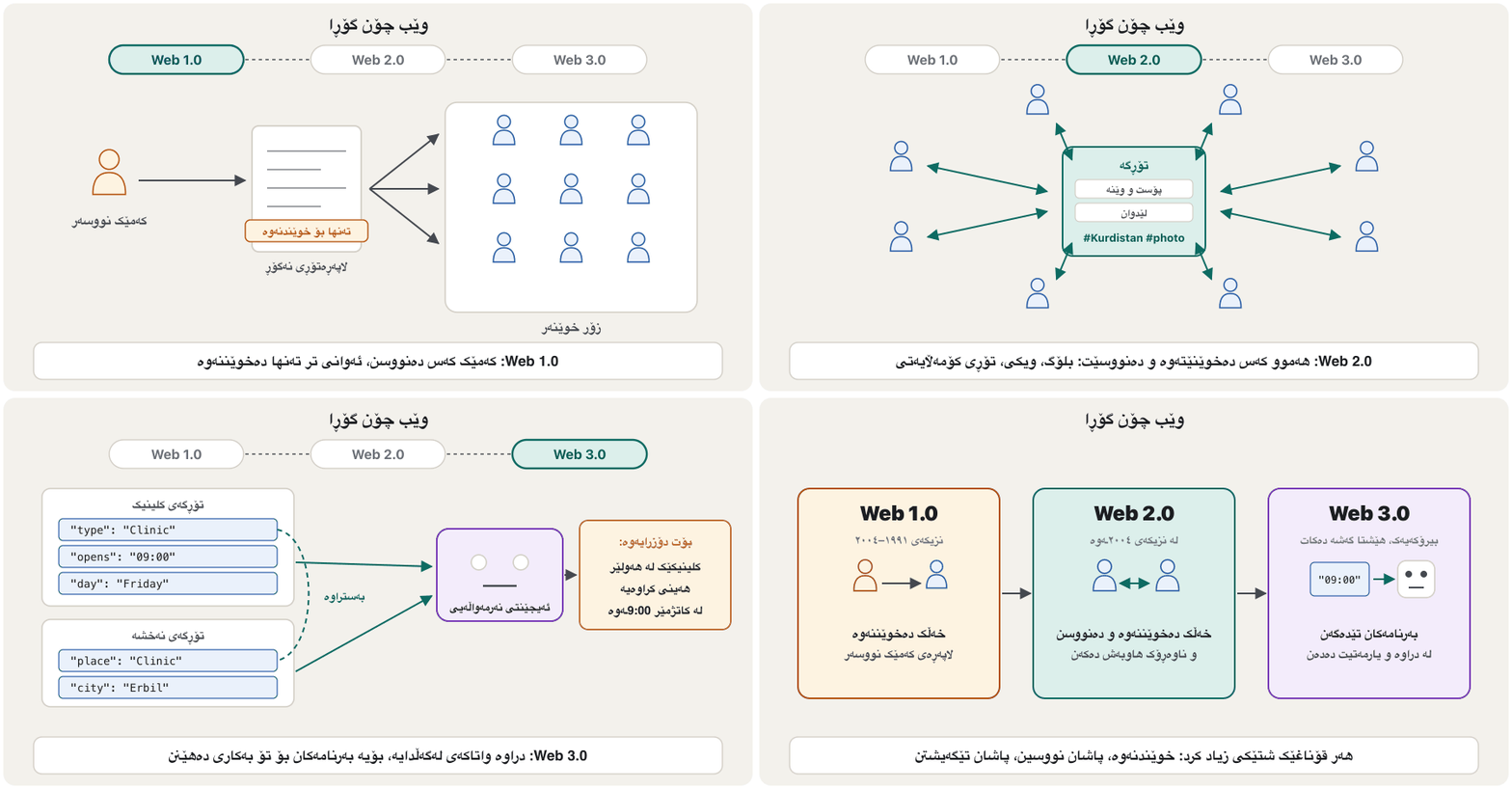
Web 1.0 (about 1991–2004) was the early stage of the Web: the read-only Web. A few people wrote pages and very many people read them. Visitors could view a page, but they could not add to it or change it: the information was closed to outside editing. Most pages were : the same HTML file for every visitor, unchanged until its author uploaded a new copy. Compare the three views of a page.
Web 1.0 (نزیکەی ١٩٩١–٢٠٠٤) قۆناغی سەرەتای بوو: . کەمێک کەس لاپەڕەیان دەنووسی و زۆر کەس دەیانخوێندنەوە. سەردانکەران دەیانتوانی لاپەڕەیەک ببینن، بەڵام نەیاندەتوانی شتێکی بۆ زیاد بکەن یان بیگۆڕن: زانیارییەکان بەڕووی دەستکاریی دەرەوەدا داخرابوون. زۆربەی لاپەڕەکان بوون: هەمان فایلی HTML بۆ هەموو سەردانکەرێک، بێ گۆڕان تا نووسەرەکەی کۆپییەکی نوێی لەسەر دادەنا. بەراوردی بکە لەگەڵ سێ دیمەنی یەک لاپەڕە.
How the Web changed: Web 1.0, 2.0 and 3.0وێب چۆن گۆڕا: Web 1.0، Web 2.0 و Web 3.0
Web 1.0: habits of the early WebWeb 1.0: خووەکانی وێبی سەرەتایی
Open a website from the late 1990s and you may still meet these habits. Each one now has a better replacement:
لە کۆتایی ساڵانی ١٩٩٠ بکەرەوە، لەوانەیە هێشتا ئەم خووانە ببینیت. ئێستا هەر یەکەیان جێگرەوەیەکی باشتری هەیە:
- Framesets: the window was cut into frames, each showing a separate page (a menu on the left, content on the right). They broke bookmarks and the Back button, and
<frameset>is obsolete in today's HTML. - Tables for layout: the whole page was one big table (the old way). Today CSS grid and flexbox do this job.
- Guestbooks: a page where visitors left their name and a short message, like signing the book at an exhibition. They are the ancestors of today's comments.
- Forms sent by e-mail:
<form action="mailto:…">opened the visitor's e-mail program, because many small sites had no program on the server to receive the data. Today PHP receives the form (Forms).
- Frameset: پەنجەرەکە دەکرا بە چەند چوارچێوەیەک و هەر یەکەیان لاپەڕەیەکی جیای پیشان دەدا (لیستێک لە چەپ، ناوەڕۆک لە ڕاست). bookmark و دوگمەی Back باش کاریان لەگەڵیدا نەدەکرد و
<frameset>لە HTMLـی ئەمڕۆدا لابراوە. - بۆ : هەموو لاپەڕەکە گەورە بوو (ڕێگا کۆنەکە). ئەمڕۆ grid و flexboxـی CSS ئەم کارە دەکەن.
- دەفتەری میوانان (guestbook): لاپەڕەیەک کە سەردانکەران ناو و نامەیەکی کورتیان تێدا جێدەهێشت، وەک واژۆکردنی دەفتەرێک لە پێشانگایەکدا. باپیرەی لێدوانەکانی ئەمڕۆن.
- کە بە دەنێردران:
<form action="mailto:…">سەردانکەرەکەی دەکردەوە، چونکە زۆر بچووک هیچ لەسەر نەبوو بۆ وەرگرتنی . ئەمڕۆ PHP وەردەگرێت (فۆرمەکان).
Its limits were clear: limited content (only a few people could publish), limited creativity (visitors could not take part) and limited business (a website was mostly an online brochure). In short, a few thousand editors wrote for hundreds of millions of readers.
سنوورەکانیشی ڕوون بوون: ناوەڕۆکی سنووردار (تەنها کەمێک کەس دەیانتوانی بڵاو بکەنەوە)، داهێنانی سنووردار (سەردانکەران نەیاندەتوانی بەشداری بکەن) و بازرگانیی سنووردار ( زیاتر وەک نامیلکەیەکی ئۆنلاین بوو). بە کورتی: چەند هەزار نووسەرێک بۆ سەدان ملیۆن خوێنەر دەیاننووسی.
How the Web changed: Web 1.0, 2.0 and 3.0وێب چۆن گۆڕا: Web 1.0، Web 2.0 و Web 3.0
Web 2.0: a Web everyone writesWeb 2.0: وێبێک کە هەموو کەس تێیدا دەنووسێت
From about 2004 the Web moved from reading to taking part. Web 2.0 lets users interact and work together as creators of content, not only as readers: they write blogs, edit wikis and post photos and videos. The name was first used in 1999 and was made popular by Tim O'Reilly and Dale Dougherty at a conference in 2004. Wikipedia, YouTube, Facebook and Twitter (now X) are typical Web 2.0 sites.
لە نزیکەی ساڵی ٢٠٠٤ـەوە لە خوێندنەوەوە بەرەو بەشداریکردن چوو. Web 2.0 ڕێگە بە دەدات کارلێک بکەن و پێکەوە کار بکەن وەک دروستکەری ناوەڕۆک، نەک تەنها وەک خوێنەر: دەنووسن، ویکی دەستکاری دەکەن و وێنە و ڤیدیۆ بڵاو دەکەنەوە. ناوەکە یەکەم جار لە ساڵی ١٩٩٩ بەکارهات و Tim O'Reilly و Dale Dougherty لە کۆنفرانسێکدا لە ساڵی ٢٠٠٤ بەناوبانگیان کرد. Wikipedia، YouTube، Facebook و Twitter (ئێستا X) نموونەی ئاسایی Web 2.0ـن.
The course describes Web 2.0 in three parts:
کۆرسەکە Web 2.0 بە سێ بەش باس دەکات:
- Rich Internet applications (RIA): web pages that behave like desktop programs. With Ajax, JavaScript updates one part of a page without reloading it (Ajax and fetch()). Flash was the other RIA tool; Adobe ended it on 31 December 2020.
- Web-oriented architecture (WOA): sites offer their content to other programs. RSS feeds tell readers about new posts, and let one site use another site's data, like today's web APIs.
- The social web: people connect, share and talk on .
- Rich Internet Applications (RIA): وەک سەر مێز کار دەکەن. بە ، بەشێکی لاپەڕەکە نوێ دەکاتەوە بێ ئەوەی هەموو لاپەڕەکە دووبارە باربکاتەوە (Ajax و
fetch()). Flash ئامرازەکەی تری RIA بوو؛ Adobe لە ٣١ی کانوونی یەکەمی ٢٠٢٠دا کۆتایی پێهێنا. - Web-Oriented Architecture (WOA): ناوەڕۆکەکەیان پێشکەشی تر دەکەن. RSS ئاگاداری خوێنەران دەکاتەوە کە بابەتی نوێ هەیە و ڕێگە دەدەن تر بەکاربهێنێت، وەک APIـی وێبی ئەمڕۆ.
- کۆمەڵایەتی: خەڵک لەسەر پەیوەندی دەگرن، هاوبەشی دەکەن و قسە دەکەن.
How the Web changed: Web 1.0, 2.0 and 3.0وێب چۆن گۆڕا: Web 1.0، Web 2.0 و Web 3.0
Web 2.0: three features and three problemsWeb 2.0: سێ تایبەتمەندی و سێ کێشە
Exams often ask for the three basic features of Web 2.0:
تاقیکردنەوەکان زۆرجار داوای سێ تایبەتمەندییە سەرەکییەکەی Web 2.0 دەکەن:
- : users themselves classify information with free tags, and everybody's tags together make it easy to find. Hashtags such as #Kurdistan are a folksonomy.
- Rich user experience: the content is dynamic and responds to what the user does.
- User participation: users add content that other people see: reviews, comments and posts.
- : خۆیان بە ئازاد زانیاری پۆلێن دەکەن و هەمووان پێکەوە دۆزینەوەی زانیارییەکە ئاسان دەکەن. هاشتاگی وەک #Kurdistan نموونەی .
- ئەزموونی دەوڵەمەندی : ناوەڕۆکەکە گۆڕاوە و وەڵامی ئەو کارانە دەداتەوە کە دەیکات.
- بەشداریی : ناوەڕۆک زیاد دەکەن کە کەسانی تر دەیبینن: هەڵسەنگاندن، لێدوان و پۆست.
Web 2.0 also brought new problems:
Web 2.0 کێشەی نوێشی هێنا:
- Information is harder to monitor and to secure, and false stories spread fast (misinformation).
- Nobody controls, in a systematic way, how information is created, stored or deleted.
- People who depend on online services cannot work when the connection is lost (cloud risks).
- چاودێریکردن و پاراستنی زانیاری قورسترە و هەواڵی هەڵە بە خێرایی بڵاو دەبێتەوە (زڕزانیاری).
- کەس بە شێوەیەکی ڕێکخراو کۆنترۆڵی دروستکردن، هەڵگرتن یان سڕینەوەی زانیاری ناکات.
- ئەوانەی پشت بە خزمەتگوزارییە ئۆنلاینەکان دەبەستن، کاتێک پەیوەندییەکە دەپچڕێت ناتوانن کار بکەن (مەترسییەکانی هەور).
How the Web changed: Web 1.0, 2.0 and 3.0وێب چۆن گۆڕا: Web 1.0، Web 2.0 و Web 3.0
Web 3.0: a Web that programs can understandWeb 3.0: وێبێک کە بەرنامەکان لێی تێدەگەن
The course calls Web 3.0 "a more intelligent web". Its main idea is the , described by Tim Berners-Lee, James Hendler and Ora Lassila in Scientific American in 2001. Today a clinic's page may say "Open Saturday to Thursday, 9:00–17:00": a person understands it, but a program sees only letters. In the Semantic Web the data also carries its meaning ("this is an opening time") in a form that programs can read, and data on different sites is linked together. The wrote the standards for it: RDF, RDFS and OWL.
کۆرسەکە بە Web 3.0 دەڵێت « زیرەکتر». بیرۆکە سەرەکییەکەی ، کە Tim Berners-Lee، James Hendler و Ora Lassila لە ساڵی ٢٠٠١ لە گۆڤاری Scientific Americanدا باسیان کرد. ئەمڕۆ لاپەڕەی کلینیکێک لەوانەیە بڵێت «شەممە تا پێنجشەممە، 9:00–17:00 کراوەیە»: مرۆڤ تێیدەگات، بەڵام تەنها پیت دەبینێت. لە واتاکەی خۆیشی لەگەڵدایە («ئەمە کاتی کردنەوەیە») بە شێوەیەک کە بتوانن بیخوێننەوە و جیاواز بەیەکەوە دەبەسترێن. ستانداردەکانی بۆ نووسی: RDF، RDFS و OWL.
With such data, can do tasks for you: for example, find a clinic near you that is open on Friday and has a free appointment that fits your timetable (software agents). Some writers go further: in Web 3.0, they say, computers rather than people will create new information.
بە لەم جۆرە، دەتوانن کار لە جیاتی تۆ بکەن: بۆ نموونە کلینیکێکی نزیکت بدۆزنەوە کە ڕۆژی هەینی کراوەیە و کاتێکی بەتاڵی هەیە کە لەگەڵ خشتەی کاتەکانت بگونجێت (ئەیجێنتە نەرمەواڵەییەکان). هەندێک نووسەر زیاتر دەڕۆن: دەڵێن لە Web 3.0دا کۆمپیوتەرەکان، نەک مرۆڤ، زانیاریی نوێ دروست دەکەن.
How the Web changed: Web 1.0, 2.0 and 3.0وێب چۆن گۆڕا: Web 1.0، Web 2.0 و Web 3.0
Web 3.0 or Web3? Two mix-ups cleared upWeb 3.0 یان Web3؟ ڕوونکردنەوەی دوو تێکەڵکردن
A second mix-up is the name Web3, written without a space or a point. In 2014 Gavin Wood, a co-founder of Ethereum, used it for a decentralised web built on , where users keep their data and money (as ) themselves instead of trusting big companies. Web3 and the Semantic Web are different ideas, but the two names are often confused.
تێکەڵکردنی دووەم ناوی Web3ـە، کە بێ بۆشایی و بێ خاڵ دەنووسرێت. لە ساڵی ٢٠١٤ Gavin Wood، یەکێک لە دامەزرێنەرانی Ethereum، ئەم ناوەی بۆ ناناوەندی بەکارهێنا کە لەسەر دروست دەکرێت و تێیدا خۆیان و پارەکەیان (وەک ) هەڵدەگرن، لە جیاتی ئەوەی متمانە بە کۆمپانیا گەورەکان بکەن. Web3 و دوو بیرۆکەی جیاوازن، بەڵام زۆرجار ناوەکانیان تێکەڵ دەکرێن.
How the Web changed: Web 1.0, 2.0 and 3.0وێب چۆن گۆڕا: Web 1.0، Web 2.0 و Web 3.0
Web 1.0, 2.0 and 3.0 side by sideWeb 1.0، 2.0 و 3.0 لە تەنیشت یەکتر
This table joins the course's two summaries. Read it row by row: each row shows how one thing changed.
ئەم خشتەیە هەردوو کورتەکەی کۆرسەکە پێکەوە کۆدەکاتەوە. ڕیز بە ڕیز بیخوێنەوە: هەر ڕیزێک پیشان دەدات شتێک چۆن گۆڕا.
| Topicبابەت | Web 1.0 | Web 2.0 | Web 3.0 |
|---|---|---|---|
| Communicationپەیوەندی | Broadcast: one to manyبڵاوکردنەوە: یەک بۆ زۆر | Interactiveکارلێک | Engaged, investedبەشداریی قووڵ |
| Informationزانیاری | Static, read-onlyنەگۆڕ، | Dynamicگۆڕاو | Portable and personalگوازراوە و کەسی |
| Focusسەرنج لەسەر | The organisationدامەزراوە | The communityکۆمەڵگە | The individualتاک |
| Personal pagesلاپەڕەی کەسی | Home pages | Blogs and wikis و ویکی | Lifestreams: all of one person's online life in one streamLifestream: هەموو ژیانی ئۆنلاینی کەسێک لە یەک ڕەوتدا |
| Contentناوەڕۆک | Ownershipخاوەندارێتی | Sharingهاوبەشکردن | Curation: choosing and arranging the bestCuration: هەڵبژاردن و ڕێکخستنی باشترینەکان |
| Interactionکارلێک | Web forms وێب | Web applications | Smart applicationsبەرنامەی زیرەک |
| Typical uses (course slide)بەکارهێنانی باو (سلایدی کۆرسەکە) | Commerce, delivery, banner advertisingبازرگانی، گەیاندن و ڕیکلامی بانەر | Communities, blogs, social media, sharingکۆمەڵگە، ، سۆشیال میدیا و هاوبەشکردن | The semantic web and agents (the slide adds cloud, mobile internet, online business and user behaviour: see the correction above) و ئەیجێنتەکان (سلایدەکە هەور، مۆبایل، بازرگانیی ئۆنلاین و ڕەفتاری زیاد دەکات: بڕوانە ڕاستکردنەوەکەی سەرەوە) |
How the Web changed: Web 1.0, 2.0 and 3.0وێب چۆن گۆڕا: Web 1.0، Web 2.0 و Web 3.0
Side by side (continued)لە تەنیشت یەکتر (بەردەوام)
| Topicبابەت | Web 1.0 | Web 2.0 | Web 3.0 |
|---|---|---|---|
| Searchگەڕان | Directories | Keywords and tags و | Context and relevance (how search changed)دەوروبەر و پەیوەندیداری (گەڕان چۆن گۆڕا) |
| Metrics: how success is countedپێوەر: سەرکەوتن چۆن دەژمێردرێت | Page viewsژمارەی بینینی لاپەڕە | Cost per clickتێچوو بۆ هەر کرتەیەک | User engagementبەشداریی |
| Advertisingڕیکلام | Bannersبانەر | Interactive advertsڕیکلامی کارلێک | Behavioural: based on what you doڕەفتاری: بەپێی ئەوەی دەیکەیت |
| Researchتوێژینەوە | Britannica Online, written by expertsBritannica Online، کە پسپۆڕان دەینووسن | Wikipedia, written by its usersWikipedia، کە خۆی دەینووسن | The Semantic Web |
| Technologiesتەکنەلۆژیاکان | HTML, FTPHTML، FTP | Flash, Java applets, XML, AjaxFlash، Java applet، XML، | RDF, RDFS, OWLRDF، RDFS، OWL |
What does a web developer need to know?گەشەپێدەرێکی وێب پێویستە چی بزانێت؟
Three practical skills before any programmingسێ لێهاتوویی پراکتیکی پێش هەر بەرنامەسازییەک
Building websites is not only about writing code. The course divides the skills into two parts: practical skills you need before any programming, and the subject areas you study over time.
دروستکردنی تەنها نووسینی کۆد نییە. کۆرسەکە لێهاتووییەکان دەکات بە دوو بەش: لێهاتوویی پراکتیکی کە پێش هەر پێویستن و ئەو بوارانەی کە بە تێپەڕبوونی کات دەیانخوێنیت.
- Computer operations. All you need is to know how to operate a computer: Windows, Linux or Macintosh (macOS). Which one depends on the you want to host your website on, so you need basic knowledge of that system only.
- Remote access. Most of the time you will reach your web server only from a remote site (from far away). You should know well how to connect to a computer from a remote site, for example through your hosting company's control panel or a secure connection called SSH.
- File uploading and downloading. You should know the basics of the utility, to connect to a remote machine and download or upload your files. Almost all service providers give you a way to upload your files to your web server.
- بەکارهێنانی کۆمپیوتەر. تەنها پێویستە بزانیت کۆمپیوتەر چۆن بەکار دەهێنرێت: Windows، Linux یان Macintosh (macOS). کامیان، پەیوەستە بەو کە دەتەوێت لەسەر دابنێیت، بۆیە تەنها پێویستت بە زانیاریی بنەڕەتیی ئەو سیستەمە هەیە.
- . زۆربەی کات تەنها لە دوورەوە دەگەیتە . پێویستە بە باشی بزانیت چۆن لە شوێنێکی دوورەوە پەیوەندی بە کۆمپیوتەرێکەوە بکەیت، بۆ نموونە لە ڕێگەی کۆمپانیای یان پەیوەندییەکی پارێزراو بە ناوی SSH.
- و فایل. پێویستە بنەماکانی ئامرازی بزانیت، بۆ پەیوەندیکردن بە ئامێرێکی دوورەوە و یان فایلەکانت. نزیکەی هەموو دابینکەرانی خزمەتگوزاری ڕێگایەکت پێدەدەن بۆ فایلەکانت بۆ سەر .
What does a web developer need to know?گەشەپێدەرێکی وێب پێویستە چی بزانێت؟
Five subject areas a web developer studiesپێنج بوار کە گەشەپێدەرێکی وێب دەیانخوێنێت
| Subject areaبوار | What it includesچی لەخۆ دەگرێت |
|---|---|
| Basic computer networksبنەماکانی | The OSI model, its layers, and مۆدێلی OSI، چینەکانی و |
| Web design and graphic design و دیزاینی گرافیک | , , , Photoshop, Illustrator and InDesign، ، ، Photoshop، Illustrator و InDesign |
| Programming and OOP (object-oriented programming) و OOP ( بە ) | , Ruby, Python, ASP (today ASP.NET), Java servlets or JSP، Ruby، Python، ASP (ئەمڕۆ ASP.NET)، Java servlet یان JSP |
| Databases and the SQL language و زمانی | , , PostgreSQL, Oracle and SQL Server; also PL/SQL، ، PostgreSQL، Oracle و SQL Server؛ هەروەها PL/SQL |
| Internet and network security و | IPsec, SSL/TLS, threats, and hashing ()IPsec، SSL/TLS، هەڕەشەکان، و هاشکردن () |
Common mistakesئەو هەڵانەی زۆرجار دەکرێن
- Saying "Internet" when you mean "Web". The Internet is the network; the Web is one service on it. Email works over the Internet but is not "the Web".
- Thinking an intranet uses different technology. It uses the same TCP/IP technology as the Internet. Only the door to the outside is closed.
- Thinking an extranet is open to everyone. An extranet lets in only chosen partners, in a controlled way.
- Thinking a firewall is antivirus software. A firewall controls traffic in and out of a network by rules; it does not clean viruses from your files.
- Sending passwords over plain FTP. Use SFTP, FTPS or your hosting control panel instead.
- وتنی «» کاتێک مەبەستت «»ـە. خودی ؛ یەک خزمەتگوزارییە لەسەری. بەسەر کار دەکات، بەڵام «» نییە.
- وا بزانیت تەکنەلۆژیایەکی جیاواز بەکار دەهێنێت. هەمان تەکنەلۆژیای بەکار دەهێنێت. تەنها دەرگای دەرەوە داخراوە.
- وا بزانیت بۆ هەموو کەسێک کراوەیە. تەنها ڕێگە بە هاوبەشە هەڵبژێردراوەکان دەدات، بە شێوەیەکی کۆنترۆڵکراو.
- وا بزانیت دژەڤایرۆسە. بە یاسا کۆنترۆڵی ئەو هاتوچۆیە دەکات کە دێتە ناو یان لێی دەچێتە دەرەوە؛ ڤایرۆس لە فایلەکانت پاک ناکاتەوە.
- ناردنی بە FTPـی سادە. لە جیاتی ئەوە SFTP، FTPS یان بەکار بهێنە.
Quick check and exercisesپشکنینی خێرا و ڕاهێنان
Quick check from the courseپشکنینی خێرای کۆرسەکە
Try to answer each question in your own words before you open the answer.
هەوڵ بدە پێش ئەوەی وەڵامەکان بکەیتەوە، بە وشەکانی خۆت وەڵامی هەر پرسیارێک بدەیتەوە.
What protocol suite does the Internet use?
کام کۆمەڵە بەکار دەهێنێت؟
Show answerوەڵامەکە پیشان بدە
TCP/IP. It links several billion devices worldwide. IP gives each device an address and carries the packets; TCP checks that all packets arrive, complete and in order.
. چەندین ملیار ئامێر لە سەرانسەری جیهاندا بەیەکەوە دەبەستێت. IP ناونیشان دەدات بە هەر ئامێرێک و دەگەیەنێت؛ TCP دڵنیا دەبێتەوە کە هەموو بە تەواوی و بە ڕیزی دروست دەگەن.
What is the difference between an intranet and an extranet?
جیاوازیی نێوان و چییە؟
Show answerوەڵامەکە پیشان بدە
An intranet is private to one organization: only its own people can use it. An extranet lets chosen outsiders (partners such as suppliers and customers) in, over the Internet, in a controlled way.
تایبەتە بە یەک دامەزراوەوە: تەنها خەڵکی خۆی دەتوانن بەکاری بهێنن. ڕێگە بە کەسانی دەرەوەی هەڵبژێردراو (هاوبەشەکانی وەک دابینکەر و کڕیار) دەدات بچنە ژوورەوە، بەسەر و بە شێوەیەکی کۆنترۆڵکراو.
Are the Internet and the Web the same thing?
ئایا و یەک شتن؟
Show answerوەڵامەکە پیشان بدە
No. The Internet is the network of networks. The Web is one service that uses the Internet (with HTTP) to pass information. Email and video calls also use the Internet but are not the Web.
نەخێر. . یەک خزمەتگوزارییە کە بەکار دەهێنێت (بە ) بۆ گواستنەوەی زانیاری. و پەیوەندیی ڤیدیۆییش بەکار دەهێنن، بەڵام نین.
Who founded the W3C, and what does it do? (The slide asks: "Who helped found the W3C?")
کێ دامەزراند و چی دەکات؟ (سلایدەکە دەپرسێت: «کێ یارمەتیی دامەزراندنی دا؟»)
Show answerوەڵامەکە پیشان بدە
Tim Berners-Lee, the inventor of the Web, founded the W3C in 1994. It writes the standards of the Web, such as HTML and CSS.
تیم بێرنەرز-لی، داهێنەری ، لە ساڵی ١٩٩٤ دامەزراند. ستانداردەکانی دەنووسێت، وەک و .
Quick check and exercisesپشکنینی خێرا و ڕاهێنان
Two more exercisesدوو ڕاهێنانی تر
Decide whether each system is part of an intranet, an extranet or the Internet: (a) a university's public homepage; (b) a staff-only system for exam marks; (c) an ordering system for 20 chosen bookshops that sell the university's books.
دیاری بکە هەر یەک لەم سیستەمانە بەشێکە لە ، یان : (أ) زانکۆیەک کە هەموو کەس دەیبینێت؛ (ب) سیستەمێک بۆ نمرەی تاقیکردنەوە کە تەنها بۆ کارمەندانە؛ (ج) سیستەمێکی داواکردن بۆ ٢٠ کتێبفرۆشی هەڵبژێردراو کە کتێبەکانی زانکۆکە دەفرۆشن.
Show answerوەڵامەکە پیشان بدە
- (a) Internet: everybody may open it.
- (b) Intranet: only the university's own staff.
- (c) Extranet: the university plus chosen partners, each with a login.
- (أ) : هەموو کەس دەتوانێت بیکاتەوە.
- (ب) : تەنها کارمەندانی خودی زانکۆکە.
- (ج) : زانکۆکە لەگەڵ هاوبەشە هەڵبژێردراوەکان، هەر یەکەیان بە و خۆی.
Karwan uses three programs: a photo editor he installed from a setup file; the student portal he opens in his browser; and a webmail service. Which are online applications and which are offline applications? Which one is easiest for its makers to update, and why?
کاروان سێ بەکار دەهێنێت: دەستکاریکردنی وێنە کە لە فایلێکی دامەزراندنەوە دایمەزراندووە؛ پۆرتاڵی خوێندکاران کە لە دەیکاتەوە؛ و خزمەتگوزارییەکی سەر وێب. کامیان و کامیان ؟ نوێکردنەوەی کامیان بۆ دروستکەرەکانی ئاسانترە و بۆچی؟
Show answerوەڵامەکە پیشان بدە
The photo editor is an offline application. The student portal and the webmail are online applications. The online ones are easiest to update: the makers change the program once, on the server, and every user has the new version immediately. For the photo editor, every user must install the new version.
دەستکاریکردنی وێنەکە . پۆرتاڵی خوێندکاران و . نوێکردنەوەی ئۆنلاینەکان ئاسانترە: دروستکەرەکان تەنها یەک جار لەسەر دەگۆڕن و هەموو بەکارهێنەرێک دەستبەجێ وەشانە نوێیەکەی دەبێت. بۆ وێنەکە، هەموو بەکارهێنەرێک دەبێت وەشانە نوێیەکە دابمەزرێنێت.
Quick check and exercisesپشکنینی خێرا و ڕاهێنان
Exam practice: the three stages of the Webڕاهێنانی تاقیکردنەوە: سێ قۆناغەکەی وێب
Write true or false, and correct each false sentence. (a) Web 1.0 was the early stage of the conceptual evolution of the WWW. (b) Web 2.0 is the newest web generation. (c) Web 1.0 allows users to interact and collaborate as creators of user-generated content. (d) The semantic web is an example of Web 2.0. (e) The Internet is a system of interlinked hypertext documents.
بنووسە ڕاست یان هەڵە و هەر ڕستەیەکی هەڵە ڕاست بکەرەوە. (أ) Web 1.0 قۆناغی سەرەتای گەشەکردنی بیرۆکەی بوو. (ب) Web 2.0 نوێترین نەوەی . (ج) Web 1.0 ڕێگە بە دەدات کارلێک بکەن و پێکەوە کار بکەن وەک دروستکەری ناوەڕۆک. (د) نموونەیەکی Web 2.0ـیە. (هـ) سیستەمێکە لە بەڵگەنامەی hypertext کە بە بەیەکەوە بەستراون.
Show answerوەڵامەکە پیشان بدە
- (a) True.
- (b) False. Web 3.0 is newer than Web 2.0.
- (c) False. That describes Web 2.0; Web 1.0 was read-only.
- (d) False. The semantic web is the idea of Web 3.0.
- (e) False. Interlinked hypertext documents are the Web. The Internet is the network of networks that carries the Web (The Internet is not the Web). Some old answer keys mark this sentence true; they are wrong.
- (أ) ڕاست.
- (ب) هەڵە. Web 3.0 لە Web 2.0 نوێترە.
- (ج) هەڵە. ئەمە باسی Web 2.0 دەکات؛ Web 1.0 بوو.
- (د) هەڵە. بیرۆکەی Web 3.0ـیە.
- (هـ) هەڵە. بەڵگەنامەی hypertext کە بە بەیەکەوە بەستراون پێکەوە پێکدەهێنن. کە هەڵدەگرێت (ئینتەرنێت هەمان وێب نییە). هەندێک وەڵامنامەی کۆن ئەم ڕستەیە بە ڕاست دادەنێن؛ هەڵەن.
(a) Web 2.0 can be described in three parts. Name them. (b) What are the three basic characteristics of Web 2.0?
(أ) Web 2.0 دەتوانرێت بە سێ بەش باس بکرێت. ناویان بهێنە. (ب) سێ تایبەتمەندییە سەرەکییەکەی Web 2.0 چین؟
Show answerوەڵامەکە پیشان بدە
(a) Rich Internet applications (Ajax; Flash in the past), web-oriented architecture (feeds, RSS, web services) and the social web. (b) Folksonomy, rich user experience and user participation.
(أ) Rich Internet Applications (؛ لە ڕابردوودا Flash)، Web-Oriented Architecture (RSS و ) و کۆمەڵایەتی. (ب) ، ئەزموونی دەوڵەمەندی و بەشداریی .
What new characteristics does Web 3.0 have that Web 2.0 does not?
Web 3.0 چ تایبەتمەندییەکی نوێی هەیە کە لە Web 2.0دا نییە؟
Show answerوەڵامەکە پیشان بدە
The core idea is the semantic web: data that carries its meaning and is linked across sites, so that programs can understand it and software agents can act for the user. The slides also list cloud computing, portable (mobile) internet, online business and user behaviour. Name them if your exam follows the slides, but add that they grew during the Web 2.0 years (the correction).
بیرۆکە سەرەکییەکە : کە واتاکەی لەگەڵدایە و لە نێوان بەستراوەتەوە، بۆ ئەوەی لێی تێبگەن و لە جیاتی کار بکەن. سلایدەکان ، گوازراوە (مۆبایل)، بازرگانیی ئۆنلاین و ڕەفتاری دەژمێرن. ئەگەر تاقیکردنەوەکەت پەیڕەوی سلایدەکان دەکات ناویان بهێنە، بەڵام زیادی بکە کە لە سەردەمی Web 2.0دا گەشەیان کرد (ڕاستکردنەوەکە).
Summary and reviewکورتە و پێداچوونەوە
- The Internet is a global network of networks. All its devices follow the TCP/IP rules, so machines from different makers can talk.
- People use it for email, file upload and download, information sharing, entertainment and remote access.
- Online applications need no installation, work anywhere and on any operating system, and are updated once on the server. Offline applications must be installed, often have more features, and are hard to update.
- Intranet: only the company. Extranet: the company plus chosen partners. Internet: everybody. A firewall is the door that controls what goes in and out; a VPN is an encrypted tunnel that wraps (encapsulates) packets.
- The World Wide Web is all the pages and resources that people reach with HTTP. It is one service on the Internet, not the Internet itself. Tim Berners-Lee invented it and founded the W3C.
- The Internet grew from ARPANET (1969), built so that researchers could share distant computers, not to survive a nuclear war. The Web went from Web 1.0 (read-only pages) to Web 2.0 (users create the content) and Web 3.0 (the Semantic Web: data that programs understand). Web3 (blockchains) is a different idea.
- A web developer needs computer operations, remote access and file transfer, and studies networks, design, programming, databases and security.
- جیهانییە کە لە چەندین پێکهاتووە. هەموو ئامێرەکانی پەیڕەوی یاساکانی دەکەن، بۆیە ئامێری دروستکەرە جیاوازەکان دەتوانن قسە لەگەڵ یەکتر بکەن.
- خەڵک بۆ ، و فایل، هاوبەشکردنی زانیاری، کات بەسەربردن و بەکاری دەهێنن.
- پێویستیان بە دامەزراندن نییە، لە هەموو شوێنێک و لەسەر هەر کار دەکەن و تەنها یەک جار لەسەر نوێ دەکرێنەوە. دەبێت دابمەزرێن، زۆرجار توانای زیاتریان هەیە و نوێکردنەوەیان قورسە.
- : تەنها کۆمپانیاکە. : کۆمپانیاکە لەگەڵ هاوبەشە هەڵبژێردراوەکان. : هەموو کەس. ئەو دەرگایەیە کە کۆنترۆڵی هاتن و چوون دەکات؛ تونێلێکە کە بە پارێزراوە و دەپێچێتەوە.
- هەموو ئەو لاپەڕە و سەرچاوانەیە کە خەڵک بە پێیان دەگەن. یەک خزمەتگوزارییە لەسەر ، نەک خودی . تیم بێرنەرز-لی دایهێنا و ـی دامەزراند.
- لە ARPANET (١٩٦٩)ـەوە گەشەی کرد، کە بۆ ئەوە دروست کرا توێژەران کۆمپیوتەرە دوورەکان هاوبەش بکەن، نەک بۆ بەرگەگرتنی جەنگی ئەتۆمی. لە Web 1.0 (لاپەڕەی )ـەوە چوو بۆ Web 2.0 ( ناوەڕۆکەکە دروست دەکەن) و Web 3.0 (: کە لێی تێدەگەن). Web3 () بیرۆکەیەکی جیاوازە.
- پێویستی بە بەکارهێنانی کۆمپیوتەر، و گواستنەوەی فایل هەیە و ، دیزاین، ، و دەخوێنێت.
What is the Internet, in one sentence?ئینتەرنێت چییە، لە یەک ڕستەدا؟
A global system of interconnected computer networks that use TCP/IP to link several billion devices.
سیستەمێکی جیهانییە لە کە بەیەکەوە بەستراون و بەکار دەهێنن بۆ بەستنەوەی چەندین ملیار ئامێر.
What do IP and TCP each do?IP و TCP هەر یەکەیان چی دەکەن؟
IP addresses the packets and carries them to the right device; TCP makes sure all packets arrive complete and in the right order.
IP ناونیشان دەکات و دەیانگەیەنێتە ئامێری دروست؛ TCP دڵنیا دەبێتەوە کە هەموو بە تەواوی و بە ڕیزی دروست دەگەن.
Give two advantages of online applications.دوو سوودی بەرنامە ئۆنلاینەکان بڵێ.
No installation (just log in and use) and they work from anywhere on any operating system. Also, they are updated once on the server for everyone.
دامەزراندنیان ناوێت (تەنها بچۆ ژوورەوە و بەکاری بهێنە) و لە هەموو شوێنێک و لەسەر هەر کار دەکەن. هەروەها تەنها یەک جار لەسەر بۆ هەمووان نوێ دەکرێنەوە.
How is a computer identified inside an intranet?کۆمپیوتەرێک لەناو ئینترانێتدا چۆن دەناسرێتەوە؟
By an IP address that is unique among the computers of that intranet.
بە کە لە نێوان کۆمپیوتەرەکانی ئەو بێهاوتایە.
What is a VPN used for in an extranet?VPN لە ئێکسترانێتدا بۆ چی بەکار دێت؟
To give partners and remote staff a safe, encrypted tunnel through the public Internet into the private network.
بۆ ئەوەی تونێلێکی پارێزراو بە بدات بە هاوبەشەکان و کارمەندانی دوورەدەست، بەناو گشتیدا بۆ ناو .
Which protocol defines the Web?کام پرۆتۆکۆڵ وێب پێناسە دەکات؟
HTTP, the HyperText Transfer Protocol (and its secure version, HTTPS).
، واتە HyperText Transfer Protocol (و وەشانە پارێزراوەکەی، ).
What is the main difference between Web 1.0 and Web 2.0?جیاوازیی سەرەکیی نێوان Web 1.0 و Web 2.0 چییە؟
In Web 1.0 a few authors wrote and visitors could only read. In Web 2.0 the users themselves create and share the content (blogs, wikis, social networks).
لە Web 1.0دا کەمێک نووسەر دەیاننووسی و سەردانکەران تەنها دەیانتوانی بخوێننەوە. لە Web 2.0دا خۆیان ناوەڕۆکەکە دروست دەکەن و هاوبەشی دەکەن (، ویکی، ).
Videoڤیدیۆ
Watch a videoسەیری ڤیدیۆیەک بکە
A video that viewers liked a lot and praised in their comments, chosen for this lesson.ڤیدیۆیەک کە بینەران زۆریان پێ خۆش بووە و لە کۆمێنتەکانیاندا ستایشیان کردووە، بۆ ئەم وانەیە هەڵبژێردراوە.
Follow a video's data from a data center, through undersea cables and routers, to your phone. Shows that the Internet is a real network of networks.
بەدوای ڤیدیۆیەکدا بڕۆ لە ناوەندی ، بەناو کێبڵەکانی ژێر دەریا و ، تا دەگاتە مۆبایلەکەت. دەبینیت ڕاستەقینەیە کە لە زۆر پێکدێت.
Whole video: how data travels from a data center to you
هەموو ڤیدیۆکە: چۆن لە ناوەندی دەگاتە لای تۆ.
Lesson complete!وانەکە تەواو بوو!
Well done. Review the key terms, then go on to the next lesson.دەستخۆش. سەیرێکی زاراوە سەرەکییەکان بکەرەوە، پاشان بڕۆ بۆ وانەی داهاتوو.
Key termsزاراوە سەرەکییەکان
Browsers, Web Servers and URLsتۆڕگەڕەکان، ڕاژەکارەکانی وێب و URL
Related lecturesوانە پەیوەندیدارەکان
References and further readingسەرچاوەکان و خوێندنەوەی زیاتر
- MDN Glossary: Internet
- MDN Glossary: World Wide Web
- MDN Glossary: TCP
- MDN Glossary: IP Address
- W3C: About us
- W3C: History
- CERN: The first website (restored)
- Wikipedia: Virtual private network
- RFC 4301: Security Architecture for the Internet Protocol (IPsec)
- Internet Society: Brief History of the Internet
- RFC 675: Specification of Internet Transmission Control Program (1974)
- Wikipedia: Ray Tomlinson (first networked e-mail, 1971)
- Wikipedia: Domain Name System (history)
- Wikipedia: National Science Foundation Network
- Wikipedia: IEEE 802.11
- Berners-Lee, Hendler & Lassila: The Semantic Web, Scientific American, May 2001
- W3C: Semantic Web activity
- Wikipedia: Web 2.0
- Wikipedia: Web3
- Adobe: Flash Player end of life
- WHATWG HTML: obsolete features (frameset)
This lecture is a first edition. The Kurdish text and terminology are waiting for review by Kurdish IT teachers.ئەم وانەیە چاپی یەکەمە. دەقە کوردییەکە و زاراوەکانی چاوەڕێی پێداچوونەوەی مامۆستایانی کوردی بواری IT ن.