Chapterبەش 1 · Lectureوانە 1.6
Security by Obscurity, by Legislation, and the Trade-off Triangleئاسایش بە شاردنەوە، ئاسایش بە یاسا و سێگۆشەی هاوسەنگی
Why hiding how a system works is never enough (Kerckhoffs’s principle and open standards), why rules and training for users are important but limited, how security competes with functionality and ease of use, and four design principles used today: defence in depth, least privilege, separation of duties and zero trust.
بۆچی شاردنەوەی چۆنیەتیی کارکردنی سیستەم هەرگیز بەس نییە ( و )، بۆچی یاسا و ڕاهێنان بۆ بەکارهێنەران گرنگن بەڵام سنووردارن، چۆن لەگەڵ توانای کارکردن و ململانێ دەکات و چوار بنەمای دیزاین کە ئەمڕۆ بەکار دێن: ، ، و .
What you will learnچی فێر دەبیت
- Explain security by obscurity, why it fails on its own, and what Kerckhoffs’s principle says.
- Give the benefits of vendor-independent open standards.
- State the three limits of security by legislation.
- Use the trade-off triangle to judge a system’s balance.
- Apply defence in depth, least privilege, separation of duties and zero trust to simple cases.
- ، بۆچی بە تەنها شکست دەهێنێت و ئەوەی دەیڵێت ڕوون بکەیتەوە.
- سوودەکانی سەربەخۆ لە دابینکەر بنووسیت.
- سێ سنوورەکەی بە یاسا بڵێیت.
- سێگۆشەی هاوسەنگی بەکار بهێنیت بۆ هەڵسەنگاندنی هاوسەنگیی سیستەمێک.
- ، ، و لەسەر نموونەی سادە جێبەجێ بکەیت.
Rules of thumb for building defencesیاسا سەرەکییەکانی دروستکردنی بەرگری
Lecture 1 names two ways of protecting a system that sound sensible but are weak on their own: hiding how the system works (security by obscurity) and telling people how to behave (security by legislation). It also shows a triangle: security always competes with features and with ease of use.
وانەی یەکەم ناوی دوو ڕێگای پاراستنی سیستەم دەهێنێت کە ژیرانە دیارن بەڵام بە تەنها لاوازن: شاردنەوەی چۆنیەتیی کارکردنی سیستەمەکە () و ڕێنماییکردنی خەڵک کە چۆن ڕەفتار بکەن ( بە یاسا). هەروەها سێگۆشەیەک نیشان دەدات: هەمیشە لەگەڵ تواناکانی سیستەم و ململانێ دەکات.
This lesson explains all three, and then adds four principles that security teams use today to design defences: defence in depth, least privilege, separation of duties and zero trust.
ئەم وانەیە هەر سێکیان ڕوون دەکاتەوە، پاشان چوار بنەما زیاد دەکات کە تیمەکانی ئەمڕۆ بۆ دیزاینکردنی بەرگری بەکاری دەهێنن: ، ، و .
Security by obscurity: hiding how it worksئاسایش بە شاردنەوە: شاردنەوەی چۆنیەتیی کارکردن
Trying to stay safe only by keeping the design or details of a system secret. It fails as soon as the secret is found, so it can be an extra layer but never the main protection.
هەوڵدانە بۆ پارێزراوبوون تەنیا بە نهێنیهێشتنەوەی دیزاین یان وردەکارییەکانی سیستەمێک. هەر کە نهێنییەکە دۆزرایەوە سەرناکەوێت، بۆیە دەکرێت چینێکی زیادە بێت بەڵام هەرگیز پاراستنی سەرەکی نییە.
Security by obscurity means trying to protect a system by keeping its inner workings secret, such as its source code, its settings, its algorithms or the address of its admin page, instead of making it strong with tested methods.
واتە هەوڵدان بۆ پاراستنی سیستەمێک بە نهێنیکردنی کارکردنی ناوەوەی، وەک ، ڕێکخستنەکانی، یان ناونیشانی لاپەڕەی بەڕێوەبەر، لە جیاتی ئەوەی بە ڕێگای تاقیکراوە بەهێزی بکەیت.
The hope behind it is simple: if outsiders do not know how the system works, they will have a harder time finding and using its weak points. Hiding details can indeed add a thin extra layer, but on its own it cannot stop a skilled attacker who uncovers the secret or finds another weakness.
هیوای پشتی ئەمە سادەیە: ئەگەر کەسانی دەرەوە نەزانن سیستەمەکە چۆن کار دەکات، دۆزینەوە و بەکارهێنانی بۆیان قورستر دەبێت. شاردنەوەی وردەکاری بەڕاستی دەتوانێت چینێکی تەنکی زیادە دابنێت، بەڵام بە تەنها ناتوانێت ڕێگری لە شارەزا بکات کە نهێنییەکە ئاشکرا دەکات یان تر دەدۆزێتەوە.
- The admin page lives at a “secret” address such as
/panel-x91, with a weak password. - A company invents its own “secret” way of scrambling customer files.
- A server runs on an unusual port and is otherwise unprotected.
- The house key is hidden under the doormat.
- لاپەڕەی بەڕێوەبەر لە ناونیشانێکی «نهێنی» وەک
/panel-x91دایە، بە لاواز. - کۆمپانیایەک ڕێگایەکی «نهێنی»ی خۆی بۆ تێکدانی فایلەکانی کڕیاران دادەهێنێت.
- لەسەر پۆرتێکی نائاسایی کار دەکات و هیچ پاراستنێکی تری نییە.
- کلیلی ماڵەکە لە ژێر ڕایەخی بەردەرگادا شاردراوەتەوە.
The principle of least privilege: give each user and program only the access it needs for its job, and remove it when no longer needed.
: هەر و تەنها ئەو وەربگرێت کە بۆ کارەکەی پێویستە و کاتێک ئیتر پێویست نەبوو لێی وەربگیرێتەوە.
Segment 14:44-17:23: the principle to avoid, security by obscurity, and why open, tested algorithms whose only secret is the key are safer.
لە 14:44 تا 17:23 پەخش دەبێت: ئەو بنەمایەی دەبێت لێی دوور بکەویتەوە، واتە . هەروەها بۆچی ، کە تەنها نهێنییان ، پارێزراوترن.
Security by obscurity: hiding how it worksئاسایش بە شاردنەوە: شاردنەوەی چۆنیەتیی کارکردن
Why hiding is a bad idea on its ownبۆچی شاردنەوە بە تەنها بیرۆکەیەکی خراپە
Secrets leak. Once the hidden details are discovered, the system becomes highly vulnerable, and there is often nothing left to change. Staff move to other jobs, code is copied, old devices are sold, configuration files end up in the wrong place.
نهێنی دزە دەکات. هەر کە وردەکارییە شاراوەکان ئاشکرا بوون، سیستەمەکە زۆر لاواز دەبێت و زۆر جار هیچ شتێک نامێنێت کە بیگۆڕیت. کارمەندان کار دەگۆڕن، کۆد کۆپی دەکرێت، ئامێری کۆن دەفرۆشرێت و فایلی ڕێکخستن دەکەوێتە شوێنی هەڵە.
Attackers can work it out. Skilled attackers reverse-engineer programs and devices: they study the finished product to learn how it works. Often they do not even need the hidden details, because they attack some other weakness instead.
دەتوانن بیدۆزنەوە. شارەزا بەرنامە و ئامێرەکان دەکات: بەرهەمە تەواوکراوەکە دەخوێنێتەوە بۆ ئەوەی فێر ببێت چۆن کار دەکات. زۆر جار پێویستی بە وردەکارییە شاراوەکانیش نییە، چونکە لە جیاتی ئەوە هێرش دەکاتە سەر تر.
Computer knowledge is everywhere. Millions of people know the common systems, protocols and tricks. Hiding which system you use rarely surprises an attacker. It is far more effective to rely on strong, widely understood practices such as encryption, multi-factor authentication and strict access control.
زانیاریی کۆمپیوتەر لە هەموو شوێنێکە. ملیۆنان کەس سیستەم، پرۆتۆکۆڵ و فێڵە باوەکان دەناسن. شاردنەوەی ئەوەی کام سیستەم بەکار دەهێنیت کەم جار سەرسام دەکات. پشتبەستن بە ڕێگای بەهێز و ناسراو وەک ، و توند زۆر کاریگەرترە.
This idea has a name: Kerckhoffs's principle. In 1883 Auguste Kerckhoffs, writing about military ciphers, argued that a system must stay secure even if the enemy knows everything about it except the key. Good protections, like strong encryption and access control, keep working even when the attacker knows exactly how they are built.
ئەم بیرۆکەیە ناوی هەیە: . لە ساڵی 1883دا ئۆگوست کێرکهۆفس لەبارەی شفرەی سەربازییەوە نووسی کە سیستەمێک دەبێت سەلامەت بمێنێتەوە تەنانەت ئەگەر دوژمن هەموو شتێکی لەبارەوە بزانێت جگە لە کلیلەکە. پاراستنی باش، وەک شفرەکردنی بەهێز و ، هەر کار دەکەن تەنانەت کاتێک بە وردی دەزانێت چۆن دروست کراون.
Security by obscurity: hiding how it worksئاسایش بە شاردنەوە: شاردنەوەی چۆنیەتیی کارکردن
A better way: open standardsڕێگایەکی باشتر: ستانداردە کراوەکان
A technical standard that anyone can read and use and that experts around the world can check, instead of one company keeping it secret. and AES are open standards.
ستانداردێکی تەکنیکییە کە هەرکەسێک دەتوانێت بیخوێنێتەوە و بەکاری بهێنێت و پسپۆڕانی سەرتاسەری جیهان دەتوانن بیپشکنن، لە جیاتی ئەوەی کۆمپانیایەک بە نهێنی بیهێڵێتەوە. و AES نموونەی ئەم جۆرەن.
Instead of hiding, use vendor-independent open standards. Their designs are public, so experts around the world, ethical “white-hat” hackers among them (hacker hats), examine and test them, and weaknesses are found and fixed in the open. The encryption standard AES and the TLS protocol behind the HTTPS padlock are examples.
لە جیاتی شاردنەوە، سەربەخۆ لە دابینکەر بەکار بهێنە. دیزاینەکانیان ئاشکرایە، بۆیە پسپۆڕان لە سەرانسەری جیهاندا، لەوانەش (جۆرەکانی هاکەر)، دەیپشکنن و تاقییان دەکەنەوە و بە ئاشکرا دەدۆزرێنەوە و چاک دەکرێنەوە. ستانداردی AES و پرۆتۆکۆڵی TLS کە لە پشتی قفڵی HTTPSـەوەیە نموونەن.
Open standards bring two more benefits. Products from different makers work together (interoperability), and you are not locked in to one company: you can change supplier without rebuilding everything. That gives flexibility, a more robust system and more transparency.
دوو سوودی تریش دەهێنن. بەرهەمی دروستکەرانی جیاواز پێکەوە کار دەکەن (کارکردنی پێکەوەیی) و تووشی نابیت: دەتوانیت دابینکەر بگۆڕیت بەبێ ئەوەی هەموو شتێک لە سەرەتاوە دروست بکەیتەوە. ئەمە نەرمی، سیستەمێکی بەهێزتر و ڕوونییەکی زیاتر دەدات.
Security by legislation: rules for peopleئاسایش بە یاسا: یاسا بۆ خەڵک
The second weak strategy is to instruct users how to behave: write rules and train people so that they avoid risky habits, such as weak passwords, sharing accounts or falling for phishing e-mails.
دووەم ستراتیژی لاواز ڕێنماییکردنی بەکارهێنەرانە کە چۆن ڕەفتار بکەن: یاسا بنووسیت و خەڵک ڕابهێنیت بۆ ئەوەی لە خووی مەترسیدار دوور بکەونەوە، وەک لاواز، بەشداریکردنی هەژمار یان فریوخواردن بە .
The lecture's verdict: not good enough. Rules are needed, but:
بڕیاری وانەکە: بەس نییە. یاسا پێویستە، بەڵام:
- Important, but limited. Training really reduces mistakes, but people still get tired, rushed or fooled.
- It only enhances security. Rules improve the measures you already have; they do not change the system itself or fix deeper design problems.
- It targets only some problems. A rule cannot fix a software bug, stop a flood, or stop an attacker who simply ignores the rules.
- گرنگە، بەڵام سنووردارە. ڕاهێنان بەڕاستی هەڵە کەم دەکاتەوە، بەڵام خەڵک هەر ماندوو دەبن، پەلەیانە یان فریو دەخۆن.
- تەنها باشتر دەکات. یاساکان ئەو ڕێوشوێنانە باشتر دەکەن کە هەتە؛ خودی سیستەمەکە ناگۆڕن و کێشە قووڵەکانی دیزاین چاک ناکەنەوە.
- تەنها هەندێک کێشە دەگرێتەوە. یاسا ناتوانێت لە چاک بکاتەوە، لافاو ڕابگرێت یان ڕێگری لە بکات کە یاساکان پشتگوێ دەخات.
Security by legislation: rules for peopleئاسایش بە یاسا: یاسا بۆ خەڵک
Rules help, but they are not brakesیاسا یارمەتی دەدات، بەڵام بریک نییە
“Stop at a red light” prevents many accidents, but cars still need brakes and seat belts, because some drivers make mistakes and some break the rules. Security rules are the same: useful, but never the only protection.
«لە گڵۆپی سووردا بوەستە» ڕێگری لە زۆر ڕووداو دەکات، بەڵام ئۆتۆمبێل هەر پێویستی بە بریک و پشتێنی سەلامەتی هەیە، چونکە هەندێک شۆفێر هەڵە دەکەن و هەندێکیش یاسا دەشکێنن. یاساکانی هەمان شتن: بەسوودن، بەڵام هەرگیز تاکە پاراستن نین.
Where the analogy stops workingسنووری ئەم نموونەیە
On the road almost everyone wants to obey. An attacker breaks rules on purpose, so organisational rules only protect against honest mistakes, not against attackers.
لە شەقامدا نزیکەی هەموو کەسێک دەیەوێت پابەند بێت. بە ئەنقەست یاسا دەشکێنێت، بۆیە یاساکانی ڕێکخراو تەنها لە هەڵەی بێنیەت دەمانپارێزن، نەک لە .
The security trade-off triangleسێگۆشەی هاوسەنگیی ئاسایش
The lecture's triangle has Security, Functionality and Ease of use at its corners and Cost in the middle. A system pulled hard toward one corner usually moves away from the other two, and every choice costs money. The security goals themselves also pull against each other: see trade-offs in the CIA triad.
لە گۆشەکانی سێگۆشەکەی وانەکەدا ، توانای کارکردن و هەن و تێچوون لە ناوەڕاستدایە. سیستەمێک کە بە توندی بەرەو گۆشەیەک ڕابکێشرێت زۆرجار لە دوو گۆشەکەی تر دوور دەکەوێتەوە و هەموو هەڵبژاردنێکیش پارەی تێدەچێت. ئامانجەکانی خۆشیان یەکتر ڕادەکێشن: سەیری هاوسەنگی لە سێگۆشەی CIAـدا بکە.
- Functionality means that the system, and the security inside it, actually do their job.
- If any of the three is missing from a system, you pay for it: the three depend on each other.
- You find out whether the system and its security are usable (do they really serve people?) from users' feedback.
- توانای کارکردن واتە سیستەمەکە و ناوی بەڕاستی کاری خۆیان بکەن.
- ئەگەر یەکێک لەم سێیە لە سیستەمێکدا نەبێت، باجەکەی دەدەیت: هەر سێکیان بە یەکەوە بەستراون.
- لە ڕێگەی بۆچوونی بەکارهێنەرانەوە دەزانیت ئایا سیستەمەکە و بەکاردێن (بەڕاستی خزمەتی خەڵک دەکەن؟).
The security trade-off triangleسێگۆشەی هاوسەنگیی ئاسایش
Three systems, three cornersسێ سیستەم، سێ گۆشە
| Systemسیستەم | Strong cornerگۆشەی بەهێز | Weak cornerگۆشەی لاواز | The priceباجەکە |
|---|---|---|---|
| A phone with no screen lockمۆبایلێک بەبێ قفڵی شاشە | ease of use | security | anyone who picks it up reads your messagesهەر کەسێک هەڵیبگرێت نامەکانت دەخوێنێتەوە |
| A bank app that asks for three passwords at every tapئەپێکی بانک کە لە هەموو کرتەیەکدا سێ داوا دەکات | security | ease of use | customers give up, or write the passwords on paperکڕیاران واز دەهێنن یان لەسەر کاغەز دەنووسن |
| An office PC where no program can be installed, not even the one the job needsکۆمپیوتەرێکی ئۆفیس کە هیچ بەرنامەیەکی لەسەر دانامەزرێت، تەنانەت ئەوەش کە کارەکە پێویستی پێیەتی | security | functionalityتوانای کارکردن | staff use their own laptops instead, which is less safeکارمەندان لە جیاتی ئەوە لاپتۆپی خۆیان بەکار دەهێنن، کە کەمتر سەلامەتە |
Defence in depth: many different layersبەرگریی چەندچین: چەندین چینی جیاواز
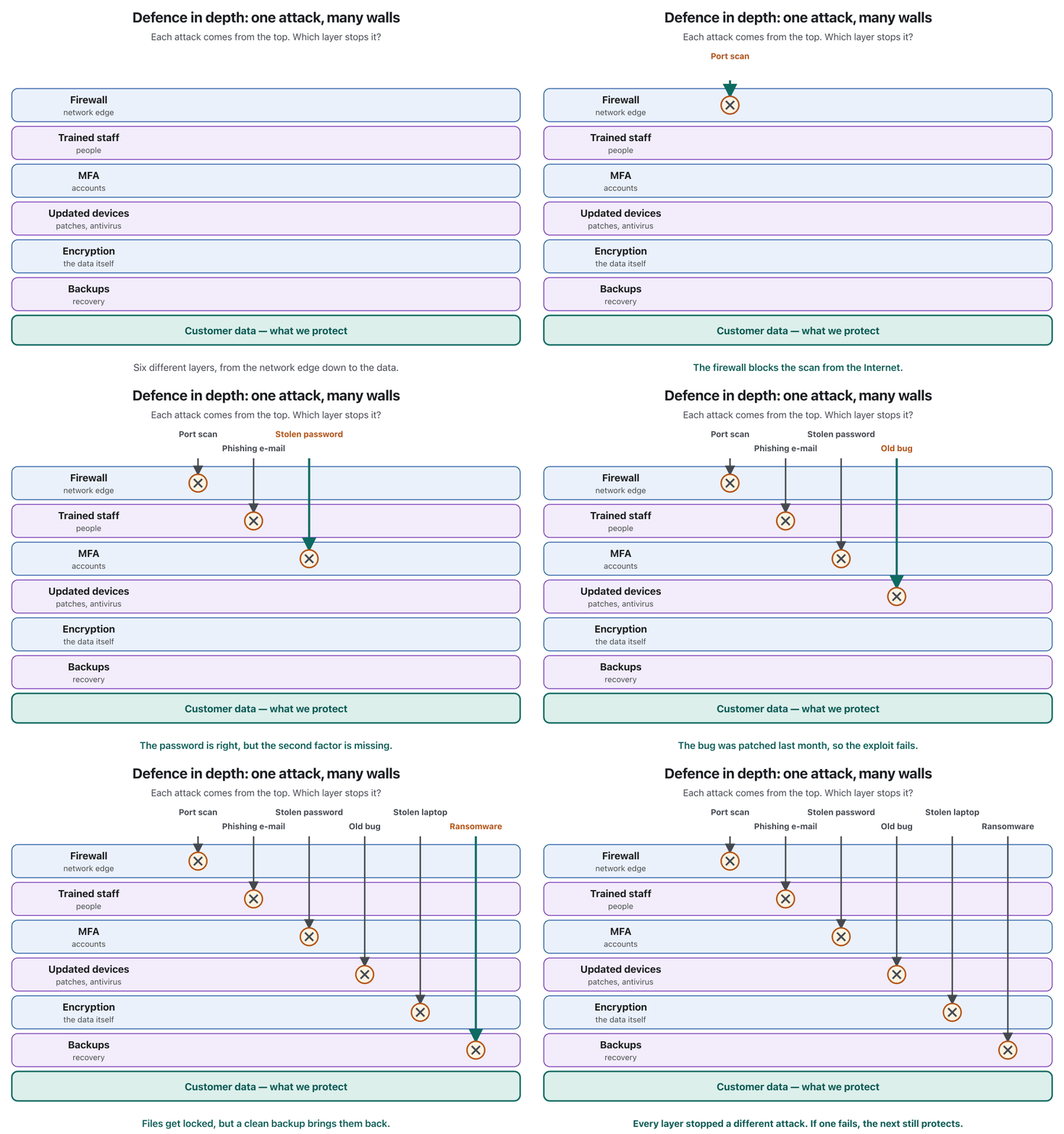
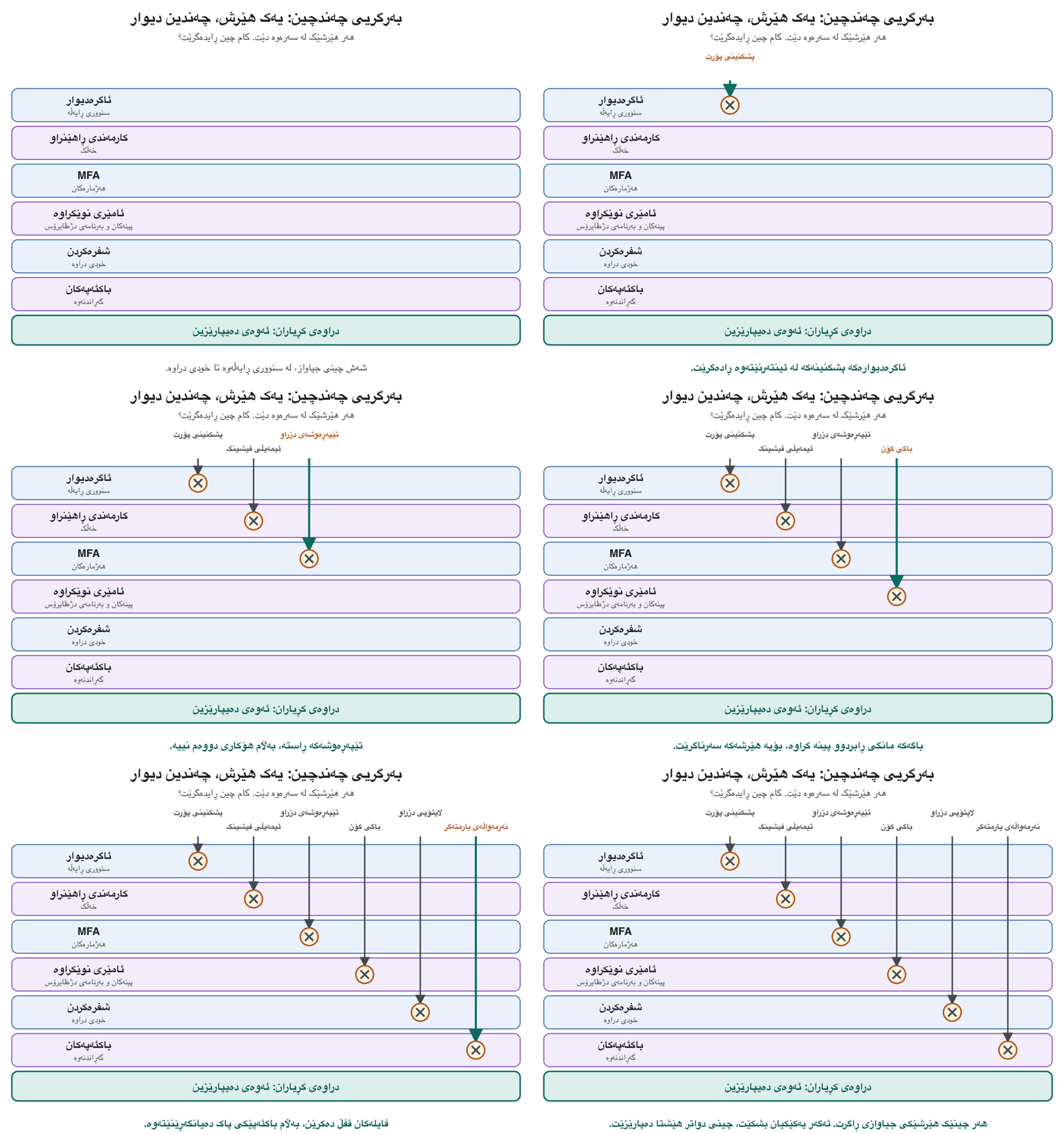
Protecting a system with several independent layers, such as a , , and , so that if one layer fails the others still stop the attacker.
پاراستنی سیستەمێکە بە چەند چینێکی سەربەخۆ، وەک ، ، و ، بۆ ئەوەی ئەگەر چینێک شکستی هێنا چینەکانی تر هێشتا ڕابگرن.
No single control is perfect, so defence in depth places several different layers between the attacker and what matters: people, technology and procedures together. An attack that gets past one layer is caught by the next one.
هیچ کۆنترۆڵێک بێکەموکوڕی نییە، بۆیە چەند چینێکی جیاواز لە نێوان و ئەو شتەی گرنگە دادەنێت: خەڵک، تەکنەلۆجیا و ڕێکار پێکەوە. کە لە چینێک تێپەڕێت، چینی دواتر دەیگرێت.
Defence in depth: many different layersبەرگریی چەندچین: چەندین چینی جیاواز
Example: the Erbil Citadelنموونە: قەڵای هەولێر
Picture the Erbil Citadel as a fortress. It stands on a high mound, so an enemy must first climb. The outer ring of houses forms a wall, and only a few gates lead in, each with guards who check who enters. Inside, every house has its own locked door, and the most precious things are kept in a locked chest. Someone watches from the roofs, and stores of food and water let people survive a long siege. An enemy who climbs the mound still meets the wall; one who passes a gate still meets locked doors.
قەڵای هەولێر وەک قەڵایەکی بەرگری بهێنە بەرچاوت. لەسەر گردێکی بەرز وەستاوە، بۆیە دوژمن سەرەتا دەبێت سەربکەوێت. ئەڵقەی دەرەوەی خانووەکان دیوارێک پێکدەهێنن و تەنها چەند دەروازەیەک دەچنە ژوورەوە، لە هەریەکەیاندا پاسەوان هەیە کە دەپشکنن کێ دێتە ژوورەوە. لە ناوەوە هەر خانوویەک دەرگای داخراوی خۆی هەیە و بەنرخترین شتەکان لە سندوقێکی قفڵکراودا هەڵدەگیرێن. کەسێک لە سەربانەکانەوە چاودێری دەکات و کۆگای خۆراک و ئاو ڕێگە بە خەڵک دەدات گەمارۆیەکی درێژ تێپەڕێنن. دوژمنێک کە بە گردەکەدا سەردەکەوێت هێشتا دەگاتە دیوارەکە؛ ئەوەی لە دەروازەیەک تێدەپەڕێت هێشتا دەگاتە دەرگای داخراو.
Where the analogy stops workingسنووری ئەم نموونەیە
In cyberspace there is no single wall: staff work from home, data sits in the cloud and phones connect from anywhere. Attackers can also start inside, through a tricked employee or a stolen account, and they can try millions of times without getting tired. That is why modern designs add zero trust (below) instead of trusting everyone who is already “inside the walls”.
لە یەک دیوار نییە: کارمەندان لە ماڵەوە کار دەکەن، لە هەوردایە و مۆبایلەکان لە هەموو شوێنێکەوە پەیوەندی دەکەن. دەتوانن لە ناوەوەش دەست پێبکەن، لە ڕێگەی کارمەندێکی فریوخواردوو یان هەژمارێکی دزراوەوە. هەروەها دەتوانن ملیۆنان جار هەوڵ بدەن بەبێ ماندووبوون. بۆیە دیزاینە نوێکان (لە خوارەوە) زیاد دەکەن لە جیاتی متمانەکردن بە هەموو ئەوانەی پێشتر «لە ناو دیوارەکاندان».
Least privilege: only the keys you needبنەمای کەمترین مۆڵەت: تەنها ئەو کلیلانەی پێویستن
Give every user, program and database account only the permissions it needs for its job, and nothing more. Then a mistake or an attack can do less damage.
هەر بەکارهێنەرێک، بەرنامەیەک و هەژمارێکی تەنها ئەو مۆڵەتانە وەربگرێت کە بۆ کارەکەی پێویستن، نەک زیاتر. ئەوکات هەڵەیەک یان هێرشێک زیانی کەمتر دەگەیەنێت.
Give every person, program and account only the access its job needs, and no more. Then a mistake, a stolen password or a piece of malware can do much less damage, because the account it uses can reach only a little.
بە هەموو کەسێک، بەرنامەیەک و هەژمارێک تەنها ئەو دەستڕاگەیشتنە بدە کە کارەکەی پێویستی پێیەتی، نەک زیاتر. ئەوکات هەڵەیەک، دزراو یان زیانی زۆر کەمتر دەگەیەنێت، چونکە ئەو هەژمارەی بەکاری دەهێنێت تەنها دەگاتە کەمێک شت.
- A shop cashier has the key to the till, not to the safe.
- Student accounts in a computer lab are not administrators, so they cannot install malware for everyone.
- A website's database account may read and write its own tables but not delete the database.
- When someone changes job or leaves, their old access is removed the same day.
- کاشێری دوکانێک کلیلی سندوقی پارەی هەیە، نەک کلیلی سندوقە ئاسنینەکە.
- هەژماری قوتابیان لە تاقیگەی کۆمپیوتەردا بەڕێوەبەر نین، بۆیە ناتوانن بۆ هەمووان دابمەزرێنن.
- هەژماری دەتوانێت خشتەکانی خۆی بخوێنێتەوە و بنووسێت، بەڵام ناتوانێت بسڕێتەوە.
- کاتێک کەسێک کار دەگۆڕێت یان دەڕوات، دەستڕاگەیشتنە کۆنەکانی هەمان ڕۆژ لادەبرێن.
For databases, see how this is done with GRANT in Least privilege in PHP database security.
بۆ ، سەیرکە چۆن بە GRANT ئەمە دەکرێت لە بنەمای کەمترین مۆڵەت لە ئاسایشی بنکەدراوەکانی PHP.
Least privilege: only the keys you needبنەمای کەمترین مۆڵەت: تەنها ئەو کلیلانەی پێویستن
Separation of duties: no one person can do it aloneجیاکردنەوەی ئەرکەکان: هیچ کەسێک بە تەنها ناتوانێت
Splitting an important task between two or more people so that no single person can misuse it alone, for example one person creates a payment and another approves it.
دابەشکردنی کارێکی گرنگە بەسەر دوو کەس یان زیاتردا بۆ ئەوەی هیچ کەسێک بە تەنیا نەتوانێت خراپ بەکاری بهێنێت، بۆ نموونە کەسێک پارەدانێک دروست دەکات و کەسێکی تر پەسەندی دەکات.
NIST puts it simply: no user should have enough rights to misuse the system on their own. An important task is split between two or more people, so fraud needs two people to agree and an honest mistake is likely to be noticed by the second person.
NIST بە سادەیی دەیڵێت: هیچ بەکارهێنەرێک نابێت ئەوەندە مافی هەبێت کە بە تەنها سیستەمەکە بە خراپی بەکار بهێنێت. کارێکی گرنگ لە نێوان دوو کەس یان زیاتردا دابەش دەکرێت، بۆیە فێڵکردن پێویستی بە ڕێککەوتنی دوو کەس هەیە و هەڵەی بێنیەتیش بە ئەگەری زۆر کەسی دووەم هەستی پێدەکات.
- One employee creates a payment; a second one approves it.
- The programmer who writes a change does not put it live alone; a reviewer checks it first.
- In an exchange shop, one person counts the money and another checks the receipt.
- کارمەندێک پارەدانێک دروست دەکات؛ کارمەندێکی تر پەسەندی دەکات.
- ئەو بەرنامەنووسەی گۆڕانکارییەک دەنووسێت بە تەنها بڵاوی ناکاتەوە؛ پێداچووەرێک سەرەتا دەیپشکنێت.
- لە دوکانێکی ئاڵوگۆڕی پارەدا، کەسێک پارەکە دەژمێرێت و کەسێکی تر پسوولەکە دەپشکنێت.
The price is speed: work needs more people and waits for approval. Small organisations that cannot split every task compensate by reviewing logs of what each person did.
باجەکەی خێراییە: کار پێویستی بە کەسی زیاترە و چاوەڕێی پەسەندکردن دەکات. ڕێکخراوە بچووکەکان کە ناتوانن هەموو کارێک دابەش بکەن، بە پێداچوونەوەی ئەو کارانەی هەر کەسێک کردوویەتی قەرەبووی دەکەنەوە.
Zero trust: trust is never assumedمتمانەی سفر: هەرگیز متمانە گریمانە ناکرێت
A security approach in which no user or device is trusted just because it is inside the company : every request is checked every time, with strong and .
ڕێبازێکی ئاسایشە کە تێیدا هیچ بەکارهێنەر یان ئامێرێک تەنیا لەبەر ئەوەی لە ناو کۆمپانیادایە متمانەی پێ ناکرێت: هەموو داواکارییەک هەموو جارێک دەپشکنرێت، بە بەهێز و .
Older company networks were built like a castle: a hard outer wall and a soft inside. Anyone already inside the office network was trusted. Today staff work from home, data lives in the cloud and phones connect from everywhere, and an attacker who steals one inside account can move around freely.
کۆمپانیاکان لە ڕابردوودا وەک قەڵا دروست دەکران: دیوارێکی دەرەوەی ڕەق و ناوەوەیەکی نەرم. هەر کەسێک لە ناو ئۆفیسەکەدا بوایە متمانەی پێدەکرا. ئەمڕۆ کارمەندان لە ماڵەوە کار دەکەن، لە هەوردایە و مۆبایلەکان لە هەموو شوێنێکەوە پەیوەندی دەکەن، هەروەها کە یەک هەژماری ناوەوە بدزێت دەتوانێت بە ئازادی بگەڕێت.
NIST's zero trust architecture (SP 800-207, August 2020) changes the rule: no trust is granted because of where a device is or who owns it. Before each session with a company resource, both the user and the device are authenticated and authorised. Protection focuses on the resources themselves (data and services), not on network segments.
دیزاینی NIST (SP 800-207، ئابی 2020) یاساکە دەگۆڕێت: هیچ متمانەیەک لەبەر ئەوەی ئامێرێک لە کوێیە یان هی کێیە نادرێت. پێش هەر لەگەڵ سەرچاوەیەکی کۆمپانیا، هەم بەکارهێنەرەکە و هەم ئامێرەکە و بۆ دەکرێت. پاراستن جەخت لەسەر خودی سەرچاوەکان دەکاتەوە ( و خزمەتگوزارییەکان)، نەک لەسەر بەشەکانی .
- Check every request with strong sign-in, usually multi-factor authentication.
- Check the device too: is it the company's, is it updated, is it healthy?
- Give only the access needed for this request (least privilege).
- Record and watch what happens, and cut access quickly when something looks wrong.
- هەموو داواکارییەک بە چوونەژوورەوەیەکی بەهێز بپشکنە، زۆرجار بە .
- ئامێرەکەش بپشکنە: هی کۆمپانیاکەیە؟ نوێکراوەتەوە؟ تەندروستە؟
- تەنها ئەو دەستڕاگەیشتنە بدە کە ئەم داواکارییە پێویستی پێیەتی ().
- ئەوەی ڕوودەدات تۆمار بکە و چاودێری بکە و کە شتێک هەڵە دەرکەوت بەخێرایی دەستڕاگەیشتن ببڕە.
Zero trust with a house analogy: never trust because of location, verify first, give only the least access needed, and match trust to risk.
بە نموونەی خانوویەک: هەرگیز لەبەر شوێن متمانە مەکە، سەرەتا بیسەلمێنە، تەنها ئەو بدە کە پێویستە و متمانە بەپێی دابنێ.
Whole video (6:56): implicit trust vs verification, verify then trust 4:14, least privilege 4:53, choosing the level of trust by risk 6:24.
هەموو ڤیدیۆکە (6:56): متمانەی خۆبەخۆ بەرامبەر سەلماندن، «سەرەتا بیسەلمێنە، پاشان متمانە بکە» 4:14، 4:53، هەڵبژاردنی ئاستی متمانە بەپێی 6:24.
Common mistakesهەڵە باوەکان
| Mistakeهەڵە | Why it is wrongبۆچی هەڵەیە | Betterباشتر |
|---|---|---|
| “Nobody knows how our system works, so it is safe.”«کەس نازانێت سیستەمەکەمان چۆن کار دەکات، کەواتە سەلامەتە.» | Secrets leak and attackers reverse-engineer.نهێنی دزە دەکات و دەکەن. | Use open, tested standards and keep only the keys secret. تاقیکراوە بەکار بهێنە و تەنها کلیلەکان بە نهێنی بهێڵەوە. |
| “Open standard” means anyone can get in.«» واتە هەر کەسێک دەتوانێت بچێتە ژوورەوە. | Only the design is public; the keys and passwords stay private.تەنها دیزاینەکە ئاشکرایە؛ کلیل و تایبەت دەمێننەوە. | Separate the public design from the secret key (Kerckhoffs).دیزاینی ئاشکرا لە کلیلی نهێنی جیا بکەرەوە (کێرکهۆفس). |
| “We trained everyone, so we are protected.”«هەمووانمان ڕاهێنا، کەواتە پارێزراوین.» | Rules and training only enhance security and cover only some problems.یاسا و ڕاهێنان تەنها باشتر دەکەن و تەنها هەندێک کێشە دەگرنەوە. | Combine training with technical controls.ڕاهێنان لەگەڵ کۆنترۆڵی تەکنیکیدا تێکەڵ بکە. |
| “More security is always better.”« زیاتر هەمیشە باشترە.» | Painful security is bypassed and costs money. ئازاربەخش تێدەپەڕێنرێت و پارەی تێدەچێت. | Balance the triangle and listen to users' feedback.سێگۆشەکە هاوسەنگ بکە و گوێ لە بۆچوونی بەکارهێنەران بگرە. |
| “Two firewalls from the same vendor are defence in depth.”«دوو لە هەمان دابینکەر .» | The same weakness beats both: it is really one layer.هەمان هەردووکیان دەبەزێنێت: لە ڕاستیدا یەک چینن. | Use layers of different kinds.چینی جۆراوجۆر بەکار بهێنە. |
| “Admin rights for everyone saves time.”«مافی بەڕێوەبەر بۆ هەمووان کات دەپارێزێت.» | One stolen account can then do anything.ئەوکات یەک هەژماری دزراو دەتوانێت هەر شتێک بکات. | Least privilege, plus separation of duties for important tasks.، لەگەڵ بۆ کارە گرنگەکان. |
| “Inside the office network means trusted.”«لە ناو ئۆفیسدایە، کەواتە متمانەپێکراوە.» | Attackers often start inside with a stolen account. زۆرجار بە هەژمارێکی دزراو لە ناوەوە دەست پێدەکەن. | Zero trust: check every request.: هەموو داواکارییەک بپشکنە. |
Exercisesڕاهێنانەکان
A new start-up says: “Our app is safe because we invented our own encryption method and nobody knows how it works.” Give two reasons why this is weak, and say what they should do instead.
کۆمپانیایەکی نوێ دەڵێت: «ئەپەکەمان سەلامەتە چونکە ڕێگایەکی تایبەتی خۆمان داهێناوە و کەس نازانێت چۆن کار دەکات.» دوو هۆکار بنووسە بۆچی ئەمە لاوازە و بڵێ لە جیاتی ئەوە چی بکەن.
Show answerوەڵامەکە پیشان بدە
- It is security by obscurity: once the method leaks or is reverse-engineered from the app, every user's data is exposed at once, and the method cannot easily be changed.
- Nobody outside has examined it, so its weaknesses are unknown even to its makers.
- Instead: use open, reviewed standards (AES for stored data, TLS for data in transit) and keep only the keys secret (Kerckhoffs's principle).
- ئەمە : هەر کە ڕێگاکە دزەی کرد یان لە ئەپەکەوە بۆ کرا، هەموو بەکارهێنەران پێکەوە ئاشکرا دەبێت و ڕێگاکەش بە ئاسانی ناگۆڕدرێت.
- کەس لە دەرەوە نەیپشکنیوە، بۆیە تەنانەت لای دروستکەرەکانیشی نەزانراوە.
- لە جیاتی ئەوە: پشکنراو بەکار بهێنن (AES بۆ هەڵگیراو، TLS بۆ گواستراوە) و تەنها کلیلەکان بە نهێنی بهێڵنەوە ().
A small clinic keeps patient records on one server and four PCs. List at least five different layers of defence it could use, from the network edge to recovery.
کلینیکێکی بچووک تۆماری نەخۆشەکان لەسەر و چوار کۆمپیوتەر هەڵدەگرێت. لانیکەم پێنج چینی جیاوازی بەرگری بنووسە کە دەتوانێت بەکاری بهێنێت، لە سنووری تا گەڕاندنەوە.
Hintئاماژە
Think of the GIF: network, people, accounts, devices, data, recovery.
بیر لە GIFـەکە بکەرەوە: ، خەڵک، هەژمار، ئامێر، ، گەڕاندنەوە.
Show answerوەڵامەکە پیشان بدە
- A firewall on the Internet connection (no remote desktop open to the Internet).
- Staff trained to spot phishing and to report it.
- Separate accounts with long passwords and MFA; no shared logins.
- Automatic updates and antivirus on all PCs and the server.
- Encrypted disks, so a stolen PC reveals nothing.
- Nightly backups kept offline or off-site, restored as a test every month.
- لەسەر پەیوەندیی (هیچ ڕیمۆت دێسکتۆپێک بۆ کراوە نەبێت).
- کارمەندانی ڕاهێنراو بۆ ناسینەوەی و ڕاپۆرتکردنی.
- هەژماری جیا بە درێژ و MFA؛ هیچ چوونەژوورەوەیەکی هاوبەش نەبێت.
- نوێکردنەوەی خۆکار و لەسەر هەموو کۆمپیوتەرەکان و .
- دیسکی پارێزراو بە ، بۆ ئەوەی کۆمپیوتەرێکی دزراو هیچ ئاشکرا نەکات.
- شەوانە کە دەرهێڵ یان لە دەرەوەی شوێنەکە هەڵدەگیرێن و هەموو مانگێک بە تاقیکردنەوە دەگەڕێنرێنەوە.
A school's marks system has teachers, a head teacher, office staff and students. Using least privilege and separation of duties, decide who may view, enter, change and approve marks.
سیستەمی نمرەی قوتابخانەیەک مامۆستا، بەڕێوەبەری قوتابخانە، کارمەندی ئۆفیس و قوتابی تێدایە. بە بەکارهێنانی و ، بڕیار بدە کێ دەتوانێت نمرەکان ببینێت، تۆماریان بکات، بیانگۆڕێت و پەسەندیان بکات.
Show answerوەڵامەکە پیشان بدە
- Students: view only their own marks.
- Teachers: enter marks only for their own classes.
- A change to a mark after it is published: requested by the teacher and approved by the head teacher (two people).
- Office staff: print reports, but cannot change marks.
- Every change is logged and the log is reviewed each term.
- قوتابیان: تەنها نمرەکانی خۆیان دەبینن.
- مامۆستایان: تەنها بۆ پۆلەکانی خۆیان نمرە تۆمار دەکەن.
- گۆڕینی نمرەیەک دوای بڵاوکردنەوەی: مامۆستا داوای دەکات و بەڕێوەبەری قوتابخانە پەسەندی دەکات (دوو کەس).
- کارمەندی ئۆفیس: ڕاپۆرت چاپ دەکەن، بەڵام ناتوانن نمرە بگۆڕن.
- هەموو گۆڕانکارییەک تۆمار دەکرێت و هەموو وەرزێک پێداچوونەوە بە تۆمارەکەدا دەکرێت.
For each system, say which corner of the trade-off triangle it favours and what price it pays: (a) a public Wi-Fi with no password; (b) a nuclear plant's control network with no Internet connection at all; (c) a messaging app with end-to-end encryption that opens with your fingerprint.
بۆ هەر سیستەمێک بڵێ کام گۆشەی سێگۆشەی هاوسەنگی پێشدەخات و چ باجێک دەدات: (أ) Wi-Fiـیەکی گشتی بەبێ ؛ (ب) کۆنترۆڵی وێستگەیەکی ئەتۆمی کە هیچ پەیوەندییەکی بە نییە؛ (ج) ئەپێکی نامەناردن بە کە بە پەنجەمۆرەکەت دەکرێتەوە.
Show answerوەڵامەکە پیشان بدە
- (a) Ease of use; price: anyone nearby can join and spy on unprotected traffic.
- (b) Security; price: functionality and ease of use: updates and remote work are slow and costly.
- (c) A good balance: strong security with little extra effort for the user. The cost is carried by the app's designers.
- (أ) ؛ باج: هەر کەسێک لە نزیکەوە دەتوانێت بێتە ناوی و سیخوڕی لە هاتوچۆی نەپارێزراو بکات.
- (ب) ؛ باج: توانای کارکردن و : نوێکردنەوە و کاری دوورەوە خاو و گرانن.
- (ج) هاوسەنگییەکی باش: بەهێز بە هەوڵێکی زیادەی کەم بۆ بەکارهێنەر. تێچوونەکە دیزاینەرانی ئەپەکە هەڵیدەگرن.
Summaryپوختە
- Security by obscurity hides how a system works. It can be an extra layer, never the main protection: secrets leak and attackers reverse-engineer.
- Kerckhoffs's principle: only the key is secret; the design may be public. Open, vendor-independent standards are reviewed by many experts.
- Security by legislation (rules and training for users) is important but limited: it only enhances security and targets only some problems.
- Security, functionality and ease of use compete, with cost in the middle. Users' feedback shows whether the balance is right.
- Defence in depth: several different layers. Least privilege: only the access a job needs. Separation of duties: no one person can misuse an important task alone. Zero trust: every request is checked; location gives no trust.
- چۆنیەتیی کارکردنی سیستەم دەشارێتەوە. دەتوانێت چینێکی زیادە بێت، هەرگیز پاراستنی سەرەکی نا: نهێنی دزە دەکات و دەکەن.
- : تەنها کلیلەکە نهێنییە؛ دیزاینەکە دەکرێت ئاشکرا بێت. سەربەخۆ لە دابینکەر لەلایەن زۆر پسپۆڕەوە دەپشکنرێن.
- بە یاسا (یاسا و ڕاهێنان بۆ بەکارهێنەران) گرنگە بەڵام سنووردارە: تەنها باشتر دەکات و تەنها هەندێک کێشە دەگرێتەوە.
- ، توانای کارکردن و ململانێ دەکەن و تێچوون لە ناوەڕاستدایە. بۆچوونی بەکارهێنەران نیشانی دەدات هاوسەنگییەکە دروستە یان نا.
- : چەند چینێکی جیاواز. : تەنها ئەو دەستڕاگەیشتنەی کارەکە پێویستی پێیەتی. : هیچ کەسێک بە تەنها ناتوانێت کارێکی گرنگ بە خراپی بەکار بهێنێت. : هەموو داواکارییەک دەپشکنرێت؛ شوێن متمانە نادات.
Why is security by obscurity a bad main strategy?بۆچی ئاسایش بە شاردنەوە ستراتیژێکی سەرەکیی خراپە؟
Because once the secret is found, the system is highly vulnerable; secrets leak, attackers reverse-engineer, and computer knowledge is widespread.
چونکە هەر کە نهێنییەکە دۆزرایەوە سیستەمەکە زۆر لاواز دەبێت؛ نهێنی دزە دەکات، دەکەن و زانیاریی کۆمپیوتەر لە هەموو شوێنێکە.
Name two benefits of vendor-independent open standards besides security.جگە لە ئاسایش، دوو سوودی ستانداردی کراوەی سەربەخۆ لە دابینکەر بنووسە.
Interoperability (products from different makers work together) and no lock-in to one vendor.
کارکردنی پێکەوەیی (بەرهەمی دروستکەرانی جیاواز پێکەوە کار دەکەن) و نەبوونی .
What are the three limits of security by legislation?سێ سنوورەکەی ئاسایش بە یاسا چین؟
Important but limited; it only enhances security; it targets only some of the problems.
گرنگە بەڵام سنووردارە؛ تەنها باشتر دەکات؛ تەنها هەندێک لە کێشەکان دەگرێتەوە.
What is the difference between least privilege and separation of duties?جیاوازیی نێوان بنەمای کەمترین مۆڵەت و جیاکردنەوەی ئەرکەکان چییە؟
Least privilege limits how much access each account has. Separation of duties splits one important task between two or more people.
بڕی دەستڕاگەیشتنی هەر هەژمارێک سنووردار دەکات. یەک کاری گرنگ لە نێوان دوو کەس یان زیاتردا دابەش دەکات.
Videoڤیدیۆ
Watch a videoسەیری ڤیدیۆیەک بکە
A video that viewers liked a lot and praised in their comments, chosen for this lesson.ڤیدیۆیەک کە بینەران زۆریان پێ خۆش بووە و لە کۆمێنتەکانیاندا ستایشیان کردووە، بۆ ئەم وانەیە هەڵبژێردراوە.
The principle of least privilege: give each user and program only the access it needs for its job, and remove it when no longer needed.
: هەر و تەنها ئەو وەربگرێت کە بۆ کارەکەی پێویستە و کاتێک ئیتر پێویست نەبوو لێی وەربگیرێتەوە.
Segment 1:05-9:51: defence in depth (1:05), least privilege (4:20) and separation of duties (7:55), three of this lesson's principles. Stops before secure by design and KISS, which the lesson does not teach.
لە 1:05 تا 9:51 پەخش دەبێت: (1:05)، (4:20) و (7:55)، سێ لە بنەماکانی ئەم وانەیە. پێش secure by design و KISS ڕادەوەستێت، کە وانەکە باسیان ناکات.
Lesson complete!وانەکە تەواو بوو!
Well done. Review the key terms, then go on to the next lesson.دەستخۆش. سەیرێکی زاراوە سەرەکییەکان بکەرەوە، پاشان بڕۆ بۆ وانەی داهاتوو.
Key termsزاراوە سەرەکییەکان
Security Planning and Risk Assessmentپلاندانانی ئاسایش و هەڵسەنگاندنی مەترسی
Related lecturesوانە پەیوەندیدارەکان
- Security Planning and Risk Assessmentپلاندانانی ئاسایش و هەڵسەنگاندنی مەترسی
- Securing Data in PHP and MySQLپاراستنی دراوە لە PHP و MySQL
- The Internet and the Webئینتەرنێت و وێب
- Database Security: Threats and Countermeasuresئاسایشی بنکەدراوە: هەڕەشەکان و ڕێوشوێنەکانی بەرگری
- Encryption, Hashing and Digital Signaturesشفرەکردن، هاشکردن و واژووە دیجیتاڵییەکان
- Cyber Ethics and Ethical Hackingئەخلاقی سایبەری و هاککردنی ئەخلاقی
References and further readingسەرچاوەکان و خوێندنەوەی زیاتر
This lecture is a first edition. The Kurdish text and terminology are waiting for review by Kurdish IT teachers.ئەم وانەیە چاپی یەکەمە. دەقە کوردییەکە و زاراوەکانی چاوەڕێی پێداچوونەوەی مامۆستایانی کوردی بواری IT ن.