Chapterبەش 9 · Lectureوانە 9.2
Karnaugh Mapsنەخشەکانی کارنۆ
Simplify Boolean functions by drawing: 2-, 3- and 4-variable maps in Gray-code order, the grouping rules, wrap-around neighbours, don't-care conditions and grouping the 0s for a product of sums — checked against the course's own exam answers.
کورتکردنەوەی بە کێشان: نەخشەی 2، 3 و 4 بە ڕیزبەندیی ، ڕێساکانی کۆمەڵکردن، دراوسێی سەر لێوارەکان، و کۆمەڵکردنی 0ـەکان بۆ — لەگەڵ پشکنینی وەڵامی تاقیکردنەوەکانی کۆرسەکە.
What you will learnچی فێر دەبیت
- Draw 2-, 3- and 4-variable K-maps with Gray-code labels and fill them from a truth table or a minterm list.
- Group 1s correctly (sizes 1, 2, 4, 8; wrap-around; overlaps) and read the simplified SOP.
- Use don't-care conditions to make groups bigger.
- Group the 0s to get a simplified POS.
- 2، 3 و 4 بە ناونیشانی بکێشیت و لە یان لیستی پڕیان بکەیتەوە.
- 1ـەکان بە دروستی کۆمەڵ بکەیت (قەبارەی 1، 2، 4، 8؛ سووڕانەوە؛ یەکتربڕین) و SOPـی کورتکراوە بخوێنیتەوە.
- بەکاربهێنیت بۆ گەورەکردنی کۆمەڵەکان.
- 0ـەکان کۆمەڵ بکەیت بۆ وەرگرتنی POSـی کورتکراوە.
Simplifying by drawingکورتکردنەوە بە کێشان
In Simplifying Boolean expressions you used the rules of Boolean algebra. It works, but you must see which rule to apply next, and it is easy to stop too early. A Karnaugh map (K-map) does the same job with a picture: it rearranges the truth table so that terms which can be combined sit next to each other. You then simplify by drawing loops.
لە کورتکردنەوەی دەربڕینە بوولییەکان ڕێساکانی بەکار هێنا. کار دەکات، بەڵام دەبێت ببینیت کام ڕێسا دواتر بەکاربهێنیت و ئاسانە زوو بوەستیت. (K-map) هەمان کار بە وێنەیەک دەکات: بە شێوەیەک ڕێک دەخاتەوە کە ئەو بڕانەی دەتوانرێن یەک بخرێن لە تەنیشت یەکەوە دابنرێن. پاشان بە کێشانی بازنە کورتی دەکەیتەوە.
A grid version of a truth table whose cells are in Gray-code order, so neighbouring cells differ in one variable. Circling groups of 1s (1, 2, 4, 8 …) gives a simplified SOP expression.
شێوەیەکی تۆڕیی کە خانەکانی بە ڕیزبەندیی دانراون، بۆیە هەر دوو خانەی دراوسێ تەنها لە یەک گۆڕاودا جیاوازن. بازنەکردنی کۆمەڵە 1ـەکان (1، 2، 4، 8 …) کورتکراوە دەدات.
Maurice Karnaugh introduced the map in 1953, improving a chart that Edward Veitch had published a year earlier. It is used by hand for functions of up to four variables.
Maurice Karnaugh لە ساڵی 1953دا ئەم نەخشەیەی هێنایە ئاراوە و خشتەیەکی باشتر کرد کە Edward Veitch ساڵێک پێشتر بڵاوی کردبووەوە. بە دەست بۆ هەتا چوار بەکار دێت.
A good shoe shop puts the same model in black and in brown side by side. A customer who wants that model "in any colour" can point at both with one hand. In a K-map two neighbouring cells differ in exactly one variable, so one loop around them says "this variable does not matter".
دووکانێکی باشی پێڵاو هەمان مۆدێل بە ڕەش و قاوەیی لە تەنیشت یەکەوە دادەنێت. کڕیارێک کە ئەو مۆدێلەی «بە هەر ڕەنگێک» دەوێت دەتوانێت بە یەک دەست ئاماژە بۆ هەردووکیان بکات. لە دوو خانەی دراوسێ ڕێک لە یەک جیاوازن، بۆیە یەک بازنە بە دەوریاندا دەڵێت «ئەوەی جیاوازە گرنگ نییە».
Where the analogy stops workingسنووری ئەم نموونەیە
A shopkeeper can arrange shelves any way he likes. A K-map has a strict order (the Gray code), and its edges even wrap around.
دووکاندار دەتوانێت ڕەفەکان بە هەر شێوەیەک ڕێک بخات. ڕیزبەندییەکی توندی هەیە () و تەنانەت لێوارەکانیشی دەسووڕێنەوە.
The one rule behind every K-mapئەو یەک ڕێسایەی لە پشت هەموو نەخشەیەکی کارنۆیە
Look at two minterms that differ in one variable only, such as and . Factor out what they share:
سەیری دوو بکە کە تەنها لە یەک جیاوازن، وەک و . ئەوەی هاوبەشیانە دەربهێنە:
If four minterms form two such pairs, the same step works twice and two variables disappear. A K-map is built so that every such pair sits side by side.
ئەگەر چوار دوو جووتی وا پێک بهێنن، هەمان هەنگاو دوو جار کار دەکات و دوو نامێنن. بەو شێوەیە دروست کراوە کە هەموو جووتێکی وا لە تەنیشت یەکەوە بێت.
Maps for two, three and four variablesنەخشە بۆ دوو، سێ و چوار گۆڕاوی بوولی
A K-map has one cell for each row of the truth table: 4 cells for 2 variables, 8 for 3, 16 for 4. The variables are split between the rows and the columns, and each cell holds the output of its row. The number written in a corner of a cell is its minterm number.
بۆ هەر ڕیزێکی یەک خانەی هەیە: 4 خانە بۆ 2 ، 8 بۆ 3، 16 بۆ 4. لە نێوان ڕیز و ستوونەکاندا دابەش دەکرێن و هەر خانەیەک ڕیزەکەی خۆی هەڵدەگرێت. ئەو ژمارەیەی لە گۆشەی خانەیەکدا نووسراوە ژمارەی مینتێرمەکەیەتی.
Look at the column order: 00, 01, 11, 10 — not 00, 01, 10, 11. This is the Gray code, where only one bit changes from one step to the next. If 10 came straight after 01, two bits would change () and the neighbours could not be combined. That is why the cell numbers run 0, 1, 3, 2 — the 2-bit Gray code, which is built by reflecting the list.
سەیری ڕیزبەندیی ستوونەکان بکە: 00، 01، 11، 10 — نەک 00، 01، 10، 11. ئەمە کۆدی گرەیە کە تێیدا لە هەنگاوێکەوە بۆ هەنگاوی دواتر تەنها یەک دەگۆڕێت. ئەگەر 10 ڕاستەوخۆ دوای 01 بهاتایە، دوو دەگۆڕان () و دراوسێکان نەیاندەتوانی یەک بخرێن. بۆیە ژمارەی خانەکان بەم شێوەیەن: 0، 1، 3، 2 — دوو ، کە بە هەڵگەڕاندنەوەی لیستەکە دروست دەکرێت.
Maps for two, three and four variablesنەخشە بۆ دوو، سێ و چوار گۆڕاوی بوولی
Neighbours across the edgesدراوسێ لە ناو لێوارەکاندا
The first and the last columns are neighbours too: 00 and 10 differ in one bit. In a 4-variable map the top and bottom rows are also neighbours, so the four corners (cells 0, 2, 8 and 10) all touch each other. Imagine the map printed on a sheet that you roll into a tube, and then bend the tube into a ring: every edge meets the opposite edge.
یەکەم و دوایین ستوون دراوسێی یەکترن: 00 و 10 لە یەک جیاوازن. لە نەخشەیەکی چوار ڕیزی سەرەوە و خوارەوەش دراوسێن، بۆیە چوار گۆشەکە (خانەکانی 0، 2، 8 و 10) هەموویان بەریەک دەکەون. وا دابنێ نەخشەکە لەسەر پەڕەیەک چاپ کراوە کە دەیپێچیت بۆ بۆرییەک و پاشان بۆرییەکە دەچەمێنیتەوە بۆ ئەڵقەیەک: هەر لێوارێک بە لێوارە بەرامبەرەکەی دەگات.
Rules for drawing groupsڕێساکانی کێشانی کۆمەڵەکان
- Loop only cells that hold 1 (and, later, X). Never include a 0.
- A group is a rectangle of neighbouring cells — straight across the edges is allowed, diagonals and L-shapes are not.
- Its size must be a power of two: 1, 2, 4, 8 or 16 cells. A group of 3 or 6 is wrong.
- Make every group as big as possible. Bigger groups give shorter terms.
- Every 1 must be in at least one group. Groups may overlap: a 1 can be used again to make another group bigger.
- Use as few groups as possible: do not add a group whose 1s are all covered already.
- تەنها ئەو خانانە بازنە بکە کە 1ـیان تێدایە (و دواتر X). هەرگیز 0 تێمەخە.
- کۆمەڵە لاکێشەیەکە لە خانەی دراوسێ — بە ناو لێوارەکاندا ڕێگەپێدراوە، لاری و شێوەی L ڕێگەپێنەدراون.
- قەبارەکەی دەبێت توانێکی دوو بێت: 1، 2، 4، 8 یان 16 خانە. کۆمەڵەی 3 یان 6 هەڵەیە.
- هەموو کۆمەڵەیەک تا بکرێت گەورە بکە. کۆمەڵەی گەورەتر بڕی کورتتر دەدات.
- هەموو 1ـێک دەبێت لانیکەم لە یەک کۆمەڵەدا بێت. کۆمەڵەکان دەتوانن یەکتر ببڕن: 1ـێک دەتوانێت دووبارە بەکاربهێنرێتەوە بۆ گەورەکردنی کۆمەڵەیەکی تر.
- تا بکرێت کەم کۆمەڵە بەکاربهێنە: کۆمەڵەیەک زیاد مەکە کە هەموو 1ـەکانی پێشتر داپۆشراون.
The K-map grouping rules: loop only 1s, groups of 1, 2, 4 or 8, as large and few as possible, overlaps, wrap-around.
ڕێساکانی کۆمەڵە لە : تەنها 1 بازنە بکە؛ 1، 2، 4 یان 8 خانە؛ گەورەترین و کەمترین؛ دەتوانن یەکتر ببڕن و بەسەر لێوارەکاندا بسووڕێنەوە.
Chapters: 1:03 basic rules, 1:15 group sizes, 2:46 best groups, 3:35 overlaps, 3:56 wrap-around.
بەشەکان: 1:03 ڕێسا سەرەکییەکان، 1:15 قەبارەی کۆمەڵەکان، 2:46 باشترین کۆمەڵەکان، 3:35 کۆمەڵەی یەکتربڕ، 3:56 سووڕانەوە بە ناو لێوارەکاندا.
Rules for drawing groupsڕێساکانی کێشانی کۆمەڵەکان
Reading a groupخوێندنەوەی کۆمەڵەیەک
Reading a group: a variable that has the same value in every cell of the group stays in the term (plain if it is 1, with a bar if it is 0). A variable that changes inside the group disappears. So a group of cells in a map of n variables gives a term with literals:
خوێندنەوەی کۆمەڵەیەک: کە لە هەموو خانەکانی کۆمەڵەکەدا هەمان بەهای هەبێت لە بڕەکەدا دەمێنێتەوە (ساکار ئەگەر 1 بێت، بە هێڵ ئەگەر 0 بێت). کە لە ناو کۆمەڵەکەدا بگۆڕێت نامێنێت. کەواتە کۆمەڵەیەکی خانە لە نەخشەیەکی n بڕێک دەدات بە .
| Groupکۆمەڵە | Cellsخانە | Literals, 3 variables، 3 | Literals, 4 variables، 4 |
|---|---|---|---|
| single cellتاک خانە | 1 | 3 | 4 |
| pairجووت | 2 | 2 | 3 |
| quadچوارینە | 4 | 1 | 2 |
| octetهەشتینە | 8 | 0 (= 1) | 1 |
Example: three variablesنموونە: سێ گۆڕاوی بوولی
Take the function of the minterms lesson, . Put a 1 in cells 3, 4, 5, 6 and 7 and a 0 elsewhere.
وانەی مینتێرمەکان وەربگرە، . لە خانەکانی 3، 4، 5، 6 و 7دا 1 دابنێ و لە شوێنی تر 0.
The biggest group: the whole row (cells 4, 5, 7, 6). B and C change inside it, only A stays 1 → A.
گەورەترین کۆمەڵە: هەموو ڕیزی (خانەکانی 4، 5، 7، 6). B و C لە ناویدا دەگۆڕێن، تەنها A وەک 1 دەمێنێتەوە ← A.
Cell 3 is still uncovered. Its biggest group is the pair 3–7 (the column ). A changes, B and C stay 1 → BC. Cell 7 is used twice — that is allowed.
خانەی 3 هێشتا دانەپۆشراوە. گەورەترین کۆمەڵەی جووتی 3–7ـە (ستوونی ). A دەگۆڕێت، B و C وەک 1 دەمێننەوە ← BC. خانەی 7 دوو جار بەکار هاتووە — ئەمە ڕێگەپێدراوە.
Add the terms: .
بڕەکان کۆ بکەرەوە: .
Five minterms with three literals each became two short terms. Boolean algebra agrees: by rule 11.
پێنج کە هەر یەکێکیان سێ هەبوو بوون بە دوو بڕی کورت. هاوڕایە: بە ڕێسای 11.
Example: three variablesنموونە: سێ گۆڕاوی بوولی
Checking an exam answer in two minutesپشکنینی وەڵامی تاقیکردنەوەیەک لە دوو خولەکدا
The exam expression took six lines of algebra in the simplification lesson. Its truth table has 1s in cells 0, 1, 2, 3 and 4 (see the circuit lesson):
تاقیکردنەوەکە شەش دێڕ جەبری پێویست بوو لە وانەی کورتکردنەوە. لە خانەکانی 0، 1، 2، 3 و 4دا 1ـی تێدایە (بڕوانە وانەی سووڕ):
| 00 | 01 | 11 | 10 | |
|---|---|---|---|---|
| 0 | 1 | 1 | 1 | 1 |
| 1 | 1 | 0 | 0 | 0 |
The whole top row () is a quad → . Cell 4 pairs with cell 0 above it (column ) → . So — exactly the course author's answer, without any algebra tricks.
هەموو ڕیزی سەرەوە () چوارینەیەکە ← . خانەی 4 لەگەڵ خانەی 0ـی سەرەوەی جووت دەبێت (ستوونی ) ← . کەواتە — ڕێک وەڵامەکەی خاوەنی کۆرسەکە، بەبێ هیچ فێڵێکی جەبری.
A wrap-around example: . Cells 0 and 2 are in the first and last columns of the top row — neighbours across the edge → . Cells 5 and 7 are side by side in the bottom row → . So , which is the XNOR of A and C.
نموونەیەکی سووڕانەوە: . خانەکانی 0 و 2 لە یەکەم و دوایین ستوونی ڕیزی سەرەوەدان — دراوسێن بە ناو لێوارەکەدا ← . خانەکانی 5 و 7 لە ڕیزی خوارەوەدا لە تەنیشت یەکن ← . کەواتە ، کە XNORـی A و Cـیە.
Example: four variables, groups one by oneنموونە: چوار گۆڕاوی بوولی، کۆمەڵەکان یەک بە یەک
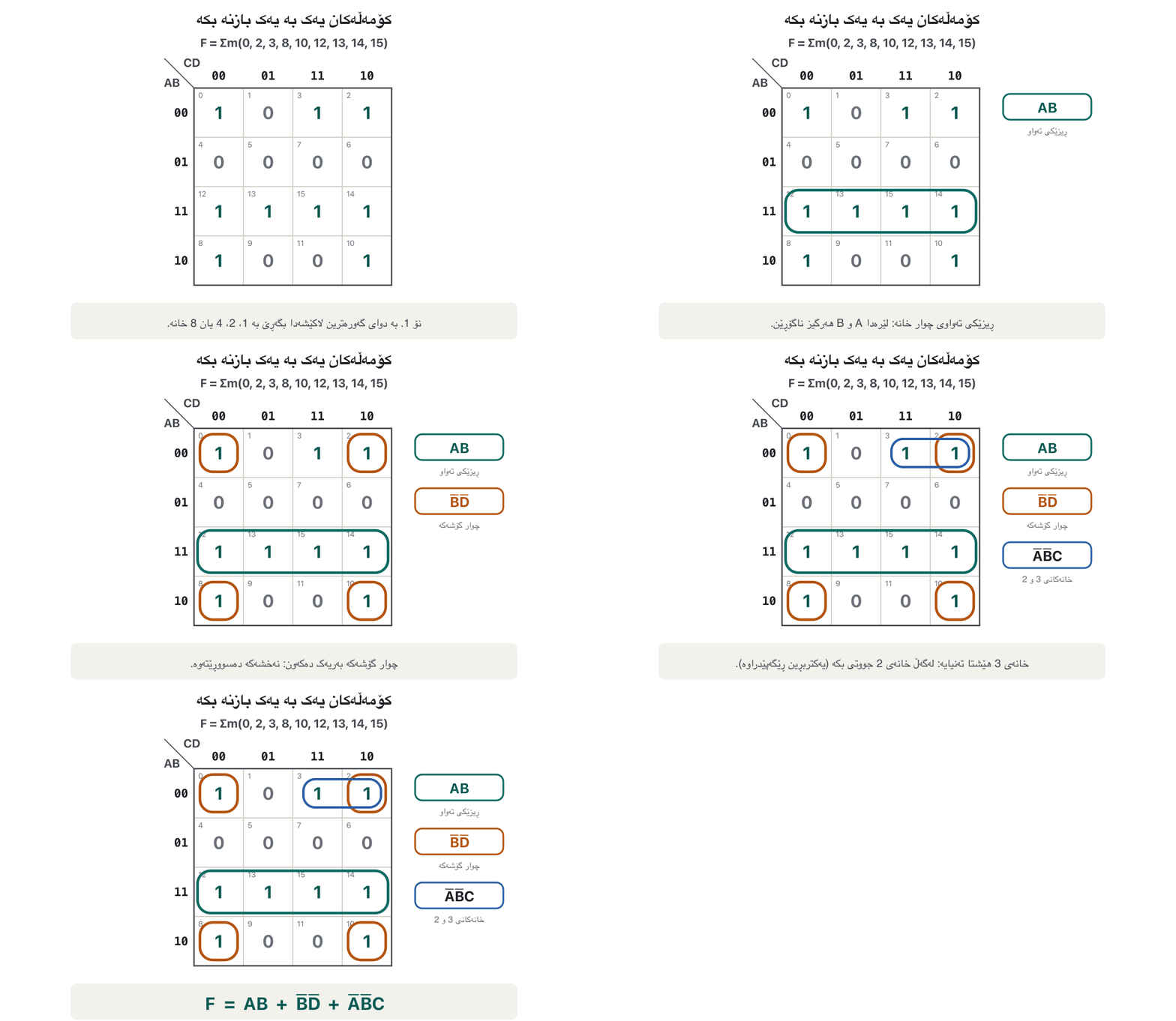
Now a 4-variable function, . Watch the groups being circled in order — biggest first, and only as many as needed.
ئێستا بە چوار ، . سەیری بازنەکردنی کۆمەڵەکان بکە بە ڕیز — سەرەتا گەورەترین و تەنها ئەوەندەی پێویستە.
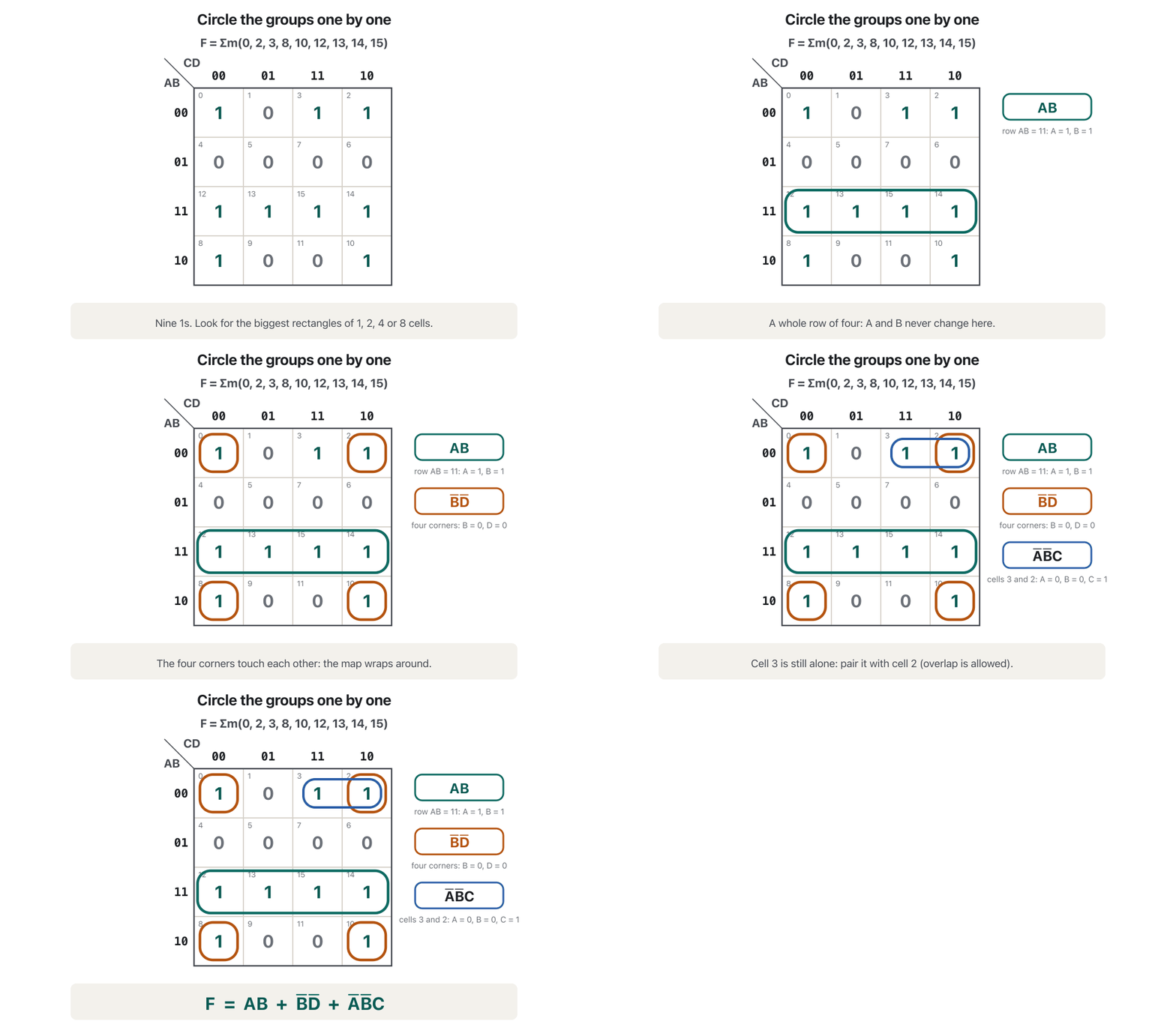
Nine minterms (36 literals) became three terms with 7 literals.
نۆ (36 ) بوون بە سێ بڕ بە 7 .
Filling a 4-variable K-map and looping groups of 2, 4 and 8 cells, including groups that wrap around the edges.
پڕکردنەوەی چوار و بازنەکردنی کۆمەڵەی 2، 4 و 8 خانە، لەوانە ئەو کۆمەڵانەی بە ناو لێوارەکاندا دەسووڕێنەوە.
Plays 4:31–10:25: putting a 4-variable function into the map, then looping groups of 2, 4 and 8 cells.
لە 4:31 تا 10:25 پەخش دەبێت: دانانی چوار لە ، پاشان بازنەکردنی کۆمەڵەی 2، 4 و 8 خانە.
Don't-care conditionsدۆخە بێبایەخەکان
An input combination that never happens, or whose output does not matter, marked X in a truth table or Karnaugh map. Each X may be treated as 0 or 1, whichever gives a simpler expression.
تێکەڵەیەکی کە هەرگیز ڕوو نادات یان گرنگ نییە. لە یان بە X نیشان دەکرێت و هەر X دەتوانرێت وەک 0 یان 1 دابنرێت، هەرکامیان دەربڕینێکی سادەتر بدات.
Some input combinations never happen. A BCD digit, for example, only uses 0000 to 1001; the codes 1010 to 1111 never appear. For those rows we do not care what the circuit outputs, so we write X in the truth table and in the map. An X may be treated as 1 if that makes a group bigger, and as 0 otherwise. Never make a group of X's only. A priority encoder is a real circuit whose truth table is full of X's.
هەندێک تێکەڵەی هەرگیز ڕوو نادەن. بۆ نموونە، ژمارەیەکی کۆدی دەیی دووانی تەنها 0000 تا 1001 بەکار دەهێنێت؛ کۆدەکانی 1010 تا 1111 هەرگیز دەرناکەون. بۆ ئەو ڕیزانە گرنگ نییە چی بدات، بۆیە لە و نەخشەکەدا X دەنووسین. X دەتوانێت وەک 1 دابنرێت ئەگەر کۆمەڵەیەک گەورەتر بکات و لە حاڵەتی تردا وەک 0. هەرگیز کۆمەڵەیەک تەنها لە X دروست مەکە. کۆدکەری پێشینەیی ڕاستەقینەیە کە پڕە لە X.
What a don't-care (X) condition is and how X cells make bigger K-map groups, with two solved examples.
(X) چییە و خانەکانی X چۆن کۆمەڵەی گەورەتر لە دروست دەکەن، لەگەڵ دوو نموونەی شیکراوە.
Plays 0:00–8:32: what a don't-care is, Examples 1 and 2.
لە 0:00 تا 8:32 پەخش دەبێت: چییە، نموونەکانی 1 و 2.
Don't-care conditionsدۆخە بێبایەخەکان
Example: is the BCD digit 5 or more?نموونە: ئایا ژمارەی کۆدی دەیی دووانی 5 یان زیاترە؟
Example: a circuit receives one BCD digit ABCD and outputs 1 when the digit is 5 or more — the test used when rounding a decimal number. The 1s are cells 5 to 9, the X's are cells 10 to 15.
نموونە: یەک ژمارەی ABCD وەردەگرێت و کاتێک ژمارەکە 5 یان زیاتر بێت 1 دەدات — ئەو تاقیکردنەوەیەی لە نزیککردنەوەی ژمارەیەکی دەییدا بەکار دێت. 1ـەکان خانەکانی 5 تا 9ن و Xـەکان خانەکانی 10 تا 15.
Without the X's the best you can do is (three terms, nine literals). With them: (five literals), which can even be written . The circuit gives the right answer for every real digit 0–9.
بەبێ Xـەکان باشترین ئەنجام ـە (سێ بڕ، نۆ ). بە Xـەکانەوە: (پێنج )، کە تەنانەت دەتوانرێت بنووسرێت . بۆ هەموو ژمارەیەکی ڕاستەقینەی 0–9 وەڵامی ڕاست دەدات.
Product of sums: group the 0sلێکدانی کۆکان: 0ـەکان کۆمەڵ بکە
A K-map can also give a simplified POS expression. Group the 0s with exactly the same rules. Each group of 0s gives a sum term, read with the maxterm rule: a variable that stays 0 is written plain, one that stays 1 gets a bar. Multiply the sum terms.
دەتوانێت کورتکراوەش بدات. 0ـەکان بە هەمان ڕێسا کۆمەڵ بکە. هەر کۆمەڵەیەکی 0 دەدات کە بە ڕێسای ماکستێرم دەخوێنرێتەوە: کە وەک 0 بمێنێتەوە بە ساکاری دەنووسرێت و ئەوەی وەک 1 بمێنێتەوە هێڵی لەسەر دادەنرێت. لێک بدە.
For the 0s are cells 0, 1 and 2. Cells 0–1 keep and → ; cells 0–2 (across the edge) keep and → . So , and rule 12 confirms that this equals — the same function as the SOP answer.
بۆ 0ـەکان خانەکانی 0، 1 و 2ن. خانەکانی 0–1 و دەهێڵنەوە ← ؛ خانەکانی 0–2 (بە ناو لێوارەکەدا) و دەهێڵنەوە ← . کەواتە و ڕێسای 12 دەیسەلمێنێت کە ئەمە یەکسانە بە — هەمان وەڵامی SOP.
How far K-maps goنەخشەی کارنۆ تا کوێ دەڕوات
- K-maps are comfortable for 2, 3 and 4 variables. Five or six variables need two or four 4-variable maps side by side, and the neighbours become hard to see.
- For bigger functions, computer programs use step-by-step methods such as the Quine–McCluskey algorithm, which follows the same idea of combining neighbouring minterms.
- The simplest answer is not always unique: sometimes two different sets of groups have the same size. Both are correct.
- بۆ 2، 3 و 4 ئاسانن. پێنج یان شەش پێویستیان بە دوو یان چوار نەخشەی چوار هەیە لە تەنیشت یەک و دراوسێکان بە زەحمەت دەبینرێن.
- بۆ گەورەتر، بەرنامەکانی ڕێگای هەنگاو بە هەنگاو بەکار دەهێنن وەک ئەلگۆریتمی Quine–McCluskey کە هەمان بیرۆکەی یەکخستنی دراوسێکان پەیڕەو دەکات.
- سادەترین وەڵام هەمیشە تاک نییە: هەندێک جار دوو ڕێگای جیاوازی کۆمەڵکردن هەمان ژمارە و قەبارەی کۆمەڵەیان هەیە. هەردووکیان ڕاستن.
How far K-maps goنەخشەی کارنۆ تا کوێ دەڕوات
Hazards: when the simplest is not the safestHazard: کاتێک سادەترین سەلامەتترین نییە
Common mistakesهەڵە باوەکان
| Mistakeهەڵە | Fixچارەسەر |
|---|---|
| Labelling the columns 00, 01, 10, 11.ناونانی ستوونەکان بە 00، 01، 10، 11. | Use the Gray code: 00, 01, 11, 10. Otherwise neighbours differ in two bits. بەکاربهێنە: 00، 01، 11، 10. ئەگەرنا دراوسێکان لە دوو جیاواز دەبن. |
| Groups of 3 or 6 cells.کۆمەڵەی 3 یان 6 خانە. | Only 1, 2, 4, 8, 16. Split into overlapping legal groups.تەنها 1، 2، 4، 8، 16. بیکە بە چەند کۆمەڵەی دروستی یەکتربڕ. |
| Looping diagonal cells.بازنەکردنی خانەی لار. | Only side-by-side cells (also across the edges) are neighbours.تەنها خانەی تەنیشت یەک (هەروەها بە ناو لێوارەکاندا) دراوسێن. |
| Forgetting the wrap-around (corners, first and last column).لەبیرکردنی سووڕانەوە (گۆشەکان، یەکەم و دوایین ستوون). | Always check the edges before settling for a small group.پێش ئەوەی ڕازی بیت بە کۆمەڵەیەکی بچووک، هەمیشە لێوارەکان بپشکنە. |
| Groups that are smaller than possible.کۆمەڵەی بچووکتر لەوەی دەکرێت. | A larger group gives a shorter term; overlapping is allowed.کۆمەڵەی گەورەتر بڕی کورتتر دەدات؛ یەکتربڕین ڕێگەپێدراوە. |
| Keeping a variable that changes inside the group.هێشتنەوەی کە لە ناو کۆمەڵەکەدا دەگۆڕێت. | Only variables with the same value in every cell stay in the term. تەنها کاتێک لە بڕەکەدا دەمێنێتەوە کە لە هەموو خانەیەکدا هەمان بەهای هەبێت. |
| Covering X's that are not needed.داپۆشینی ئەو Xـانەی پێویست نین. | Use an X only to enlarge a group of 1s.X تەنها بۆ گەورەکردنی کۆمەڵەیەکی 1 بەکاربهێنە. |
Exercisesڕاهێنانەکان
Simplify — the class quiz function of the minterms lesson.
کورت بکەرەوە — تاقیکردنەوەی پۆلی وانەی مینتێرمەکان.
Show answerوەڵامەکە پیشان بدە
| 00 | 01 | 11 | 10 | |
|---|---|---|---|---|
| 0 | 0 | 0 | 0 | 1 |
| 1 | 0 | 1 | 1 | 0 |
Cells 5 and 7 make a pair → . Cell 2 has no neighbouring 1 (cells 0, 3 and 6 are 0), so it stays a full minterm → . .
خانەکانی 5 و 7 جووتێک دروست دەکەن ← . خانەی 2 هیچ 1ـێکی دراوسێی نییە (خانەکانی 0، 3 و 6 0ن)، بۆیە وەک تەواو دەمێنێتەوە ← . .
Simplify (Q8 i of the course).
کورت بکەرەوە (Q8 iـی کۆرسەکە).
Show answerوەڵامەکە پیشان بدە
| 00 | 01 | 11 | 10 | |
|---|---|---|---|---|
| 0 | 0 | 1 | 0 | 0 |
| 1 | 1 | 0 | 1 | 0 |
No two 1s are neighbours (, , each differ in two or three bits). The standard SOP is already the simplest SOP.
هیچ دوو 1ـێک دراوسێ نین (، ، هەر یەکێکیان لە دوو یان سێ جیاوازن). ستاندارد پێشتر سادەترین SOPـە.
The class quiz simplified to . Check it with a K-map.
تاقیکردنەوەی پۆل ـی کورت کردەوە بۆ . بە پشکنینی بۆ بکە.
Show answerوەڵامەکە پیشان بدە
From the truth table, only for 100 and 101: cells 4 and 5, a pair in the bottom row. and stay, C changes → . The quiz answer is right.
لە ، X تەنها بۆ 100 و 101 یەکسانە بە 1: خانەکانی 4 و 5، جووتێک لە ڕیزی خوارەوەدا. و دەمێننەوە، C دەگۆڕێت ← . وەڵامی تاقیکردنەوەکە ڕاستە.
Simplify , the truth table of the lab-exam circuit.
کورت بکەرەوە، سووڕەکەی تاقیکردنەوەی تاقیگە.
Show answerوەڵامەکە پیشان بدە
| 00 | 01 | 11 | 10 | |
|---|---|---|---|---|
| 00 | 0 | 1 | 1 | 1 |
| 01 | 1 | 0 | 0 | 1 |
| 11 | 0 | 0 | 1 | 0 |
| 10 | 0 | 1 | 1 | 0 |
Cells 1, 3, 9, 11 form a quad (rows 00 and 10 wrap, columns 01 and 11): , → .
خانەکانی 1، 3، 9، 11 چوارینەیەک پێک دەهێنن (ڕیزەکانی 00 و 10 دەسووڕێنەوە، ستوونەکانی 01 و 11): ، ← .
Cells 4 and 6 are a pair across the edge of row 01 → .
خانەکانی 4 و 6 جووتێکن بە ناو لێواری ڕیزی 01دا ← .
Cell 15 pairs with 11 → .
خانەی 15 لەگەڵ 11 جووت دەبێت ← .
Cell 2 pairs with 6 → (or with 3 → ; both are minimal).
خانەی 2 لەگەڵ 6 جووت دەبێت ← (یان لەگەڵ 3 ← ؛ هەردووکیان کورتترینن).
Simplify .
کورت بکەرەوە.
Show answerوەڵامەکە پیشان بدە
| 00 | 01 | 11 | 10 | |
|---|---|---|---|---|
| 00 | 1 | 1 | 0 | 0 |
| 01 | 1 | 1 | 1 | 0 |
| 11 | 1 | 1 | 1 | 0 |
| 10 | 1 | 1 | 0 | 0 |
The first two columns ( and 01) are all 1: an octet where only C stays 0 → . Cells 7 and 15 join cells 5 and 13 in a quad: , → . .
دوو ستوونی یەکەم ( و 01) هەموویان 1ن: هەشتینەیەک کە تەنها C وەک 0 دەمێنێتەوە ← . خانەکانی 7 و 15 لەگەڵ خانەکانی 5 و 13 چوارینەیەک دروست دەکەن: ، ← . .
A 3-variable function has 1s in cells 1, 3 and 7 and don't-cares in cells 5 and 6. Simplify it.
بە سێ لە خانەکانی 1، 3 و 7دا 1ـی هەیە و لە خانەکانی 5 و 6دا . کورتی بکەرەوە.
Show answerوەڵامەکە پیشان بدە
| 00 | 01 | 11 | 10 | |
|---|---|---|---|---|
| 0 | 0 | 1 | 1 | 0 |
| 1 | 0 | X | 1 | X |
Treat X5 as 1: cells 1, 3, 5, 7 form a quad (the two middle columns) → . X6 does not help, so it is treated as 0.
X5 وەک 1 دابنێ: خانەکانی 1، 3، 5، 7 چوارینەیەک پێک دەهێنن (دوو ستوونی ناوەڕاست) ← . X6 یارمەتی نادات، بۆیە وەک 0 دادەنرێت.
A circuit receives one BCD digit ABCD (A is the most significant bit) and lights a lamp F when the digit is prime: 2, 3, 5 or 7. The codes 1010 to 1111 never occur. Find the simplest SOP (a) without using the don't-cares, (b) using them.
یەک ژمارەی ABCD وەردەگرێت (A ) و کاتێک ژمارەکە سەرەتایی بێت گڵۆپێکی F هەڵدەکات: 2، 3، 5 یان 7. کۆدەکانی 1010 تا 1111 هەرگیز ڕوو نادەن. سادەترین SOP بدۆزەوە (أ) بەبێ بەکارهێنانی ، (ب) بە بەکارهێنانیان.
Hintئاماژە
. 0 and 1 are not prime.
. 0 و 1 سەرەتایی نین.
Show answerوەڵامەکە پیشان بدە
| 00 | 01 | 11 | 10 | |
|---|---|---|---|---|
| 00 | 0 | 0 | 1 | 1 |
| 01 | 0 | 1 | 1 | 0 |
| 11 | X | X | X | X |
| 10 | 0 | 0 | X | X |
(a) Without the X's: cells 2–3 → and cells 5–7 → , so . (b) With them, cells 2, 3, 10, 11 form a quad (rows 00 and 10 wrap) → , and cells 5, 7, 13, 15 form a quad → . So : four literals instead of six, and the answer is still right for every real digit 0 to 9.
(أ) بەبێ Xـەکان: خانەکانی 2–3 ← و خانەکانی 5–7 ← ، بۆیە . (ب) بە Xـەکانەوە، خانەکانی 2، 3، 10، 11 چوارینەیەک دروست دەکەن (ڕیزەکانی 00 و 10 دەسووڕێنەوە) ← و خانەکانی 5، 7، 13، 15 چوارینەیەک ← . کەواتە : چوار لە جیاتی شەش و وەڵامەکە هێشتا بۆ هەموو ژمارەیەکی ڕاستەقینەی 0 تا 9 ڕاستە.
Summaryپوختە
- A K-map is a truth table drawn as a grid: 4, 8 or 16 cells, numbered with minterm numbers.
- Rows and columns follow the Gray code (00, 01, 11, 10), so neighbours differ in one variable; the edges wrap around and the four corners touch.
- Loop the 1s in rectangles of 1, 2, 4, 8 cells, as large and as few as possible; overlaps are allowed.
- Each group gives one product term: keep the variables that stay the same, drop the ones that change.
- Don't-cares (X) are used as 1s only when they make a group bigger.
- Grouping the 0s gives a simplified product of sums.
- کە وەک تۆڕ کێشراوە: 4، 8 یان 16 خانە، بە ژمارەی ژمارە کراون.
- ڕیز و ستوونەکان پەیڕەو دەکەن (00، 01، 11، 10)، بۆیە دراوسێکان لە یەک جیاوازن؛ لێوارەکان دەسووڕێنەوە و چوار گۆشەکە بەریەک دەکەون.
- 1ـەکان لە لاکێشەی 1، 2، 4، 8 خانەدا بازنە بکە، تا بکرێت گەورە و کەم؛ یەکتربڕین ڕێگەپێدراوە.
- هەر کۆمەڵەیەک یەک دەدات: کە وەک خۆیان دەمێننەوە بیانهێڵەرەوە و ئەوانەی دەگۆڕێن لایان ببە.
- (X) تەنها کاتێک وەک 1 بەکار دێن کە کۆمەڵەیەک گەورەتر بکەن.
- کۆمەڵکردنی 0ـەکان کورتکراوە دەدات.
Why is the column order 00, 01, 11, 10?بۆچی ڕیزبەندیی ستوونەکان 00، 01، 11، 10ـە؟
It is the Gray code: only one bit changes between neighbours, so neighbouring minterms can be combined.
: تەنها یەک لە نێوان دراوسێکاندا دەگۆڕێت، بۆیە دراوسێکان دەتوانرێن یەک بخرێن.
How many literals does a quad give in a 4-variable map?چوارینەیەک لە نەخشەیەکی چوار گۆڕاوی بوولیدا چەند لیتەراڵ دەدات؟
Two ().
دوو ().
simplified? کورتکراوە؟
, or as a product of sums .
، یان وەک .
Videoڤیدیۆ
Watch a videoسەیری ڤیدیۆیەک بکە
A video that viewers liked a lot and praised in their comments, chosen for this lesson.ڤیدیۆیەک کە بینەران زۆریان پێ خۆش بووە و لە کۆمێنتەکانیاندا ستایشیان کردووە، بۆ ئەم وانەیە هەڵبژێردراوە.
Moves a truth table into a K-map, loops the 1s, reads the simplified expression and draws the circuit.
دەگوازێتەوە بۆ ، بازنە بە دەوری 1ـەکاندا دەکێشێت، دەخوێنێتەوە و دەکێشێت.
Plays 0:00–7:50: introduction to K-maps and simplifying with them.
لە 0:00 تا 7:50 پەخش دەبێت: ناساندنی و کورتکردنەوە بەوان.
Lesson complete!وانەکە تەواو بوو!
Well done. Review the key terms, then go on to the next lesson.دەستخۆش. سەیرێکی زاراوە سەرەکییەکان بکەرەوە، پاشان بڕۆ بۆ وانەی داهاتوو.
Key termsزاراوە سەرەکییەکان
Half and Full Addersنیوەکۆکەرەوە و کۆکەرەوەی تەواو
Related lecturesوانە پەیوەندیدارەکان
References and further readingسەرچاوەکان و خوێندنەوەی زیاتر
- Wikipedia: Karnaugh map
- MIT OpenCourseWare 6.004 Computation Structures (Spring 2017), 4.1 Annotated slides: Karnaugh maps, implicants, don't cares
- Wikipedia: Implicant (prime and essential prime implicants)
- Wikipedia: Consensus theorem (the redundant term used against hazards)
- MIT OpenCourseWare 6.004, 4.2.5 Karnaugh Maps (video)
- Wikipedia: Canonical normal form (minimal forms, Quine–McCluskey)
- T. L. Floyd, Digital Fundamentals, 11th ed., §4-8 to 4-11 Karnaugh maps (Pearson, 2015) — topic order only
This lecture is a first edition. The Kurdish text and terminology are waiting for review by Kurdish IT teachers.ئەم وانەیە چاپی یەکەمە. دەقە کوردییەکە و زاراوەکانی چاوەڕێی پێداچوونەوەی مامۆستایانی کوردی بواری IT ن.