Chapterبەش 2 · Lectureوانە 2.9
The Median and the Modeناوەڕاستە و باو
The middle value and the most common value: the median of raw data (odd and even ) and of grouped data with class boundaries and the less-than table, the mode of raw data, of categories and of grouped data (with the crossing-lines picture), all the course examples and homework (H.W 3–7) with their corrections, when to prefer each average, and Python's median and mode functions.
نرخی ناوەڕاست و باوترین نرخ: ڕەسەن ( تاک و جووت) و بە و خشتەی «کەمتر لە»، ڕەسەن، جۆرەکان و (بە وێنەی هێڵە یەکبڕەکان)، هەموو نموونە و ڕاهێنانەکانی ماڵەوەی کۆرسەکە (ڕاهێنانی 3–7) بە ڕاستکردنەوەکانیانەوە، کەی هەر تێکڕایەک باشترە و و لە Pythonـدا.
What you will learnچی فێر دەبیت
- Find the median of ungrouped data for odd and even , and explain why it resists outliers.
- Find the median class and compute the grouped median with class boundaries.
- Find the mode of raw data and categories, and the grouped mode with the formula.
- Spot the typical slips: wrong median or modal class, limits instead of boundaries.
- بۆ تاک و جووت بدۆزیتەوە و ڕوونی بکەیتەوە بۆچی بەرگەی دەگرێت.
- بدۆزیتەوە و پۆلێنکراو بە بژمێریت.
- ڕەسەن و جۆرەکان و پۆلێنکراو بە یاسای بدۆزیتەوە.
- هەڵە باوەکان بناسیتەوە: یان هەڵە، سنوور لە جیاتی .
The median: the value in the middleناوەڕاستە: نرخەکەی ناوەڕاست
Line the values up from smallest to largest. The median is the value in the middle: half of the data lie below it and half above it.
نرخەکان لە بچووکەوە بۆ گەورە ڕیز بکە. ئەو نرخەیە کە لە ناوەڕاستدایە: نیوەی لە خوارییەوەیە و نیوەکەی تر لە سەرییەوە.
The middle value when the data is sorted; with an even number of values it is the mean of the two middle ones. Half of the data lies on each side.
نرخی ناوەڕاستە کاتێک دراوەکە ڕیز دەکرێت؛ ئەگەر ژمارەی نرخەکان جووت بێت، تێکڕای دوو نرخە ناوەڕاستەکەیە. نیوەی دراوەکە لە هەر لایەکیەتی.
Why we need it. A small tea house pays its ten people per month (in thousands of dinars): six earn 500, two earn 600, one earns 700 and the owner takes 10 000. The mean is — more than any worker earns. The median is 500, which really describes a typical worker. One extreme value pulls the mean far away, but it hardly moves the median.
بۆچی پێویستمانە. چایخانەیەکی بچووک مانگانە مووچەی دە کەسەکەی دەدات (بە هەزار دینار): شەشیان 500 وەردەگرن، دوویان 600، یەکێکیان 700 و خاوەنەکە 10 000 بۆ خۆی دەبات. ـە — زیاتر لە مووچەی هەر کرێکارێک. 500ـە کە بە ڕاستی کرێکارێکی ئاسایی وەسف دەکات. یەک نرخی زۆر دوور ناوەندەکە زۆر ڕادەکێشێت، بەڵام بە زەحمەت دەجووڵێنێت.
The median of ungrouped dataناوەڕاستەی دراوەی پۆلێننەکراو
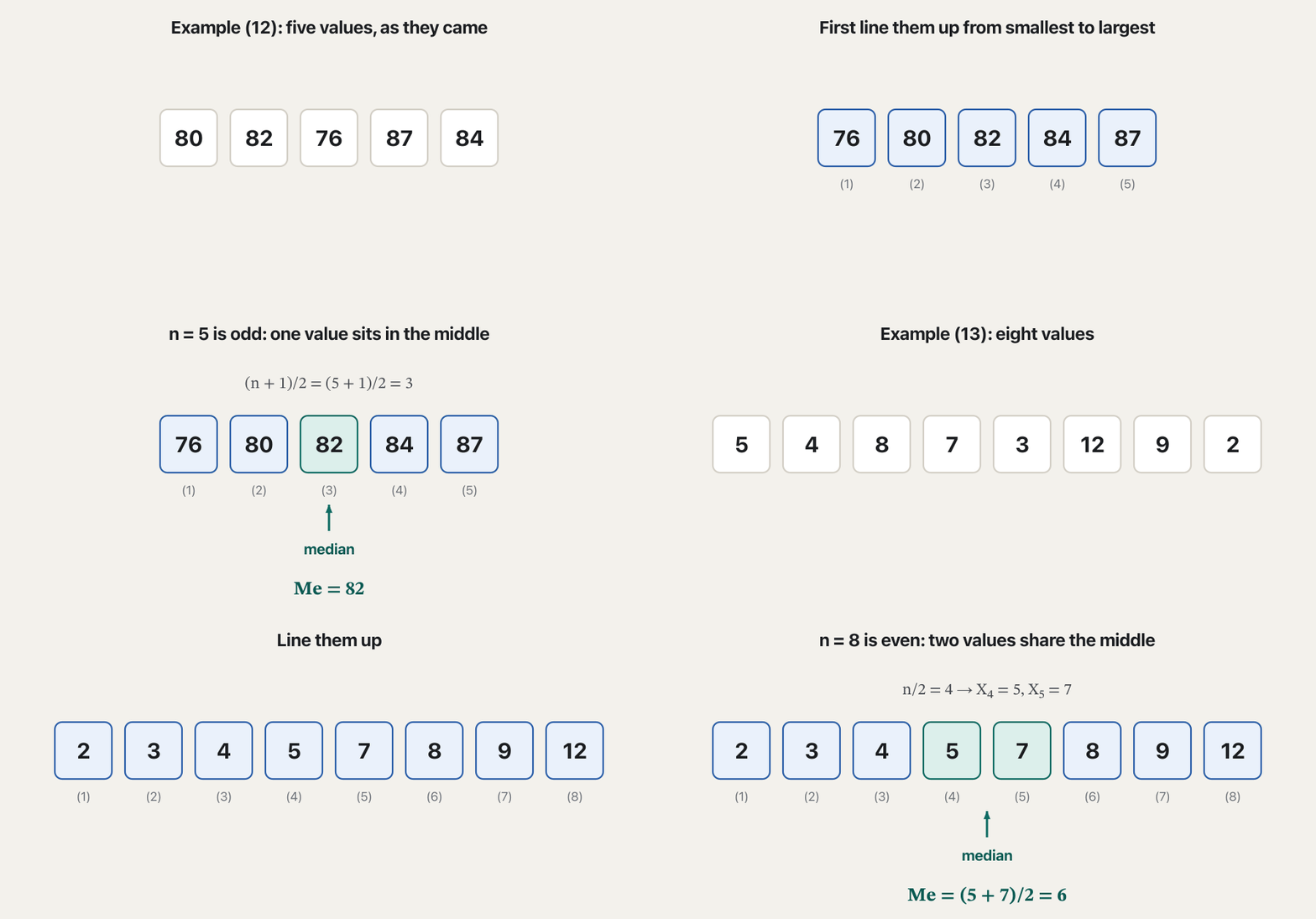
First sort the data. Then write for the value in position of the sorted list. Which position is the middle depends on whether is odd or even:
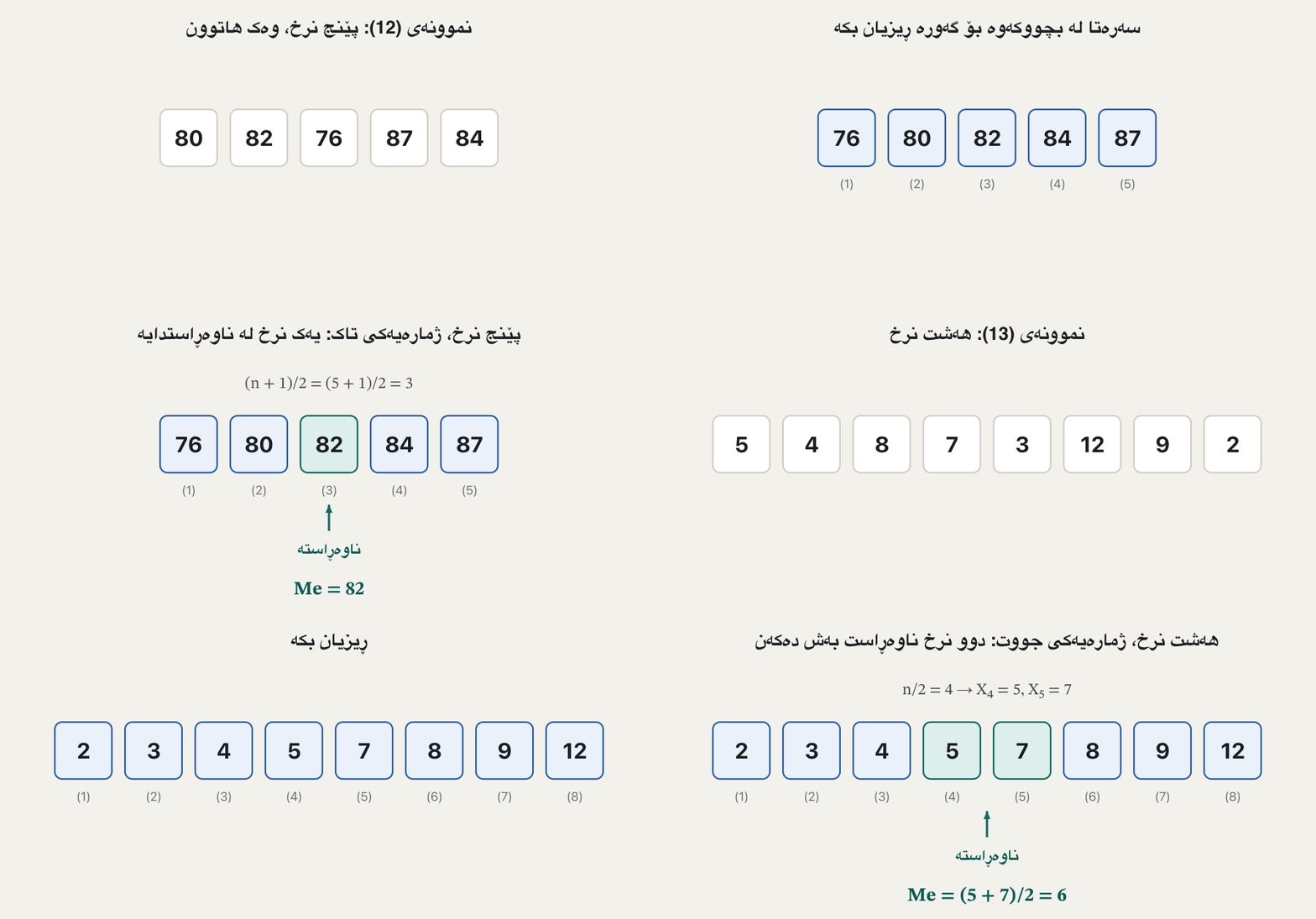
سەرەتا ڕیز بکە. پاشان بنووسە بۆ ئەو نرخەی لە شوێنی ـی لیستە ڕیزکراوەکەدایە. کام شوێن ناوەڕاستە بەندە بەوەی تاکە یان جووت:
When is odd, one value sits in the middle, at position .
کاتێک تاکە، یەک نرخ لە ناوەڕاستدایە، لە شوێنی .
When is even, two values share the middle, and the median is their mean — it may not be one of the data.
کاتێک جووتە، دوو نرخ ناوەڕاست بەش دەکەن و ئەو دووانەیە — لەوانەیە یەکێک لە نەبێت.
The median of ungrouped dataناوەڕاستەی دراوەی پۆلێننەکراو
Examples (12) and (13)نموونەکانی (12) و (13)
- Example (12): sortنموونەی (12): ڕیزکردن
80, 82, 76, 87, 84 → 76, 80, 82, 84, 87.
80، 82، 76، 87، 84 ← 76، 80، 82، 84، 87.
- is odd تاکە
- Example (13): sortنموونەی (13): ڕیزکردن
5, 4, 8, 7, 3, 12, 9, 2 → 2, 3, 4, 5, 7, 8, 9, 12.
5، 4، 8، 7، 3، 12، 9، 2 ← 2، 3، 4، 5، 7، 8، 9، 12.
- is even جووتە
The median of grouped dataناوەڕاستەی دراوەی پۆلێنکراو
In a frequency table we cannot see the middle value itself. We can only find the class it falls in — the median class, the first class whose cumulative frequency reaches — and then estimate where inside that class it lies. The tool is the less-than table of cumulative frequencies.
لە خودی نرخی ناوەڕاست نابینین. تەنها دەتوانین ئەو بدۆزینەوە کە تێیدایە — ، یەکەم کە دەگاتە — پاشان خەمڵاندن بکەین کە لە کوێی ئەو . ئامرازەکە خشتەی «کەمتر لە»ی دووبارەبوونەوەی کەڵەکەبووـە.
- — the lower boundary of the median class.
- — the cumulative frequency before the median class (all values below it).
- — the frequency of the median class itself.
- — the width of the median class.
- — سنووری خوارەوەی ڕاستەقینەی ().
- — پێش (هەموو ئەو نرخانەی لە خوارییەوەن).
- — خودی .
- — پانیی .
The mean of a grouped frequency table: find each class midpoint, multiply by its frequency, add the products and divide by the total frequency.
پۆلێنکراو: بۆ هەر ، لە بدە، لێکدراوەکان کۆ بکەرەوە و دابەشی کۆی بکە.
Watch 3:56–7:00: find the median class (first cf ≥ Σf/2), then use the formula
لە 3:56 تا 7:00 سەیر بکە: بدۆزەرەوە (یەکەم کە بێت)، پاشان بەکار بهێنە.
The median of grouped dataناوەڕاستەی دراوەی پۆلێنکراو
Boundaries, not limitsسنوورە ڕاستەقینەکانی کلاس، نەک سنوورەکان
The median of grouped dataناوەڕاستەی دراوەی پۆلێنکراو
Why the median formula worksبۆچی یاسای ناوەڕاستە کار دەکات
Why it works. We assume the values of the median class are spread evenly across it. We still need of them to reach the middle, so we walk that fraction of the class width from its lower boundary. On the ogive this is reading the curve at height :
بۆچی کار دەکات. وا دادەنێین کە نرخەکەی بە یەکسانی بەسەریدا بڵاو بوونەتەوە. هێشتا لەوانەمان پێویستە بۆ گەیشتن بە ناوەڕاست، بۆیە ئەو بەشەی پانیی لە سنووری خوارەوەیەوە دەڕۆین. لەسەر چەماوەی کەڵەکەبوو ئەمە واتە خوێندنەوەی چەماوەکە لە بەرزیی ـدا:
The median of grouped dataناوەڕاستەی دراوەی پۆلێنکراو
Example (14): classes of whole numbersنموونەی (14): کلاسەکانی ژمارە تەواوەکان
Find the median of Table (20). The classes 2–4, 5–7, … hold whole numbers, so their boundaries lie 0.5 below and above the limits.
خشتەی (20) بدۆزەرەوە. 2–4، 5–7، … دەگرنەخۆ، بۆیە 0.5 لە خوار و سەرووی سنوورەکانەوەن.
| Class | Upper limitسنووری سەرەوە | Less thanکەمتر لە | ||
|---|---|---|---|---|
| 2–4 | 6 | 4 | 6 | |
| 5–7 | 9 | 7 | 15 | |
| 8–10 | 12 | 10 | 27 | |
| 11–13 | 20 | 13 | 47 | |
| 14–16 | 14 | 16 | 61 | |
| 17–19 | 11 | 19 | 72 | |
| 20–22 | 8 | 22 | 80 | |
| Totalکۆ | 80 |
- Half of the dataنیوەی دراوەکە
. 40 lies between 27 and 47, so the median class is 11–13.
. 40 لە نێوان 27 و 47دایە، بۆیە 11–13ـە.
- Read the partsبەشەکان بخوێنەرەوە
, , , .
، ، ، .
- Substituteدابنێ
(The notes write the total as ; the table has 7 classes, so the upper index is 7.)
(تێبینییەکان کۆکە بە دەنووسن؛ خشتەکە 7 هەیە، بۆیە ژمارەی سەرەوە 7ـە.)
The median of grouped dataناوەڕاستەی دراوەی پۆلێنکراو
Example (15): continuous classesنموونەی (15): کلاسی بەردەوام
Table (22) has continuous classes 60–63, 63–66, …, 72–75 with frequencies 5, 18, 42, 27 and 8. The classes already touch, so no is needed.
خشتەی (22) بەردەوامی 60–63، 63–66، …، 72–75ی هەیە بە 5، 18، 42، 27 و 8. پێشتر بەیەکەوە لکاون، بۆیە پێویست نییە.
| 5 | 23 | 65 | 92 | 100 |
- Median classکلاسی ناوەڕاستە
; 50 lies between 23 and 65, so the median class is 66–69.
؛ 50 لە نێوان 23 و 65دایە، بۆیە 66–69ـە.
- Partsبەشەکان
(continuous: no ), , , .
(بەردەوام: بێ )، ، ، .
- Resultئەنجام
Homework (3)–(5): grouped mediansڕاهێنانەکانی ماڵەوە (3)–(5): ناوەڕاستەی پۆلێنکراو
Find the median of Table (24): classes 0–10, 10–20, …, 60–70 with frequencies 15, 20, 25, 24, 22, 14, 5.
خشتەی (24) بدۆزەرەوە: 0–10، 10–20، …، 60–70 بە 15، 20، 25، 24، 22، 14، 5.
Hintئاماژە
. Which cumulative frequency first reaches it?
. یەکەم کە دەگاتە ئەوە کامەیە؟
Show answerوەڵامەکە پیشان بدە
| Class | Upper limitسنووری سەرەوە | Less thanکەمتر لە | ||
|---|---|---|---|---|
| 0–10 | 15 | 10 | 15 | |
| 10–20 | 20 | 20 | 35 | |
| 20–30 | 25 | 30 | 60 | |
| 30–40 | 24 | 40 | 84 | |
| 40–50 | 22 | 50 | 106 | |
| 50–60 | 14 | 60 | 120 | |
| 60–70 | 5 | 70 | 125 |
is first reached in the class 30–40 (cumulative 84), so that is the median class. The classes are continuous, so . (One line of the worked page writes “”; it must be minus.)
یەکەم جار لە 30–40 دەگات ( 84)، بۆیە ئەوە . بەردەوامن، بۆیە . (دێڕێکی پەڕە شیکراوەکە «» دەنووسێت؛ دەبێت لێدەرکردن بێت.)
Find the median of Table (25): classes 0–10, 10–20, 20–30, 30–40, 40–50 with frequencies 22, 38, 46, 35, 20.
خشتەی (25) بدۆزەرەوە: 0–10، 10–20، 20–30، 30–40، 40–50 بە 22، 38، 46، 35، 20.
Show answerوەڵامەکە پیشان بدە
Cumulative: 22, 60, 106, 141, 161; , so the median class is 20–30.
: 22، 60، 106، 141، 161؛ ، بۆیە 20–30ـە.
Find the median of Table (26): classes 51–55, 56–60, 61–65, 66–70 with frequencies 2, 7, 8, 4.
خشتەی (26) بدۆزەرەوە: 51–55، 56–60، 61–65، 66–70 بە 2، 7، 8، 4.
Hintئاماژە
Check that the median you get lies inside the median class.
بپشکنە کە ئەو دەیدۆزیتەوە لە ناو بێت.
Show answerوەڵامەکە پیشان بدە
Cumulative: 2, 9, 17, 21; . The first cumulative frequency that reaches 10.5 is 17, so the median class is 61–65 (whole numbers, so , ):
: 2، 9، 17، 21؛ . یەکەم کە دەگاتە 10.5، 17ـە، بۆیە 61–65ـە (، بۆیە ، ):
The mode: the most common valueباو: باوترین نرخ
The mode is the value that occurs most often. Example (16): in 4, 8, 7, 6, 9, 8, 10, 5, 8 the value 8 appears three times, so .
ئەو نرخەیە کە زۆرترین جار دووبارە دەبێتەوە. نموونەی (16): لە 4، 8، 7، 6، 9، 8، 10، 5، 8ـدا نرخی 8 سێ جار دەردەکەوێت، بۆیە .
The value that occurs most often. Data can have one mode, several modes or none.
ئەو نرخەیە کە زۆرترین جار دووبارە دەبێتەوە. دراوە دەتوانێت یەک باو یان چەند باوێکی هەبێت یان هیچی نەبێت.
- One mode — 4, 8, 7, 6, 9, 8, 10, 5, 8 → 8.
- Two modes (bimodal) — 2, 3, 3, 5, 7, 7, 9 → 3 and 7.
- No mode — 1, 2, 3, 4: every value appears once, so no value is “most common”.
- Words, not numbers — a tea house sells tea, coffee, tea, juice, tea, coffee: the mode is tea. The mode is the only one of the three averages that works for categories.
- یەک — 4، 8، 7، 6، 9، 8، 10، 5، 8 ← 8.
- دوو — 2، 3، 3، 5، 7، 7، 9 ← 3 و 7.
- بێ — 1، 2، 3، 4: هەموو نرخێک یەک جار دەردەکەوێت، بۆیە هیچ نرخێک «باوترین» نییە.
- وشە، نەک ژمارە — چایخانەیەک چا، قاوە، چا، شەربەت، چا، قاوە دەفرۆشێت: چایە. تاکە یەکێکە لە سێ تێکڕاکە کە بۆ (جۆرەکان، وەک ناوی خواردنەوە) کار دەکات.
The mode of grouped dataباوی دراوەی پۆلێنکراو
In a frequency table the modal class is the class with the greatest frequency. Its midpoint is a rough mode (the crude mode). The formula below does better: it moves the mode inside the modal class towards the bigger neighbour.
لە ئەو کە زۆرترین هەیە. نزیکەییە. یاساکەی خوارەوە باشتر کار دەکات: لە ناو بەرەو دراوسێ گەورەکە دەبات.
- — lower boundary of the modal class (the lower limit minus for classes of whole numbers).
- — frequency of the modal class − frequency of the class before it.
- — frequency of the modal class − frequency of the class after it.
- — the class width.
- — سنووری خوارەوەی ڕاستەقینەی (سنووری خوارەوە کەم بۆ ).
- — − پێش ئەو.
- — − دوای ئەو.
- — .
The mean of a grouped frequency table: find each class midpoint, multiply by its frequency, add the products and divide by the total frequency.
پۆلێنکراو: بۆ هەر ، لە بدە، لێکدراوەکان کۆ بکەرەوە و دابەشی کۆی بکە.
Watch 7:00–9:22: the modal class and the mode formula
لە 7:00 تا 9:22 سەیر بکە: و .
The mode of grouped dataباوی دراوەی پۆلێنکراو
Why the mode formula worksبۆچی یاسای باو کار دەکات
Why it works. If the class before is much smaller than the class after (), the peak leans to the right, and is more than . If both neighbours are equal, the mode is exactly the midpoint. On a histogram the formula is where two crossing lines meet:
بۆچی کار دەکات. ئەگەر پێشەوە زۆر لە دواوە بچووکتر بێت ()، لووتکەکە بەلای ڕاستدا لار دەبێتەوە و لە زیاترە. ئەگەر هەردوو دراوسێ یەکسان بن، ڕێک . لەسەر یاساکە ئەو شوێنەیە کە دوو هێڵی یەکبڕ تێیدا بەیەک دەگەن:
The mode of grouped dataباوی دراوەی پۆلێنکراو
Example (17): classes of whole numbersنموونەی (17): کلاسەکانی ژمارە تەواوەکان
- Example (17): modal classنموونەی (17): کلاسی باو
Table (27): 60–74 (2), 75–89 (6), 90–104 (14), 105–119 (10). The largest frequency is 14, so the modal class is 90–104.
خشتەی (27): 60–74 (2)، 75–89 (6)، 90–104 (14)، 105–119 (10). گەورەترین 14ـە، بۆیە 90–104ـە.
- Partsبەشەکان
, , , .
، ، ، .
- Resultئەنجام
. The crude mode (the midpoint 97) is pulled 2.5 towards the bigger neighbour 105–119.
. نزیکەیی ( 97) 2.5 بەرەو دراوسێ گەورەکە 105–119 ڕادەکێشرێت.
The mode of grouped dataباوی دراوەی پۆلێنکراو
Continuous classes: Example (18)کلاسی بەردەوام: نموونەی (18)
For continuous classes the formula is the same, but is simply the lower limit of the modal class (no ). Example (18) uses Table (28), the same table as Example (15): 60–63, 63–66, 66–69, 69–72, 72–75 with frequencies 5, 18, 42, 27, 8.
بۆ بەردەوام یاساکە هەمانە، بەڵام تەنها سنووری خوارەوەی (بێ ). نموونەی (18) خشتەی (28) بەکار دەهێنێت، هەمان خشتەی نموونەی (15): 60–63، 63–66، 66–69، 69–72، 72–75 بە 5، 18، 42، 27، 8.
Homework (6) and (7): grouped modesڕاهێنانەکانی ماڵەوە (6) و (7): باوی پۆلێنکراو
Table (29): classes 150–154, 155–159, 160–164, 165–169, 170–174, 175–179, 180–184, 185–189 with frequencies 5, 2, 6, 8, 9, 11, 6, 3.
خشتەی (29): 150–154، 155–159، 160–164، 165–169، 170–174، 175–179، 180–184، 185–189 بە 5، 2، 6، 8، 9، 11، 6، 3.
Hintئاماژە
Look for the largest frequency first.
سەرەتا بەدوای گەورەترین بگەڕێ.
Show answerوەڵامەکە پیشان بدە
The largest frequency is 11, so the modal class is 175–179. Whole numbers: , , , .
گەورەترین 11ـە، بۆیە 175–179ـە. : ، ، ، .
Table (30): continuous classes 150–160, 160–170, 170–180, 180–190, 190–200 with frequencies 8, 12, 15, 9, 6.
خشتەی (30): بەردەوامی 150–160، 160–170، 170–180، 180–190، 190–200 بە 8، 12، 15، 9، 6.
Show answerوەڵامەکە پیشان بدە
The largest frequency, 15, belongs to 170–180, so that is the modal class. The classes are continuous, so is the lower limit itself.
گەورەترین ، 15، هی 170–180ـە، بۆیە ئەوە . بەردەوامن، بۆیە خودی سنووری خوارەوەیە.
Median and mode in Pythonناوەڕاستە و باو لە Pythonـدا
The statistics module sorts the data for you. median() averages the two middle values when is even; median_low() and median_high() return one of the two. mode() returns the first most common value and multimode() returns all of them. median_grouped() uses the same interpolation as the grouped formula: give it the class midpoints, repeated by frequency, and the class width as interval.
statistics خۆی ڕیز دەکات. median() کاتێک جووتە تێکڕای دوو نرخە ناوەڕاستەکە وەردەگرێت؛ median_low() و median_high() یەکێک لەو دووانە دەگەڕێننەوە. mode() یەکەم باوترین نرخ دەگەڕێنێتەوە و multimode() هەموویان. median_grouped() هەمان ڕێگای یاسای پۆلێنکراو بەکار دەهێنێت: بە ئەندازەی دووبارەکراو و وەک intervalـی پێ بدە.
import statistics as st

print(st.median([80, 82, 76, 87, 84]))           # Example (12)
data = [5, 4, 8, 7, 3, 12, 9, 2]                 # Example (13)
print(st.median(data), st.median_low(data), st.median_high(data))

print(st.mode([4, 8, 7, 6, 9, 8, 10, 5, 8]))     # Example (16)
print(st.multimode([2, 3, 3, 5, 7, 7, 9]))       # two modes
print(st.multimode([1, 2, 3, 4]))                # every value once

drinks = ["tea", "coffee", "tea", "juice", "tea", "coffee"]
print(st.mode(drinks))                           # works for words too

mids = [61.5, 64.5, 67.5, 70.5, 73.5]            # Example (15)
freq = [5, 18, 42, 27, 8]
values = [m for m, f in zip(mids, freq) for _ in range(f)]
print(round(st.median_grouped(values, interval=3), 4))82 6.0 5 7 8 [3, 7] [1, 2, 3, 4] tea 67.9286
Explain the codeڕوونکردنەوەی کۆدەکە
- Lineدێڕی 4-5
Example (13): the median 6.0 is not in the data;
median_lowandmedian_highgive 5 and 7.نموونەی (13): 6.0 لە نییە؛
median_lowوmedian_high5 و 7 دەدەن.- Lineدێڕی 8-9
multimode()shows two modes, and for 1, 2, 3, 4 it lists every value — that is, there is no real mode.multimode()دوو پیشان دەدات و بۆ 1، 2، 3، 4 هەموو نرخەکان ڕیز دەکات — واتە ڕاستەقینە نییە.- Lineدێڕی 11-12
The mode works for words too.
بۆ وشەش کار دەکات.
- Lineدێڕی 14-17
The grouped median of Example (15): 67.9286, the same as the formula.
پۆلێنکراوی نموونەی (15): 67.9286، هەمان ئەنجامی یاساکە.
Mean, median or mode?ناوەند، ناوەڕاستە یان باو؟
| Averageتێکڕا | Use it when…بەکاری بهێنە کاتێک… | Carefulئاگاداربە |
|---|---|---|
| Mean | the data are numbers without extreme values; you need totals () ژمارەن بێ نرخی زۆر دوور؛ کۆت پێویستە () | pulled by outliers ڕایدەکێشن |
| Median | there are outliers or a long tail (incomes, house prices) یان کلکێکی درێژ هەیە (داهات، نرخی خانوو) | ignores how far the extreme values areگوێ ناداتە ئەوەی نرخە دوورەکان چەند دوورن |
| Mode | the data are categories, or you want the most common value (sizes, drinks) جۆرن نەک ژمارە ()، یان باوترین نرخت دەوێت (قەبارە، خواردنەوە) | may not exist or may not be uniqueلەوانەیە نەبێت یان تەنها یەک نەبێت |
For a symmetric data set with a single peak the three are equal. When the data have a long tail, they separate — the skewness lesson shows how, together with the course's mean–median–mode relation.
بۆ کۆمەڵە هاوجێ کە یەک لووتکەی هەیە، هەر سێکیان یەکسانن. کاتێک کلکێکی درێژی هەیە، لێک جیا دەبنەوە — وانەی ناهاوجێبوون چۆنییەتییەکەی پیشان دەدات، لەگەڵ پەیوەندیی –– کۆرسەکە.
Common mistakesهەڵە باوەکان
| Mistakeهەڵە | Fixچارەسەر |
|---|---|
| Taking the middle of the unsorted listوەرگرتنی ناوەڕاستی لیستی ڕیزنەکراو | Sort firstسەرەتا ڕیز بکە |
| Giving as the medianدانانی وەک | It is the position; read the value thereئەوە شوێنەکەیە؛ نرخەکەی ئەوێ بخوێنەرەوە |
| Median class = the class in the middle of the table = ناوەڕاستی خشتەکە | Use the first cumulative frequency یەکەم کە بێت بەکار بهێنە |
| Median class whose cumulative frequency is still below (H.W 5) کە هێشتا لە خوار ـەوەیە (ڕاهێنانی 5) | Go on to the next classبڕۆ بۆ دواتر |
| = cumulative frequency of the median class = خودی | Use the one before itئەوەی پێش ئەو بەکار بهێنە |
| Class limit instead of boundary for whole numbers لە جیاتی بۆ | Subtract 0.5 (or 0.05 for one decimal)0.5 لێ دەربکە (یان 0.05 بۆ یەک ) |
| Modal class with a negative (H.W 6) بە ـی نەرێنی (ڕاهێنانی 6) | Pick the class with the largest frequencyئەو هەڵبژێرە کە گەورەترین هەیە |
| in the denominator لە پشکی خوارەوەدا | It is ـە |
Exercisesڕاهێنانەکان
Table (4) of H.W (2) has classes 0–10, 10–20, …, 70–80 with frequencies 2, 8, 12, 18, 28, 22, 6, 4. Find the median and the mode. Compare the median with the point where the two ogives cross in the graphs lesson.
خشتەی (4)ی ڕاهێنانی (2) 0–10، 10–20، …، 70–80ی هەیە بە 2، 8، 12، 18، 28، 22، 6، 4. و بدۆزەرەوە. بەراورد بکە بەو خاڵەی کە هەردوو لە وانەی هێڵکارییەکاندا یەکتر دەبڕن.
Show answerوەڵامەکە پیشان بدە
Cumulative frequencies: 2, 10, 22, 40, 68, …; is first reached in 40–50, which is also the modal class (frequency 28). The ogives cross at about 44 — the median, as expected.
: 2، 10، 22، 40، 68، …؛ یەکەم جار لە 40–50 دەگات، کە ( 28). هەردوو لە نزیکەی 44دا یەکتر دەبڕن — ، وەک چاوەڕوان دەکرا.
Find the median and the mode of 12, 15, 11, 15, 18, 14, 15, 20, 11, 13.
و بۆ 12، 15، 11، 15، 18، 14، 15، 20، 11، 13 بدۆزەرەوە.
Show answerوەڵامەکە پیشان بدە
Sorted: 11, 11, 12, 13, 14, 15, 15, 15, 18, 20. is even: . 15 appears three times, so .
ڕیزکراو: 11، 11، 12، 13، 14، 15، 15، 15، 18، 20. جووتە: . 15 سێ جار دەردەکەوێت، بۆیە .
A table has frequencies 4, 9, 15, 7, 5 (). Name the median class and the modal class, and say whether they must always be the same.
خشتەیەک 4، 9، 15، 7، 5ی هەیە (). و دیاری بکە و بڵێ ئایا هەمیشە دەبێت وەک یەک بن.
Show answerوەڵامەکە پیشان بدە
Cumulative: 4, 13, 28, 35, 40; , so the 3rd class is the median class. The largest frequency, 15, is also in the 3rd class, so here both are the same. They need not be: with frequencies 6, 3, 3, 3, 5 () the median class is the 3rd (cumulative 6, 9, 12 — the first that is ) but the modal class is the 1st.
: 4، 13، 28، 35، 40؛ ، بۆیە سێیەم . گەورەترین ، 15، لە سێیەمیشدایە، بۆیە لێرەدا هەردووکیان یەکن. پێویست ناکات وابن: بە 6، 3، 3، 3، 5 ()، سێیەمە ( 6، 9، 12 — یەکەمیان کە ـە) بەڵام یەکەمە.
Summaryپوختە
- Median: sort, then take the middle value (odd ) or the mean of the two middle values (even ). It resists outliers.
- Grouped median: median class = first cumulative frequency ; .
- Mode: the most common value; there may be one, two or none. It works for categories.
- Grouped mode: modal class = largest frequency; .
- Whole-number classes use boundaries (limits ); continuous classes use the limits.
- Python:
median,median_low,median_high,median_grouped,mode,multimode.
- : ڕیز بکە، پاشان نرخی ناوەڕاست ( تاک) یان دوو نرخە ناوەڕاستەکە ( جووت) وەربگرە. بەرگەی دەگرێت.
- پۆلێنکراو: = یەکەم کە بێت؛ .
- : باوترین نرخ؛ لەوانەیە یەک، دوو یان هیچ هەبێت. بۆ پۆلەکان (جۆرەکان) کار دەکات.
- پۆلێنکراو: = گەورەترین ؛ .
- بەکار دەهێنن (سنوور )؛ بەردەوام سنوورەکان خۆیان.
- Python:
median،median_low،median_high،median_grouped،mode،multimode.
Why is the median a better “typical salary” than the mean?بۆچی ناوەڕاستە «مووچەی ئاسایی»یەکی باشترە لە ناوەند؟
A few very high salaries pull the mean up, but they do not change which value is in the middle.
چەند مووچەیەکی زۆر بەرز بەرز دەکەنەوە، بەڵام ئەوە ناگۆڕن کە کام نرخ لە ناوەڕاستدایە.
In the median formula, what is ?لە یاسای ناوەڕاستەدا، چییە؟
The cumulative frequency of all the classes before the median class.
هەموو ئەو پێش .
Your grouped mode comes out outside the modal class. What went wrong?باوی پۆلێنکراوەکەت لە دەرەوەی کلاسی باوەکە دەرچوو. چی هەڵە بوو؟
Either the wrong modal class (a negative or ) or a slip such as in the denominator.
یان هەڵە ( یان ـی نەرێنی) یان هەڵەیەکی وەک لە پشکی خوارەوەدا.
Videoڤیدیۆ
Watch a videoسەیری ڤیدیۆیەک بکە
A video that viewers liked a lot and praised in their comments, chosen for this lesson.ڤیدیۆیەک کە بینەران زۆریان پێ خۆش بووە و لە کۆمێنتەکانیاندا ستایشیان کردووە، بۆ ئەم وانەیە هەڵبژێردراوە.
Math Antics on the three kinds of average: the mean, the median (the middle value) and the mode (the most common value), with a real-world example.
Math Antics دەربارەی سێ جۆری ناوەندگیری: ، (نرخی ناوەڕاست) و (ئەو نرخەی زۆرتر دووبارە دەبێتەوە)، لەگەڵ نموونەیەکی ژیانی ڕۆژانە.
Plays 5:18–10:22: the median (with an even count, the mean of the two middle values), the mode, and a real-world example that compares the three. The mean is in the previous lesson.
لە 5:18 تا 10:22 پەخش دەبێت: (کاتێک ژمارەی جووتە، دوو نرخە ناوەڕاستەکە)، و نموونەیەکی ژیانی ڕۆژانە کە هەر سێکیان بەراورد دەکات. لە وانەی پێشوودایە.
Lesson complete!وانەکە تەواو بوو!
Well done. Review the key terms, then go on to the next lesson.دەستخۆش. سەیرێکی زاراوە سەرەکییەکان بکەرەوە، پاشان بڕۆ بۆ وانەی داهاتوو.
Key termsزاراوە سەرەکییەکان
Quartiles, Percentiles and Box Plots (Supplementary)چواریەکەکان، سەدیەکەکان و هێڵکارییە سندووقییەکان (زیادە)
Related lecturesوانە پەیوەندیدارەکان
- Quartiles, Percentiles and Box Plots (Supplementary)چواریەکەکان، سەدیەکەکان و هێڵکارییە سندووقییەکان (زیادە)
- Skewness, Kurtosis and the Mean–Median–Mode Relationناهاوجێبوون، پلەی لووتکەیی و پەیوەندیی نێوان ناوەند، ناوەڕاستە و باو
- Practice: One Data Set from Table to Averagesڕاهێنان: یەک کۆمەڵەدراوە لە خشتەوە بۆ پێوەرەکانی ڕووکردنە چەق
- Measuring Spread: Range and Mean Deviationپێوانی پەرتبوون: مەودا و لادانی نێوانەیی
References and further readingسەرچاوەکان و خوێندنەوەی زیاتر
- OpenStax, Introductory Statistics 2e, 2.5 Measures of the Center of the Data (median position, mode, effect of outliers)
- OpenStax, Introductory Statistics 2e, 2.6 Skewness and the Mean, Median, and Mode
- Python documentation: statistics — median, median_low, median_high, median_grouped, mode, multimode
This lecture is a first edition. The Kurdish text and terminology are waiting for review by Kurdish IT teachers.ئەم وانەیە چاپی یەکەمە. دەقە کوردییەکە و زاراوەکانی چاوەڕێی پێداچوونەوەی مامۆستایانی کوردی بواری IT ن.