Chapterبەش 2 · Lectureوانە 2.7
The Arithmetic Mean and the Weighted Meanناوەند و ناوەندی قورسکراو
The everyday average, taught properly: the mean of a list and of a frequency table (with class midpoints), why the mean is the balance point of the data, the weighted mean for marks and course hours (how a GPA works), the corrected Example (3), and the same calculations in Python.
ئەو تێکڕایەی ڕۆژانە، بە شێوەیەکی دروست: لیستێک و (بە )، بۆچی خاڵی هاوسەنگیی ، بۆ نمرە و کاتژمێری وانەکان (تێکڕای نمرەی زانکۆ چۆن کار دەکات)، نموونەی (3)ی ڕاستکراوە و هەمان ژماردن لە Pythonـدا.
What you will learnچی فێر دەبیت
- Compute the mean of ungrouped data and of a frequency table using class midpoints.
- Explain why the mean is the balance point and why the deviations from it add up to zero.
- Compute a weighted mean for ungrouped and grouped data, for example a semester average from marks and course hours.
- Check your results with Python's
statistics.meanandstatistics.fmean.
- و بە بەکارهێنانی بدۆزیتەوە.
- ڕوونی بکەیتەوە بۆچی خاڵی هاوسەنگییە و بۆچی کۆی لێیەوە سفرە.
- بۆ و بدۆزیتەوە، بۆ نموونە تێکڕای وەرزێک لە نمرە و کاتژمێری وانەکانەوە.
- ئەنجامەکانت بە
statistics.meanوstatistics.fmeanـی Python بپشکنیت.
One number for the centre of the dataیەک ژمارە بۆ ناوەڕاستی دراوەکە
When a teacher says “the class average was 72”, one number describes thirty marks. A shop says “we sell about 40 glasses of tea an hour”. In both cases a long list of values is summed up by a single typical value. Statistics calls such a value a measure of central tendency.
کاتێک مامۆستایەک دەڵێت «تێکڕای پۆلەکە 72 بوو»، یەک ژمارە سی نمرە وەسف دەکات. چایخانەیەک دەڵێت «لە هەر کاتژمێرێکدا نزیکەی 40 پیاڵە چا دەفرۆشین». لە هەردوو حاڵەتەکەدا لیستێکی درێژی نرخ بە یەک نرخی ئاسایی کورت دەکرێتەوە. بە نرخێکی وا دەڵێت .
A single number that describes the centre of the data. The best known are the , the and the .
یەک ژمارەیە کە ناوەڕاستی دراوەکە وەسف دەکات. ناسراوترینەکانیان و و .
This lesson teaches the best-known one, the arithmetic mean (the everyday “average”), and its cousin the weighted mean. Both can be found for raw, ungrouped data and for grouped data in a frequency table. Later lessons add the geometric, harmonic and quadratic means, the median and the mode.
ئەم وانەیە ناسراوترینیان فێر دەکات، (ئەو «تێکڕا»یەی ڕۆژانە بەکاری دەهێنین)، لەگەڵ خزمە نزیکەکەی . هەردووکیان بۆ دراوەی پۆلێننەکراو و بۆ لە دەدۆزرێنەوە. وانەکانی دواتر ناوەندی ئەندازەیی، ناوەندی هارمۆنیک، ناوەندی دووجایی، ناوەڕاستە و باو زیاد دەکەن.
The mean of ungrouped dataناوەندی دراوەی پۆلێننەکراو
To find the arithmetic mean of a list, add all the values and divide by how many there are. With the sigma notation you already know:
بۆ دۆزینەوەی لیستێک، هەموو نرخەکان کۆ بکەرەوە و دابەشی ژمارەیان بکە. بە نیشانەی سیگما کە پێشتر ناسیوتە:
Read as “X bar”. The top adds every value once; is the number of values.
بەم شێوەیە دەخوێنرێتەوە: «X بار». بەشی سەرەوە هەموو نرخێک یەک جار کۆ دەکاتەوە؛ ژمارەی نرخەکانە.
- Add the valuesنرخەکان کۆ بکەرەوە
Example (2): the values are 8, 3, 5, 12, 10. Their sum is .
نموونەی (2): نرخەکان 8، 3، 5، 12، 10ن. کۆکەیان ـە.
- Count themبیانژمێرە
There are values.
نرخ هەیە.
- Divideدابەش بکە
In Kurdish: the mean of a list is the sum of the numbers divided by how many there are, with a worked example.
بە کوردی: لیستێک کۆی ژمارەکانە دابەش بە ژمارەی دانەکان، لەگەڵ نموونەیەکی چارەسەرکراو.
In Kurdish; watch 3:10–8:15, the mean (ناوەند). The rest of the video does range, mode and median.
بە کوردی؛ لە 3:10 تا 8:15 سەیر بکە: . ئەوانی تری ڤیدیۆکە ، و باس دەکات.
Why it works: the mean is the balance pointبۆچی کار دەکات: ناوەند خاڵی هاوسەنگییە
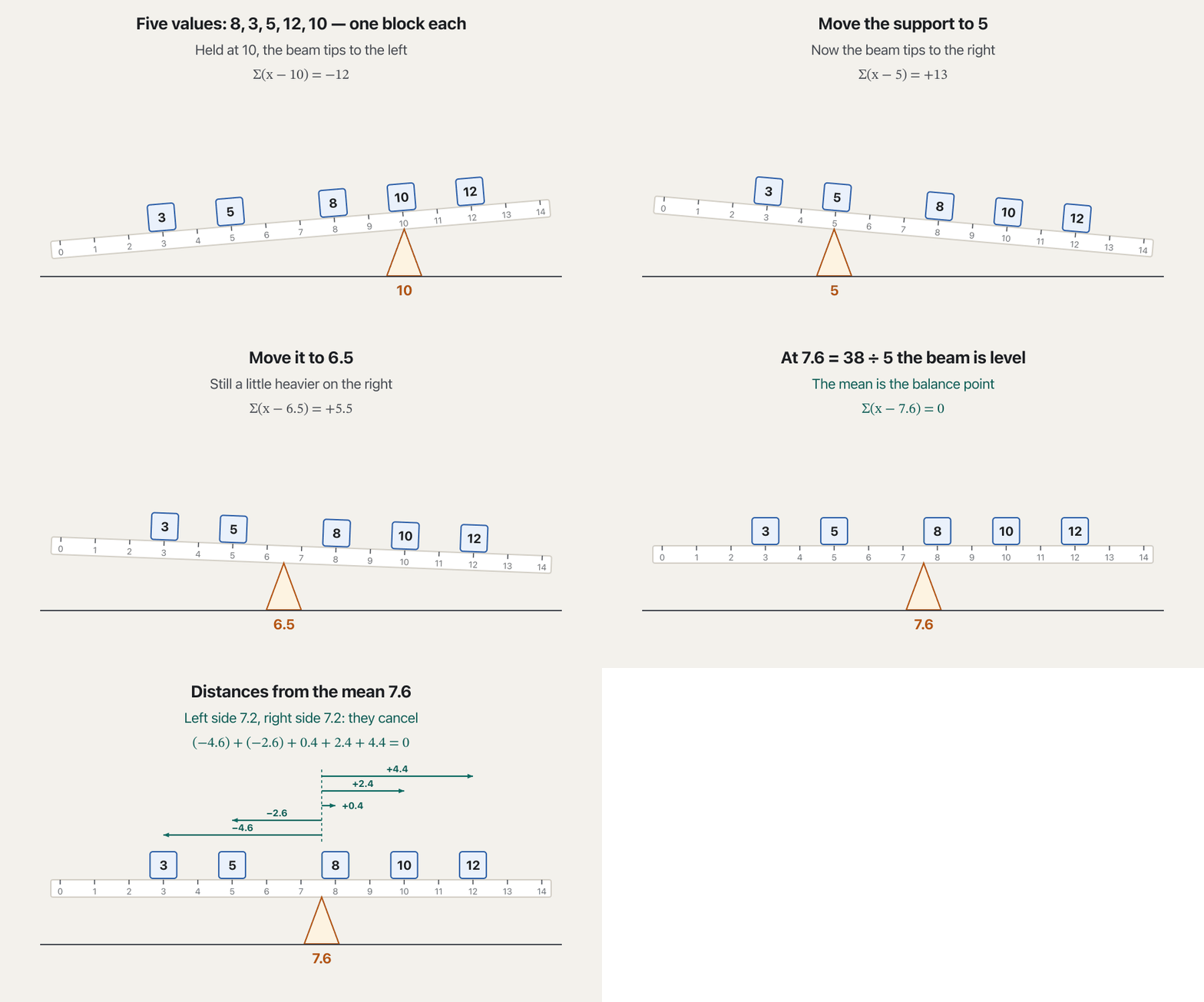
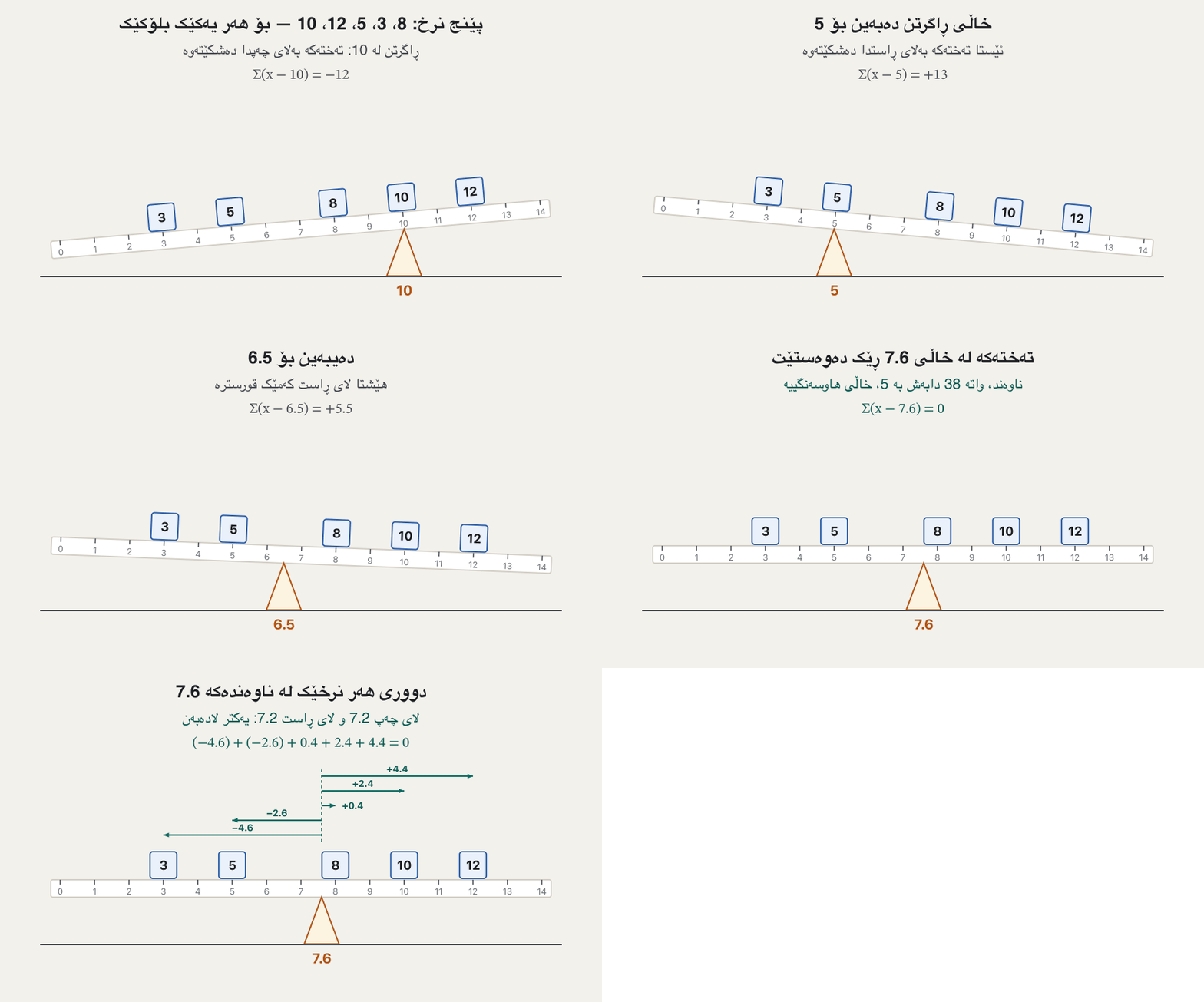
Put each value as an equal block on a long ruler and try to hold the ruler on one finger. Under 10 it falls to the left, under 5 it falls to the right. It stays level only under 7.6, the mean.
هەر نرخێک وەک بلۆکێکی یەکسان لەسەر ڕاستەیەکی درێژ دابنێ و هەوڵ بدە ڕاستەکە لەسەر یەک پەنجە ڕابگریت. لە ژێر 10ـدا بەلای چەپدا دەکەوێت، لە ژێر 5ـدا بەلای ڕاستدا. تەنها لە ژێر 7.6ـدا، واتە ، ڕێک دەوەستێت.
Why it works: the mean is the balance pointبۆچی کار دەکات: ناوەند خاڵی هاوسەنگییە
The deviations always add up to zeroکۆی لادانەکان هەمیشە سفرە
The distance of a value from the mean is its deviation, . The deviations on the left ( and ) weigh exactly as much as those on the right (, and ). This is true for every data set:
دووریی نرخێک لە ، . لای چەپ ( و ) ڕێک هێندەی ئەوانەی لای ڕاست (، و ) قورسن. ئەمە بۆ هەموو کۆمەڵە ڕاستە:
Because , the deviations from the mean always add up to zero. That is what “balance point” means. Because they cancel, measuring spread needs their signs removed first: see Deviations, and why they add up to zero.
چونکە ، کۆی لە هەمیشە سفرە. «خاڵی هاوسەنگی» واتای ئەمەیە. لەبەر ئەوەی یەکتر لادەبەن، بۆ پێوانی دەبێت سەرەتا نیشانەکانیان لاببەین: بڕوانە لادانەکان و بۆچی کۆیان سفرە.
A waiter in a tea house carries a tray of glasses on one hand. If the glasses stand at 3, 5, 8, 10 and 12 cm from the edge, his hand must be under 7.6 cm, or the tray tips.
چایچییەک لە چایخانەیەکدا سینییەکی پیاڵە چا لەسەر یەک دەست هەڵدەگرێت. ئەگەر پیاڵەکان لە 3، 5، 8، 10 و 12 سانتیمەتری لێوارەکەوە بن، دەبێت دەستی لە ژێر 7.6 سانتیمەتردا بێت، دەنا سینییەکە لار دەبێتەوە.
Where the analogy stops workingسنووری ئەم نموونەیە
This works because every glass weighs the same. If one glass were heavier, the balance point would move towards it — that is the weighted mean later in this lesson.
ئەمە کار دەکات چونکە هەموو پیاڵەکان کێشیان وەک یەکە. ئەگەر پیاڵەیەک قورستر بوایە، خاڵی هاوسەنگی بەرەو ئەو دەڕۆیشت — ئەمە کە دواتر لەم وانەیەدا دێت.
The mean of grouped data: midpoints stand inناوەندی دراوەی پۆلێنکراو: خاڵە ناوەڕاستەکانی کلاس جێگە دەگرنەوە
In a frequency table the single values are gone. We only know how many values fall in each class. So we let the class midpoint (class mark) stand for every value of its class, and we count it as many times as the class frequency says.
لە خشتەیەکی دووبارەبوونەوەدا نرخە تاکەکان نەماون. تەنها دەزانین چەند نرخ دەکەونە هەر . بۆیە ڕێگە دەدەین جێگەی هەموو نرخەکانی ئەو بگرێتەوە و بە ئەندازەی هەژماری دەکەین.
Here is the midpoint of class , is its frequency and is the number of classes. The bottom, , is the number of values — not the number of classes.
لێرەدا ـیە، و ژمارەی . بەشی خوارەوە، ، ژمارەی نرخەکانە، — نەک ژمارەی .
Multiplying by is the same idea as adding repeated values: in 1, 1, 1, 2, 2 you can add and divide by 5. A class with 30 values must count 30 times, not once.
لێکدان لە هەمان بیرۆکەی کۆکردنەوەی نرخە دووبارەکانە: لە 1، 1، 1، 2، 2ـدا دەتوانیت کۆ بکەیتەوە و دابەشی 5ی بکەیت. کە 30 نرخی تێدایە دەبێت 30 جار هەژمار بکرێت، نەک یەک جار.
The mean of a grouped frequency table: find each class midpoint, multiply by its frequency, add the products and divide by the total frequency.
پۆلێنکراو: بۆ هەر ، لە بدە، لێکدراوەکان کۆ بکەرەوە و دابەشی کۆی بکە.
Watch 0:34–3:56, the mean; the rest of the video does the median and mode of grouped data.
لە 0:34 تا 3:56 سەیر بکە: ؛ ئەوانی تری ڤیدیۆکە و دەدۆزێتەوە.
Example (3): the mean of a frequency tableنموونەی (3): ناوەندی خشتەیەکی دووبارەبوونەوە
Example (3) asks for the arithmetic mean of Table (5): five classes of width 10 with frequencies 8, 26, 30, 20 and 16. Add a midpoint column and a product column :
نموونەی (3) داوای خشتەی (5) دەکات: پێنج بە پانیی 10 و 8، 26، 30، 20 و 16. ستوونێک بۆ و ستوونێک بۆ لێکدانەکان زیاد بکە:
| Class | |||
|---|---|---|---|
| 20–30 | 8 | 25 | 200 |
| 30–40 | 26 | 35 | 910 |
| 40–50 | 30 | 45 | 1350 |
| 50–60 | 20 | 55 | 1100 |
| 60–70 | 16 | 65 | 1040 |
| Totalکۆ |
Example (3): the mean of a frequency tableنموونەی (3): ناوەندی خشتەیەکی دووبارەبوونەوە
Example (3) as a picture, and a correctionنموونەی (3) وەک وێنە و ڕاستکردنەوەیەک
The weighted mean: when some values count moreناوەندی قورسکراو: کاتێک هەندێک نرخ زیاتر هەژمار دەکرێن
In the arithmetic mean every value counts once. Sometimes values deserve different importance: a course with 3 hours a week should count more in a student's average than a course with 2 hours. The importance of each value is a number , its weight.
لە هەر نرخێک یەک جار هەژمار دەکرێت. هەندێک جار نرخەکان گرنگیی جیاوازیان هەیە: وانەیەک کە هەفتانە 3 کاتژمێرە دەبێت لە تێکڕای قوتابیدا زیاتر هەژمار بکرێت لە وانەیەکی 2 کاتژمێری. گرنگیی هەر نرخێک ژمارەیەکە ، .
A in which some values count more than others: , where is each value's .
کە تێیدا هەندێک نرخ لە هەندێکی تر زیاتر هەژمار دەکرێن: ، کە هەر نرخێکە.
Multiply each value by its weight, add, and divide by the sum of the weights. If all weights are equal, they cancel and you get the ordinary mean.
هەر نرخێک لە بدە، کۆیان بکەرەوە و دابەشی کۆی بکە. ئەگەر هەموو یەکسان بن، لادەچن و ئاسایی دەردەچێت.
You buy 2 kg of tomatoes at 1000 dinars a kilo and 1 kg at 1500 dinars. The average price per kilo is not : you paid for 3 kg, which is about 1167 dinars a kilo. The kilos are the weights.
2 کیلۆ تەماتە بە کیلۆی 1000 دینار و 1 کیلۆ بە 1500 دینار دەکڕیت. تێکڕای نرخی کیلۆیەک نییە: دینارت بۆ 3 کیلۆ داوە، واتە نزیکەی 1167 دینار بۆ هەر کیلۆیەک. کیلۆکان .
Where the analogy stops workingسنووری ئەم نموونەیە
Here the weights are real amounts. In other uses, such as marks and hours, the weights are a decision about importance that someone has to make.
لێرەدا بڕی ڕاستەقینەن. لە بەکارهێنانی تردا، وەک نمرە و کاتژمێر، بڕیارێکن دەربارەی گرنگی کە کەسێک دەبێت بیدات.
Example (4): marks and course hoursنموونەی (4): نمرە و کاتژمێری وانەکان
A student has seven marks: 62, 80, 75, 88, 84, 86 and 90. The first three courses have 2 hours a week and the last four have 3 hours. Find the weighted mean with the hours as weights.
قوتابییەک حەوت نمرەی هەیە: 62، 80، 75، 88، 84، 86 و 90. سێ وانەی یەکەم هەفتانە 2 کاتژمێرن و چوار وانەی کۆتایی 3 کاتژمێر. بدۆزەرەوە، کاتژمێرەکان .
| Courseوانە | Mark نمرە | Hours کاتژمێر | |
|---|---|---|---|
| Course 1وانەی 1 | 62 | 2 | 124 |
| Course 2وانەی 2 | 80 | 2 | 160 |
| Course 3وانەی 3 | 75 | 2 | 150 |
| Course 4وانەی 4 | 88 | 3 | 264 |
| Course 5وانەی 5 | 84 | 3 | 252 |
| Course 6وانەی 6 | 86 | 3 | 258 |
| Course 7وانەی 7 | 90 | 3 | 270 |
| Totalکۆ |
The weighted mean (82.111) is higher than the plain mean of the seven marks (80.714).
(82.111) لە ئاسایی حەوت نمرەکە (80.714) بەرزترە.
Example (4): marks and course hoursنموونەی (4): نمرە و کاتژمێری وانەکان
Seeing the weightsبینینی کێشەکان
The weighted mean of grouped dataناوەندی قورسکراوی دراوەی پۆلێنکراو
In a frequency table each class already counts times. If each class also has a weight , its midpoint counts times:
لە هەر پێشتر جار هەژمار دەکرێت. ئەگەر هەر ـیشی هەبێت، جار هەژمار دەکرێت:
| Class | |||||
|---|---|---|---|---|---|
| 2–4 | 3 | 4 | 6 | 24 | 72 |
| 4–6 | 5 | 5 | 5 | 25 | 125 |
| 6–8 | 7 | 6 | 6 | 36 | 252 |
| 8–10 | 9 | 3 | 4 | 12 | 108 |
| 10–12 | 11 | 2 | 4 | 8 | 88 |
| Totalکۆ |
The notes write 6.142, cutting off the last digit; to four decimal places it is 6.1429. Without the weights the grouped mean would be .
تێبینییەکان 6.142 دەنووسن و دوایین ژمارە دەبڕن؛ بە چوار دەکاتە 6.1429. بەبێ پۆلێنکراو دەبوو بە .
Means in Pythonناوەندەکان لە Pythonـدا
Python's statistics module has mean() for ordinary data and fmean(), which accepts weights (Python 3.11 and later). The same function gives the grouped mean (weights = frequencies) and the weighted mean (weights = hours, or ).
statisticsـی Python mean()ـی بۆ ئاسایی هەیە و fmean() کە weights وەردەگرێت (Python 3.11 و دواتر). هەمان پۆلێنکراو دەدات ( = ) و ( = کاتژمێرەکان، یان ).
import statistics as st

values = [8, 3, 5, 12, 10]                 # Example 2
print(st.mean(values))

midpoints = [25, 35, 45, 55, 65]           # Example 3
freq = [8, 26, 30, 20, 16]
print(st.fmean(midpoints, weights=freq))

marks = [62, 80, 75, 88, 84, 86, 90]       # Example 4
hours = [2, 2, 2, 3, 3, 3, 3]
print(round(st.fmean(marks, weights=hours), 4))
print(round(st.mean(marks), 4))            # no weights

X = [3, 5, 7, 9, 11]                       # Example 5
F = [4, 5, 6, 3, 2]
W = [6, 5, 6, 4, 4]
FW = [f * w for f, w in zip(F, W)]
print(FW)
print(round(st.fmean(X, weights=FW), 4))7.6 46.0 82.1111 80.7143 [24, 25, 36, 12, 8] 6.1429
Explain the codeڕوونکردنەوەی کۆدەکە
- Lineدێڕی 4
mean()adds and divides by the number of values: 7.6.mean()کۆ دەکاتەوە و دابەشی ژمارەی نرخەکان دەکات: 7.6.- Lineدێڕی 6-8
Midpoints with frequencies as weights give the grouped mean of Example (3): 46, not 44.
لەگەڵ وەک پۆلێنکراوی نموونەی (3) دەدەن: 46، نەک 44.
- Lineدێڕی 10-13
Hours as weights: 82.1111; without weights: 80.7143.
کاتژمێرەکان وەک : 82.1111؛ بەبێ : 80.7143.
- Lineدێڕی 15-20
For Example (5) the weight of each midpoint is .
بۆ نموونەی (5) هەر ـە.
Common mistakesهەڵە باوەکان
| Mistakeهەڵە | What goes wrongچی تێک دەچێت | Do this insteadلە جیاتی ئەوە |
|---|---|---|
| Dividing by the number of classesدابەشکردن بەسەر ژمارەی | Example (3) gives — outside the dataنموونەی (3) دەبێتە — لە دەرەوەی | Divide by دابەشی بکە |
| Averaging the midpoints without تێکڕای بەبێ | : every class counts once: هەر یەک جار هەژمار دەکرێت | Multiply each midpoint by its frequencyهەر لە بدە |
| Using a class limit instead of the midpointبەکارهێنانی لە جیاتی | Every value is pushed to one end of its classهەموو نرخەکان بۆ یەک لێواری پاڵ دەنرێن | |
| Weighted mean divided by دابەش بە | Example (4): , more than any markنموونەی (4): ، لە هەموو نمرەیەک زیاتر | Divide by دابەشی بکە |
| Averaging two averagesتێکڕای دوو تێکڕا | Groups of 20 (mean 70) and 30 (mean 80) give 76, not 75گرووپی 20 کەسی ( 70) و 30 کەسی ( 80) 76 دەدەن، نەک 75 | Weight each mean by its group sizeهەر بە قەبارەی گرووپەکەی قورس بکە |
| Trusting one multiplicationمتمانەکردن بە یەک لێکدان | The 44 instead of 46 in Example (3)44 لە جیاتی 46 لە نموونەی (3)دا | Redo the products, or check with Pythonلێکدانەکان دووبارە بکەرەوە، یان بە Python بیپشکنە |
Common mistakesهەڵە باوەکان
The mean and extreme valuesناوەند و نرخە زۆر دوورەکان
Exercisesڕاهێنانەکان
The mean of five numbers is 9. Four of them are 7, 12, 5 and 10. What is the fifth number?
پێنج ژمارە 9ـە. چواریان 7، 12، 5 و 10ن. ژمارەی پێنجەم چەندە؟
Hintئاماژە
: the mean times the number of values gives the sum.
: جارانی ژمارەی نرخەکان کۆکە دەدات.
Show answerوەڵامەکە پیشان بدە
The five numbers must add up to . The four known ones add up to 34, so the fifth is .
پێنج ژمارەکە دەبێت کۆکەیان بێت. کۆی چوار ژمارە زانراوەکە 34ـە، کەواتە پێنجەم ـە.
Table (4) of H.W (2) in the graphs lesson has eight classes 0–10, 10–20, …, 70–80 with frequencies 2, 8, 12, 18, 28, 22, 6, 4. Find its arithmetic mean.
خشتەی (4)ی ڕاهێنانی (2) لە وانەی هێڵکارییەکان هەشت هەیە: 0–10، 10–20، …، 70–80، بە 2، 8، 12، 18، 28، 22، 6، 4. بدۆزەرەوە.
Hintئاماژە
Make the columns and first.
سەرەتا ستوونەکانی و دروست بکە.
Show answerوەڵامەکە پیشان بدە
Midpoints 5, 15, …, 75. and , so .
5، 15، …، 75. و ، کەواتە .
Hana's marks this semester: Mathematics 65 (4 units), Programming 92 (4 units), English 80 (2 units), Kurdish 95 (1 unit). Find her weighted average and compare it with the plain average.
نمرەکانی هانا لەم وەرزەدا: بیرکاری 65 (4 یەکە)، 92 (4 یەکە)، ئینگلیزی 80 (2 یەکە)، کوردی 95 (1 یەکە). بدۆزەرەوە و بەراوردی بکە بە تێکڕا ئاساییەکەی.
Show answerوەڵامەکە پیشان بدە
The plain average (83) treats the 1-unit course like the 4-unit ones. The weighted average (80.27) is lower because the 4-unit Mathematics mark is low.
تێکڕا ئاساییەکە (83) وانە 1 یەکەییەکە وەک وانە 4 یەکەییەکان هەژمار دەکات. (80.27) نزمترە چونکە نمرەی بیرکاریی 4 یەکەیی نزمە.
A solution to Example (3) writes and . Without redoing the whole table, how can you find the slip?
چارەسەرێکی نموونەی (3) و دەنووسێت. بەبێ دووبارەکردنەوەی هەموو خشتەکە، چۆن هەڵەکە دەدۆزیتەوە؟
Show answerوەڵامەکە پیشان بدە
Check each product: 910, 1350, 1100 and 1040 are right, but the first row is . With it the sum is 4600 and the mean 46. Python's fmean([25, 35, 45, 55, 65], weights=[8, 26, 30, 20, 16]) also gives 46.0.
هەر لێکدانێک بپشکنە: 910، 1350، 1100 و 1040 ڕاستن، بەڵام ڕیزی یەکەم ـە. لەگەڵ ئەودا کۆکە 4600 و 46ـە. fmean([25, 35, 45, 55, 65], weights=[8, 26, 30, 20, 16])ـی Pythonـیش 46.0 دەدات.
Dilan's quiz marks are 12, 15, 11, 18 and 14. Find the mean and check that the deviations add up to zero.
نمرەکانی تاقیکردنەوەی دیلان 12، 15، 11، 18 و 14ن. بدۆزەرەوە و بپشکنە کە کۆی سفرە.
Show answerوەڵامەکە پیشان بدە
. Deviations: ; their sum is .
. : ؛ کۆکەیان ـە.
Summaryپوختە
- Ungrouped mean: . It is the balance point: .
- Grouped mean: midpoints stand for their classes, . It is an estimate.
- Weighted mean: ; grouped: . A GPA is a weighted mean.
- Example (3)'s correct mean is 46 (the notes' 44 comes from a wrong product).
- In Python:
statistics.mean()andstatistics.fmean(data, weights=...).
- : . خاڵی هاوسەنگییە: .
- : جێگەی دەگرنەوە، . نزیکەییە.
- : ؛ بۆ : . تێکڕای نمرەی زانکۆ .
- ڕاستی نموونەی (3) 46ـە (44ـی تێبینییەکان لە لێکدانێکی هەڵەوە هاتووە).
- لە Pythonـدا:
statistics.mean()وstatistics.fmean(data, weights=...).
Why do we multiply each midpoint by its frequency?بۆچی هەر خاڵێکی ناوەڕاستی کلاس لە دووبارەبوونەوەکەی دەدەین؟
Because the midpoint stands for all values of its class, so it must be counted times.
چونکە جێگەی هەموو نرخەکەی دەگرێتەوە، بۆیە دەبێت جار هەژمار بکرێت.
When does the weighted mean equal the ordinary mean?ناوەندی قورسکراو کەی یەکسانە بە ناوەندی ئاسایی؟
When all weights are equal: they cancel from the top and the bottom.
کاتێک هەموو یەکسان بن: لە سەرەوە و خوارەوە لادەچن.
A list has mean 20. What is the sum of the deviations from 20?لیستێک ناوەندەکەی 20ـە. کۆی لادانەکان لە 20 چەندە؟
0 — always, for any list.
0 — هەمیشە، بۆ هەر لیستێک.
Lesson complete!وانەکە تەواو بوو!
Well done. Review the key terms, then go on to the next lesson.دەستخۆش. سەیرێکی زاراوە سەرەکییەکان بکەرەوە، پاشان بڕۆ بۆ وانەی داهاتوو.
Key termsزاراوە سەرەکییەکان
Geometric, Harmonic and Quadratic Meansناوەندی ئەندازەیی، ناوەندی هارمۆنیک و ناوەندی دووجایی
Related lecturesوانە پەیوەندیدارەکان
- Geometric, Harmonic and Quadratic Meansناوەندی ئەندازەیی، ناوەندی هارمۆنیک و ناوەندی دووجایی
- The Median and the Modeناوەڕاستە و باو
- Practice: One Data Set from Table to Averagesڕاهێنان: یەک کۆمەڵەدراوە لە خشتەوە بۆ پێوەرەکانی ڕووکردنە چەق
- Expected Value (Mathematical Expectation)نرخی پێشبینیکراو (چاوەڕوانیی بیرکاری)
References and further readingسەرچاوەکان و خوێندنەوەی زیاتر
This lecture is a first edition. The Kurdish text and terminology are waiting for review by Kurdish IT teachers.ئەم وانەیە چاپی یەکەمە. دەقە کوردییەکە و زاراوەکانی چاوەڕێی پێداچوونەوەی مامۆستایانی کوردی بواری IT ن.