Chapterبەش 2 · Lectureوانە 2.4
Quadratic Inequalities and the Sign Chartلاسەنگە پلەدووەکان و خشتەی هێماکان
Factor , find the zeros, test one number in each interval and keep the intervals with the right sign. Slide 14's Exercise 5 () with a sign chart and a parabola, the classic slip of keeping the wrong sign, and , , from the same chart.
، دۆزینەوەی سفرەکان، تاقیکردنەوەی یەک ژمارە لە هەر و وەرگرتنی هەر کە هێمای دروستی هەیە. ڕاهێنانی 5ی سلایدی 14 () بە و ، هەڵە باوەکەی وەرگرتنی هێمای هەڵە و ، و لە هەمان خشتەوە.
What you will learnچی فێر دەبیت
- Factor a quadratic by finding two numbers with product c and sum b.
- Explain why a product can only change sign at its zeros.
- Solve a quadratic inequality with a sign chart and write the answer as an interval or a union.
- Avoid the common slips: wrong sign kept, dividing by x, taking square roots.
- پلەدووی وەک بە بنووسیتەوە بە دۆزینەوەی دوو ژمارە کە لێکدانیان c و کۆکردنەوەیان b بێت.
- ڕوونی بکەیتەوە بۆچی لێکدان تەنها لە سفرەکانیدا دەتوانێت هێما بگۆڕێت.
- بە چارەسەر بکەیت و وەڵامەکە وەک یان بنووسیت.
- خۆت لە هەڵە باوەکان بپارێزیت: وەرگرتنی هێمای هەڵە، دابەشکردن بە x و وەرگرتنی .
What is a quadratic inequality?لاسەنگەی پلەدوو چییە؟
A has an term, like slide 14's homework Exercise 5: . The moves of linear inequalities cannot leave x alone here, because and are different kinds of terms that you cannot combine.
بڕێکی ـی تێدایە، وەک ڕاهێنانی ماڵەوەی ژمارە 5ی سلایدی 14: . هەنگاوەکانی لاسەنگە هێڵییەکان لێرەدا ناتوانن x بە تەنها بهێڵنەوە، چونکە و دوو جۆری جیاوازی بڕن و ناتوانیت تێکەڵیان بکەیت.
The new idea: make one side 0 and write the other side as a product. Then the question becomes “where is this product negative?” In a picture: is a , and asks where the parabola is below the x-axis.
بیرۆکە نوێیەکە: لایەک بکە بە 0 و لاکەی تر وەک لێکدانی چەند کۆلکەیەک بنووسە. ئەو کاتە پرسیارەکە دەبێتە «ئەم لێکدانە لە کوێدا سالبە؟». بە وێنە: و دەپرسێت لە کوێدا لە ژێر xـدایە.
An with an term, such as . Solve it by factoring, finding where each factor is 0 and checking the sign between those points with a .
کە ـی تێدایە، وەک . بە شیکار دەکرێت: دۆزینەوەی ئەو خاڵانەی هەر کۆلکەیەک تێیاندا سفر دەبێت و پشکنینی هێمای نێوانیان بە .
Factoring شیتەڵکردنی
To write as a product, look for two numbers p and q whose product is c and whose sum is b. Then . The reason is simple multiplication:
بۆ ئەوەی وەک لێکدان بنووسیت، بەدوای دوو ژمارەی p و q بگەڕێ کە لێکدانیان c و کۆکردنەوەیان b بێت. ئەو کاتە . هۆکارەکەی لێکدانێکی سادەیە:
For we need a product of 3 and a sum of .
بۆ پێویستمان بە لێکدانی 3 و کۆکردنەوەی هەیە.
Pairs with product 3: (sum 4) and (sum ). The second pair fits.
ئەو جووتانەی لێکدانیان 3ـە: (کۆکردنەوەیان 4) و (کۆکردنەوەیان ). جووتی دووەم گونجاوە.
So . Check by multiplying out: ✓.
کەواتە . بە لێکدانەوە تاقی بکەرەوە: ✓.
The homework attempt on this exercise used a small “cross” sketch: for the term, and 1 and 3 for the constant. That sketch is the same search for two numbers, written as a picture.
هەوڵێکی ڕاهێنانی ماڵەوە بۆ ئەم پرسیارە وێنەیەکی بچووکی «خاچ»ـی بەکارهێنا: بۆ بڕی و 1 و 3 بۆ ژمارە تەنهاکە. ئەو وێنەیە هەمان گەڕانە بەدوای دوو ژمارەدا، بە شێوەی وێنە.
How to factor x^2+bx+c: find two numbers that multiply to c and add to b, then write the two brackets and check.
: دوو ژمارە بدۆزەرەوە کە لێکدراویان c بێت و کۆیان b، پاشان دوو کەوانەکە بنووسە و بیپشکنەوە.
Plays 0:00-3:48, basic factoring of x^2+bx+c; the later "magic x" method for other leading numbers is not needed here.
لە 0:00 تا 3:48 پەخش دەبێت: سادەی ؛ ڕێگای «magic x» کە دواتر دێت بۆ کاتێک 1 نییە، لێرەدا پێویست نییە.
Factoring شیتەڵکردنی
More factoring, and sign hintsنموونەی زیاتری شیتەڵکردن و ئاماژەی هێما
| Expression | Product, sumلێکدان، کۆکردنەوە | Factoredدوای |
|---|---|---|
Where can the sign change?هێما لە کوێدا دەگۆڕێت؟
A product is 0 only when one of its factors is 0. So only at and . These are the zeros.
لێکدان تەنها کاتێک سفرە کە یەکێک لە کۆلکەکانی سفر بێت. بۆیە تەنها لە و دا. ئەمانە سفرەکانن.
Each factor has one sign on each side of its own zero: is negative to the left of 1 and positive to the right. So between two neighbouring zeros no factor changes sign, and neither does the product. The sign can only change at a zero. With the sign rules , , , one test number per region is enough.
هەر کۆلکەیەک لە هەر لایەکی سفرەکەی خۆیەوە یەک هێمای هەیە: لە لای چەپی 1 سالبە و لە لای ڕاستی موجەبە. بۆیە لە نێوان دوو سفری دراوسێدا هیچ کۆلکەیەک هێمای ناگۆڕێت و لێکدانەکەش ناگۆڕێت. هێما تەنها لە سفرێکدا دەتوانێت بگۆڕێت. بە یاساکانی هێما ، و ، یەک ژمارەی تاقیکردنەوە بۆ هەر بەسە.
The sign-chart methodڕێگای خشتەی هێماکان
Put the ideas together and you have a method that works for every factored inequality. The step names follow a student's Kurdish solution of this exercise.
ئەم بیرۆکانە پێکەوە دابنێ، ڕێگایەکت دەست دەکەوێت کە بۆ هەموو شیتەڵکراو کار دەکات. ناوی هەنگاوەکان لە چارەسەرێکی کوردیی خوێندکارێکەوە وەرگیراون بۆ ئەم پرسیارە.
- Zero on one sideسفر لە لایەک
Move everything to one side so that the other side is 0.
هەموو شتێک بگوازەرەوە بۆ یەک لا تا لاکەی تر 0 بێت.
- Factorشیتەڵکردن
Factor the quadratic: becomes .
: دەبێتە .
- Find the zerosسفرەکان بدۆزەرەوە
Set each bracket equal to 0 to get the values of x: , .
هەر کەوانەیەک یەکسان بکە بە 0 بۆ دەستکەوتنی نرخی x: ، .
- Number lineهێڵی ژمارەکان
Put the zeros on the number line from small to large, left to right. They cut it into intervals.
سفرەکان لە بچووکەوە بۆ گەورە، لە چەپەوە بۆ ڕاست، بخە سەر . هێڵەکە دەکەن بە چەند .
- Testتاقی بکەرەوە
Pick one test number inside each interval. Find the sign of each factor and of the product there.
لە ناو هەر ژمارەیەکی تاقیکردنەوە هەڵبژێرە. هێمای هەر کۆلکەیەک و هێمای لێکدانەکە لەوێدا بدۆزەرەوە.
- Chooseهەڵبژێرە
Keep only the intervals whose sign matches the question: negative for , positive for .
لە ، تەنها ئەوانە وەربگرە کە هێمایان لەگەڵ پرسیارەکە یەک دەگرێتەوە: سالب بۆ و موجەب بۆ .
- Endsسنوورەکان
Decide the ends: for or the zeros are left out (open dots); for or they are included (filled dots).
سنوورەکان دیاری بکە: بۆ یان سفرەکان تێدا نین (خاڵی پڕنەکراو)؛ بۆ یان تێدان (خاڵی پڕکراو).
Example 5: نموونەی 5:
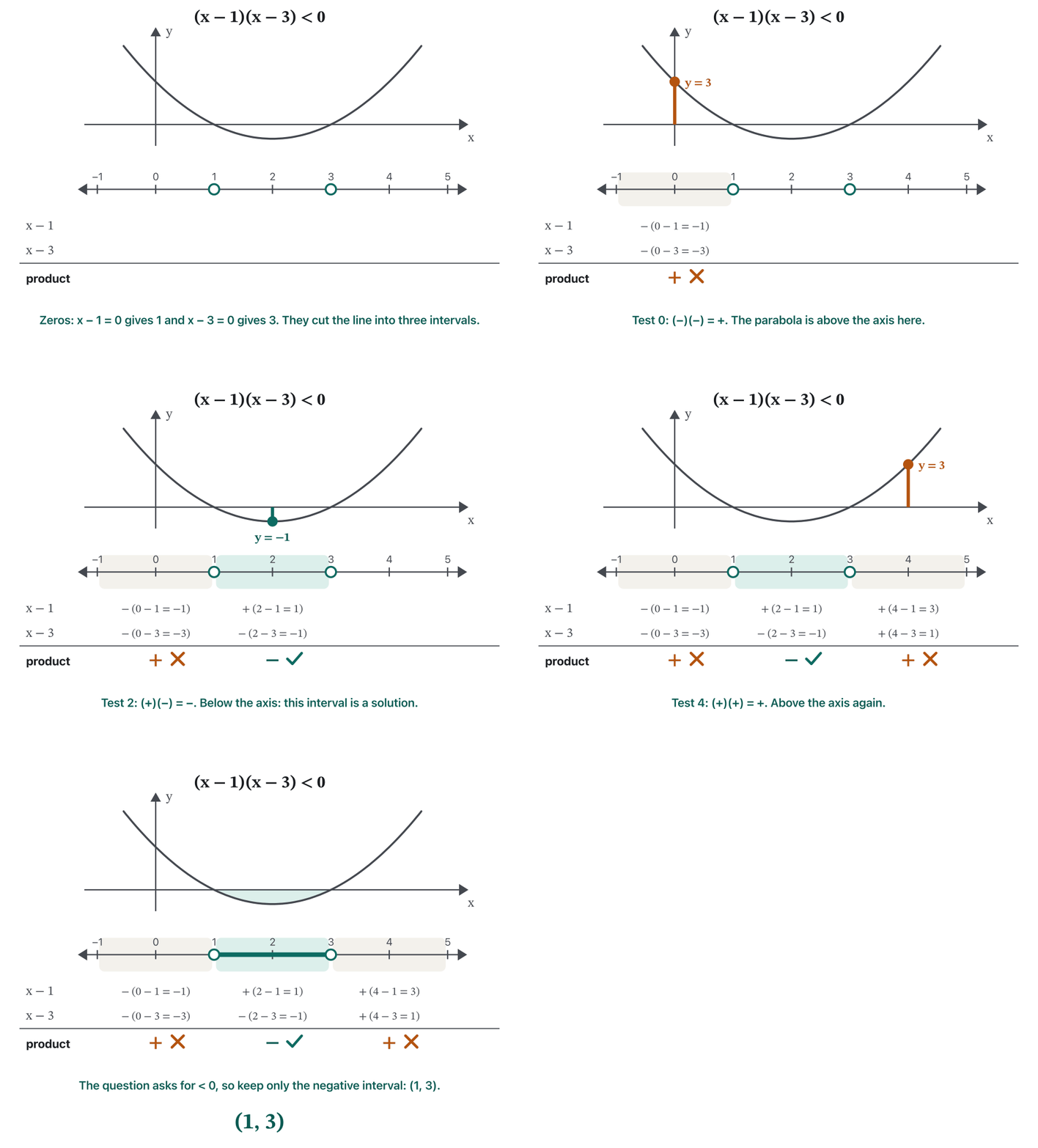
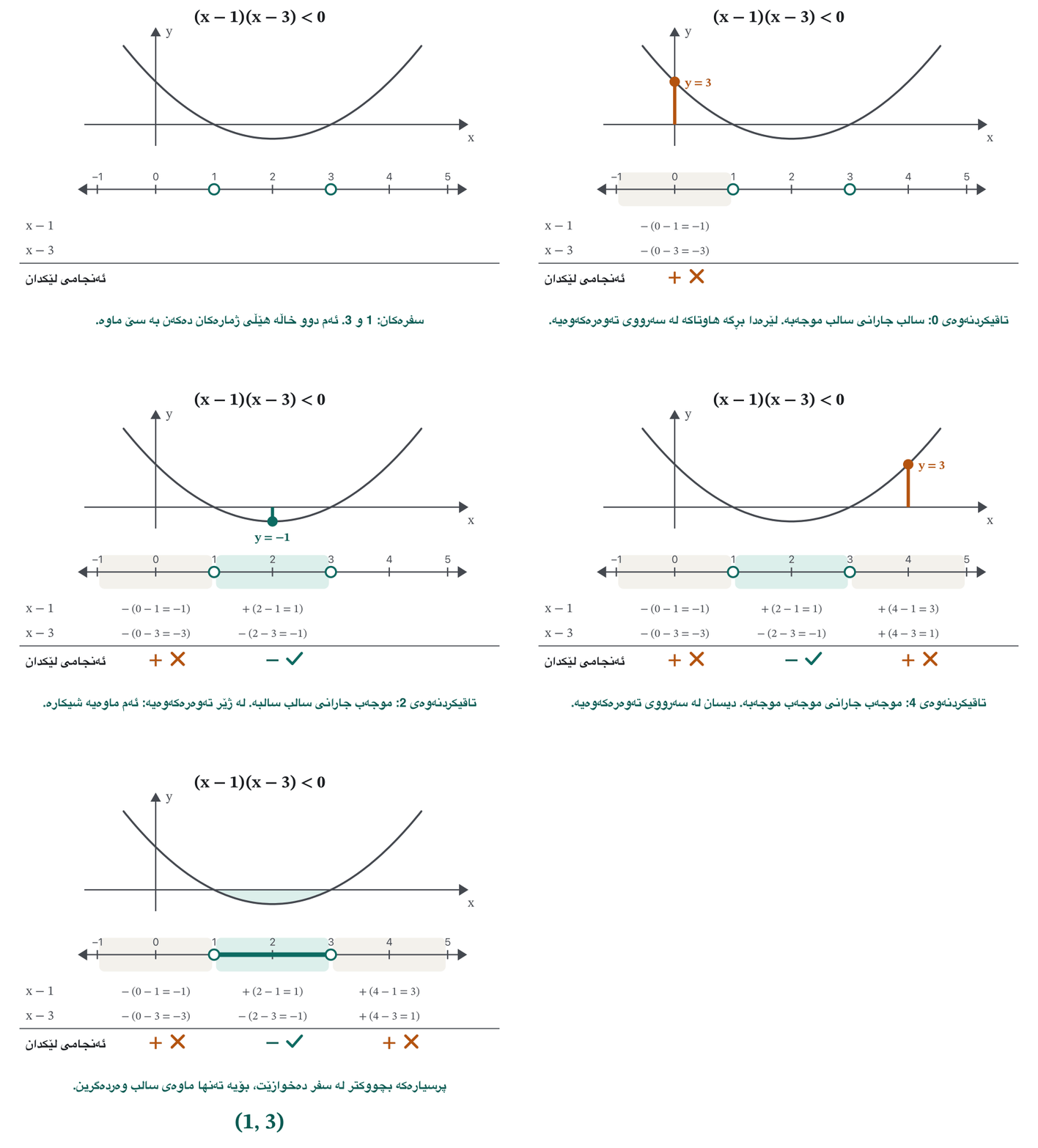
After factoring, has the zeros 1 and 3. The test numbers 0, 2 and 4 sit in the three intervals — the lecturer and the student both chose these.
دوای ، دوو سفری هەیە: 1 و 3. ژمارەکانی تاقیکردنەوە 0، 2 و 4 لە سێ — مامۆستاکە و خوێندکارەکە هەردووکیان ئەمانەیان هەڵبژارد.
| Factorکۆلکە | (test 0) (تاقیکردنەوەی 0) | (test 2) (تاقیکردنەوەی 2) | (test 4) (تاقیکردنەوەی 4) |
|---|---|---|---|
| (−) | (+) | (+) | |
| (−) | (−) | (+) | |
| productلێکدان | (+) | (−) | (+) |
| ? ؟ | ✗ | ✓ | ✗ |
Only the middle interval is negative. At the zeros the product is 0, and is false, so 1 and 3 are open. Answer: — the student's notes write it .
تەنها سالبە. لە سفرەکاندا لێکدانەکە 0ـە و هەڵەیە، بۆیە 1 و 3 پڕنەکراون. وەڵام: — تێبینییەکانی خوێندکارەکە بە شێوەی دەینووسن.
Spot the mistakeهەڵەکە بدۆزەرەوە
This exercise went wrong in the same way twice: once in a student's homework and once in the first attempt on the lecturer's answer sheet. It is the most common slip with sign charts.
ئەم پرسیارە دوو جار بە هەمان شێوە بە هەڵەدا چوو: جارێک لە ڕاهێنانی ماڵەوەی خوێندکارێکدا و جارێک لە یەکەم هەوڵی وەرەقەی وەڵامەکانی مامۆستادا. ئەمە باوترین هەڵەیە لەگەڵ .
A homework solution of : it factors to , finds the zeros 1 and 3, draws the sign chart + | − | + correctly, and then answers . Find the two mistakes.
چارەسەرێکی ڕاهێنانی ماڵەوە بۆ : دەیکات بە ، سفرەکانی 1 و 3 دەدۆزێتەوە، بە دروستی دەکێشێت + | − | + و پاشان وەڵام دەداتەوە . دوو هەڵەکە بدۆزەرەوە.
Hintئاماژە
Compare the sign you kept with the sign in the question.
ئەو هێمایەی وەرتگرتووە لەگەڵ هێمای ناو پرسیارەکە بەراورد بکە.
Show answerوەڵامەکە پیشان بدە
- It keeps the positive intervals although the question asks for . The answer must be the negative interval: .
- The left end lost its minus sign: should be , and is simply .
- وەردەگرێت لە کاتێکدا پرسیارەکە دەخوازێت. وەڵامەکە دەبێت بێت: .
- سنووری چەپ هێمای سالبی لەدەست داوە: دەبێت بێت و هەر ـە.
Spot the mistakeهەڵەکە بدۆزەرەوە
The same slip on the answer sheetهەمان هەڵە لە وەرەقەی وەڵامەکاندا
The same chart for , and هەمان خشتە بۆ ، و
One sign chart answers four questions. Only the chosen intervals and the dots at the zeros change.
یەک وەڵامی چوار پرسیار دەداتەوە. تەنها و خاڵەکانی سەر سفرەکان دەگۆڕێن.
| Questionپرسیار | Keepوەربگرە | Zerosسفرەکان | Answerوەڵام |
|---|---|---|---|
| negativeسالب | left outتێدا نین | ||
| negative or 0سالب یان 0 | includedتێدان | ||
| positiveموجەب | left outتێدا نین | ||
| positive or 0موجەب یان 0 | includedتێدان |
Common mistakesهەڵە باوەکان
| Mistakeهەڵە | Fixڕاستکردنەوە |
|---|---|
| Keeping the + intervals for a “” question.وەرگرتنی بۆ پرسیارێکی «». | Write the wanted sign above the chart and keep only those intervals.هێمای خوازراو لە سەرووی خشتەکە بنووسە و تەنها ئەو هێمایە وەربگرە. |
| Dividing by x: .دابەشکردن بە x: . | x may be negative or 0. Write , so : answer .x دەکرێت سالب یان 0 بێت. بنووسە، واتە : وەڵام . |
| Taking a square root: .وەرگرتنی : . | gives ; is not a solution. دەبێتە ؛ شیکار نییە. |
| Using factor signs when the other side is not 0, e.g. .بەکارهێنانی هێمای کۆلکەکان کاتێک لاکەی تر 0 نییە، وەک . | Move everything to one side first, then factor again.سەرەتا هەموو شتێک بگوازەرەوە بۆ یەک لا، پاشان دیسان بە بینووسەرەوە. |
| Assuming the signs always alternate.وا دانان کە هێماکان هەمیشە یەک لە دوای یەک دەگۆڕێن. | A repeated factor does not change sign: for every . Test every interval.کۆلکەیەکی دووبارە هێما ناگۆڕێت: بۆ هەموو . هەموو تاقی بکەرەوە. |
Exercisesڕاهێنانەکان
Solve .
چارەسەر بکە.
Show answerوەڵامەکە پیشان بدە
. Zeros and 2. Tests: gives (+), 0 gives (−), 3 gives (+). Keep the positive intervals: .
. سفرەکان و 2. تاقیکردنەوە: دەبێتە (+)، 0 دەبێتە (−)، 3 دەبێتە (+). وەربگرە: .
Solve .
چارەسەر بکە.
Hintئاماژە
Do not take a square root. Move 9 to the left and factor.
وەرمەگرە. 9 بگوازەرەوە بۆ لای چەپ و بە بینووسەرەوە.
Show answerوەڵامەکە پیشان بدە
, so . The product is negative between and 3 and 0 at both: .
، واتە . لێکدانەکە لە نێوان و 3دا سالبە و لە هەردووکیاندا 0ـە: .
Solve .
چارەسەر بکە.
Show answerوەڵامەکە پیشان بدە
. Zeros 0 and 5. Positive outside them, and the zeros count (): .
. سفرەکان 0 و 5. لە دەرەوەیان موجەبە و سفرەکانیش دەژمێردرێن (): .
Solve .
چارەسەر بکە.
Show answerوەڵامەکە پیشان بدە
, so . Negative between the zeros: .
، واتە . لە نێوان سفرەکاندا سالبە: .
Solve .
چارەسەر بکە.
Show answerوەڵامەکە پیشان بدە
. A square is never negative, and it is 0 only at . So every number except 3: . Here the sign does not change at the zero.
. دووجا هەرگیز سالب نییە و تەنها لە دا 0ـە. کەواتە هەموو ژمارەیەک جگە لە 3: . لێرەدا هێما لە سفرەکەدا ناگۆڕێت.
Solve .
چارەسەر بکە.
Hintئاماژە
It factors as . Multiply out to check.
بە شێوەی بۆ دەکرێت. بە لێکدانەوە تاقی بکەرەوە.
Show answerوەڵامەکە پیشان بدە
. Zeros and 1. Test 0: (−). Answer: .
. سفرەکان و 1. تاقیکردنەوەی 0: (−). وەڵام: .
Summaryپوختە
- Get 0 on one side and factor: with and .
- A product can only change sign at a zero, so one test number per interval is enough.
- Keep the intervals with the sign the question asks for: negative for , positive for .
- Zeros are open for and , closed for and .
- has the answer : the parabola is below the x-axis there.
- سفر لە لایەک دابنێ و بە بینووسەرەوە: کە و .
- لێکدان تەنها لە سفرێکدا دەتوانێت هێما بگۆڕێت، بۆیە یەک ژمارەی تاقیکردنەوە بۆ هەر بەسە.
- لە ، ئەوانە وەربگرە کە هێمایان ئەوەیە پرسیارەکە دەیخوازێت: سالب بۆ و موجەب بۆ .
- سفرەکان بۆ و پڕنەکراون و بۆ و پڕکراون.
- وەڵامی ـە: لەوێدا لە ژێر xـدایە.
Why may you not simply divide by x?بۆچی ناتوانیت بە سادەیی دابەشی x بکەیت؟
x can be negative (the sign would have to turn) or 0 (division is impossible). Factor instead: gives .
x دەکرێت سالب بێت (هێماکە دەبوو پێچەوانە ببێتەوە) یان 0 بێت (دابەشکردن مەحاڵە). لە جیاتی ئەوە بەکاربهێنە: دەبێتە .
What does the answer mean on the graph of ?وەڵامی لەسەر هێڵکاریی نەخشەی چ واتایەک دەدات؟
Between and the parabola lies below the x-axis.
لە نێوان و دا لە ژێر xـدایە.
Videoڤیدیۆ
Watch a videoسەیری ڤیدیۆیەک بکە
A video that viewers liked a lot and praised in their comments, chosen for this lesson.ڤیدیۆیەک کە بینەران زۆریان پێ خۆش بووە و لە کۆمێنتەکانیاندا ستایشیان کردووە، بۆ ئەم وانەیە هەڵبژێردراوە.
Solving quadratic inequalities with a sign chart: factor, mark the zeros on a number line, test each region, then write the answer as an interval.
چارەسەرکردنی بە : ، دانانی سفرەکان لەسەر ، تاقیکردنەوەی هەر ناوچەیەک، پاشان نووسینی وەڵام وەک .
Chapters: 0:00 introduction, 1:48 testing points on the number line, 5:09 perfect squares, 7:32 factoring by grouping.
بەشەکان: 0:00 پێشەکی، 1:48 تاقیکردنەوەی خاڵ لەسەر ، 5:09 دووجای تەواو، 7:32 بە گرووپکردن.
Lesson complete!وانەکە تەواو بوو!
Well done. Review the key terms, then go on to the next lesson.دەستخۆش. سەیرێکی زاراوە سەرەکییەکان بکەرەوە، پاشان بڕۆ بۆ وانەی داهاتوو.
Key termsزاراوە سەرەکییەکان
Inequalities with Fractions (Rational Inequalities)لاسەنگە ڕێژەییەکان
Related lecturesوانە پەیوەندیدارەکان
References and further readingسەرچاوەکان و خوێندنەوەی زیاتر
This lecture is a first edition. The Kurdish text and terminology are waiting for review by Kurdish IT teachers.ئەم وانەیە چاپی یەکەمە. دەقە کوردییەکە و زاراوەکانی چاوەڕێی پێداچوونەوەی مامۆستایانی کوردی بواری IT ن.