Chapterبەش 8 · Lectureوانە 8.2
How Countries Protect Themselves: Iraq and Kurdistan Todayوڵاتان چۆن خۆیان دەپارێزن: عێراق و کوردستان ئەمڕۆ
A country needs protection in cyberspace just as a house needs locks, cameras and guards. This lesson matches the report's five steps to ITU's five pillars (legal, technical, organisational, capacity development, cooperation), explains national CERTs and strategies, reads Iraq's results correctly in two different indices — ITU's GCI 2024 (Tier 4, 53.07/100) and the NCSI (129th, 24.17 in December 2025) — sums up the legal situation in Iraq and the Kurdistan Region, and ends with the report's conclusion and a check of its sources.
وڵات لە پێویستی بە پاراستن هەیە هەروەک خانوو پێویستی بە قفڵ، کامێرا و پاسەوان هەیە. ئەم وانەیە پێنج هەنگاوەکەی ڕاپۆرتەکە لەگەڵ پێنج کۆڵەگەکەی ITU (یاسایی، تەکنیکی، ڕێکخستنی، پەرەپێدانی توانا، هاوکاری) بەراورد دەکات، CERT و ستراتیژییە نیشتیمانییەکان ڕوون دەکاتەوە، ئەنجامەکانی عێراق لە دوو پێوەری جیاوازدا بە دروستی دەخوێنێتەوە — GCI 2024ی ITU (پلەی 4، 53.07/100) و NCSI (پلەی 129، 24.17 لە کانوونی یەکەمی 2025) — دۆخی یاسایی لە عێراق و هەرێمی کوردستان کورت دەکاتەوە، هەروەها بە ئەنجامی ڕاپۆرتەکە و پشکنینی سەرچاوەکانی کۆتایی دێت.
What you will learnچی فێر دەبیت
- Explain the five national measures with the house analogy and match them to ITU's five pillars.
- Describe what a national CERT/CSIRT and a national strategy do, with Iraq as an example.
- Read ITU's GCI 2024 and the NCSI correctly and explain why they give different numbers for Iraq.
- State the legal situation in Iraq and the Kurdistan Region accurately and with a date.
- Judge how far to trust the sources of a report.
- پێنج ڕێکارە نیشتیمانییەکە بە بەراوردی خانوو ڕوون بکەیتەوە و لەگەڵ پێنج کۆڵەگەکەی ITUدا بیانگونجێنیت.
- وەسف بکەیت CERT/CSIRTـی نیشتیمانی و ستراتیژیی نیشتیمانی چی دەکەن، بە عێراق وەک نموونە.
- GCI 2024ی ITU و NCSI بە دروستی بخوێنیتەوە و ڕوونی بکەیتەوە بۆچی ژمارەی جیاواز بۆ عێراق دەدەن.
- دۆخی یاسایی لە عێراق و هەرێمی کوردستان بە وردی و بە بەرواردەوە بڵێیت.
- هەڵسەنگێنیت تا چەند متمانە بە سەرچاوەکانی ڕاپۆرتێک بکرێت.
A country is like a houseوڵات وەک خانوویەکە
The report starts with a comparison. A house needs locked doors, security cameras and — depending on its size — guards. A country needs the same kinds of protection in cyberspace, the online world of connected computers, networks and the Internet.
ڕاپۆرتەکە بە بەراوردێک دەست پێ دەکات. خانوو پێویستی بە دەرگای داخراو، کامێرای چاودێری و — بەپێی گەورەیی خانووەکە — پاسەوان هەیە. وڵاتیش لە هەمان جۆرە پاراستنی پێویستە، واتە جیهانی ئۆنلاینی ، و بەیەکەوە بەستراو.
Locks are the laws that tell burglars there is a price to pay. Cameras are the monitoring that sees trouble early. Guards are the trained teams who act. The family, who never open the door to a stranger, are the aware citizens. And neighbours who warn each other about a thief in the street are the countries that share threat information.
قفڵەکان ئەو یاسایانەن کە بە دزەکان دەڵێن نرخێک هەیە دەبێت بیدەن. کامێراکان ئەو چاودێرییەن کە کێشە زوو دەبینێت. پاسەوانەکان ئەو تیمە ڕاهێنراوانەن کە کار دەکەن. خێزانەکە، کە هەرگیز دەرگا بۆ نەناسراو ناکەنەوە، هاووڵاتیانی ئاگادارن. هەروەها ئەو دراوسێیانەی ئاگاداری یەکتر دەکەنەوە لە دزێک لە کۆڵانەکەدا، ئەو وڵاتانەن کە هاوبەش دەکەن.
Where the analogy stops workingسنووری ئەم نموونەیە
A burglar has to come to the door. In cyberspace the attacker can be on the other side of the world, attack thousands of 'houses' at once and hide who they are.
دز دەبێت بێتە بەر دەرگا. لە دەکرێت لە ئەو سەری جیهان بێت، لە یەک کاتدا هەزاران «خانوو» بکاتە ئامانج و ناسنامەی خۆی بشارێتەوە.
Five things a country must doپێنج کار کە وڵات دەبێت بیکات
The report lists five steps; the presentation lists five strategies. They are the same five ideas — and they match the five pillars that the International Telecommunication Union (ITU), the UN agency for information and communication technology, uses to measure every country:
ڕاپۆرتەکە پێنج هەنگاو ڕیز دەکات؛ پێشکەشکردنەکە پێنج ستراتیژی. هەمان پێنج بیرۆکەن — و لەگەڵ ئەو پێنج کۆڵەگەیەدا دەگونجێن کە یەکێتیی نێودەوڵەتیی پەیوەندییەکان (ITU)، دەزگای نەتەوە یەکگرتووەکان بۆ تەکنەلۆجیای زانیاری و پەیوەندی، بۆ پێوانەکردنی هەموو وڵاتێک بەکاریان دەهێنێت:
| ITU pillarکۆڵەگەی ITU | In the reportلە ڕاپۆرتەکەدا | In the presentationلە پێشکەشکردنەکەدا |
|---|---|---|
| Legalیاسایی | Legislation: laws that punish cybercriminalsیاسادانان: یاسا بۆ سزادانی | Creating a legal frameworkدروستکردنی چوارچێوەیەکی یاسایی |
| Technicalتەکنیکی | A defence community watching 24/7; technology developmentکۆمەڵەیەکی بەرگریی کە شەو و ڕۆژ چاودێری دەکات؛ پەرەپێدانی تەکنەلۆجیا | National CERTs; better network and system securityCERTـی نیشتیمانی؛ باشتری و سیستەم |
| Organisationalڕێکخستنی | (implied: who leads and plans)(ناڕاستەوخۆ: کێ سەرکردایەتی و پلاندانان دەکات) | A defence unit; partners to protect critical infrastructure; managing risksیەکەیەکی بەرگریی ؛ هاوبەشان بۆ پاراستنی ؛ بەڕێوەبردنی |
| Capacity developmentپەرەپێدانی توانا | Spreading awarenessبڵاوکردنەوەی هۆشیاری | Public awareness and trainingهۆشیاریی گشتی و ڕاهێنان |
| Cooperationهاوکاری | Cooperation between countriesهاوکاریی نێوان وڵاتان | (partnering, at home)(هاوبەشی، لە ناوخۆدا) |
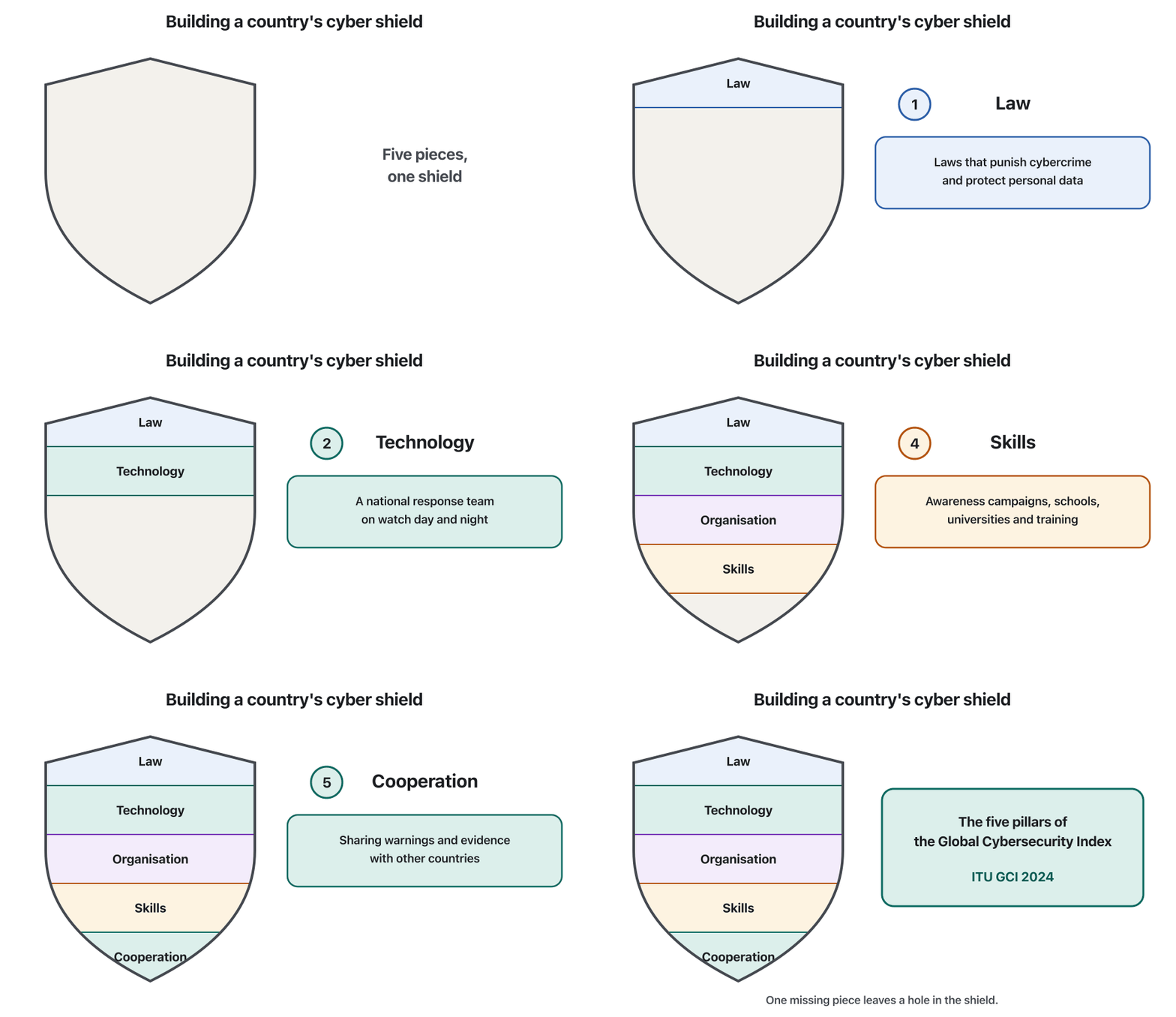
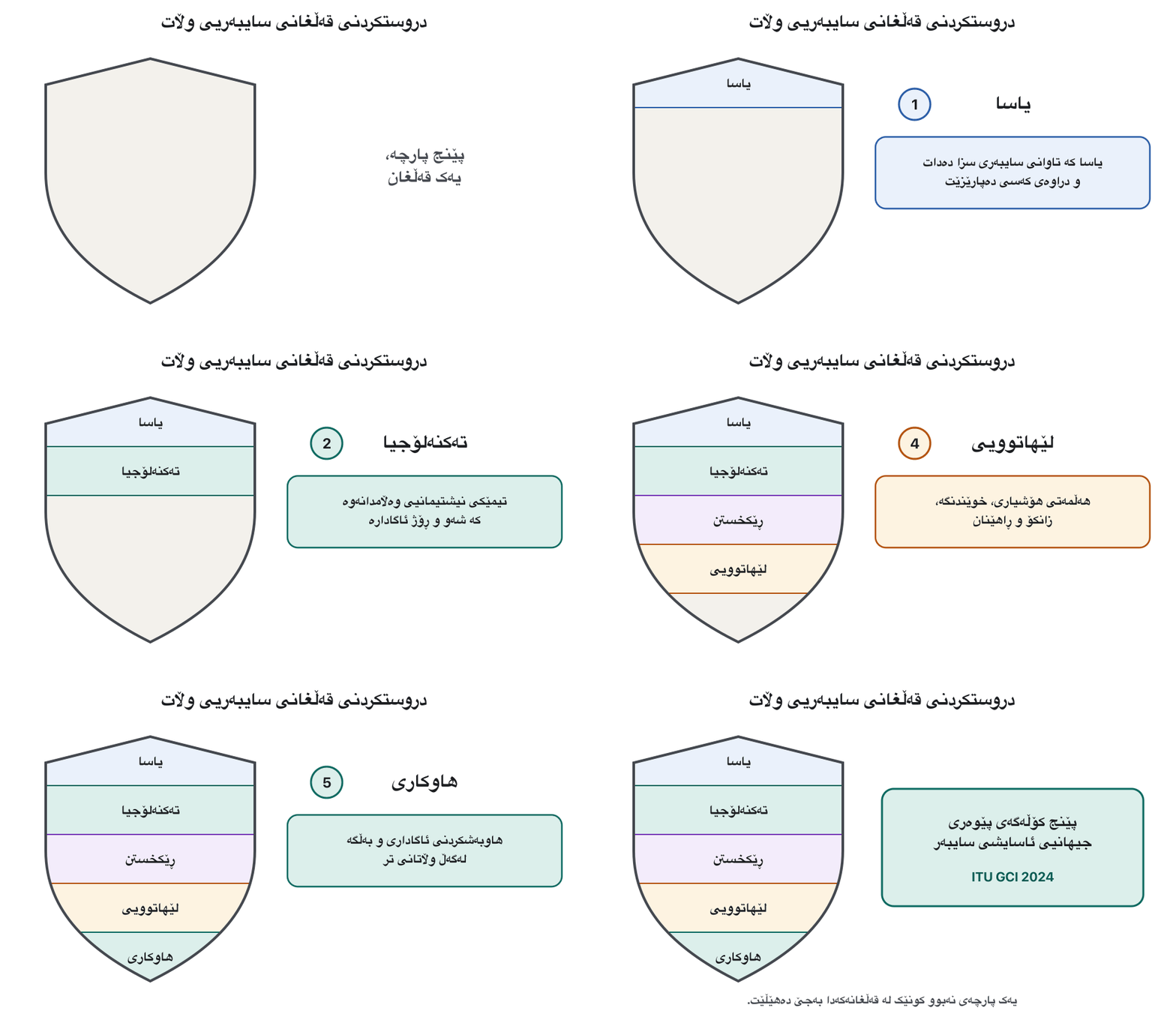
Five things a country must doپێنج کار کە وڵات دەبێت بیکات
1. Legal measures: laws1. ڕێکارە یاساییەکان: یاسا
Laws must be made to punish cybercriminals, so that fewer crimes happen in the future. Good laws also protect people: data-protection laws say how personal data may be used, and breach-notification rules make organisations tell victims. Laws only work when people are allowed to report, police and courts know the technology, and other countries can be asked for help.
پێویستە یاسا بۆ سزادانی دابنرێت، بۆ ئەوەی لە داهاتوودا تاوانی کەمتر ڕووبدات. یاسای باش خەڵکیش دەپارێزێت: یاساکانی پاراستنی دەڵێن کەسی چۆن بەکار دەهێنرێت، هەروەها یاساکانی ڕێکخراوەکان ناچار دەکەن بە قوربانییەکان بڵێن. یاسا تەنها کاتێک کار دەکات کە خەڵک بتوانن ڕاپۆرت بکەن، پۆلیس و دادگاکان تەکنەلۆجیاکە بناسن و بتوانرێت داوای یارمەتی لە وڵاتانی تر بکرێت.
The legal situation at home, as of October 2026: Iraq has no dedicated cybercrime law in force. Drafts have been debated since 2011 (one was paused in 2021 after warnings that its vague wording could punish free expression), and a new Combating Cybercrimes Bill had its first reading in parliament on 6 July 2026 but had not passed by October 2026. Meanwhile courts use older general laws, mainly the Penal Code of 1969. The Kurdistan Region applies its Law No. 6 of 2008 on preventing the misuse of telecommunication devices. Details and sources: The law at home and the bill's long history.
دۆخی یاسایی لە ناوخۆدا، تا تشرینی یەکەمی 2026: عێراق هیچ یاسایەکی تایبەتی لە کاردا نییە. لە 2011ـەوە پڕۆژەیاسا گفتوگۆیان لەسەر دەکرێت (یەکێکیان لە 2021دا ڕاگیرا دوای ئاگادارکردنەوە لەوەی دەقە ناڕوونەکەی دەتوانێت ئازادیی ڕادەربڕین سزا بدات)، هەروەها پڕۆژەیاسایەکی نوێ بە ناوی بەرەنگاربوونەوەی لە 6ی تەممووزی 2026دا یەکەم خوێندنەوەی لە پەرلەمان بۆ کرا، بەڵام تا تشرینی یەکەمی 2026 پەسەند نەکرابوو. لەم نێوانەدا دادگاکان یاسا گشتییە کۆنترەکان بەکار دەهێنن، بە تایبەتی یاسای سزادانی 1969. هەرێمی کوردستان یاسای ژمارە 6ی ساڵی 2008 بۆ ڕێگریکردن لە خراپ بەکارهێنانی جێبەجێ دەکات. وردەکاری و سەرچاوەکان: یاسا لە ناوخۆدا و مێژووە درێژەکەی پڕۆژەیاساکە.
Five things a country must doپێنج کار کە وڵات دەبێت بیکات
2. Technical measures: teams on watch2. ڕێکارە تەکنیکییەکان: تیمی ئاگادار
The report asks for a defence community: competent groups and teams that watch systems 24 hours a day, 7 days a week and stop threats and attacks. It also asks for technology development: money for equipment that detects and prevents cyberattacks, especially in sensitive places such as military and health facilities. The presentation adds better network and system security.
ڕاپۆرتەکە داوای کۆمەڵەیەکی بەرگریی دەکات: گرووپ و تیمی لێهاتوو کە 24 کاتژمێر لە ڕۆژدا، 7 ڕۆژ لە هەفتەدا چاودێریی سیستەمەکان دەکەن و و ڕادەگرن. هەروەها داوای پەرەپێدانی تەکنەلۆجیا دەکات: پارە بۆ ئەو ئامێرانەی دەدۆزنەوە و ڕێیان لێ دەگرن، بەتایبەتی لە شوێنە هەستیارەکانی وەک دامەزراوە سەربازی و تەندروستییەکان. پێشکەشکردنەکە باشتری و سیستەم زیاد دەکات.
National CERTs: the country’s fire brigadeCERTـە نیشتیمانییەکان: ئاگرکوژێنەوەی وڵات
The usual name for the national team is a CERT (Computer Emergency Response Team) or CSIRT (Computer Security Incident Response Team). A national CERT receives reports of incidents and vulnerabilities, publishes warnings, helps victims respond — especially critical-infrastructure operators — and talks to the CERTs of other countries. The first CERT was set up in 1988 after the Morris worm; since 1990 such teams meet in FIRST, their global forum. ITU counted 139 countries with an active national response team in 2024, up from 109 in 2021. Iraq's national team is IQ-CERT (Iraq Cyber Event Response Team), which the NCSI lists as the country's incident-response team.
ناوی باوی تیمی نیشتیمانی (تیمی وەڵامدانەوەی فریاکەوتنی ) یان CSIRT (تیمی وەڵامدانەوەی ). CERTـێکی نیشتیمانی ڕاپۆرتی ڕووداو و وەردەگرێت، ئاگاداری بڵاو دەکاتەوە، یارمەتیی قوربانییەکان دەدات وەڵام بدەنەوە — بەتایبەتی بەڕێوەبەرانی — و لەگەڵ CERTـی وڵاتانی تر قسە دەکات. یەکەم CERT لە 1988دا دوای Morris دامەزرا؛ لە 1990ـەوە ئەم تیمانە لە FIRSTدا کۆ دەبنەوە، کە کۆڕی جیهانییانە. ITU لە 2024دا 139 وڵاتی هەژمار کرد کە تیمێکی نیشتیمانیی چالاکی وەڵامدانەوەیان هەیە، بەراورد بە 109 لە 2021دا. تیمی نیشتیمانیی عێراق IQ-CERTـە (تیمی وەڵامدانەوەی ڕووداوە سایبەرییەکانی عێراق)، کە NCSI وەک تیمی وڵات ڕیزی دەکات.
A team that receives reports of cyber incidents and , helps victims respond and shares warnings. Many countries have a national CERT, which can also pass a researcher's report to an organisation that has no security contact.
تیمێکە کە ڕاپۆرتی ڕووداوە سایبەرییەکان و وەردەگرێت، یارمەتیی قوربانییان دەدات بۆ وەڵامدانەوە و ئاگادارکردنەوە بڵاو دەکاتەوە. زۆر وڵات CERTـی نیشتیمانییان هەیە کە دەتوانێت ڕاپۆرتی توێژەرێک بگەیەنێتە دامەزراوەیەک کە هیچ پەیوەندییەکی بۆ کێشەکانی ئاسایش نییە.
Five things a country must doپێنج کار کە وڵات دەبێت بیکات
3. Organisational measures: a plan and a leader3. ڕێکارە ڕێکخستنییەکان: پلانێک و سەرکردەیەک
A country also needs someone in charge and a written plan. The presentation names a defence unit, partnering with local groups to protect critical infrastructure and managing risks effectively. In practice this means a national cybersecurity strategy (goals, who does what, a budget), an agency that leads, and a list of the critical systems that must be protected first. ITU counted 132 countries with a national strategy in 2024 (107 in 2021).
وڵات هەروەها پێویستی بە بەرپرسێک و پلانێکی نووسراو هەیە. پێشکەشکردنەکە ناوی یەکەیەکی بەرگریی ، هاوبەشی لەگەڵ گرووپە ناوخۆییەکان بۆ پاراستنی و بەڕێوەبردنی کاریگەری دەهێنێت. لە ڕاستیدا ئەمە واتە ستراتیژییەکی نیشتیمانیی (ئامانج، کێ چی دەکات، بودجە)، دەزگایەک کە سەرکردایەتی دەکات و لیستێکی ئەو سیستەمە گرنگانەی سەرەتا دەبێت بپارێزرێن. ITU لە 2024دا 132 وڵاتی هەژمار کرد کە ستراتیژییەکی نیشتیمانییان هەیە (107 لە 2021دا).
Iraq, according to the evidence listed by the NCSI index, has an Iraqi Cybersecurity Strategy 2022–2025, a national strategy for the security of critical infrastructure (2020) and national information security and data-sharing policies and standards (2020).
عێراق، بەپێی ئەو بەڵگانەی پێوەری NCSI ڕیزیان دەکات، ستراتیژیی عێراق 2022–2025، ستراتیژییەکی نیشتیمانی بۆ (2020) و سیاسەت و ستانداردە نیشتیمانییەکانی و هاوبەشکردنی (2020)ـی هەیە.
Five things a country must doپێنج کار کە وڵات دەبێت بیکات
4. Capacity development: awareness and skills4. پەرەپێدانی توانا: هۆشیاری و لێهاتوویی
The report asks governments to educate the public about protecting themselves online, through awareness campaigns: create strong passwords, avoid opening suspicious links and recognise spyware. The Kurdish version of the report says the same through the education sector, and adds learning to recognise fake news. Both ideas belong here. The presentation adds training.
ڕاپۆرتەکە داوا لە حکومەتەکان دەکات خەڵک لەسەر پاراستنی خۆیان لە ئۆنلایندا فێر بکەن، لە ڕێگەی هەڵمەتی هۆشیارییەوە: بەهێز دروست بکەن، گوماناوی مەکەنەوە و بناسنەوە. وەشانە کوردییەکەی ڕاپۆرتەکە هەمان شت لە ڕێگەی کەرتی پەروەردەوە دەڵێت و فێربوونی ناسینەوەی زڕهەواڵ () زیاد دەکات. هەردوو بیرۆکەکە سەر بەم بەشەن. پێشکەشکردنەکە ڕاهێنان زیاد دەکات.
Capacity also means experts: university programmes, research and professional training. ITU found that 152 countries ran awareness campaigns in 2024, but capacity development and technical measures were the weakest pillars worldwide. In Iraq the NCSI lists, among other evidence, cybersecurity degrees at the University of Technology in Baghdad and at the University of Kurdistan Hewlêr, and computer subjects in secondary-school curricula.
توانا هەروەها واتای پسپۆڕ: بەرنامەی زانکۆ، توێژینەوە و ڕاهێنانی پیشەیی. ITU دۆزییەوە کە 152 وڵات لە 2024دا هەڵمەتی هۆشیارییان ئەنجام دا، بەڵام پەرەپێدانی توانا و ڕێکارە تەکنیکییەکان لاوازترین کۆڵەگەکان بوون لە جیهاندا. لە عێراقدا NCSI، لە نێو بەڵگەکانی تردا، بڕوانامەی لە زانکۆی تەکنەلۆجیا لە بەغدا و لە زانکۆی کوردستان هەولێر و بابەتی لە پرۆگرامی خوێندنی ناوەندیدا ڕیز دەکات.
Five things a country must doپێنج کار کە وڵات دەبێت بیکات
5. Cooperation: no country is safe alone5. هاوکاری: هیچ وڵاتێک بە تەنها سەلامەت نییە
problems are global: an attack can start on one continent, use servers on a second and hit victims on a third. So countries must work together; international cooperation can reduce or prevent cyberattacks. The report's conclusion adds that working with international organisations and sharing information about threats builds a stronger defence.
کێشە جیهانین: دەکرێت لە کیشوەرێکەوە دەست پێ بکات، لە کیشوەرێکی دووەمدا بەکار بهێنێت و لە قوربانییەکانی کیشوەرێکی سێیەم بدات. بۆیە وڵاتان دەبێت پێکەوە کار بکەن؛ هاوکاریی نێودەوڵەتی دەتوانێت کەم بکاتەوە یان ڕێیان لێ بگرێت. ئەنجامی ڕاپۆرتەکە زیاد دەکات کە کارکردن لەگەڵ ڕێکخراوە نێودەوڵەتییەکان و هاوبەشکردنی بەرگرییەکی بەهێزتر بونیاد دەنێت.
- Response teams talk to each other — national CERTs share warnings through FIRST and regional groups.
- Treaties let police ask other countries for evidence — for example the Budapest Convention, which Iraq has not joined.
- Shared threat intelligence — one country's warning protects many others.
- تیمەکانی وەڵامدانەوە قسە لەگەڵ یەکتر دەکەن — CERTـە نیشتیمانییەکان ئاگادارییەکان لە ڕێگەی FIRST و گرووپە هەرێمییەکانەوە هاوبەش دەکەن.
- پەیماننامەکان ڕێگە بە پۆلیس دەدەن داوای بەڵگە لە وڵاتانی تر بکات — بۆ نموونە پەیماننامەی بوداپێست، کە عێراق بەشداری تێدا نەکردووە.
- هاوبەش — ئاگادارکردنەوەی وڵاتێک زۆر وڵاتی تر دەپارێزێت.
Cooperation was the most common measure in ITU's 2024 survey: 166 countries (92%) had at least one international cooperation agreement or mechanism.
هاوکاری باوترین ڕێکار بوو لە ڕاپرسیی 2024ی ITUدا: 166 وڵات (92%) لانیکەم یەک ڕێککەوتن یان میکانیزمی هاوکاریی نێودەوڵەتییان هەبوو.
Measuring countries (1): ITU's Global Cybersecurity Indexپێوانەکردنی وڵاتان (1): پێوەری جیهانیی ئاسایشی سایبەری ITU
The Global Cybersecurity Index (GCI) of the ITU measures how committed countries are to cybersecurity. Its fifth edition, GCI 2024, was published on 12 September 2024 and assessed 194 countries. Governments answer a questionnaire through a national focal point, and the answers and evidence are scored across the five pillars — legal, technical, organisational, capacity development and cooperation — each worth up to 20 points, so the total is out of 100.
پێوەری جیهانیی (GCI)ـی ITU دەپێوێت وڵاتان چەند پابەندن بە . پێنجەمین وەشانی، GCI 2024، لە 12ـی ئەیلوولی 2024دا بڵاو کرایەوە و 194 وڵاتی هەڵسەنگاند. حکومەتەکان لە ڕێگەی خاڵێکی پەیوەندیی نیشتیمانییەوە وەڵامی پرسیارنامەیەک دەدەنەوە. پاشان وەڵام و بەڵگەکان لەسەر پێنج کۆڵەگەکە نمرەیان پێ دەدرێت — یاسایی، تەکنیکی، ڕێکخستنی، پەرەپێدانی توانا و هاوکاری — هەریەکەیان تا 20 خاڵ، بۆیە کۆی گشتی لە 100ـە.
Instead of ranking countries 1st, 2nd, 3rd…, GCI 2024 places them in five tiers, because small score differences between countries do not mean much:
GCI 2024 لەبری ڕیزکردنی وڵاتان بە یەکەم، دووەم، سێیەم…، لە پێنج پلەدا دایاندەنێت، چونکە جیاوازیی بچووکی نمرە لە نێوان وڵاتاندا واتایەکی زۆری نییە:
| Tierپلە | Nameناو | Score bandناوەندی نمرە | Countriesوڵاتان |
|---|---|---|---|
| 1 | Role-modellingنموونەی پێشەنگ | 95–100 | 46 |
| 2 | Advancingپێشکەوتوو | 85–95 | 29 |
| 3 | Establishingدامەزرێنەر | 55–85 | 49 |
| 4 | Evolvingلە گەشەدا | 20–55 | 56 |
| 5 | Buildingبونیادنەر | 0–20 | 14 |
- Legal measures were the strongest pillar for most countries: 177 had rules on personal data, privacy or breach notification in force or in progress.
- Capacity development and technical measures were the weakest.
- The global average score was 65.7 out of 100.
- ڕێکارە یاسایییەکان بۆ زۆربەی وڵاتان بەهێزترین کۆڵەگە بوون: 177 وڵات یاسایان لەسەر کەسی، تایبەتمەندی یان هەبوو، لە کاردا یان لە ئامادەکردندا.
- پەرەپێدانی توانا و ڕێکارە تەکنیکییەکان لاوازترین بوون.
- تێکڕای نمرەی جیهانی 65.7 لە 100 بوو.
Measuring countries (1): ITU's Global Cybersecurity Indexپێوانەکردنی وڵاتان (1): پێوەری جیهانیی ئاسایشی سایبەری ITU
Iraq in the GCI 2024: Tier 4, 'Evolving'عێراق لە GCI 2024دا: پلەی 4، «لە گەشەدا»
ITU's country profile places Iraq in Tier 4 'Evolving' — with most Arab states. Its five pillar scores, each out of 20, are shown below. The strongest is organisational measures (strategies and leadership); ITU lists the other four as areas for growth.
پرۆفایلی وڵاتی ITU عێراق لە پلەی 4ـی «لە گەشەدا» دادەنێت — لەگەڵ زۆربەی وڵاتانی عەرەبی. پێنج نمرەی کۆڵەگەکانی، هەریەکەیان لە 20، لە خوارەوە پیشان دراون. بەهێزترینیان ڕێکارە ڕێکخستنییەکانـە (ستراتیژی و سەرکردایەتی)؛ ITU چوارەکەی تر وەک بواری گەشەکردن ڕیز دەکات.
Adding the five pillars gives Iraq's total GCI 2024 score. The Internet Society's Pulse page for Iraq reports the same 53.07.
کۆکردنەوەی پێنج کۆڵەگەکە کۆی نمرەی عێراق لە GCI 2024دا دەدات. پەڕەی Pulseـی Internet Society بۆ عێراق هەمان 53.07 ڕادەگەیەنێت.
53.07 lies near the top of Tier 4 (20 to 55): about 2 more points would reach the Tier 3 band. For comparison, eight Arab states — among them Egypt, Qatar, Saudi Arabia and the United Arab Emirates — reached Tier 1.
53.07 نزیک سەرەوەی پلەی 4ـە (20 تا 55): نزیکەی 2 خاڵی تر دەیگەیەنێتە ناوەندی پلەی 3. بۆ بەراورد، هەشت وڵاتی عەرەبی — لەوانە میسر، قەتەر، سعودیە و ئیمارات — گەیشتنە پلەی 1.
Measuring countries (2): the National Cyber Security Indexپێوانەکردنی وڵاتان (2): پێوەری نیشتیمانیی ئاسایشی سایبەر
The National Cyber Security Index (NCSI) is made by the e-Governance Academy, a foundation in Estonia. It measures how prepared a country is to prevent threats and manage incidents, using only public evidence: laws, official documents and official websites. It has 3 categories, 12 capacities and 49 indicators. The score is the percentage of the maximum points a country earns. The NCSI is updated continuously — whenever new evidence is accepted — so always quote it with a date.
پێوەری نیشتیمانیی (NCSI) لەلایەن ئەکادیمیای ئەلیکترۆنیی حوکمڕانییەوە دروست دەکرێت، دامەزراوەیەک لە ئیستۆنیا. دەپێوێت وڵاتێک چەند ئامادەیە بۆ ڕێگرتن لە و بەڕێوەبردنی ڕووداوەکان، تەنها بە بەکارهێنانی بەڵگەی گشتی: یاسا، بەڵگەنامەی فەرمی و فەرمی. 3 پۆل، 12 توانا و 49 نیشاندەری هەیە. نمرەکە ڕێژەی سەدیی ئەو خاڵانەیە کە وڵاتێک لە کۆی زۆرترین خاڵ بەدەستی دەهێنێت. NCSI بەردەوام نوێ دەکرێتەوە — هەر کاتێک بەڵگەی نوێ پەسەند بکرێت — بۆیە هەمیشە لەگەڵ بەرواردا بیهێنەرەوە.
Iraq in the NCSI (version of 15 December 2025, still current on 25 October 2026): rank 129th, score 24.17 — that is 29 of 120 points.
عێراق لە NCSIدا (وەشانی 15ـی کانوونی یەکەمی 2025، کە لە 25ـی تشرینی یەکەمی 2026دا هێشتا دوایین وەشانە): پلەی 129، نمرەی 24.17 — واتە 29 خاڵ لە 120.
Iraq's NCSI score as a percentage of the maximum points.
نمرەی NCSIـی عێراق وەک ڕێژەی سەدی لە زۆرترین خاڵ.
Measuring countries (2): the National Cyber Security Indexپێوانەکردنی وڵاتان (2): پێوەری نیشتیمانیی ئاسایشی سایبەر
Iraq's twelve NCSI capacitiesدوازدە تواناکەی عێراق لە NCSIدا
Iraq's points in each of the twelve capacities:
خاڵەکانی عێراق لە هەر یەکێک لە دوازدە تواناکەدا:
| Capacityتوانا | Iraq's pointsخاڵی عێراق | Maximumزۆرترین |
|---|---|---|
| Cybersecurity policy developmentپەرەپێدانی سیاسەتی | 3 | 15 |
| Global cybersecurity contributionبەشداریی جیهانی لە | 0 | 6 |
| Education and professional developmentپەروەردە و گەشەی پیشەیی | 8 | 10 |
| Cybersecurity research and developmentتوێژینەوە و پەرەپێدانی | 2 | 4 |
| Protection of critical information infrastructureپاراستنی | 6 | 12 |
| Protection of digital enablers (e.g. e-signatures)پاراستنی ئامرازە دیجیتاڵییەکان (وەک واژووی ئەلیکترۆنی) | 2 | 12 |
| threat analysis and awareness raisingشیکردنەوەی و بەرزکردنەوەی هۆشیاری | 3 | 12 |
| Protection of personal dataپاراستنی کەسی | 0 | 4 |
| Cyber incident response سایبەری | 3 | 14 |
| crisis managementبەڕێوەبردنی قەیرانی | 0 | 9 |
| Fight against cybercrimeبەرەنگاربوونەوەی | 0 | 16 |
| Military defenceبەرگریی سەربازی | 2 | 6 |
| Totalکۆی گشتی | 29 | 120 |
The evidence behind the points includes IQ-CERT, the Iraqi Cybersecurity Strategy 2022–2025, the critical-infrastructure strategy (2020) and the Electronic Signature and Electronic Transactions Law No. 78 of 2012. Four capacities have zero points: global contribution, personal data protection, crisis management and the fight against cybercrime — which matches the missing cybercrime law and the missing data-protection law.
ئەو بەڵگانەی لە پشت خاڵەکانن IQ-CERT، ستراتیژیی عێراق 2022–2025، ستراتیژیی (2020) و یاسای واژووی ئەلیکترۆنی و مامەڵە ئەلیکترۆنییەکان ژمارە 78ی ساڵی 2012 دەگرنەوە. چوار توانا سفر خاڵیان هەیە: بەشداریی جیهانی، پاراستنی کەسی، بەڕێوەبردنی قەیران و بەرەنگاربوونەوەی — ئەمەش لەگەڵ نەبوونی یاسای و نەبوونی یاسای پاراستنی دەگونجێت.
Measuring countries (2): the National Cyber Security Indexپێوانەکردنی وڵاتان (2): پێوەری نیشتیمانیی ئاسایشی سایبەر
Two indices, two different numbersدوو پێوەر، دوو ژمارەی جیاواز
The group's presentation said: 'According to the ITU, Iraq and Kurdistan are ranked 129th among 193 countries in tier four with a 20.71 score.' That sentence mixes the two indices. Put side by side:
پێشکەشکردنەکەی گرووپەکە گوتی: «بەپێی ITU، عێراق و کوردستان لە نێو 193 وڵاتدا پلەی 129ـیان هەیە لە پلەی چوارەمدا بە نمرەی 20.71.» ئەو ڕستەیە دوو پێوەرەکە تێکەڵ دەکات. بە تەنیشت یەکەوە:
| Questionپرسیار | ITU GCI 2024پێوەری ITU (GCI 2024) | NCSIپێوەری NCSI |
|---|---|---|
| Made byدروستکەر | ITU (UN agency)ITU (دەزگای نەتەوە یەکگرتووەکان) | e-Governance Academy (Estonia)ئەکادیمیای ئەلیکترۆنیی حوکمڕانی (ئیستۆنیا) |
| Evidenceبەڵگە | Government questionnaire + evidenceپرسیارنامەی حکومەت + بەڵگە | Public evidence onlyتەنها بەڵگەی گشتی |
| Result formشێوەی ئەنجام | Tiers (no rank numbers)پلە (بێ ژمارەی ڕیزبەندی) | Rank and percentageڕیزبەندی و ڕێژەی سەدی |
| Updatedنوێکردنەوە | Editions (latest 2024; a sixth edition has been in preparation since April 2026)وەشان (دوایینیان 2024؛ وەشانی شەشەم لە نیسانی 2026ـەوە ئامادە دەکرێت) | Continuouslyبەردەوام |
| Iraqعێراق | Tier 4 'Evolving', 53.07 / 100پلەی 4 «لە گەشەدا»، 53.07 / 100 | 129th, 24.17 (15 Dec 2025)پلەی 129، 24.17 (15ـی کانوونی یەکەمی 2025) |
Why the two numbers differبۆچی دوو ژمارەکە جیاوازن
Why are the numbers so different (53 and 24)? The two indices ask different questions and count different evidence. The NCSI, for example, gives no points for anything that is not published, and gives many points to a cybercrime law and a crisis-management system, which Iraq does not have. Neither number is 'the truth': read each one with its method and date.
بۆچی ژمارەکان ئەوەندە جیاوازن (53 و 24)؟ دوو پێوەرەکە پرسیاری جیاواز دەکەن و بەڵگەی جیاواز دەژمێرن. بۆ نموونە NCSI هیچ خاڵێک بۆ شتێک نادات کە بڵاو نەکرابێتەوە، بەڵام خاڵێکی زۆر بە یاسای و سیستەمی بەڕێوەبردنی قەیران دەدات، کە عێراق نییەتی. هیچ کام لە دوو ژمارەکە «ڕاستی»ـی تەواو نییە: هەریەکەیان لەگەڵ ڕێگا و بەروارەکەیدا بخوێنەرەوە.
Iraq and the Kurdistan Region todayعێراق و هەرێمی کوردستان ئەمڕۆ
Putting the two indices and the legal facts together gives a picture of where things stand in late 2026:
کۆکردنەوەی دوو پێوەرەکە و ڕاستییە یاساییەکان وێنەیەک دەدات لە دۆخەکە لە کۆتایی 2026دا:
| Already in placeئێستا هەیە | Still missingهێشتا نییە |
|---|---|
| A national incident-response team (IQ-CERT)تیمێکی نیشتیمانیی (IQ-CERT) | A dedicated cybercrime law in force (drafts since 2011; a new bill had its first reading in July 2026)یاسایەکی تایبەتی لە کاردا (پڕۆژەیاسا لە 2011ـەوە؛ پڕۆژەیاسایەکی نوێ لە تەممووزی 2026دا یەکەم خوێندنەوەی بۆ کرا) |
| A national cybersecurity strategy 2022–2025 and a critical-infrastructure strategy (2020)ستراتیژییەکی نیشتیمانیی 2022–2025 و ستراتیژییەکی (2020) | A personal data protection lawیاسایەکی پاراستنی کەسی |
| An e-signature and e-transactions law (No. 78 of 2012)یاسای واژوو و مامەڵەی ئەلیکترۆنی (ژمارە 78ی 2012) | A national crisis-management systemسیستەمێکی نیشتیمانی بۆ بەڕێوەبردنی قەیرانی |
| University degrees in cybersecurity; computer subjects in schoolsبڕوانامەی زانکۆ لە ؛ بابەتی لە خوێندنگەکاندا | A visible role in international cooperation (NCSI: 0 of 6)ڕۆڵێکی دیار لە هاوکاریی نێودەوڵەتیدا (NCSI: 0 لە 6) |
| In the Kurdistan Region: Law No. 6 of 2008 on the misuse of telecommunication devicesلە هەرێمی کوردستاندا: یاسای ژمارە 6ی 2008 دەربارەی خراپ بەکارهێنانی | A separate assessment of the Kurdistan Region by either indexهەڵسەنگاندنێکی جیای هەرێمی کوردستان لەلایەن هەر یەکێک لە دوو پێوەرەکەوە |
The report's conclusionئەنجامی ڕاپۆرتەکە
The report ends where it began: cybersecurity is part of national security, and countries and their leaders must take strong measures to protect their systems and data. This can be done by improving education, teaching people about online safety and raising awareness.
ڕاپۆرتەکە لەو شوێنە کۆتایی دێت کە لێوەی دەستی پێکرد: بەشێکە لە . وڵاتان و سەرکردەکانیان دەبێت هەنگاوی بەهێز بنێن بۆ پاراستنی سیستەم و خۆیان. ئەمە دەکرێت لە ڕێگەی باشترکردنی پەروەردە، فێرکردنی خەڵک لەسەر سەلامەتیی ئۆنلاین و بەرزکردنەوەی هۆشیاری.
Governments should also invest in advanced tools to detect and prevent cyberattacks, work with international organisations and share information about threats. Doing so protects not only a nation's sensitive data but also the safety and well-being of its citizens in the digital world.
حکومەتەکان هەروەها دەبێت وەبەرهێنان لە ئامرازی پێشکەوتوو بۆ دۆزینەوە و ڕێگرتن لە بکەن، لەگەڵ ڕێکخراوە نێودەوڵەتییەکان کار بکەن و هاوبەش بکەن. ئەم کارانە نەک تەنها هەستیاری گەلێک دەپارێزن، بەڵکو سەلامەتی و خۆشگوزەرانیی هاووڵاتیانیشی لە جیهانی دیجیتاڵیدا دەپارێزن.
The presentation closes on a hopeful note. As smartphones, computers and other devices spread, national security faces new threats every day. But with strong strategies, better defences and better security in our systems and organisations, we can protect our digital future. Challenges will always exist, and so will chances to grow; the key is to stay prepared, aware and responsive to new threats.
پێشکەشکردنەکە بە هیوایەکەوە کۆتایی دێت. بە بڵاوبوونەوەی ، و ئامێرەکانی تر، هەموو ڕۆژێک ڕووبەڕووی نوێ دەبێتەوە. بەڵام بە ستراتیژیی بەهێز، بەرگریی باشتر و باشتر لە سیستەم و ڕێکخراوەکانماندا، دەتوانین داهاتووی دیجیتاڵیمان بپارێزین. ئاستەنگ هەمیشە دەبن، هەروەها دەرفەتی گەشەکردنیش؛ کلیلەکە ئەوەیە ئامادە، ئاگادار و وەڵامدەرەوە بمێنینەوە بەرامبەر .
Judging the sourcesهەڵسەنگاندنی سەرچاوەکان
A good report is only as good as its sources. The report and the presentation used these references — and checking them is a useful skill in itself:
ڕاپۆرتێکی باش تەنها هێندەی سەرچاوەکانی باشە. ڕاپۆرتەکە و پێشکەشکردنەکە ئەم سەرچاوانەیان بەکار هێنا — هەروەها پشکنینیان خۆی لە خۆیدا لێهاتووییەکی بەسوودە:
| Sourceسەرچاوە | Kindجۆر | How far to trust itتا چەند متمانەی پێ بکرێت |
|---|---|---|
| ITU, Global Cybersecurity Index 2024ITU، پێوەری جیهانیی 2024 | UN agency reportڕاپۆرتی دەزگای نەتەوە یەکگرتووەکان | High — the official source for the GCIبەرز — سەرچاوەی فەرمیی GCI |
| NCSI index (e-Governance Academy)پێوەری NCSI (ئەکادیمیای ئەلیکترۆنیی حوکمڕانی) | Index with public evidenceپێوەر بە بەڵگەی گشتی | High — but give the date; it changesبەرز — بەڵام بەروار بنووسە؛ دەگۆڕێت |
| CSIS, Significant Cyber IncidentsCSIS، ڕووداوە سایبەرییە گرنگەکان | Research centre's dated timelineهێڵی کاتیی بەرواردار لە سەنتەرێکی توێژینەوە | Good starting point; check each incidentخاڵی دەستپێکی باش؛ هەر ڕووداوێک بپشکنە |
| BleepingComputer (MoneyGram article, October 2024)BleepingComputer (وتاری MoneyGram، تشرینی یەکەمی 2024) | Specialist news site هەواڵی پسپۆڕ | Good for facts and datesباش بۆ ڕاستی و بەروار |
| Nissenbaum (2005), Where computer security meets national securityNissenbaum (2005)، کاتێک و یەکتر دەگرنەوە | Academic articleوتاری ئەکادیمی | Good for ideas; older than today's threatsباش بۆ بیرۆکە؛ لە ئەمڕۆ کۆنترە |
| ThoughtCo and ScienceDirect topic pages; Fortian blogپەڕەکانی ThoughtCo و ScienceDirect؛ بلۆگی Fortian | Explainers and summariesڕوونکردنەوە و پوختە | Fine for definitions; prefer the original sourceبۆ پێناسە باشە؛ سەرچاوە ڕەسەنەکە باشترە |
| 'Relationship of cybersecurity and national security: Iraq case study' (2020)«پەیوەندیی و : لێکۆڵینەوەی عێراق» (2020) | Paper in a pharmacy journalتوێژینەوە لە گۆڤارێکی دەرمانسازیدا | Low — an odd venue for this topic; use ITU and NCSI for Iraq insteadنزم — شوێنێکی نامۆیە بۆ ئەم بابەتە؛ لەبری ئەوە ITU و NCSI بۆ عێراق بەکار بهێنە |
Judging the sourcesهەڵسەنگاندنی سەرچاوەکان
Read the sources you citeئەو سەرچاوانە بخوێنەرەوە کە ئاماژەیان پێ دەدەیت
Common mistakesهەڵە باوەکان
- 'ITU ranks Iraq 129th.' — ITU gives tiers (Iraq: Tier 4, 53.07); 129th is the NCSI rank.
- Quoting an NCSI score without a date. — It changes whenever new evidence is accepted.
- 'Iraq and Kurdistan are ranked…' — Neither index assesses the Kurdistan Region separately.
- 'No cybercrime law means hacking is legal.' — General criminal laws still apply, and the Kurdistan Region has its 2008 law.
- Thinking one pillar is enough. — Laws without trained people, or teams without a strategy, leave holes in the shield.
- Trusting every reference equally. — Prefer official and specialist sources; check odd venues.
- «ITU پلەی 129 بە عێراق دەدات.» — ITU پلە دەدات (عێراق: پلەی 4، 53.07)؛ 129 ڕیزبەندیی NCSIـە.
- هێنانەوەی نمرەی NCSI بەبێ بەروار. — هەر کاتێک بەڵگەی نوێ پەسەند بکرێت دەگۆڕێت.
- «عێراق و کوردستان پلەیان…» — هیچ کام لە پێوەرەکان هەرێمی کوردستان بە جیا هەڵناسەنگێنێت.
- «نەبوونی یاسای واتە هاککردن یاساییە.» — یاسا تاوانکارییە گشتییەکان هێشتا جێبەجێ دەکرێن، هەروەها هەرێمی کوردستان یاسای 2008ی هەیە.
- بیرکردنەوە لەوەی یەک کۆڵەگە بەسە. — یاسا بەبێ خەڵکی ڕاهێنراو، یان تیم بەبێ ستراتیژی، کون لە قەڵغانەکەدا بەجێ دەهێڵن.
- متمانەکردن بە هەموو سەرچاوەیەک بە یەک ئەندازە. — سەرچاوەی فەرمی و پسپۆڕ باشترن؛ شوێنی بڵاوکردنەوەی نامۆ بپشکنە.
Exercisesڕاهێنانەکان
Put each measure into one of ITU's five pillars: (a) a TV campaign about fake SMS messages; (b) a law on personal data; (c) a national CERT that works 24/7; (d) an agreement to share threat information with neighbouring countries; (e) a national cybersecurity strategy with a budget.
هەر ڕێکارێک بخە ناو یەکێک لە پێنج کۆڵەگەکەی ITU: (أ) هەڵمەتێکی تەلەفزیۆنی دەربارەی ساختە؛ (ب) یاسایەک دەربارەی کەسی؛ (ج) CERTـێکی نیشتیمانی کە شەو و ڕۆژ کار دەکات؛ (د) ڕێککەوتنێک بۆ هاوبەشکردنی لەگەڵ وڵاتانی دراوسێ؛ (هـ) ستراتیژییەکی نیشتیمانیی بە بودجەوە.
Show answerوەڵامەکە پیشان بدە
- (a) Capacity development; (b) Legal; (c) Technical; (d) Cooperation; (e) Organisational.
- (أ) پەرەپێدانی توانا؛ (ب) یاسایی؛ (ج) تەکنیکی؛ (د) هاوکاری؛ (هـ) ڕێکخستنی.
Using the GCI pillar scores (legal 11.21, technical 9.6, organisational 15.77, capacity development 8.38, cooperation 8.11): (a) confirm the total; (b) which pillar is weakest as a percentage of 20? (c) How many points short of the Tier 3 band (55) is Iraq?
بە بەکارهێنانی نمرەکانی کۆڵەگەکانی GCI (یاسایی 11.21، تەکنیکی 9.6، ڕێکخستنی 15.77، پەرەپێدانی توانا 8.38، هاوکاری 8.11): (أ) کۆکەی پشتڕاست بکەرەوە؛ (ب) کام کۆڵەگە وەک ڕێژەی سەدی لە 20 لاوازترینە؟ (ج) عێراق چەند خاڵی کەمە بۆ گەیشتن بە ناوەندی پلەی 3 (55)؟
Show answerوەڵامەکە پیشان بدە
Cooperation (8.11 of 20, about 41%) is the weakest, just below capacity development (8.38, about 42%). Iraq is 1.93 points below the Tier 3 band.
هاوکاری (8.11 لە 20، نزیکەی 41%) لاوازترینە، کەمێک لە خوار پەرەپێدانی تواناوە (8.38، نزیکەی 42%). عێراق 1.93 خاڵ لە خوار ناوەندی پلەی 3ـەوەیە.
Rewrite this sentence from the presentation so that it is correct: 'Depending on the ITU, Iraq and Kurdistan are ranked 129th among 193 countries in the tier four (T4) with 20.71 score performance which is low.'
ئەم ڕستەیەی پێشکەشکردنەکە دووبارە بنووسەرەوە بە شێوەیەک کە دروست بێت: «بەپێی ITU، عێراق و کوردستان لە نێو 193 وڵاتدا پلەی 129ـیان هەیە لە پلەی چوارەمدا (T4) بە نمرەی 20.71 کە نزمە.»
Show answerوەڵامەکە پیشان بدە
'In ITU's Global Cybersecurity Index 2024, Iraq is in Tier 4 (Evolving) with 53.07 out of 100. In the separate National Cyber Security Index, Iraq ranked 129th with a score of 24.17 (15 December 2025). Neither index rates the Kurdistan Region separately.'
«لە پێوەری جیهانیی ITU (2024)دا، عێراق لە پلەی 4دایە (لە گەشەدا) بە 53.07 لە 100. لە پێوەری جیاوازی نیشتیمانیی (NCSI)دا، عێراق پلەی 129ـی هەبوو بە نمرەی 24.17 (15ـی کانوونی یەکەمی 2025). هیچ کام لە دوو پێوەرەکە هەرێمی کوردستان بە جیا هەڵناسەنگێنێت.»
Summaryپوختە
- A country, like a house, needs locks (laws), cameras (monitoring), guards (response teams), a careful family (aware citizens) and good neighbours (cooperation).
- The report's five steps and the presentation's five strategies match ITU's five pillars: legal, technical, organisational, capacity development, cooperation.
- A national CERT/CSIRT receives reports, warns, helps victims and works with other countries; Iraq's is IQ-CERT.
- ITU GCI 2024: tiers, not ranks; Iraq is Tier 4 'Evolving' with 53.07/100, strongest in organisational measures.
- NCSI: public evidence, continuous updates; Iraq 129th with 24.17 (15 Dec 2025); zero in cybercrime, data protection, crisis management and global contribution.
- No dedicated cybercrime law is in force in Iraq (as of October 2026; a new bill had its first reading on 6 July 2026); the Kurdistan Region applies Law No. 6 of 2008.
- Education, awareness, detection tools and international information sharing — and checked sources — are the report's way forward.
- وڵات، وەک خانوو، پێویستی بە قفڵ (یاسا)، کامێرا (چاودێری)، پاسەوان (تیمی وەڵامدانەوە)، خێزانێکی ئاگادار (هاووڵاتیی ئاگادار) و دراوسێی باش (هاوکاری) هەیە.
- پێنج هەنگاوەکەی ڕاپۆرت و پێنج ستراتیژییەکەی پێشکەشکردن لەگەڵ پێنج کۆڵەگەکەی ITU دەگونجێن: یاسایی، تەکنیکی، ڕێکخستنی، پەرەپێدانی توانا، هاوکاری.
- CERT/CSIRTـی نیشتیمانی ڕاپۆرت وەردەگرێت، ئاگادار دەکاتەوە، یارمەتیی قوربانییەکان دەدات و لەگەڵ وڵاتانی تر کار دەکات؛ هی عێراق IQ-CERTـە.
- GCI 2024ی ITU: پلە، نەک ڕیزبەندی؛ عێراق لە پلەی 4ـی «لە گەشەدا»یە بە 53.07/100، بەهێزترین لە ڕێکارە ڕێکخستنییەکاندا.
- NCSI: بەڵگەی گشتی، نوێکردنەوەی بەردەوام؛ عێراق پلەی 129 بە 24.17 (15ـی کانوونی یەکەمی 2025)؛ سفر لە ، پاراستنی ، بەڕێوەبردنی قەیران و بەشداریی جیهانیدا.
- لە عێراقدا هیچ یاسایەکی تایبەتی لە کاردا نییە (تا تشرینی یەکەمی 2026؛ پڕۆژەیاسایەکی نوێ لە 6ی تەممووزی 2026دا یەکەم خوێندنەوەی بۆ کرا)؛ هەرێمی کوردستان یاسای ژمارە 6ی 2008 جێبەجێ دەکات.
- پەروەردە، هۆشیاری، ئامرازی دۆزینەوە و هاوبەشکردنی نێودەوڵەتیی — لەگەڵ سەرچاوەی پشکنراو — ڕێگای پێشەوەی ڕاپۆرتەکەن.
Name ITU's five pillars.پێنج کۆڵەگەکەی ITU ناو بهێنە.
Legal, technical, organisational, capacity development and cooperation.
یاسایی، تەکنیکی، ڕێکخستنی، پەرەپێدانی توانا و هاوکاری.
What is Iraq's GCI 2024 result, and what is its NCSI result?ئەنجامی عێراق لە GCI 2024دا چییە و لە NCSIدا چییە؟
GCI 2024: Tier 4 'Evolving', 53.07/100. NCSI: 129th, 24.17 (15 December 2025).
GCI 2024: پلەی 4 «لە گەشەدا»، 53.07/100. NCSI: پلەی 129، 24.17 (15ـی کانوونی یەکەمی 2025).
What evidence does the NCSI accept?NCSI چ بەڵگەیەک پەسەند دەکات؟
Only public evidence: legal acts, official documents and official websites.
تەنها بەڵگەی گشتی: یاسا، بەڵگەنامەی فەرمی و فەرمی.
What is the name of Iraq's national response team?ناوی تیمی نیشتیمانیی وەڵامدانەوەی عێراق چییە؟
IQ-CERT (Iraq Cyber Event Response Team).
IQ-CERT (تیمی وەڵامدانەوەی ڕووداوە سایبەرییەکانی عێراق).
Lesson complete!وانەکە تەواو بوو!
Well done. Review the key terms, then go on to the next lesson.دەستخۆش. سەیرێکی زاراوە سەرەکییەکان بکەرەوە، پاشان بڕۆ بۆ وانەی داهاتوو.
Key termsزاراوە سەرەکییەکان
Real Incidents: From MoneyGram to GPS Spoofingڕووداوە ڕاستەقینەکان: لە MoneyGramـەوە تا هەڵخەڵەتاندنی GPS
Related lecturesوانە پەیوەندیدارەکان
- Real Incidents: From MoneyGram to GPS Spoofingڕووداوە ڕاستەقینەکان: لە MoneyGramـەوە تا هەڵخەڵەتاندنی GPS
- Computer-Crime Laws: Budapest, the CFAA, the UK and the Law at Homeیاساکانی تاوانی سایبەری: بوداپێست، CFAA، بەریتانیا و یاسا لە وڵاتی خۆمان
- Incident Response: Six Phasesوەڵامدانەوەی ڕووداو: شەش قۆناغ
- Building a Security Cultureبونیادنانی کولتووری ئاسایش
- Responsible Disclosure and Bug Bountiesئاشکراکردنی بەرپرسیارانە و خەڵاتی دۆزینەوەی باگ
- Europe's GDPR: Rights, Breach Notification and FinesGDPRـی ئەوروپا: ماف، ئاگادارکردنەوەی دزەکردنی دراوە و سزای دارایی
References and further readingسەرچاوەکان و خوێندنەوەی زیاتر
- ITU press release: Global Cybersecurity Index 2024 (12 September 2024)
- ITU: Global Cybersecurity Index — about the index and its questionnaire
- Drishti IAS: GCI 2024 tiers and score bands (summary of the ITU report)
- Telecom Review: Assessing Arab states in the ITU's GCI 2024 (Iraq in Tier 4)
- Internet Society Pulse: Iraq country report (GCI 2024 score 53.07)
- NCSI: Iraq country page (rank 129, 24.17, 15 December 2025)
- NCSI: methodology
- FIRST: About FIRST (founded 1990)
- PUKmedia: Iraqi Parliament resumes legislative term, reviews cybercrime and minors bills (6 July 2026)
- The New Arab: Concerns grow in Iraq as lawmakers debate controversial cybercrime bill (July 2026)
- ITU circular D26-BDT-CIR-0015: invitation to participate in the sixth edition of the GCI (13 April 2026)
This lecture is a first edition. The Kurdish text and terminology are waiting for review by Kurdish IT teachers.ئەم وانەیە چاپی یەکەمە. دەقە کوردییەکە و زاراوەکانی چاوەڕێی پێداچوونەوەی مامۆستایانی کوردی بواری IT ن.