Chapterبەش 2 · Lectureوانە 2.7
Properties of Absolute Value and the Triangle Inequalityتایبەتمەندییەکانی نرخی ڕووت و لاسەنگەی سێگۆشەیی
The five rules that connect absolute value with arithmetic — , , the triangle inequality , and — what each one means, and complete proofs of all five.
پێنج یاساکە کە بە ژمێرکارییەوە دەبەستنەوە — ، ، ، و — واتای هەریەکەیان و تەواوی هەر پێنجیان.
What you will learnچی فێر دەبیت
- State the five properties of absolute value and check them with numbers.
- Explain when the triangle inequality is an equality and why it is named after a triangle.
- Prove the properties by squaring, comparing and taking square roots of non-negative numbers.
- Use the triangle inequality to bound sums of errors.
- پێنج تایبەتمەندییەکەی بڵێیت و بە ژمارە بیانپشکنیت.
- ڕوونی بکەیتەوە کەی یەکسانییە و بۆچی ناوی سێگۆشەی لێنراوە.
- تایبەتمەندییەکان بە دووجاکردن، بەراوردکردن و وەرگرتنی ژمارە نا-سالبەکان بسەلمێنیت.
- بۆ دیاریکردنی سنووری کۆی هەڵەکان بەکار بهێنیت.
Five properties at a glanceپێنج تایبەتمەندییەکە بە کورتی
In Absolute value you met as a distance. Now we ask how it behaves with arithmetic. The course states a — a statement that has been proved — for any two real numbers and :
لە نرخی ڕووت ت وەک دووری ناسی. ئێستا دەپرسین لەگەڵ کۆکردنەوە و لێکدان و دابەشکردندا چۆن ڕەفتار دەکات. وانەکە دەڵێت — ڕستەیەک کە سەلمێنراوە — بۆ هەر دوو و :
| Propertyتایبەتمەندی | In wordsبە وشە | Check with پشکنین بە |
|---|---|---|
| 1 | the size of a product is the product of the sizesقەبارەی ئەنجامی لێکدان یەکسانە بە لێکدانی قەبارەکان | |
| 2 | the size of a quotient is the quotient of the sizesقەبارەی ئەنجامی دابەشکردن یەکسانە بە دابەشکردنی قەبارەکان | |
| 3 | the size of a sum is at most the sum of the sizesقەبارەی کۆ لە کۆی قەبارەکان زیاتر نییە | |
| 4 | the size of a difference is at least the difference of the sizesقەبارەی جیاوازی لە جیاوازیی قەبارەکان کەمتر نییە | |
| 5 | two sizes differ by at most the distance between the numbersجیاوازیی دوو قەبارە لە دووریی نێوان ژمارەکان زیاتر نییە |
A mathematical statement that has been proved to be true from definitions and earlier results.
ڕستەیەکی بیرکارییە کە بە لەسەر بنەمای پێناسەکان و ئەنجامە پێشووەکان ڕاستییەکەی دەرخراوە.
Two tools for every proofدوو ئامراز بۆ هەموو سەلماندنێک
The proofs below need only two facts from Absolute value …
خوارەوە تەنها پێویستیان بە دوو ڕاستی هەیە لە نرخی ڕووت …
- — squaring forgets the sign;
- — in particular .
- — دووجاکردن هێما لەبیر دەکات؛
- — بە تایبەتی .
… and one rule about squares. For numbers that are not negative, comparing their squares is the same as comparing the numbers themselves:
… هەروەها یاسایەک دەربارەی دووجا. بۆ ئەو ژمارانەی کە سالب نین، بەراوردکردنی دووجاکانیان هەمان بەراوردکردنی خودی ژمارەکانە:
Squaring and taking square roots keep the order of non-negative numbers: if then (rule 10 of the order rules).
دووجاکردن و وەرگرتنی ڕیزبەندیی ژمارە نا-سالبەکان دەپارێزن: ئەگەر ئەوا (یاسای 10ی یاساکانی ڕیزبەندی).
Property 1: تایبەتمەندیی 1:
Why it should be true: multiplying sets the size of the answer by the sizes of the factors, and its sign by the rule of signs. Absolute value throws the sign away, so only the sizes remain. Example: .
بۆچی دەبێت ڕاست بێت: لە لێکداندا قەبارەی ئەنجام بە قەبارەی ژمارەکان دیاری دەکرێت و هێماکەی بە یاسای هێماکان. هێماکە فڕێ دەدات، بۆیە تەنها قەبارەکان دەمێننەوە. نموونە: .
Square the left side and use :
لای چەپ دووجا بکە و بەکار بهێنە:
Multiply out, and use the same fact backwards for and :
بیکەرەوە و هەمان ڕاستی بە پێچەوانەوە بۆ و بەکار بهێنە:
Both and are and their squares are equal, so they are equal:
و هەردووکیان ن و دووجاکانیان یەکسانە، بۆیە خۆشیان یەکسانن:
Property 2: تایبەتمەندیی 2:
Division is multiplication by the , so Property 2 follows from Property 1. The condition is needed because we cannot divide by 0.
دابەشکردن لێکدانە لە ژمارەکە ()، بۆیە تایبەتمەندیی 2 لە تایبەتمەندیی 1ـەوە دێت. مەرجی پێویستە چونکە ناتوانین دابەشی سفر بکەین.
Since , is a real number, and . By Property 1:
چونکە ، و . بەپێی تایبەتمەندیی 1:
The course then uses . Here is why it is true — Property 1 again:
پاشان وانەکە بەکار دەهێنێت. ئەمە هۆکارەکەیەتی — دیسان تایبەتمەندیی 1:
Put the two together:
هەردووکیان پێکەوە دابنێ:
Property 3: the triangle inequalityتایبەتمەندیی 3: لاسەنگەی سێگۆشەیی
The rule : the size of a sum is never more than the sum of the sizes. Like a triangle, one side is never longer than the other two together.
یاسای : کۆی دوو ژمارە هەرگیز لە کۆی نرخە ڕووتەکانیان زیاتر نییە. وەک سێگۆشەیەک، هیچ لایەک لە کۆی دوو لاکەی تر درێژتر نییە.
When you add two numbers with the same sign, their sizes add up. When the signs are different, one number partly cancels the other, so the sum is smaller than .
کاتێک دوو ژمارە بە هەمان هێما کۆ دەکەیتەوە، قەبارەکانیان کۆ دەبنەوە. کاتێک هێماکان جیاواز بن، یەکێکیان بەشێک لە ئەوی تر دەسڕێتەوە، بۆیە کۆکە لە بچووکترە.
So the two sides are equal exactly when and do not have opposite signs, that is, when .
کەواتە دوو لاکە ڕێک کاتێک یەکسانن کە و هێمای پێچەوانەیان نەبێت، واتە کاتێک .
A taxi drives 5 km east, then 2 km back west. It ends 3 km from where it started, but the meter shows 7 km. is how far you end up; is how far you drove. You can never end up further away than the distance you drove.
تەکسییەک 5 کم بەرەو ڕۆژهەڵات دەڕوات، پاشان 2 کم بەرەو ڕۆژئاوا دەگەڕێتەوە. لە 3 کم دووری شوێنی دەستپێکەوە دەوەستێت، بەڵام ژمێرەرەکە 7 کم پیشان دەدات. ئەوەیە کە لە کۆتاییدا چەند دووریت؛ ئەوەیە کە چەندت لێخوڕیوە. هەرگیز لەو ڕێگایەی لێتخوڕیوە دوورتر ناکەویتەوە.
Where the analogy stops workingسنووری ئەم نموونەیە
A taxi can turn in any direction on a map. Real numbers can only go left or right along the number line; the next screen shows the general picture.
تەکسی دەتوانێت لە ناو شاردا بەرەو هەر لایەک بسووڕێتەوە. تەنها دەتوانن لەسەر بەرەو چەپ یان ڕاست بڕۆن؛ شاشەی داهاتوو وێنە گشتییەکە پیشان دەدات.
States the triangle inequality |a + b| ≤ |a| + |b|, checks it on an example, then proves it step by step for real numbers.
دەناسێنێت، لەسەر نموونەیەک دەیپشکنێت، پاشان هەنگاو بە هەنگاو بۆ دەیسەلمێنێت.
Statement (0:10), a number example (0:28) and a short proof (1:21) that adds -|a| ≤ a ≤ |a| and -|b| ≤ b ≤ |b|; the lesson's own proof on the next screen squares both sides instead.
دەربڕینی یاساکە (0:10)، نموونەیەکی ژمارەیی (0:28) و کورت (1:21) کە و کۆ دەکاتەوە؛ خودی وانەکە لە شاشەی دواتردا لە جیاتی ئەوە هەردوو لا دووجا دەکات.
Why is it called the triangle inequality?بۆچی ناوی لاسەنگەی سێگۆشەییە؟
Think of and as arrows. On the number line they can only point left or right. Let them point anywhere in a plane: put at the tip of , and the arrow from the start of to the tip of is . The three arrows form a triangle, and in a triangle one side is never longer than the other two together.
و وەک دوو تیر وێنا بکە. لەسەر تەنها دەتوانن ڕوو لە چەپ یان ڕاست بن. با لە ڕووتەختێکدا ڕوو لە هەر لایەک بن: لە سەری دابنێ، ئەو تیرەی لە سەرەتای ـەوە بۆ سەری دەچێت ـە. سێ تیرەکە سێگۆشەیەک پێک دەهێنن و لە سێگۆشەدا هیچ لایەک لە کۆی دوو لاکەی تر درێژتر نییە.
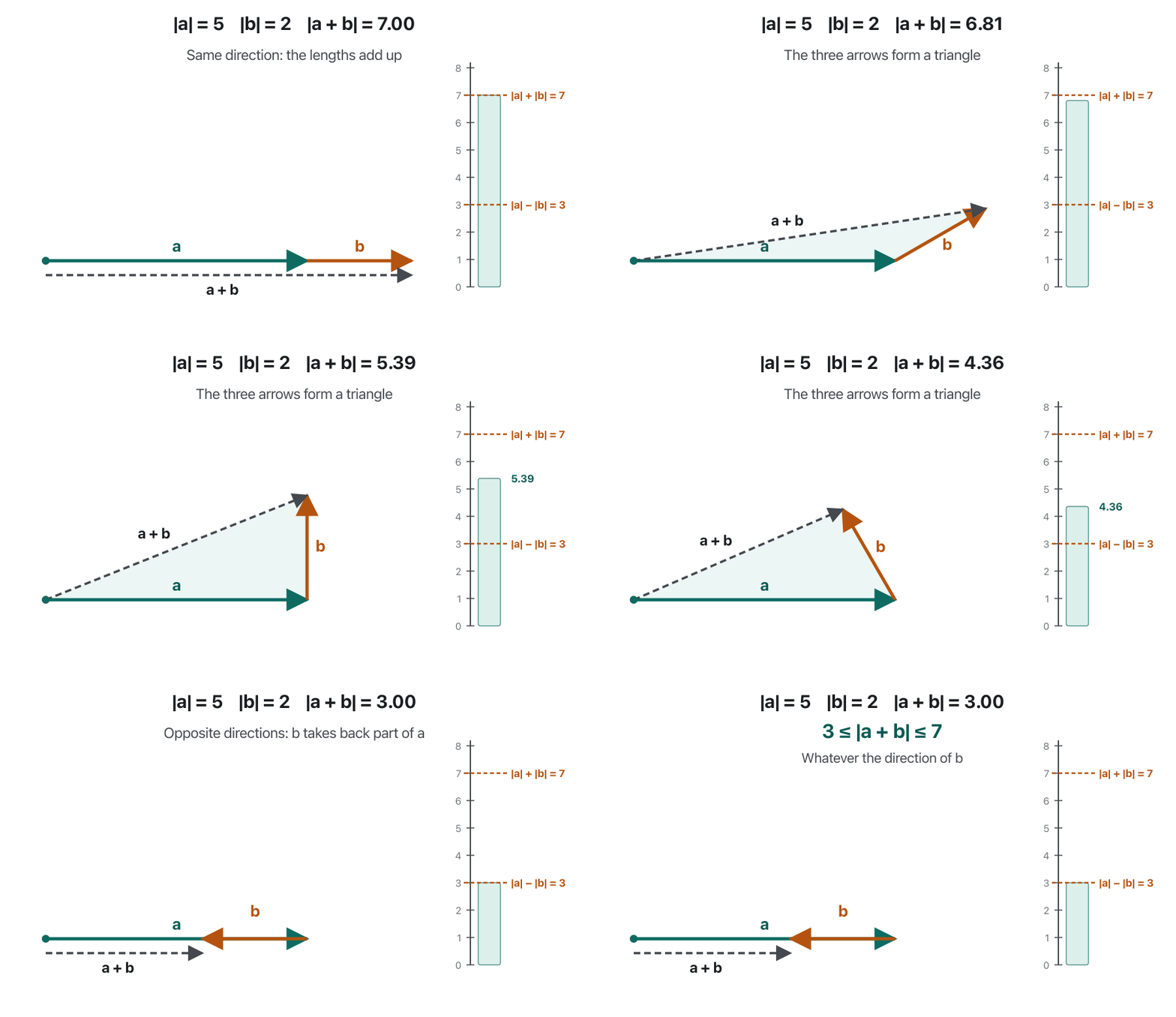
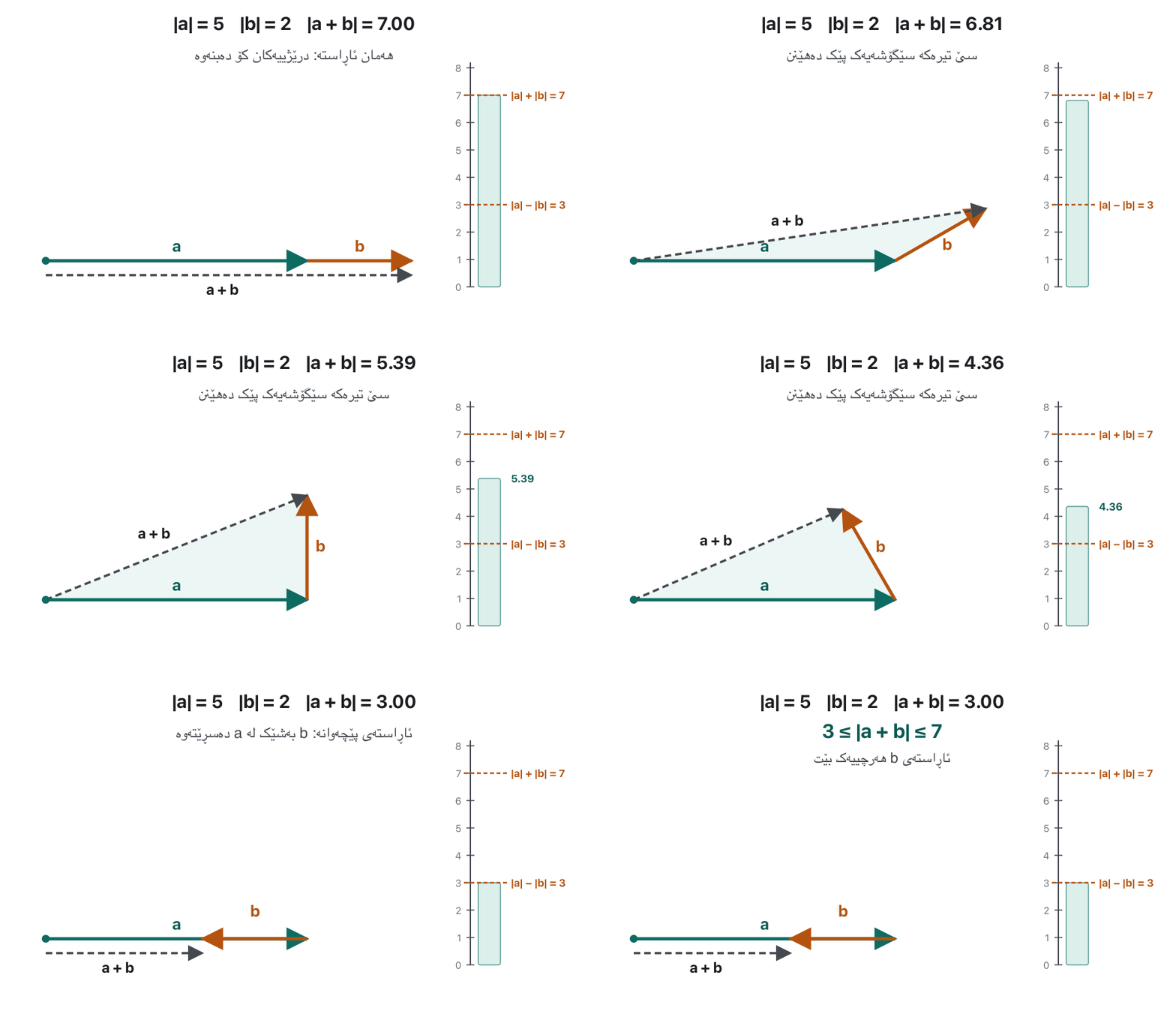
The animation also shows a lower limit: never drops below . That is Property 5 (below) with in place of .
وێنە جووڵاوەکە سنوورێکی خوارەوەش پیشان دەدات: هەرگیز لە کەمتر نابێتەوە. ئەمە تایبەتمەندیی 5ـە (خوارەوە) کە لە جیاتی دانراوە.
Proof of the triangle inequalityسەلماندنی لاسەنگەی سێگۆشەیی
Square and expand. Replace and by and :
دووجا بکە و بیکەرەوە. و بە و بگۆڕە:
Only the boxed term changes. By (with ) and Property 1:
تەنها بڕە چوارگۆشەکراوەکەی دەگۆڕێت. بەپێی (کە ) و تایبەتمەندیی 1:
So the square of the left side is at most a perfect square:
کەواتە دووجای لای چەپ لە دووجایەکی تەواو زیاتر نییە:
Both and are , so we may take square roots and keep the sign:
و هەردووکیان ن، بۆیە دەتوانین وەربگرین و هێماکە بمێنێتەوە:
Property 4: تایبەتمەندیی 4:
On the slide this proof is homework. Try it yourself first — the answer below is the lecturer's solution from the answer sheet.
لە سلایدەکەدا ئەم ئەرکی ماڵەوەیە. یەکەم جار خۆت هەوڵی بدە — وەڵامی خوارەوە چارەسەری مامۆستاکەیە لە پەڕەی وەڵامەکاندا.
Prove that for all real , .
بیسەلمێنە کە بۆ هەموو و ، .
Hintئاماژە
Write as .
وەک بنووسە.
Show answerوەڵامەکە پیشان بدە
Add and subtract inside the bars (this adds 0), then use the triangle inequality on :
لە ناو هێڵەکاندا کۆ بکەرەوە و لێی دەربکە (ئەمە سفر زیاد دەکات)، پاشان لەسەر بەکار بهێنە:
Subtract from both sides:
لە هەردوو لا دەربکە:
The trick “add and subtract the same thing” changes nothing in value but lets a known rule do the work. Calculus uses it again and again.
فێڵی «کۆکردنەوە و لێدەرکردنی هەمان شت» هیچ لە نرخەکە ناگۆڕێت، بەڵام ڕێگە دەدات یاسایەکی ناسراو کارەکە بکات. کالکولەس بەردەوام بەکاری دەهێنێت.
Example: , : . True — but notice that the right side can be negative, so the bound is sometimes weak. Property 5 fixes that.
نموونە: ، : . ڕاستە — بەڵام سەرنج بدە کە لای ڕاست دەشێت سالب بێت، بۆیە ئەم سنوورە هەندێک جار لاوازە. تایبەتمەندیی 5 ئەمە چاک دەکات.
Property 5: تایبەتمەندیی 5:
In words: the sizes of two numbers differ by at most the distance between the numbers. It is also called the reverse triangle inequality. On the slide its proof is homework too.
بە وشە: جیاوازیی قەبارەی دوو ژمارە لە دووریی نێوان ژمارەکان زیاتر نییە. هەروەها پێی دەوترێت « پێچەوانە». لە سلایدەکەدا ئەویش ئەرکی ماڵەوەیە.
Prove that .
بیسەلمێنە کە .
Hintئاماژە
Use Property 4 twice: once as it is, once with and swapped.
تایبەتمەندیی 4 دوو جار بەکار بهێنە: جارێک وەک خۆی، جارێک بە جێگۆڕکێی و .
Show answerوەڵامەکە پیشان بدە
Property 4 as it is:
تایبەتمەندیی 4 وەک خۆی:
Property 4 with and swapped, then multiplied by , which reverses the sign (see multiplying by a negative number):
تایبەتمەندیی 4 کە و جێگۆڕکێیان پێکراوە، پاشان لێکدان لە کە هێماکە پێچەوانە دەکاتەوە (بڕوانە لێکدان لە ژمارەیەکی سالب):
First side fact: . So (1) and (2) together say:
ڕاستیی لاوەکیی یەکەم: . کەواتە (1) و (2) پێکەوە دەڵێن:
Second side fact: . Use it with and :
ڕاستیی لاوەکیی دووەم: . بەکاری بهێنە بە و :
Proves the reverse triangle inequality ||a| − |b|| ≤ |a − b| from the ordinary triangle inequality, explaining each step.
پێچەوانە لە ئاساییەوە دەسەلمێنێت و هەر هەنگاوێک ڕوون دەکاتەوە.
Whole video (8:53): uses the triangle inequality with a clever substitution, the same 'add and subtract' idea as Properties 4 and 5.
هەموو ڤیدیۆکە (8:53): بە جێگرتنەوەیەکی زیرەکانە بەکار دەهێنێت، هەمان بیرۆکەی «زیاد بکە و کەم بکەرەوە»ی تایبەتمەندییەکانی 4 و 5.
Exercisesڕاهێنانەکان
Check the five properties for , .
پێنج تایبەتمەندییەکە بۆ ، بپشکنە.
Show answerوەڵامەکە پیشان بدە
Prove that .
بیسەلمێنە کە .
Hintئاماژە
Subtracting is adding .
لێدەرکردنی هەمان کۆکردنەوەی ـە.
Show answerوەڵامەکە پیشان بدە
Write as , use the triangle inequality, then .
وەک بنووسە، بەکار بهێنە، پاشان .
Prove that and check it with .
بیسەلمێنە کە و بە بیپشکنە.
Show answerوەڵامەکە پیشان بدە
Use the triangle inequality twice. Check: .
دوو جار بەکار بهێنە. پشکنین: .
A sensor measures with and with . How far can be from 8?
دەپێوێت بە و بە . دەتوانێت چەند لە 8 دوور بێت؟
Hintئاماژە
Write as .
وەک بنووسە.
Show answerوەڵامەکە پیشان بدە
Less than 0.3. In the worst case the two errors add up, never more. Scientists, engineers and computer arithmetic estimate errors this way, and calculus uses exactly this step when it works with limits.
کەمتر لە 0.3. لە خراپترین حاڵەتدا دوو هەڵەکە کۆ دەبنەوە، هەرگیز زیاتر نا. زانایان، ئەندازیاران و ژمێرکاریی هەڵە بەم شێوەیە دەخەمڵێنن و کالکولەس کاتێک کار لەگەڵ دەکات ڕێک ئەم هەنگاوە بەکار دەهێنێت.
A student writes . Give numbers that show this is wrong, and write the correct relation.
خوێندکارێک دەنووسێت . چەند ژمارەیەک بدۆزەوە کە پیشانی بدەن هەڵەیە و پەیوەندییە دروستەکە بنووسە.
Show answerوەڵامەکە پیشان بدە
, : but . A distance cannot be . The correct relation is Property 4, , or the sharper Property 5.
، : بەڵام . دووری ناتوانێت بێت. پەیوەندییە دروستەکە تایبەتمەندیی 4ـە، ، یان تایبەتمەندیی 5ی وردتر.
Common mistakesهەڵە باوەکان
| Mistakeهەڵە | Counter-exampleنموونەی پێچەوانە | Correctدروست |
|---|---|---|
| : : | ||
| : : | ||
| with بە | division by 0 has no valueدابەشکردن لە سفر نرخی نییە | only for تەنها بۆ |
| for any بۆ هەر ـێک | : but : بەڵام | only when تەنها کاتێک |
| Stopping the triangle proof at the squaresوەستاندنی لە قۆناغی دووجاکاندا | is not yet the theorem هێشتا خودی نییە | finish with square roots of the non-negative sidesبە وەرگرتنی هەردوو لای نا-سالب تەواوی بکە |
Summaryپوختە
- Products and quotients keep sizes exactly: , for .
- Sums only have a bound: (the triangle inequality), with equality exactly when .
- Differences: and the sharper .
- Proof method: square (using and ), compare, then take square roots — allowed because absolute values are not negative.
- لێکدان و دابەشکردن قەبارەکان ڕێک دەپارێزن: ، بۆ .
- کۆ تەنها سنوورێکی هەیە: ()، یەکسانی ڕێک کاتێکە کە .
- جیاوازی: و ڕستە وردترەکەی .
- ڕێگای : دووجا بکە ( و بەکار بهێنە)، بەراورد بکە، پاشان وەربگرە — ڕێگەپێدراوە چونکە سالب نین.
Why is false in general?بۆچی بە گشتی هەڵەیە؟
When and have opposite signs, they partly cancel: but .
کاتێک و هێمای پێچەوانەیان هەبێت، بەشێک لە یەکتر دەسڕنەوە: بەڵام .
Which trick proves Property 4?کام فێڵ تایبەتمەندیی 4 دەسەلمێنێت؟
Write and apply the triangle inequality, then subtract from both sides.
بنووسە و بەکار بهێنە، پاشان لە هەردوو لا دەربکە.
Why may we take square roots at the end of the proofs?بۆچی دەتوانین لە کۆتایی سەلماندنەکاندا ڕەگ وەربگرین؟
Both sides are absolute values (or sums of them), so they are , and for non-negative numbers .
هەردوو لا (یان کۆی ئەوانن)، بۆیە ن. بۆ ژمارە نا-سالبەکانیش .
Lesson complete!وانەکە تەواو بوو!
Well done. Review the key terms, then go on to the next lesson.دەستخۆش. سەیرێکی زاراوە سەرەکییەکان بکەرەوە، پاشان بڕۆ بۆ وانەی داهاتوو.
Key termsزاراوە سەرەکییەکان
Absolute Value Equations and Inequalitiesهاوکێشەکان و لاسەنگەکانی نرخی ڕووت
Related lecturesوانە پەیوەندیدارەکان
References and further readingسەرچاوەکان و خوێندنەوەی زیاتر
- OpenStax Calculus Volume 1, 2.5 The Precise Definition of a Limit (triangle inequality |a + b| ≤ |a| + |b|)
- Wikipedia: Absolute value — fundamental properties (multiplicativity, subadditivity, preservation of division, reverse triangle inequality)
- OpenStax College Algebra 2e, 2.7 (|X| ≤ k is equivalent to −k ≤ X ≤ k)
This lecture is a first edition. The Kurdish text and terminology are waiting for review by Kurdish IT teachers.ئەم وانەیە چاپی یەکەمە. دەقە کوردییەکە و زاراوەکانی چاوەڕێی پێداچوونەوەی مامۆستایانی کوردی بواری IT ن.