Chapterبەش 1 · Lectureوانە 1.3
Threats, Vulnerabilities, Attacks and Riskهەڕەشەکان، خاڵە لاوازەکان، هێرشەکان و مەترسی
The four basic words of security and how they form a chain: a threat (what could go wrong), a vulnerability (the weakness that lets it happen), an attack (the action that uses the weakness) and risk (how likely and how bad). Where threats come from and what they cause; interruption, interception, modification and fabrication; repudiation; passive and active attacks. With corrections to three mistakes in the course notes.
چوار وشە بنەڕەتییەکەی و چۆن زنجیرەیەک پێک دەهێنن: (چی دەکرێت تێک بچێت)، (ئەو لاوازییەی ڕێگە دەدات ڕوو بدات)، (ئەو کارەی لاوازییەکە بەکار دەهێنێت) و (چەند ئەگەری هەیە و چەند خراپە). لە کوێوە دێن و چی دەکەن؛ ، ، و ؛ ؛ و . لەگەڵ ڕاستکردنەوەی سێ هەڵە لە تێبینییەکانی کۆرسەکەدا.
What you will learnچی فێر دەبیت
- Define threat, vulnerability, attack and risk, and show how they form one chain in a real example.
- Sort threats by where they come from (users, disasters, insiders, outsiders) and by what they cause (disclosure, wrong changes, denial of service).
- Recognise interruption, interception, modification, fabrication and repudiation, and the objective each one attacks.
- Tell passive attacks from active attacks, and explain why each needs a different defence.
- ، ، و پێناسە بکەیت و پیشانی بدەیت چۆن لە نموونەیەکی ڕاستەقینەدا یەک زنجیرە پێک دەهێنن.
- بەپێی سەرچاوەکەیان (، کارەسات، کەسانی ناوخۆ، کەسانی دەرەکی) و بەپێی ئەنجامەکەیان (ئاشکراکردن، گۆڕینی هەڵە، ) پۆلێن بکەیت.
- ، ، ، و بناسیتەوە و بزانیت هەریەکەیان دەکاتە سەر کام ئامانج.
- لە جیا بکەیتەوە و ڕوونی بکەیتەوە بۆچی هەریەکەیان بەرگرییەکی جیاوازی پێویستە.
Four words, one chainچوار وشە، یەک زنجیرە
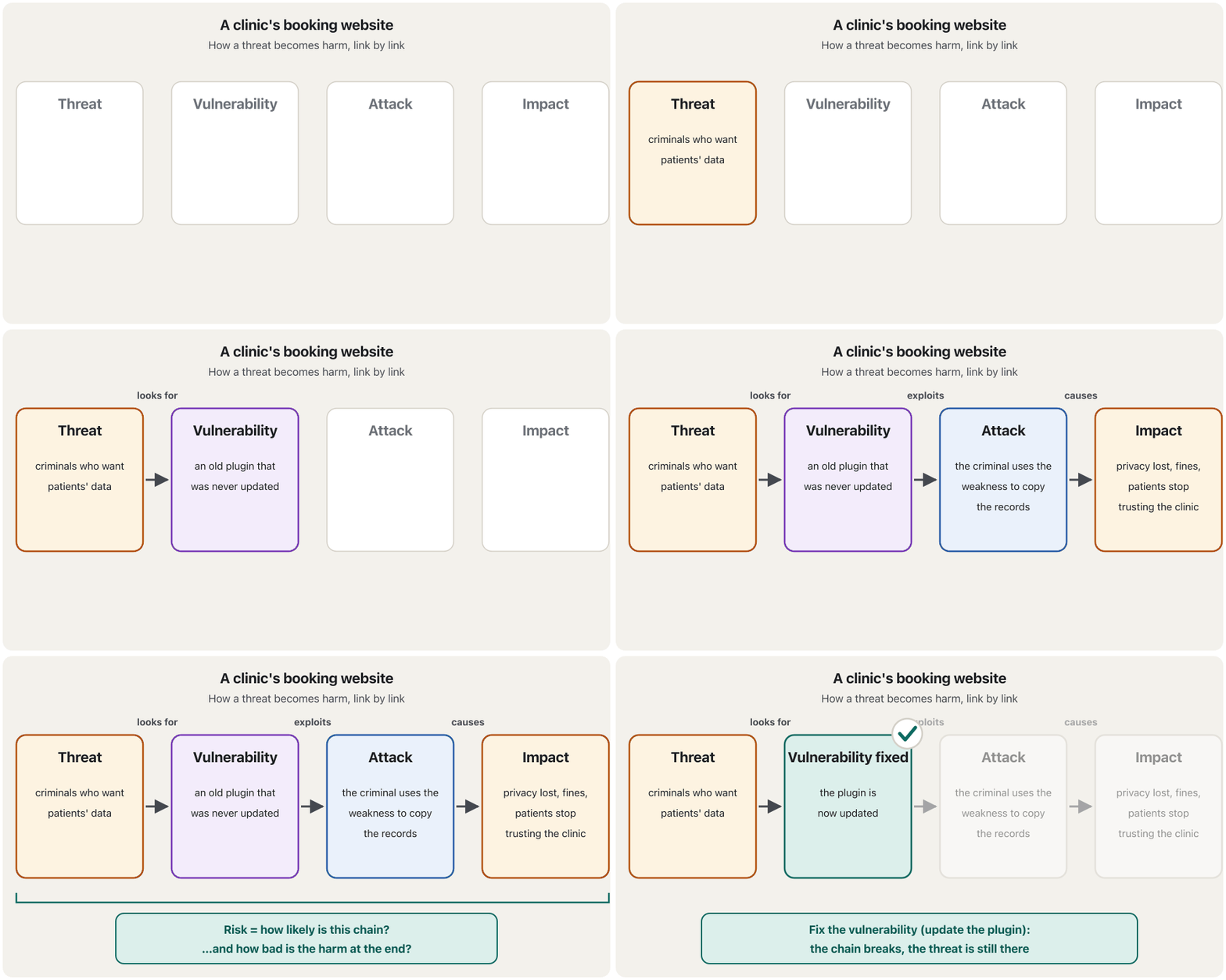
Four words appear in every security conversation: threat, vulnerability, attack and risk. People often mix them up, but each one names a different link of the same chain. Understand the chain, and you know where to break it.
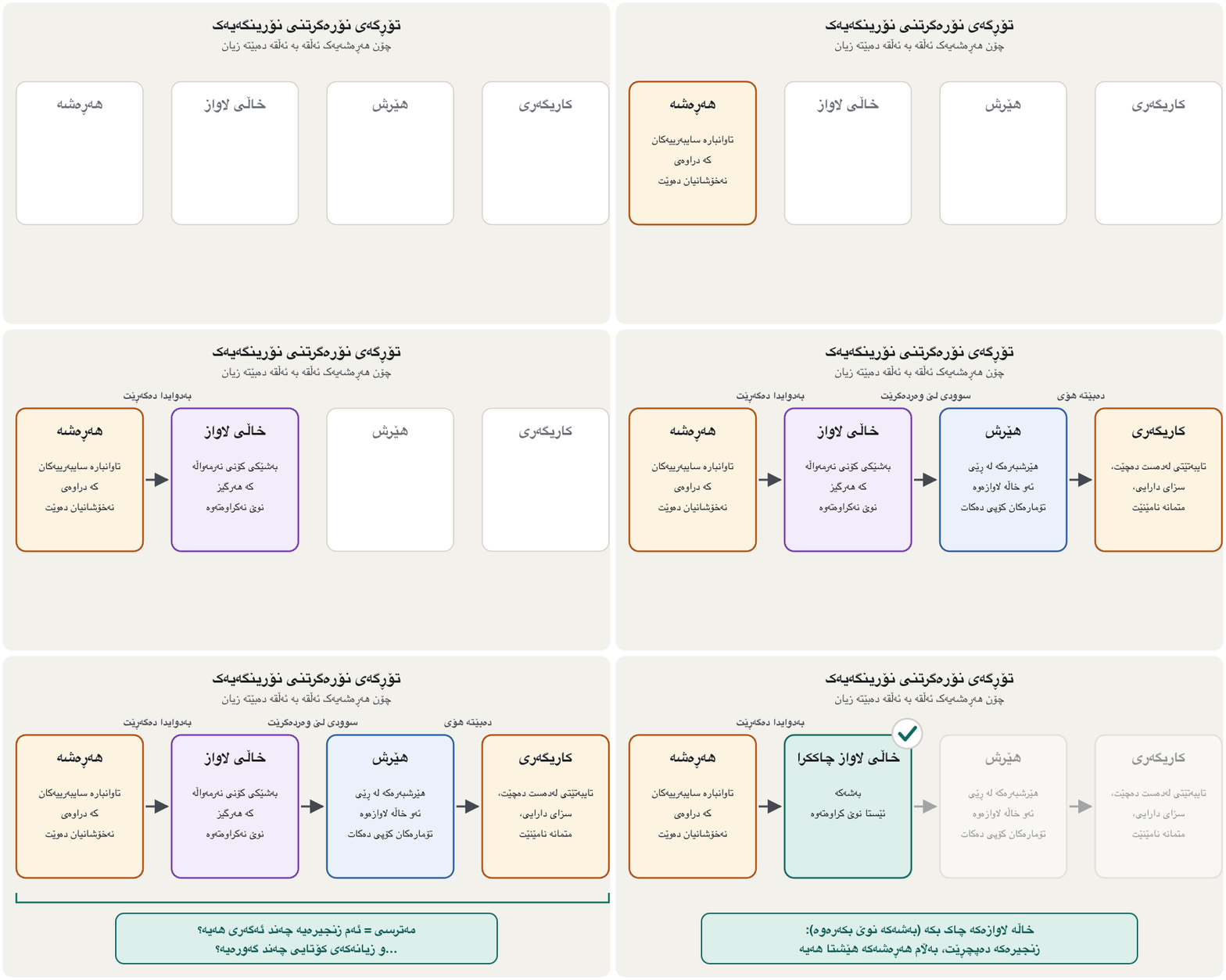
چوار وشە لە هەموو گفتوگۆیەکی دەردەکەون: ، ، و . خەڵک زۆرجار تێکەڵیان دەکەن، بەڵام هەریەکەیان ناوی ئەڵقەیەکی جیاوازی هەمان زنجیرەیە. زنجیرەکە تێبگە، ئەوکات دەزانیت لە کوێوە بیپچڕێنیت.
There are thieves in the city: that is a threat, something that could happen. The lock on the shop's back door is broken: that is a vulnerability, a weakness. One night a thief comes through that door: that is the attack. The stolen goods and the days without trade are the impact. And risk is the shopkeeper's question before anything happens: how likely is it, and how bad would it be?
دز لە شارەکەدا هەن: ئەمە ، شتێک کە دەکرێت ڕوو بدات. قفڵی دەرگای پشتەوەی دوکانەکە شکاوە: ئەمە ، لاوازییەک. شەوێک دزێک لەو دەرگایەوە دێتە ژوورەوە: ئەمە . کاڵا دزراوەکان و ئەو ڕۆژانەی بێ کڕین و فرۆشتن دەمێننەوە . هەروەها پرسیاری دوکاندارەکەیە پێش ئەوەی هیچ شتێک ڕوو بدات: ئەگەری چەندە و چەند خراپ دەبێت؟
Where the analogy stops workingسنووری ئەم نموونەیە
A broken lock is visible; many computer weaknesses are invisible until someone finds them. And in cyberspace the 'thief' may try every shop in the world at the same time.
قفڵێکی شکاو دەبینرێت؛ زۆر نابینرێن تا کەسێک دەیاندۆزێتەوە. هەروەها لە «دزەکە» لەوانەیە لە هەمان کاتدا هەموو دوکانەکانی جیهان تاقی بکاتەوە.
Threat: what could go wrongهەڕەشە: چی دەکرێت تێک بچێت
Any situation or event, done on purpose or by accident, that can harm a system and therefore the organisation. Examples are theft and fraud, and the loss of , , or .
هەر دۆخ یان ڕووداوێکە، بە ئەنقەست یان بە هەڵکەوت، کە دەکرێت زیان بە سیستەمێک و لە ئەنجامدا بە دامەزراوەکە بگەیەنێت. نموونەکانی: دزی و فێڵ، لەدەستدانی ، ، یان .
The course: a threat is a potential occurrence that can have an undesired effect on the system. 'Potential' means possible: it has not happened yet, but if it happens it causes a problem.
کۆرسەکە: ڕووداوێکی ئەگەریـیە کە دەکرێت کاریگەرییەکی نەخوازراوی لەسەر سیستەمەکە هەبێت. «ئەگەری» واتە دەکرێت ڕوو بدات: هێشتا ڕووی نەداوە، بەڵام ئەگەر ڕوو بدات کێشە دروست دەکات.
NIST says the same in other words: any circumstance or event with the potential to harm an organisation's operations, assets or people, for example through unauthorized access, destruction, disclosure, modification of information, or denial of service. A threat does not need a person behind it: a flood is a threat too.
NIST هەمان شت بە وشەی تر دەڵێت: هەر دۆخ یان ڕووداوێک کە توانای زیانگەیاندنی بە کارەکان، یان خەڵکی ڕێکخراوێک هەبێت، بۆ نموونە لە ڕێی ، لەناوبردن، ئاشکراکردن، گۆڕینی یان . پێویست ناکات کەسێکی لە پشتەوە بێت: لافاویش .
Threat: what could go wrongهەڕەشە: چی دەکرێت تێک بچێت
Threat is not 'vulnerability divided by 1'هەڕەشە «خاڵی لاواز دابەش بە 1» نییە
Threat: what could go wrongهەڕەشە: چی دەکرێت تێک بچێت
Where threats come fromهەڕەشەکان لە کوێوە دێن
The notes list eight 'types of threats' in one list. It is clearer to split them into two groups: where a threat comes from (its source, this screen) and what it causes (its result, the next screen). The sources:
تێبینییەکان هەشت «جۆری » لە یەک لیستدا دەنووسن. ڕوونترە بیانکەینە دوو گرووپ: لە کوێوە دێت (سەرچاوەکەی، ئەم پەڕەیە) و چی دەکات (ئەنجامەکەی، پەڕەی داهاتوو). سەرچاوەکان:
| Sourceسەرچاوە | What it meansواتای چییە | Exampleنموونە |
|---|---|---|
| 1. Errors of users١. هەڵەی | honest mistakes when entering data, using the system or the network, or keeping passwordsهەڵەی بێ مەبەست لە کاتی نووسینی ، بەکارهێنانی سیستەم یان ، یان شێوەی هەڵگرتنی | typing a mark as 59 instead of 95; a password on a sticky note on the screenنووسینی نمرەیەک بە 59 لە جیاتی 95؛ لەسەر کاغەزێکی نووساو بە شاشەکەوە |
| 2. Natural, man-made or machine disasters٢. کارەساتی سروشتی، دەستکرد یان ئامێری | devices fail because of nature, people or the machines themselvesئامێرەکان بەهۆی سروشت، مرۆڤ یان خودی ئامێرەکانەوە لە کار دەکەون | a flood, an earthquake, an electrical short circuit, a fire in the server roomلافاو، بوومەلەرزە، شۆرتی کارەبا، ئاگر لە ژووری |
| 3. Dishonest insider٣. کەسی ناوخۆی ناپاک | a traitor inside the organisation: someone who works there and abuses that trustخائینێک لە ناو ڕێکخراوەکەدا: کەسێک کە لەوێ کار دەکات و ئەو متمانەیە خراپ بەکار دەهێنێت | a clerk who sells the customer listفەرمانبەرێک کە لیستی کڕیاران دەفرۆشێت |
| 4. Disgruntled insider٤. کەسی ناوخۆی ناڕازی | an unhappy, angry employee who may take revengeفەرمانبەرێکی ناڕازی و تووڕە کە لەوانەیە تۆڵە بکاتەوە | an employee who was refused a promotion and deletes files before leavingفەرمانبەرێک کە پلەبەرزکردنەوەی ڕەت کراوەتەوە و پێش ڕۆیشتن دەسڕێتەوە |
| 5. Outsiders٥. کەسانی دەرەکی | people outside the organisation with no permission: attackers and other unauthorized personsکەسانی دەرەوەی ڕێکخراوەکە کە هیچ مۆڵەتێکیان نییە: و کەسانی بێمۆڵەتی تر | a criminal group trying stolen passwords on the company's e-mailگرووپێکی تاوانکار کە دزراو لەسەر کۆمپانیاکە تاقی دەکاتەوە |
Threat: what could go wrongهەڕەشە: چی دەکرێت تێک بچێت
Dishonest or disgruntled, but not a spyناپاک یان ناڕازی، بەڵام جاسووس نا
Threat: what could go wrongهەڕەشە: چی دەکرێت تێک بچێت
What threats causeهەڕەشەکان چی دەکەن
The other three items of the notes' list describe what happens when a threat comes true. Each one breaks one corner of the CIA triad:
سێ بڕگەکەی تری لیستی تێبینییەکان باسی ئەوە دەکەن کە چی ڕوو دەدات کاتێک دێتە دی. هەریەکەیان گۆشەیەکی دەشکێنێت:
| Resultئەنجام | What it meansواتای چییە | Objective brokenئامانجی شکاو |
|---|---|---|
| 6. Disclosure threat٦. ئاشکراکردن | information spreads to people who are not allowed to have it بۆ ئەو کەسانە بڵاو دەبێتەوە کە بۆیان نییە هەیانبێت | Confidentiality |
| 7. Integrity threat٧. | information is changed incorrectly بە هەڵە دەگۆڕدرێت | Integrity |
| 8. Denial of service threat٨. | access to a system resource is blockedدەستڕاگەیشتن بە سەرچاوەیەکی سیستەم دەگیرێت | Availability |
Any source can lead to any result. A flood (disaster) can cause denial of service; a careless user can cause disclosure by e-mailing the wrong file. The Database Administration course lists the losses a database can suffer in a similar way: see Five kinds of loss.
هەر سەرچاوەیەک دەتوانێت ببێتە هۆی هەر ئەنجامێک. لافاو (کارەسات) دەتوانێت ببێتە هۆی ؛ بێئاگا دەتوانێت بە ناردنی هەڵە بە ببێتە هۆی ئاشکراکردن. کۆرسی بەڕێوەبردنی بە شێوەیەکی هاوشێوە ئەو زیانانە دەنووسێت کە تووشیان دەبێت: بڕوانە پێنج جۆری زیان.
Vulnerability: the weak pointخاڵی لاواز: شوێنی لاواز
A weakness in , , settings or procedures that an can use to cause harm, for example a , a or a missing .
لاوازییەکە لە ، ، ڕێکخستنەکان یان ڕێکارەکاندا کە دەتوانێت بۆ زیانگەیاندن بەکاری بهێنێت، بۆ نموونە ، یان کە دانەمەزرابێت.
Lecture 1: a characteristic of the system that makes it possible for a threat to occur. Lecture 4 is more precise: a weakness in software, hardware or configuration that attackers can exploit to gain unauthorized access, disrupt services or steal data.
وانەی یەکەم: تایبەتمەندییەکی سیستەمەکە کە وا دەکات بتوانێت ڕوو بدات. وانەی چوارەم وردترە: لاوازییەک لە ، یان ڕێکخستندا کە دەتوانن سوودی لێ وەربگرن بۆ ، تێکدانی خزمەتگوزاری یان دزینی .
Weak points are not only in code. NIST's definition also includes weaknesses in procedures and internal controls, which means in the way people work. A few examples:
شوێنە لاوازەکان تەنها لە کۆددا نین. پێناسەی NIST لاوازی لە ڕێکار و کۆنترۆڵە ناوخۆییەکانیشدا دەگرێتەوە، واتە لە شێوەی کارکردنی خەڵکدا. چەند نموونەیەک:
- Software: an old version with a known bug that was never updated.
- Hardware: a router that still uses its factory password.
- Configuration: a folder of student records shared with 'everyone' by mistake.
- People and processes: no one checks whether the backups really work; staff were never shown a fake e-mail.
- : وەشانێکی کۆن کە هەڵەیەکی ناسراوی تێدایە و هەرگیز نوێ نەکراوەتەوە.
- : ڕاوتەرێک کە هێشتا کارگە بەکار دەهێنێت.
- ڕێکخستن: فۆڵدەرێکی تۆماری خوێندکاران کە بە هەڵە لەگەڵ «هەمووان» هاوبەش کراوە.
- خەڵک و ڕێکار: کەس ناپشکنێت ئایا بە ڕاستی کار دەکەن؛ هەرگیز ساختە پیشانی کارمەندان نەدراوە.
Chapter 6 of this course is about vulnerabilities in depth: where they come from (coding errors, outdated software, misconfigurations), and how they are found, disclosed and patched. Weak passwords are covered in How passwords are broken.
بەشی شەشەمی ئەم کۆرسە بە قووڵی دەربارەی : لە کوێوە دێن (هەڵەی کۆدنووسین، کۆن، ) و چۆن دەدۆزرێنەوە، ڕادەگەیەنرێن و پینە دەکرێن. لاواز لە تێپەڕەوشەکان چۆن دەشکێنرێن باس کراوە.
Attack: using the weaknessهێرش: بەکارهێنانی لاوازییەکە
A deliberate action by an that uses a to harm a system, for example to steal, change or block . An attack turns a into real damage.
کارێکی ئەنقەستی کە بە بەکارهێنانی زیان بە سیستەمێک دەگەیەنێت، بۆ نموونە بۆ دزین، گۆڕین یان ڕاگرتنی . هێرش دەکات بە زیانێکی ڕاستەقینە.
The course: an attack is the action of a malicious intruder that exploits vulnerabilities of the system to make a threat happen.
کۆرسەکە: کاری دزەکەرێکی خراپەکارە کە سوود لە سیستەمەکە وەردەگرێت بۆ ئەوەی بێتە دی.
So an attack needs both: a threat (someone with a reason) and a vulnerability (a way in). The piece of code or the trick that turns a weakness into a working attack is called an exploit (more in Exploitation). The course notes name the kinds of malicious attacks in two ways, by what happens to the message and by whether the attacker changes anything. The next screens show both.
کەواتە پێویستی بە هەردووکیانە: (کەسێک کە هۆکارێکی هەیە) و (ڕێگەیەک بۆ چوونە ژوورەوە). ئەو پارچە کۆد یان فێڵەی لاوازییەک دەکاتە کارا پێی دەوترێت (زیاتر لە قۆستنەوە). تێبینییەکانی کۆرسەکە جۆرەکانی خراپەکار بە دوو شێوە ناو دەبەن، بەپێی ئەوەی چی بەسەر پەیامەکەدا دێت و بەپێی ئەوەی ئایا شتێک دەگۆڕێت. پەڕەکانی داهاتوو هەردووکیان پیشان دەدەن.
A Sorani Kurdish overview of common online threats and practical ways to protect your system and personal data.
بە کوردیی سۆرانی، باوترین مەترسییەکانی سەر دەناسێنێت و ڕێگای پراکتیکی بۆ پاراستنی سیستەمەکەت و کەسیی خۆت پیشان دەدات.
Kurdish (Sorani) slides lesson, segment 0:00-13:06: threats, malware, phishing, man-in-the-middle, denial of service and brute force. Stops before SQL injection and DNS attacks, which have their own lessons.
وانەیەکی کوردیی سۆرانی بە ، لە 0:00 تا 13:06 پەخش دەبێت: ، ، ، ، و . پێش و ڕادەوەستێت، چونکە ئەوانە وانەی تایبەتی خۆیان هەیە.
Attack: using the weaknessهێرش: بەکارهێنانی لاوازییەکە
Interruption, interception, modification, fabricationدابڕین، ڕێلێبڕین، دەستکاریکردن، ساختەکاری
Picture information flowing from a sender to a receiver. An attacker can do four things to that flow, and each one hits one security objective:
بهێنە پێش چاوت کە لە نێرەرێکەوە بۆ وەرگرێک دەڕوات. دەتوانێت چوار شت بەو ڕەوتە بکات و هەریەکەیان لە ئامانجێکی دەدات:
| Attack | What happensچی ڕوو دەدات | Objective attackedئەو ئامانجەی دەکرێتە سەر |
|---|---|---|
| Interruption | an asset is destroyed, unavailable or unusable لەناو دەبرێت، بەردەست نییە یان بەکار نایەت | Availability |
| Interception | an unauthorized party gains access to an assetلایەنێکی بێمۆڵەت دەستی بە دەگات | Confidentiality |
| Modification | an unauthorized party tampers with an assetلایەنێکی بێمۆڵەت دەستکاریی دەکات | Integrity |
| Fabrication | an unauthorized party inserts a counterfeit (fake) object into the systemلایەنێکی بێمۆڵەت شتێکی ساختە دەخاتە ناو سیستەمەکەوە | Authenticity |
Karwan posts a letter to Hana. Interruption: the letter is burned on the way and never arrives. Interception: someone opens it, reads it, closes it again and sends it on. Modification: someone opens it and changes '10 sheep' to '100 sheep'. Fabrication: someone writes a letter, signs it 'Karwan' and posts it to Hana, though Karwan wrote nothing.
کاروان نامەیەک بە پۆست بۆ هانا دەنێرێت. : نامەکە لە ڕێگادا دەسووتێنرێت و هەرگیز ناگات. : کەسێک دەیکاتەوە، دەیخوێنێتەوە، دیسان دایدەخاتەوە و دەینێرێتەوە. : کەسێک دەیکاتەوە و «10 مەڕ» دەکاتە «100 مەڕ». : کەسێک نامەیەک دەنووسێت، بە ناوی «کاروان» واژووی دەکات و بۆ هانای دەنێرێت، هەرچەندە کاروان هیچی نەنووسیوە.
Where the analogy stops workingسنووری ئەم نموونەیە
A paper letter shows signs of being opened; a digital message can be copied or changed without any trace, unless it is protected with encryption and integrity checks.
نامەی کاغەزی نیشانەی کرانەوەی پێوە دیارە؛ پەیامی دیجیتاڵی دەکرێت بەبێ هیچ شوێنەوارێک کۆپی بکرێت یان بگۆڕدرێت، مەگەر بە و پشکنینی پارێزرابێت.
Attack: using the weaknessهێرش: بەکارهێنانی لاوازییەکە
Denial: 'I never did that'نکۆڵی: «هەرگیز ئەوەم نەکردووە»
The notes list a fifth type: denial, when a person denies taking an action. For example, a customer orders goods online, receives them, and then says 'I never ordered anything' to avoid paying. Or an employee deletes important files and later says 'it wasn't me'.
تێبینییەکان جۆرێکی پێنجەم دەنووسن: نکۆڵی، کاتێک کەسێک نکۆڵی لە کردنی کارێک دەکات. بۆ نموونە، کڕیارێک بە ئۆنلاین کاڵا داوا دەکات، وەریدەگرێت و پاشان دەڵێت «هەرگیز هیچم داوا نەکردووە» بۆ ئەوەی پارە نەدات. یان فەرمانبەرێک گرنگ دەسڕێتەوە و دواتر دەڵێت «من نەبووم».
Passive and active attacksهێرشە ناچالاکەکان و هێرشە چالاکەکان
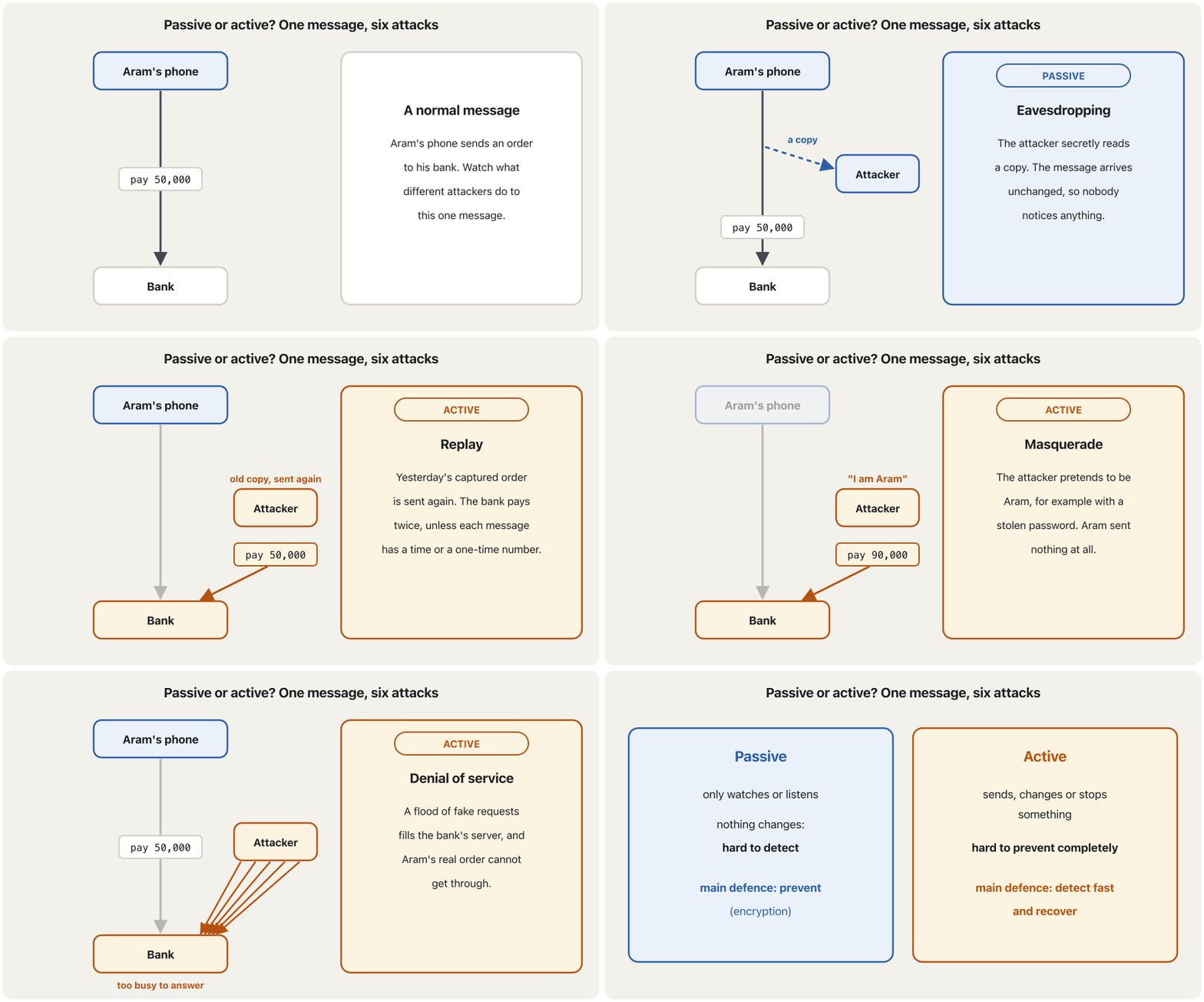
The second way to sort attacks asks one question: does the attacker change anything? A passive attack only watches or listens. An active attack changes data, creates false data or stops a service.
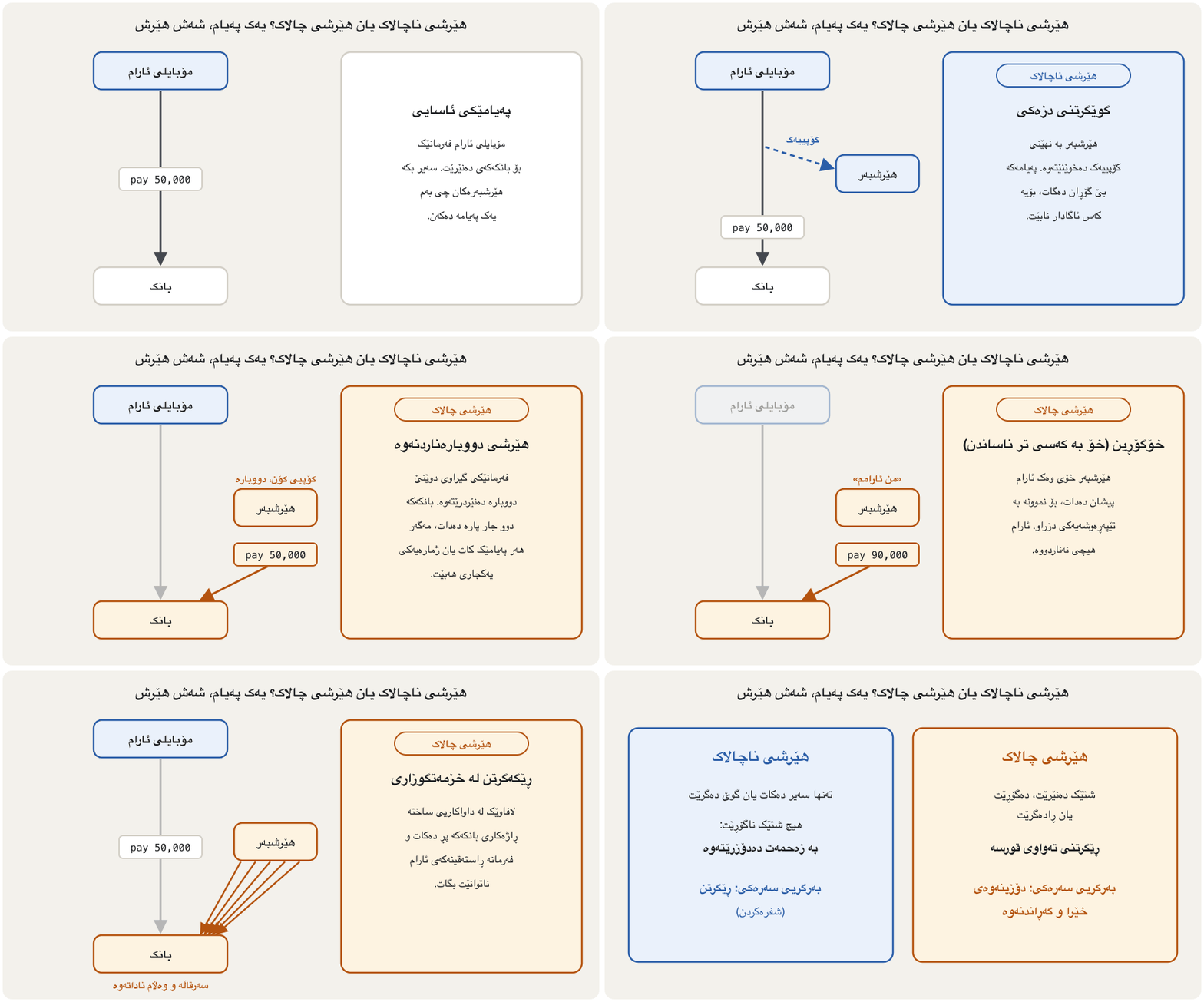
شێوەی دووەمی پۆلێنکردنی یەک پرسیار دەکات: ئایا شتێک دەگۆڕێت؟ تەنها سەیر دەکات یان گوێ دەگرێت. دەگۆڕێت، ساختە دروست دەکات یان خزمەتگوزارییەک ڕادەگرێت.
| Typeجۆر | Attack | What the attacker does چی دەکات |
|---|---|---|
| Passiveناچالاک | Eavesdropping (sniffing, snooping) (sniffing، snooping) | secretly reads or listens to the content of messages, for example on open Wi-Fi. Capturing the packets on a network with a tool is called sniffing; network administrators use the same tools, such as Wireshark, legally to find faultsبە نهێنی ناوەڕۆکی پەیامەکان دەخوێنێتەوە یان گوێی لێ دەگرێت، بۆ نموونە لەسەر Wi-Fiـی کراوە. گرتنی بە ئامرازێک پێی دەوترێت sniffing؛ هەمان ئامراز، وەک Wireshark، بە یاسایی بۆ دۆزینەوەی تێکچوون بەکار دەهێنن |
| Passiveناچالاک | Monitoring (traffic analysis)چاودێری () | cannot read the content, but learns from the pattern: who talks to whom, when, how often, how much, and even which websites you visitناتوانێت ناوەڕۆکەکە بخوێنێتەوە، بەڵام لە شێوازەکەوە فێر دەبێت: کێ لەگەڵ کێ قسە دەکات، کەی، چەند جار، چەند و تەنانەت سەردانی کام دەکەیت |
| Activeچالاک | Masqueradeخۆگۆڕین () | one entity pretends to be a different entity, for example by logging in with someone else's stolen passwordلایەنێک خۆی وەک لایەنێکی تر پیشان دەدات، بۆ نموونە بە چوونەژوورەوە بە دزراوی کەسێکی تر |
| Activeچالاک | Replay | passively captures a message, then sends it again later, for example repeating a captured 'open the door' or 'pay 50,000 dinars' commandبە شێوەی ناچالاک پەیامێک دەگرێت، پاشان دواتر دووبارە دەینێرێتەوە، بۆ نموونە دووبارەکردنەوەی فەرمانێکی گیراوی «دەرگاکە بکەرەوە» یان «50,000 دینار بدە» |
| Activeچالاک | Modification of messages پەیام | alters a legitimate message (or delays or reorders it)پەیامێکی ڕەوا دەگۆڕێت (یان دوای دەخات یان ڕیزبەندییەکەی دەگۆڕێت) |
| Activeچالاک | Denial of service | prevents the normal use of resources, for example by flooding a server with requests (DoS and DDoS)ڕێگە لە بەکارهێنانی ئاسایی سەرچاوەکان دەگرێت، بۆ نموونە بە پڕکردنی بە داواکاری |
Passive attacks (release of message contents, traffic analysis) and active attacks (masquerade, replay, modification, denial of service), with Alice, Bob and Darth examples.
(ئاشکراکردنی ناوەڕۆکی نامە و ) و (، ، و )، بە نموونەی Alice، Bob و Darth.
From 0:51: security attacks, release of message contents 3:03, traffic analysis 4:21, masquerade (impersonation) 6:36, replay 8:21, modification 9:05, denial of service 10:18, passive vs active 12:23. Same six attacks as the lesson table.
لە 0:51 دەست پێدەکات: ، ئاشکراکردنی ناوەڕۆکی نامە 3:03، 4:21، (masquerade) 6:36، 8:21، 9:05، 10:18، جیاوازیی و 12:23. هەمان ئەو شەش کە لە وانەکەدا هاتوون.
Passive and active attacksهێرشە ناچالاکەکان و هێرشە چالاکەکان
Why the difference mattersبۆچی جیاوازییەکە گرنگە
Why does the difference matter? Passive attacks are hard to detect, because nothing changes and nothing breaks. So the main defence is prevention: encrypt the traffic, so that what is read is meaningless. Active attacks are hard to prevent completely, because there are so many ways in. So the main defence is to detect them quickly and recover: integrity checks, logs, alarms and backups. A man-in-the-middle attack, where the attacker secretly sits between two sides and relays (and perhaps changes) their messages, mixes both: it starts with listening and often ends with masquerade and modification.
بۆچی جیاوازییەکە گرنگە؟ بە زەحمەت دەدۆزرێنەوە، چونکە هیچ شتێک ناگۆڕێت و هیچ شتێک تێک ناچێت. بۆیە بەرگریی سەرەکی ڕێگرتنە: هاتوچۆکە، بۆ ئەوەی ئەوەی دەخوێنرێتەوە بێواتا بێت. ڕێگرتنی تەواو لە قورسە، چونکە ڕێگەی زۆر بۆ چوونە ژوورەوە هەیە. بۆیە بەرگریی سەرەکی دۆزینەوەی خێرا و گەڕاندنەوەیە: پشکنینی ، ، ئاگادارکەرەوە و . هێرشی کەسی ناوەڕاست، کە تێیدا بە نهێنی لە نێوان دوو لایەندا دادەنیشێت و پەیامەکانیان دەگوازێتەوە (و لەوانەیە بیانگۆڕێت)، هەردووکیان تێکەڵ دەکات: بە گوێگرتن دەست پێ دەکات و زۆرجار بە خۆگۆڕین و کۆتایی دێت.
The animation follows one payment order through the six attacks of the table. Watch which attacks leave the message untouched and which send or change something:
یەک فەرمانی پارەدان بە ناو شەش خشتەکەدا دەبات. سەیر بکە کام پەیامەکە دەستلێنەدراو جێ دەهێڵن و کامیان شتێک دەنێرن یان دەگۆڕن:
Risk: how likely, and how bad?مەترسی: چەند ئەگەری هەیە و چەند خراپە؟
A measure that combines how likely it is that a will use a with how much harm it would then cause. It is often estimated as .
پێوەرێکە کە دوو شت پێکەوە دەبەستێت: ئەوەی بەکار بهێنێت و ئەو زیانەی ئەگەر ڕووی دا دەیگەیەنێت (). زۆرجار بەم شێوەیە دەخەمڵێنرێت: .
The course: risk is a measure of the possibility of security breaches and the severity of the damage.
کۆرسەکە: پێوەرێکە بۆ ئەگەری شکاندنی و قورسیی زیانەکە.
So risk always has two parts. A flood in a desert town is very unlikely, even if it would be terrible; a weak password on a public website is very likely to be tried. Organisations use risk to decide what to protect first, because no one has the money or time to fix everything at once. The full method (estimating likelihood and impact, a risk matrix, and choosing to avoid, reduce, transfer or accept a risk) is taught in Security Planning and Risk Assessment.
کەواتە هەمیشە دوو بەشی هەیە. لافاو لە شارۆچکەیەکی بیابانیدا ئەگەری زۆر کەمە، هەرچەندە ئەگەر ڕوو بدات زۆر خراپ دەبێت؛ لاواز لەسەر گشتی ئەگەرێکی زۆری هەیە تاقی بکرێتەوە. ڕێکخراوەکان بەکار دەهێنن بۆ بڕیاردان لەسەر ئەوەی پێشەکی چی بپارێزن، چونکە کەس پارە و کاتی ئەوەی نییە هەموو شتێک بەیەکەوە چاک بکات. ڕێگا تەواوەکە (خەمڵاندنی ئەگەر و ، و هەڵبژاردنی دوورکەوتنەوە، کەمکردنەوە، گواستنەوە یان قبووڵکردنی ) لە پلاندانانی ئاسایش و هەڵسەنگاندنی مەترسی فێر دەکرێت.
Putting it together: one clinic, the whole chainکۆکردنەوەی هەمووی: یەک نۆرینگە، هەموو زنجیرەکە
- Assetسامان
The patient database behind the booking website: names, phone numbers, appointment reasons.
نەخۆشان لە پشت نۆرەگرتنەوە: ناو، ژمارەی مۆبایل، هۆکاری نۆرەکان.
- Threatهەڕەشە
Criminals who sell personal data (outsiders); also a receptionist who might make a mistake (user error).
تاوانباران کە دەفرۆشن (کەسانی دەرەکی)؛ هەروەها کارمەندێکی پێشوازی کە لەوانەیە هەڵە بکات (هەڵەی ).
- Vulnerabilityخاڵی لاواز
The website uses an old booking plugin with a known weakness, and the admin page accepts the password 'clinic123'.
بەشێکی کۆنی نۆرەگرتن بەکار دەهێنێت کە لاوازییەکی ناسراوی هەیە و پەڕەی بەڕێوەبەرایەتی «clinic123» وەردەگرێت.
- Attackهێرش
A criminal uses an exploit for the old plugin and copies the database (interception, a breach of confidentiality).
تاوانبارێک بۆ بەشە کۆنەکە بەکار دەهێنێت و کۆپی دەکات (، شکاندنی ).
- Impactکاریگەری
Patients' privacy is lost, some receive fraud calls, the clinic may be fined, and people stop trusting it.
نەخۆشان لەدەست دەچێت، هەندێکیان پەیوەندیی فێڵاوییان بۆ دێت، لەوانەیە نۆرینگەکە سزای دارایی بدرێت و خەڵک متمانەی پێی نامێنێت.
- Risk and the fixمەترسی و چارەسەر
The likelihood is high (old public plugins are scanned automatically) and the impact is serious, so the risk is high. The cheapest fix breaks the chain at the vulnerability: update the plugin and set a strong, unique admin password with MFA. The threat does not disappear, but the attack has no way in.
ئەگەرەکە بەرزە (بەشە کۆنە گشتییەکان بە شێوەیەکی خۆکار دەپشکنرێن) و قورسە، بۆیە بەرزە. هەرزانترین چارەسەر زنجیرەکە لە دەپچڕێنێت: بەشەکە نوێ بکەرەوە و بەهێز و تایبەت لەگەڵ MFA بۆ بەڕێوەبەرایەتی دابنێ. ون نابێت، بەڵام ڕێگەی چوونە ژوورەوەی نییە.
This order (asset → threat → vulnerability → attack → impact → risk) is the backbone of every risk assessment you will meet later in the course.
ئەم ڕیزبەندییە ( ← ← ← ← ← ) بڕبڕەی پشتی هەموو کە دواتر لەم کۆرسەدا دەیبینیت.
Common mistakesهەڵە باوەکان
| Mistakeهەڵە | Why it is wrongبۆچی هەڵەیە | Correct ideaبیرۆکەی دروست |
|---|---|---|
| Using 'threat' and 'vulnerability' as the same wordبەکارهێنانی و وەک یەک وشە | A threat is what could harm you; a vulnerability is your weakness ئەوەیە کە دەکرێت زیانت پێ بگەیەنێت؛ لاوازیی خۆتە | Threats are outside your control; vulnerabilities you can fix لە دەرەوەی کۆنترۆڵی تۆن؛ دەتوانیت چاکیان بکەیت |
| Writing نووسینی | They are independent, and the formula means nothingسەربەخۆن و هاوکێشەکە هیچ واتایەکی نییە | Risk depends on likelihood and impact پشت بە ئەگەر و دەبەستێت |
| Thinking only attackers are threatsوا بزانیت تەنها | Floods, power cuts and honest mistakes cause real damage tooلافاو، بڕانی کارەبا و هەڵەی بێ مەبەستیش زیانی ڕاستەقینە دەگەیەنن | Plan for accidents as well as attacks (backups, training)پلان بۆ ڕووداوی ناخوازراویش دابنێ وەک (، ڕاهێنان) |
| Calling a disgruntled insider a spyبە کەسی ناوخۆی ناڕازی بڵێیت جاسووس | Disgruntled means unhappy and resentfuldisgruntled واتە ناڕازی و دڵگران | Spy = sent in from outside; disgruntled = angry insiderجاسووس = لە دەرەوە نێردراو؛ ناڕازی = کەسی ناوخۆی تووڕە |
| Saying that denying an action attacks authenticityوتنی ئەوەی نکۆڵی لە کارێک دەکاتە سەر | That is repudiation; the protection is non-repudiationئەوە ؛ پاراستنەکە | Fabrication attacks authenticity دەکاتە سەر |
| Believing a passive attack is harmless because nothing changesباوەڕکردن بەوەی بێزیانە چونکە هیچ ناگۆڕێت | Secrets are lost silently, and you may never noticeنهێنییەکان بە بێدەنگی لەدەست دەچن و لەوانەیە هەرگیز ئاگات لێ نەبێت | Prevent passive attacks with encryptionبە ڕێگە لە بگرە |
Exercisesڕاهێنانەکان
Label each item as a threat, a vulnerability, an attack or an impact: (a) staff who reuse their home password at work; (b) a hacktivist group that dislikes the ministry; (c) someone tries 10,000 passwords on the e-mail server; (d) the website is offline for two days and orders are lost; (e) heavy rain in a city whose server room is in the basement; (f) the basement has no water alarm.
هەر بڕگەیەک ناو بنێ: ، ، یان : (أ) کارمەندان کە ماڵەوەیان لە کاردا دووبارە بەکار دەهێننەوە؛ (ب) گرووپێکی کە حەزیان لە وەزارەتەکە نییە؛ (ج) کەسێک 10,000 لەسەر تاقی دەکاتەوە؛ (د) بۆ دوو ڕۆژ ناکار دەبێت و داواکارییەکان لەدەست دەچن؛ (هـ) بارانی بەخوڕ لە شارێکدا کە ژووری لە ژێرزەمیندایە؛ (و) ژێرزەمینەکە هیچ ئاگادارکەرەوەیەکی ئاوی نییە.
Show answerوەڵامەکە پیشان بدە
- (a) Vulnerability (a weak process and habit).
- (b) Threat (an outsider with a motive).
- (c) Attack (an active attempt to guess passwords).
- (d) Impact (a denial of service result).
- (e) Threat (a natural disaster).
- (f) Vulnerability (nothing will warn anyone before the water reaches the servers).
- (أ) (ڕێکار و خوویەکی لاواز).
- (ب) (کەسێکی دەرەکی کە پاڵنەری هەیە).
- (ج) (هەوڵێکی چالاک بۆ مەزەندەکردنی ).
- (د) (ئەنجامێکی ).
- (هـ) (کارەساتێکی سروشتی).
- (و) (هیچ شتێک پێش ئەوەی ئاو بگاتە کەس ئاگادار ناکاتەوە).
For each event say whether it is interruption, interception, modification, fabrication or repudiation, and which property it attacks: (a) a fake e-mail 'from the dean' announces that the exam is cancelled; (b) someone on the café Wi-Fi reads the messages of the people around him; (c) a cable is cut and the bank branch goes offline; (d) the amount on an online invoice is changed from 200 to 2,000 before it reaches the customer; (e) a customer says he never sent a payment order that the bank received from his account.
بۆ هەر ڕووداوێک بڵێ ، ، ، یان و دەکاتە سەر کام تایبەتمەندی: (أ) ساختە «لە ڕاگرەوە» ڕادەگەیەنێت کە تاقیکردنەوەکە هەڵوەشاوەتەوە؛ (ب) کەسێک لەسەر Wi-Fiـی چایخانەیەک نامەکانی خەڵکی دەوروبەری دەخوێنێتەوە؛ (ج) کێبڵێک دەبڕدرێت و لقی بانکەکە دەپچڕێت؛ (د) بڕی پسوولەیەکی ئۆنلاین پێش ئەوەی بگاتە کڕیار لە 200ـەوە دەکرێتە 2,000؛ (هـ) کڕیارێک دەڵێت هەرگیز فەرمانی پارەدانێکی نەناردووە کە بانکەکە لە هەژمارەکەیەوە وەریگرتووە.
Show answerوەڵامەکە پیشان بدە
- (a) Fabrication: authenticity.
- (b) Interception (a passive attack, eavesdropping): confidentiality.
- (c) Interruption: availability.
- (d) Modification: integrity.
- (e) Repudiation (if the customer really sent it): the protection needed is non-repudiation, for example a signed order and logs. If he did not send it, someone else used his account: a masquerade.
- (أ) : .
- (ب) (، ): .
- (ج) : .
- (د) : .
- (هـ) (ئەگەر کڕیارەکە بە ڕاستی ناردبێتی): پاراستنی پێویست ، بۆ نموونە فەرمانێکی واژووکراو و . ئەگەر نەینێردبێت، کەسێکی تر هەژمارەکەی بەکار هێناوە: خۆگۆڕین ().
Classify as passive or active, and suggest the main kind of defence (prevent or detect and recover): (a) recording which employees visit a job website and how often, without reading the pages; (b) logging in to a teacher's account with a guessed password; (c) flooding a game server so that nobody can play.
بە ناچالاک یان چالاک پۆلێنیان بکە و جۆری سەرەکیی بەرگری پێشنیار بکە (ڕێگرتن یان دۆزینەوە و گەڕاندنەوە): (أ) تۆمارکردنی ئەوەی کام فەرمانبەر سەردانی کار دەکات و چەند جار، بەبێ خوێندنەوەی پەڕەکان؛ (ب) چوونەژوورەوە بۆ هەژماری مامۆستایەک بە مەزەندەکراو؛ (ج) پڕکردنی یاری بۆ ئەوەی کەس نەتوانێت یاری بکات.
Show answerوەڵامەکە پیشان بدە
- (a) Passive, traffic analysis. Prevent: encrypt and hide the pattern where possible (for example with a VPN).
- (b) Active, masquerade. Prevent with strong passwords and MFA, and detect with login alerts.
- (c) Active, denial of service. Detect it quickly and keep the service running (extra capacity, DDoS protection).
- (أ) ناچالاک، . ڕێگرتن: و شاردنەوەی شێوازەکە هەتا بکرێت (بۆ نموونە بە VPN).
- (ب) چالاک، خۆگۆڕین (). ڕێگرتن بە بەهێز و MFA، دۆزینەوە بە ئاگادارکردنەوەی چوونەژوورەوە.
- (ج) چالاک، . بە خێرایی بیدۆزەرەوە و خزمەتگوزارییەکە بە کارکردن بهێڵەوە (توانای زیادە، پاراستن لە DDoS).
Summary and reviewپوختە و پێداچوونەوە
- Threat: a potential event with an undesired effect. Vulnerability: the weakness that makes it possible. Attack: the action that exploits the weakness. Risk: how likely and how severe.
- Threats come from users' errors, disasters, dishonest and disgruntled insiders, and outsiders; they cause disclosure, wrong changes or denial of service.
- Interruption hits availability, interception confidentiality, modification integrity, fabrication authenticity; denying an action is repudiation, stopped by non-repudiation.
- Passive attacks (eavesdropping, traffic analysis) are hard to detect: prevent them with encryption. Active attacks (masquerade, replay, modification, denial of service) are hard to prevent: detect them and recover.
- : ڕووداوێکی ئەگەری بە کاریگەریی نەخوازراو. : ئەو لاوازییەی دەیکاتە شتێکی گونجاو. : ئەو کارەی سوود لە لاوازییەکە وەردەگرێت. : چەند ئەگەری هەیە و چەند قورسە.
- لە هەڵەی ، کارەسات، کەسانی ناوخۆی ناپاک و ناڕازی و کەسانی دەرەکییەوە دێن؛ دەبنە هۆی ئاشکراکردن، گۆڕینی هەڵە یان .
- لە دەدات، لە ، لە ، لە ؛ نکۆڵیکردن لە کارێک و ڕێگەی لێ دەگرێت.
- (، ) بە زەحمەت دەدۆزرێنەوە: بە ڕێگەیان لێ بگرە. (خۆگۆڕین، ، ، ) بە زەحمەت ڕێگەیان لێ دەگیرێت: بیاندۆزەرەوە و بگەڕێوە سەر کار.
Why is wrong?بۆچی هەڵەیە؟
Threats exist whether or not you have a weakness, and dividing by 1 changes nothing. It is risk that depends on both, measured by likelihood and impact.
هەن جا لاوازیت هەبێت یان نا و دابەشکردن بە 1 هیچ ناگۆڕێت. کە پشت بە هەردووکیان دەبەستێت و بە ئەگەر و دەپێورێت.
What is the difference between a dishonest and a disgruntled insider?جیاوازیی نێوان کەسی ناوخۆی ناپاک و ناڕازی چییە؟
A dishonest insider betrays the organisation, often for gain; a disgruntled insider is an unhappy employee who may take revenge. Neither is a spy sent from outside.
کەسی ناوخۆی ناپاک خیانەت لە ڕێکخراوەکە دەکات، زۆرجار بۆ قازانج؛ کەسی ناوخۆی ناڕازی فەرمانبەرێکی دڵگرانە کە لەوانەیە تۆڵە بکاتەوە. هیچیان جاسووسێک نین کە لە دەرەوە نێردرابێت.
Why is replay an active attack although it starts by only listening?بۆچی هێرشی دووبارەناردنەوە هێرشی چالاکە هەرچەندە تەنها بە گوێگرتن دەست پێ دەکات؟
Because the attacker then sends the captured message into the system again to cause an effect.
چونکە پاشان پەیامە گیراوەکە دووبارە دەنێرێتەوە ناو سیستەمەکە بۆ ئەوەی کاریگەرییەک دروست بکات.
Videoڤیدیۆ
Watch a videoسەیری ڤیدیۆیەک بکە
A video that viewers liked a lot and praised in their comments, chosen for this lesson.ڤیدیۆیەک کە بینەران زۆریان پێ خۆش بووە و لە کۆمێنتەکانیاندا ستایشیان کردووە، بۆ ئەم وانەیە هەڵبژێردراوە.
What a threat is: any action or event that could harm the normal working of a system, such as a break-in or a malware campaign, and who the threat actor is.
چییە: هەر کار یان ڕووداوێک کە بتوانێت زیان بە کارکردنی ئاسایی سیستەمێک بگەیەنێت، وەک چوونەژوورەوەی نایاسایی یان هەڵمەتێکی . هەروەها دەزانیت کێ لە پشت .
Whole video (5:45): threat 0:47, threat actor 1:22, vulnerability 1:37, exploit 2:33, risk 3:15, controls 3:43. The same chain as the lesson.
هەموو ڤیدیۆکە (5:45): 0:47، (threat actor) 1:22، 1:37، 2:33، 3:15، 3:43. هەمان ئەو زنجیرەیەیە کە وانەکە فێری دەکات.
Lesson complete!وانەکە تەواو بوو!
Well done. Review the key terms, then go on to the next lesson.دەستخۆش. سەیرێکی زاراوە سەرەکییەکان بکەرەوە، پاشان بڕۆ بۆ وانەی داهاتوو.
Key termsزاراوە سەرەکییەکان
Who Attacks, and Why?کێ هێرش دەکات و بۆچی؟
Related lecturesوانە پەیوەندیدارەکان
- Who Attacks, and Why?کێ هێرش دەکات و بۆچی؟
- Where Vulnerabilities Come Fromخاڵە لاوازەکان لە کوێوە دێن
- The Vulnerability Lifecycle and Patchingسووڕی ژیانی خاڵی لاواز و پینەکردن
- Security Planning and Risk Assessmentپلاندانانی ئاسایش و هەڵسەنگاندنی مەترسی
- Network Defences: Firewalls, Segmentation, Monitoring and SIEMبەرگرییەکانی ڕایەڵە: ئاگرەدیوار، بەشبەشکردنی ڕایەڵە، چاودێریی ئاسایش و SIEM
- Database Security: Threats and Countermeasuresئاسایشی بنکەدراوە: هەڕەشەکان و ڕێوشوێنەکانی بەرگری
References and further readingسەرچاوەکان و خوێندنەوەی زیاتر
- NIST CSRC Glossary: threat
- NIST CSRC Glossary: vulnerability
- NIST CSRC Glossary: risk
- NIST CSRC Glossary: non-repudiation
- RFC 4949: Internet Security Glossary, Version 2 (active and passive attack, threat consequence, traffic analysis)
- CISA: Defining Insider Threats
- Al-Mustaqbal University (Iraq), Information Security in Healthcare, Lecture 2: Kinds of Breaches and Attacks (passive and active attacks, after the X.800 classification)
- Wireshark User's Guide: what a network packet analyzer is and who uses it
This lecture is a first edition. The Kurdish text and terminology are waiting for review by Kurdish IT teachers.ئەم وانەیە چاپی یەکەمە. دەقە کوردییەکە و زاراوەکانی چاوەڕێی پێداچوونەوەی مامۆستایانی کوردی بواری IT ن.