Chapterبەش 8 · Lectureوانە 8.1
Sum-of-Products and Product-of-Sumsکۆی لێکدانەکان و لێکدانی کۆکان
The two standard shapes of Boolean expressions: SOP and POS, the one-bar rule, when each one is 1 or 0, how to read their truth tables, their two-level circuits (AND-OR, NAND-NAND and OR-AND) and how to turn any expression into SOP — with the lecture's Q1 and Q2.
دوو شێوە بنەڕەتییەکەی : SOP و POS، یاسای یەک هێڵ، کەی هەر یەکێکیان 1 یان 0ـە، چۆن دەخوێنرێتەوە، دوو ئاستییان (AND-OR، NAND-NAND و OR-AND) و چۆن هەر دەکرێتە SOP — لەگەڵ پرسیارەکانی 1 و 2ی وانەکە.
What you will learnچی فێر دەبیت
- Recognise SOP and POS expressions and apply the one-bar rule.
- Say when an SOP is 1 and when a POS is 0, and fill in their truth tables.
- Draw AND-OR, NAND-NAND and OR-AND circuits and explain the NAND-NAND trick with De Morgan.
- Convert any expression to SOP with De Morgan and the distributive law.
- SOP و POS بناسیتەوە و یاسای یەک هێڵ جێبەجێ بکەیت.
- بڵێیت SOP کەی 1ـە و POS کەی 0ـە و پڕ بکەیتەوە.
- AND-OR، NAND-NAND و OR-AND بکێشیت و فێڵی NAND-NAND بە دی مۆرگان ڕوون بکەیتەوە.
- هەر بە دی مۆرگان و بگۆڕیت بۆ SOP.
Two standard shapesدوو شێوەی بنەڕەتی
Every Boolean expression, whatever it looks like, can be rewritten in one of two standard shapes: a sum of products (SOP) or a product of sums (POS). Think of the registration form at a school office: once everybody fills in the same form, it is easy to read, compare and process. A fixed shape does the same for expressions: evaluating, simplifying and building circuits become step-by-step work instead of guesswork.
هەموو ، هەر شێوەیەکی هەبێت، دەتوانرێت بە یەکێک لە دوو شێوەی بنەڕەتی بنووسرێتەوە: (SOP) یان (POS). بیر لە فۆرمی ناونووسین لە نووسینگەی قوتابخانە بکەرەوە: کاتێک هەمووان هەمان فۆرم پڕ دەکەنەوە، خوێندنەوە، بەراوردکردن و ڕاپەڕاندنی ئاسان دەبێت. شێوەیەکی جێگیر هەمان شت بۆ دەکات: هەڵسەنگاندن، کورتکردنەوە و دروستکردنی دەبنە کارێکی هەنگاو بە هەنگاو لە جیاتی مەزەندە.
Two building blocks, from Boolean expressions and laws: a product term is literals joined by AND, such as ; a sum term is literals joined by OR, such as .
دوو بەردی بناغە، لە دەربڕینە بوولییەکان و یاساکان: چەند کە بە AND بەستراون، وەک ؛ چەند کە بە OR بەستراون، وەک .
Two standard shapesدوو شێوەی بنەڕەتی
Ways to pass and requirementsڕێگاکانی دەرچوون و مەرجەکان
An SOP is like a list of ways to pass: “You pass if (you pass the final AND hand in the homework) OR (you get full marks in the project).” One satisfied way is enough. A POS is like a list of requirements: “You may enter the exam hall if (you have an ID card OR a letter) AND (you have a pen OR a pencil).” Every requirement must hold; one failed requirement keeps you out.
SOP وەک لیستێکی ڕێگاکانی دەرچوون وایە: «دەردەچیت ئەگەر (لە تاقیکردنەوەی کۆتایی دەربچیت AND ئەرکەکانی ماڵەوە ڕادەست بکەیت) OR (نمرەی تەواو لە پڕۆژەکەدا بهێنیت).» یەک ڕێگای جێبەجێکراو بەسە. POS وەک لیستێکی مەرجەکان وایە: «دەتوانیت بچیتە هۆڵی تاقیکردنەوە ئەگەر (ناسنامەت هەبێت OR نامەیەکت هەبێت) AND (پێنووسی جافت هەبێت OR قەڵەمی ڕەساس).» هەموو مەرجێک دەبێت جێبەجێ بێت؛ یەک مەرجی جێبەجێنەکراو نایەڵێت بچیتە ژوورەوە.
Where the analogy stops workingسنووری ئەم نموونەیە
Real rules have exceptions and teachers may decide case by case. A Boolean expression never bends: its value follows only from the 0s and 1s.
یاسای ڕاستەقینە بەدەرکراوی هەیە و مامۆستا لەوانەیە بەپێی هەر حاڵەتێک بڕیار بدات. هەرگیز نانەوێت: بەهاکەی تەنها لە 0 و 1ـەکانەوە دێت.
Sum of products (SOP)کۆی لێکدانەکان (SOP)
A Boolean expression written as product terms joined by OR, such as . It is built with AND gates that feed one OR gate.
کە لە پێکدێت و بە OR بەیەکەوە بەستراون، وەک . بە چەند دروست دەکرێت کە دەچنە ناو یەک .
When two or more product terms are added with Boolean addition (OR), the result is a sum-of-products expression. Examples: , and . A term may be a single variable: is also SOP.
کاتێک دوو یان زیاتر بە کۆکردنەوەی بوولی (OR) کۆ دەکرێنەوە، ئەنجامەکە پێی دەوترێت (SOP). نموونەکان: ، و . بڕێک دەتوانێت تەنها یەک بێت: یش SOPـە.
One rule: in an SOP expression a bar may cover only one variable. is allowed; is not, because a long bar hides a NAND inside the term. Remove such a bar with De Morgan first: , which is SOP (three one-letter terms).
یەک یاسا: لە SOPـدا هێڵێک تەنها دەتوانێت یەک داپۆشێت. ڕێگە پێدراوە؛ ڕێگە پێنەدراوە، چونکە هێڵێکی درێژ NANDـێک لە ناو بڕەکەدا دەشارێتەوە. یەکەم جار ئەو هێڵە بە دی مۆرگان لابە: ، کە SOPـە (سێ بڕی یەک پیتی).
When is an SOP equal to 1?SOP کەی 1ـە؟
The last operation of an SOP is OR, so an SOP is 1 as soon as at least one product term is 1, and it is 0 only when every product term is 0. Take . With , , , the term BCD is 1, so . With , , , all three terms are 0, so .
لە SOPـدا OR دوایین هەنگاوە، بۆیە SOP هەر کە لانیکەم یەک 1 بوو 1ـە و تەنها کاتێک 0ـە کە هەموو 0 بن. وەربگرە. بە ، ، ، بڕی BCD 1ـە، بۆیە . بە ، ، ، هەر سێ بڕەکە 0ـن، بۆیە .
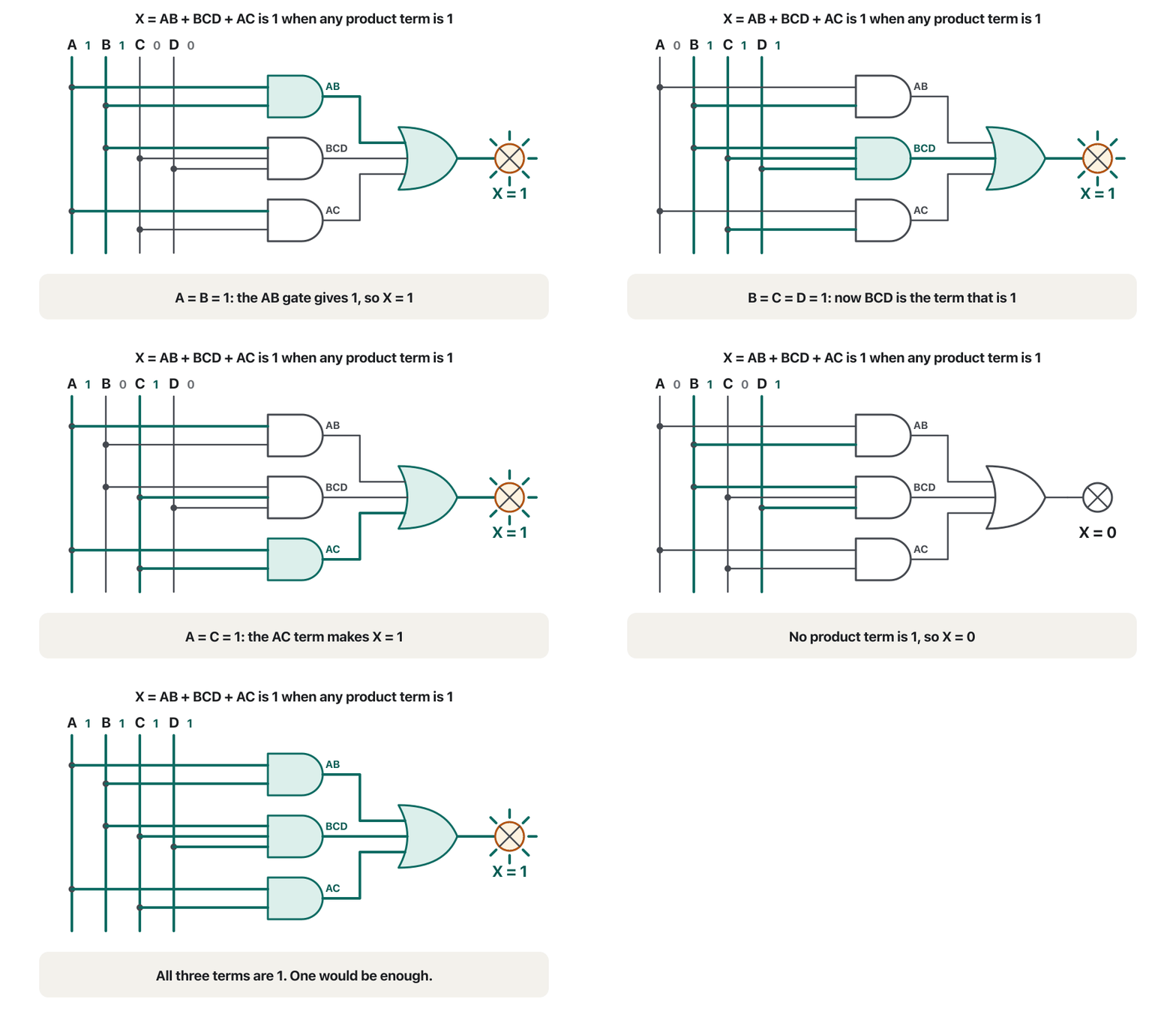
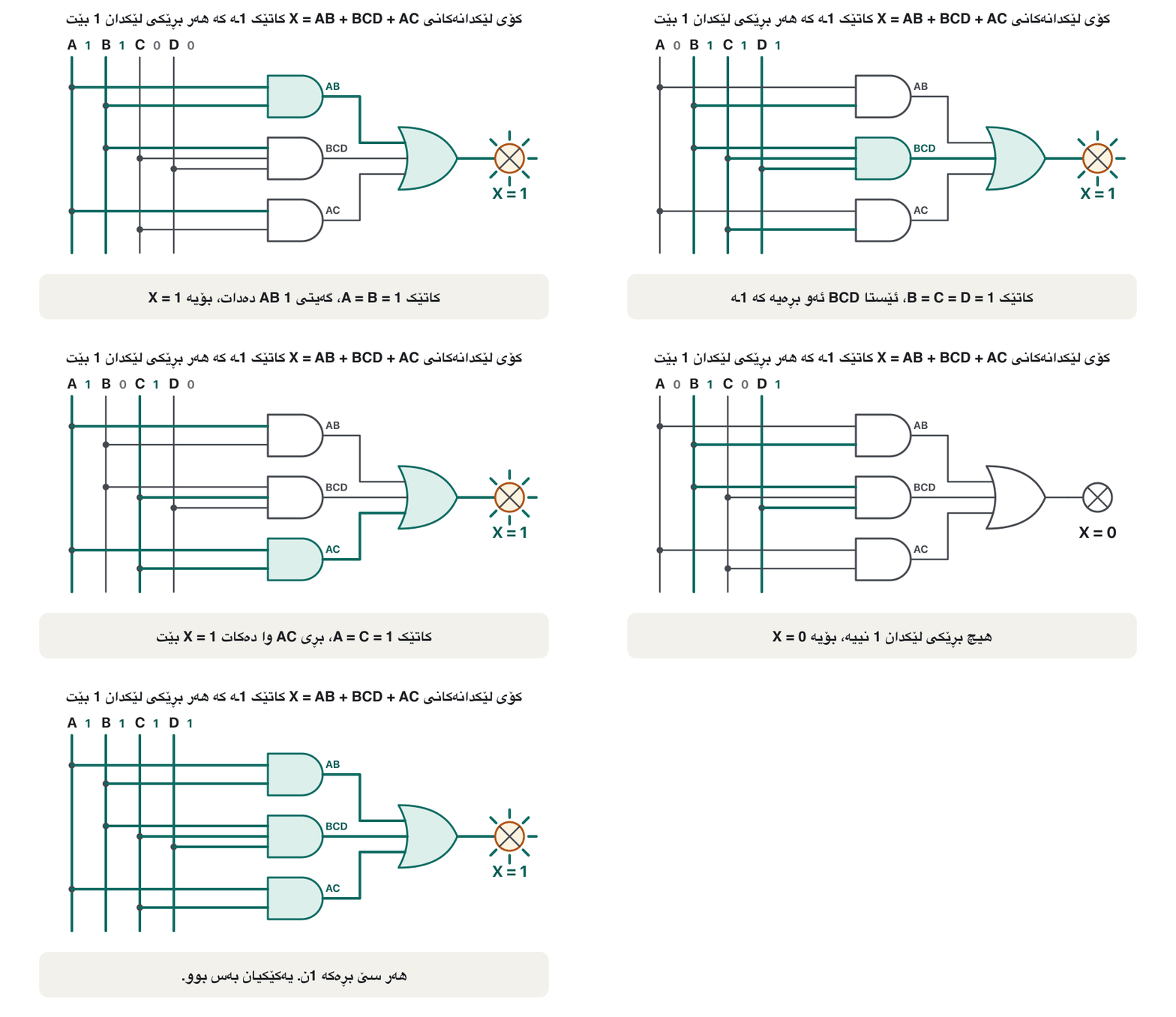
When is an SOP equal to 1?SOP کەی 1ـە؟
From an SOP to its truth tableلە SOPـەوە بۆ خشتەی ڕاستییەکەی
To fill a truth table from an SOP, ask for each product term: in which rows is it 1? A product term is 1 only when every literal in it is 1, and a missing variable may be 0 or 1. Take : is 1 in rows 110 and 111 (C is missing), and is 1 in rows 001 and 011 (B is missing). X is 1 in those four rows and 0 in the others.
بۆ پڕکردنەوەی لە SOPـێکەوە، بۆ هەر بپرسە: لە کام ڕیزانەدا 1ـە؟ تەنها کاتێک 1ـە کە هەموو 1 بن و ونبوو دەتوانێت 0 یان 1 بێت. وەربگرە: لە ڕیزەکانی 110 و 111ـدا 1ـە (C ونە) و لە ڕیزەکانی 001 و 011ـدا 1ـە (B ونە). X لەو چوار ڕیزەدا 1ـە و لە ئەوانی تردا 0.
| 000 | 0 | 0 | 0 |
| 001 | 0 | 1 | 1 |
| 010 | 0 | 0 | 0 |
| 011 | 0 | 1 | 1 |
| 100 | 0 | 0 | 0 |
| 101 | 0 | 0 | 0 |
| 110 | 1 | 0 | 1 |
| 111 | 1 | 0 | 1 |
A product term with k missing variables is 1 in rows: (one missing) covers 2 rows, a single letter like (two missing) covers 4 of the 8 rows.
کە k ونبووی هەبێت لە ڕیزدا 1ـە: (یەک ونبوو) 2 ڕیز دەگرێتەوە، پیتێکی تاک وەک (دوو ونبوو) 4 ڕیز لە 8 ڕیزەکە دەگرێتەوە.
Building an SOP: the AND-OR circuitدروستکردنی SOP: سووڕی لۆجیکیی AND-OR
An SOP turns straight into a circuit: one AND gate for each product term, and one OR gate that adds them. For that is three AND gates (with 2, 3 and 2 inputs) feeding a 3-input OR gate. This is called AND-OR or two-level logic: every signal passes through at most two gates (plus NOT gates for complemented inputs), which keeps the circuit fast.
SOP ڕاستەوخۆ دەبێتە : بۆ هەر و کە کۆیان دەکاتەوە. بۆ سێ پێویستە (بە 2، 3 و 2 ) کە دەچنە ناو بە سێ . پێی دەوترێت AND-OR یان لۆجیکی دوو ئاستی: هەموو بە زۆرەوە بە ناو دوو تێدەپەڕێت (جگە لە بۆ هێڵدار)، ئەمەش خێرا دەهێڵێتەوە.
Building an SOP: the AND-OR circuitدروستکردنی SOP: سووڕی لۆجیکیی AND-OR
The same circuit from NAND gates onlyهەمان سووڕی لۆجیکی تەنها بە گەیتەکانی NAND
An AND-OR circuit can be rebuilt with NAND gates only: every AND becomes a NAND, and the OR becomes a NAND too. It looks like magic, but it is De Morgan. Put two bubbles on each wire between the two levels; two NOTs in a row cancel, so nothing changes. Now each first-level gate is an AND with an output bubble, a NAND, and the output gate is an OR with bubbled inputs, which De Morgan says is a NAND.
AND-OR دەتوانرێت تەنها بە دووبارە دروست بکرێتەوە: هەموو ANDـێک دەبێتە NAND و ORـەکەش دەبێتە NAND. وەک جادوو دەردەکەوێت بەڵام دی مۆرگانە. دوو بازنە لەسەر هەر وایەرێکی نێوان دوو ئاستەکە دابنێ؛ دوو NOT لە دوای یەک یەکتر لادەبەن، بۆیە هیچ ناگۆڕێت. ئێستا هەر ئاستی یەکەم ANDـێکە بە بازنەیەک لەسەر ، واتە NAND و ORـێکە بە بازنەدار، کە دی مۆرگان دەڵێت NANDـە.
The algebra: De Morgan (theorem 1) breaks the long bar, then rule 9 cancels each double bar.
جەبرەکەی: دی مۆرگان ( یەکەم) هێڵە درێژەکە دەشکێنێت، پاشان یاسای 9 هەر هێڵێکی دووانە لادەبات.
The slide draws the output NAND as an OR with bubbled inputs (a negative-OR); both drawings are the same gate. One chip type is then enough, for example a 74HC00 with four 2-input NAND gates.
سلایدەکە NANDـی وەک OR بە بازنەدار دەکێشێت ()؛ هەردوو وێنەکە هەمان . ئیتر یەک جۆر بەسە، بۆ نموونە 74HC00 کە چوار بە دوو لەخۆ دەگرێت.
Kurdish (Sorani): NAND as a universal gate (NOT, AND, OR from NANDs, the two NAND symbols) and turning an SOP into a NAND-NAND circuit.
بە کوردیی سۆرانی: NAND وەک (NOT، AND و OR لە NAND، هەروەها دوو NAND) و گۆڕینی SOP بۆ NAND-NAND.
10:00-13:45: algorithm SOP -> AND-OR -> NAND-NAND, example F = AB + CD; stops before the K-map example.
لە 10:00 تا 13:45: هەنگاوەکان: SOP، پاشان AND-OR، پاشان NAND-NAND؛ نموونەی ؛ پێش نموونەی ڕادەوەستێت.
Product of sums (POS)لێکدانی کۆکان (POS)
A Boolean expression written as sum terms joined by AND, such as . It is built with OR gates that feed one AND gate.
کە لە پێکدێت و بە AND بەیەکەوە بەستراون، وەک . بە چەند دروست دەکرێت کە دەچنە ناو یەک .
When two or more sum terms are multiplied with Boolean multiplication (AND), the result is a product-of-sums expression. Examples: , and . A single variable may be one of the factors: is also POS.
کاتێک دوو یان زیاتر بە لێکدانی بوولی (AND) لێک دەدرێن، ئەنجامەکە پێی دەوترێت (POS). نموونەکان: ، و . یەک دەتوانێت یەکێک لە لێکدراوەکان بێت: یش POSـە.
The same one-bar rule holds: is allowed inside a POS, is not. (De Morgan turns it into , a product of three one-letter factors.)
هەمان یاسای یەک هێڵ ڕاستە: لە ناو POSـدا ڕێگە پێدراوە، ڕێگە پێنەدراوە. (دی مۆرگان دەیکات بە ، لێکدانی سێ لێکدراوی یەک پیتی.)
When is a POS equal to 0? The OR-AND circuitPOS کەی 0ـە؟ سووڕی لۆجیکیی OR-AND
The last operation of a POS is AND, so a POS is 0 as soon as at least one sum term is 0, and it is 1 only when every sum term is 1. Its circuit is the mirror image of AND-OR: one OR gate for each sum term and one AND gate that multiplies them (OR-AND). Here is :
لە POSـدا AND دوایین هەنگاوە، بۆیە POS هەر کە لانیکەم یەک 0 بوو 0ـە و تەنها کاتێک 1ـە کە هەموو 1 بن. وێنەی ئاوێنەی AND-ORـە: بۆ هەر و کە لێکیان دەدات (OR-AND). ئەمە ـە:
Where is ? is 0 at 000, is 0 at 101 and is 0 at 001. In every other row all three sums are 1, so .
X لە کوێ 0ـە؟ لە 000ـدا 0ـە، لە 101ـدا 0ـە و لە 001ـدا 0ـە. لە هەموو ڕیزێکی تردا هەر سێ کۆکە 1ـن، بۆیە .
When is a POS equal to 0? The OR-AND circuitPOS کەی 0ـە؟ سووڕی لۆجیکیی OR-AND
A POS from NOR gates onlyدروستکردنی POS تەنها بە گەیتەکانی NOR
A POS can be built from NOR gates only, the mirror image of NAND-NAND: every OR becomes a NOR, and the final AND becomes a NOR too. Take . The first-level NORs give and , and a NOR with both inputs tied together makes .
POS دەتوانرێت تەنها بە دروست بکرێت، وێنەی ئاوێنەی NAND-NAND: هەموو ORـێک دەبێتە NOR و ANDـی کۆتاییش دەبێتە NOR. وەربگرە. ئاستی یەکەم و دەدەن و کە هەردوو پێکەوە بەستراون دروست دەکات.
The algebra: De Morgan (theorem 2) breaks the long bar, then rule 9 cancels each double bar.
جەبرەکەی: دی مۆرگان ( دووەم) هێڵە درێژەکە دەشکێنێت، پاشان یاسای 9 هەر هێڵێکی دووانە لادەبات.
X is 0 in rows 000, 001, 100 and 110, exactly where one of the sum terms is 0. The circuit uses four NOR gates, so one 74HC02 chip (four 2-input NORs) builds all of it.
X لە ڕیزەکانی 000، 001، 100 و 110ـدا 0ـە، ڕێک ئەو شوێنانەی یەکێک لە 0ـە. چوار بەکار دەهێنێت، بۆیە یەک 74HC02 (چوار NOR بە دوو ) هەمووی دروست دەکات.
Kurdish (Sorani): NOR as a universal gate and the steps to build a POS expression from NOR gates only.
بە کوردیی سۆرانی: NOR وەک و هەنگاوەکانی دروستکردنی POS تەنها لە .
5:00-7:21: algorithm POS -> OR-AND -> NOR-NOR, example F = (A + B)(C + D)E with the bubbles drawn.
لە 5:00 تا 7:21: هەنگاوەکان: POS، پاشان OR-AND، پاشان NOR-NOR؛ نموونەی لەگەڵ کێشانی .
When is a POS equal to 0? The OR-AND circuitPOS کەی 0ـە؟ سووڕی لۆجیکیی OR-AND
From a POS to its truth tableلە POSـەوە بۆ خشتەی ڕاستییەکەی
For a POS, look for the zeros. A sum term is 0 only when every literal in it is 0. In , is 0 when and (rows 000 and 001), and is 0 when and (rows 100 and 110). X is 0 in those four rows and 1 in the others.
بۆ POS بە دوای سفرەکاندا بگەڕێ. تەنها کاتێک 0ـە کە هەموو 0 بن. لە دا، کاتێک 0ـە کە و (ڕیزەکانی 000 و 001) و کاتێک 0ـە کە و (ڕیزەکانی 100 و 110). X لەو چوار ڕیزەدا 0ـە و لە ئەوانی تردا 1.
| 000 | 0 | 1 | 0 |
| 001 | 0 | 1 | 0 |
| 010 | 1 | 1 | 1 |
| 011 | 1 | 1 | 1 |
| 100 | 1 | 0 | 0 |
| 101 | 1 | 1 | 1 |
| 110 | 1 | 0 | 0 |
| 111 | 1 | 1 | 1 |
SOP and POS side by sideSOP و POS لە تەنیشت یەکەوە
| Featureتایبەتمەندی | SOP | POS |
|---|---|---|
| Shapeشێوە | OR of product termsORـی | AND of sum termsANDـی |
| Exampleنموونە | ||
| Decided byبڕیار دەدرێت بە | when any product term is 1 کاتێک هەر 1 بێت | when any sum term is 0 کاتێک هەر 0 بێت |
| Two-level circuit دوو ئاستی | AND-OR | OR-AND |
| One gate type onlyتەنها یەک جۆر | NAND-NAND | NOR-NOR |
| Each term marks rows whereهەر بڕێک ئەو ڕیزانە دیاری دەکات کە | X = 1 | X = 0 |
When every term contains every variable of the expression, the form is called a standard SOP or POS. Then each term matches exactly one row of the truth table. That is the subject of the next lesson, Standard SOP and POS Forms.
کاتێک هەموو بڕێک هەموو لەخۆ بگرێت، شێوەکە پێی دەوترێت SOP یان POSـی ستاندارد. ئەو کاتە هەر بڕێک ڕێک لەگەڵ یەک ڕیزی دەگونجێت. ئەمە بابەتی وانەی داهاتووە، SOP و POSـی ستاندارد.
Turning any expression into SOPگۆڕینی هەر دەربڕینێک بۆ SOP
Two tools are enough: first remove long bars with De Morgan, then multiply out with the distributive law until no brackets are left. Examples:
دوو ئامراز بەسن: یەکەم هێڵە درێژەکان بە دی مۆرگان لابە، پاشان بە کەوانەکان بکەرەوە تا هیچ کەوانەیەک نەمێنێت. نموونەکان:
Distributive law: every term of the first bracket times every term of the second.
: هەر بڕێکی کەوانەی یەکەم لێکدراو لە هەر بڕێکی کەوانەی دووەم.
De Morgan first: NOT of an OR is the AND of the NOTs.
یەکەم دی مۆرگان: NOTـی OR یەکسانە بە ANDـی NOTـەکان.
Common mistakesهەڵە باوەکان
| Mistakeهەڵە | Fixچارەسەر |
|---|---|
| Calling an SOP.ناونانی بە SOP. | A bar may cover one variable only. De Morgan first: .هێڵێک تەنها دەتوانێت یەک داپۆشێت. یەکەم دی مۆرگان: . |
| Thinking an SOP needs all product terms to be 1.وا بیرکردنەوە کە SOP پێویستی بەوەیە هەموو 1 بن. | One product term of 1 is enough (OR). It is the POS that needs every sum term to be 1.یەک کە 1 بێت بەسە (OR). POSـە کە پێویستی بەوەیە هەموو 1 بێت. |
| Reading the zeros of a sum term wrongly: is 0 at , .خوێندنەوەی هەڵەی سفرەکانی : لە ، دا 0ـە. | Every literal must be 0: and , so .هەموو دەبێت 0 بێت: و ، کەواتە . |
| Using AND gates for a POS.بەکارهێنانی بۆ POS لە ئاستی یەکەمدا. | POS: OR gates first, one AND gate last (OR-AND).POS: یەکەم ، لە کۆتاییدا یەک (OR-AND). |
| Forgetting the NOT gates for complemented inputs.لەبیرکردنی بۆ هێڵدار. | Every barred letter, such as , needs an inverter (or a NOT output already available).هەموو پیتێکی هێڵدار، وەک ، پێویستی بە هەیە (یان NOT کە پێشتر هەبێت). |
Exercisesڕاهێنانەکان
Convert each expression to sum-of-products form: (a) (b) .
هەر بگۆڕە بۆ شێوەی : (أ) (ب) .
Hintئاماژە
Multiply out with the distributive law.
بە کەوانەکان بکەرەوە.
Show answerوەڵامەکە پیشان بدە
(a) Distributive law: B multiplies both terms in the bracket.
(أ) : B هەردوو بڕەکەی ناو کەوانەکە لێک دەدات.
(b) Start with the given expression:
(ب) بە دراوەکە دەست پێبکە:
Distributive law: every term times every term.
: هەر بڕێک لێکدراو لە هەر بڕێک.
Rule 7: .
یاسای 7: .
Rule 10: B absorbs AB, BC and BD.
یاسای 10: B بڕەکانی AB، BC و BD هەڵدەمژێت.
For (b), the second line is already an SOP; the simplified SOP is the same function with fewer gates.
بۆ (ب)، دێڕی دووەم پێشتر SOPـە؛ SOPـە کورتکراوەکەی هەمان بە کەمتر.
Identify each expression as SOP, standard SOP, POS or standard POS: (a) (b) (c) (d) .
هەر دیاری بکە کە SOP، SOPـی ستاندارد، POS یان POSـی ستانداردە: (أ) (ب) (ج) (د) .
Hintئاماژە
First decide SOP or POS from the last operation, then check whether every term has every variable.
یەکەم لە دوایین هەنگاوەوە (OR یان AND) بڕیار بدە SOPـە یان POS، پاشان سەیر بکە ئایا هەموو بڕێک هەموو تێدایە.
Show answerوەڵامەکە پیشان بدە
| Expression | Formشێوە | Whyبۆچی |
|---|---|---|
| (a)(أ) | SOP (not standard)SOP (ستاندارد نییە) | AB has no C or D; the other terms also miss a variableAB نە Cـی تێدایە نە D؛ بڕەکانی تریش ونیان هەیە |
| (b)(ب) | standard POSPOSـی ستاندارد | both sum terms contain A, B and Cهەردوو A، B و Cـیان تێدایە |
| (c)(ج) | standard SOPSOPـی ستاندارد | both product terms contain A, B and Cهەردوو A، B و Cـیان تێدایە |
| (d)(د) | POS (not standard)POS (ستاندارد نییە) | A alone and miss variablesA بە تەنها و ونە |
For list the gates of (a) the AND-OR circuit and (b) the NAND-only circuit.
بۆ ئەمانە بنووسە: (أ) AND-OR و (ب) تەنها بە NAND.
Show answerوەڵامەکە پیشان بدە
- (a) Two NOT gates (, ), two 2-input AND gates (, ) and one 2-input OR gate.
- (b) Replace each AND and the OR by a NAND: two NAND gates for the products and one NAND for the output, . The two inverters can also be NAND gates with their inputs tied together.
- (أ) دوو (، )، دوو بە دوو (، ) و یەک بە دوو .
- (ب) هەموو AND و ORـەکە بە NAND بگۆڕە: دوو بۆ لێکدانەکان و یەک NAND بۆ ، . هەروەها لە جیاتی دەتوانیت بەکاربهێنیت کە پێکەوە بەستراون.
For find X for and for .
بۆ ، X بدۆزەوە بۆ و بۆ .
Show answerوەڵامەکە پیشان بدە
: , so (one zero sum is enough). : , , so again.
: ، بۆیە (یەک کۆی سفر بەسە). : ، ، بۆیە دیسان .
Draws AND-OR and OR-AND circuits from SOP and POS expressions, classifies expressions by form, and shows the identity and null rules with an OR gate.
لە SOP و POSـەوە AND-OR و OR-AND دەکێشێت، بە پێی شێوە پۆلێن دەکات و و بە OR پیشان دەدات.
35:11-48:08: decide SOP, POS, both or neither; count variables, literals, product and sum terms; spot standard terms.
لە 35:11 تا 48:08: بڕیار بدە SOPـە، POSـە، هەردووکیانە یان هیچیان؛ ، ، و بژمێرە؛ بڕە ستانداردەکان بدۆزەرەوە.
Summaryپوختە
- SOP = product terms joined by OR, e.g. ; POS = sum terms joined by AND, e.g. .
- A bar may cover only one variable in SOP and POS; remove long bars with De Morgan.
- SOP is 1 when any product term is 1; POS is 0 when any sum term is 0.
- Circuits: SOP → AND-OR or NAND-NAND; POS → OR-AND (or NOR-NOR).
- Any expression becomes SOP with De Morgan plus the distributive law.
- SOP = کە بە OR بەستراون، وەک ؛ POS = کە بە AND بەستراون، وەک .
- لە SOP و POSـدا هێڵێک تەنها دەتوانێت یەک داپۆشێت؛ هێڵە درێژەکان بە دی مۆرگان لابە.
- SOP کاتێک 1ـە کە هەر 1 بێت؛ POS کاتێک 0ـە کە هەر 0 بێت.
- : SOP ← AND-OR یان NAND-NAND؛ POS ← OR-AND (یان NOR-NOR).
- هەر بە دی مۆرگان و دەبێتە SOP.
Why does NAND-NAND give the same output as AND-OR?بۆچی NAND-NAND هەمان دەرخستە دەدات وەک AND-OR؟
Two bubbles on each middle wire cancel, and an OR with bubbled inputs is a NAND (De Morgan).
دوو بازنە لەسەر هەر وایەرێکی ناوەڕاست یەکتر لادەبەن و OR بە بازنەدار NANDـە (دی مۆرگان).
Is an SOP?ئایا SOPـە؟
Yes: a one-letter product term A plus the product term BC.
بەڵێ: یەک پیتی A لەگەڵ BC.
Videoڤیدیۆ
Watch a videoسەیری ڤیدیۆیەک بکە
A video that viewers liked a lot and praised in their comments, chosen for this lesson.ڤیدیۆیەک کە بینەران زۆریان پێ خۆش بووە و لە کۆمێنتەکانیاندا ستایشیان کردووە، بۆ ئەم وانەیە هەڵبژێردراوە.
Draws AND-OR and OR-AND circuits from SOP and POS expressions, classifies expressions by form, and shows the identity and null rules with an OR gate.
لە SOP و POSـەوە AND-OR و OR-AND دەکێشێت، بە پێی شێوە پۆلێن دەکات و و بە OR پیشان دەدات.
Chapter 'SOP and POS expressions' (26:56-35:11): AND-OR and OR-AND circuits drawn from SOP and POS functions.
بەشی SOP and POS expressions (26:56 تا 35:11): AND-OR و OR-AND لە SOP و POS دەکێشرێن.
Lesson complete!وانەکە تەواو بوو!
Well done. Review the key terms, then go on to the next lesson.دەستخۆش. سەیرێکی زاراوە سەرەکییەکان بکەرەوە، پاشان بڕۆ بۆ وانەی داهاتوو.
Key termsزاراوە سەرەکییەکان
Standard SOP and POS FormsSOP و POSـی ستاندارد
Related lecturesوانە پەیوەندیدارەکان
References and further readingسەرچاوەکان و خوێندنەوەی زیاتر
- MIT 6.004 Computation Structures, notes: Combinational logic (sum of products, AND-OR and NAND-NAND)
- MIT OpenCourseWare 6.004 (Spring 2017), 4.2 Combinational Logic: Sum of Products
- Wikipedia: Canonical normal form (SOP/POS)
- T. L. Floyd, Digital Fundamentals, 11th ed., §4-6 Standard Forms of Boolean Expressions (Pearson, 2015) — topics only
- T. L. Floyd, Digital Fundamentals, 11th ed., §5-4 Combinational Logic Using NAND and NOR Gates (Pearson, 2015) — topics only
This lecture is a first edition. The Kurdish text and terminology are waiting for review by Kurdish IT teachers.ئەم وانەیە چاپی یەکەمە. دەقە کوردییەکە و زاراوەکانی چاوەڕێی پێداچوونەوەی مامۆستایانی کوردی بواری IT ن.