Chapterبەش 4 · Lectureوانە 4.6
Mutually Exclusive Events and the Addition Ruleڕووداوی جیا و یاسای کۆکردنەوەی ئەگەر
"Or" as a union, mutually exclusive (disjoint) events and their two properties, the general addition rule with its proof, Examples (15), (16) and (19), a Venn diagram puzzle with Python and Flutter students, inclusion–exclusion for three events and the midterm bag question.
«یان» وەک ، و دوو تایبەتمەندییەکەیان، بە شێوە گشتییەکەی لەگەڵ ، نموونەکانی (15)، (16) و (19)، مەتەڵێکی بە قوتابیانی Python و Flutter، بۆ سێ و پرسیاری توورەکەی تاقیکردنەوەی نیوەی وەرز.
What you will learnچی فێر دەبیت
- Decide whether two events are mutually exclusive and use when they are.
- Apply and prove the general addition rule for overlapping events.
- Solve Venn diagram problems, also backwards, and use inclusion–exclusion for three events.
- بڕیار بدە ئایا دوو و گەر وابوون بەکاربهێنە.
- بە شێوە گشتییەکەی بۆ یەکتربڕ بەکاربهێنە و بیسەلمێنە.
- کێشەی چارەسەر بکە (بە پێچەوانەشەوە) و بۆ سێ بەکاربهێنە.
"A or B" is a union«A یان B» یەکگرتنێکە
In probability, A or B means that A happens, or B happens, or both. As sets it is the union : every outcome that is in A, in B, or in both, listed once. A and B is the intersection : the outcomes in both. You met these in Union, Intersection, Difference and Complement and Or, and, not: combining events.
لە ، A یان B واتە A ڕوو دەدات، یان B ڕوو دەدات، یان هەردووکیان. وەک ئەمە : هەموو ئەو لە A، لە B یان لە هەردووکیاندان، هەر یەکەیان یەک جار. A و B : ئەو لە هەردووکیاندان. ئەمانەت لە یەکگرتن و یەکتربڕین و یان، و، نا: تێکەڵکردنی ڕووداوەکان بینیوە.
The sign looks like a cup, and a cup holds more: "or" lets in outcomes from both events, so it is at least as big as each of them. The sign is the cup turned upside down: "and" keeps only what both events share, so it is never bigger than either. So .
نیشانەی لە پەرداخێک دەچێت و پەرداخ زیاتر هەڵدەگرێت: «یان» لە هەردوو وەردەگرێت، بۆیە لانیکەم بە قەد هەر یەکێکیان گەورەیە. نیشانەی پەرداخە بە سەرەوژێری: «و» تەنها ئەوە دەهێڵێتەوە کە هەردووکیان هاوبەشیانە، بۆیە هەرگیز لە هیچیان گەورەتر نییە. کەواتە .
Where the analogy stops workingسنووری ئەم نموونەیە
A memory aid only: the inequalities are proved by theorem 1 of the axioms lesson (a subset is never more likely).
تەنها یارمەتییەک بۆ لەبیرکردنە: نایەکسانییەکان بە سەلمێنراوی 1ـی وانەی بەڵگەنەویستەکان دەسەلمێنرێن ( هەرگیز زیاتر نییە).
Mutually exclusive (disjoint) eventsڕووداوی جیا
Two events are mutually exclusive, or disjoint, if they cannot happen at the same time: when one happens, the other cannot. They share no outcome, . Rolling a die: "even" () and "odd" () are mutually exclusive, because no number is both.
دوو (جیاکراوە)، گەر نەتوانن لە هەمان کاتدا ڕوو بدەن: کاتێک یەکێکیان ڕوو دەدات، ئەوی تر ناتوانێت. هیچ هاوبەشیان نییە، . هەڵدانی بەردەزار: «جووت» () و «تاک» () ، چونکە هیچ ژمارەیەک هەردووکیان نییە.
Mutually exclusive events have two properties:
دوو تایبەتمەندییان هەیە:
The first says they never happen together. The second is the additivity axiom: the probability that one of them happens is the sum. Example: rolling a 2 or a 5, .
یەکەم دەڵێت هەرگیز پێکەوە ڕوو نادەن. دووەم کۆکراوەییە: ڕوودانی یەکێکیان کۆی هەردووکیانە. نموونە: هێنانی 2 یان 5، .
Mutually exclusive (disjoint) eventsڕووداوی جیا
Example (15): one ball from a bagنموونەی (15): یەک تۆپ لە توورەکەیەک
Example (15). A bag holds 4 white, 3 black and 5 red balls (12 in all). One ball is drawn at random. What is the probability that it is white or red?
نموونەی (15). توورەکەیەک 4 تۆپی سپی، 3 ڕەش و 5 سووری تێدایە (هەمووی 12). یەک تۆپ بە هەڕەمەکی دەردەهێنرێت. ئەوە چەندە کە سپی یان سوور بێت؟
One ball cannot be both white and red, so the events are mutually exclusive and the probabilities simply add. Check by counting: 9 of the 12 balls are white or red.
یەک تۆپ ناتوانێت هەم سپی و هەم سوور بێت، بۆیە و بە سادەیی کۆ دەکرێنەوە. بە ژماردن بیپشکنە: 9 لە 12 تۆپەکە سپی یان سوورن.
When events overlap: subtract onceکاتێک ڕووداوەکان یەکتر دەبڕن: یەک جار دەربکە
Roll a die. Let A be "even" () and B "greater than 3" (). If you simply add, , as if A or B were certain. But a roll of 1 or 3 is in neither event. The problem is that 4 and 6 belong to both events, so they were counted twice.
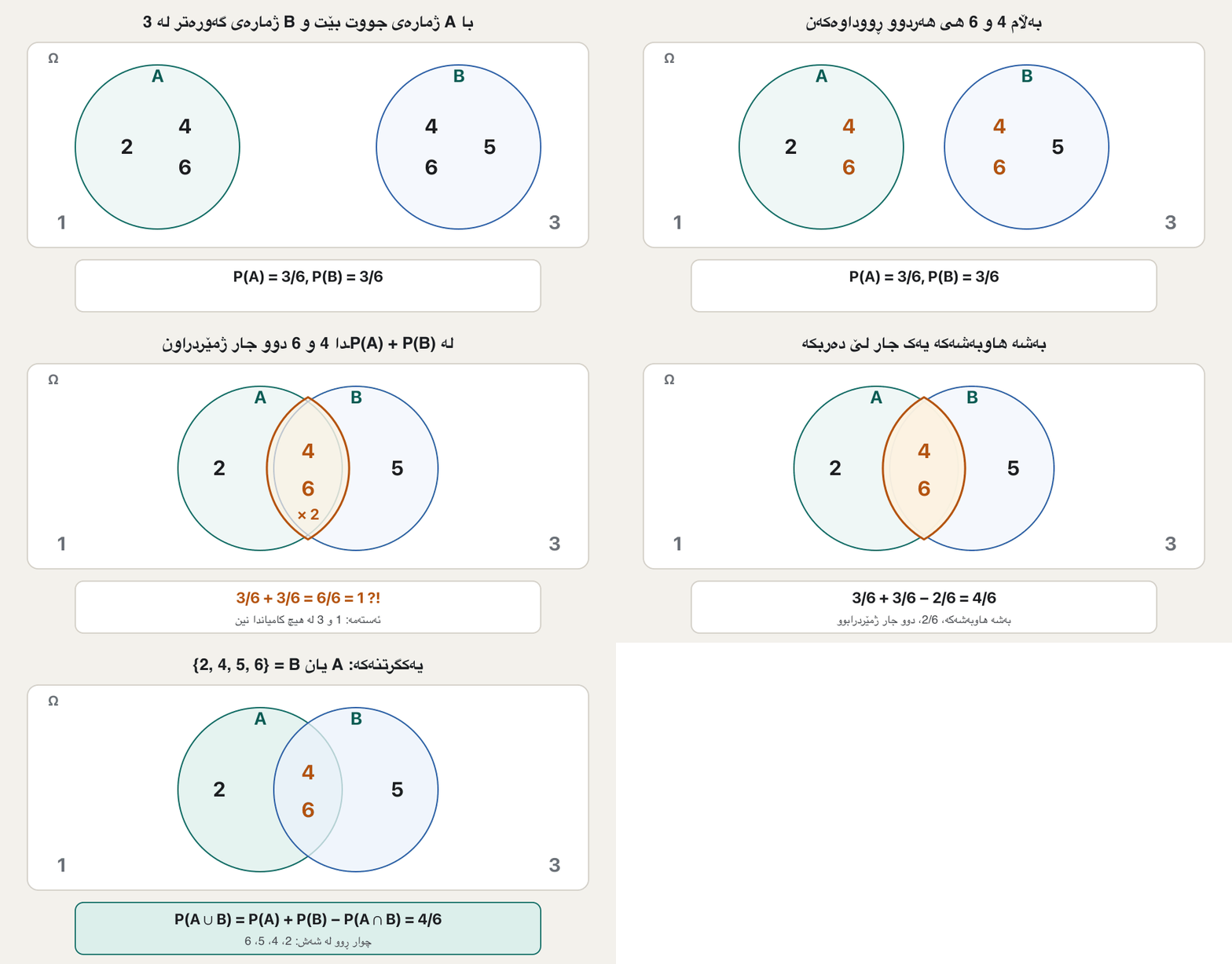
بەردەزارێک هەڵبدە. با A «جووت» بێت () و B «لە 3 گەورەتر» بێت (). گەر تەنها کۆیان بکەیتەوە، ، وەک ئەوەی A یان B دڵنیا بێت. بەڵام هێنانی 1 یان 3 لە هیچ کامیاندا نییە. کێشەکە ئەوەیە کە 4 و 6 سەر بە هەردوو ، بۆیە دوو جار ژمێردراون.
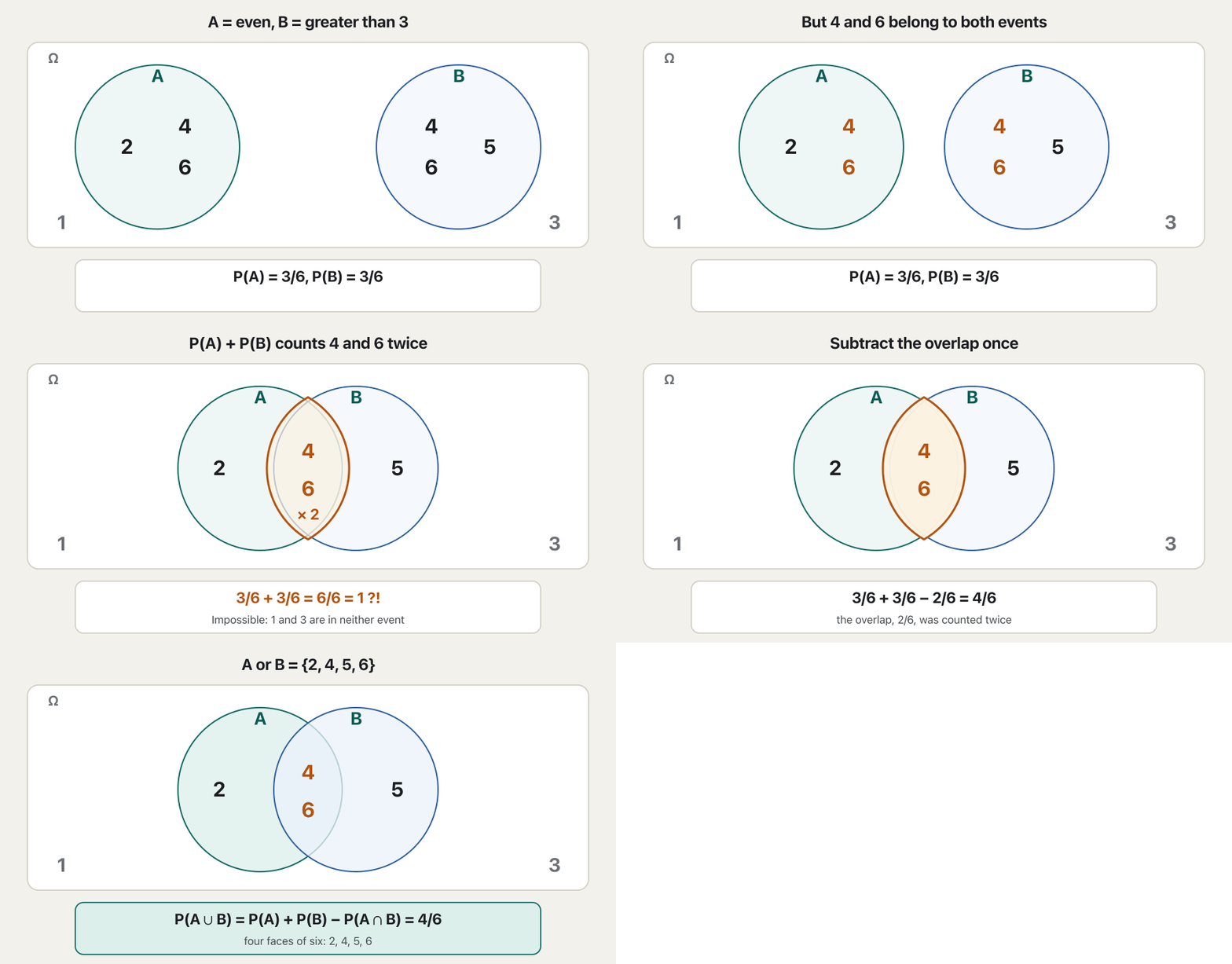
This is the addition rule for any two events (theorem 6 in the notes). For the die: , and indeed "A or B", , has 4 of the 6 faces. When A and B are mutually exclusive, and the rule becomes simple addition.
ئەمە ـە بۆ هەر دوو ( 6 لە تێبینییەکاندا). بۆ بەردەزارەکە: . بە ڕاستیش «A یان B»، واتە ، 4 لە 6 ڕووەکەی هەیە. کاتێک A و B بن، و یاساکە دەبێتە کۆکردنەوەی سادە.
Why the rule is true: the proofبۆچی یاساکە ڕاستە: سەلماندنەکە
The addition rule is proved from the axioms by cutting into pieces that do not overlap.
لە دەسەلمێنرێت، بە بڕینی بۆ چەند پارچەیەک کە یەکتر نابڕن.
- Cut the unionیەکگرتنەکە ببڕە
: all of A, plus the part of B that is outside A. These two pieces do not overlap.
: هەموو A، لەگەڵ ئەو بەشەی B کە لە دەرەوەی Aـیە. ئەم دوو پارچەیە یەکتر نابڕن.
- Use additivityکۆکراوەیی بەکاربهێنە
.
.
- Split B (theorem 7)B دابەش بکە (سەلمێنراوی 7)
B is its part inside A plus its part outside A: , so .
B بریتییە لە بەشەکەی لە ناو A و بەشەکەی لە دەرەوەی A: ، بۆیە .
- Substituteجێگیری بکە
.
.
Example (16): a girl or an A gradeنموونەی (16): کچ یان نمرەی A
Example (16). A maths class has 30 students: 17 boys and 13 girls. 4 boys and 5 girls got an A grade. One student is chosen at random. What is the probability that the student is a girl or got an A?
نموونەی (16). پۆلێکی بیرکاری 30 قوتابیی تێدایە: 17 کوڕ و 13 کچ. 4 کوڕ و 5 کچ نمرەی Aیان وەرگرت. قوتابییەک بە هەڕەمەکی هەڵدەبژێردرێت. ئەوە چەندە کە کچ بێت یان نمرەی Aـی وەرگرتبێت؟
| Studentsقوتابیان | Got an Aنمرەی A | No Aبێ A | Totalکۆ |
|---|---|---|---|
| Boysکوڕ | 4 | 13 | 17 |
| Girlsکچ | 5 | 8 | 13 |
| Totalکۆ | 9 | 21 | 30 |
G = the student is a girl, T = the student got the top grade A. The 5 girls with an A are in both events, so they are subtracted once. Check by counting: 13 girls and 4 boys with an A make 17 students.
G = قوتابییەکە کچە، T = قوتابییەکە نمرەی بەرزی Aـی وەرگرتووە. ئەو 5 کچەی Aیان هەیە لە هەردوو ، بۆیە یەک جار دەردەکرێن. بە ژماردن بیپشکنە: 13 کچ و 4 کوڕی خاوەن A دەکەنە 17 قوتابی.
Example (19): the sum of two diceنموونەی (19): کۆی دوو بەردەزار
Example (19). Two dice are rolled. What is the probability that the sum is 4 or the sum is greater than 8? Put the 36 equally likely pairs in a grid and colour each event.
نموونەی (19). دوو بەردەزار هەڵدەدرێن. ئەوە چەندە کە کۆکەیان 4 بێت یان لە 8 گەورەتر بێت؟ 36 جووتەکە (هەموویان بە هەمان ) لە خانەبەندییەکدا دابنێ و هەر ڕەنگ بکە.
A Venn diagram problem: Python and Flutterکێشەیەکی هێڵکاریی ڤێن: Python و Flutter
In a class of 30 students, 16 study Python and 21 study Flutter. Every student studies at least one of them. How many study both? This puzzle is the addition rule used backwards.
لە پۆلێکی 30 قوتابیدا، 16 کەس Python دەخوێنن و 21 کەس Flutter. هەموو قوتابییەک لانیکەم یەکێکیان دەخوێنێت. چەند کەس هەردووکیان دەخوێنن؟ ئەم مەتەڵە بە پێچەوانەوە بەکارهێنراو.
- Name the unknownنەزانراوەکە ناو بنێ
Let be the number who study both. Then study only Python and only Flutter.
با ژمارەی ئەوانە بێت کە هەردووکیان دەخوێنن. ئەوکات کەس تەنها Python دەخوێنن و کەس تەنها Flutter.
- Add the three regionsسێ ناوچەکە کۆ بکەرەوە
.
.
- Fill the diagramهێڵکاریی ڤێنەکە پڕ بکەرەوە
Python only 9, both 7, Flutter only 14, neither 0; .
تەنها Python 9، هەردووکیان 7، تەنها Flutter 14، هیچیان 0؛ .
| Event (one student at random) (یەک قوتابی بە هەڕەمەکی) | Probability |
|---|---|
| studies PythonPython دەخوێنێت | |
| studies FlutterFlutter دەخوێنێت | |
| Python onlyتەنها Python | |
| Flutter onlyتەنها Flutter | |
| Python and FlutterPython و Flutter | |
| Python or FlutterPython یان Flutter |
A Kurdish teacher explains complementary events and P(Ā) = 1 − P(A), then reads probabilities from a three-circle Venn diagram.
مامۆستایەکی کورد و ڕوون دەکاتەوە، پاشان لە سێ بازنەیی دەخوێنێتەوە.
Plays 10:10-15:20 in Sorani: 60 students and three subjects in a Venn diagram; the chance that a student studies two subjects, all three, and so on.
لە 10:10 تا 15:20 بە سۆرانی پەخش دەبێت: 60 خوێندکار و سێ بابەت لە ؛ ئەوەی خوێندکارێک دوو بابەت یان هەر سێ بابەتەکە بخوێنێت، لەگەڵ پرسیاری تر.
Three events: inclusion–exclusionسێ ڕووداو: بنەمای تێخستن و دەرکردن
For three events the same idea needs one more correction: adding the three probabilities counts every pairwise overlap twice, so subtract the pairs, but then the middle part (in all three) has been added three times and subtracted three times, so add it back once.
بۆ سێ هەمان بیرۆکە پێویستی بە ڕاستکردنەوەیەکی تر هەیە: کۆکردنەوەی سێ هەر بەشێکی هاوبەشی دوو دانە دوو جار دەژمێرێت، بۆیە جووتەکان دەربکە. بەڵام بەشی ناوەڕاست (لە هەر سێکیاندا) سێ جار کۆکراوەتەوە و سێ جار دەرکراوە، بۆیە یەک جار بیخەرەوە سەری.
This is the inclusion–exclusion principle. It extends to events: add the singles, subtract the pairs, add the triples, subtract the quadruples, and so on.
ئەمە ـە. بۆ درێژ دەکرێتەوە: تاکەکان کۆ بکەرەوە، جووتەکان دەربکە، سێیەکان کۆ بکەرەوە، چوارەکان دەربکە، بەم شێوەیە.
Example. A number is chosen at random from 1 to 30. Let A = divisible by 2 (15 numbers), B = divisible by 3 (10), C = divisible by 5 (6). Pairs: by 6 (5 numbers), by 15 (2), by 10 (3); all three: by 30 (1).
نموونە. ژمارەیەک بە هەڕەمەکی لە 1 تا 30 هەڵدەبژێردرێت. با A = دابەشبوو بە 2 (15 ژمارە)، B = دابەشبوو بە 3 (10)، C = دابەشبوو بە 5 (6) بن. جووتەکان: بە 6 (5 ژمارە)، بە 15 (2)، بە 10 (3)؛ هەر سێکیان: بە 30 (1).
Checking every number from 1 to 30 one by one gives the same 22 numbers; the 8 left over are 1, 7, 11, 13, 17, 19, 23, 29.
پشکنینی هەموو ژمارەیەک لە 1 تا 30 یەک یەک هەمان 22 ژمارە دەدات؛ ئەو 8 ژمارەیەی دەمێننەوە 1، 7، 11، 13، 17، 19، 23، 29ن.
Common mistakesهەڵە باوەکان
| Mistakeهەڵە | Why it is wrongبۆچی هەڵەیە | Do this insteadلەبری ئەوە ئەمە بکە |
|---|---|---|
| Adding for overlapping eventsکۆکردنەوەی بۆ یەکتربڕ | The shared outcomes are counted twice; the answer can even pass 1. هاوبەش دوو جار دەژمێردرێن؛ وەڵامەکە دەشێت لە 1 تێپەڕێت. | Ask: can both happen at once? If yes, subtract .بپرسە: دەکرێت هەردووکیان پێکەوە ڕوو بدەن؟ گەر بەڵێ، دەربکە. |
| Subtracting the overlap twiceدەرکردنی بەشە هاوبەشەکە دوو جار | Then the shared outcomes are not counted at all.ئەوکات هاوبەش هەر ناژمێردرێن. | Subtract it exactly once (for two events).ڕێک یەک جار دەری بکە (بۆ دوو ). |
| Thinking "disjoint" means "independent"وابزانیت «جیا» واتە «سەربەخۆ» | Disjoint events with positive probabilities are dependent. بە ئەرێنی . | Use for disjoint, for independent.بۆ جیا و بۆ سەربەخۆ بەکاربهێنە. |
| Adding an impossible colour as if it had balls (midterm Q2A b)کۆکردنەوەی ڕەنگێکی ئەستەم وەک ئەوەی تۆپی هەبێت (پرسیاری 2A b) | A colour that is not in the bag has probability 0.ڕەنگێک کە لە توورەکەکەدا نییە 0ـە. | , so (K = black, G = green).، بۆیە (K ڕەش، G سەوز). |
Exercisesڕاهێنانەکان
A bag contains 4 green, 6 yellow and 8 blue balls. One ball is drawn at random. (a) What is the probability that it is blue or green? (b) What is the probability that it is black or green?
توورەکەیەک 4 تۆپی سەوز، 6 زەرد و 8 شینی تێدایە. یەک تۆپ بە هەڕەمەکی دەردەهێنرێت. (أ) ئەوە چەندە کە شین یان سەوز بێت؟ (ب) ئەوە چەندە کە ڕەش یان سەوز بێت؟
Show answerوەڵامەکە پیشان بدە
18 balls in all. One ball has one colour, so the events are mutually exclusive. There is no black ball (K), so : an impossible event adds nothing. (B is blue here.)
هەمووی 18 تۆپ. یەک تۆپ یەک ڕەنگی هەیە، بۆیە . هیچ تۆپێکی ڕەش (K) نییە، بۆیە : هیچ زیاد ناکات. (لێرەدا B شینە.)
Two dice are rolled. Find the probability that the first die shows 6 or the sum is at least 10.
دوو بەردەزار هەڵدەدرێن. ئەوە بدۆزەرەوە کە بەردەزاری یەکەم 6 نیشان بدات یان کۆکە لانیکەم 10 بێت.
Hintئاماژە
List the pairs with a sum of at least 10 and see which start with 6.
ئەو جووتانە بنووسە کە کۆیان لانیکەم 10ـە و سەیر بکە کامیان بە 6 دەست پێ دەکەن.
Show answerوەڵامەکە پیشان بدە
First die 6: 6 pairs. Sum at least 10: (4,6), (5,5), (5,6), (6,4), (6,5), (6,6). Both: (6,4), (6,5), (6,6).
بەردەزاری یەکەم 6: 6 جووت. کۆی لانیکەم 10: (4,6)، (5,5)، (5,6)، (6,4)، (6,5)، (6,6). هەردووکیان: (6,4)، (6,5)، (6,6).
One die. A = even, B = greater than 3. What is the probability that neither A nor B happens?
یەک بەردەزار. A = جووت، B = لە 3 گەورەتر. ئەوە چەندە کە هیچ کام لە A و B ڕوو نەدەن؟
Show answerوەڵامەکە پیشان بدە
"Neither" is the complement of "A or B": . Check: only 1 and 3 are in neither event.
«هیچ کامیان» «A یان B»ـە: . پشکنین: تەنها 1 و 3 لە هیچ نین.
In a survey, L = "a student uses a laptop" and T = "a student uses a tablet", with , and . What is , the probability of using both?
لە ڕاپرسییەکدا، L واتە «قوتابییەک لاپتۆپ بەکاردەهێنێت» و T واتە «تابلێت بەکاردەهێنێت»: ، و . ، واتە بەکارهێنانی هەردووکیان، چەندە؟
Show answerوەڵامەکە پیشان بدە
Rearrange the addition rule, as in the Python and Flutter puzzle.
ڕێک بخەرەوە، وەک مەتەڵی Python و Flutter.
Summaryپوختە
- "A or B" is the union ; "A and B" is the intersection ( is a cup: it holds more).
- Mutually exclusive (disjoint): and .
- Any two events: ; the overlap is subtracted once.
- Three events: add singles, subtract pairs, add the triple (inclusion–exclusion).
- The rule also works backwards: ().
- «A یان B» ـە؛ «A و B» ـە ( پەرداخە: زیاتر هەڵدەگرێت).
- : و .
- هەر دوو : ؛ بەشە هاوبەشەکە یەک جار دەردەکرێت.
- سێ : تاکەکان کۆ بکەرەوە، جووتەکان دەربکە، سێیەکە بخەرەوە سەر ().
- یاساکە بە پێچەوانەشەوە کار دەکات: ().
Why is the probability of "sum 4 or sum greater than 8" just ?بۆچی ئەگەری «کۆی 4 یان کۆی گەورەتر لە 8» تەنها ـە؟
A sum cannot be 4 and greater than 8 at once: the events are mutually exclusive.
کۆیەک ناتوانێت لە یەک کاتدا 4 بێت و لە 8 گەورەتر بێت: .
What does "mutually inclusive" mean in the notes?«ڕووداوی ناجیا» لە تێبینییەکاندا چ واتایەکی هەیە؟
Events that can happen together; textbooks say "not mutually exclusive".
ئەو کە دەتوانن پێکەوە ڕوو بدەن؛ کتێبەکان دەڵێن «جیا نین».
Videoڤیدیۆ
Watch a videoسەیری ڤیدیۆیەک بکە
A video that viewers liked a lot and praised in their comments, chosen for this lesson.ڤیدیۆیەک کە بینەران زۆریان پێ خۆش بووە و لە کۆمێنتەکانیاندا ستایشیان کردووە، بۆ ئەم وانەیە هەڵبژێردراوە.
Probability of "A or B" with two dice: add both events and subtract the overlap once, shown on a Venn diagram.
«A یان B» بە دوو بەردەزار: هەردوو کۆ بکەرەوە و بەشە هاوبەشەکە یەک جار لێی کەم بکەرەوە، لەسەر .
Reviews sample spaces and simple probability with two dice, then the union of two overlapping events from 4:14 (9/36 + 11/36 − 5/36 = 15/36).
سەرەتا و سادە بە دوو بەردەزار دووبارە دەکاتەوە، پاشان لە 4:14ـەوە دوو کە بەشی هاوبەشیان هەیە ().
Lesson complete!وانەکە تەواو بوو!
Well done. Review the key terms, then go on to the next lesson.دەستخۆش. سەیرێکی زاراوە سەرەکییەکان بکەرەوە، پاشان بڕۆ بۆ وانەی داهاتوو.
Key termsزاراوە سەرەکییەکان
Conditional Probability, Independence and the Multiplication Ruleئەگەری مەرجدار، سەربەخۆیی و یاسای لێکدانی ئەگەر
Related lecturesوانە پەیوەندیدارەکان
References and further readingسەرچاوەکان و خوێندنەوەی زیاتر
- OpenStax, Introductory Statistics 2e, 3.2 Independent and Mutually Exclusive Events
- OpenStax, Introductory Statistics 2e, 3.3 Two Basic Rules of Probability (the addition rule)
- OpenStax, Introductory Statistics 2e, 3.5 Tree and Venn Diagrams (Venn diagrams with the addition rule)
- H. Pishro-Nik: 1.3.3 Finding Probabilities (inclusion-exclusion derived from the axioms)
- MIT OpenCourseWare 18.05, Class 1 reading: Counting and Sets (inclusion-exclusion principle)
This lecture is a first edition. The Kurdish text and terminology are waiting for review by Kurdish IT teachers.ئەم وانەیە چاپی یەکەمە. دەقە کوردییەکە و زاراوەکانی چاوەڕێی پێداچوونەوەی مامۆستایانی کوردی بواری IT ن.