Chapterبەش 6 · Lectureوانە 6.3
The Vulnerability Lifecycle and Patchingسووڕی ژیانی خاڵی لاواز و پینەکردن
How a vulnerability lives and dies: discovery (audits and penetration tests, user reports, scanners), exploitation (SQL injection, ransomware, the MOVEit zero-day), disclosure and the CVE ID's journey from Reserved to Published to KEV, zero-day versus n-day, and patching — rapid, automated and tested, prioritised by severity, exploitation and exposure, rolled out in stages with a rollback plan, handled with workarounds when no patch exists, and managed centrally with patch-management systems (NIST SP 800-40 Rev. 4).
چۆن دەژی و دەمرێت: دۆزینەوە ( و ، ڕاپۆرتی بەکارهێنەران، )، قۆستنەوە (، ، MOVEit)، ئاشکراکردن و گەشتی ناسنامەی لە گیراوەوە بۆ بڵاوکراوە و ، بەرامبەر و — خێرا، خۆکار و تاقیکراوە، ڕیزکراو بەپێی توندی، قۆستنەوە و ئاشکرابوون، بڵاوکراوە قۆناغ بە قۆناغ لەگەڵ پلانی گەڕانەوە، مامەڵەکراو بە چارەسەری کاتی کاتێک نییە و بەڕێوەبراو بە شێوەی ناوەندی بە سیستەمەکانی (NIST SP 800-40 Rev. 4).
What you will learnچی فێر دەبیت
- Describe the vulnerability lifecycle and tell the good path from the zero-day path.
- Explain how vulnerabilities are discovered and why scanners find only known ones.
- Follow a CVE ID from Reserved to Published to KEV and use it to track a fix.
- Distinguish zero-day and n-day vulnerabilities, with real examples.
- Plan patching: prioritise, test with a staged rollout and rollback, handle systems that cannot be patched, and use patch-management systems.
- وەسف بکەیت و ڕێگا باشەکە لە ڕێگای جیا بکەیتەوە.
- ڕوونی بکەیتەوە چۆن دەدۆزرێنەوە و بۆچی تەنها ناسراوەکان دەدۆزنەوە.
- بەدوای ناسنامەیەکی بڕۆیت لە گیراوەوە بۆ بڵاوکراوە و و بۆ بەدواداچوونی چاککردنێک بەکاری بهێنیت.
- و لە یەکتر جیا بکەیتەوە، بە نموونەی ڕاستەقینە.
- پلان بۆ دابنێیت: ڕیزبەندی، تاقیکردنەوە بە بڵاوکردنەوەی قۆناغ بە قۆناغ و گەڕانەوە، مامەڵە لەگەڵ ئەو سیستەمانەی ناکرێن و بەکارهێنانی سیستەمەکانی .
Every vulnerability has a life storyهەر خاڵێکی لاواز چیرۆکی ژیانی خۆی هەیە
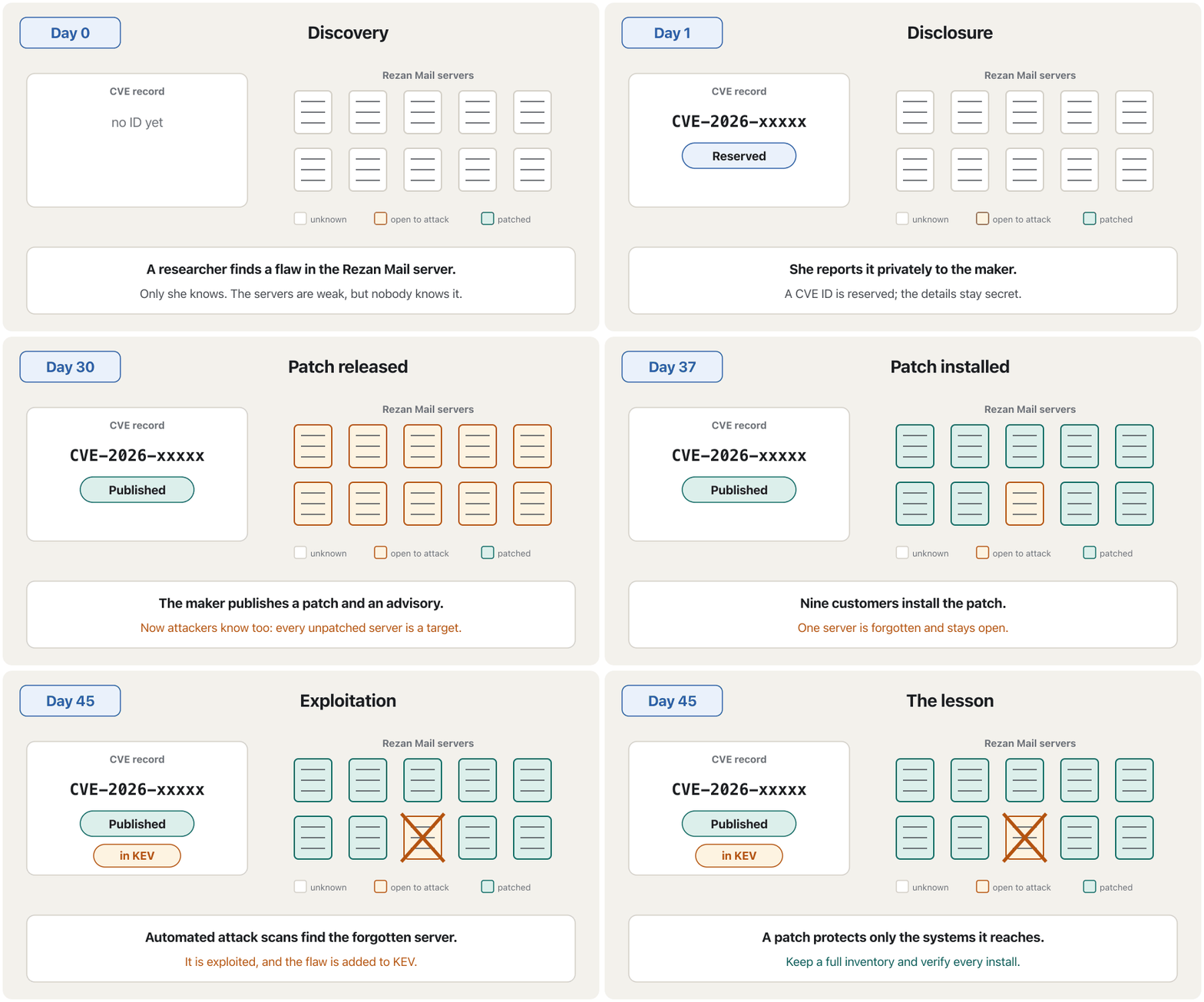
A vulnerability is born the day a mistake enters the code — but nobody knows yet. Its story really starts when someone finds it. Lecture 4 calls this story the vulnerability lifecycle and gives it four steps:
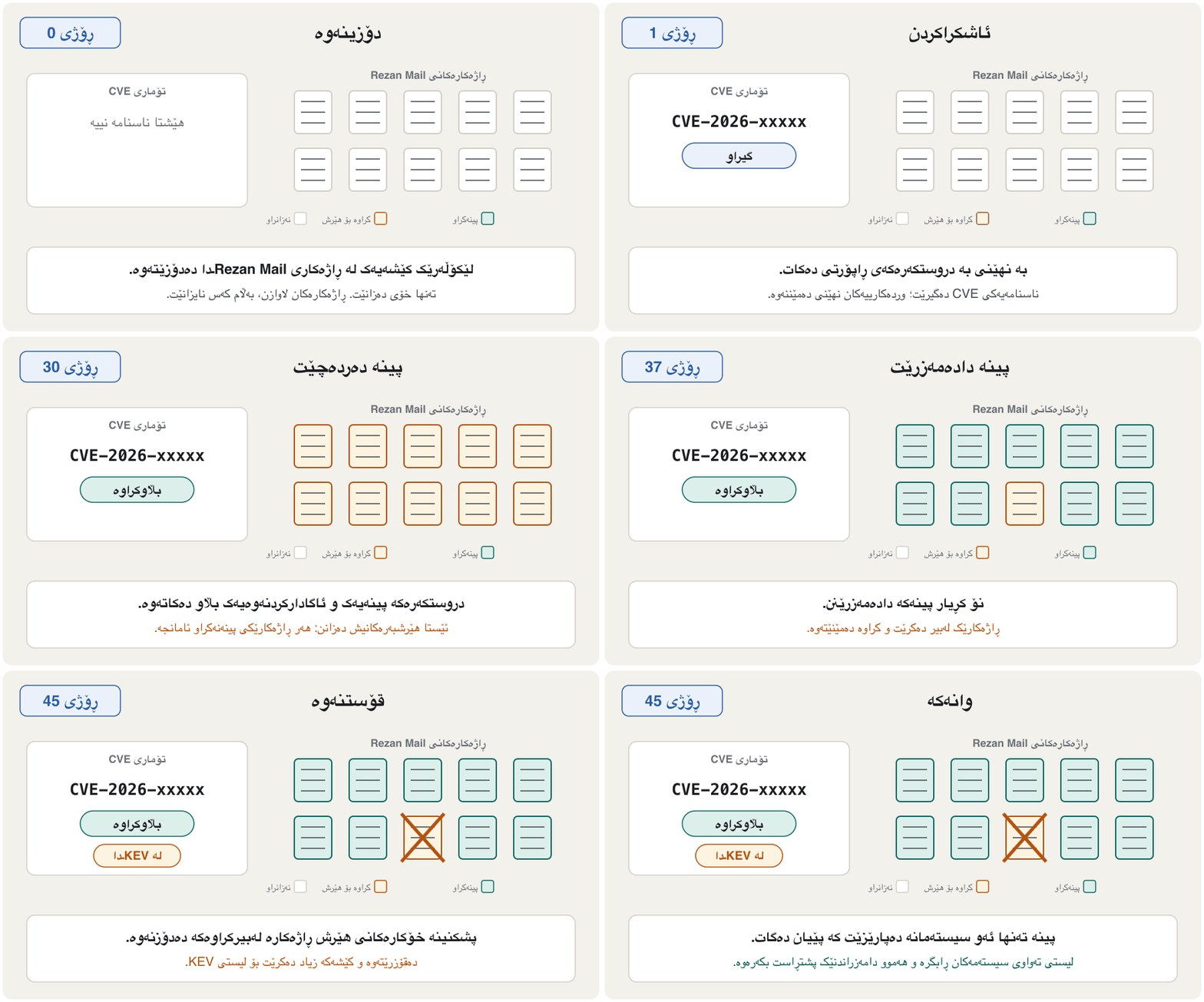
ئەو ڕۆژە لەدایک دەبێت کە هەڵەیەک دەچێتە ناو کۆدەوە — بەڵام هێشتا کەس نایزانێت. چیرۆکەکەی بە ڕاستی کاتێک دەست پێ دەکات کە کەسێک دەیدۆزێتەوە. وانەی چوارەم ئەم چیرۆکە ناو دەنێت و چوار هەنگاوی بۆ دادەنێت:
- Discoveryدۆزینەوە
Security researchers, attackers or automated tools find the vulnerability.
لێکۆڵەرانی ، یان ئامرازە خۆکارەکان دەدۆزنەوە.
- Exploitationقۆستنەوە
Attackers use it to get unauthorised access or to disrupt services.
بەکاری دەهێنن بۆ دەستڕاگەیشتنی بێ مۆڵەت یان تێکدانی خزمەتگوزارییەکان.
- Disclosureئاشکراکردن
The vulnerability is reported to the affected organisation, or through responsible channels.
بە ڕێکخراوە پەیوەندیدارەکە ڕاپۆرت دەکرێت، یان لە ڕێگەی کەناڵە بەرپرسیارەکانەوە.
- Patchingپینەکردن
The organisation releases an update or fix that closes the vulnerability and stops further exploitation.
ڕێکخراوەکە یان چارەسەرێک دەردەکات کە دادەخات و ڕێگە لە قۆستنەوەی زیاتر دەگرێت.
Every vulnerability has a life storyهەر خاڵێکی لاواز چیرۆکی ژیانی خۆی هەیە
Two paths, not oneدوو ڕێگا، نەک یەک
Every vulnerability has a life storyهەر خاڵێکی لاواز چیرۆکی ژیانی خۆی هەیە
The broken back door of a shopدەرگای پشتەوەی شکاوی دووکانێک
A shopkeeper in the bazaar has a back door that does not lock properly. If a neighbour notices first, he quietly tells the owner, the owner fixes it, and nothing is lost — the good path. If a thief notices first, he uses it night after night, and the owner learns about the door only when goods go missing — the zero-day path. And even after the locksmith has made a new lock, the shop is safe only on the day the lock is actually fitted.
دووکاندارێک لە بازاڕ دەرگایەکی پشتەوەی هەیە کە بە باشی قفڵ نابێت. ئەگەر دراوسێیەک یەکەم جار تێبینیی بکات، بە بێدەنگی بە خاوەنەکەی دەڵێت، خاوەنەکە چاکی دەکاتەوە و هیچ لەدەست ناچێت — ڕێگا باشەکە. ئەگەر دزێک یەکەم جار تێبینیی بکات، شەو لە دوای شەو بەکاری دەهێنێت و خاوەنەکە تەنها کاتێک بە دەرگاکە دەزانێت کە کاڵاکان ون دەبن — ڕێگای . تەنانەت دوای ئەوەی قفڵسازەکە قفڵێکی نوێی دروست کرد، دووکانەکە تەنها ئەو ڕۆژە سەلامەتە کە قفڵەکە بە ڕاستی دەبەسترێت.
Where the analogy stops workingسنووری ئەم نموونەیە
A shop has one door; a company has thousands of systems, and the 'new lock' (the patch) must be fitted on every one of them.
دووکان یەک دەرگای هەیە؛ کۆمپانیایەک هەزاران سیستەمی هەیە و «قفڵە نوێیەکە» () دەبێت لەسەر هەموویان دابنرێت.
Step 1 — Discovery: how flaws are foundهەنگاوی 1 — دۆزینەوە: کێشەکان چۆن دەدۆزرێنەوە
Who finds vulnerabilities? Security researchers (including the maker's own testers and bug-bounty hunters), attackers, and automated tools. The lecture names three ways an organisation can find them in its own systems:
کێ دەدۆزێتەوە؟ لێکۆڵەرانی (لەوانە تاقیکەرەوەکانی خودی دروستکەرەکە و ڕاوچییانی )، و ئامرازە خۆکارەکان. وانەکە سێ ڕێگا ناو دەبات کە ڕێکخراوێک دەتوانێت لە سیستەمەکانی خۆیدا بیاندۆزێتەوە:
| Methodڕێگا | What it meansواتای چییە | Good at findingباشە بۆ دۆزینەوەی |
|---|---|---|
| Security audits and penetration tests و | Experts check the systems and, with written permission, imitate real attacks to see what an attacker could do.پسپۆڕان سیستەمەکان دەپشکنن و، بە مۆڵەتی نووسراو، لاسایی دەکەنەوە بۆ ئەوەی ببینن چی دەتوانێت بکات. | Flaws in logic and design; chains of small weaknessesکێشە لە لۆجیک و دیزایندا؛ زنجیرەی لاوازیی بچووک |
| User reportsڕاپۆرتی بەکارهێنەران | Employees report malfunctions or strange behaviour that might show a vulnerability.کارمەندان کارنەکردنی دروست یان ڕەفتاری سەیر ڕاپۆرت دەکەن کە لەوانەیە نیشانەی بێت. | Problems nobody tested for; signs of an attack already happeningئەو کێشانەی کەس تاقی نەکردوونەتەوە؛ نیشانەکانی کە ڕوو دەدات |
| Automated vulnerability scanning خۆکار | Tools compare the software versions and settings they find with databases of known vulnerabilities.ئامرازەکان ئەو وەشانی و ڕێکخستنانەی دەیانبینن بەراورد دەکەن لەگەڵ ناسراو. | Missing patches and known misconfigurations, quickly and on many machines کە دانەمەزراون و ناسراو، بە خێرایی و لەسەر ئامێری زۆر |
Step 1 — Discovery: how flaws are foundهەنگاوی 1 — دۆزینەوە: کێشەکان چۆن دەدۆزرێنەوە
Scanners know only known flawsسکانەرەکان تەنها کێشە ناسراوەکان دەناسن
How scanners work in detail is in Finding and rating vulnerabilities. Penetration testing is allowed only with the owner's written permission — see Ethics and ethical hacking.
چۆنیەتیی کارکردنی بە وردی لە دۆزینەوە و هەڵسەنگاندنی خاڵە لاوازەکاندایە. تەنها بە مۆڵەتی نووسراوی خاوەنەکەی ڕێگەپێدراوە — سەیری ئەخلاق و هاککردنی ئەخلاقی بکە.
Step 2 — Exploitation: attackers take advantageهەنگاوی 2 — قۆستنەوە: هێرشبەرەکان سوود وەردەگرن
To exploit a vulnerability means to use it to make a system do something it should not: reveal data, accept a fake login, or run the attacker's code. The lecture gives two examples:
قۆستنەوەی واتە بەکارهێنانی بۆ ئەوەی سیستەمێک کارێک بکات کە نابێت بیکات: ئاشکرا بکات، چوونەژوورەوەیەکی ساختە قبووڵ بکات، یان کۆدی جێبەجێ بکات. وانەکە دوو نموونە دەهێنێتەوە:
- SQL injection: attackers change the queries a web application sends to its database server, to read sensitive data. How it works and how to stop it: Injection attacks.
- Ransomware: the lecture says ransomware exploits vulnerabilities to encrypt data and demand payment. More exactly, ransomware is the payload; it often gets in through an unpatched flaw, but also through stolen passwords or phishing. See Ransomware.
- : ئەو دەینێرێت بۆ دەگۆڕن، بۆ خوێندنەوەی هەستیار. چۆن کار دەکات و چۆن ڕادەگیرێت: هێرشەکانی تێخزاندن.
- : وانەکە دەڵێت دەقۆزێتەوە بۆ شفرەکردنی و داواکردنی پارە. بە وردی، بارەکەیە؛ زۆرجار لە ڕێگەی کێشەیەکی پینەنەکراوەوە دێتە ژوورەوە، بەڵام لە ڕێگەی دزراو یان . سەیری نەرمەواڵەی بارمتەگر بکە.
Step 2 — Exploitation: attackers take advantageهەنگاوی 2 — قۆستنەوە: هێرشبەرەکان سوود وەردەگرن
A real case: MOVEit (2023)ڕووداوێکی ڕاستەقینە: MOVEit (2023)
A real case joins both examples. From 27 May 2023, the criminal group CL0P exploited a SQL injection flaw in MOVEit Transfer, a program many organisations use to send large files. Nobody else knew about the flaw. In a few days the group copied files from many organisations around the world and then demanded money not to publish them. The maker, Progress Software, published its warning and a patch on 31 May; the flaw received the ID CVE-2023-34362 on 2 June.
ڕووداوێکی ڕاستەقینە هەردوو نموونەکە پێکەوە کۆ دەکاتەوە. لە 27ـی ئایاری 2023ـەوە، گرووپی تاوانکاری CL0P کێشەیەکی لە MOVEit Transferـدا قۆستەوە، کە زۆر ڕێکخراو بۆ ناردنی فایلی گەورە بەکاری دەهێنن. کەسی تر بە کێشەکەی نەدەزانی. لە چەند ڕۆژێکدا گرووپەکە فایلی زۆر ڕێکخراوی لە سەرانسەری جیهاندا کۆپی کرد و پاشان داوای پارەی کرد بۆ ئەوەی بڵاویان نەکاتەوە. دروستکەرەکە، Progress Software، لە 31ـی ئایاردا ئاگادارکردنەوە و بڵاو کردەوە؛ کێشەکە لە 2ـی حوزەیراندا ناسنامەی CVE-2023-34362ـی وەرگرت.
The MOVEit Transfer attack of 2023: a SQL injection zero-day that CL0P used to steal files from many organisations, and why it hit companies.
MOVEit Transfer لە 2023: لە جۆری کە CL0P بۆ دزینی زۆر ڕێکخراو بەکاری هێنا، هەروەها بۆچی بەر کۆمپانیاکان کەوت.
Plays 0:45-4:58: the MOVEit attack and how the exploit worked.
لە 0:45 تا 4:58 پەخش دەبێت: MOVEit و چۆن کاری دەکرد.
Step 3 — Disclosure: telling the right peopleهەنگاوی 3 — ئاشکراکردن: پێگوتنی کەسە دروستەکان
Disclosure means reporting the vulnerability to the affected organisation or through responsible channels. In a good disclosure the finder reports privately, the maker gets time to fix, and only then are the details made public. Two things are created at this step: a CVE ID is reserved for the flaw (next screen), and the maker prepares a security advisory — a public notice saying which versions are affected and how to fix them.
ئاشکراکردن واتە ڕاپۆرتکردنی بۆ ڕێکخراوە پەیوەندیدارەکە یان لە ڕێگەی کەناڵە بەرپرسیارەکانەوە. لە ئاشکراکردنێکی باشدا دۆزەرەوەکە بە نهێنی ڕاپۆرت دەکات، دروستکەرەکە کاتی بۆ چاککردن دەدرێتێ و تەنها دواتر وردەکارییەکان ئاشکرا دەکرێن. لەم هەنگاوەدا دوو شت دروست دەبن: ناسنامەیەکی بۆ کێشەکە دەگیرێت (پەڕەی داهاتوو) و دروستکەرەکە ئاگادارکردنەوەیەکی ئامادە دەکات — ڕاگەیاندنێکی گشتی کە دەڵێت کام وەشانانە کێشەکەیان تێدایە و چۆن چاک دەکرێن.
The two kinds of disclosure in the lecture — responsible (coordinated) and full disclosure — and the deadlines researchers use, such as Project Zero's 90 days, are explained in Responsible disclosure and bug bounties.
دوو جۆرەکەی ئاشکراکردن لە وانەکەدا — (هەماهەنگکراو) و — و ئەو وادانەی لێکۆڵەران بەکاریان دەهێنن، وەک 90 ڕۆژەکەی Project Zero، لە ئاشکراکردنی بەرپرسیارانە و خەڵاتەکانی دۆزینەوەی باگ ڕوون کراونەتەوە.
CVE IDs: following one flaw through its lifeناسنامەکانی CVE: بەدواداچوونی یەک کێشە بە درێژایی ژیانی
What a CVE is — one public ID for each vulnerability, given out by CVE Numbering Authorities — is explained in CVE: one name for each vulnerability. This screen follows a CVE ID along the lifecycle and shows how defenders use it.
چییە — یەک ناسنامەی گشتی بۆ هەر ، کە دەسەڵاتەکانی ژمارەدانانی CVE دەیبەخشن — لە CVE: یەک ناو بۆ هەر خاڵێکی لاواز ڕوون کراوەتەوە. ئەم پەڕەیە بەدوای ناسنامەیەکی دەڕوات بە درێژایی و نیشان دەدات بەرگریکاران چۆن بەکاری دەهێنن.
| Lifecycle stepهەنگاوی سووڕەکە | What happens to the CVE recordچی بەسەر تۆماری CVEـدا دێت | Example: CVE-2017-5638 (Apache Struts)نموونە: CVE-2017-5638 (Apache Struts) |
|---|---|---|
| Disclosureئاشکراکردن | The ID is reserved: it exists, but the details are not public yet.ناسنامەکە دەگیرێت: هەیە، بەڵام هێشتا وردەکارییەکانی ئاشکرا نین. | Reserved on 29 January 2017لە 29ـی کانوونی دووەمی 2017دا گیرا |
| Patch releasedدەرچوونی | The record is published with a description and the affected versions.تۆمارەکە بە وەسف و وەشانە کێشەدارەکانەوە بڵاو دەکرێتەوە. | Fix on 7 March 2017; record published on 11 March 2017چارەسەر لە 7ـی ئاداری 2017؛ تۆمار لە 11ـی ئاداری 2017دا بڵاو کرایەوە |
| Analysisشیکاری | A CVSS score and the kind of weakness (CWE) are added — by the CNA (often the vendor), CISA or NVD. Since April 2026 NVD fully analyses mainly KEV-listed flaws and software used by the US government.نمرەی و جۆری لاوازییەکە () زیاد دەکرێن — لەلایەن CNA (زۆرجار دروستکەرەکە)، CISA یان . لە نیسانی 2026ـەوە بە تەواوی تەنها کێشەکانی ناو و حکومەتی ئەمریکا شی دەکاتەوە. | CVSS 3.1: 9.8 Critical; CWE-755 (NVD and CISA)CVSS 3.1: 9.8 زۆر مەترسیدار؛ CWE-755 (NVD و CISA) |
| Exploitation seenبینینی قۆستنەوە | CISA adds the CVE to its KEV catalog, with a due date for US federal agencies.CISA زیاد دەکاتە لیستی ، لەگەڵ وادەیەک بۆ دەزگا فیدراڵییەکانی ئەمریکا. | Exploited from March 2017; added to KEV on 3 November 2021, when the catalog beganلە ئاداری 2017ـەوە قۆزرایەوە؛ لە 3ـی تشرینی دووەمی 2021دا زیاد کرا بۆ KEV، کاتێک لیستەکە دەستی پێکرد |
CVE IDs: following one flaw through its lifeناسنامەکانی CVE: بەدواداچوونی یەک کێشە بە درێژایی ژیانی
Record states, and tracking a fix with the IDدۆخەکانی تۆمار و بەدواداچوونی چاککردن بە ناسنامەکە
The CVE Program names three states for a record: Reserved (the ID is taken), Published (the details are public) and Rejected (the ID should no longer be used, for example because it was a duplicate). Note that the year in an ID is the year the ID was reserved (or the year the flaw was made public) — not the year it was discovered or attacked.
بەرنامەی CVE سێ دۆخ بۆ تۆمارێک ناو دەبات: گیراو (ناسنامەکە گیراوە)، بڵاوکراوە (وردەکارییەکان ئاشکران) و ڕەتکراوە (ناسنامەکە چیتر نابێت بەکار بهێنرێت، بۆ نموونە لەبەر ئەوەی دووبارە بوو). سەرنج بدە کە ساڵی ناو ناسنامەیەک ئەو ساڵەیە کە ناسنامەکە گیراوە (یان ئەو ساڵەی کێشەکە ئاشکرا کرا) — نەک ساڵی دۆزینەوە یان .
How defenders use the ID in the patching steps that follow: they search their scanner results and software lists for the ID, read the maker's advisory for that ID, check whether it is in KEV, and track the fix in a ticket named after it until every affected system is patched. One ID lets the scanner, the advisory, the patch notes and the ticket all point at the same flaw.
بەرگریکاران لە هەنگاوەکانی دواتردا ناسنامەکە چۆن بەکار دەهێنن: لە ئەنجامەکانی و لیستی بەدوای ناسنامەکەدا دەگەڕێن، ئاگادارکردنەوەی دروستکەرەکە بۆ ئەو ناسنامەیە دەخوێننەوە، دەپشکنن ئایا لە و چاککردنەکە لە داواکارییەکی کاردا (تیکێت) کە ناوی ئەو ناسنامەیەی لەسەرە بەدواداچوونی بۆ دەکەن تا هەموو سیستەمێکی کێشەدار دەکرێت. یەک ناسنامە وا دەکات ، ئاگادارکردنەوە، تێبینییەکانی و تیکێتەکە هەموویان ئاماژە بە هەمان کێشە بکەن.
Zero-day and n-day vulnerabilitiesخاڵە لاوازەکانی ڕۆژی سفر و خاڵە لاوازەکانی ڕۆژی n
A zero-day is a vulnerability that attackers know and use before the maker knows about it or has a patch — the defenders have had 'zero days' to fix it. NIST describes a zero-day attack as one that exploits a previously unknown vulnerability. MOVEit in May 2023 was a zero-day: CL0P used the flaw for at least four days before anyone else knew.
کە پێش ئەوەی دروستکەرەکە پێی بزانێت یان هەبێت دەیزانن و بەکاری دەهێنن — بەرگریکاران «سفر ڕۆژ»یان بۆ چاککردنی هەبووە. NIST وا وەسف دەکات کە پێشتر نەناسراو دەقۆزێتەوە. MOVEit لە ئایاری 2023دا بوو: CL0P لانیکەم چوار ڕۆژ پێش ئەوەی کەسی تر بزانێت کێشەکەی بەکار هێنا.
An n-day is a vulnerability that is already public and has a patch, but is still open on systems that were not updated; n is the number of days since the fix appeared. Equifax was an n-day: the patch was 67 days old when the data theft began. So was WannaCry: Microsoft had patched the Windows flaw two months before the worm spread.
کە پێشتر ئاشکرا کراوە و هەیە، بەڵام هێشتا لەسەر ئەو سیستەمانە کراوەیە کە نەکراون؛ n ژمارەی ئەو ڕۆژانەیە کە لە دەرچوونی چارەسەرەکەوە تێپەڕیون. Equifax بوو: کاتێک دزینی دەستی پێکرد، 67 ڕۆژ تەمەنی بوو. WannaCryیش هەروا بوو: Microsoft دوو مانگ پێش بڵاوبوونەوەی کێشەکەی Windowsـی کردبوو.
The zero-day timeline: attackers find and use a flaw before the maker knows, then the patch race, real examples and what defenders can do.
هێڵی کاتی : دەدۆزنەوە و بەکاری دەهێنن پێش ئەوەی دروستکەر بزانێت، پاشان پێشبڕکێی ، نموونەی ڕاستەقینە و ئەوەی بەرگریکاران دەتوانن بیکەن.
Whole video (13:45): zero-day timeline, examples and defences.
هەموو ڤیدیۆکە (13:45): هێڵی کاتی ، نموونەکان و ڕێگاکانی بەرگری.
Zero-day and n-day vulnerabilitiesخاڵە لاوازەکانی ڕۆژی سفر و خاڵە لاوازەکانی ڕۆژی n
The race starts on patch dayپێشبڕکێکە لە ڕۆژی پینەوە دەست پێ دەکات
| Questionپرسیار | Zero-day | N-day |
|---|---|---|
| Who knows?کێ دەزانێت؟ | Only the attackersتەنها | Everyone, including attackersهەمووان، لەوانە |
| Patch available? هەیە؟ | Noنەخێر | Yesبەڵێ |
| Best defenceباشترین بەرگری | Layers: least privilege, segmentation, monitoring, fast emergency responseچینەکان: ، ، چاودێری، وەڵامدانەوەی خێرای کاتی تەنگانە | Install the patch quickly, starting with exposed and KEV-listed systems بە خێرایی دابمەزرێنە، لە سیستەمە ئاشکراکان و ئەوانەی لە دەست پێ بکە |
| Exampleنموونە | MOVEit Transfer (May 2023)MOVEit Transfer (ئایاری 2023) | Equifax (2017), WannaCry (2017)Equifax (2017)، WannaCry (2017) |
Step 4 — Patching: closing the holeهەنگاوی 4 — پینەکردن: داخستنی کونەکە
In the lecture's last step the organisation that makes the software releases an update or fix. But for everyone who uses the software, the work starts there: the patch must reach every affected system. The lecture gives three rules:
لە دوا هەنگاوی وانەکەدا ئەو ڕێکخراوەی دروست دەکات یان چارەسەرێک دەردەکات. بەڵام بۆ هەموو ئەوانەی بەکار دەهێنن، کارەکە لەوێوە دەست پێ دەکات: دەبێت بگاتە هەموو سیستەمێکی کێشەدار. وانەکە سێ یاسا دەدات:
- Rapid patch deployment: install patches promptly, especially for critical vulnerabilities, to shorten the time systems are exposed.
- Automated patching: automate patching for critical systems wherever possible, so updates arrive on time and nothing depends on someone remembering.
- Patch testing: test patches thoroughly before deploying them, so that they do not create new problems or stop the business.
- دامەزراندنی خێرای : بە زووی دابمەزرێنە، بەتایبەتی بۆ زۆر مەترسیدار، بۆ کورتکردنەوەی ئەو کاتەی سیستەمەکان ئاشکران.
- خۆکار: لە هەر شوێنێک بکرێت سیستەمە گرنگەکان خۆکار بکە، بۆ ئەوەی لە کاتی خۆیدا بگەن و هیچ شتێک پشت بە بیرهاتنەوەی کەسێک نەبەستێت.
- تاقیکردنەوەی : پێش دامەزراندن بە وردی تاقی بکەرەوە، بۆ ئەوەی کێشەی نوێ دروست نەکەن یان کارەکان نەوەستێنن.
The first two rules push for speed, the third for care. NIST's patching guide (SP 800-40 Rev. 4, 2022) explains how to hold both: treat patching as preventive maintenance, like servicing a company's cars before they break down. A patch may sometimes disrupt work, but that disruption is planned and controllable; the disruption from a successful attack is not.
دوو یاسای یەکەم پاڵ بە خێراییەوە دەنێن، سێیەمیان بە وریاییەوە. ڕێبەری NIST (SP 800-40 Rev. 4، 2022) ڕوون دەکاتەوە چۆن هەردووکیان پێکەوە ڕابگریت: وەک چاککردنەوەی پێشوەختە مامەڵە بکە، وەک چاککردنەوەی ئۆتۆمبێلەکانی کۆمپانیایەک پێش ئەوەی تێک بچن. لەوانەیە هەندێک جار کار پچڕێنێت، بەڵام ئەو پچڕانە پلانی بۆ دانراوە و کۆنترۆڵ دەکرێت؛ پچڕانی سەرکەوتوو وا نییە.
Step 4 — Patching: closing the holeهەنگاوی 4 — پینەکردن: داخستنی کونەکە
Which patch first?کام پینە یەکەم؟
A big organisation may face hundreds of new patches every month. The lecture's rule: prioritise patching by the vulnerability's severity, its impact and the systems it affects, so the critical ones are fixed first. Today two more questions are added: is it being exploited right now (is it in KEV?) and is the system exposed to the internet?
ڕێکخراوێکی گەورە لەوانەیە هەموو مانگێک ڕووبەڕووی سەدان نوێ ببێتەوە. یاسای وانەکە: بەپێی توندیی ، کاریگەرییەکەی و ئەو سیستەمانەی کێشەکەیان تێدایە ڕیز بکە، بۆ ئەوەی زۆر مەترسیدارەکان یەکەم جار چاک بکرێن. ئەمڕۆ دوو پرسیاری تریش زیاد دەکرێن: ئایا ئێستا دەقۆزرێتەوە (لە ؟) و ئایا سیستەمەکە بۆ ئاشکرایە؟
| Patch | Severityتوندی | In KEV?لە KEVـدایە؟ | Systemسیستەم | Orderڕیز |
|---|---|---|---|---|
| Mail server flawکێشەی ئیمەیڵ | Criticalزۆر مەترسیدار | yesبەڵێ | on the internet, all staff use itلەسەر ، هەموو کارمەندان بەکاری دەهێنن | 1 |
| Database flawکێشەی | Highبەرز | noنەخێر | internal, customer dataناوخۆیی، کڕیاران | 2 |
| Office software update ئۆفیس | Mediumمامناوەند | noنەخێر | all laptopsهەموو لاپتۆپەکان | 3 |
| Test-lab printer firmware تاقیگە | Lowکەم | noنەخێر | isolated labتاقیگەی جیاکراوە | 4 |
The full method — CVSS bands, the KEV catalog, CISA's directive BOD 26-04 and EPSS — is taught in Which one first? CVSS + KEV + exposure.
ڕێگا تەواوەکە — ئاستەکانی ، لیستی ، ڕێنمایی BOD 26-04ـی CISA و EPSS — لە کامیان یەکەم؟ CVSS + KEV + ئاشکرابوون فێر دەکرێت.
Step 4 — Patching: closing the holeهەنگاوی 4 — پینەکردن: داخستنی کونەکە
Test first, and keep a way backیەکەم جار تاقی بکەرەوە و ڕێگایەکی گەڕانەوە بهێڵەرەوە
The lecture's second strategy: test patches thoroughly before deploying them, so they do not introduce new problems, and have a rollback plan — a tested way to return to the previous version if the patch breaks something. A common way to do this is a staged rollout:
ستراتیژی دووەمی وانەکە: پێش دامەزراندن بە وردی تاقی بکەرەوە، بۆ ئەوەی کێشەی نوێ نەهێنن و پلانێکی گەڕانەوەت هەبێت — ڕێگایەکی تاقیکراوە بۆ گەڕانەوە بۆ وەشانی پێشوو ئەگەر شتێک تێک بدات. ڕێگایەکی باو بۆ ئەمە بڵاوکردنەوەی قۆناغ بە قۆناغـە:
- Testتاقیکردنەوە
Install the patch on a few test machines that copy the real setup. Check that the main programs still work.
لەسەر چەند ئامێرێکی تاقیکردنەوە دابمەزرێنە کە لە ڕێکخستنی ڕاستەقینە دەچن. بپشکنە کە هێشتا کار دەکەن.
- Pilotهەنگاوی تاقیکاری
Roll it out to a small group of real users, for example the IT team, and watch for problems.
بۆ گرووپێکی بچووکی بەکارهێنەرانی ڕاستەقینە (بۆ نموونە تیمی IT) بڵاوی بکەرەوە و چاودێریی کێشەکان بکە.
- Everyoneهەمووان
Roll it out to all systems, critical and exposed ones first.
بۆ هەموو سیستەمەکان بڵاوی بکەرەوە، لە گرنگ و ئاشکراکانەوە دەست پێ بکە.
- Verifyپشتڕاستکردنەوە
Check, for example with a new scan, that every system really has the patch.
بپشکنە، بۆ نموونە بە پشکنینێکی نوێ، کە هەموو سیستەمێک بە ڕاستی هەیە.
Step 4 — Patching: closing the holeهەنگاوی 4 — پینەکردن: داخستنی کونەکە
A warning from July 2024ئاگادارکردنەوەیەک لە تەممووزی 2024
Step 4 — Patching: closing the holeهەنگاوی 4 — پینەکردن: داخستنی کونەکە
When you cannot patch (yet)کاتێک ناتوانیت پینە بکەیت (هێشتا)
Sometimes a patch is not possible right away: it does not exist yet (a zero-day), the product is no longer supported (end of life), or the system must keep running, as in a hospital or a factory. NIST lists ways to handle the risk until then:
هەندێک جار یەکسەر ناکرێت: هێشتا نییە ()، بەرهەمەکە چیتر پشتگیری ناکرێت (کۆتایی ژیان)، یان سیستەمەکە دەبێت بەردەوام کار بکات، وەک لە نەخۆشخانە یان کارگەیەکدا. NIST چەند ڕێگایەک بۆ مامەڵەکردن لەگەڵ تا ئەو کاتە دەژمێرێت:
| Responseوەڵام | What it meansواتای چییە | Exampleنموونە |
|---|---|---|
| Mitigate (temporary workaround)کەمکردنەوە (چارەسەری کاتی) | Reduce the risk without the patch: turn off the vulnerable feature, block traffic, add a filter. بێ کەم بکەرەوە: تایبەتمەندییە لاوازەکە بکوژێنەرەوە، هاتوچۆ ڕابگرە، زیاد بکە. | For MOVEit, experts advised blocking web traffic to the program until it was patched.بۆ MOVEit، پسپۆڕان ئامۆژگارییان کرد هاتوچۆی وێب بۆ ڕابگیرێت تا دەکرێت. |
| Isolateجیاکردنەوە | Put an unpatchable system in its own network segment, reachable only by what needs it.سیستەمێکی پینەنەکراو لە بەشێکی جیای دابنێ کە تەنها ئەوانەی پێویستیانە پێی بگەن. | An old machine that controls factory equipmentئامێرێکی کۆن کە ئامێرەکانی کارگەیەک کۆنترۆڵ دەکات |
| Avoidدوورکەوتنەوە | Remove the risk: uninstall the software or retire the system. لاببە: بسڕەوە یان سیستەمەکە لە کار بخە. | Replacing Windows 10 PCs after support ended in October 2025گۆڕینی Windows 10 دوای کۆتاییهاتنی پشتگیری لە تشرینی یەکەمی 2025 |
| Transfer / acceptگواستنەوە / قبووڵکردن | Share the cost (cyber insurance, a cloud service that patches for you) or accept a small, documented risk.تێچووەکە بەش بکە (، خزمەتگوزارییەکی هەوری کە لە جیاتی تۆ دەکات) یان بچووک و تۆمارکراو قبووڵ بکە. | A low-risk flaw on an isolated test PCکێشەیەکی کەممەترسی لەسەر تاقیکردنەوەی جیاکراوە |
Step 4 — Patching: closing the holeهەنگاوی 4 — پینەکردن: داخستنی کونەکە
Patch-management systemsسیستەمەکانی بەڕێوەبردنی پینە
Doing all this by hand on hundreds of computers is impossible. The lecture names patch-management systems: tools that automate the deployment of software updates and patches. Their two big advantages:
ئەنجامدانی هەموو ئەمانە بە دەست لەسەر سەدان ناکرێت. وانەکە سیستەمەکانی ناو دەبات: ئامرازگەلێک کە دامەزراندنی و خۆکار دەکەن. دوو سوودە گەورەکەیان:
- Automation: the system downloads, schedules and installs patches by itself, which reduces human error — nobody forgets a machine or types the wrong command.
- Centralised management: one console controls updates for all systems, shows which machines are patched and which are not, and produces reports.
- : سیستەمەکە خۆی دادەگرێت، کاتیان بۆ دیاری دەکات و دایاندەمەزرێنێت، ئەمەش هەڵەی مرۆیی کەم دەکاتەوە — کەس ئامێرێک لەبیر ناکات یان فەرمانی هەڵە نانووسێت.
- بەڕێوەبردنی ناوەندی: یەک کۆنسۆڵ هەموو سیستەمەکان کۆنترۆڵ دەکات، نیشان دەدات کام ئامێر کراوە و کامیان نەکراوە و ڕاپۆرت دروست دەکات.
Step 4 — Patching: closing the holeهەنگاوی 4 — پینەکردن: داخستنی کونەکە
The patch cycle (NIST)خولی پینە (NIST)
NIST describes the whole job as a short cycle that every organisation repeats:
NIST هەموو کارەکە وەک خولێکی کورت وەسف دەکات کە هەموو ڕێکخراوێک دووبارەی دەکاتەوە:
- Knowزانین
Know which devices and software you have — down to the libraries inside programs — and follow news of new vulnerabilities in them (vendor advisories, the NVD).
بزانە چ ئامێر و هەیە — تا ئاستی ناو — و بەدواداچوون بۆ هەواڵی نوێ تێیاندا بکە (ئاگادارکردنەوەی دروستکەران، ).
- Planپلاندانان
Decide how risky each new flaw is for you and what to do: patch, work around, isolate or accept.
بڕیار بدە هەر کێشەیەکی نوێ بۆ تۆ چەند مەترسیدارە و چی بکەیت: ، چارەسەری کاتی، جیاکردنەوە یان قبووڵکردن.
- Prepare and deployئامادەکردن و دامەزراندن
Get the patch from a trusted source, check it is genuine, test it, schedule it, install it.
لە سەرچاوەیەکی متمانەپێکراو وەربگرە، بپشکنە کە ڕاستەقینەیە، تاقی بکەرەوە، کاتی بۆ دیاری بکە و دایبمەزرێنە.
- Verify and monitorپشتڕاستکردنەوە و چاودێری
Check the patch is installed and working, and keep checking that nobody removes it.
بپشکنە کە دامەزراوە و کار دەکات و بەردەوام بپشکنە کە کەس لای نابات.
Common mistakesهەڵە باوەکان
| Mistakeهەڵە | Why it is wrongبۆچی هەڵەیە | Betterباشتر |
|---|---|---|
| "The maker released a patch, so we are safe."«دروستکەرەکە دەرکرد، بۆیە سەلامەتین.» | A released patch protects nothing until it is installed; from release day attackers know the flaw too. کە دەرچووە هیچ شتێک ناپارێزێت تا دانەمەزرێت؛ لە ڕۆژی دەرچوونەوە کێشەکە دەزانن. | Install it quickly and verify every system.بە خێرایی دایبمەزرێنە و هەموو سیستەمێک پشتڕاست بکەرەوە. |
| "Most attacks use zero-days."«زۆربەی بەکار دەهێنن.» | Many big incidents, such as Equifax and WannaCry, used flaws that already had patches.زۆرێک لە ڕووداوە گەورەکان، وەک Equifax و WannaCry، کێشەی وایان بەکار هێنا کە پێشتر هەبوو. | Patch the known flaws first; layers help against the unknown ones.یەکەم جار کێشە ناسراوەکان بکە؛ چینەکان دژی نەناسراوەکان یارمەتی دەدەن. |
| "Patch by CVSS score only."«تەنها بەپێی نمرەی CVSS بکە.» | Severity ignores whether a flaw is exploited now and how exposed your system is.توندی گوێ نادات بەوەی ئایا کێشەکە ئێستا دەقۆزرێتەوە و سیستەمەکەت چەند ئاشکرایە. | Combine severity, KEV and exposure.توندی، و ئاشکرابوون پێکەوە لەبەرچاو بگرە. |
| "Testing takes too long; install straight away everywhere."«تاقیکردنەوە زۆر دەخایەنێت؛ یەکسەر لە هەموو شوێنێک دابمەزرێنە.» | An untested update can stop the business, as CrowdStrike showed in 2024. تاقینەکراوە دەتوانێت کارەکان بوەستێنێت، وەک CrowdStrike لە 2024دا نیشانی دا. | Short tests and staged rollout, with a rollback plan.تاقیکردنەوەی کورت و بڵاوکردنەوەی قۆناغ بە قۆناغ، لەگەڵ پلانی گەڕانەوە. |
| "Scanners find every vulnerability."« هەموو دەدۆزنەوە.» | They find known ones in their databases; zero-days and logic flaws need other methods.ناسراوەکانی ناو دەدۆزنەوە؛ و کێشەکانی لۆجیک ڕێگای تریان پێویستە. | Add penetration tests, user reports and monitoring.، ڕاپۆرتی بەکارهێنەران و چاودێری زیاد بکە. |
Exercisesڕاهێنانەکان
Put these events in order twice: once for a good, coordinated case and once for a zero-day case. Events: (A) the patch is installed on users' systems; (B) the maker releases a patch; (C) the vulnerability is discovered; (D) the vulnerability is reported to the maker; (E) attackers exploit the vulnerability.
ئەم ڕووداوانە دوو جار ڕیز بکە: جارێک بۆ حاڵەتێکی باش و هەماهەنگکراو و جارێک بۆ حاڵەتێکی . ڕووداوەکان: (A) لەسەر سیستەمەکانی بەکارهێنەران دادەمەزرێت؛ (B) دروستکەرەکە دەردەکات؛ (C) دەدۆزرێتەوە؛ (D) بە دروستکەرەکە ڕاپۆرت دەکرێت؛ (E) دەقۆزنەوە.
Show answerوەڵامەکە پیشان بدە
- Good path: C → D → B → A. Exploitation (E) ideally never happens; if it does, it is usually on systems where step A was late — an n-day.
- Zero-day path: C → E → D → B → A — as in the lecture's order. With MOVEit, attackers discovered and exploited the flaw (C, E) from 27 May 2023; the maker learned of it and released a patch on 31 May (D, B); customers then had to install it (A).
- ڕێگا باشەکە: C → D → B → A. قۆستنەوە (E) بە باشترین شێوە هەرگیز ڕوو نادات؛ ئەگەر ڕوو بدات، بە زۆری لەسەر ئەو سیستەمانەیە کە هەنگاوی A تێیاندا دواکەوت — .
- ڕێگای : C → E → D → B → A — وەک ڕیزبەندییەکەی وانەکە. لە MOVEitـدا لە 27ـی ئایاری 2023ـەوە کێشەکەیان دۆزییەوە و قۆستیانەوە (C، E)؛ دروستکەرەکە پێی زانی و لە 31ـی ئایاردا دەرکرد (D، B)؛ پاشان کڕیاران دەبوو دایبمەزرێنن (A).
Use these facts: exploitation of MOVEit Transfer began on 27 May 2023; Progress published its warning and patch on 31 May; the CVE ID was published and CISA added the flaw to KEV on 2 June, with a due date of 23 June. (a) For how many days was it a zero-day before the maker's warning? (b) How many days did US federal agencies have to fix it after it was added to KEV?
ئەم ڕاستییانە بەکار بهێنە: قۆستنەوەی MOVEit Transfer لە 27ـی ئایاری 2023دا دەستی پێکرد؛ Progress لە 31ـی ئایاردا ئاگادارکردنەوە و بڵاو کردەوە؛ ناسنامەی بڵاو کرایەوە و CISA لە 2ـی حوزەیراندا کێشەکەی زیاد کرد بۆ ، بە وادەی 23ـی حوزەیران. (أ) چەند ڕۆژ بوو پێش ئاگادارکردنەوەی دروستکەرەکە؟ (ب) دەزگا فیدراڵییەکانی ئەمریکا دوای زیادکردنی بۆ چەند ڕۆژیان هەبوو بۆ چاککردنی؟
Show answerوەڵامەکە پیشان بدە
(a) At least 4 days, from 27 to 31 May (and possibly longer, if earlier attacks were never seen). (b) 21 days, from 2 to 23 June. In those days the race was on: every unpatched MOVEit server facing the internet was at risk.
(أ) لانیکەم 4 ڕۆژ، لە 27 تا 31ـی ئایار (و لەوانەیە زیاتر، ئەگەر پێشتر هەرگیز نەبینرابن). (ب) 21 ڕۆژ، لە 2 تا 23ـی حوزەیران. لەو ڕۆژانەدا پێشبڕکێکە بەردەوام بوو: هەر MOVEitـی پینەنەکراو کە ڕووبەڕووی بوو لە مەترسیدا بوو.
This month a school's IT team must deal with: (1) a High flaw in the student-records database, internal only, not in KEV; (2) a Critical flaw in the school's website server, internet-facing, listed in KEV; (3) a Medium flaw in the office software on staff laptops; (4) an old library computer that can no longer be updated. Put (1)–(3) in order and say what to do with (4).
ئەم مانگە تیمی ITـی قوتابخانەیەک دەبێت مامەڵە لەگەڵ ئەمانە بکات: (1) کێشەیەکی بەرز لە تۆمارەکانی قوتابیان، تەنها ناوخۆیی، لە نییە؛ (2) کێشەیەکی زۆر مەترسیدار لە قوتابخانەکە، ڕووبەڕووی ، لە ؛ (3) کێشەیەکی مامناوەند لە ئۆفیسی لاپتۆپی کارمەندان؛ (4) کۆنی کتێبخانە کە چیتر ناکرێت. (1)–(3) ڕیز بکە و بڵێ چی لە (4) بکرێت.
Show answerوەڵامەکە پیشان بدە
Order: (2) first — critical, exposed and already exploited; then (1) — high severity and sensitive student data; then (3). For (4): isolate it (for example a separate network segment with no access to the records database) and plan to replace it; it cannot be patched.
ڕیز: (2) یەکەم — زۆر مەترسیدار، ئاشکرا و پێشتر قۆزراوەتەوە؛ پاشان (1) — توندیی بەرز و هەستیاری قوتابیان؛ پاشان (3). بۆ (4): جیای بکەرەوە (بۆ نموونە بەشێکی جیای بێ دەستڕاگەیشتن بە تۆمارەکان) و پلان بۆ گۆڕینی دابنێ؛ ناتوانرێت بکرێت.
Karwan runs IT for a company with 200 laptops and 10 servers. A monthly operating-system update has arrived. Write a five-step plan that follows the lecture's rules (rapid, automated, tested) and includes a rollback plan.
کاروان ITـی کۆمپانیایەک بەڕێوە دەبات کە 200 لاپتۆپ و 10 هەیە. مانگانەی گەیشتووە. پلانێکی پێنج هەنگاوی بنووسە کە یاساکانی وانەکە (خێرا، خۆکار، تاقیکراوە) پەیڕەو بکات و پلانێکی گەڕانەوەی تێدا بێت.
Show answerوەڵامەکە پیشان بدە
- Day 1: install it with the patch-management system on 5 test laptops and 1 test server; check the main programs.
- Day 2: roll it out to the IT team's laptops (the pilot group).
- Days 3–4: automatic rollout to all laptops; servers one at a time in a planned maintenance window, internet-facing ones first.
- Rollback plan: before each server is updated, take a backup or snapshot, and write down how to uninstall the update if something breaks.
- Day 5: verify with a scan and the central console that all 210 machines have the update; follow up the ones that do not.
- ڕۆژی 1: بە سیستەمی لەسەر 5 لاپتۆپ و 1 تاقیکردنەوە دایبمەزرێنە؛ بپشکنە.
- ڕۆژی 2: بۆ لاپتۆپەکانی تیمی IT بڵاوی بکەرەوە (گرووپی تاقیکاری).
- ڕۆژی 3–4: بڵاوکردنەوەی خۆکار بۆ هەموو لاپتۆپەکان؛ یەک بە یەک لە ماوەیەکی پلاندانراوی چاککردنەوەدا، ئەوانەی ڕووبەڕووی یەکەم جار.
- پلانی گەڕانەوە: پێش هەر ، یان وێنەیەکی دۆخەکە وەربگرە و بنووسە چۆن لادەبرێت ئەگەر شتێک تێک چوو.
- ڕۆژی 5: بە پشکنینێک و کۆنسۆڵە ناوەندییەکە پشتڕاست بکەرەوە کە هەر 210 ئامێرەکە هەیە؛ بەدواداچوون بۆ ئەوانە بکە کە نییانە.
Summary and reviewپوختە و پێداچوونەوە
- The lecture's lifecycle: discovery, exploitation, disclosure, patching. That order is the zero-day path; the good path is discovery → disclosure → patch released → patch installed.
- Flaws are found by audits and penetration tests, user reports and automated scanners, which compare systems with databases of known vulnerabilities (CVE, NVD).
- A CVE ID is reserved at disclosure, published with the patch, scored (by the CNA, CISA or NVD) and added to KEV when exploitation is seen.
- Zero-day: exploited before a patch exists. N-day: a patch exists but is not installed. Patch day starts a race.
- Patch fast (critical, exposed and KEV-listed first), automate, test with a staged rollout and keep a rollback plan; when you cannot patch, mitigate or isolate. Patch-management systems give automation and one central view.
- لە وانەکەدا: دۆزینەوە، قۆستنەوە، ئاشکراکردن، . ئەو ڕیزبەندییە ڕێگای ؛ ڕێگا باشەکە دۆزینەوە ← ئاشکراکردن ← دەرچوونی ← دامەزراندنی .
- کێشەکان بە و ، ڕاپۆرتی بەکارهێنەران و دەدۆزرێنەوە کە سیستەمەکان لەگەڵ ناسراو (CVE، NVD) بەراورد دەکەن.
- ناسنامەی لە کاتی ئاشکراکردندا دەگیرێت، لەگەڵ بڵاو دەکرێتەوە، نمرەی دەدرێتێ (لەلایەن CNA، CISA یان ) و کاتێک قۆستنەوە دەبینرێت زیاد دەکرێت بۆ .
- : پێش هەبوونی دەقۆزرێتەوە. : هەیە بەڵام دانەمەزراوە. ڕۆژی پێشبڕکێیەک دەست پێ دەکات.
- خێرا بکە (زۆر مەترسیدار، ئاشکرا و ئەوانەی لە یەکەم)، خۆکاری بکە، بە بڵاوکردنەوەی قۆناغ بە قۆناغ تاقی بکەرەوە و پلانی گەڕانەوەت هەبێت؛ کاتێک ناتوانیت بکەیت، کەمی بکەرەوە یان جیای بکەرەوە. سیستەمەکانی و یەک دیمەنی ناوەندی دەدەن.
Why does the risk of a vulnerability usually go up on patch day?بۆچی مەترسیی خاڵێکی لاواز بە زۆری لە ڕۆژی پینەدا بەرز دەبێتەوە؟
Because the flaw becomes public: attackers can study the patch and attack every system that has not installed it yet.
چونکە کێشەکە ئاشکرا دەبێت: دەتوانن بخوێنن و هێرش بکەنە سەر هەموو سیستەمێک کە هێشتا دای نەمەزراندووە.
What are the three states of a CVE record?سێ دۆخەکەی تۆمارێکی CVE چین؟
Reserved, Published and Rejected.
گیراو، بڵاوکراوە و ڕەتکراوە.
Name two things to do when no patch exists yet.دوو کار ناو ببە کە کاتێک هێشتا پینە نییە دەکرێن.
A temporary workaround (turn off the vulnerable feature, block traffic) and isolating the system; also watch it closely.
چارەسەرێکی کاتی (کوژاندنەوەی تایبەتمەندییە لاوازەکە، ڕاگرتنی هاتوچۆ) و جیاکردنەوەی سیستەمەکە؛ هەروەها بە وردی چاودێریی بکە.
Lesson complete!وانەکە تەواو بوو!
Well done. Review the key terms, then go on to the next lesson.دەستخۆش. سەیرێکی زاراوە سەرەکییەکان بکەرەوە، پاشان بڕۆ بۆ وانەی داهاتوو.
Key termsزاراوە سەرەکییەکان
Finding and Rating Vulnerabilities: Scanning, OWASP and CVSSدۆزینەوە و هەڵسەنگاندنی خاڵە لاوازەکان: پشکنین، OWASP و CVSS
Related lecturesوانە پەیوەندیدارەکان
- Finding and Rating Vulnerabilities: Scanning, OWASP and CVSSدۆزینەوە و هەڵسەنگاندنی خاڵە لاوازەکان: پشکنین، OWASP و CVSS
- Responsible Disclosure and Bug Bountiesئاشکراکردنی بەرپرسیارانە و خەڵاتی دۆزینەوەی باگ
- Case Studies: Equifax, Colonial Pipeline and Capital Oneلێکۆڵینەوەی ڕووداو: Equifax، Colonial Pipeline و Capital One
- Ransomware: WannaCry, NotPetya and Recent Attacksنەرمەواڵەی بارمتەگر: WannaCry، NotPetya و هێرشە نوێیەکان
- Injection Attacks: SQL Injection and Cross-Site Scriptingهێرشەکانی تێخزاندن: تێخزاندنی SQL و XSS
- Cyber Ethics and Ethical Hackingئەخلاقی سایبەری و هاککردنی ئەخلاقی
- Threats, Vulnerabilities, Attacks and Riskهەڕەشەکان، خاڵە لاوازەکان، هێرشەکان و مەترسی
References and further readingسەرچاوەکان و خوێندنەوەی زیاتر
- NIST SP 800-40 Rev. 4: Guide to Enterprise Patch Management Planning — Preventive Maintenance for Technology (April 2022)
- NIST CSRC Glossary: zero day attack
- CISA: Known Exploited Vulnerabilities Catalog
- CVE Program: Process (CVE Record lifecycle and states)
- CVE Program: About — Overview
- CVE Record CVE-2017-5638 (Apache Struts)
- NIST National Vulnerability Database: CVE-2017-5638
- Apache Struts: 2017 announcements (Struts 2.3.32 and 2.5.10.1, 7 March 2017)
- NIST National Vulnerability Database: CVE-2023-34362 (MOVEit Transfer)
- CISA Advisory AA23-158A: CL0P Ransomware Gang Exploits CVE-2023-34362 MOVEit Vulnerability (7 June 2023)
- Rapid7: Rapid7 Observed Exploitation of Critical MOVEit Transfer Vulnerability (1 June 2023)
- CrowdStrike: Technical Details — Falcon Update for Windows Hosts (July 2024)
- Microsoft: Helping our customers through the CrowdStrike outage (20 July 2024)
- NIST: NIST Updates NVD Operations to Address Record CVE Growth (15 April 2026)
This lecture is a first edition. The Kurdish text and terminology are waiting for review by Kurdish IT teachers.ئەم وانەیە چاپی یەکەمە. دەقە کوردییەکە و زاراوەکانی چاوەڕێی پێداچوونەوەی مامۆستایانی کوردی بواری IT ن.