Chapterبەش 4 · Lectureوانە 4.5
Storage for Organisations: RAID, NAS, SAN and Tapeخەزنکردن بۆ دامەزراوەکان: RAID، NAS، SAN و تەیپی موگناتیسی
Why hospitals, banks and universities need storage built for heavy use and constant availability; RAID in brief (mirroring versus striping, with a link to the RAID levels); network-attached storage (NAS) for shared files; storage area networks (SAN) that give servers block-level space; file level versus block level; magnetic tape and tape libraries, and why tape is still used in 2026; and how organisations combine them.
بۆچی نەخۆشخانە، بانک و زانکۆکان پێویستیان بە کە بۆ بەکارهێنانی قورس و ئامادەیی هەمیشەیی دروست کرابێت؛ بە کورتی ( بەرامبەر ، بە بەستەرێک بۆ )؛ بۆ هاوبەش؛ کە شوێنی ئاستی بلۆک دەداتە ؛ ئاستی بەرامبەر ئاستی بلۆک؛ و و بۆچی لە 2026دا هێشتا بەکاردێت؛ و دامەزراوەکان چۆن ئەمانە پێکەوە بەکار دەهێنن.
What you will learnچی فێر دەبیت
- Explain why organisations need storage for heavy use, efficiency and availability.
- Tell mirroring from striping and say why RAID is not a backup.
- Describe a NAS and a SAN and the difference between file-level and block-level storage.
- Explain how tape works, its limits and why it is still used for archives and offline backups.
- Choose suitable storage for a given job.
- ڕوون بکەیتەوە بۆچی دامەزراوەکان پێویستیان بە بۆ بەکارهێنانی قورس، کارایی و هەیە.
- لە جیا بکەیتەوە و بڵێیت بۆچی نییە.
- و وەسف بکەیت و جیاوازیی نێوان و بڵێیت.
- ڕوون بکەیتەوە چۆن کار دەکات، سنوورەکانی چین و بۆچی هێشتا بۆ ئەرشیف و ئۆفلاین بەکاردێت.
- گونجاو بۆ کارێکی دیاریکراو هەڵبژێریت.
Why organisations need special storageبۆچی دامەزراوەکان پێویستیان بە خەزنکردنی تایبەتە
At home, one laptop with one SSD is enough. Now think of a hospital in Erbil: hundreds of doctors and nurses open patient files at the same time, day and night. If one disk breaks, the files must still be there. If the hospital grows, the storage must grow with it, without stopping the work.
لە ماڵەوە، بە یەک SSD بەسە. ئێستا بیر لە نەخۆشخانەیەک لە هەولێر بکەرەوە: سەدان پزیشک و پەرستار لە هەمان کاتدا نەخۆشەکان دەکەنەوە، شەو و ڕۆژ. ئەگەر دیسکێک تێکبچێت، دەبێت هەر بمێنن. ئەگەر نەخۆشخانەکە گەورەتر بێت، دەبێت لەگەڵیدا گەورە ببێت، بێ ئەوەی کارەکە بوەستێت.
Designing a system so that it keeps working almost all the time, even when a machine fails, usually by keeping copies of the data on several servers.
دیزاینکردنی سیستەمێکە بە شێوەیەک کە نزیکەی هەموو کاتێک کار بکات، تەنانەت کاتێک ئامێرێک تێکدەچێت، زۆرجار بە هەڵگرتنی کۆپیی دراوەکان لەسەر چەند ڕاژەکارێک.
Enterprise storage is the storage hardware that large organisations use to keep and manage their data. It is built for three things:
دامەزراوەیی ئەو کە دامەزراوە گەورەکان بۆ هەڵگرتن و بەڕێوەبردنی خۆیان بەکاری دەهێنن. بۆ سێ شت دروست کراوە:
- Heavy use — many users and programs read and write at the same time.
- Maximum efficiency — fast answers, and space that is easy to share and to add to.
- Maximum availability — the data is there 24 hours a day, even when a part fails.
- بەکارهێنانی قورس — زۆر و لە هەمان کاتدا دەخوێننەوە و دەنووسن.
- زۆرترین کارایی — وەڵامی خێرا و شوێنێک کە بە ئاسانی هاوبەش بکرێت و زیاد بکرێت.
- زۆرترین — ٢٤ کاتژمێر لە ڕۆژدا ئامادەیە، تەنانەت کاتێک بەشێک تێکدەچێت.
This lesson shows the four tools organisations use for this: RAID (several disks working as one), NAS (a file store on the network), SAN (a separate network just for storage) and tape (cheap long-term copies).
ئەم وانەیە ئەو چوار ئامرازە پیشان دەدات کە دامەزراوەکان بۆ ئەمە بەکاریان دەهێنن: (چەند دیسکێک کە وەک یەک کار دەکەن)، ( لەسەر )، ( جیا تەنها بۆ ) و (کۆپیی هەرزان بۆ چەندین ساڵ).
RAID in two minutesRAID لە دوو خولەکدا
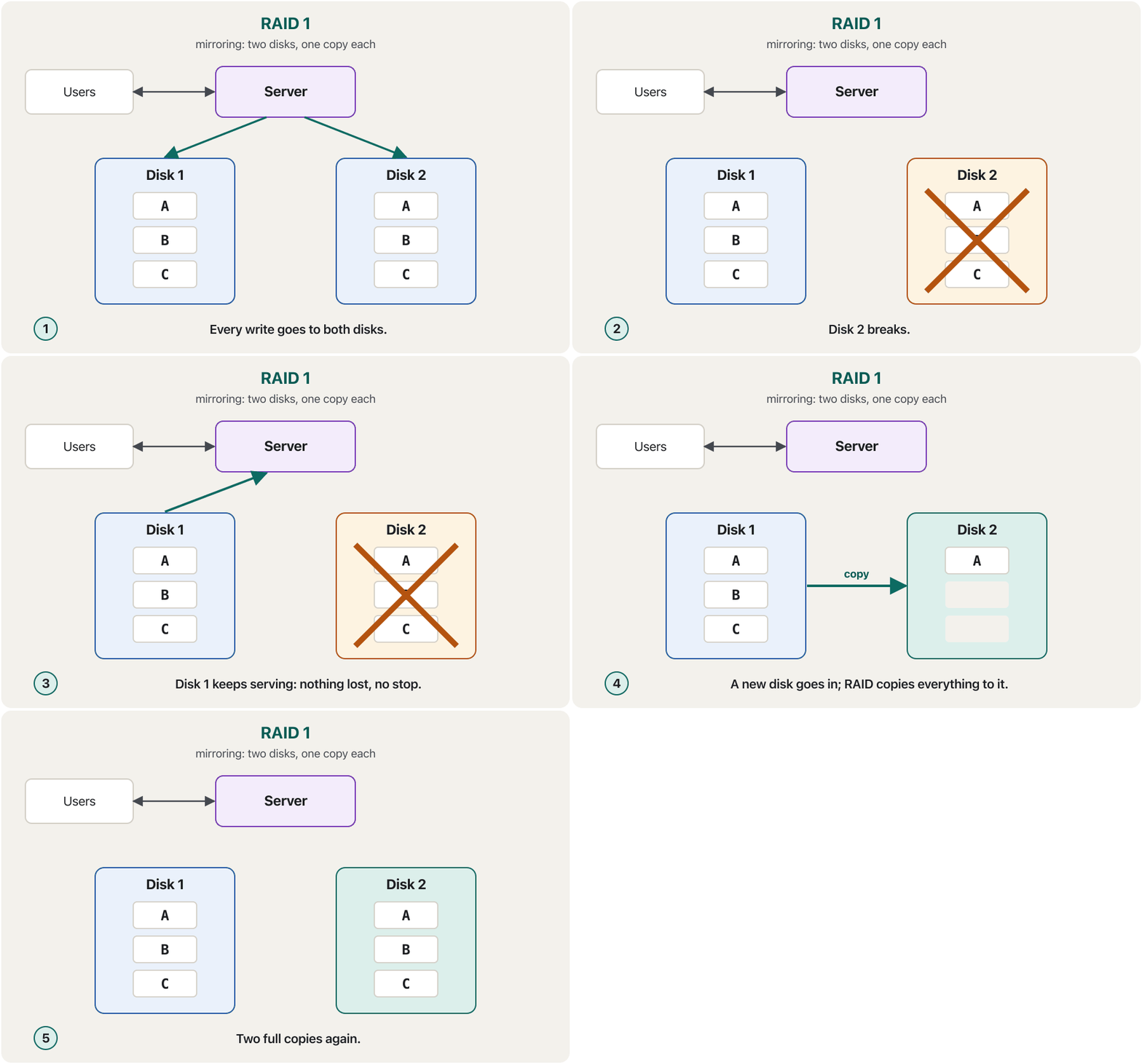
RAID (redundant array of independent disks) joins two or more hard disks or SSDs so that the computer sees them as one disk. Organisations use it so that one broken disk does not stop the work or lose the data. RAID mixes two simple ideas:
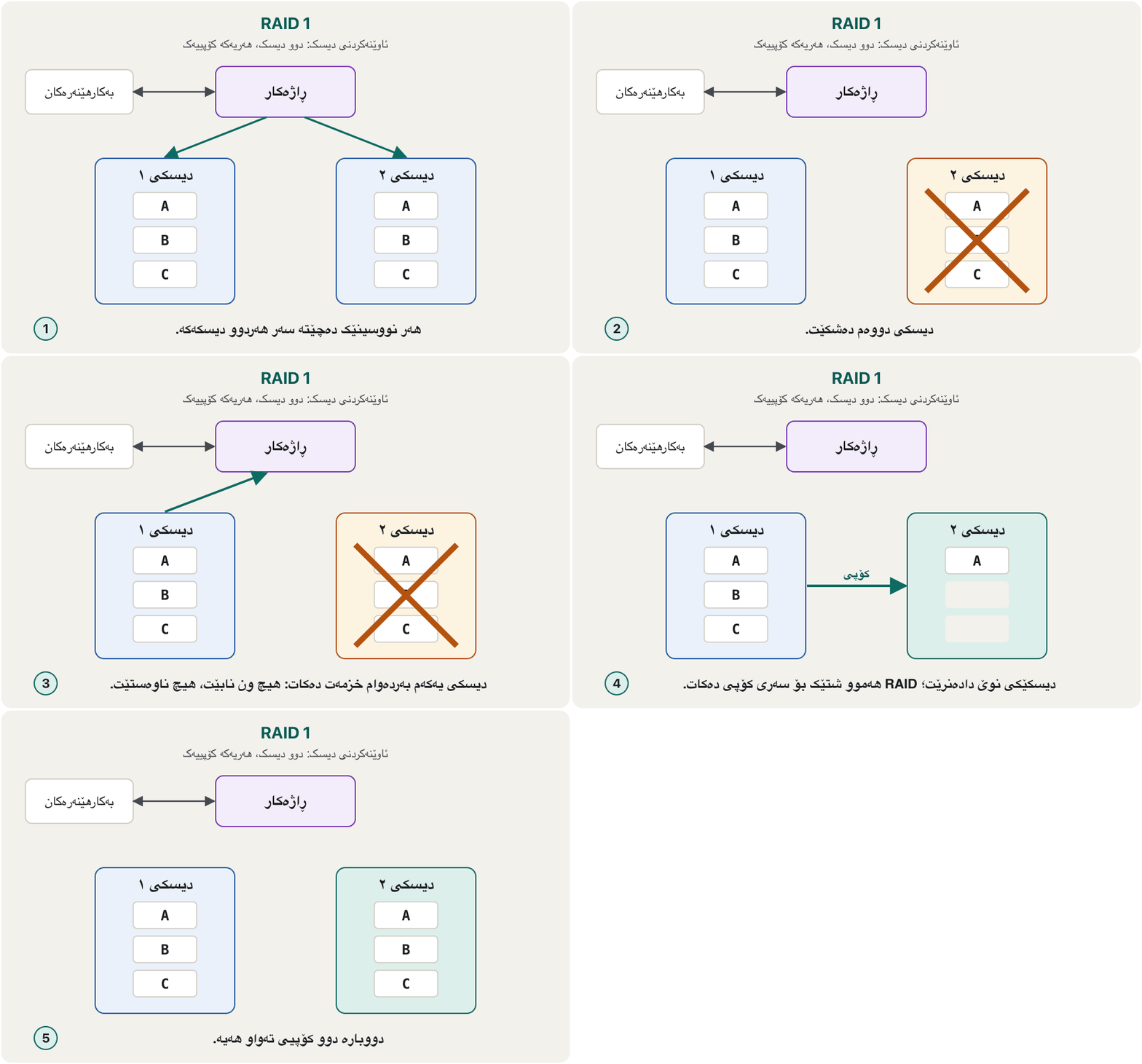
(redundant array of independent disks) دوو یان زیاتر یان SSD پێکەوە دەبەستێت بە شێوەیەک کە هەموویان وەک یەک دیسک دەبینێت. دامەزراوەکان بەکاری دەهێنن تا دیسکێکی شکاو کارەکە ڕانەگرێت و ون نەکات. دوو بیرۆکەی سادە تێکەڵ دەکات:
- Mirroring — every piece of data is written to two disks. If one dies, its twin still has everything.
- Striping — the data is cut into blocks spread over several disks, so they all work at once. Faster, but no spare copy.
- — هەر پارچەیەکی لەسەر دوو دیسک دەنووسرێت. ئەگەر یەکێکیان مرد، جووتەکەی هەموو شتێکی هەیە.
- — دەکرێتە بلۆک و بەسەر چەند دیسکێکدا بڵاو دەکرێتەوە، بۆیە هەموویان پێکەوە کار دەکەن. خێراترە، بەڵام هیچ کۆپییەکی یەدەگ نییە.
NAS: a file store on the networkNAS: خەزنکردنی فایلەکان لەسەر ڕایەڵە
Network-attached storage (NAS) is a small server whose only job is to store files for the computers, phones and other devices on a network. Inside the box there are usually two to eight drives (often in RAID), a small processor and a simple operating system that you control from a web page.
(network-attached storage) بچووکە کە تاکە کاری خەزنکردنی بۆ ، مۆبایلەکان و ئامێرەکانی ترە لەسەر . لەناو سندووقەکەدا زۆرجار دوو تا هەشت درایڤ هەیە (زۆرجار بە )، پرۆسێسەرێکی بچووک و سادە کە لە پەڕەیەکی وێبەوە کۆنترۆڵی دەکەیت.
A NAS works at the file level: a laptop asks it for Accounts\2026\salaries.xlsx by name, and the NAS finds the file in its own file system and sends it. Windows PCs, Macs, Linux machines and phones can all use the same NAS (the notes call this a heterogeneous group of clients) because it speaks the usual file-sharing protocols: SMB for Windows and NFS for Linux and UNIX. It joins the normal office network through an Ethernet cable or Wi-Fi.
لە ئاستی کار دەکات: داوای Accounts\2026\salaries.xlsxی بە ناو لێ دەکات و لە خۆیدا دەدۆزێتەوە و دەینێرێت. Windows، Mac، ئامێرەکانی Linux و مۆبایلەکان هەموویان دەتوانن هەمان بەکار بهێنن (تێبینییەکان بە ئەمە دەڵێن کۆمەڵێکی جۆراوجۆری ) چونکە ئاساییەکانی هاوبەشکردنی دەزانێت: SMB بۆ Windows و NFS بۆ Linux و UNIX. بە کێبڵی یان دەچێتە سەر ئاسایی نووسینگەکە.
In Kurdish: what a NAS is, why offices and homes use one, RAID inside it, and reaching your files from anywhere.
بە کوردی: چییە، بۆچی نووسینگە و ماڵەکان بەکاری دەهێنن، لەناویدا و گەیشتن بە لە هەر شوێنێکەوە.
Kurdish (Sorani), plays 3:26-8:25: NAS, why it is used, RAID and remote access.
بە کوردیی سۆرانی، لە 3:26 تا 8:25 پەخش دەبێت: ، بۆچی بەکار دێت، و .
NAS: a file store on the networkNAS: خەزنکردنی فایلەکان لەسەر ڕایەڵە
Why offices choose a NASبۆچی نووسینگەکان NAS هەڵدەبژێرن
| Advantage (lecture notes)سوود (تێبینییەکانی وانە) | What it means in practiceلە ڕاستیدا واتای چییە |
|---|---|
| Relatively inexpensiveتا ڕادەیەک هەرزان | A box with a few drives costs much less than a SAN and needs no special network.سندووقێک بە چەند درایڤێکەوە زۆر لە هەرزانترە و تایبەتی پێویست نییە. |
| 24/7 and remote availabilityئامادەیی ٢٤/٧ و لە دوورەوە | It stays on day and night; staff can reach their files from home through a secure connection.شەو و ڕۆژ هەڵکراوە؛ کارمەندان دەتوانن لە ماڵەوە بە پەیوەندییەکی پارێزراو بگەنە خۆیان. |
| Good expandability باش | Add a drive or swap small drives for bigger ones when space runs out.کاتێک شوێن نەما، درایڤێک زیاد بکە یان درایڤە بچووکەکان بە گەورەتر بگۆڕە. |
| Redundant storage یەدەگدار | The drives inside are usually in RAID, so one failed drive loses nothing.درایڤەکانی ناوەوە زۆرجار بە ، بۆیە درایڤێکی تێکچوو هیچ شتێک ون ناکات. |
| Automatic backups خۆکار | It can copy itself every night to another drive or to cloud storage.دەتوانێت هەموو شەوێک خۆی کۆپی بکات بۆ درایڤێکی تر یان بۆ . |
| Flexibilityنەرمی | The same box can also share printers, stream videos or hold camera recordings.هەمان سندووق دەتوانێت هاوبەش بکات، ڤیدیۆ پەخش بکات یان تۆمارەکانی کامێرا هەڵبگرێت. |
SAN: a network just for storageSAN: ڕایەڵەیەک تەنها بۆ خەزنکردن
A storage area network (SAN) is a separate, high-speed network whose only job is to connect servers to shared storage, usually large disk arrays. Users never talk to a SAN directly: they talk to the servers (a bank's database server, a university's mail server), and those servers use the SAN.
(storage area network) جیا و خێرایە کە تاکە کاری بەستنەوەی ە بە هاوبەشەوە، زۆرجار کۆمەڵە دیسکی گەورە. هەرگیز ڕاستەوخۆ لەگەڵ قسە ناکەن: لەگەڵ قسە دەکەن ( بانکێک، ئیمەیڵی زانکۆیەک) و ئەو بەکار دەهێنن.
A SAN works at the block level. It does not know about files. It gives each server a piece of raw disk space, and the server's operating system sees that space as if it were its own local disk. The server puts its own file system on it and asks for numbered blocks: give me block 10,482. The servers reach the SAN through special network cards and switches, with Fibre Channel or with iSCSI, which carries the same disk commands over an ordinary IP network.
لە ئاستی بلۆک کار دەکات. هیچ لە نازانێت. بە هەر پارچەیەک شوێنی دیسکی خاو دەدات و ئەو شوێنە دەبینێت وەک ئەوەی دیسکی ناوخۆیی خۆی بێت. خۆی لەسەر دادەنێت و داوای بلۆکی ژمارەدار دەکات: بلۆکی 10482م بدەرێ. بە کارتی و سویچی تایبەت دەگەنە ، بە Fibre Channel یان بە iSCSI کە هەمان فەرمانەکانی دیسک بەسەر ئاسایی IPـدا دەگوازێتەوە.
SAN: a network just for storageSAN: ڕایەڵەیەک تەنها بۆ خەزنکردن
Why big organisations pay for a SANبۆچی دامەزراوە گەورەکان پارە بۆ SAN دەدەن
| Advantage (lecture notes)سوود (تێبینییەکانی وانە) | Whyبۆچی |
|---|---|
| Extremely fast data accessدەستپێگەیشتنی زۆر خێرا بە | A dedicated network, fast links and big disk arrays (today often all SSD). تایبەت، بەستنەوەی خێرا و کۆمەڵە دیسکی گەورە (ئەمڕۆ زۆرجار هەمووی SSD). |
| Takes the load off the LANباری سەر کەم دەکاتەوە | Heavy disk traffic stays on the storage network, so the office network stays free for users.هاتوچۆی قورسی دیسک لەسەر دەمێنێتەوە، بۆیە نووسینگەکە بۆ ئازاد دەمێنێتەوە. |
| Highly expandableزۆر فراوانبوو | Add more disk arrays and give servers more space without opening the servers.کۆمەڵە دیسکی زیاتر زیاد بکە و شوێنی زیاتر بدە بە بێ ئەوەی بکەیتەوە. |
| OS-level (block-level) accessدەستپێگەیشتن لە ئاستی (ئاستی بلۆک) | Each server formats its space as it likes, exactly like a local disk; databases need this.هەر شوێنەکەی خۆی بەو شێوەیەی دەیەوێت فۆرمات دەکات، ڕێک وەک دیسکی ناوخۆیی؛ پێویستیان بەمەیە. |
| High quality of serviceکوالیتی بەرزی خزمەتگوزاری | Steady speed for demanding work such as video editing or big databases.خێرایی جێگیر بۆ کاری قورس وەک دەستکاریکردنی ڤیدیۆ یان . |
The price: a SAN costs much more than a NAS and needs trained staff to set it up and look after it. Small offices rarely need one.
نرخەکەی: زۆر لە گرانترە و کارمەندی ڕاهێنراوی پێویستە بۆ دامەزراندن و چاودێریکردنی. نووسینگە بچووکەکان کەم جار پێویستیان پێیەتی.
File level or block level?ئاستی فایل یان ئاستی بلۆک؟
The real difference between a NAS and a SAN is who keeps the file system. A NAS keeps it and hands out whole files by name. A SAN hands out empty, numbered blocks, and the server that uses them keeps the file system.
جیاوازیی ڕاستەقینەی نێوان و ئەوەیە کە کێ هەڵدەگرێت. خۆی هەڵیدەگرێت و تەواو بە ناو دابەش دەکات. بلۆکی بەتاڵ و ژمارەدار دابەش دەکات و ئەو بەکاریان دەهێنێت هەڵدەگرێت.
| Featureتایبەتمەندی | ||
|---|---|---|
| Sharesچی هاوبەش دەکات | Files and folders, by name و ، بە ناو | Raw blocks, like an empty diskبلۆکی خاو، وەک دیسکێکی بەتاڵ |
| Kind of storageجۆری | File-level storage | Block-level storage |
| File system kept by لای کێیە | The NAS itself خۆی | Each server that uses itهەر کە بەکاری دەهێنێت |
| Who connectsکێ پەیوەندی دەکات | PCs, Macs, phones, serversPC، Mac، مۆبایل، | Servers onlyتەنها |
| Network | The normal office network (Ethernet, Wi-Fi) ئاسایی نووسینگە (، ) | A separate storage network (Fibre Channel or iSCSI) جیای (Fibre Channel یان iSCSI) |
| Cost and skillتێچوون و شارەزایی | Low; easy to set upکەم؛ دامەزراندنی ئاسانە | High; needs trained staffزۆر؛ کارمەندی ڕاهێنراوی دەوێت |
| Typical useبەکارهێنانی باو | Shared documents, home media, camera recordings, backupsبەڵگەنامەی هاوبەش، میدیای ماڵەوە، تۆماری کامێرا، | Databases, virtual machines, video editing، ، دەستکاریکردنی ڤیدیۆ |
A NAS shares files over the normal network; a SAN is a separate fast network that gives servers block storage.
بە سەر ئاساییدا هاوبەش دەکات؛ جیا و خێرایە کە دەداتە .
Whole video (4:27): NAS, then SAN, side by side.
هەموو ڤیدیۆکە (4:27): ، پاشان ، لە تەنیشت یەکەوە.
File level or block level?ئاستی فایل یان ئاستی بلۆک؟
A bazaar picture of NAS and SANوێنەیەکی بازاڕی بۆ NAS و SAN
A NAS is like a shop in the bazaar: you say «two kilos of rice» and the shopkeeper finds it on his shelves and hands you the bag. You never see how he arranges the shop. A SAN is like renting an empty room in a warehouse: you get the key to rooms 14 and 15, and you build your own shelves and decide where everything goes.
وەک دووکانێک وایە لە بازاڕدا: دەڵێیت «دوو کیلۆ برنج» و دووکاندارەکە لە ڕەفەکانیدا دەیدۆزێتەوە و کیسەکەت دەداتێ. هەرگیز نابینیت دووکانەکە چۆن ڕێکدەخات. وەک بەکرێگرتنی ژوورێکی بەتاڵ وایە لە کۆگایەکدا: کلیلی ژووری ١٤ و ١٥ وەردەگریت، ڕەفەکان خۆت دروست دەکەیت و خۆت بڕیار دەدەیت هەر شتێک لە کوێ دابنرێت.
Where the analogy stops workingسنووری ئەم نموونەیە
In a real SAN the «rooms» are reached over a very fast network, and many servers can have rooms in the same disk array at once.
لە ڕاستەقینەدا «ژوورەکان» بە زۆر خێرا دەگەیەنرێن و چەندین دەتوانن لە یەک کاتدا لە هەمان کۆمەڵە دیسکدا ژووریان هەبێت.
Tape: old, cheap and still importantتەیپی موگناتیسی: کۆن، هەرزان و هێشتا گرنگ
Magnetic tape is a long ribbon of plastic with a magnetic coating, wound inside a cartridge about the size of a thick book. It can hold very large amounts of data. A tape drive is the machine that reads and writes the data on the tape.
شریتێکی درێژی پلاستیکە کە ڕووپۆشێکی موگناتیسی هەیە و لەناو کارتریجێکدا پێچراوە کە نزیکەی قەبارەی کتێبێکی ئەستووری هەیە. دەتوانێت بڕێکی زۆر گەورەی هەڵبگرێت. ئەو ئامێرەیە کە لەسەر دەخوێنێتەوە و دەنووسێت.
Tape is read in order, like an old music cassette: to reach a file near the end, the drive must wind past everything before it. Finding one file can take a minute or more, while an SSD finds it in a fraction of a millisecond. But once the right place is found, tape streams data fast — an LTO-10 drive writes about 400 MB every second.
بە ڕیز دەخوێندرێتەوە، وەک کاسێتێکی کۆنی گۆرانی: بۆ گەیشتن بە نزیک کۆتایی، درایڤەکە دەبێت بە بەردەم هەموو ئەوەی پێش ئەودایە تێپەڕێت. دۆزینەوەی یەک لەوانەیە خولەکێک یان زیاتر بخایەنێت، لە کاتێکدا SSD لە بەشێکی میلیچرکەیەکدا دەیدۆزێتەوە. بەڵام کاتێک شوێنە ڕاستەکە دۆزرایەوە، بە خێرایی دەڕژێنێت — درایڤێکی LTO-10 هەر چرکەیەک نزیکەی 400 MB دەنووسێت.
Big organisations keep hundreds of cartridges in a tape library: a cabinet with shelves, several tape drives and a robot arm that takes the cartridge you need and puts it into a drive.
دامەزراوە گەورەکان سەدان کارتریج لە هەڵدەگرن: کابینەیەک بە ڕەفە، چەند و دەستێکی ڕۆبۆتی کە ئەو کارتریجەی پێویستتە دەیبات و دەیخاتە ناو درایڤێکەوە.
Why organisations still back up to magnetic tape: huge, cheap cartridges that sit offline for years.
بۆچی دامەزراوەکان هێشتا لەسەر دەگرن: کارتریجی زۆر گەورە و هەرزان کە بۆ چەندین ساڵ بێ پەیوەندی دادەنرێن.
Plays 0:00-2:55: what tape drives are and why they are still used; stops before the sponsor.
لە 0:00 تا 2:55 پەخش دەبێت: چین و بۆچی هێشتا بەکار دێن؛ پێش ڕیکلامی سپۆنسەر ڕادەوەستێت.
Tape: old, cheap and still importantتەیپی موگناتیسی: کۆن، هەرزان و هێشتا گرنگ
Why tape is still used in 2026بۆچی تەیپی موگناتیسی لە 2026دا هێشتا بەکاردێت
- Huge and cheap. One LTO-10 cartridge holds 30 TB or 40 TB (LTO-9: 18 TB) before compression, at a lower price per terabyte than disks.
- Offline. A cartridge on a shelf is not connected to anything, so ransomware that spreads over the network cannot reach it (an «air gap»).
- Long life, little power. Stored well, cartridges last for decades, and a tape on a shelf uses no electricity.
- Easy to send away. Cartridges can be carried to another building or city for an off-site copy.
- گەورە و هەرزان. یەک کارتریجی LTO-10 پێش 30 TB یان 40 TB هەڵدەگرێت (LTO-9: 18 TB)، بە نرخێکی کەمتر بۆ هەر لە دیسک.
- ئۆفلاین. کارتریجێک لەسەر ڕەفە بە هیچ شتێکەوە نەبەستراوە، بۆیە ئەو بەسەر بڵاو دەبێتەوە ناتوانێت پێی بگات («بۆشایی هەوا»).
- تەمەنی درێژ، کارەبای کەم. ئەگەر بە باشی هەڵبگیرێن، کارتریجەکان دەیان ساڵ دەمێننەوە و لەسەر ڕەفە هیچ کارەبایەک بەکار نابات.
- ئاسان بۆ ناردن. کارتریجەکان دەتوانرێن ببرێنە باڵەخانە یان شارێکی تر بۆ کۆپییەکی دوور.
Putting it together: which storage for which jobکۆکردنەوە: کام خەزنکردن بۆ کام کار
Real organisations combine these tools. A typical plan for a medium-sized company in Sulaimani might look like this:
دامەزراوە ڕاستەقینەکان ئەم ئامرازانە پێکەوە بەکار دەهێنن. پلانێکی باو بۆ کۆمپانیایەکی مامناوەندی لە سلێمانی لەوانەیە ئاوا بێت:
| Jobکار | Storage | Whyبۆچی |
|---|---|---|
| Staff documents and shared foldersبەڵگەنامەی کارمەندان و هاوبەشەکان | Cheap, simple, works with every PC and Macهەرزان، سادە، لەگەڵ هەموو PC و Macێک کار دەکات | |
| The customer database and the virtual servers کڕیاران و گریمانەییەکان | Fast, block-level, built for serversخێرا، ئاستی بلۆک، بۆ دروست کراوە | |
| Inside the NAS and the SANلەناو و | One failed disk stops nothingیەک دیسکی تێکچوو هیچ شتێک ناوەستێنێت | |
| Monthly archive copies kept for yearsکۆپیی ئەرشیفی مانگانە کە بۆ ساڵان هەڵدەگیرێن | () () | Cheap per terabyte, offline, long-lastingبۆ هەر هەرزان، ئۆفلاین، تەمەن درێژ |
| A copy in another cityکۆپییەک لە شارێکی تر | or tapes sent away یان کە دەنێردرێن | Safe from a fire or flood at the officeلە ئاگر یان لافاو لە نووسینگەکە پارێزراوە |
Very large organisations keep all of this in a data centre: a building full of server racks with backup power, cooling and fast network links. Cloud providers rent space in such data centres to everyone — see Cloud Computing. Whatever the size, the 3-2-1 backup rule still applies.
دامەزراوە زۆر گەورەکان هەموو ئەمانە لە دادەنێن: باڵەخانەیەک پڕ لە ڕەفەی بە کارەبای یەدەگ، ساردکەرەوە و بەستنەوەی خێرای . لەو شوێن بە هەمووان بەکرێ دەدەن — سەیری هەورەژمێرکاری بکە. قەبارە هەرچییەک بێت، ڕێسای باکئەپی 3-2-1 هەر جێبەجێ دەبێت.
Common mistakesهەڵە باوەکان
| Mistakeهەڵە | What is trueڕاستییەکە |
|---|---|
| RAID is a backup. . | RAID protects against a broken disk only. A deleted file, ransomware or a fire destroys every disk in the array at once. You still need backups. تەنها لە دیسکی شکاو دەپارێزێت. سڕاوە، یان ئاگر هەموو دیسکەکانی کۆمەڵەکە پێکەوە لەناو دەبات. هێشتا پێویستە. |
| Every RAID level keeps a copy.هەموو کۆپییەک هەڵدەگرێت. | RAID 0 (striping only) keeps no copy; one failed disk loses everything.RAID 0 (تەنها ) هیچ کۆپییەک هەڵناگرێت؛ یەک دیسکی تێکچوو هەموو شتێک ون دەکات. |
| NAS and SAN are the same, only the letters change. و وەک یەکن، تەنها پیتەکان دەگۆڕێن. | A NAS shares files on the normal network; a SAN gives servers raw blocks on a network of its own. لەسەر ئاسایی هاوبەش دەکات؛ بلۆکی خاو لەسەر تایبەت بە خۆی دەداتە . |
| A laptop can plug straight into a SAN. دەتوانێت ڕاستەوخۆ بە ببەسترێت. | Users reach a SAN only through servers; the SAN is not on the office network. تەنها لە ڕێگەی دەگەنە ؛ لەسەر نووسینگەکە نییە. |
| Tape is dead. مردووە. | Tape is still used for archives and offline backups in 2026; LTO-10 holds up to 40 TB per cartridge. لە 2026دا هێشتا بۆ ئەرشیف و ئۆفلاین بەکاردێت؛ LTO-10 تا 40 TB لە هەر کارتریجێکدا هەڵدەگرێت. |
| Tape is quick for opening one file. بۆ کردنەوەی یەک خێرایە. | Tape is read in order, so reaching one file can take minutes. It is fast only for long, continuous reading and writing. بە ڕیز دەخوێندرێتەوە، بۆیە گەیشتن بە یەک لەوانەیە چەند خولەکێک بخایەنێت. تەنها کاتێک خێرایە کە خوێندنەوە و نووسینەکە درێژ و بەردەوام بێت. |
Exercisesڕاهێنانەکان
For each case, choose NAS, SAN, tape or cloud storage, and give one reason. (a) An accounting office with eight PCs needs shared folders. (b) A hospital's patient database runs on six servers and must answer very fast. (c) A TV station must keep 20 years of video cheaply. (d) A family wants its photos safe even if the house burns.
بۆ هەر حاڵەتێک ، ، یان هەڵبژێرە و هۆیەک بڵێ. (أ) نووسینگەیەکی ژمێریاری بە هەشت PC پێویستی بە هاوبەشە. (ب) نەخۆشانی نەخۆشخانەیەک لەسەر شەش کار دەکات و دەبێت زۆر خێرا وەڵام بداتەوە. (ج) کەناڵێکی تەلەفزیۆنی دەبێت ٢٠ ساڵ ڤیدیۆ بە هەرزانی هەڵبگرێت. (د) خێزانێک دەیەوێت وێنەکانی سەلامەت بن تەنانەت ئەگەر ماڵەکە بسووتێت.
Show answerوەڵامەکە پیشان بدە
- (a) NAS — cheap, simple, shares files with every PC on the office network (with RAID inside, plus an off-site copy).
- (b) SAN — block-level storage for servers, very fast, on its own network.
- (c) Tape (a tape library) — lowest cost per terabyte, no power on the shelf, lasts for decades; the archive is rarely opened.
- (d) Cloud storage — the copy lives in a data centre in another place, so a fire at home cannot reach it.
- (أ) — هەرزان، سادە، لەگەڵ هەموو PCێک لەسەر نووسینگەکە هاوبەش دەکات (بە لەناویدا، لەگەڵ کۆپییەکی دوور).
- (ب) — بۆ ، زۆر خێرا، لەسەر تایبەت بە خۆی.
- (ج) () — کەمترین نرخ بۆ هەر ، کارەبا لەسەر ڕەفە بەکار نابات، دەیان ساڵ دەمێنێتەوە؛ ئەرشیفەکە کەم جار دەکرێتەوە.
- (د) — کۆپییەکە لە شوێنێکی تردایە، بۆیە ئاگری ماڵەوە پێی ناگات.
Karwan puts two 8 TB disks in a NAS. (a) How much space can he use with RAID 1? (b) With RAID 0? (c) Which one should he choose for the company's accounts, and why?
کاروان دوو دیسکی 8 TB دەخاتە ناو . (أ) بە RAID 1 چەند شوێن بەکار دەهێنێت؟ (ب) بە RAID 0؟ (ج) بۆ ژمێریاریی کۆمپانیاکە کامیان هەڵبژێرێت و بۆچی؟
Hintئاماژە
Mirroring keeps a full copy; striping keeps none.
کۆپییەکی تەواو هەڵدەگرێت؛ هیچ.
Show answerوەڵامەکە پیشان بدە
- (a) RAID 1 writes everything twice, so he can use 8 TB (the second disk is the copy).
- (b) RAID 0 uses both disks for different data: 16 TB, but with no copy.
- (c) RAID 1. Accounts must not be lost; with RAID 0 one failed disk would destroy all 16 TB. He still needs a backup somewhere else.
- (أ) RAID 1 هەموو شتێک دوو جار دەنووسێت، بۆیە دەتوانێت 8 TB بەکار بهێنێت (دیسکی دووەم کۆپییەکەیە).
- (ب) RAID 0 هەردوو دیسکەکە بۆ جیاواز بەکار دەهێنێت: 16 TB، بەڵام بەبێ کۆپی.
- (ج) RAID 1. ژمێریاری نابێت ون بێت؛ بە RAID 0 یەک دیسکی تێکچوو هەموو 16 TBـەکە لەناو دەبات. هێشتا پێویستی بە لە شوێنێکی تر هەیە.
A company must archive 150 TB of data (without compression). (a) How many LTO-9 cartridges (18 TB) does it need? (b) How many 40 TB LTO-10 cartridges? (c) A drive writes 400 MB per second. About how long does it take to fill one 18 TB cartridge?
کۆمپانیایەک دەبێت 150 TB ئەرشیف بکات (بەبێ ). (أ) چەند کارتریجی LTO-9 (18 TB) پێویستە؟ (ب) چەند کارتریجی 40 TBـی LTO-10؟ (ج) درایڤێک هەر چرکەیەک 400 MB دەنووسێت. پڕکردنەوەی یەک کارتریجی 18 TB نزیکەی چەندی دەخایەنێت؟
Show answerوەڵامەکە پیشان بدە
Round the number of cartridges up: a half-full cartridge still counts. 18 TB = 18,000,000 MB (decimal units, as drive makers count).
ژمارەی کارتریجەکان بەرەو سەرەوە بازنە بکە: کارتریجێکی نیوەپڕیش دەژمێردرێت. 18 TB = 18,000,000 MB (یەکەی دەیی، وەک دروستکەرانی درایڤ دەیژمێرن).
In three or four sentences, explain to a friend the difference between file-level and block-level storage. Use your own everyday example.
بە سێ یان چوار ڕستە، جیاوازیی نێوان و بۆ هاوڕێیەک ڕوون بکەرەوە. نموونەیەکی ڕۆژانەی خۆت بەکار بهێنە.
Show answerوەڵامەکە پیشان بدە
A model answer: with file-level storage (a NAS) I ask for a file by its name, and the storage box finds it and gives it to me, like asking a librarian for a book by its title. With block-level storage (a SAN) a server gets empty numbered space, like an empty notebook, and the server itself decides what to write on each page and keeps its own index (the file system).
وەڵامێکی نموونە: بە () داوای بە ناوەکەی دەکەم و سندووقی دەیدۆزێتەوە و دەیداتێ، وەک ئەوەی داوای کتێبێک بە ناونیشانەکەی لە کتێبخانەوان بکەیت. بە () شوێنی بەتاڵی ژمارەدار وەردەگرێت (وەک دەفتەرێکی بەتاڵ) و خۆی بڕیار دەدات چی لەسەر هەر لاپەڕەیەک بنووسێت و پێڕستی خۆی هەڵدەگرێت ().
Summaryپوختە
- Enterprise storage is built for heavy use, maximum efficiency and maximum availability.
- RAID joins disks into one: mirroring keeps a copy, striping only adds speed. RAID is not a backup. The levels are in the DBA RAID lesson.
- A NAS is a file server on the normal network: file-level, cheap, easy, for PCs, Macs and phones.
- A SAN is a separate fast network that gives servers block-level space they treat as their own disks.
- Tape is read in order; it is cheap per terabyte, offline and long-lasting — ideal for archives and ransomware-safe copies.
- دامەزراوەیی بۆ بەکارهێنانی قورس، زۆرترین کارایی و زۆرترین دروست کراوە.
- دیسکەکان دەکاتە یەک: کۆپییەک هەڵدەگرێت، تەنها خێرایی زیاد دەکات. نییە. ئاستەکان لە وانەی RAIDـی DBAـدان.
- لەسەر ئاسایی: ئاستی ، هەرزان، ئاسان، بۆ PC، Mac و مۆبایل.
- جیا و خێرایە کە شوێنی ئاستی بلۆک دەداتە و ئەوانیش وەک دیسکی خۆیان مامەڵەی لەگەڵ دەکەن.
- بە ڕیز دەخوێندرێتەوە؛ بۆ هەر هەرزانە، ئۆفلاینە و تەمەن درێژە — بۆ ئەرشیف و کۆپیی پارێزراو لە گونجاوە.
What are the three goals of enterprise storage?سێ ئامانجی خەزنکردنی دامەزراوەیی چین؟
Heavy use by many users at once, maximum efficiency and maximum availability (24/7, even when a part fails).
بەکارهێنانی قورس لەلایەن زۆر کەسەوە لە یەک کاتدا، زۆرترین کارایی و زۆرترین (٢٤/٧، تەنانەت کاتێک بەشێک تێکدەچێت).
Who keeps the file system in a NAS, and who keeps it in a SAN?لە NASـدا کێ سیستەمی فایلەکە هەڵدەگرێت و لە SANـدا کێ؟
In a NAS, the NAS itself. In a SAN, each server that uses the space.
لە ، خۆی. لە ، هەر کە شوێنەکە بەکار دەهێنێت.
Why is tape slow for one file but good for backups?بۆچی تەیپی موگناتیسی بۆ یەک فایل خاوە بەڵام بۆ باکئەپ باشە؟
It is read in order, so reaching one file takes time; but it streams long backups fast, costs little per terabyte and can be kept offline.
بە ڕیز دەخوێندرێتەوە، بۆیە گەیشتن بە یەک کات دەبات؛ بەڵام درێژ بە خێرایی دەنووسێت، بۆ هەر کەم تێدەچێت و دەتوانرێت ئۆفلاین هەڵبگیرێت.
Lesson complete!وانەکە تەواو بوو!
Well done. Review the key terms, then go on to the next lesson.دەستخۆش. سەیرێکی زاراوە سەرەکییەکان بکەرەوە، پاشان بڕۆ بۆ وانەی داهاتوو.
Key termsزاراوە سەرەکییەکان
Software and Operating Systemsنەرمەواڵە و سیستەمەکانی وەگەڕخەر
Related lecturesوانە پەیوەندیدارەکان
References and further readingسەرچاوەکان و خوێندنەوەی زیاتر
- IBM Think: What is network attached storage (NAS)?
- IBM Think: What is a storage area network (SAN)?
- Wikipedia: Storage area network (block-level access, devices appear as direct-attached storage)
- LTO Program: What is LTO technology? (offline copies, air gap)
- LTO Program: LTO generation compatibility (30 TB and 40 TB LTO-10 media)
- Fujifilm: LTO Ultrium tape specifications (LTO-9 18 TB; LTO-10 30 TB and 40 TB native)
- Spectra Logic: LTO-10 tape drive datasheet (400 MB/s native)
- CISA (US-CERT): Data Backup Options
This lecture is a first edition. The Kurdish text and terminology are waiting for review by Kurdish IT teachers.ئەم وانەیە چاپی یەکەمە. دەقە کوردییەکە و زاراوەکانی چاوەڕێی پێداچوونەوەی مامۆستایانی کوردی بواری IT ن.