Chapterبەش 5 · Lectureوانە 5.6
The Binomial Distribution (Supplementary)دابەشبوونی دووڕادەیی (زیادە)
Counting successes in repeated independent trials: Bernoulli trials, the binomial setting, the formula built from penalty kicks, the course's coin pmfs as binomial, how the shape changes with , mean and variance , "at least" questions, Python, and the contrast with drawing without replacement (hypergeometric).
ژماردنی سەرکەوتنەکان لە کاری دووبارە و سەربەخۆدا: ، بارودۆخی دووڕادەیی، فۆرمولەی کە لە لێدانی پەنالتی دروست دەکرێت، دراوەکانی کۆرسەکە وەک دووڕادەیی، چۆنێتیی گۆڕانی شێوە لەگەڵ ، و ، پرسیارەکانی «لانیکەم»، Python و بەراورد لەگەڵ دەرهێنان ().
What you will learnچی فێر دەبیت
- Decide whether a situation is binomial (fixed , two outcomes, same , independent trials).
- Compute binomial probabilities with and the complement rule.
- Use , and , and describe the shape for different .
- Explain when drawing without replacement is hypergeometric instead of binomial.
- بڕیار بدەیت کە بارودۆخێک دووڕادەییە یان نا (ـی جێگیر، دوو ، هەمان ، سەربەخۆ).
- دووڕادەیی بە و بژمێریت.
- ، و بەکاربهێنیت و شێوەکە بۆ ـی جیاواز وەسف بکەیت.
- ڕوون بکەیتەوە کەی دەرهێنان نەک دووڕادەیی.
Trials with two outcomesکارە هەڕەمەکییەکان بە دوو ئەنجام
Many random experiments have only two outcomes that matter to us. A penalty kick is a goal or a miss. A coin shows heads or not. A die shows a six or not. A light bulb from a factory works or is faulty. Call the outcome you are counting a success and the other a failure, even when the "success" is a faulty bulb.
زۆر تەنها دوو هەیە کە بۆمان گرنگن. لێدانی پەنالتی یان گۆڵە یان نا. دراو یان شێر نیشان دەدات یان نا. بەردەزار یان 6 نیشان دەدات یان نا. گڵۆپێکی کارگە یان کار دەکات یان تێکچووە. ئەو دەیژمێریت ناوی بنێ سەرکەوتن و ئەوی تر شکست، تەنانەت گەر «سەرکەوتن»ەکە گڵۆپێکی تێکچوو بێت.
One such trial is a Bernoulli trial. Its success probability is written and its failure probability . If you write 1 for a success and 0 for a failure, you get the simplest random variable there is:
یەک کاری لەم جۆرە . سەرکەوتنەکەی بە دەنووسرێت و شکستەکەی بە . گەر بۆ سەرکەوتن 1 و بۆ شکست 0 بنووسیت، سادەترین بەدەست دێت کە هەیە:
A with only two outcomes, “success” (probability ) and “failure” ().
کە تەنها دوو ئەنجامی هەیە: «سەرکەوتن» (ئەگەری ) و «شکست» ().
| Sumکۆ |
So one trial has mean and, by the shortcut for the variance, variance . For a penalty taker who scores 80% of the time, , , mean 0.8 goals per kick and variance .
کەواتە یەک کار ـە و بە ڕێگا کورتەکەی لێکنەچوون ـە. بۆ یاریزانێک کە لە 80%ی پەنالتییەکاندا گۆڵ دەکات، ، ، 0.8 گۆڵ بۆ هەر لێدانێک و .
Counting successes: the binomial settingژماردنی سەرکەوتنەکان: بارودۆخی دووڕادەیی
Now repeat the trial times and count the successes. The count X follows the binomial distribution when four conditions hold:
ئێستا کارەکە جار دووبارە بکەرەوە و سەرکەوتنەکان بژمێرە. ژمارەی X هەیە کاتێک ئەم چوار مەرجە هەبن:
- A fixed number of trials, decided before you start.
- Two outcomes in each trial: success or failure.
- The same in every trial.
- Independent trials: one result does not change the chances of another.
- ژمارەیەکی جێگیری کار، کە پێش دەستپێکردن دیاری کراوە.
- دوو لە هەر کارێکدا: سەرکەوتن یان شکست.
- هەمان لە هەموو کارێکدا.
- کاری سەربەخۆ: ئەنجامی یەکێکیان چانسی ئەوی تر ناگۆڕێت.
Then we write , read "X is binomial with trials and success probability ". The values of X are . The name binomial ("two terms") comes from the two outcomes, and from the binomial coefficients in its formula.
پاشان دەنووسین ، بەم شێوەیە دەخوێنرێتەوە: «X هەیە بە کار و سەرکەوتنی ». نرخەکانی X بریتین لە . ناوی «دووڕادەیی» لە دوو دێت و لە هاوکۆلکە دووڕادەییەکانی ناو فۆرمولەکەی.
A binomial model for penaltiesمۆدێلێکی دووڕادەیی بۆ پەنالتی
A player takes 5 penalties in training. Each kick is a goal or a miss (two outcomes), he always takes exactly 5 (fixed n), he is equally good every time (same ), and one kick does not affect the next (independent). The number of goals is .
یاریزانێک لە ڕاهێناندا 5 پەنالتی لێ دەدات. هەر لێدانێک یان گۆڵە یان نا (دوو )، هەمیشە ڕێک 5 لێدەدات (ـی جێگیر)، هەموو جارێک بە هەمان ئاست باشە (هەمان ) و لێدانێک کار لە لێدانی داهاتوو ناکات (سەربەخۆ). ژمارەی گۆڵەکان ـە.
Where the analogy stops workingسنووری ئەم نموونەیە
Real players get tired or nervous, so may change from kick to kick. The binomial model is an idealisation; it works well when those effects are small.
یاریزانی ڕاستەقینە ماندوو یان دڵەڕاوکێ دەبێت، بۆیە لەوانەیە لە لێدانێکەوە بۆ لێدانێکی تر بگۆڕێت. مۆدێلی دووڕادەیی وێنەیەکی ئایدیاڵە؛ کاتێک ئەو کاریگەرییانە بچووکن باش کار دەکات.
The binomial formulaفۆرمولەی دووڕادەیی
What is the chance that the player scores exactly 4 of the 5 penalties? One way is goal, goal, goal, goal, miss. Because the kicks are independent, its probability is a product: . But the miss can be any one of the 5 kicks:
چانسی ئەوە چەندە کە یاریزانەکە ڕێک 4 لە 5 پەنالتییەکە بکاتە گۆڵ؟ یەک ڕێگا ئەمەیە: گۆڵ، گۆڵ، گۆڵ، گۆڵ، بەفیڕۆچوون. لەبەر ئەوەی لێدانەکان سەربەخۆن، لێکدانە: . بەڵام لێدانە بەفیڕۆچووەکە دەکرێت هەر یەکێک لە 5 لێدانەکە بێت:
Each order has the same probability, and the number of orders is the number of ways to choose which 4 kicks are goals, . So . The same reasoning for any , and gives the binomial formula:
هەموو ڕیزبەندییەک هەمان هەیە و ژمارەی ڕیزبەندییەکان ژمارەی ڕێگاکانی هەڵبژاردنی ئەو 4 لێدانەیە کە گۆڵن، . کەواتە . هەمان بیرکردنەوە بۆ هەر ، و فۆرمولەی دووڕادەیی دەدات:
: the probability of one particular order with successes. : how many such orders there are.
: یەک ڕیزبەندیی دیاریکراو بە سەرکەوتن. : چەند ڕیزبەندیی لەو جۆرە هەیە.
The probabilities add up to 1, because by the binomial theorem . The coefficients are the rows of Pascal's triangle: 1, 5, 10, 10, 5, 1 for .
کۆی 1ـە، چونکە بە دووڕادەیی . ڕیزەکانی سێگۆشەی پاسکاڵـن: بۆ ، 1، 5، 10، 10، 5، 1.
Builds the binomial formula from coin flips: list the orders, multiply the probabilities, count the orders with Pascal's triangle and n choose k.
لە هەڵدانی دراوەوە دروست دەکات: ڕیزبەندییەکان بنووسە، لێک بدە، ڕیزبەندییەکان بە و بژمێرە.
Whole video: small cases by hand (0:41), independence (5:54), Pascal's triangle (6:50), the binomial coefficient (9:03) and a simulation check (13:27).
هەموو ڤیدیۆکە: حاڵەتی بچووک بە دەست (0:41)، (5:54)، (6:50)، (9:03) و پشکنین بە لاساییکردنەوە (13:27).
Coins: the course's pmfs were binomialدراوەکان: نەخشەی بارستەی ئەگەری کۆرسەکە دووڕادەیی بوو
You have met binomial distributions already. The number of heads in two fair coins () is , and in three coins () it is . The homework pmf in Random Variables is the same in disguise:
پێشتر بینیوە. ژمارەی شێرەکان لە دوو دراوی دادپەروەردا () ـە و لە سێ دراودا () ـە. ئەرکی ماڵەوە لە گۆڕاوە هەڕەمەکییەکان هەمان ـە بە شێوەیەکی تر:
With every order has probability , and .
بە هەموو ڕیزبەندییەک ـە و .
With 10 coins the shape becomes clearer. The ways are the 11th row of Pascal's triangle, each divided by :
بە 10 دراو شێوەکە ڕوونتر دەبێت. ڕێگاکان ڕیزی 11ی ، هەریەکە دابەش بە :
How the shape depends on شێوەکە چۆن پشت بە دەبەستێت
Keep and change the success probability from 0.1 to 0.9. Watch the bars move:
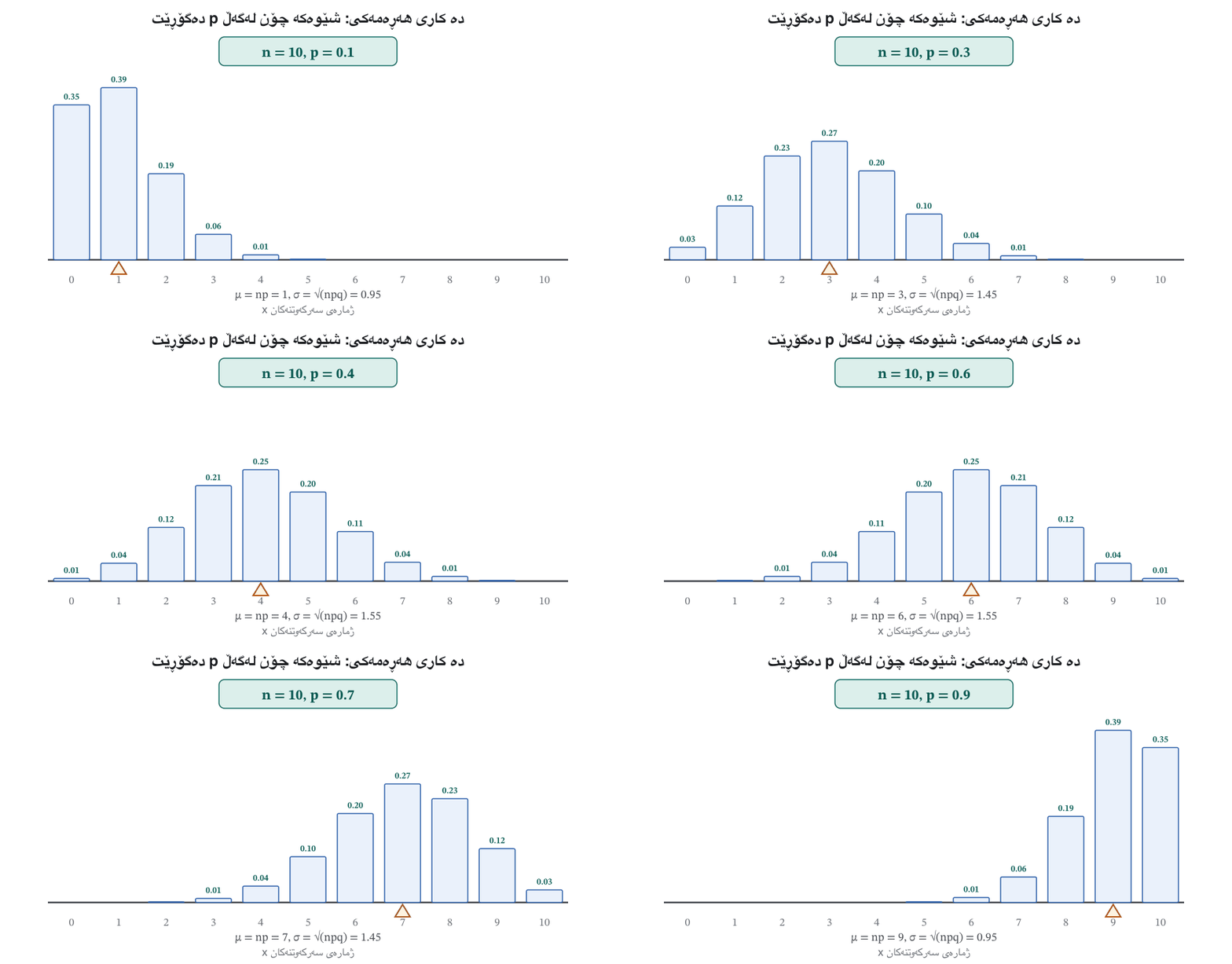
وەک خۆی بهێڵەرەوە و سەرکەوتن لە 0.1ـەوە بۆ 0.9 بگۆڕە. سەیری جووڵەی ستوونەکان بکە:
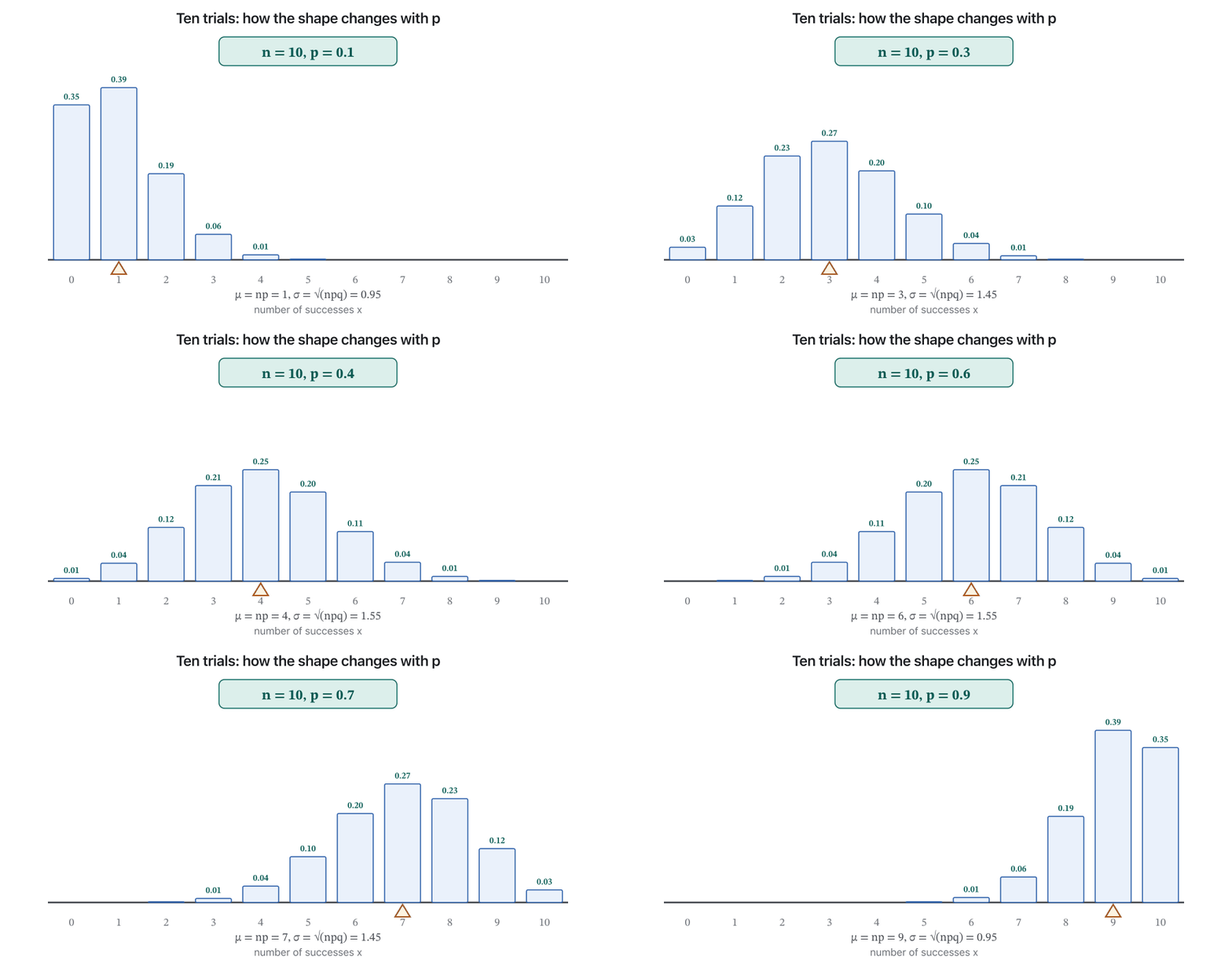
- : most bars are on the left and the tail points right (positive skewness).
- : the bars are symmetric around .
- : the mirror image. Counting failures instead of successes turns into .
- The tallest bar is always near the mean .
- : زۆربەی ستوونەکان لە چەپن و کلکەکە بەرەو ڕاستە (ناهاوجێبوونی موجەب).
- : ستوونەکان لە دەوری هاوجێن.
- : وێنەی ئاوێنەیی. ژماردنی شکستەکان لە جیاتی سەرکەوتنەکان دەکات بە .
- بەرزترین ستوون هەمیشە لە نزیک ـە.
Mean and variance ناوەندی و لێکنەچوونی
You could find the mean of by adding over values. There is a much shorter way. X is a sum of Bernoulli variables, one per trial (1 for a success, 0 for a failure). Each has mean and variance , so:
دەتوانیت بە کۆکردنەوەی بەسەر نرخدا بدۆزیتەوە. ڕێگایەکی زۆر کورتتر هەیە. کۆی گۆڕاوی بێرنۆلییە، یەک بۆ هەر کارێک (1 بۆ سەرکەوتن، 0 بۆ شکست). هەریەکەیان و ـی هەیە، بۆیە:
Means always add (rule 3 of expectation). Variances add because the trials are independent (variance rules).
هەمیشە کۆ دەکرێنەوە (یاسای 3ی نرخی پێشبینیکراو). کۆ دەکرێتەوە چونکە کارەکان سەربەخۆن (یاساکانی لێکنەچوون).
| Situationبارودۆخ | ||||
|---|---|---|---|---|
| Heads in 3 fair coinsشێر لە 3 دراوی دادپەروەردا | ||||
| Goals from 5 penaltiesگۆڵ لە 5 پەنالتیدا | ||||
| Right answers when guessing 10 questions with 4 optionsوەڵامی ڕاست کاتێک تەخمینی 10 پرسیاری 4 وەڵامی دەکەیت | ||||
| Heads in 10 fair coinsشێر لە 10 دراوی دادپەروەردا |
Check the first row the long way: .
ڕیزی یەکەم بە ڕێگا درێژەکە بپشکنە: .
"At least" and "at most"«لانیکەم» و «لانیزۆر»
Questions often ask about several values at once. Add their bars, or, when that is long, use the complement rule: .
پرسیارەکان زۆر جار چەند نرخێکی پێکەوە داوا دەکەن. ستوونەکانی ئەو نرخانە کۆ بکەرەوە، یان کاتێک درێژە، یاسای تەواوکەر بەکاربهێنە: .
- Guessing a whole testتەخمینکردنی تاقیکردنەوەیەکی تەواو
A test has 10 questions with 4 options each; Dilan guesses every answer, so . To pass she needs at least 5 right:
تاقیکردنەوەیەک 10 پرسیاری هەیە، هەریەکە 4 وەڵام؛ دیلان هەموو وەڵامەکان تەخمین دەکات، بۆیە . بۆ دەرچوون لانیکەم 5 وەڵامی ڕاستی پێویستە:
- At least one six in four rollsلانیکەم یەک 6 لە چوار فڕێداندا
Roll a die 4 times: . "At least one" is everything except "none":
بەردەزارێک 4 جار فڕێ بدە: . «لانیکەم یەک» هەموو شتێکە جگە لە «هیچ»:
- A box of bulbsسندووقێکی گڵۆپ
20 bulbs, each faulty with probability 0.05: . A shop accepts the box if at most one bulb is faulty:
20 گڵۆپ، هەریەکە بە 0.05 تێکچووە: . دوکانێک سندووقەکە قبووڵ دەکات گەر لانیزۆر یەک گڵۆپ تێکچوو بێت:
A worked binomial example by hand: 10 men, 8% colour-blind; exactly 2, none, all, and at least 2 of them.
نموونەیەکی بە دەست: 10 پیاو، 8%ـیان کوێری ڕەنگن؛ ڕێک 2، هیچیان، هەموویان و لانیکەم 2 لەوان.
Chapter 'Calculating by hand' (2:36-8:56): (a) all 10, (b) none, (c) exactly 2, (d) at least 2.
بەشی «ژماردن بە دەست» (2:36 تا 8:56): (a) هەر 10 کەسەکە، (b) هیچیان، (c) ڕێک 2، (d) لانیکەم 2.
The binomial distribution in Pythonدابەشبوونی دووڕادەیی لە Pythonـدا
math.comb(n, x) gives , so the whole formula fits in one line. This program prints the guessing-test distribution and checks the mean against :
math.comb(n, x) ژمارەی دەدات، بۆیە هەموو فۆرمولەکە لە یەک دێڕدا جێی دەبێتەوە. ئەم دابەشبوونی تاقیکردنەوەی تەخمین چاپ دەکات و لەگەڵ بەراورد دەکات:
from math import comb

def binom_pmf(x, n, p):
    """P(X = x) when X ~ B(n, p)."""
    return comb(n, x) * p**x * (1 - p)**(n - x)

n, p = 10, 0.25            # 10 questions, 4 options each, pure guessing
probs = [binom_pmf(x, n, p) for x in range(n + 1)]
for x, pr in enumerate(probs):
    print(f"P(X = {x:2}) = {pr:.4f}")

print("sum of P(x) =", round(sum(probs), 10))
print("mean        =", round(sum(x * pr for x, pr in enumerate(probs)), 10), "  np  =", n * p)
print("P(X >= 5) =", round(sum(probs[5:]), 4))P(X = 0) = 0.0563 P(X = 1) = 0.1877 P(X = 2) = 0.2816 P(X = 3) = 0.2503 P(X = 4) = 0.1460 P(X = 5) = 0.0584 P(X = 6) = 0.0162 P(X = 7) = 0.0031 P(X = 8) = 0.0004 P(X = 9) = 0.0000 P(X = 10) = 0.0000 sum of P(x) = 1.0 mean = 2.5 np = 2.5 P(X >= 5) = 0.0781
Explain the codeڕوونکردنەوەی کۆدەکە
- Lineدێڕی 3-5
The binomial formula: .
فۆرمولەی دووڕادەیی: .
- Lineدێڕی 8
A list comprehension builds all probabilities at once.
لیستێک هەموو پێکەوە دروست دەکات.
- Lineدێڕی 12-14
Checks: the probabilities total 1, the mean equals , and the tail from 5 upwards is about 0.078.
پشکنینەکان: کۆی 1ـە، یەکسانە بە و کلکەکە لە 5 بەرەو سەرەوە نزیکەی 0.078ـە.
Putting back or not: binomial vs hypergeometricگەڕاندنەوە یان نا: دووڕادەیی بەرامبەر هایپەرجیۆمەتری
Go back to H.W 10: a box of 12 items, 3 defective, and you take 3. The course takes them without replacement, so X is hypergeometric. If you put each item back before the next draw, every draw has the same and the draws are independent: then .
بگەڕێوە بۆ ئەرکی ماڵەوەی 10: سندووقێکی 12 کەرەستە کە 3یان بێکەڵکن و 3 دانە دەردەهێنیت. کۆرسەکە دەریان دەهێنێت، بۆیە X . گەر هەر کەرەستەیەک پێش دەرهێنانی داهاتوو بگەڕێنیتەوە، هەموو دەرهێنانێک هەمان ـی هەیە و دەرهێنانەکان سەربەخۆن: ئەو کاتە .
| Without replacement (hypergeometric) () | With replacement (binomial) (دووڕادەیی) | |
|---|---|---|
| Mean | ||
| Variance |
The means agree, , because each single draw is defective with probability either way. The spread does not: without replacement the box "remembers" what is gone, extreme results become less likely and the variance is smaller. When the box is huge compared with the sample the difference disappears. With 1,200 items of which 300 are defective, taking 3 without replacement gives 0.4215, 0.4225, 0.1405, 0.0155, almost the binomial 0.4219, 0.4219, 0.1406, 0.0156.
یەک دەگرنەوە، ، چونکە هەر دەرهێنانێک بە تەنها بە هەردوو ڕێگا بە بێکەڵکە. بڵاوبوونەوە یەک ناگرێتەوە: سندووقەکە «لەبیری دەمێنێت» چی ڕۆیشتووە، ئەنجامە توندەکان کەمتر دەبێت و بچووکترە. کاتێک سندووقەکە بە بەراورد بە نموونەکە زۆر گەورەیە، جیاوازییەکە نامێنێت. بە 1,200 کەرەستە کە 300یان بێکەڵکن، دەرهێنانی 3 دانە دەدات 0.4215، 0.4225، 0.1405، 0.0155، نزیکەی هەمان ژمارەکانی دووڕادەیی 0.4219، 0.4219، 0.1406، 0.0156.
Common mistakesهەڵە باوەکان
| Mistakeهەڵە | Why it is wrongبۆچی هەڵەیە | Correctڕاست |
|---|---|---|
| Forgetting لەبیرکردنی | is one order only تەنها یەک ڕیزبەندییە | |
| Using the binomial without replacementبەکارهێنانی دووڕادەیی | changes, draws are dependent دەگۆڕێت، دەرهێنانەکان سەربەخۆ نین | Hypergeometric (unless the population is huge) (مەگەر زۆر گەورە بێت) |
| Thinking two outcomes means وابزانیت دوو واتە | A six on a die has بۆ 6 لە بەردەزاردا ـە | Find from the situation لە بارودۆخەکەوە بدۆزەرەوە |
| Writing نووسینی | is the variance | |
| Adding the bars for "at least one"کۆکردنەوەی ستوونەکان بۆ «لانیکەم یەک» | Slow and easy to miss a termهێواشە و ئاسانە بەشێک لەبیر بچێت | |
| Treating as possible وەک شتێکی ڕوودەر | You cannot have more successes than trialsناتوانیت لە ژمارەی کارەکان زیاتر سەرکەوتنت هەبێت |
Exercisesڕاهێنانەکان
Which of these are binomial? (a) The number of goals from 8 penalties, each, independent. (b) The number of cards drawn from a deck until the first ace. (c) The number of red cards among 5 cards dealt from one deck. (d) The number of sixes in 12 rolls of a die.
کامیان دووڕادەیین؟ (أ) ژمارەی گۆڵەکان لە 8 پەنالتیدا، هەریەکە ، سەربەخۆ. (ب) ژمارەی ئەو کارتانەی لە دەستەیەک دەردەهێنرێن تا یەکەم ئاس. (ج) ژمارەی کارتە سوورەکان لە 5 کارتدا کە لە یەک دەستە دابەش دەکرێن. (د) ژمارەی 6ـەکان لە 12 فڕێدانی بەردەزاردا.
Show answerوەڵامەکە پیشان بدە
- (a) Yes: .
- (b) No: the number of trials is not fixed.
- (c) No: dealing is without replacement (hypergeometric).
- (d) Yes: .
- (أ) بەڵێ: .
- (ب) نەخێر: ژمارەی کارەکان جێگیر نییە.
- (ج) نەخێر: دابەشکردن ().
- (د) بەڵێ: .
For 5 penalties with , find and .
بۆ 5 پەنالتی بە ، و بدۆزەرەوە.
Show answerوەڵامەکە پیشان بدە
Write the whole distribution of the number of sixes in 4 rolls of a fair die, and its mean and variance.
هەموو دابەشبوونی ژمارەی 6ـەکان لە 4 فڕێدانی بەردەزارێکی دادپەروەردا بنووسە، لەگەڵ و .
Hintئاماژە
Use ; the numerators are .
بەکاربهێنە؛ ـن.
Show answerوەڵامەکە پیشان بدە
A machine makes 5% faulty bulbs. In a box of 20, what is the probability that more than one bulb is faulty?
ئامێرێک 5% گڵۆپی تێکچوو دروست دەکات. لە سندووقێکی 20 دانەییدا، ئەوە چەندە کە زیاتر لە یەک گڵۆپ تێکچوو بێت؟
Show answerوەڵامەکە پیشان بدە
Summaryپوختە
- A Bernoulli trial has two outcomes: success with probability , failure with . Mean , variance .
- Binomial setting: fixed , two outcomes, same , independent trials. is the number of successes, .
- : one order's probability times the number of orders.
- , , . Right-skewed for , symmetric at , left-skewed for .
- "At least one" is . The course's coin pmfs and are ; the defective-items box is hypergeometric (no replacement), with the same mean as but a smaller variance.
- دوو هەیە: سەرکەوتن بە ، شکست بە . ، .
- بارودۆخی دووڕادەیی: ـی جێگیر، دوو ، هەمان ، کاری سەربەخۆ. ژمارەی سەرکەوتنەکانە، .
- : لێکدانی یەک ڕیزبەندی لە ژمارەی ڕیزبەندییەکان.
- ، ، . بۆ لار بەرەو ڕاست، لە هاوجێ، بۆ لار بەرەو چەپ.
- «لانیکەم یەک» دەکاتە . دراوەکانی کۆرسەکە و بریتین لە ؛ سندووقی کەرەستە بێکەڵکەکان (بێ گەڕاندنەوە)، بە هەمان بەڵام بچووکتر.
Next: when is large the bars of line up along a smooth bell-shaped curve, the normal distribution.
داهاتوو: کاتێک گەورەیە، ستوونەکانی بە درێژایی چەماوەیەکی لووس و زەنگوڵەئاسا ڕیز دەبن، دابەشبوونی ئاسایی.
Videoڤیدیۆ
Watch a videoسەیری ڤیدیۆیەک بکە
A video that viewers liked a lot and praised in their comments, chosen for this lesson.ڤیدیۆیەک کە بینەران زۆریان پێ خۆش بووە و لە کۆمێنتەکانیاندا ستایشیان کردووە، بۆ ئەم وانەیە هەڵبژێردراوە.
When a count is binomial (two outcomes, independent trials, fixed n, same p), the binomial formula, and its mean and standard deviation.
کەی ژمارەی سەرکەوتنەکان پەیڕەو دەکات (دوو ، سەربەخۆ، جێگیر، هەمان )، ، هەروەها و .
Whole video: the idea, the four conditions as 'BINS' (2:12), the formula, and the mean np and standard deviation (7:30).
هەموو ڤیدیۆکە: بیرۆکەکە، چوار مەرجەکە بە ناوی «BINS» (2:12)، ، هەروەها و (7:30).
Lesson complete!وانەکە تەواو بوو!
Well done. Review the key terms, then go on to the next lesson.دەستخۆش. سەیرێکی زاراوە سەرەکییەکان بکەرەوە، پاشان بڕۆ بۆ وانەی داهاتوو.
Key termsزاراوە سەرەکییەکان
The Normal Distribution (Supplementary)دابەشبوونی ئاسایی (زیادە)
Related lecturesوانە پەیوەندیدارەکان
- Random Variables and Probability Mass Functionsگۆڕاوە هەڕەمەکییەکان و نەخشەی بارستەی ئەگەر
- Conditional Probability, Independence and the Multiplication Ruleئەگەری مەرجدار، سەربەخۆیی و یاسای لێکدانی ئەگەر
- The Normal Distribution (Supplementary)دابەشبوونی ئاسایی (زیادە)
- Skewness, Kurtosis and the Mean–Median–Mode Relationناهاوجێبوون، پلەی لووتکەیی و پەیوەندیی نێوان ناوەند، ناوەڕاستە و باو
References and further readingسەرچاوەکان و خوێندنەوەی زیاتر
- OpenStax, Introductory Statistics 2e, 4.3 Binomial Distribution (three characteristics, X ~ B(n, p), mean np, standard deviation √(npq), Bernoulli trial)
- OpenStax, Introductory Statistics 2e, 4.5 Hypergeometric Distribution (sampling without replacement)
- MIT OpenCourseWare 18.05 (Spring 2022), Reading 5a: Variance of Discrete Random Variables (Bernoulli variance p(1 − p), binomial variance np(1 − p))
- Python documentation: math.comb
- Python documentation: math module (comb is a soft-deprecated alias of math.integer.comb since Python 3.15)
This lecture is a first edition. The Kurdish text and terminology are waiting for review by Kurdish IT teachers.ئەم وانەیە چاپی یەکەمە. دەقە کوردییەکە و زاراوەکانی چاوەڕێی پێداچوونەوەی مامۆستایانی کوردی بواری IT ن.