Chapterبەش 4 · Lectureوانە 4.1
What Is Probability?ئەگەرێتی چییە؟
Probability measures how likely something is: weather forecasts and other everyday examples, outcomes and sample spaces, the count-and-divide rule for equally likely outcomes, the scale from 0 (impossible) to 1 (certain), four ways to write a probability, theoretical, experimental and subjective probability, and the law of large numbers.
دەپێوێت شتێک چەندە دەگونجێت ڕوو بدات: پێشبینیی کەشوهەوا و نموونەی ڕۆژانەی تر، و ، یاسای بژمێرە و دابەش بکە بۆ ، پێوەرەکە لە 0 (ئەستەم) تا 1 (دڵنیا)، چوار ڕێگای نووسینی ، تیۆری، تاقیکردنەوەیی و خودی لەگەڵ .
What you will learnچی فێر دەبیت
- Explain what a probability is and give everyday examples of it.
- Compute theoretical probabilities by counting equally likely outcomes.
- Place probabilities on the 0–1 scale and write them as fractions, decimals and percentages.
- Tell theoretical, experimental and subjective probability apart and state the law of large numbers.
- ڕوون بکەیتەوە چییە و نموونەی ڕۆژانەی بۆ بهێنیتەوە.
- بە ژماردنی حیساب بکەیت.
- لەسەر پێوەری 0–1 دابنێیت و بە ، دەیی و بیاننووسیت.
- تیۆری، تاقیکردنەوەیی و خودی لە یەک جیا بکەیتەوە و بڵێیت.
Probability: measuring chanceئەگەرێتی: پێوانی هەلی ڕوودان
Will it rain tomorrow? Will our team win on Friday? Will the bus be late? We cannot know for sure, but we are not completely in the dark either: we have information. Probability is the branch of mathematics that turns that information into a number that says how likely something is to happen.
سبەی باران دەبارێت؟ تیپەکەمان هەینی دەباتەوە؟ پاسەکە دوا دەکەوێت؟ ناتوانین بە دڵنیاییەوە بزانین، بەڵام تەواو لە تاریکیشدا نین: زانیاریمان هەیە. لقێکە لە لقەکانی بیرکاری کە ئەو زانیارییە دەکاتە ژمارەیەک کە دەڵێت شتێک چەندە دەگونجێت ڕوو بدات.
A prediction made this way rests on correct information collected from different sources, yet it is never a 100% promise: something unexpected can always happen. That honest "probably, but not certainly" is the heart of the subject.
پێشبینییەک کە بەم شێوەیە دەکرێت پشت بە زانیاریی دروست دەبەستێت کە لە سەرچاوەی جیاواز کۆکراوەتەوە، بەڵام هەرگیز بەڵێنی سەدا سەد نییە: هەمیشە دەکرێت شتێکی چاوەڕواننەکراو ڕوو بدات. ئەو «بە زۆری، بەڵام نەک بە دڵنیایی»ـیە ڕاستگۆیانەیە کرۆکی ئەم بابەتەیە.
A number from 0 to 1 that says how likely something is: 0 means impossible, 1 means certain and 0.5 means as likely as not.
ژمارەیەکە لە 0 تا 1 کە دەڵێت شتێک چەند لەوانەیە ڕوو بدات: 0 واتە مەحاڵ، 1 واتە دڵنیا و 0.5 واتە نیوەبەنیوە.
Probability in daily lifeئەگەرێتی لە ژیانی ڕۆژانەدا
Weather forecasts. Thermometers, wind gauges and other instruments stand on land, float at sea and fly on balloons and satellites. They are joined in a network and send their measurements all the time. Computers collect and analyse the data, and the result, tomorrow's weather, reaches the app on your phone or the news as a probability.
پێشبینیی کەشوهەوا. گەرمیپێو، باپێو و ئامێری تر لەسەر وشکانی دانراون، لەسەر دەریا مەلە دەکەن و بە باڵۆن و مانگی دەستکرد بەرز دەبنەوە. بە بەیەکەوە بەستراون و بەردەوام پێوانەکانیان دەنێرن. کۆ دەکەنەوە و شی دەکەنەوە و ئەنجامەکە، کەشوهەوای سبەی، بە دەگاتە بەرنامەی ناو مۆبایلەکەت یان هەواڵەکان.
What does "70% chance of rain" mean? It does not mean rain for 70% of the day. It means that on days with conditions like tomorrow's, rain fell on about 7 days out of 10.
«سبەی باران 70%ـە» واتای چییە؟ واتای ئەوە نییە کە 70%ی ڕۆژەکە باران دەبارێت. واتای ئەوەیە کە لەو ڕۆژانەی بارودۆخیان وەک سبەی بووە، لە نزیکەی 7 ڕۆژ لە 10 ڕۆژدا باران باریوە.
Probability in daily lifeئەگەرێتی لە ژیانی ڕۆژانەدا
Football: information, but no certaintyتۆپی پێ: زانیاری هەیە، دڵنیایی نییە
Someone predicts that one team will win, and is right. They had collected information: the players' health and situation in the days before the match, and how the players like the weather and the stadium of the day. Still they said it "with probability", because a player might get hurt and the team might lose.
کەسێک پێشبینی دەکات تیپێک دەباتەوە و ڕاست دەردەچێت. زانیاریی کۆکردبووەوە: تەندروستی و باری یاریزانەکان لە ڕۆژانی پێش یارییەکە و حەزی یاریزانەکان بۆ کەشوهەوا و یاریگای ئەو ڕۆژە. هێشتا «بە » گوتی، چونکە لەوانەیە یاریزانێک بریندار بێت و تیپەکە بدۆڕێت.
The football example grows into a full project at the end of this course: Predicting a Football Match with Probability.
نموونەی تۆپی پێ لە کۆتایی ئەم کۆرسەدا دەبێتە پرۆژەیەکی تەواو: پێشبینیکردنی یارییەکی تۆپی پێ بە ئەگەر.
Probability in daily lifeئەگەرێتی لە ژیانی ڕۆژانەدا
Factories and insuranceکارگە و بیمە
- Quality checks. A lamp factory cannot test every one of 10,000 lamps, so it tests 50 of them. If 1 of the 50 fails, it predicts that about 2% of the batch will fail. The prediction is useful but not certain: the other lamps were never tested.
- Insurance and finance. An insurance company estimates how likely a car accident or a house fire is before it sets its prices, and a bank estimates how likely a borrower is to repay.
- پشکنینی جۆری. کارگەیەکی گڵۆپ ناتوانێت هەموو 10,000 گڵۆپەکە تاقی بکاتەوە، بۆیە 50یان تاقی دەکاتەوە. گەر 1 لە 50 تێک بچێت، پێشبینی دەکات نزیکەی 2%ی بارەکە تێک دەچێت. پێشبینییەکە بەسوودە بەڵام دڵنیا نییە: گڵۆپەکانی تر هەرگیز تاقی نەکراونەتەوە.
- بیمە و دارایی. کۆمپانیایەکی بیمە پێش دانانی نرخەکانی دەخەمڵێنێت ڕووداوی ئۆتۆمبێل یان ئاگرکەوتنەوەی خانوو چەندە دەگونجێت و بانکێک دەخەمڵێنێت قەرزکەرێک چەندە دەگونجێت قەرزەکەی بداتەوە.
Experiments, outcomes and the sample spaceتاقیکردنەوە، ئەنجامەکان و بۆشایی نموونە
Probability always starts from an experiment: an action whose result we cannot know in advance, such as throwing a die, tossing a coin or drawing a card. Each possible result is an outcome, and the set of all outcomes is the sample space.
لە هەموو شتێک لە تاقیکردنەوەیەکـەوە دەست پێ دەکات: کارێک کە پێشوەختە ناتوانین ئەنجامەکەی بزانین، وەک هەڵدانی بەردەزارێک، هەڵدانی دراوێک یان ڕاکێشانی کارتێک. هەر ئەنجامێکی گونجاو ـە و هەموو ـە.
| Experimentتاقیکردنەوە | Sample space | Number of outcomesژمارەی |
|---|---|---|
| Throw a dieهەڵدانی بەردەزارێک | 6 | |
| Toss a coinهەڵدانی دراوێک | (heads, tails) (شێر، خەت) | 2 |
| Draw one card from a standard deck (no jokers)ڕاکێشانی یەک کارت لە دەستە کارتێکی ستاندارد (بێ جۆکەر) | all 52 cardsهەر 52 کارتەکە | 52 |
"Throwing a 6" is one outcome of a die. A question such as "is it even?" picks out several outcomes, : that is an event. Sample spaces and events get their own lesson next: Experiments, Sample Spaces and Events.
«هێنانی 6» بەردەزارە. پرسیارێکی وەک «جووتە؟» چەند هەڵدەبژێرێت، : ئەمە ـە. و لە وانەی داهاتوودا وانەی تایبەتی خۆیان هەیە: تاقیکردنەوە، بۆشایی نموونە و ڕووداوەکان.
Theoretical probability: count and divideئەگەری تیۆری: بژمێرە و دابەش بکە
When every outcome is equally likely, the probability of an event is a fraction:
کاتێک هەموو بن، :
The numerator counts the outcomes in the event , the ones we want; the denominator counts all possible outcomes.
ئەو دەژمێرێت کە لە ـدان، واتە ئەوانەی دەمانەوێت؛ هەموو گونجاوەکان دەژمێرێت.
- A 2 on a die2 لە بەردەزاردا
Only one face shows 2, and there are 6 faces: . In the same way, Example (13): .
تەنها یەک ڕوو 2 نیشان دەدات و 6 ڕوو هەیە: . بە هەمان شێوە، نموونەی (13): .
- A 1 or a 41 یان 4
One face shows 1 and one shows 4, two faces together. The probability of "1 or 4" is after simplifying.
یەک ڕوو 1 نیشان دەدات و یەک ڕوو 4، پێکەوە دوو ڕوو. بۆیە «1 یان 4» دوای ساکارکردن ـە.
- A 4 or a 6; heads4 یان 6؛ شێر
In the same way the probability of "4 or 6" is . A coin has two faces, so , where stands for heads.
بە هەمان شێوە «4 یان 6» ـە. دراو دوو ڕووی هەیە، بۆیە ، کە واتە شێر.
In Kurdish: a Grade 9 lesson on experiments, outcomes, the sample space of a die and the probability of an event as a fraction.
بە کوردی: وانەیەکی پۆلی 9 دەربارەی ، ، بەردەزارێک و وەک .
Watch 0:00–9:40 (Kurdish): experiment, outcome, sample space of a die and P(A) as a fraction
لە 0:00 تا 9:40 سەیر بکە (بە کوردی): ، ، بەردەزارێک و وەک .
Theoretical probability: count and divideئەگەری تیۆری: بژمێرە و دابەش بکە
Only when outcomes are equally likelyتەنها کاتێک ئەنجامەکان یەکسان لە ئەگەردا بن
The lecture notes describe this as a probability function: a rule that takes an event and gives back a number between 0 and 1. The rules every probability function must obey come in The Axioms of Probability and the Complement Rule.
تێبینییەکانی وانەکە ئەمە وەک وەسف دەکەن: یاسایەک کە وەک وەردەگرێت و ژمارەیەکی لە نێوان 0 و 1 دەداتەوە. ئەو یاسایانەی هەموو دەبێت پەیڕەویان بکات لە وانەی بەڵگەنەویستەکانی ئەگەر و یاسای تەواوکەردا دێن.
Theoretical probability: count and divideئەگەری تیۆری: بژمێرە و دابەش بکە
A bag, a box and Example (14)توورەکەیەک، بۆکسێک و نموونەی (14)
A bag holds 3 blue, 3 red and 4 white balls, 10 balls in all. You put your hand in without looking and take one ball. Every ball has the same chance, so count and divide:
توورەکەیەک 3 تۆپی شین، 3 سوور و 4 سپیی تێدایە، کۆی گشتی 10 تۆپ. بێ سەیرکردن دەست دەکەیتە ناوی و تۆپێک دەردەهێنیت. هەموو تۆپێک هەمان هەلی هەیە، بۆیە بژمێرە و دابەش بکە:
| Colourڕەنگ | Ballsتۆپ | Probability |
|---|---|---|
| redسوور | 3 | |
| whiteسپی | 4 | |
| blueشین | 3 | |
| blackڕەش | 0 |
There is no black ball in the bag, so drawing one is impossible: its probability is 0. Example (14) from the lecture works the same way: in a bag of 5 balls, 4 blue and 1 red, the probability of blue is .
هیچ تۆپێکی ڕەش لە توورەکەکەدا نییە، بۆیە دەرهێنانی ئەستەمە: 0ـە. نموونەی (14)ی وانەکە بە هەمان شێوە کار دەکات: لە توورەکەیەکی 5 تۆپیدا، 4 شین و 1 سوور، شین ـە.
Now a box holds only 4 blue balls. Whatever you take out is blue, so the probability of blue is . A probability of 1 means we are certain.
ئێستا بۆکسێک تەنها 4 تۆپی شینی تێدایە. هەرچی دەریبهێنیت شینە، بۆیە شین ـە. 1 واتە دڵنیاین.
0 means impossible, 1 means certain0 واتە ئەستەم، 1 واتە دڵنیا
What is the probability of a 7 on an ordinary die? None of the six faces shows 7, so . A probability of 0 means the event is impossible. At the other end, a probability of 1 means it is certain, like drawing blue from the box of blue balls. Every probability lies between these two: .
لە بەردەزارێکی ئاساییدا 7 چەندە؟ هیچ کام لە شەش ڕووەکە 7 نیشان نادات، بۆیە . 0 واتە ئەستەمە (). لە سەرەکەی ترەوە، 1 واتە دڵنیایە ()، وەک دەرهێنانی شین لە بۆکسی تۆپە شینەکان. هەموو لە نێوان ئەم دووانەدایە: .
Two dice (from the midterm exam)
دوو بەردەزار (لە تاقیکردنەوەی نیوەی وەرز)
Two dice are thrown; is the number on the first and on the second. There are equally likely ordered pairs, from to (the full sample space is drawn in the next lesson).
دوو بەردەزار هەڵدەدرێن؛ ژمارەی یەکەمیانە و ژمارەی دووەمیان. هەیە، لە ـەوە تا ( بە تەواوی لە وانەی داهاتوودا کێشراوە).
- The sum is 1: the smallest possible sum is , so (impossible).
- The sum is 4: , three pairs, so .
- The sum is greater than 12: the largest sum is , so (impossible).
- کۆکە 1ـە: بچووکترین کۆی گونجاو ـە، بۆیە (ئەستەم).
- کۆکە 4ـە: ، سێ جووت، بۆیە .
- کۆکە لە 12 گەورەترە: گەورەترین کۆ ـە، بۆیە (ئەستەم).
The probability scale and four ways to write itپێوەری ئەگەر و چوار ڕێگای نووسینی
Put every probability on a line from 0 to 1. Near 0 an event is unlikely, near 1 it is likely, and 0.5 is an even chance. Here are the examples of this lesson on that line:
هەموو لەسەر هێڵێک لە 0 تا 1 دابنێ. نزیک 0 لە ڕوودان دوورە، نزیک 1 لە ڕوودان نزیکە و 0.5 نیوە بە نیوەیە. ئەمانە نموونەکانی ئەم وانەیەن لەسەر ئەو هێڵە:
| Fraction | Decimalدەیی | Percentage | "1 in n" formشێوەی «1 لە n» |
|---|---|---|---|
| 0.5 | 50% | 1 in 21 لە 2 | |
| 0.167 | 16.7% | 1 in 61 لە 6 | |
| 0.8 | 80% | 4 in 54 لە 5 | |
| 0.077 | 7.7% | 1 in 131 لە 13 |
The letter P means "the probability of": is read "the probability of A". A standard deck has 52 cards with 4 aces, so the probability of drawing an ace is : "1 in 13". The same notes give a rule for independent events, where one does not affect the other: the probability that both happen is the product of their probabilities. It is taught in Independent events.
پیتی P واتە «»: دەخوێندرێتەوە « A». دەستە کارتێکی ستاندارد 52 کارت و 4 ئاسی تێدایە، بۆیە ڕاکێشانی ئاس ـە: «1 لە 13». هەمان تێبینییەکان یاسایەکیش بۆ دەدەن، کە یەکێکیان کار ناکاتە سەر ئەوی تر: ڕوودانی هەردووکیان لێکدانی هەردووکیانە. ئەم یاسایە لە ڕووداوە سەربەخۆکان دەخوێندرێت.
In Kurdish: the probability scale from impossible (0, 0%) to certain (1, 100%), with unlikely, equal and likely, written as fractions, decimals and percentages.
بە کوردی: پێوەری لە (0، 0%) تا (1، 100%)، لەگەڵ کەم، یەکسان و زۆر، بە ، و .
Watch 0:00–12:00 (Kurdish): the probability scale and ways to write a probability
لە 0:00 تا 12:00 سەیر بکە (بە کوردی): پێوەری و ڕێگاکانی نووسینی .
Three ways to get a probabilityسێ ڕێگای دۆزینەوەی ئەگەر
Counting equally likely outcomes is one of three ways to find a probability:
ژماردنی یەکێکە لە سێ ڕێگای دۆزینەوەی :
| Kindجۆر | How you get itچۆن دەیدۆزیتەوە | Exampleنموونە |
|---|---|---|
| Theoretical (classical)تیۆری () | Count equally likely outcomes: . بژمێرە: . | A fair die: .بەردەزارێکی دادپەروەر: . |
| Experimental (relative frequency)تاقیکردنەوەیی () | Repeat the experiment times and count how often happens, times: .تاقیکردنەوەکە جار دووبارە بکەرەوە و بژمێرە چەند جار ڕوو دەدات، جار: . | The lamp factory: 1 failure in 50 tests, .کارگەی گڵۆپ: 1 تێکچوون لە 50 تاقیکردنەوەدا، . |
| Subjectiveخودی () | An informed judgement when the situation cannot be repeated.بڕیارێکی بە زانیاری کاتێک بارودۆخەکە دووبارە نابێتەوە. | "Our team has a 60% chance to win Friday's match."«تیپەکەمان بردنەوەی 60%ـە لە یارییەکەی هەینیدا.» |
The experimental view uses the relative frequency you met in frequency tables. It is the only option when outcomes are not equally likely: in one class experiment a Belgian one-euro coin landed heads in 56% of 250 trials. Is the coin biased, or was that chance? Only many more trials can tell. Subjective probabilities, such as the football forecast of the last chapter, should rest on evidence, and they are only as good as that evidence.
ڕوانگەی تاقیکردنەوەیی ئەو دووبارەبوونەوەی ڕێژەیی بەکار دەهێنێت کە لە ناسیت. تاکە ڕێگایە کاتێک نین: لە تاقیکردنەوەیەکی پۆلدا دراوێکی یەک یۆرۆیی بەلجیکی لە 56%ی 250 جاردا شێر هات. ئایا دراوەکە لاسەنگە، یان ئەوە ڕێکەوت بوو؟ تەنها زۆر جاری زیاتر دەتوانێت بڵێت. ، وەک پێشبینیی یارییەکەی تۆپی پێ لە دوایین بەشی کۆرسەکەدا، دەبێت پشت بە بەڵگە ببەستێت و تەنها هێندەی ئەو بەڵگەیە باشە.
The law of large numbersیاسای ژمارە گەورەکان
Probability is a guide, not an exact forecast. Toss a fair coin 100 times and you expect about 50 heads, but 48 or 55 would not surprise anyone. What, then, does promise? It describes the long run: as the number of tosses grows, the share of heads gets closer and closer to 0.5. This is the law of large numbers.
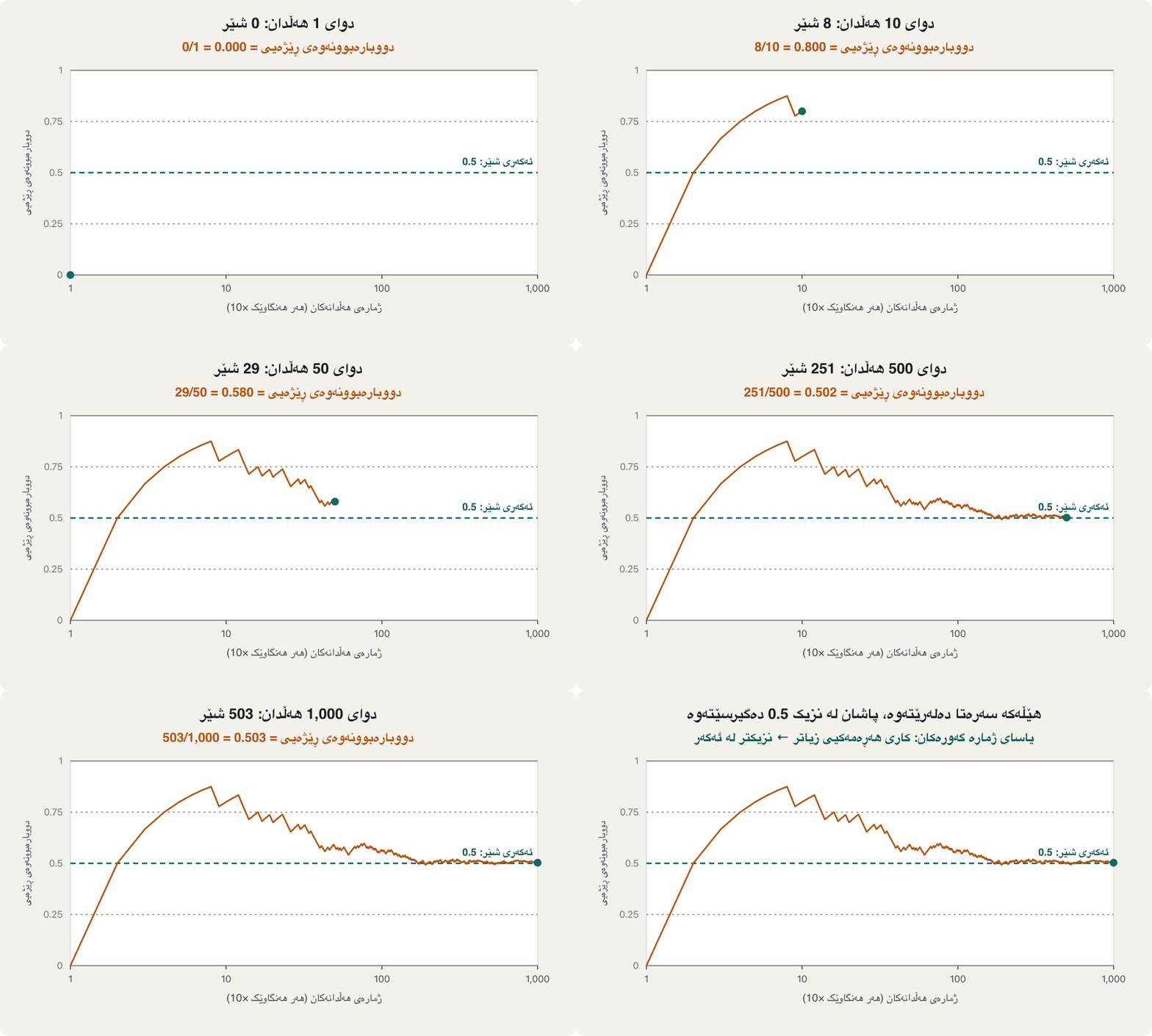
ڕێنمایە، نەک پێشبینییەکی ورد. دراوێکی دادپەروەر 100 جار هەڵبدە و چاوەڕێی نزیکەی 50 شێر دەکەیت، بەڵام 48 یان 55 کەس سەرسام ناکات. کەواتە چ بەڵێنێک دەدات؟ ئەوەی لە درێژخایەندا ڕوو دەدات وەسف دەکات: هەتا ژمارەی هەڵدانەکان زیاتر بێت، بەشی شێرەکان زیاتر لە 0.5 نزیک دەبێتەوە. ئەمە ـە.
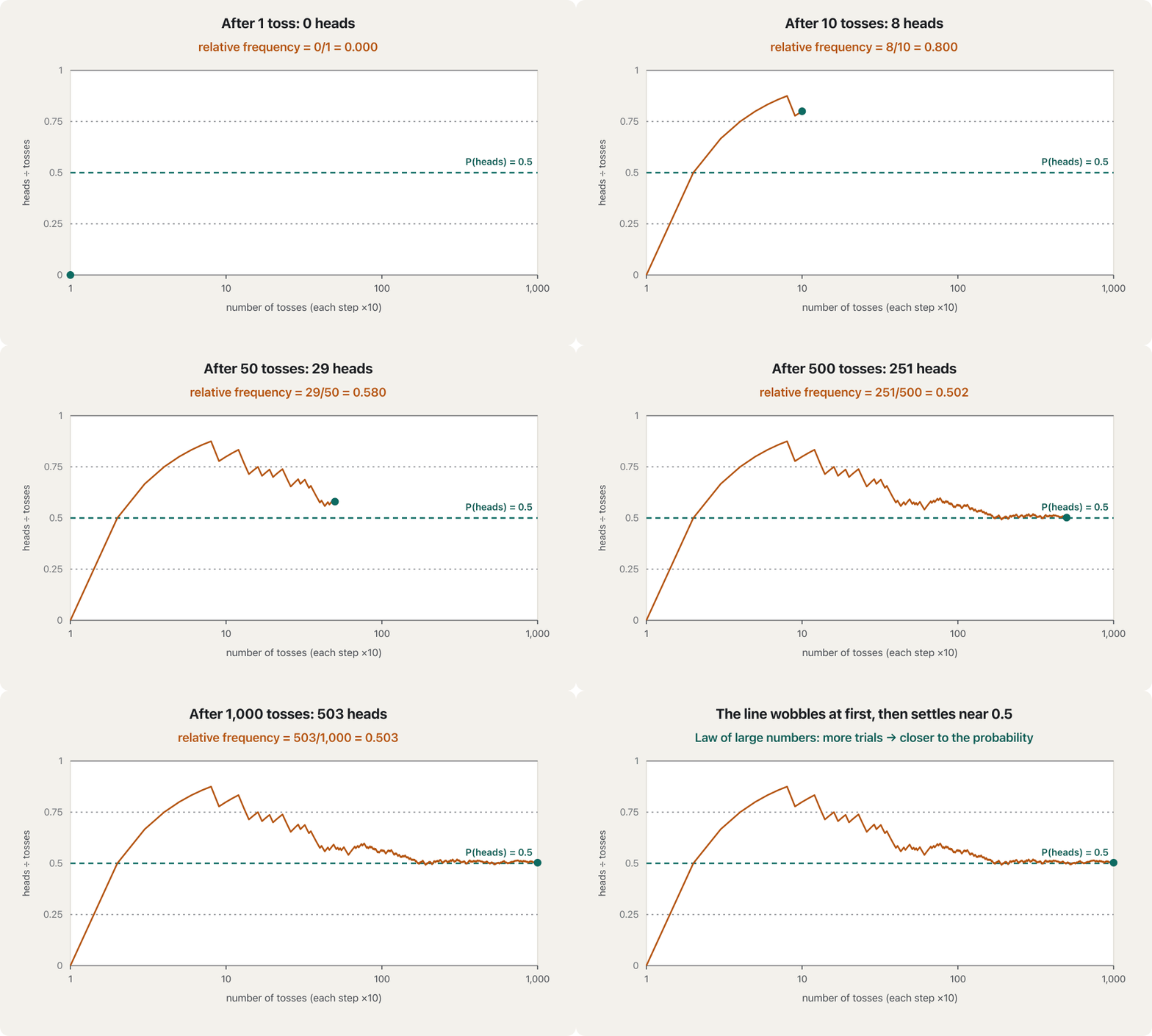
Real people have done this by hand. The statistician Karl Pearson tossed a coin 24,000 times and got 12,012 heads: a relative frequency of . A computer can repeat an experiment thousands of times in a moment: Watch the average settle.
خەڵکی ڕاستەقینە ئەمەیان بە دەست کردووە. ئاماریناس کارڵ پیرسن دراوێکی 24,000 جار هەڵدا و 12,012 شێری هێنا: دەبێتە . دەتوانێت لە چرکەیەکدا هەزاران جار تاقیکردنەوەیەک دووبارە بکاتەوە: سەیری جێگیربوونی تێکڕاکە بکە.
The law of large numbersیاسای ژمارە گەورەکان
A simulation, and a coin with no memoryهاوشێوەسازییەک و دراوێکی بێ بیرەوەری
A computer can toss the coin for you. How a machine that follows rules can make "random" numbers is explained in Random numbers from a machine that follows rules.
دەتوانێت دراوەکە بۆت هەڵبدات. چۆن ئامێرێک کە یاسا جێبەجێ دەکات دروست دەکات، لە ژمارە هەڕەمەکییەکان لە ئامێرێکەوە کە یاسا جێبەجێ دەکات ڕوون کراوەتەوە.
import random

random.seed(181)                 # the same seed gives the same tosses every run
heads = 0
for n in range(1, 1001):
    if random.random() < 0.5:    # heads with probability 1/2
        heads += 1
    if n in (10, 100, 1000):
print(f"{n:>5} tosses: {heads:>3} heads, relative frequency = {heads / n:.3f}")10 tosses: 8 heads, relative frequency = 0.800 100 tosses: 56 heads, relative frequency = 0.560 1000 tosses: 503 heads, relative frequency = 0.503
Explain the codeڕوونکردنەوەی کۆدەکە
- Lineدێڕی 3
A fixed seed makes the "random" tosses repeat exactly, so you get the same numbers as this page. Remove it to get new tosses each run.
جێگیر وا دەکات هەڵدانە «هەڕەمەکی»ـیەکان ڕێک دووبارە ببنەوە، بۆیە هەمان ژمارەکانی ئەم پەڕەیە وەردەگریت. لای ببە تا لە هەر جارێکدا هەڵدانی نوێ وەربگریت.
- Lineدێڕی 6
random.random()gives a number from 0 up to 1, so it is below 0.5 half of the time: a fair coin.random.random()ژمارەیەک لە 0 تا 1 دەدات، بۆیە نیوەی جارەکان لە 0.5 کەمترە: دراوێکی دادپەروەر.
A coin has no memory: why a streak does not make the other side 'due', and what the law of large numbers really promises.
دراو هیچ بیرەوەرییەکی نییە: بۆچی کاتێک یەک ڕوو چەند جار لە سەر یەک دێت، ڕووەکەی تر «نۆرەی» نابێت، هەروەها بە ڕاستی چی بەڵێن دەدات.
Watch 0:00–5:55: a coin has no memory — the gambler's fallacy, and what the law of large numbers really promises
لە 0:00 تا 5:55 سەیر بکە: دراو هیچ بیرەوەرییەکی نییە — ، هەروەها بە ڕاستی چی بەڵێن دەدات.
Common mistakesهەڵە باوەکان
| Mistakeهەڵە | Correct ideaبیرۆکەی ڕاست |
|---|---|
| Using when outcomes are not equally likely (a loaded die, or "win, draw or lose: each").بەکارهێنانی کاتێک نین (بەردەزاری فێڵاوی، یان «بردنەوە، یەکسانبوون یان دۆڕان: هەر یەکە »). | Count only equally likely outcomes; otherwise use data (experimental probability).تەنها بژمێرە؛ ئەگینا بەکار بهێنە (). |
| A probability of or . یان . | Every probability is between 0 and 1 (0% to 100%). Check your answer.هەموو لە نێوان 0 و 1ـە (0% تا 100%). وەڵامەکەت بپشکنە. |
| Counting and as the same pair with two dice.ژماردنی و وەک یەک جووت لە دوو بەردەزاردا. | The dice are different, so there are 36 ordered pairs and the sum 4 has 3 of them.بەردەزارەکان جیاوازن، بۆیە 36 هەیە و کۆی 4 سێیانی هەیە. |
| "A 20% forecast that ended in rain was wrong."«پێشبینییەکی 20% کە بە باران کۆتایی هات هەڵە بوو.» | A probability is a long-run rate, not a promise about one day. ڕێژەیەکی درێژخایەنە، نەک بەڵێنێک بۆ یەک ڕۆژ. |
| "Tails is due after many heads."«دوای زۆر شێر نۆرەی خەتە.» | Each toss of a fair coin is ; the law of large numbers works by swamping, not by correcting.هەر هەڵدانێکی دراوی دادپەروەر ـە؛ بە ونکردن کار دەکات، نەک بە ڕاستکردنەوە. |
Exercisesڕاهێنانەکان
Two dice are thrown. Find the probability that the sum is (a) 1, (b) 4, (c) greater than 12.
دوو بەردەزار هەڵدەدرێن. ئەوە بدۆزەرەوە کە کۆکە (أ) 1، (ب) 4، (ج) گەورەتر لە 12 بێت.
Show answerوەڵامەکە پیشان بدە
- (a) 0: the smallest sum is 2.
- (b) : .
- (c) 0: the largest sum is 12.
- (أ) 0: بچووکترین کۆ 2ـە.
- (ب) سێ جووت، : .
- (ج) 0: گەورەترین کۆ 12ـە.
A bag holds 3 blue, 3 red and 4 white balls. One ball is drawn. Find the probability of red, of white, of black and of "blue or red". Write each as a fraction and a percentage.
توورەکەیەک 3 تۆپی شین، 3 سوور و 4 سپیی تێدایە. تۆپێک دەردەهێنرێت. سوور، سپی، ڕەش و «شین یان سوور» بدۆزەرەوە. هەر یەکێک بە و بنووسە.
Show answerوەڵامەکە پیشان بدە
- red:
- white:
- black: (impossible)
- blue or red:
- سوور:
- سپی:
- ڕەش: (ئەستەم)
- شین یان سوور:
A bag has 5 balls: 4 blue and 1 red. One ball is drawn at random. Find the probability of blue and of red, and check that they add to 1.
توورەکەیەک 5 تۆپی تێدایە: 4 شین و 1 سوور. تۆپێک بە هەڕەمەکی دەردەهێنرێت. شین و سوور بدۆزەرەوە و بپشکنە کە کۆکەیان 1ـە.
Show answerوەڵامەکە پیشان بدە
- blue: ; red:
- check: , because every ball is either blue or red
- شین: ؛ سوور:
- پشکنین: ، چونکە هەموو تۆپێک یان شینە یان سوور
One card is drawn from a standard 52-card deck. Find the probability of (a) an ace, (b) a heart, (c) a red card.
یەک کارت لە دەستە کارتێکی ستانداردی 52 کارتی ڕادەکێشرێت. ئەمانە بدۆزەرەوە: (أ) ئاس، (ب) دڵ، (ج) کارتێکی سوور.
Show answerوەڵامەکە پیشان بدە
- (a) 4 aces: .
- (b) 13 hearts: .
- (c) 26 red cards (hearts and diamonds): .
- (أ) 4 ئاس: .
- (ب) 13 دڵ: .
- (ج) 26 کارتی سوور (دڵ و خشت): .
Name the kind of probability: (a) the probability of a 3 on a fair die is ; (b) a phone shop found 12 faulty chargers among 400 it sold, so it estimates that 3% of its chargers are faulty; (c) a doctor says a patient will probably recover within a week.
جۆری ناو بنێ: (أ) 3 لە بەردەزارێکی دادپەروەردا ـە؛ (ب) دوکانێکی مۆبایل 12 شەحنکەری تێکچووی لەناو 400 دانەی فرۆشراودا دۆزییەوە، بۆیە دەخەمڵێنێت 3%ی شەحنکەرەکانی تێکچوون؛ (ج) پزیشکێک دەڵێت نەخۆشێک بە زۆری لە هەفتەیەکدا چاک دەبێتەوە.
Show answerوەڵامەکە پیشان بدە
- (a) theoretical; (b) experimental, ; (c) subjective.
- (أ) ؛ (ب) ، ؛ (ج) .
Summaryپوختە
- A probability is a number from 0 (impossible) to 1 (certain) that says how likely an event is.
- For equally likely outcomes: .
- Write it as a fraction, a decimal, a percentage or "1 in n".
- Probabilities are theoretical, experimental (relative frequency) or subjective.
- Law of large numbers: when a trial is repeated many times, the relative frequency settles near the probability.
- هەر ژمارەیەکە لە 0 (ئەستەم) تا 1 (دڵنیا) کە دەڵێت چەندە دەگونجێت.
- بۆ : .
- بە ، دەیی، یان «1 لە n» بینووسە.
- تیۆرین، تاقیکردنەوەیین () یان خودین.
- : کاتێک زۆر جار دووبارە دەکرێتەوە، لە نزیک دەگیرسێتەوە.
Why is on a die equal to 0?بۆچی لە بەردەزاردا 0ـە؟
No face shows 7: zero favourable outcomes out of 6.
هیچ ڕوویەک 7 نیشان نادات: سفر لە 6.
What does a probability of 1 mean?ئەگەرێکی 1 واتای چییە؟
The event is certain, like drawing blue from a box of only blue balls.
دڵنیایە، وەک دەرهێنانی شین لە بۆکسێک کە تەنها تۆپی شینی تێدایە.
Does the law of large numbers mean the coin balances itself?ئایا یاسای ژمارە گەورەکان واتای ئەوەیە دراوەکە خۆی هاوسەنگ دەکاتەوە؟
No. Each toss is still ; the early tosses just matter less and less in the proportion.
نەخێر. هەر هەڵدانێک هێشتا ـە؛ تەنها هەڵدانە سەرەتاییەکان لە ڕێژەکەدا کەمتر و کەمتر کاریگەرن.
Videoڤیدیۆ
Watch a videoسەیری ڤیدیۆیەک بکە
A video that viewers liked a lot and praised in their comments, chosen for this lesson.ڤیدیۆیەک کە بینەران زۆریان پێ خۆش بووە و لە کۆمێنتەکانیاندا ستایشیان کردووە، بۆ ئەم وانەیە هەڵبژێردراوە.
What a probability is, why it always lies between 0 and 1, and the basic rules every probability follows, with short examples.
چییە، بۆچی هەمیشە لە نێوان 0 و 1ـدایە، هەروەها ئەو یاسا بنەڕەتییانەی هەموو پەیڕەویان دەکات، لەگەڵ نموونەی کورت.
Whole video: what probability is and its basic rules
هەموو ڤیدیۆکە: چییە و یاسا بنەڕەتییەکانی.
Lesson complete!وانەکە تەواو بوو!
Well done. Review the key terms, then go on to the next lesson.دەستخۆش. سەیرێکی زاراوە سەرەکییەکان بکەرەوە، پاشان بڕۆ بۆ وانەی داهاتوو.
Key termsزاراوە سەرەکییەکان
Experiments, Sample Spaces and Eventsتاقیکردنەوە، بۆشایی نموونە و ڕووداوەکان
Related lecturesوانە پەیوەندیدارەکان
- Experiments, Sample Spaces and Eventsتاقیکردنەوە، بۆشایی نموونە و ڕووداوەکان
- Counting and Permutationsژماردن و گۆڕینەکان
- The Axioms of Probability and the Complement Ruleبەڵگەنەویستەکانی ئەگەر و یاسای تەواوکەر
- Machine Learning Basics (Supplementary)بنەماکانی فێربوونی ئامێر (زیادە)
- Project: Predicting a Football Match with Probabilityپرۆژە: پێشبینیکردنی یارییەکی تۆپی پێ بە ئەگەر
- Probability in Computing: Speech, Predictive Text and Riskبەکارهێنانی ئەگەر لە بواری کۆمپیوتەردا: ئاخاوتن، پێشبینیی دەق و مەترسی
- Conditional Probability, Independence and the Multiplication Ruleئەگەری مەرجدار، سەربەخۆیی و یاسای لێکدانی ئەگەر
References and further readingسەرچاوەکان و خوێندنەوەی زیاتر
- OpenStax, Introductory Statistics 2e, 3.1 Terminology (experiment, outcome, sample space, equally likely, relative frequency, law of large numbers, the Belgian euro coin)
- OpenStax, Introductory Statistics 2e, 4.2 Mean or Expected Value and Standard Deviation (law of large numbers; Karl Pearson's 24,000 tosses)
- MIT OpenCourseWare 18.05 Introduction to Probability and Statistics (course calendar: counting, probability basics, law of large numbers)
This lecture is a first edition. The Kurdish text and terminology are waiting for review by Kurdish IT teachers.ئەم وانەیە چاپی یەکەمە. دەقە کوردییەکە و زاراوەکانی چاوەڕێی پێداچوونەوەی مامۆستایانی کوردی بواری IT ن.