Chapterبەش 6 · Lectureوانە 6.4
Finding and Rating Vulnerabilities: Scanning, OWASP and CVSSدۆزینەوە و هەڵسەنگاندنی خاڵە لاوازەکان: پشکنین، OWASP و CVSS
How vulnerability scanners work, the three kinds of scanning (network, application with SAST/DAST, host-based), authenticated and unauthenticated scans, false positives, the OWASP Top 10:2025, CVSS v4.0 severity bands, the five risk factors, and how to prioritise with CVSS, CISA's KEV catalog and exposure — only on systems you are allowed to test.
چۆن کار دەکەن، سێ جۆری پشکنین (، بە SAST/DAST، سەر ئامێر)، و ، ، :2025، ئاستەکانی گەورەیی لە v4.0، پێنج هۆکارەکەی و چۆنیەتیی ڕیزکردن بە ، CISA و ئاشکرابوون — تەنها لەسەر ئەو سیستەمانەی ڕێگەت پێدراوە تاقییان بکەیتەوە.
What you will learnچی فێر دەبیت
- Explain what a vulnerability scanner does and why scanning needs the owner's permission.
- Choose between network, application (SAST/DAST) and host-based scanning, and between authenticated and unauthenticated scans.
- Recognise false positives and false negatives and say how to reduce them.
- Read a CVSS v4.0 score and name the OWASP Top 10:2025 categories.
- Prioritise findings with severity, the KEV catalog, exposure and the five risk factors.
- ڕوونی بکەیتەوە چی دەکات و بۆچی پشکنین پێویستی بە مۆڵەتی خاوەنەکەیەتی.
- لە نێوان پشکنینی ، (SAST/DAST) و سەر ئامێردا هەڵبژێریت. هەروەها لە نێوان و .
- و بناسیتەوە و بڵێیت چۆن کەمیان بکەیتەوە.
- نمرەیەکی v4.0 بخوێنیتەوە و پۆلەکانی :2025 ناو ببەیت.
- دۆزینەوەکان بە گەورەیی، ، ئاشکرابوون و پێنج هۆکارەکەی ڕیز بکەیت.
Find the weak spots before attackers doخاڵە لاوازەکان بدۆزەرەوە پێش ئەوەی هێرشبەران بیاندۆزنەوە
Every network has weak spots: an old program, a forgotten test server, a printer that still has its factory password. Attackers search for these weak spots with automated tools every day. Defenders must find them first.
هەموو هەیە: کۆن، تاقیکردنەوەی لەبیرکراو، کە هێشتا کارگەکەی هەیە. هەموو ڕۆژێک بە ئامرازی خۆکار بەدوای ئەم خاڵانەدا دەگەڕێن. بەرگریکاران دەبێت یەکەم بن کە دەیاندۆزنەوە.
Using automatic tools that compare the software versions and settings of computers, websites and network devices with lists of known (such as records) and report what needs fixing. Only scan systems that you own or are allowed to test.
بەکارهێنانی ئامرازی خۆکارە کە وەشانی نەرمەواڵە و ڕێکخستنەکانی کۆمپیوتەر، تۆڕگە و ئامێرەکانی ڕایەڵە بەراورد دەکەن بە لیستی خاڵە لاوازە ناسراوەکان (وەک تۆمارەکانی ) و ڕاپۆرتی ئەوە دەدەن کە پێویستی بە چاککردنە. تەنیا ئەو سیستەمانە بپشکنە کە هی خۆتن یان ڕێگەت پێدراوە تاقییان بکەیتەوە.
The course gives scanning a clear purpose: to identify vulnerabilities before they can be exploited, and to give actionable insights — a list of concrete things to fix — that improve the organisation's security posture (how well protected it is overall).
وانەکە ئامانجێکی ڕوون بۆ پشکنین دیاری دەکات: دۆزینەوەی پێش ئەوەی بکرێن، هەروەها دانی ڕێنمایی بەکەڵک — لیستێکی ڕوونی ئەو شتانەی دەبێت چاک بکرێن — کە ئاستی گشتیی پاراستنی ڕێکخراوەکە باشتر دەکات.
Before a long trip from Erbil to Duhok, a careful driver goes to a mechanic. The mechanic has a checklist: tyres, brakes, oil, lights. He does not wait for the brakes to fail on the mountain road. A vulnerability scanner is that checklist for computers: it checks thousands of known problems quickly, and gives you a list to fix before the trip.
پێش گەشتێکی درێژ لە هەولێرەوە بۆ دهۆک، شۆفێرێکی وریا دەچێتە لای وەستایەک. وەستاکە لیستێکی پشکنینی هەیە: تایە، بریک، ڕۆن، گڵۆپ. چاوەڕێ ناکات بریکەکان لە ڕێگای شاخدا تێک بچن. هەمان لیستە بۆ کۆمپیوتەر: هەزاران کێشەی ناسراو بە خێرایی دەپشکنێت و لیستێکت دەداتێ کە پێش گەشتەکە چاکیان بکەیت.
Where the analogy stops workingسنووری ئەم نموونەیە
A mechanic notices a strange noise that is not on the checklist; a scanner only finds problems that are already on its list. It cannot find a brand-new weakness (a zero-day).
وەستاکە دەنگێکی نامۆ هەست پێ دەکات کە لە لیستەکەدا نییە؛ بەڵام تەنها ئەو کێشانە دەدۆزێتەوە کە پێشتر لە لیستەکەیدان. ناتوانێت بدۆزێتەوە کە تەواو نوێیە (خاڵی لاوازی ڕۆژی سفر).
Find the weak spots before attackers doخاڵە لاوازەکان بدۆزەرەوە پێش ئەوەی هێرشبەران بیاندۆزنەوە
Permission firstسەرەتا مۆڵەت
What a vulnerability scanner doesسکانەرێکی خاڵە لاوازەکان چی دەکات
A vulnerability scanner is an automated tool that identifies vulnerabilities in systems, applications and networks. Most scanners follow the same four steps:
ئامرازێکی خۆکارە کە لە سیستەم، و دەدۆزێتەوە. زۆربەی سکانەرەکان هەمان چوار هەنگاو دەگرنە بەر:
- Discoverدۆزینەوە
Find which devices are switched on in the address range you are allowed to scan.
بیدۆزەرەوە کام ئامێرەکان لەو مەودای ناونیشانانەدا هەڵکراون کە ڕێگەت پێدراوە بیپشکنیت.
- List open doorsلیستکردنی دەرگا کراوەکان
For each device, find the open and the services behind them (a website, file sharing, remote login…).
بۆ هەر ئامێرێک، کراوەکان و ئەو خزمەتگوزارییانەی لە پشتیانن بدۆزەرەوە (، هاوبەشکردنی فایل، …).
- Identify versions and settingsناسینەوەی وەشان و ڕێکخستنەکان
Work out which software and which is running, and how it is configured.
بزانە کام و کام کار دەکات و چۆن ڕێکخراوە.
- Compare and reportبەراوردکردن و ڕاپۆرتدان
Compare what it found with a database of known vulnerabilities, then report each match with a severity and a suggested fix.
ئەوەی دۆزیویەتەوە لەگەڵ بنکەیەکی ناسراو بەراورد دەکات، پاشان هەر هاوتاییەک بە ئاستی مەترسی و چارەسەرێکی پێشنیارکراوەوە ڕاپۆرت دەکات.
What vulnerability scanning is, how automated scanners check systems against known flaws, and what to consider before scanning.
چییە، چۆن سیستەمەکان لەگەڵ بەراورد دەکەن و پێش پشکنین دەبێت ئاگاداری چی بیت.
Plays 1:53-8:49: vulnerability scanning and automated scanners.
لە 1:53 تا 8:49 پەخش دەبێت: و .
What a vulnerability scanner doesسکانەرێکی خاڵە لاوازەکان چی دەکات
A scanner is only as good as its databaseسکانەرێک تەنها هێندەی بنکەکەی باشە
Each known vulnerability has a public ID such as CVE-2017-5638 (the flaw behind the 2017 Equifax breach). How these IDs work, and how they differ from CWE and KEV, is explained in Kinds, names and scores; who gives them out is in Responsible disclosure. Because new vulnerabilities are published every day, a scanner is only as good as its database: update the scanner before every scan.
هەر کە ناسراوە ناسنامەیەکی گشتیی هەیە وەک CVE-2017-5638 ( کە لە پشت دزەکردنەکەی Equifax لە ساڵی 2017دا بوو). ئەم ناسنامانە چۆن کار دەکەن و چ جیاوازییەکیان لەگەڵ و هەیە، لە جۆر، ناو و نمرە ڕوون کراوەتەوە؛ کێ دەیانبەخشێت لە ئاشکراکردنی بەرپرسیارانەدا هەیە. چونکە هەموو ڕۆژێک نوێ بڵاو دەکرێنەوە، تەنها هێندەی بنکەکەی باشە: پێش هەموو پشکنینێک نوێ بکەرەوە.
Three kinds of scanningسێ جۆری پشکنین
The course names three types of vulnerability scanning. They look at different layers of the same organisation:
وانەکە سێ جۆری ناو دەبات. هەر یەکەیان سەیری چینێکی جیاوازی هەمان ڕێکخراو دەکات:
| Typeجۆر | What it looks atسەیری چی دەکات | Typical findingsدۆزینەوە باوەکان |
|---|---|---|
| Network scanningپشکنینی | Devices on the network: servers, routers, switchesئامێرەکانی سەر : ، ، | Open ports and exposed services, old firmware کراوە و خزمەتگوزاریی ئاشکرا، پتەوواڵەی کۆن |
| Application scanningپشکنینی | Web and mobile applications و مۆبایل | , , broken logins، ، تێکچوو |
| Host-based scanningپشکنینی سەر ئامێر | One device at a time: a workstation or a serverیەک ئامێر لە یەک کاتدا: کار یان | Outdated software, misconfigurations, settings that break the rules کۆن، ، کە پێچەوانەی یاساکانن |
Three kinds of scanningسێ جۆری پشکنین
Network scanning and port scanningپشکنینی ڕایەڵە و پشکنینی پۆرت
Network scanning uses automated tools to check the devices on a network — servers, routers and switches — for vulnerabilities. Network scanners usually begin with port scanning: they knock on every port of a device to see which ones answer.
پشکنینی ئامرازی خۆکار بەکار دەهێنێت بۆ پشکنینی ئامێرەکانی سەر — ، و — بۆ . سکانەرەکانی زۆرجار بە دەست پێ دەکەن: لە هەموو ئامێرێک دەدەن بۆ ئەوەی ببینن کامیان وەڵام دەدەنەوە.
Checking which of a computer are open, to see which services it offers. Defenders use it to find services that should be closed; doing it to systems you do not own can be illegal.
پشکنینی ئەوەیە کە کام کۆمپیوتەرێک کراوەیە، بۆ ئەوەی بزانرێت چ خزمەتگوزارییەک پێشکەش دەکات. بەرگریکاران بەکاری دەهێنن بۆ دۆزینەوەی ئەو خزمەتگوزارییانەی دەبێت دابخرێن؛ ئەنجامدانی لەسەر سیستەمێک کە هی تۆ نییە دەکرێت نایاسایی بێت.
Why do open ports matter? Each open port is a service that someone on the network can talk to. A service nobody needs — an old file-sharing service, a remote-desktop port open to the whole Internet — is an extra door for attackers. The fix is usually simple: close what you do not use, and protect what you must keep open.
بۆچی کراوەکان گرنگن؟ هەر کراوە خزمەتگوزارییەکە کە هەر کەسێک لەسەر دەتوانێت قسەی لەگەڵ بکات. خزمەتگوزارییەک کە کەس پێویستی پێی نییە — خزمەتگوزارییەکی کۆنی هاوبەشکردنی فایل، کە بۆ هەموو کراوەیە — دەرگایەکی زیادەیە بۆ . چارەسەرەکە زۆرجار سادەیە: ئەوەی بەکاری ناهێنیت دایبخە و ئەوەی دەبێت کراوە بێت بیپارێزە.
A port scan is like a night guard in the bazaar walking past every shop and pushing each door and shutter. He does not go inside; he only notes which doors are open.
وەک پاسەوانێکی شەوی بازاڕە کە بە لای هەموو دوکانێکدا تێدەپەڕێت و دەست بە هەر دەرگا و کەپەنکێکدا دەنێت. ناچێتە ژوورەوە؛ تەنها تێبینی دەکات کام دەرگا کراوەیە.
Where the analogy stops workingسنووری ئەم نموونەیە
The guard works for the bazaar. A stranger pushing every door at night is suspicious — and so is port scanning someone else's network.
پاسەوانەکە بۆ بازاڕەکە کار دەکات. کەسێکی نامۆ کە بە شەو دەست بە هەموو دەرگایەکدا بنێت گوماناوییە — کەسێکی تریش هەروایە.
Three kinds of scanningسێ جۆری پشکنین
Application scanning: SAST and DASTپشکنینی ئەپ: SAST و DAST
Application scanning focuses on web and mobile applications. It looks for mistakes in the program itself, such as SQL injection and cross-site scripting (XSS). Application scanners use two methods:
پشکنینی سەرنج دەخاتە سەر و مۆبایل. بەدوای هەڵەدا لە خودی بەرنامەکەدا دەگەڕێت. نموونەیان: تێخزاندنی SQL و XSS. سکانەرەکانی دوو ڕێگا بەکار دەهێنن:
| Methodڕێگا | How it worksچۆن کار دەکات | Strengthخاڵی بەهێز | Limitسنوور |
|---|---|---|---|
| Static analysis (SAST) (بە کورتی SAST) | Reads the without running it دەخوێنێتەوە بەبێ ئەوەی جێبەجێی بکات | Finds the exact line of the mistake, early, before releaseهێڵی ورد و دروستی هەڵەکە زوو دەدۆزێتەوە، پێش بڵاوکردنەوە | Needs the code; may warn about code that is never reachedپێویستی بە کۆدەکەیە؛ لەوانەیە دەربارەی کۆدێک ئاگادار بکاتەوە کە هەرگیز جێبەجێ ناکرێت |
| Dynamic analysis (DAST) (بە کورتی DAST) | Tests the live application from outside, like a user or attacker would کارکردوو لە دەرەوە تاقی دەکاتەوە، هەروەک بەکارهێنەر یان دەیکەن | Shows what really happens when the app runsپیشانی دەدات لە کاتی کارکردنی ئەپەکەدا بەڕاستی چی ڕوو دەدات | Cannot point to the line of code; must run on a test copyناتوانێت هێڵی کۆدەکە نیشان بدات؛ دەبێت لەسەر کۆپییەکی تاقیکردنەوە کار بکات |
Three kinds of scanningسێ جۆری پشکنین
Host-based scanningپشکنینی سەر ئامێر
Host-based scanning evaluates one specific device — a staff workstation or a server — in detail. It finds outdated software and misconfigurations, and it can check configuration compliance: is the device set up according to security best practices and the organisation's rules?
پشکنینی سەر ئامێر یەک ئامێری دیاریکراو — کارمەندێک یان — بە وردی هەڵدەسەنگێنێت. کۆن و دەدۆزێتەوە، هەروەها دەتوانێت گونجانی بپشکنێت: ئایا ئامێرەکە بەپێی باشترین ڕێکارەکانی ئاسایش و یاساکانی ڕێکخراوەکە ڕێکخراوە؟
- Is the screen locked after a few minutes?
- Is the disk encrypted?
- Is the built-in firewall switched on?
- Are there old user accounts or default passwords?
- Is any installed program out of support?
- ئایا شاشەکە دوای چەند خولەکێک قفڵ دەبێت؟
- ئایا دیسکەکە بۆ کراوە؟
- ئایا ناوخۆیی ئامێرەکە هەڵکراوە؟
- ئایا کۆن یان هەن؟
- ئایا هیچ بەرنامەیەکی دامەزراو پشتگیریی لێ بڕاوە؟
Host-based checks often compare a device with a written hardening baseline — a list of safe settings — so every computer in the organisation is set up the same safe way. See Least privilege for one of the rules these checks enforce.
پشکنینەکانی سەر ئامێر زۆرجار ئامێرێک لەگەڵ بنەمایەکی نووسراوی — لیستێکی سەلامەت — بەراورد دەکەن، بۆ ئەوەی هەموو کۆمپیوتەرێکی ڕێکخراوەکە بە هەمان شێوەی سەلامەت ڕێک بخرێت. بڕوانە بنەمای کەمترین مۆڵەت بۆ یەکێک لەو یاسایانەی ئەم پشکنینانە جێبەجێی دەکەن.
From outside or from inside: authenticated scansلە دەرەوە یان لە ناوەوە: پشکنینی بە چوونەژوورەوە
A scanner can look at a server in two ways. In an unauthenticated scan it has no account: it sees only what any outsider on the network can see — the open ports and whatever version numbers the services show. In an authenticated scan (also called a credentialed scan) it is given an account and logs in to each device, so it can read the real list of installed software, missing updates and settings.
دەتوانێت بە دوو شێوە سەیری بکات. لە هیچ هەژمارێکی نییە: تەنها ئەوە دەبینێت کە هەر کەسێکی دەرەکی لەسەر دەیبینێت — کراوەکان و هەر ژمارەیەکی وەشان کە خزمەتگوزارییەکان پیشانی دەدەن. لە هەژمارێکی پێ دەدرێت و دەچێتە ناو هەر ئامێرێکەوە، بۆیە دەتوانێت لیستی ڕاستەقینەی دامەزراوەکان، نەکراوەکان و بخوێنێتەوە.
| Aspectلایەن | Unauthenticated | Authenticated |
|---|---|---|
| Showsپیشانی دەدات | The attacker's view from the networkدیمەنی لە | The real state inside each deviceدۆخی ڕاستەقینەی ناو هەر ئامێرێک |
| Accuracyوردی | Guesses from version banners → more false positivesلە ژمارەی وەشانی پیشاندراوەوە مەزەندە دەکات ← زیاتر | Reads installed versions → fewer false positivesوەشانە دامەزراوەکان دەخوێنێتەوە ← کەمتر |
| Risk | Low: no account to protectکەم: هیچ هەژمارێک نییە بیپارێزیت | The scan account is powerful: protect it, use it only for scanning, watch itهەژماری پشکنینەکە بەهێزە: بیپارێزە، تەنها بۆ پشکنین بەکاری بهێنە و چاودێری بکە |
Good programmes use both: an unauthenticated scan from the Internet shows what the whole world can reach, and authenticated scans inside show what is really installed. Some organisations install a small scanning agent on each laptop, which reports even when the laptop is at home.
بەرنامە باشەکان هەردووکیان بەکار دەهێنن: لە پیشانی دەدات هەموو جیهان دەتوانێت بگاتە چی. لە ناوەوە پیشانی دەدەن بەڕاستی چی دامەزراوە. هەندێک ڕێکخراو بەرنامەیەکی بچووکی پشکنین () لەسەر هەر دادەمەزرێنن کە تەنانەت کاتێک لە ماڵەوەیە ڕاپۆرت دەنێرێت.
When the scanner is wrongکاتێک سکانەرەکە هەڵە دەکات
Scanners match patterns, so they make two kinds of mistakes:
سکانەرەکان نموونەکان بەراورد دەکەن، بۆیە دوو جۆر هەڵە دەکەن:
- A false positive: the scanner reports a vulnerability that is not really there — for example a patch that is installed, but the version banner was never changed.
- A false negative: a real vulnerability that the scanner misses — for example a flaw in a page it could not reach, or a weakness that is not in its database yet.
- : ڕاپۆرت دەکات کە بەڕاستی نییە — بۆ نموونە دامەزراوە، بەڵام ژمارەی وەشانی پیشاندراو هەرگیز نەگۆڕدراوە.
- : کە ڕاستەقینەیە بەڵام نایبینێت — بۆ نموونە لە پەڕەیەکدا کە نەیتوانیوە پێی بگات، یان لاوازییەک کە هێشتا لە بنکەکەیدا نییە.
Both are costly. Too many false positives waste the team's time and teach people to ignore reports. False negatives give false confidence. The same words are used for AI and alarm systems; see False alarms and misses.
هەردووکیان گرانن. زۆربوونی کاتی تیمەکە بەفیڕۆ دەدات و فێری خەڵک دەکات ڕاپۆرتەکان پشتگوێ بخەن. متمانەی هەڵە دەدەن. هەمان وشەکان بۆ و سیستەمی ئاگادارکەرەوە بەکار دێن؛ بڕوانە ئاگادارکردنەوەی هەڵە و لەدەستچوون.
- Verify important findings before acting: check the version by hand, or ask the system owner.
- Use authenticated scans where you can — they guess less.
- Tune the scanner: mark checked false positives so they are not reported again.
- Let an expert read the results; some teams compare two scanners.
- پێش کارکردن دۆزینەوە گرنگەکان پشتڕاست بکەرەوە: وەشانەکە بە دەست بپشکنە، یان لە خاوەنی سیستەمەکە بپرسە.
- لە هەر شوێنێک دەتوانیت بەکار بهێنە — کەمتر مەزەندە دەکەن.
- ڕێک بخە: کە پشکنیوتن نیشانە بکە بۆ ئەوەی دووبارە ڕاپۆرت نەکرێنەوە.
- با پسپۆڕێک ئەنجامەکان بخوێنێتەوە؛ هەندێک تیم دوو بەراورد دەکەن.
When the scanner is wrongکاتێک سکانەرەکە هەڵە دەکات
What scanners cannot findئەوەی سکانەرەکان نایدۆزنەوە
Three standards that scanning reports useسێ ستاندارد کە ڕاپۆرتەکانی پشکنین بەکاریان دەهێنن
The course lists three standards and frameworks that guide vulnerability work: CVSS, the NIST Framework and the OWASP Top 10. Each answers a different question:
وانەکە سێ ستاندارد و چوارچێوە ناو دەبات کە ڕێنمایی کاری دەکەن: ، چوارچێوەی NIST و . هەر یەکەیان وەڵامی پرسیارێکی جیاواز دەداتەوە:
| Standardستاندارد | Question it answersوەڵامی کام پرسیار دەداتەوە |
|---|---|
| How severe is this one vulnerability? (a score from 0 to 10)ئەم چەند گەورەیە؟ (نمرەیەک لە 0 تا 10) | |
| Where does vulnerability work fit in the whole security programme?کاری لە کوێی هەموو بەرنامەی ئاسایشدا جێی دەبێتەوە؟ | |
| Which kinds of web-application weakness are the most common and dangerous?کام جۆرە لاوازییەکانی باوترین و مەترسیدارترینن؟ |
The notes describe the "NIST Framework" as guidelines for managing vulnerabilities that emphasise risk assessment, vulnerability identification, mitigation and incident response. Today this means the NIST Cybersecurity Framework (CSF) 2.0 (February 2024), whose six functions you met in the course map. Finding vulnerabilities belongs to Identify (risk assessment), fixing them to Protect, and handling exploitation to Detect, Respond and Recover.
تێبینییەکان «چوارچێوەی NIST» وەک ڕێنمایی بۆ وەسف دەکەن کە جەخت لە ، دۆزینەوەی ، کەمکردنەوەیان و دەکاتەوە. ئەمڕۆ ئەمە واتە 2.0 (شوباتی 2024)، کە شەش ئەرکەکەیت لە نەخشەی کۆرسەکەدا ناسی. دۆزینەوەی سەر بە Identifyـە ()، چاککردنیان سەر بە Protect و مامەڵەکردن لەگەڵ سەر بە Detect، Respond و Recover.
The OWASP Top 10OWASP Top 10
A list, published every few years by the OWASP foundation, of the ten most important security risks in web applications. The 2025 list starts with Broken Access Control and has Injection as A05.
لیستێکە کە دامەزراوەی OWASP هەموو چەند ساڵێک بڵاوی دەکاتەوە و دە گرنگترین مەترسیی ئاسایش لە دەستنیشان دەکات. لیستی ٢٠٢٥ بە Broken Access Control دەست پێ دەکات و Injection وەک A05 تێدایە.
The OWASP Top 10 lists the most critical web-application risks. The list is prioritised by how often each problem is found and how much damage it can do, and OWASP gives free guidance on how to avoid each one and how to write secure code. Application scanners usually report their findings using these categories.
گرنگترین لیست دەکات. لیستەکە بەپێی ئەوەی هەر کێشەیەک چەند جار دەدۆزرێتەوە و چەند زیان دەگەیەنێت ڕیز کراوە، هەروەها OWASP ڕێنمایی بێبەرانبەر دەدات دەربارەی چۆنیەتیی خۆلادان لە هەر یەکەیان و نووسینی کۆدی سەلامەت. سکانەرەکانی زۆرجار دۆزینەوەکانیان بەم پۆلانە ڕاپۆرت دەکەن.
The OWASP Top 10OWASP Top 10
The 2025 listلیستی 2025
| Rankپلە | Category (2025)پۆل (2025) | In plain wordsبە وشەی سادە |
|---|---|---|
| A01 | Broken Access Control | Users can see or change things they should not, e.g. another customer's order by changing a number in the address.بەکارهێنەران دەتوانن شتێک ببینن یان بگۆڕن کە نابێت، بۆ نموونە داواکاریی کڕیارێکی تر بە گۆڕینی ژمارەیەک لە ناونیشانەکەدا. |
| A02 | Security Misconfiguration | Unsafe settings: default passwords, debug pages left on, open cloud storage. ناسەلامەت: ، پەڕەی هەڵەدۆزینەوەی هەڵکراو، کراوە. |
| A03 | Software Supply Chain Failures | Weak or poisoned libraries, packages and build tools that the app depends on.کتێبخانە، پاکێج و ئامرازی دروستکردنی لاواز یان ژەهراوی کە ئەپەکە پشتیان پێ دەبەستێت. |
| A04 | Cryptographic Failures | Sensitive data not encrypted, or protected with weak, old methods. هەستیار بۆ نەکراوە، یان بە ڕێگای لاواز و کۆن پارێزراوە. |
| A05 | Injection | User input treated as code: , , command injection. وەک کۆد مامەڵەی لەگەڵ دەکرێت: ، ، . |
| A06 | Insecure Design | The plan itself is unsafe, e.g. password reset by a guessable question.خودی پلانەکە ناسەلامەتە، بۆ نموونە گۆڕینی بە پرسیارێک کە دەکرێت مەزەندە بکرێت. |
| A07 | Authentication Failures | Weak login: no limit on guesses, no MFA, sessions that never end. لاواز: هیچ سنوورێک بۆ مەزەندەکردن نییە، MFA نییە، کە هەرگیز کۆتاییان نایەت. |
| A08 | Software or Data Integrity Failures | Updates or data accepted without checking that they are genuine. یان وەردەگیرێن بەبێ پشکنینی ئەوەی ڕەسەنن. |
| A09 | Security Logging and Alerting Failures | Attacks happen but nothing is logged, or nobody is alerted.هێرش ڕوو دەدات بەڵام هیچ شتێک لە تۆمار ناکرێت، یان کەس ئاگادار ناکرێتەوە. |
| A10 | Mishandling of Exceptional Conditions | The app fails unsafely on errors, e.g. showing secret details or skipping a check.ئەپەکە لە کاتی هەڵەدا بە شێوەیەکی ناسەلامەت تێک دەچێت، بۆ نموونە وردەکاریی نهێنی پیشان دەدات یان پشکنینێک دەبەزێنێت. |
The OWASP Top 10:2025 one category at a time: broken access control, misconfiguration, supply chain, crypto, injection and the rest.
:2025 پۆل بە پۆل: شکاو، ، زنجیرەی دابینکردن، ، و ئەوانی تر.
Whole video (10:15): the ten 2025 categories with examples.
هەموو ڤیدیۆکە (10:15): دە پۆلەکەی لیستی 2025 لەگەڵ نموونە.
CVSS: a severity score from 0 to 10CVSS: نمرەی گەورەیی لە 0 تا 10
A standard way to score how severe a is, from 0.0 to 10.0: None (0.0), Low (0.1–3.9), Medium (4.0–6.9), High (7.0–8.9) and Critical (9.0–10.0). The score alone does not say whether the flaw is being exploited now.
ڕێگەیەکی ستانداردە بۆ دیاریکردنی ئەوەی چەندە توندە بە نمرەیەک لە 0.0 تا 10.0: هیچ (0.0)، کەم (0.1–3.9)، مامناوەند (4.0–6.9)، بەرز (7.0–8.9) و زۆر مەترسیدار (9.0–10.0). نمرەکە بە تەنیا ناڵێت ئایا ئێستا کێشەکە بەکار دەهێنرێت یان نا.
The Common Vulnerability Scoring System (CVSS) gives each vulnerability a number from 0.0 to 10.0. The base score is calculated from facts about the flaw itself: how it can be exploited (from the network or only with physical access? does it need a password? does a user have to click?) and what it damages (confidentiality, integrity, availability). The number is then put into a named band:
ژمارەیەک لە 0.0 تا 10.0 دەداتە هەر . نمرە بنەڕەتییەکە لە ڕاستییەکانی خودی هەژمار دەکرێت: چۆن دەتوانرێت بکرێت (لە ڕێگەی یان تەنها بە دەستگەیشتنی فیزیکی؟ پێویستی بە هەیە؟ دەبێت بەکارهێنەرێک کرتە بکات؟) و چی تێک دەدات (، ، ). پاشان ژمارەکە دەخرێتە ئاستێکی ناودارەوە:
| Bandئاست | Scoreنمرە | What the course card saysکارتەکەی وانەکە چی دەڵێت |
|---|---|---|
| Noneهیچ | 0.0 | (not on the card)(لە کارتەکەدا نییە) |
| Lowنزم | 0.1–3.9 | Minimal impact, hard to exploitکاریگەریی کەم، قورسە |
| Mediumمامناوەند | 4.0–6.9 | Noticeable impact but limited exploitationکاریگەریی دیار، بەڵام سنووردار |
| Highبەرز | 7.0–8.9 | Significant damage, easy to exploitزیانی گەورە، ئاسانە |
| Criticalیەکجار بەرز | 9.0–10.0 | Catastrophic impact and "actively exploited"کاریگەریی کارەساتبار و «بە چالاکی دەکرێت» |
CVSS: a severity score from 0 to 10CVSS: نمرەی گەورەیی لە 0 تا 10
What the score does not tell youنمرەکە چی پێ ناڵێت
CVSS: a severity score from 0 to 10CVSS: نمرەی گەورەیی لە 0 تا 10
Severity is not the same as riskگەورەیی هەمان مەترسی نییە
CVSS measures severity — how bad a flaw is in general. Risk is about your situation: how likely the flaw is to be used against you, and how much it would hurt you (see Risk: how likely, and how bad?). NIST's testing guide gives a good example: a scanner may rate an FTP server "moderate" because it sends passwords in clear text — but if the server is only a public download site with no passwords at all, the real risk is much lower.
گەورەیی دەپێوێت — بە گشتی چەند خراپە. دەربارەی بارودۆخی تۆیە: ئەگەری چەندە دژی تۆ بەکار بهێنرێت و چەند زیانت پێ دەگەیەنێت (بڕوانە مەترسی: چەند ئەگەری هەیە و چەند خراپە؟). ڕێنمایی تاقیکردنەوەی NIST نموونەیەکی باش دەدات: لەوانەیە بە «مامناوەند» هەڵبسەنگێنێت چونکە بە دەنێرێت — بەڵام ئەگەر تەنها شوێنێکی گشتیی دابەزاندن بێت و هیچ نەبێت، ڕاستەقینە زۆر کەمترە.
A storm warning says how strong the storm is. Whether your house is in danger depends on where it is and how it is built. CVSS is the storm's strength; risk is what happens to your house.
ئاگادارکردنەوەی گەردەلوول دەڵێت گەردەلوولەکە چەند بەهێزە. ئایا ماڵی تۆ لە مەترسیدایە یان نا پشت بە شوێنەکەی و چۆنیەتیی دروستکردنی دەبەستێت. هێزی گەردەلوولەکەیە؛ ئەوەیە کە بەسەر ماڵەکەتدا دێت.
Where the analogy stops workingسنووری ئەم نموونەیە
Storms are forecast; attacks are chosen by people, who prefer flaws that are easy and already have tools.
گەردەلوول پێشبینی دەکرێت؛ بەڵام هێرش خەڵک هەڵیدەبژێرن، کە ئەو خاڵانەیان پێ باشترە کە ئاسانن و پێشتر ئامرازیان بۆ هەیە.
Five things that make a vulnerability more dangerousپێنج شت کە خاڵێکی لاواز مەترسیدارتر دەکەن
The course lists five risk factors that decide how dangerous a vulnerability really is:
وانەکە پێنج هۆکاری ناو دەبات کە دیاری دەکەن بەڕاستی چەند مەترسیدارە:
| Factorهۆکار | More dangerous when…مەترسیدارترە کاتێک… | Exampleنموونە |
|---|---|---|
| 1. Exposure and accessibility1. ئاشکرابوون و دەستڕاگەیشتن | the system is publicly reachable, not internal onlyسیستەمەکە بۆ هەمووان دەگاتێ، نەک تەنها ناوخۆیی | A login page on the Internet vs a printer in a back officeپەڕەیەکی لەسەر بەراورد بە لە ژوورێکی پشتەوە |
| 2. Exploitation complexity2. ئاڵۆزیی | it is easy to exploit, often with public tools ئاسانە، زۆرجار بە ئامرازی گشتی | One request with no password vs a long chain of stepsیەک بەبێ بەراورد بە زنجیرەیەکی درێژی هەنگاو |
| 3. Potential impact3. ئەگەری | success means a breach, money lost or a critical service stoppedسەرکەوتن واتە ، لەدەستدانی پارە یان ڕاگرتنی خزمەتگوزارییەکی گرنگ | Full control of a server vs reading a harmless version numberکۆنترۆڵی تەواوی بەراورد بە خوێندنەوەی ژمارەی وەشانێکی بێزیان |
| 4. Exploits in the wild4. لە جیهانی ڕاستەقینەدا | working exploit code is public, or attacks are already seenکۆدی کارا گشتییە، یان هێرش پێشتر بینراوە | A flaw listed in CISA's vs a flaw only described in theory لە CISA بەراورد بە خاڵێک کە تەنها بە تیۆری وەسف کراوە |
| 5. Affected systems5. سیستەمە تووشبووەکان | the system holds sensitive data or controls critical infrastructureسیستەمەکە هەستیار هەڵدەگرێت یان کۆنترۆڵ دەکات | A hospital's patient records vs a cafeteria menu screenتۆمارەکانی نەخۆشانی نەخۆشخانەیەک بەراورد بە شاشەی لیستی خواردنی چێشتخانەیەک |
Notice that factors 1 and 4 are exactly what CVSS's base score cannot know, because they depend on your network and on what attackers are doing this week. That is why the next screen adds two more sources.
سەرنج بدە کە هۆکارەکانی 1 و 4 ڕێک ئەوانەن کە نمرە بنەڕەتییەکەی ناتوانێت بیانزانێت، چونکە پشت بە و بەو کارەی ئەم هەفتەیە دەیکەن دەبەستن. بۆیە پەڕەی داهاتوو دوو سەرچاوەی تر زیاد دەکات.
Which one first? CVSS + KEV + exposureکامیان یەکەم؟ CVSS + KEV + ئاشکرابوون
A large network can produce thousands of findings, and nobody can fix them all at once. Today's good practice combines three questions:
گەورە دەتوانێت هەزاران دۆزینەوە بەرهەم بهێنێت و کەس ناتوانێت هەموویان بەیەکەوە چاک بکات. ڕێکاری باشی ئەمڕۆ سێ پرسیار پێکەوە دەگرێت:
- How severe is it? — the CVSS score.
- Is it being exploited right now? — check CISA's Known Exploited Vulnerabilities (KEV) catalog, a free public list of flaws that attackers are known to use. In late October 2026 it held more than 1,750 entries, each with a due date by which US federal agencies must fix it.
- How exposed and how important is the system? — Internet-facing? Holding sensitive data?
- چەند گەورەیە؟ — نمرەی .
- ئێستا دەکرێت؟ — سەیری CISA بکە، لیستێکی گشتیی بێبەرانبەرە بۆ ئەو خاڵانەی زانراوە بەکاریان دەهێنن. لە کۆتایی تشرینی یەکەمی 2026دا زیاتر لە 1,750 بڕگەی تێدا بوو، هەر یەکەیان دوا وادەیەکی هەیە کە دامەزراوە فیدراڵییەکانی ئەمریکا دەبێت تا ئەو کاتە چاکی بکەن.
- سیستەمەکە چەند ئاشکرا و چەند گرنگە؟ — ڕووی لە ؟ هەستیار هەڵدەگرێت؟
A free public list kept by the US agency CISA of that are known to be used by attackers in real attacks. Defenders use it to decide what to first.
لیستێکی گشتی و بێبەرانبەرە لە کە زانراوە لە ڕاستەقینەدا بەکاریان هێناون. دەزگای ئەمریکی CISA ڕایدەگرێت. بەرگریکاران بەکاری دەهێنن بۆ ئەوەی بڕیار بدەن کامە یەکەم جار بکەن.
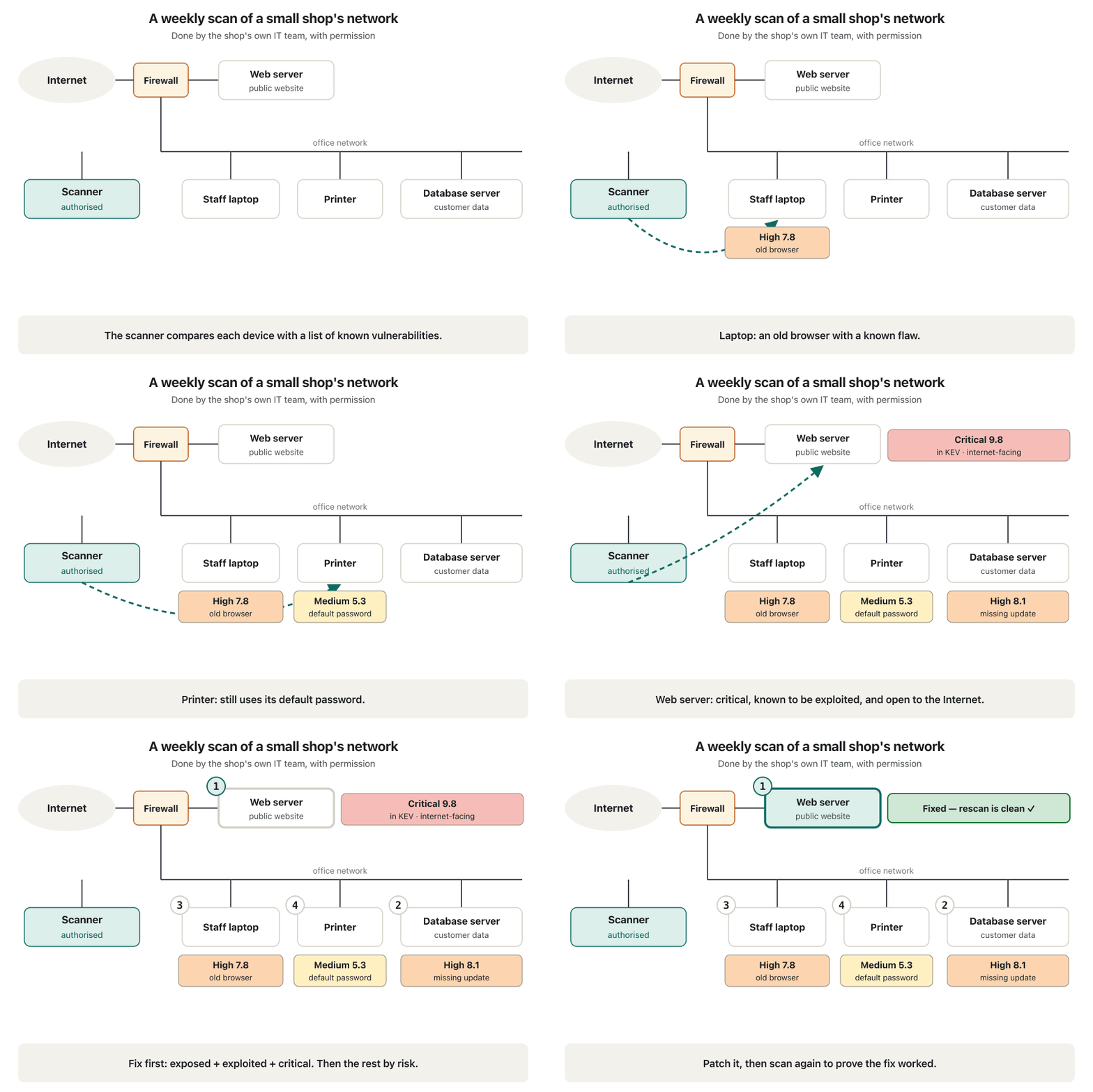
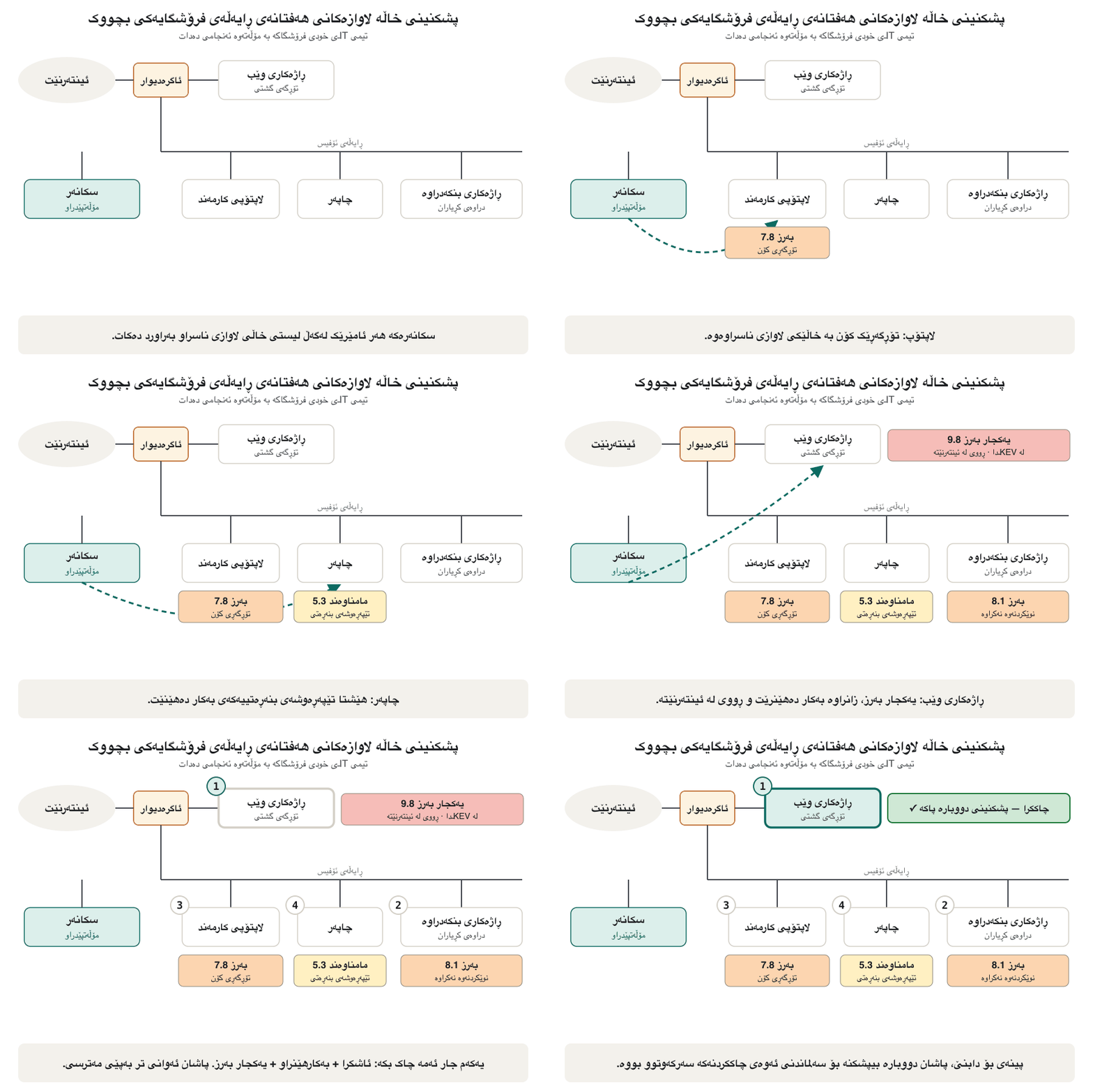
| Findingدۆزینەوە | CVSSنمرەی CVSS | In KEV?لە KEVدایە؟ | Exposed?ئاشکرایە؟ | Orderڕیز |
|---|---|---|---|---|
| Public web server: remote-code flaw گشتی: خاڵی جێبەجێکردنی کۆد لە دوورەوە | 9.8 | yesبەڵێ | Internet | 1 |
| Database server: missing update : نەکراوە | 8.1 | noنا | internal, customer dataناوخۆیی، کڕیاران | 2 |
| Staff laptop: old browser کارمەند: کۆن | 7.8 | noنا | browses the Web dailyڕۆژانە بە وێبدا دەگەڕێت | 3 |
| Printer: default password: | 5.3 | noنا | internalناوخۆیی | 4 — but a 2-minute fix, so do it today4 — بەڵام چاککردنی دوو خولەکە، بۆیە ئەمڕۆ بیکە |
Which one first? CVSS + KEV + exposureکامیان یەکەم؟ CVSS + KEV + ئاشکرابوون
Two more signals: BOD 26-04 and EPSSدوو نیشانەی تر: BOD 26-04 و EPSS
Five habits of good vulnerability managementپێنج ڕەفتاری بەڕێوەبردنی خاڵە لاوازەکانی باش
Scanning is only the start. The course lists five best practices that turn scan results into real protection:
پشکنین تەنها سەرەتایە. وانەکە پێنج باشترین ڕێکار ناو دەبات کە ئەنجامی پشکنین دەکەن بە پاراستنی ڕاستەقینە:
- Continuous monitoringچاودێریی بەردەوام
Scan and audit regularly, not once a year. The UK's NCSC suggests scanning infrastructure at least monthly and again right after fixing a critical issue, and scanning applications whenever they change.
بە بەردەوامی بپشکنە و وردبینی بکە، نەک ساڵی جارێک. NCSCی بەریتانیا پێشنیار دەکات ژێرخانی لانیکەم مانگانە بپشکنرێت و دووبارە ڕاستەوخۆ دوای چاککردنی کێشەیەکی گەورە. هەر کاتێک گۆڕان دەبێت بپشکنرێن.
- Patch managementبەڕێوەبردنی پینە
Deploy patches promptly, critical ones first, to close known weaknesses and shorten the time you are exposed.
بە خێرایی دابمەزرێنە، گەورەکان یەکەم جار، بۆ داخستنی لاوازییە ناسراوەکان و کورتکردنەوەی ئەو ماوەیەی ئاشکرایت.
- Network segmentationبەشبەشکردنی ڕایەڵە
Keep vulnerable systems away from sensitive ones, so an attacker who gets in cannot spread sideways. See Network defences.
سیستەمە لاوازەکان لە سیستەمە هەستیارەکان دوور بخەرەوە، بۆ ئەوەی کە دێتە ژوورەوە نەتوانێت بە لادا بڵاو ببێتەوە. بڕوانە بەرگرییەکانی ڕایەڵە.
- Access controlکۆنترۆڵی دەستڕاگەیشتن
Limit who can reach critical systems and require strong authentication such as MFA. See Passwords, MFA and access control.
سنوور دابنێ بۆ ئەوەی کێ دەگاتە سیستەمە گرنگەکان و بەهێز وەک MFA داوا بکە. بڕوانە تێپەڕەوشەکان، MFA و کۆنترۆڵی دەستڕاگەیشتن.
- Incident response planپلانی وەڵامدانەوەی ڕووداو
Prepare a plan for the day a vulnerability is exploited anyway, so the team acts quickly. See Incident response.
پلانێک ئامادە بکە بۆ ئەو ڕۆژەی کە هەر چۆنێک بێت دەکرێت، بۆ ئەوەی تیمەکە بە خێرایی کار بکات. بڕوانە وەڵامدانەوەی ڕووداو.
Tools and automationئامراز و خۆکارکردن
Vulnerability management uses three main kinds of tools: vulnerability scanners (network, application and host-based), patch-management systems that push updates to many machines (see Patch-management systems), and SIEM tools that watch for attacks (see Network defences). Large organisations connect them, so the work is automated:
سێ جۆری سەرەکیی ئامراز بەکار دەهێنێت: سکانەرەکانی (، و سەر ئامێر)، سیستەمەکانی کە بۆ زۆر ئامێر دەنێرن (بڕوانە سیستەمەکانی بەڕێوەبردنی پینە)، هەروەها ئامرازەکانی کە چاودێریی هێرش دەکەن (بڕوانە بەرگرییەکانی ڕایەڵە). ڕێکخراوە گەورەکان پێکەوەیان دەبەستن، بۆیە کارەکە خۆکار دەبێت:
- Efficiency and scalability: one small team can track tens of thousands of devices, which is impossible by hand.
- Continuous, proactive detection: scans run on a schedule or when a new server appears, and fixes can be deployed automatically.
- کارایی و فراوانبوون: تیمێکی بچووک دەتوانێت چاودێریی دەیان هەزار ئامێر بکات، کە بە دەست مەحاڵە.
- دۆزینەوەی بەردەوام و پێشوەختە: پشکنینەکان بەپێی خشتەی کات کار دەکەن یان کاتێک نوێ دەردەکەوێت. هەروەها دەکرێت چاککردنەکان بە شێوەیەکی خۆکار دابمەزرێن.
Common mistakesهەڵە باوەکان
| Mistakeهەڵە | Why it is wrongبۆچی هەڵەیە | Do this insteadلە جیاتی ئەوە ئەمە بکە |
|---|---|---|
| Scanning a network "just to see" without permissionپشکنینی «تەنها بۆ سەیرکردن» بەبێ مۆڵەت | It can be illegal and can disturb real servicesدەکرێت نایاسایی بێت و خزمەتگوزارییە ڕاستەقینەکان تێک بدات | Practise on your own lab or virtual machines; get written permission and a scopeلەسەر تاقیگەی خۆت یان ڕاهێنان بکە؛ مۆڵەتی نووسراو و سنوور وەربگرە |
| Sorting the to-do list by CVSS onlyڕیزکردنی لیستی کار تەنها بەپێی | CVSS is severity, not risk; it ignores exposure and real attacks گەورەییە نەک ؛ ئاشکرابوون و هێرشی ڕاستەقینە پشتگوێ دەخات | Add KEV, exposure and how important the system isKEV، ئاشکرابوون و گرنگیی سیستەمەکە زیاد بکە |
| "The scan is clean, so we are secure"«پشکنینەکە پاکە، کەواتە سەلامەتین» | Scanners miss unknown flaws, logic errors and what they cannot reachسکانەرەکان خاڵە نەناسراوەکان، و ئەوەی پێی ناگەن نابینن | Add penetration tests, code reviews and monitoring، و چاودێری زیاد بکە |
| Trusting every finding without checkingمتمانەکردن بە هەموو دۆزینەوەیەک بەبێ پشکنین | False positives waste time and destroy trust in reports کات بەفیڕۆ دەدەن و متمانە بە ڕاپۆرتەکان دەشکێنن | Verify important results; use authenticated scans; tune the scannerئەنجامە گرنگەکان پشتڕاست بکەرەوە؛ بەکار بهێنە؛ ڕێک بخە |
| Fixing, but never scanning againچاککردن، بەڵام هەرگیز دووبارە نەپشکنین | Failed patches and restored old copies stay open سەرنەکەوتووەکان و کۆپییە کۆنە گەڕێنراوەکان کراوە دەمێننەوە | Rescan to confirm every fixدووبارە بپشکنە بۆ سەلماندنی هەر چاککردنێک |
| Using an old scanner databaseبەکارهێنانی بنکەیەکی کۆنی | New vulnerabilities are invisible to it نوێ بۆی نابینرێن | Update the scanner before each scanپێش هەر پشکنینێک نوێ بکەرەوە |
Exercisesڕاهێنانەکان
Name the kind of scanning (network, application or host-based) for each task: (a) find which servers have port 3389 open; (b) check whether a staff laptop has disk encryption on; (c) test a shop's checkout page for XSS; (d) list the routers in a building and their firmware versions.
جۆری پشکنین (، یان سەر ئامێر) بۆ هەر ئەرکێک ناو ببە: (أ) بیدۆزەرەوە کام 3389یان کراوەیە؛ (ب) بپشکنە ئایا دیسک لە کارمەندێکدا هەڵکراوە؛ (ج) پەڕەی پارەدانی فرۆشگایەک بۆ تاقی بکەرەوە؛ (د) باڵەخانەیەک و وەشانی پتەوواڵەکانیان لیست بکە.
Show answerوەڵامەکە پیشان بدە
(a) Network scanning (a port scan). (b) Host-based scanning — a setting inside one device. (c) Application scanning (DAST on the live page, or SAST on its code). (d) Network scanning — devices on the network and their versions.
(أ) پشکنینی (). (ب) پشکنینی سەر ئامێر — لە ناو یەک ئامێردا. (ج) پشکنینی (DAST لەسەر پەڕە کارکردووەکە، یان SAST لەسەر کۆدەکەی). (د) پشکنینی — ئامێرەکانی سەر و وەشانەکانیان.
Give the CVSS v4.0 band for each score: 0.0, 3.9, 4.0, 6.9, 7.0, 9.0, 10.0.
ئاستی v4.0 بۆ هەر نمرەیەک بنووسە: 0.0، 3.9، 4.0، 6.9، 7.0، 9.0، 10.0.
Show answerوەڵامەکە پیشان بدە
| Scoreنمرە | Bandئاست |
|---|---|
| 0.0 | Noneهیچ |
| 3.9 | Lowنزم |
| 4.0 | Mediumمامناوەند |
| 6.9 | Mediumمامناوەند |
| 7.0 | Highبەرز |
| 9.0 | Criticalیەکجار بەرز |
| 10.0 | Criticalیەکجار بەرز |
A clinic's scan finds: (A) CVSS 6.5 on the appointment website, which faces the Internet, listed in KEV; (B) CVSS 9.0 on an internal backup server that has no network path from the Internet, not in KEV; (C) CVSS 7.5 on the patient-records database, internal, not in KEV; (D) CVSS 3.1 on a reception PC. Put them in a sensible order and explain.
پشکنینی نۆرینگەیەک ئەمانە دەدۆزێتەوە: (A) 6.5 لەسەر کاتی سەردان، کە ڕووی لە و لە KEVدایە؛ (B) 9.0 لەسەر ناوخۆیی کە هیچ ڕێگایەکی لە نییە، لە KEVدا نییە؛ (C) 7.5 لەسەر تۆمارەکانی نەخۆشان، ناوخۆیی، لە KEVدا نییە؛ (D) 3.1 لەسەر پێشوازی. بە ڕیزێکی ژیرانە ڕیزیان بکە و ڕوونی بکەرەوە.
Hintئاماژە
Use the three questions: how severe, exploited now, how exposed and important.
سێ پرسیارەکە بەکار بهێنە: چەند گەورەیە، ئێستا دەکرێت، چەند ئاشکرا و گرنگە.
Show answerوەڵامەکە پیشان بدە
A sensible order is A, C, B, D. A first: it is exposed to everyone and attackers are already using the flaw (KEV), even though its score is only Medium. C next: High severity on the most sensitive data (impact). B: Critical score, but hard to reach; fix it soon, and remember that backups are what save you from ransomware. D last. Other orders can be defended if the reasons use exposure, real exploitation, impact and the system's value — not the score alone.
ڕیزێکی ژیرانە A، C، B، Dـیە. A یەکەم: بۆ هەمووان ئاشکرایە و پێشتر بەکار دەهێنن (KEV)، هەرچەندە نمرەکەی تەنها مامناوەندە. پاشان C: گەورەیی بەرز لەسەر هەستیارترین (). B: نمرەی یەکجار بەرز، بەڵام گەیشتن پێی قورسە؛ زوو چاکی بکە و لەبیرت بێت کە ئەوانەن کە لە ڕزگارت دەکەن. D لە کۆتاییدا. ڕیزی تریش دەکرێت بەرگرییان لێ بکرێت ئەگەر هۆکارەکان ئاشکرابوون، ڕاستەقینە، و بەهای سیستەمەکە بەکار بهێنن — نەک تەنها نمرەکە.
A friend who studies with you says: "Our college Wi-Fi is slow. Run your scanner on the college network tonight and tell me which devices are vulnerable." What do you answer, and what would make the scan acceptable?
هاوڕێیەکت کە لەگەڵت دەخوێنێت دەڵێت: « کۆلێژەکەمان خاوە. ئەمشەو لەسەر کۆلێژ کار پێ بکە و پێم بڵێ کام ئامێرەکان لاوازن.» چی وەڵام دەدەیتەوە و چی پشکنینەکە پەسەند دەکات؟
Show answerوەڵامەکە پیشان بدە
Say no for now: the college network is not yours, and scanning it without permission can break rules and laws and can disturb services. It becomes acceptable only with written permission from the college's IT department, a clear scope (which addresses, which dates and times, which checks) and a contact person — the same rules as a penetration test. Otherwise, practise on your own virtual machines.
ئێستا بڵێ نا: کۆلێژەکە هی تۆ نییە و پشکنینی بەبێ مۆڵەت دەتوانێت یاسا و ڕێساکان بشکێنێت و خزمەتگوزارییەکان تێک بدات. تەنها کاتێک پەسەند دەبێت کە مۆڵەتی نووسراو لە بەشی ITـی کۆلێژەکەوە هەبێت، لەگەڵ سنوورێکی ڕوون (کام ناونیشانەکان، کام ڕۆژ و کاتەکان، کام پشکنینەکان) و کەسێکی پەیوەندی — هەمان یاساکانی . دەنا لەسەر خۆت ڕاهێنان بکە.
List the five risk factors that affect the severity of a vulnerability, with one example of each.
پێنج هۆکاری بنووسە کە کار دەکەنە سەر گەورەیی ، لەگەڵ نموونەیەک بۆ هەر یەکەیان.
Show answerوەڵامەکە پیشان بدە
- Exposure and accessibility — an Internet-facing login page.
- Exploitation complexity — a flaw exploitable with one public tool.
- Potential impact — full control of a payment server.
- Exploits in the wild — the flaw is listed in KEV.
- Affected systems — a hospital's patient database or a power-grid controller.
- ئاشکرابوون و دەستڕاگەیشتن — پەڕەیەکی کە ڕووی لە .
- ئاڵۆزیی — کە بە یەک ئامرازی گشتی دەکرێت.
- ئەگەری — کۆنترۆڵی تەواوی پارەدان.
- لە جیهانی ڕاستەقینەدا — خاڵەکە لە KEVدا لیست کراوە.
- سیستەمە تووشبووەکان — نەخۆشانی نەخۆشخانەیەک یان کۆنترۆڵکەرێکی تۆڕی کارەبا.
Summaryپوختە
- Vulnerability scanning finds known weaknesses before attackers do and turns them into a to-do list — only on systems you own or may test.
- Three types: network (devices, port scanning), application (SAST reads code, DAST tests the live app) and host-based (software and settings on one device).
- Authenticated scans log in and are more accurate; unauthenticated scans show the outsider's view. Verify findings: scanners make false positives and false negatives.
- OWASP Top 10:2025 ranks web-application risks; CVSS v4.0 scores severity: None 0.0, Low 0.1–3.9, Medium 4.0–6.9, High 7.0–8.9, Critical 9.0–10.0.
- Prioritise with severity + real exploitation (KEV) + exposure and importance; then patch, segment, control access, prepare to respond, and rescan.
- لاوازییە ناسراوەکان پێش دەدۆزێتەوە و دەیانکات بە لیستی کار — تەنها لەسەر ئەو سیستەمانەی هی خۆتن یان مۆڵەتی پشکنینیانت هەیە.
- سێ جۆر: (ئامێرەکان، )، (SAST کۆد دەخوێنێتەوە، DAST ئەپی کارکردوو تاقی دەکاتەوە) و سەر ئامێر ( و لەسەر یەک ئامێر).
- دەچنە ژوورەوە و وردترن؛ دیمەنی کەسی دەرەکی پیشان دەدەن. دۆزینەوەکان پشتڕاست بکەرەوە: سکانەرەکان و دەکەن.
- :2025 ڕیز دەکات؛ v4.0 گەورەیی دەپێوێت: هیچ 0.0، نزم 0.1–3.9، مامناوەند 4.0–6.9، بەرز 7.0–8.9، یەکجار بەرز 9.0–10.0.
- بە گەورەیی + ڕاستەقینە (KEV) + ئاشکرابوون و گرنگی ڕیزیان بکە؛ پاشان دابنێ، دابەش بکە، دەستڕاگەیشتن کۆنترۆڵ بکە، خۆت بۆ وەڵامدانەوە ئامادە بکە و دووبارە بپشکنە.
Why can a CVSS 9.8 sometimes wait while a 6.5 is fixed today?بۆچی هەندێک جار CVSS 9.8 دەتوانێت چاوەڕێ بکات کاتێک 6.5 ئەمڕۆ چاک دەکرێت؟
Because CVSS measures severity, not risk. The 6.5 may be on an Internet-facing system and already exploited (in KEV), while the 9.8 is on an isolated system that attackers cannot reach.
چونکە گەورەیی دەپێوێت نەک . لەوانەیە 6.5ـەکە لەسەر سیستەمێک بێت کە ڕووی لە و پێشتر کراوە (لە KEVدا)، کاتێک 9.8ـەکە لەسەر سیستەمێکی دابڕاوە کە ناگەنێ.
What is the difference between SAST and DAST?جیاوازیی نێوان SAST و DAST چییە؟
SAST reads source code without running it; DAST tests the running application from outside.
SAST دەخوێنێتەوە بەبێ جێبەجێکردنی؛ DAST ئەپی کارکردوو لە دەرەوە تاقی دەکاتەوە.
Name one thing a vulnerability scanner cannot find.شتێک ناو ببە کە سکانەرێکی خاڵە لاوازەکان ناتوانێت بیدۆزێتەوە.
A zero-day (a flaw not yet in its database), a logic flaw in how an app works, or anything on systems it cannot reach.
خاڵی لاوازی ڕۆژی سفر (خاڵێک کە هێشتا لە بنکەکەیدا نییە)، لە چۆنیەتیی کارکردنی ئەپێکدا، یان هەر شتێک لەسەر ئەو سیستەمانەی پێیان ناگات.
Lesson complete!وانەکە تەواو بوو!
Well done. Review the key terms, then go on to the next lesson.دەستخۆش. سەیرێکی زاراوە سەرەکییەکان بکەرەوە، پاشان بڕۆ بۆ وانەی داهاتوو.
Key termsزاراوە سەرەکییەکان
Network Defences: Firewalls, Segmentation, Monitoring and SIEMبەرگرییەکانی ڕایەڵە: ئاگرەدیوار، بەشبەشکردنی ڕایەڵە، چاودێریی ئاسایش و SIEM
Related lecturesوانە پەیوەندیدارەکان
- Cyber Ethics and Ethical Hackingئەخلاقی سایبەری و هاککردنی ئەخلاقی
- Responsible Disclosure and Bug Bountiesئاشکراکردنی بەرپرسیارانە و خەڵاتی دۆزینەوەی باگ
- Injection Attacks: SQL Injection and Cross-Site Scriptingهێرشەکانی تێخزاندن: تێخزاندنی SQL و XSS
- Network Defences: Firewalls, Segmentation, Monitoring and SIEMبەرگرییەکانی ڕایەڵە: ئاگرەدیوار، بەشبەشکردنی ڕایەڵە، چاودێریی ئاسایش و SIEM
- Incident Response: Six Phasesوەڵامدانەوەی ڕووداو: شەش قۆناغ
- Security Planning and Risk Assessmentپلاندانانی ئاسایش و هەڵسەنگاندنی مەترسی
- The Vulnerability Lifecycle and Patchingسووڕی ژیانی خاڵی لاواز و پینەکردن
- Where Vulnerabilities Come Fromخاڵە لاوازەکان لە کوێوە دێن
References and further readingسەرچاوەکان و خوێندنەوەی زیاتر
- NIST SP 800-115: Technical Guide to Information Security Testing and Assessment (vulnerability scanning, §4.3)
- UK NCSC: Vulnerability scanning tools and services
- FIRST: CVSS v4.0 Specification Document
- CISA: Known Exploited Vulnerabilities Catalog
- CISA: BOD 26-04 Prioritizing Security Updates Based on Risk (June 2026)
- FIRST: Exploit Prediction Scoring System (EPSS)
- OWASP Top 10:2025
- NIST: Cybersecurity Framework 2.0 released (26 February 2024)
- NIST SP 800-40 Rev. 4: Guide to Enterprise Patch Management Planning
This lecture is a first edition. The Kurdish text and terminology are waiting for review by Kurdish IT teachers.ئەم وانەیە چاپی یەکەمە. دەقە کوردییەکە و زاراوەکانی چاوەڕێی پێداچوونەوەی مامۆستایانی کوردی بواری IT ن.