Chapterبەش 5 · Lectureوانە 5.2
Stretching, Compressing and Reflecting Graphsدرێژکردنەوە، پەستاندن و وێنەدانەوەی هێڵکاری
How multiplying a function by a constant, or its input by a constant, stretches or compresses its graph vertically or horizontally, and how a minus sign reflects it across an axis: , , (a horizontal stretch, corrected), and , with the 17 examples of the notes worked and drawn.
چۆن لێکدانی یان لە هێڵکارییەکەی بە ستوونی یان ئاسۆیی درێژ دەکاتەوە یان دەپەستێنێت و چۆن نیشانەی سالب بەرامبەر وێنەی دەداتەوە: ، ، ( ئاسۆیی، ڕاستکراوەتەوە)، و ، لەگەڵ 17 نموونەکەی تێبینییەکان بە چارەسەر و هێڵکاری.
What you will learnچی فێر دەبیت
- Stretch or compress a graph vertically with and .
- Compress or stretch a graph horizontally with and , and explain why the inside works the other way round.
- Reflect a graph across the x-axis or the y-axis, and find the new domain and range.
- Read a formula that combines stretches, reflections and shifts in the right order.
- هێڵکارییەک بە و بە ستوونی درێژ بکەیتەوە یان بیپەستێنیت.
- هێڵکارییەک بە و بە ئاسۆیی بپەستێنیت یان درێژی بکەیتەوە و ڕوونی بکەیتەوە بۆچی ناوەوە بە پێچەوانەوە کار دەکات.
- هێڵکارییەک بەرامبەر x یان y وێنە بدەیتەوە و و نوێ بدۆزیتەوە.
- فۆرمولەیەک کە ، و تێکەڵ دەکات بە ڕیزبەندیی ڕاست بخوێنیتەوە.
Stretch, compress, flipدرێژکردنەوە، پەستاندن و وێنەدانەوە
Shifts slide a graph without changing its shape. This lesson changes the shape. To scale the graph of is to stretch it or compress it, vertically or horizontally. With a minus sign you can also reflect it, as in a mirror, across the x-axis or the y-axis.
کشانەوە هێڵکارییەک دەخزێنێت بەبێ گۆڕینی شێوەکەی. ئەم وانەیە شێوەکە دەگۆڕێت. واتە یان ، بە ستوونی یان بە ئاسۆیی. بە نیشانەیەکی سالب دەتوانیت وێنەشی بدەیتەوە، وەک لە ئاوێنەدا، بەرامبەر x یان y.
Making a graph taller or shorter (vertical) or wider or narrower (horizontal) by a factor c: a or a .
بەرزتر یان نزمترکردنی هێڵکارییەک (بە ستوونی) یان پانتر یان تەسکترکردنی (بە ئاسۆیی) بە ڕێژەی c: یان .
There are again two places to put the number c: outside f, which changes the outputs (vertical), or inside f, which changes the inputs (horizontal). And again the inside works the other way round. In this lesson unless we say otherwise.
دیسان دوو شوێن هەیە بۆ دانانی ژمارەی c: دەرەوەی f، کە دەگۆڕێت (ستوونی)، یان ناوەوەی f، کە دەگۆڕێت (ئاسۆیی). دیسان ناوەوە بە پێچەوانەوە کار دەکات. لەم وانەیەدا ـە مەگەر شتێکی تر بڵێین.
Vertical stretch and compression: درێژکردنەوە و پەستاندنی ستوونی:
stretches the graph vertically by the factor c, and compresses it vertically by c. Multiplying the output by c multiplies every height by c: each point moves to . Points on the x-axis (height 0) do not move. Dividing by c makes every height c times smaller.
هێڵکارییەکە بە ڕێژەی c بە ستوونی درێژ دەکاتەوە و بە ڕێژەی c بە ستوونی دەیپەستێنێت. لێکدانی لە c هەموو بەرزییەک لە c دەدات: هەر خاڵێکی دەچێت بۆ . خاڵەکانی سەر x (بەرزیی 0) ناجوولێن. دابەشکردن بەسەر cـدا هەموو بەرزییەک c جار بچووکتر دەکات.
Vertical stretch and compression: درێژکردنەوە و پەستاندنی ستوونی:
Watching a parabola stretch and compressسەیرکردنی درێژکردنەوە و پەستاندنی بڕگەیەکی هاوتا
Examples 12 and 13 of the notes do the same to the parabola: doubles every height, so the U becomes narrower; halves every height, so it becomes wider. The vertex stays where it is, because .
نموونەی 12 و 13ی تێبینییەکان هەمان کار بە دەکەن: هەموو بەرزییەک دوو هێندە دەکات، بۆیە Uـەکە تەسکتر دەبێت؛ هەموو بەرزییەک نیوە دەکات، بۆیە پانتر دەبێت. لە شوێنی خۆی دەمێنێتەوە، چونکە .
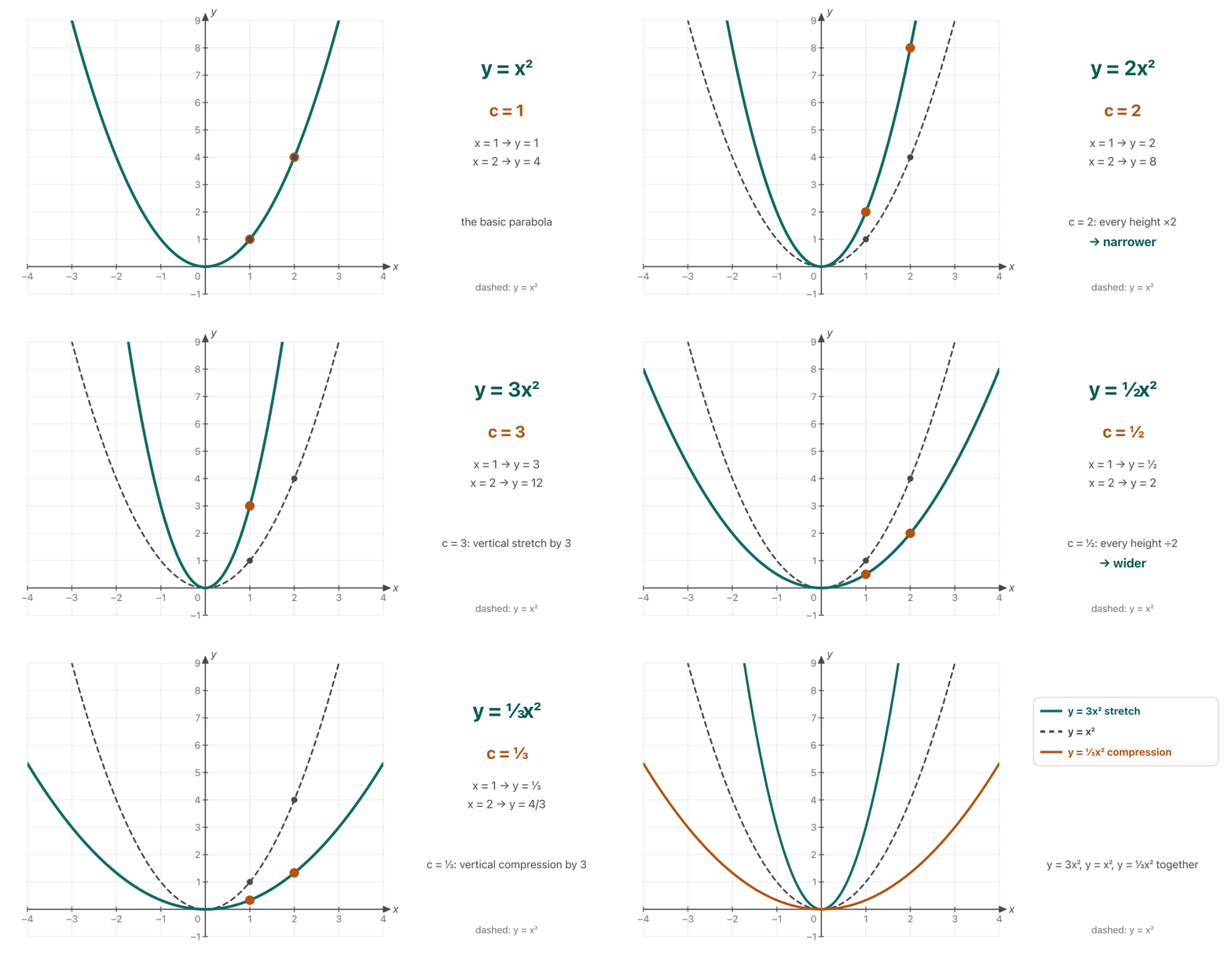
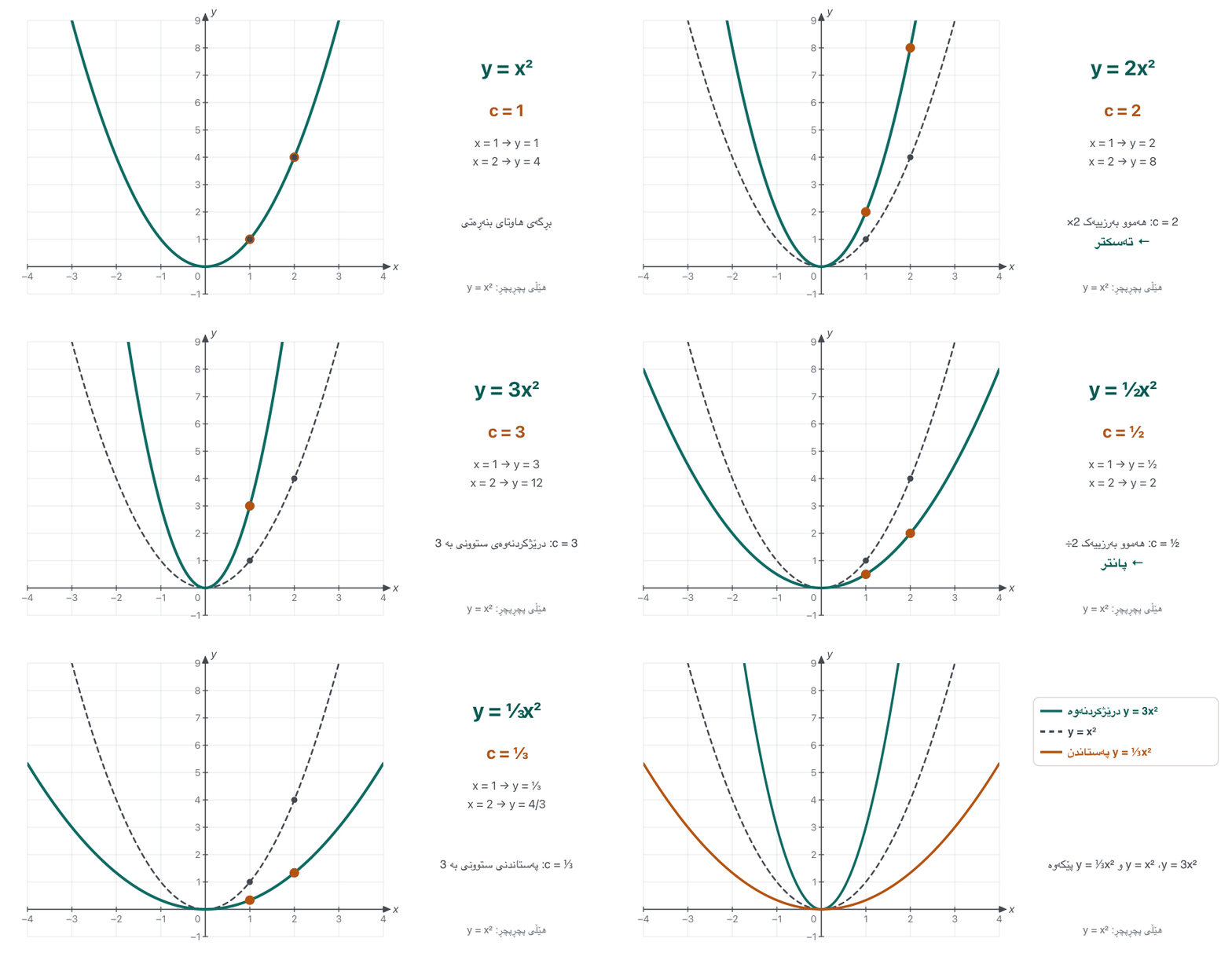
Pull a photo taller on your phone with two fingers, only up and down: every face gets longer, but nothing moves left or right. That is a vertical stretch. Squeezing it down is a vertical compression.
لە مۆبایلەکەتدا بە دوو پەنجە وێنەیەک تەنها بۆ سەرەوە و خوارەوە ڕابکێشە: هەموو ڕوخسارێک درێژتر دەبێت، بەڵام هیچ شتێک بۆ چەپ یان ڕاست ناجوولێت. ئەوە ستوونییە. پەستانی بۆ خوارەوە ستوونییە.
Where the analogy stops workingسنووری ئەم نموونەیە
A photo has edges; a graph goes on forever, and the stretch is measured from the x-axis, not from the middle of the picture.
وێنە لێواری هەیە؛ هێڵکاری بێکۆتایی بەردەوامە و لە xـەوە دەپێورێت، نەک لە ناوەڕاستی وێنەکەوە.
Horizontal compression and stretch: and پەستاندن و درێژکردنەوەی ئاسۆیی: و
compresses the graph horizontally by c, and stretches it horizontally by c. Now the input is changed. reaches every value c times sooner: the value that f has at 9, already has at 3. Each point moves to , closer to the y-axis. does the opposite: each point moves to , c times further out.
هێڵکارییەکە بە ڕێژەی c بە ئاسۆیی دەپەستێنێت و بە ڕێژەی c بە ئاسۆیی درێژی دەکاتەوە. ئێستا دەگۆڕێت. هەموو بەهایەک c جار زووتر دەدات: ئەو بەهایەی f لە 9دا هەیەتی، لە 3دا هەیەتی. هەر خاڵێکی دەچێت بۆ ، نزیکتر لە y. پێچەوانەکەی دەکات: هەر خاڵێک دەچێت بۆ ، c جار دوورتر.
Horizontal compression and stretch: and پەستاندن و درێژکردنەوەی ئاسۆیی: و
Examples 3 and 4: and نموونەی 3 و 4: و
Example 3 : horizontal compression by 3. Example 4 : horizontal stretch by 3. Both keep the domain and the range . For this particular function there is a shortcut: , so squeezing sideways by 3 looks the same as stretching upwards by . Most functions have no such shortcut.
نموونەی 3 : ئاسۆیی بە ڕێژەی 3. نموونەی 4 : ئاسۆیی بە ڕێژەی 3. هەردووکیان و دەهێڵنەوە. بۆ ئەم ڕێگەیەکی کورت هەیە: ، بۆیە بە لادا بە ڕێژەی 3 وەک بۆ سەرەوە بە ڕێژەی دەردەکەوێت. زۆربەی ئەم ڕێگە کورتەیان نییە.
Reflections: and وێنەدانەوە: و
The notes take :
تێبینییەکان وەردەگرن:
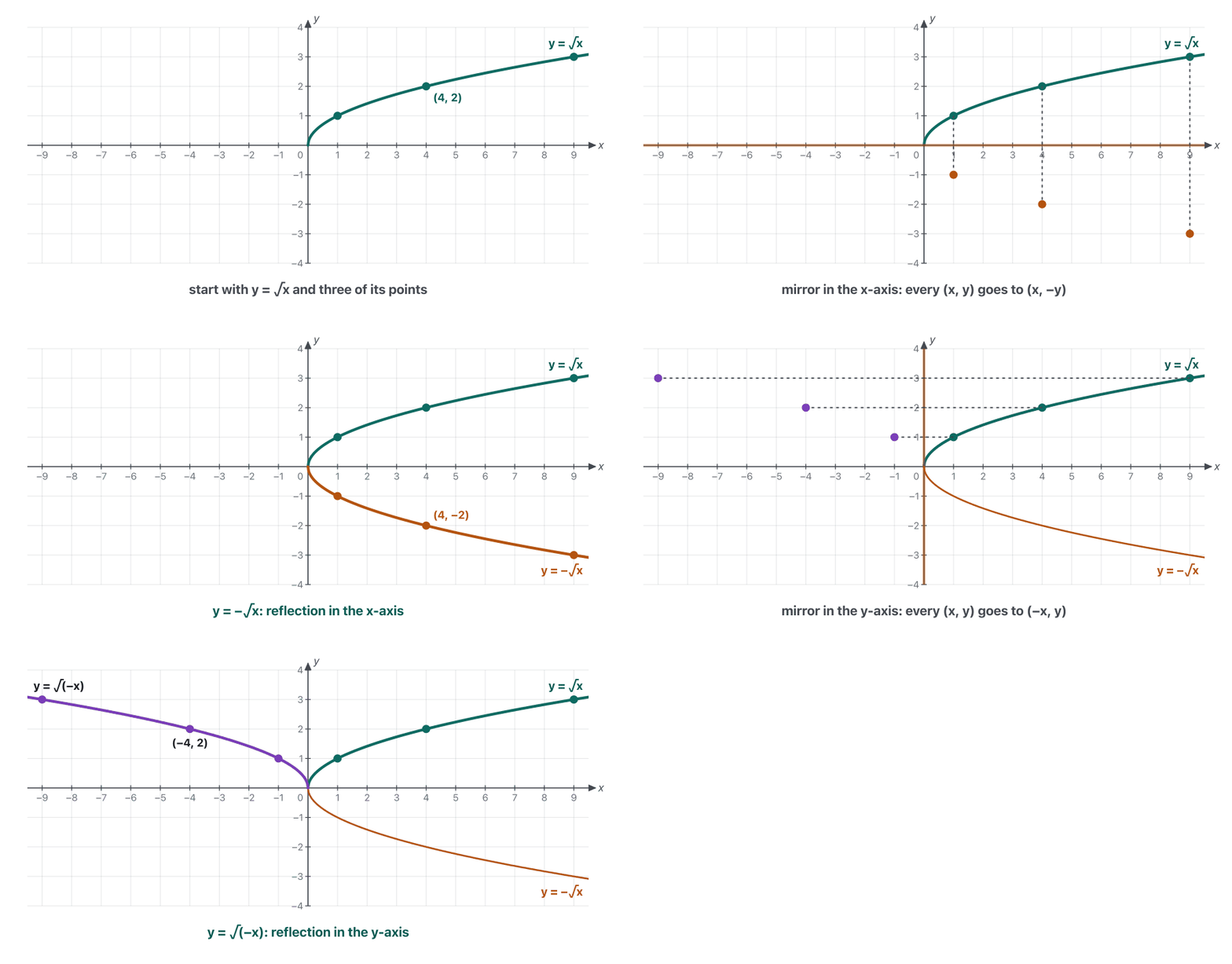
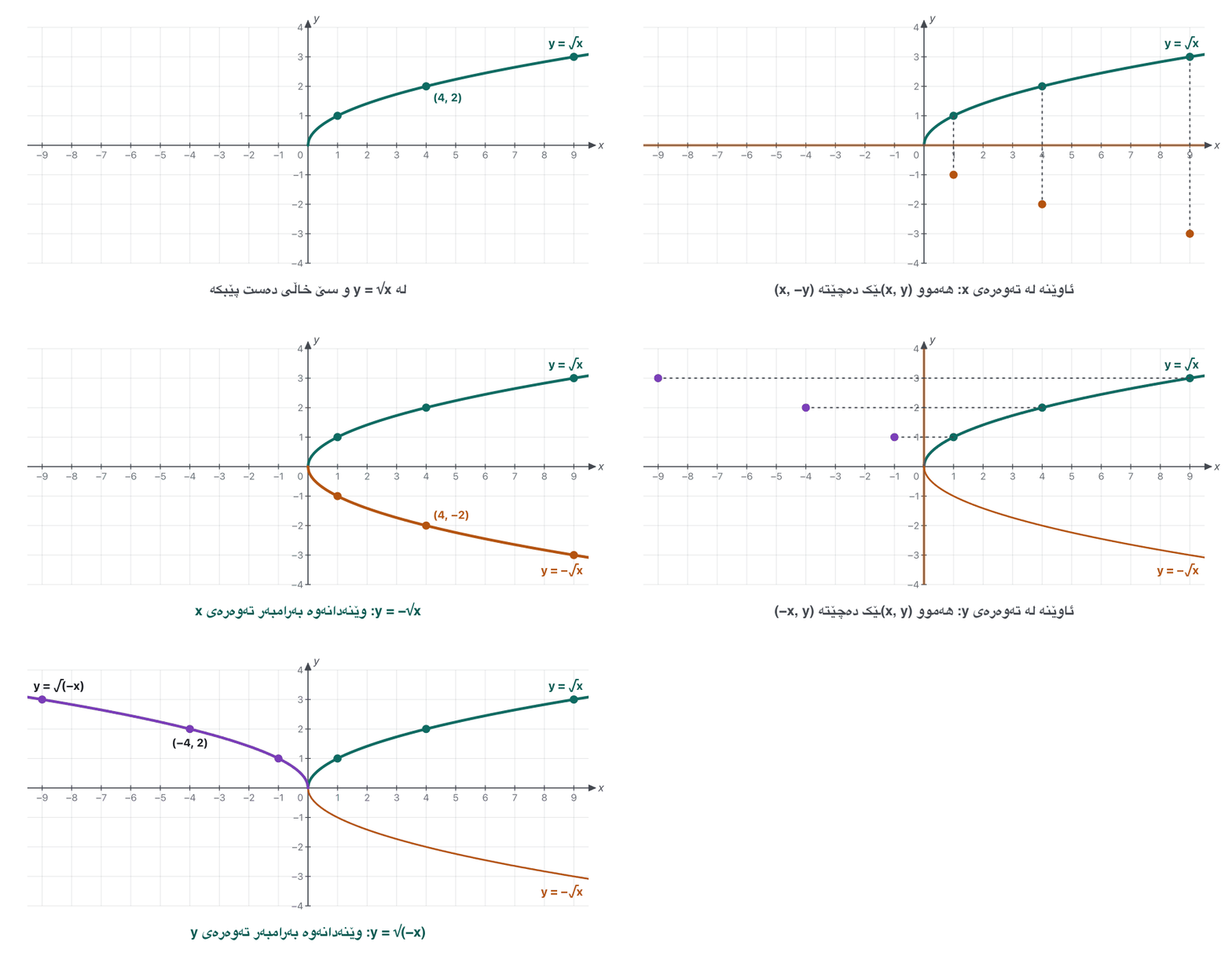
reflects the graph across the x-axis, and reflects it across the y-axis. A minus sign outside changes the sign of every output: , a mirror in the x-axis. A minus sign inside changes the sign of every input: , a mirror in the y-axis.
هێڵکارییەکە بەرامبەر x وێنە دەداتەوە و بەرامبەر y. نیشانەی سالب لە دەرەوە نیشانەی هەموو دەگۆڕێت: ، ئاوێنەیەک لە x. نیشانەی سالب لە ناوەوە نیشانەی هەموو دەگۆڕێت: ، ئاوێنەیەک لە y.
| Exampleنموونە | Reflection | Domain | Range |
|---|---|---|---|
| 5) | across the x-axisبەرامبەر x | ||
| 6) | across the y-axisبەرامبەر y |
This links back to even and odd functions: an even function is unchanged by (the y-axis mirror), and for an odd function the two mirrors give the same graph, ; doing both mirrors one after the other is the half turn about the origin.
ئەمە دەگەڕێتەوە بۆ نەخشە جووتەکان و نەخشە تاکەکان: بە (ئاوێنەی y) ناگۆڕێت و بۆ دوو ئاوێنەکە هەمان هێڵکاری دەدەن، ؛ ئەنجامدانی هەردوو ئاوێنەکە یەک لە دوای یەک هەمان نیو سووڕانەوەیە بە دەوری .
How a minus sign outside, −f(x), reflects a graph across the x-axis, and a minus sign inside, f(−x), reflects it across the y-axis.
چۆن هێمای سالب لە دەرەوە، ، بەرامبەر x وێنە دەداتەوە و هێمای سالب لە ناوەوە، ، بەرامبەر y وێنەی دەداتەوە.
Reflections across the x-axis and the y-axis, with the point rules (x, y) → (x, −y) and (−x, y).
بەرامبەر x و y، لەگەڵ یاساکانی خاڵ: و .
Examples 7–11 with نموونەکانی 7–11 بە
Describe the graphs of (7) (8) (9) (10) (11) . Which two pairs give the same graph?
هێڵکارییەکانی (7) (8) (9) (10) (11) وەسف بکە. کام دوو جووت هەمان هێڵکاری دەدەن؟
Hintئاماژە
Use .
بەکار بهێنە.
Show answerوەڵامەکە پیشان بدە
| Exampleنموونە | What happensچی ڕوو دەدات | Point at خاڵ لە |
|---|---|---|
| 7) | vertical stretch by 2: a steeper V ستوونی بە ڕێژەی 2: Vـێکی لێژتر | |
| 8) | vertical compression by 2: a flatter V ستوونی بە ڕێژەی 2: Vـێکی تەختتر | |
| 9) | horizontal compression by 2, and : the same graph as 7 ئاسۆیی بە ڕێژەی 2 و : هەمان هێڵکاریی 7 | |
| 10) | horizontal stretch by 2, and : the same graph as 8 ئاسۆیی بە ڕێژەی 2 و : هەمان هێڵکاریی 8 | |
| 11) | stretch by 2 and reflection across the x-axis: an upside-down V بە ڕێژەی 2 و بەرامبەر x: Vـێکی سەرەوژێر |
Why are 7 and 9 the same? The absolute value of a product is the product of the absolute values: . For a V made of straight lines through the origin, squeezing it sideways by 2 and pulling it up by 2 give the same steeper V. In the same way .
بۆچی 7 و 9 وەک یەکن؟ لێکدان یەکسانە بە لێکدانی : . بۆ Vـێک کە لە هێڵی ڕاست بە پێک هاتووە، بە لادا بە ڕێژەی 2 و ڕاکێشانی بۆ سەرەوە بە ڕێژەی 2 هەمان Vـی لێژتر دەدەن. بە هەمان شێوە .
Examples 12–17 with نموونەکانی 12–17 بە
Simplify and describe (12) (13) (14) (15) (16) (17) .
سادە بکەرەوە و وەسف بکە: (12) (13) (14) (15) (16) (17) .
Show answerوەڵامەکە پیشان بدە
| Exampleنموونە | Simplifiedسادەکراو | What happensچی ڕوو دەدات |
|---|---|---|
| 12) | vertical stretch by 2 (narrower) ستوونی بە ڕێژەی 2 (تەسکتر) | |
| 13) | vertical compression by 2 (wider) ستوونی بە ڕێژەی 2 (پانتر) | |
| 14) | horizontal compression by 2 = vertical stretch by 4 ئاسۆیی بە ڕێژەی 2 = ستوونی بە ڕێژەی 4 | |
| 15) | horizontal stretch by 2 = vertical compression by 4 ئاسۆیی بە ڕێژەی 2 = ستوونی بە ڕێژەی 4 | |
| 16) | stretch by 2 and reflection across the x-axis (opens downwards) بە ڕێژەی 2 و بەرامبەر x (بەرەو خوارەوە کراوەیە) | |
| 17) | the same function as 16هەمان 16 |
Notice 14 and 15: for the parabola a horizontal change can be rewritten as a vertical one, because and . Squeezing the parabola sideways by 2 makes it as narrow as pulling it up by 4.
سەرنجی 14 و 15 بدە: بۆ گۆڕانی ئاسۆیی دەکرێت وەک گۆڕانی ستوونی بنووسرێتەوە، چونکە و . بە لادا بە ڕێژەی 2 هێندەی ڕاکێشانی بۆ سەرەوە بە ڕێژەی 4 تەسکی دەکات.
Combining stretches, reflections and shiftsتێکەڵکردنی درێژکردنەوە، وێنەدانەوە و کشانەوە
Real formulas mix everything, for example . For a formula of the form , work in this order: (1) horizontal shift (from h), (2) horizontal stretch, compression or reflection (from b), (3) vertical stretch, compression or reflection (from a), (4) vertical shift (from k). Outside f this is the order of arithmetic: multiply, then add. Inside f it is the reverse of how you compute a value, because changes to the input work the other way round.
فۆرمولە ڕاستەقینەکان هەموو شتێک تێکەڵ دەکەن، بۆ نموونە . بۆ فۆرمولەیەک بە شێوەی بەم ڕیزبەندییە کار بکە: (1) ئاسۆیی (لە hـەوە)، (2) ، یان ئاسۆیی (لە bـەوە)، (3) ، یان ستوونی (لە aـەوە)، (4) ستوونی (لە kـەوە). لە دەرەوەی f ئەمە هەمان ڕیزبەندیی حیسابە: سەرەتا لێکدان، پاشان کۆکردنەوە. لە ناوەوەی f پێچەوانەی ڕیزبەندیی حیسابکردنی بەهاکەیە، چونکە گۆڕینی بە پێچەوانەوە کار دەکات.
: the V of moves 1 left; the vertex is at .
: Vـی 1 بۆ چەپ دەڕوات؛ لە ـدایە.
: every height doubles; the vertex stays at because its height is 0.
: هەموو بەرزییەک دوو هێندە دەبێت؛ لە دەمێنێتەوە چونکە بەرزییەکەی 0ـە.
: reflection across the x-axis; the V now opens downwards.
: بەرامبەر x؛ Vـەکە ئێستا بەرەو خوارەوە کراوەیە.
: everything moves 3 up; the vertex ends at , the highest point of the graph.
: هەموو شتێک 3 بۆ سەرەوە دەڕوات؛ لە ـدا کۆتایی دێت، بەرزترین خاڵی هێڵکارییەکە.
Common mistakesهەڵە باوەکان
| Mistakeهەڵە | Correctڕاست |
|---|---|
| " stretches the graph by 3."« هێڵکارییەکە بە ڕێژەی 3 درێژ دەکاتەوە.» | It compresses it horizontally by 3: values come 3 times sooner.بە ئاسۆیی بە ڕێژەی 3 دەیپەستێنێت: بەهاکان 3 جار زووتر دێن. |
| " is a vertical stretch" (the misprint in the notes).« ستوونییە» (هەڵە چاپەکەی تێبینییەکان). | It is a horizontal stretch by c. ئاسۆییە بە ڕێژەی c. |
| Mixing up and .تێکەڵکردنی و . | Minus outside: mirror in the x-axis. Minus inside: mirror in the y-axis.سالب لە دەرەوە: ئاوێنە لە x. سالب لە ناوەوە: ئاوێنە لە y. |
| Keeping the domain of for .هێشتنەوەی بۆ . | lives on . لەسەر ـە. |
| Thinking that .وا بزانیت . | ; only is negative.؛ تەنها سالبە. |
| Stretching after shifting: reading as . دوای : خوێندنەوەی وەک . | Multiply before adding: the vertex of is .پێش کۆکردنەوە لێک بدە: خاڵی ـە. |
Summaryپوختە
| Formula ()فۆرمولە () | Effectکاریگەری | goes to دەچێت بۆ |
|---|---|---|
| vertical stretch by c ستوونی بە ڕێژەی c | ||
| vertical compression by c ستوونی بە ڕێژەی c | ||
| horizontal compression by c ئاسۆیی بە ڕێژەی c | ||
| horizontal stretch by c ئاسۆیی بە ڕێژەی c | ||
| reflection across the x-axis بەرامبەر x | ||
| reflection across the y-axis بەرامبەر y |
Why is the same graph as ?بۆچی هەمان هێڵکاریی ـە؟
Because for every x.
چونکە بۆ هەموو xـێک .
What does look like, and what is its range? چۆنە و مەوداکەی چییە؟
The curve mirrored below the x-axis; range .
چەماوەی کە بۆ ژێر x وێنەی دراوەتەوە؛ .
In which order do you read ? بە چ ڕیزبەندییەک دەخوێنیتەوە؟
1 right, then a vertical stretch by 3, then 2 up.
1 بۆ ڕاست، پاشان ستوونی بە ڕێژەی 3، پاشان 2 بۆ سەرەوە.
This is the last of the graph-transformation lessons. The next lessons in this chapter combine functions with arithmetic and composition. To try the moves on a wave, do the last exercise in Exercises: graphs, code and periods: the range and period of , and .
ئەمە دوایین وانەی هێڵکارییە. وانەکانی داهاتووی ئەم بەشە بە کارە ژمێرەییەکان پێکەوە دەبەستن و ئاوێتەکردنی نەخشەکان فێر دەکەن. بۆ تاقیکردنەوەی ئەم جووڵانە لەسەر شەپۆلێک، دوایین ڕاهێنانی ڕاهێنانەکان: هێڵکاری، کۆد و کاتی خولی بکە: و ، و .
Videoڤیدیۆ
Watch a videoسەیری ڤیدیۆیەک بکە
A video that viewers liked a lot and praised in their comments, chosen for this lesson.ڤیدیۆیەک کە بینەران زۆریان پێ خۆش بووە و لە کۆمێنتەکانیاندا ستایشیان کردووە، بۆ ئەم وانەیە هەڵبژێردراوە.
Moving a graph up, down, left and right, then stretching, shrinking and reflecting it, shown on the basic graphs.
جووڵاندنی بۆ سەرەوە، خوارەوە، چەپ و ڕاست، پاشان ، و ، لەسەر هێڵکارییە بنەڕەتییەکان.
Watch 2:51–4:40: stretching and shrinking (2x², ½x², (2x)²) and the summary box, then reflecting −x² and (−x)².
لە 2:51 تا 4:40 سەیر بکە: و (، ، ) و چوارچێوەی کورتەکە، پاشان و .
Lesson complete!وانەکە تەواو بوو!
Well done. Review the key terms, then go on to the next lesson.دەستخۆش. سەیرێکی زاراوە سەرەکییەکان بکەرەوە، پاشان بڕۆ بۆ وانەی داهاتوو.
Key termsزاراوە سەرەکییەکان
Adding, Subtracting, Multiplying and Dividing Functionsکۆکردنەوە، لێدەرکردن، لێکدان و دابەشکردنی نەخشەکان
Related lecturesوانە پەیوەندیدارەکان
References and further readingسەرچاوەکان و خوێندنەوەی زیاتر
This lecture is a first edition. The Kurdish text and terminology are waiting for review by Kurdish IT teachers.ئەم وانەیە چاپی یەکەمە. دەقە کوردییەکە و زاراوەکانی چاوەڕێی پێداچوونەوەی مامۆستایانی کوردی بواری IT ن.