Chapterبەش 1 · Lectureوانە 1.4
Who Attacks, and Why?کێ هێرش دەکات و بۆچی؟
Computer crime and how it is counted today (the FBI's IC3 report); the course's three classic kinds of computer criminal (amateurs, crackers, career criminals); today's threat actors (unskilled attackers, hacktivists, organised crime, nation-states, insiders) with real, well-documented cases; their motives; and how knowing the attacker helps you choose your defence.
و چۆن ئەمڕۆ دەژمێردرێت (ڕاپۆرتی IC3ـی FBI)؛ سێ جۆرە کلاسیکییەکەی تاوانباری لە کۆرسەکەدا (ئەماتۆر، کراکەر، تاوانباری پیشەیی)؛ ئەمڕۆ (، ، تاوانی ڕێکخراو، ، کەسانی ناوخۆ) لەگەڵ ڕووداوی ڕاستەقینە و باش بەڵگەدار؛ پاڵنەرەکانیان؛ هەروەها چۆن ناسینی یارمەتیت دەدات بەرگرییەکەت هەڵبژێریت.
What you will learnچی فێر دەبیت
- Define computer crime, and say who counts it today and why the numbers are only part of the truth.
- Describe the course's three classic kinds of computer criminal and their motivations.
- Name today's main threat actors and describe each by motive, resources, skill and whether it is inside or outside.
- Use the likely attacker and motive to choose sensible defences.
- پێناسە بکەیت و بڵێیت ئەمڕۆ کێ دەیژمێرێت و بۆچی ژمارەکان تەنها بەشێکن لە ڕاستییەکە.
- سێ جۆرە کلاسیکییەکەی تاوانباری لە کۆرسەکەدا و پاڵنەرەکانیان وەسف بکەیت.
- ناوی سەرەکیترین ئەمڕۆ بهێنیت و هەریەکەیان بەپێی پاڵنەر، سەرچاوە، شارەزایی و ئەوەی لە ناوەوەیە یان دەرەوە وەسف بکەیت.
- و پاڵنەرە ئەگەرییەکە بەکار بهێنیت بۆ هەڵبژاردنی بەرگریی ژیرانە.
What is computer crime?تاوانی سایبەری چییە؟
Any crime that is done with computers and or aimed at them, such as fraud, , spreading or breaking into systems.
هەر تاوانێکە کە بە کۆمپیوتەر و ئەنجام دەدرێت یان ئەوانی کردووەتە ئامانج، وەک فێڵکردن، ، بڵاوکردنەوەی یان دزەکردن بۆ ناو سیستەمەکان.
The course: computer crime is any crime that involves computers or is aided by the use of computers.
کۆرسەکە: هەر تاوانێکە کە تێیدا بەشدار بێت یان بە یارمەتیی بەکارهێنانی ئەنجام درابێت.
The definition covers two different situations. Sometimes the computer is the target: someone breaks into a server, locks files with ransomware or knocks a website offline. Sometimes the computer is only the tool for an old crime: fraud, theft, blackmail or harassment done through messages, fake shops or online 'investments'. Today the second kind causes most of the money that victims lose.
پێناسەکە دوو دۆخی جیاواز دەگرێتەوە. هەندێک جار ئامانجەکەیە: کەسێک دزە دەکاتە ناو ، بە قفڵ دەکات یان لە کار دەخات. هەندێک جار تەنها ئامرازە بۆ تاوانێکی کۆن: فێڵ، دزی، هەڕەشەکردن بۆ پارە یان بێزارکردن کە لە ڕێی نامە، دوکانی ساختە یان «وەبەرهێنان»ی ئۆنلاینەوە ئەنجام دەدرێت. ئەمڕۆ جۆری دووەم هۆی زۆربەی ئەو پارەیەیە کە قوربانییەکان لەدەستی دەدەن.
Who counts computer crime?کێ تاوانی سایبەری دەژمێرێت؟
The notes say that the US Federal Bureau of Investigation (FBI) reports uniform crime statistics. That is true of crime in general: the FBI's Uniform Crime Reporting programme collects police figures. For computer crime, the FBI runs a special centre, the Internet Crime Complaint Center (IC3), which has received complaints since 2000 and publishes a yearly Internet Crime Report.
تێبینییەکان دەڵێن دەزگای لێکۆڵینەوەی فیدراڵیی ئەمریکا (FBI) ئامارێکی یەکگرتووی تاوان بڵاو دەکاتەوە. ئەمە بۆ تاوان بە گشتی ڕاستە: بەرنامەی Uniform Crime Reportingـی FBI ژمارەکانی پۆلیس کۆ دەکاتەوە. بۆ ، FBI ناوەندێکی تایبەتی هەیە، ناوەندی سکاڵای تاوانی (IC3)، کە لە ساڵی 2000ـەوە سکاڵا وەردەگرێت و هەموو ساڵێک ڕاپۆرتی تاوانی بڵاو دەکاتەوە.
Read such numbers with care. They count only what victims reported, mostly in the United States. Many victims never report, out of shame or because they think nothing will happen, so the real totals are higher. A sector with few complaints may be well protected, or may simply report less.
ئەم جۆرە ژمارانە بە وریاییەوە بخوێنەوە. تەنها ئەوە دەژمێرن کە قوربانییەکان ڕاپۆرتیان کردووە، زیاتر لە ویلایەتە یەکگرتووەکان. زۆر قوربانی هەرگیز ڕاپۆرت ناکەن، لە شەرمدا یان چونکە پێیان وایە هیچ ڕوو نادات، بۆیە کۆی ڕاستەقینە زیاترە. کەرتێک کە سکاڵای کەمی هەیە لەوانەیە باش پارێزراو بێت، یان تەنها کەمتر ڕاپۆرت بکات.
The classic three: amateurs, crackers and career criminalsسێ جۆرە کلاسیکییەکە: ئەماتۆر، کراکەر و تاوانباری پیشەیی
The course divides computer criminals into three kinds, by what drives them:
کۆرسەکە تاوانبارانی بەپێی ئەوەی هانیان دەدات دەکاتە سێ جۆر:
| Kindجۆر | Who they areکێن | Motivationپاڵنەر | Exampleنموونە |
|---|---|---|---|
| Amateursئەماتۆرەکان | regular users who take advantage of a weakness they happen to find ئاسایی کە سوود لە لاوازییەک وەردەگرن کە بە ڕێکەوت دەیدۆزنەوە | easy access: they simply grab information or resources that are easy to reachدەستڕاگەیشتنی ئاسان: تەنها ئەو یان سەرچاوانە دەبەن کە ئاسان دەستیان پێ دەگات | a clerk who finds a colleague's computer unlocked and reads the salary fileفەرمانبەرێک کە هاوکارێکی بە کراوەیی دەبینێت و مووچەکان دەخوێنێتەوە |
| Crackersکراکەرەکان | people who try to get into computers they have no permission to useئەو کەسانەی هەوڵ دەدەن بچنە ناو ئەو کە مۆڵەتی بەکارهێنانیان نییە | challenge and curiosity: they see breaking in as a fun puzzle or an adventureتەحەدا و کونجکۆڵی: چوونە ژوورەوە بە زۆر وەک مەتەڵێکی خۆش یان سەرکێشییەک دەبینن | a student who breaks the college Wi-Fi password 'to see if he can'خوێندکارێک کە Wi-Fiـی کۆلێژ دەشکێنێت «بۆ ئەوەی بزانێت دەتوانێت» |
| Career criminalsتاوانبارانی پیشەیی | professionals who understand computer systems and their weaknesses wellپسپۆڕانێک کە سیستەمی و لاوازییەکانی بە باشی دەناسن | personal gain, especially money: they break in for serious reasons such as stealing valuable informationقازانجی کەسی، بەتایبەتی پارە: بۆ هۆکاری جددی دزە دەکەن وەک دزینی بەنرخ | a group that steals card numbers and sells themگرووپێک کە ژمارەی کارت دەدزێت و دەیفرۆشێت |
The classic three: amateurs, crackers and career criminalsسێ جۆرە کلاسیکییەکە: ئەماتۆر، کراکەر و تاوانباری پیشەیی
Crackers, hackers and hatsکراکەر، هاکەر و کڵاوەکان
The word cracker was used for someone who breaks in without permission, to keep 'hacker' for skilled, curious people. Today the same idea is usually called a black-hat hacker. Hackers who test systems with permission are white-hat hackers. The 'hats' are taught in White, black and grey hats.
وشەی کراکەر (cracker) بۆ کەسێک بەکار دەهات کە بەبێ مۆڵەت دزە دەکات، بۆ ئەوەی «» بۆ کەسانی شارەزا و کونجکۆڵ بمێنێتەوە. ئەمڕۆ هەمان بیرۆکە زۆرجار پێی دەوترێت . ئەو بە مۆڵەت سیستەمەکان تاقی دەکەنەوە . «کڵاوەکان» لە کڵاوی سپی، ڕەش و خۆڵەمێشی فێر دەکرێن.
Today's threat actorsهێرشبەرەکانی ئەمڕۆ
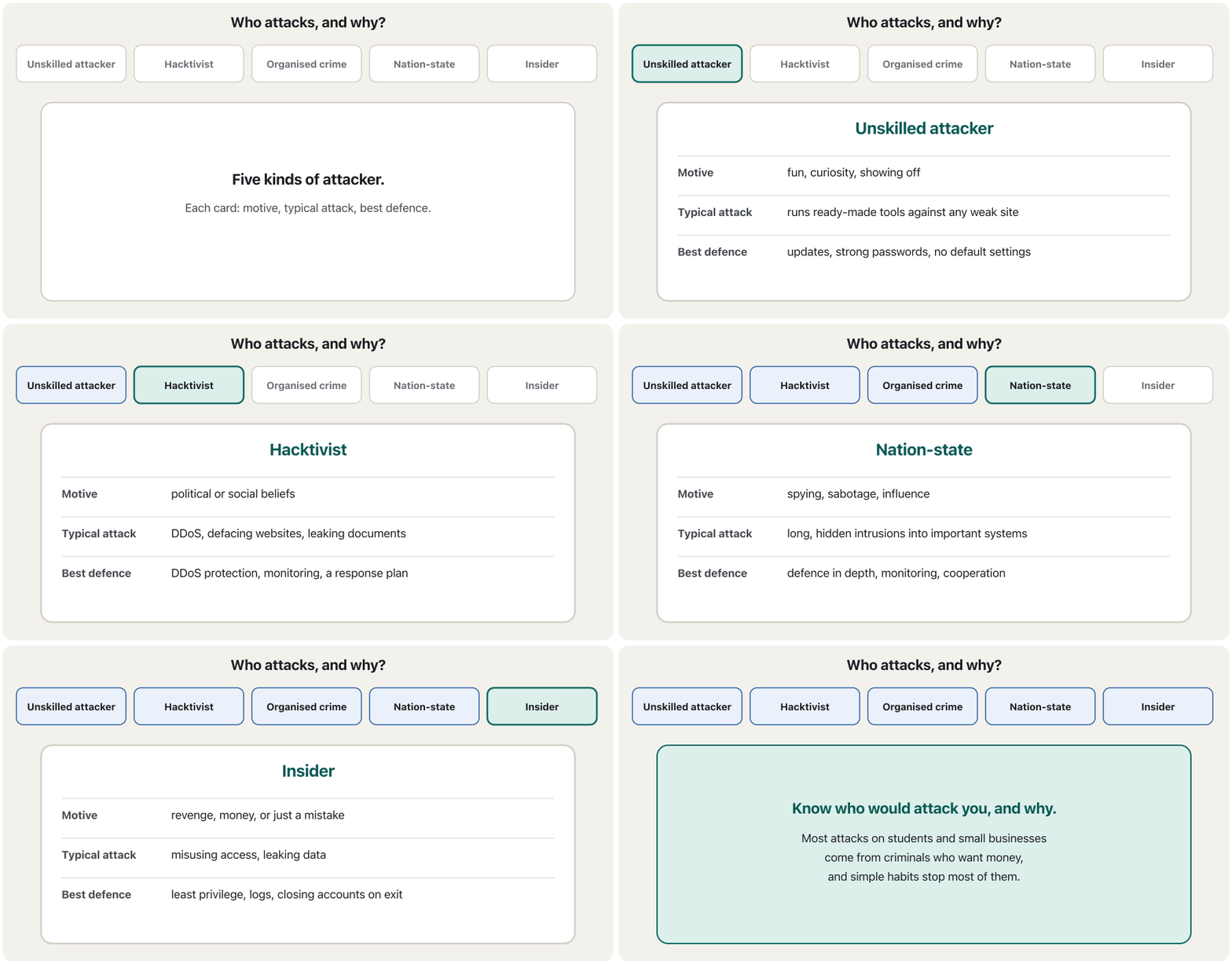
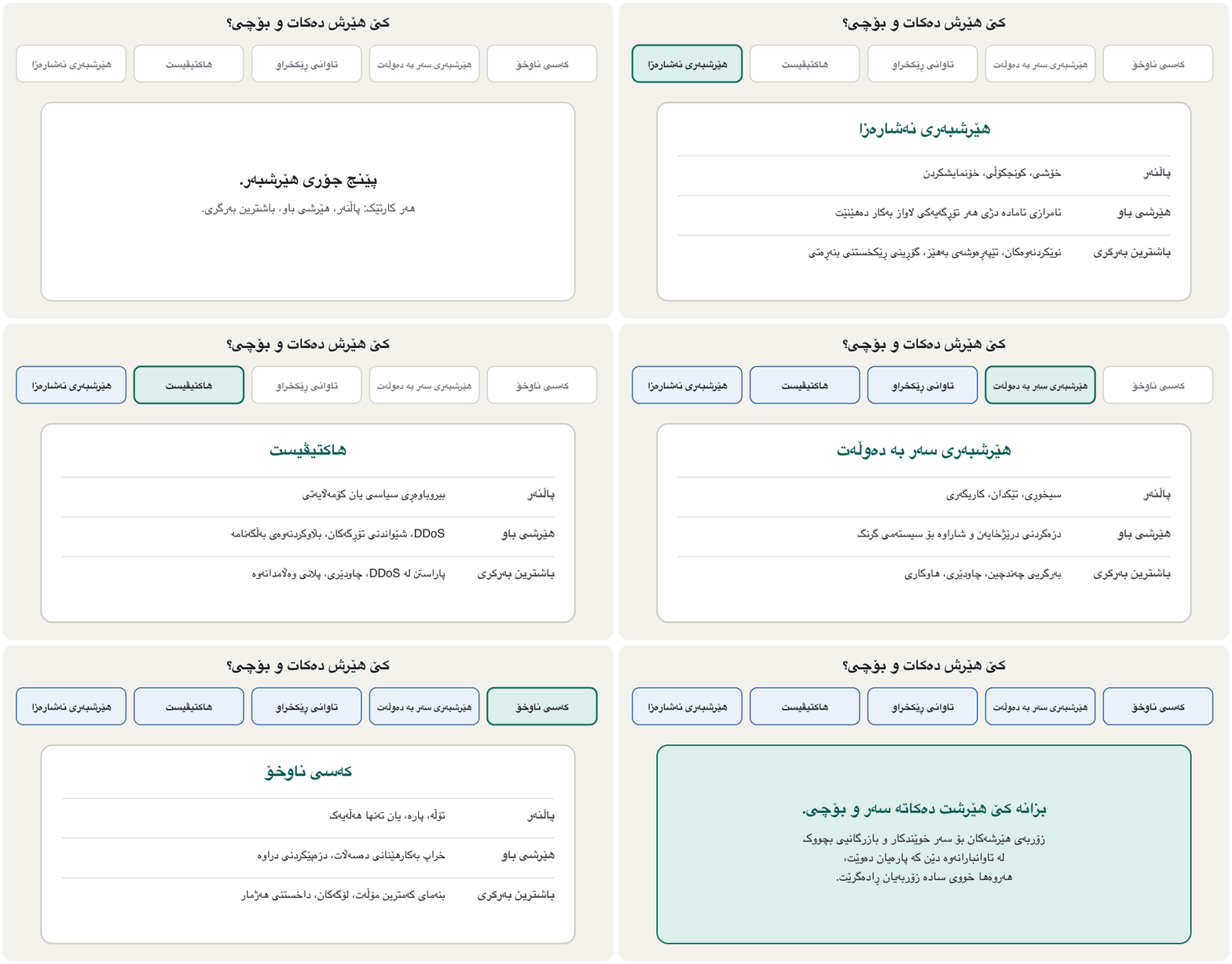
The classic three-part list is decades old. Today security professionals (for example in the CompTIA Security+ certificate) use a longer list of threat actors: anyone who causes a security event that affects others, usually on purpose. Here are the main ones, with the classic name that is closest:
لیستە کلاسیکییە سێبەشییەکە چەندین دەیە کۆنە. ئەمڕۆ پسپۆڕانی (بۆ نموونە لە بڕوانامەی CompTIA Security+) لیستێکی درێژتری بەکار دەهێنن: هەر کەسێک کە ڕووداوێکی دروست دەکات کە کار لە ئەوانی تر دەکات، زۆرجار بە ئەنقەست. ئەمانە سەرەکیترینیانن، لەگەڵ نزیکترین ناوی کلاسیکی:
| Actor | Typical motiveپاڵنەری باو | Skill and resourcesشارەزایی و سەرچاوە | Closest classic kindنزیکترین جۆری کلاسیکی |
|---|---|---|---|
| Unskilled attacker ('script kiddie'): runs ready-made tools without understanding them: ئامرازی ئامادە بەکار دەهێنێت بەبێ ئەوەی لێیان تێبگات | fun, curiosity, showing offخۆشی، کونجکۆڵی، خۆنمایشکردن | low skill, little money; gives up if the tool failsشارەزایی کەم، پارەی کەم؛ ئەگەر ئامرازەکە شکستی هێنا واز دەهێنێت | amateurs and crackersئەماتۆر و کراکەر |
| Hacktivist: attacks for a political or social cause: بۆ ئامانجێکی سیاسی یان کۆمەڵایەتی دەکات | beliefs, publicity, protestبیروباوەڕ، دەنگدانەوە، ناڕەزایی | often skilled, limited money; DDoS, defacing websites, leaking documentsزۆرجار شارەزا، پارەی سنووردار؛ DDoS، شێواندنی ، بڵاوکردنەوەی بەڵگەنامە | (new)(نوێ) |
| Organised crime: criminal groups that work like businessesتاوانی ڕێکخراو: گرووپی تاوانکار کە وەک کۆمپانیا کار دەکەن | moneyپارە | high skill, a lot of money, specialised roles; ransomware, phishing, fraudشارەزایی بەرز، پارەی زۆر، ڕۆڵی پسپۆڕانە؛ ، ، فێڵ | career criminalsتاوانباری پیشەیی |
| Nation-state actor: works for, or is supported by, a government: بۆ حکومەتێک کار دەکات یان پشتگیریی حکومەتێکی لە پشتە | spying, sabotage, influence, warسیخوڕی، تێکدان، کاریگەری، جەنگ | very high skill, huge resources, patient: may hide inside a network for monthsشارەزایی زۆر بەرز، سەرچاوەی زۆر گەورە، بە ئارام: لەوانەیە بۆ چەند مانگێک لە ناو خۆی بشارێتەوە | (new)(نوێ) |
| Insider: someone who has, or had, authorized accessکەسی ناوخۆ (): کەسێک کە دەستڕاگەیشتنی ڕێگەپێدراوی هەیە یان هەیبووە | revenge, money, or simply a mistakeتۆڵە، پارە یان تەنها هەڵەیەک | medium skill, but already knows where the valuable data isشارەزایی مامناوەند، بەڵام پێشتر دەزانێت بەنرخ لە کوێیە | dishonest and disgruntled insiders (previous lesson)کەسانی ناوخۆی ناپاک و ناڕازی (وانەی پێشوو) |
Today's threat actorsهێرشبەرەکانی ئەمڕۆ
Mapping the actors, and shadow ITنەخشەی هێرشبەرەکان و shadow IT
The map places the five actors by skill and by resources (money, people, time). Notice the insider: little skill is needed when you are already inside.
نەخشەکە پێنج بەپێی شارەزایی و سەرچاوە (پارە، خەڵک، کات) دادەنێت. سەرنجی کەسی ناوخۆ بدە: کاتێک پێشتر لە ناوەوە بیت، شارەزاییەکی کەم بەسە.
Security+ also lists shadow IT: staff who set up their own cloud services or devices without asking the IT department. They do not mean harm, but systems nobody manages (no updates, no backups) become easy doors for the real attackers.
Security+ هەروەها shadow IT دەنووسێت: کارمەندانێک کە بەبێ پرسیار لە بەشی IT خزمەتگوزاریی هەور یان ئامێری تایبەت بە خۆیان دادەنێن. مەبەستیان زیان نییە، بەڵام ئەو سیستەمانەی کەس بەڕێوەیان نابات (بێ ، بێ ) دەبنە دەرگای ئاسان بۆ ڕاستەقینە.
Today's threat actorsهێرشبەرەکانی ئەمڕۆ
Three well-documented casesسێ ڕووداوی باش بەڵگەدار
A nation-state level attack: Stuxnet (found in 2010). This malware secretly changed the programs that controlled machines in a uranium-enrichment plant, so that they damaged themselves while the screens showed normal values. No government has officially claimed it, but researchers who analysed it estimated that a team of about ten people needed two to three years to build it, and concluded that only a state could have been behind it. It is often called the first cyberweapon to damage industrial equipment.
لە ئاستی دەوڵەتدا: Stuxnet (لە 2010 دۆزرایەوە). Stuxnet، کە ، بە نهێنی ئەو بەرنامانەی دەگۆڕی کە ئامێرەکانی کارگەیەکی پیتاندنی یۆرانیۆمیان کۆنترۆڵ دەکرد، بە شێوەیەک کە خۆیان تێک دەدا لە کاتێکدا شاشەکان بەهای ئاساییان پیشان دەدا. هیچ حکومەتێک بە فەرمی خۆی بە خاوەنی نەناساندووە، بەڵام ئەو توێژەرانەی شیکارییان بۆ کرد خەمڵاندیان کە تیمێکی نزیکەی دە کەسی پێویستی بە دوو تا سێ ساڵ بووە بۆ دروستکردنی و گەیشتنە ئەو ئەنجامەی کە تەنها دەوڵەتێک دەتوانێت لە پشتیەوە بێت. زۆرجار پێی دەوترێت یەکەم چەکی کە زیانی بە ئامێری پیشەسازی گەیاندبێت.
Why Stuxnet needed a state-level team: discovery, multiple zero-days, stolen certificates, USB spread across air gaps, and faking normal readings while machines destroyed themselves.
بۆچی Stuxnet تیمێکی دەوڵەتی دەویست: دۆزینەوەکەی، چەند ، ، بڵاوبوونەوە بە بۆ ئامێرە دابڕاوەکان و پیشاندانی ژمارەی ئاسایی کاتێک ئامێرەکان خۆیان تێکدەدا.
Segment 0:00-10:47: discovery, four zero-days, stolen certificates, USB/air-gap spread, man-in-the-middle on the controllers with replayed normal readings, physical damage, worldwide infection and the centrifuge targeting clue. Stops just before the speculation about who built it; the lesson notes no government officially claimed it.
لە 0:00 تا 10:47 پەخش دەبێت: دۆزینەوەکەی، چوار ، ، بڵاوبوونەوە بە بۆ ئامێرە دابڕاوەکان (کە بە نەبەستراون)، لەسەر PLCـەکان بە دووبارە پیشاندانی ژمارە ئاساییەکان، زیانی فیزیکی، بڵاوبوونەوە لە هەموو جیهاندا و ئەو نیشانەیەی دەریخست ئامانجەکە سەنتریفیوجەکان بوون. پێش گریمانەکان دەربارەی ئەوەی کێ دروستی کرد ڕادەوەستێت؛ وانەکە دەڵێت هیچ حکومەتێک بە فەرمی خۆی بە خاوەنی نەناساندووە.
Criminal businesses and hacktivistsبازرگانیی تاوانکار و هاکتیڤیستەکان
Organised crime: ransomware groups. Groups such as LockBit worked like companies with separate roles: some members wrote the ransomware, others broke into victims, others negotiated the ransom. In 2024 the FBI and its international partners dealt LockBit, then one of the world's most active ransomware groups, a serious blow. Why victims should report such attacks, and whether to pay, is discussed in Should a victim pay?.
تاوانی ڕێکخراو: گرووپەکانی . گرووپی وەک LockBit وەک کۆمپانیا بە ڕۆڵی جیاواز کاریان دەکرد: هەندێک ئەندام دەنووسی، هەندێکی تر دزەیان دەکردە ناو قوربانییەکانەوە و هەندێکی تریش لەسەر بارمتەکە دانوستانیان دەکرد. لە 2024 FBI و هاوبەشە نێودەوڵەتییەکانی گورزێکی توندیان لە LockBit دا، کە ئەوکات یەکێک بوو لە چالاکترین گرووپەکانی لە جیهاندا. بۆچی قوربانی دەبێت ئەم جۆرە ڕاپۆرت بکات و ئایا پارە بدات یان نا، لە ئایا قوربانی پارە بدات؟ باس کراوە.
Hacktivists: DDoS against public services. ENISA, the EU cybersecurity agency, found in its Threat Landscape 2026 (covering 2025) that public administration was the most targeted sector (32% of cases), and that ideology-driven DDoS attacks, mostly by hacktivists reacting to world events, made up 82% of the recorded events against public administrations. Such attacks rarely steal data, but they take services offline and get attention. What this means for a whole country is taught in Four kinds of threat to a nation.
: DDoS دژی خزمەتگوزارییە گشتییەکان. ENISA، دەزگای یەکێتیی ئەورووپا، لە ڕاپۆرتی دیمەنی 2026ـدا (کە ساڵی 2025 دەگرێتەوە) دۆزییەوە کە دامەزراوە گشتییەکان زیاترین ئامانجی بوون (32%ی حاڵەتەکان) و کە DDoS کە بیروباوەڕ هانیان دەدات، زۆربەیان لەلایەن وەک کاردانەوە بەرامبەر ڕووداوەکانی جیهان، 82%ی ئەو ڕووداوانە بوون کە دژی دامەزراوە گشتییەکان تۆمار کران. ئەم جۆرە کەم جار دەدزن، بەڵام خزمەتگوزارییەکان لە کار دەخەن و سەرنج ڕادەکێشن. ئەمە بۆ هەموو وڵاتێک چ واتایەکی هەیە لە چوار جۆری هەڕەشە بۆ سەر وڵات فێر دەکرێت.
Notice how different the three are: years of preparation by a state, a criminal business that wants money, and a group that wants attention. Each one calls for a different response, which is why defenders first ask who might attack and why.
سەرنج بدە سێیەکە چەند جیاوازن: ساڵانێک ئامادەکاری لەلایەن دەوڵەتێکەوە، بازرگانییەکی تاوانکار کە پارەی دەوێت و گرووپێک کە سەرنجی دەوێت. هەریەکەیان وەڵامێکی جیاوازی پێویستە، لەبەر ئەمەیە بەرگریکاران سەرەتا دەپرسن کێ لەوانەیە بکات و بۆچی.
Motives: why people attackپاڵنەرەکان: بۆچی خەڵک هێرش دەکەن
Behind every attack there is a reason. The common motives are:
لە پشت هەموو هۆکارێک هەیە. پاڵنەرە باوەکان ئەمانەن:
- Money (financial gain): ransomware, fraud, selling stolen data. The most common motive by far.
- Spying (espionage): stealing state secrets or a company's intellectual property, its designs, plans and source code (see What does cybersecurity protect?).
- Disruption and chaos: stopping services, sometimes as part of a conflict between countries.
- Beliefs (ideology, politics): protest and publicity for a cause.
- Revenge: an angry employee or ex-partner.
- Fun, challenge, fame: curiosity and showing off, the classic cracker.
- پارە (قازانجی دارایی): ، فێڵ، فرۆشتنی دزراو. بە جیاوازییەکی زۆر باوترین پاڵنەرە.
- سیخوڕی (): دزینی نهێنییەکانی دەوڵەت یان کۆمپانیایەک، دیزاین، پلان و (بڕوانە ئاسایشی سایبەر چی دەپارێزێت؟).
- تێکدان و ئاژاوە: ڕاگرتنی خزمەتگوزارییەکان، هەندێک جار وەک بەشێک لە ململانێی نێوان وڵاتان.
- بیروباوەڕ (ئایدیۆلۆژیا، سیاسەت): ناڕەزایی و دەنگدانەوە بۆ ئامانجێک.
- تۆڵە: فەرمانبەرێکی تووڕە یان هاوبەشێکی پێشوو.
- خۆشی، تەحەدا، ناوبانگ: کونجکۆڵی و خۆنمایشکردن، کراکەری کلاسیکی.
Know your attacker, choose your defenceهێرشبەرەکەت بناسە، بەرگرییەکەت هەڵبژێرە
Professionals describe any attacker with three questions: Inside or outside? (insiders already have access; outsiders must find a way in.) How many resources? (money, people and time.) How sophisticated? (running a downloaded tool, or writing new tools?)
پسپۆڕان هەر بە سێ پرسیار وەسف دەکەن: لە ناوەوەیە یان لە دەرەوە؟ (کەسانی ناوخۆ پێشتر دەستیان دەگات؛ کەسانی دەرەکی دەبێت ڕێگەیەک بۆ چوونە ژوورەوە بدۆزنەوە.) چەند سەرچاوەی هەیە؟ (پارە، خەڵک و کات.) چەند پێشکەوتووە؟ (ئامرازێکی دابەزێنراو بەکار دەهێنێت، یان ئامرازی نوێ دەنووسێت؟)
The answers tell you where to spend your effort. A small shop, a student or a clinic is very unlikely to be the target of a nation-state. Its realistic attackers are criminals who want money and unskilled attackers with automatic tools, and simple habits stop most of them: updates, strong unique passwords with multi-factor authentication, backups, and staff who recognise phishing. A ministry, a bank or a power company must also plan for skilled, patient attackers, with layered defences and constant monitoring.
وەڵامەکان پێت دەڵێن هەوڵەکەت لە کوێ خەرج بکەیت. دوکانێکی بچووک، خوێندکارێک یان نۆرینگەیەک ئەگەری زۆر کەمە ببێتە ئامانجی . ڕاستەقینەی ئەوان تاوانبارانن کە پارەیان دەوێت و بە ئامرازی خۆکار، هەروەها خووی سادە زۆربەیان ڕادەگرێت: ، بەهێز و تایبەت لەگەڵ ، و کارمەندانێک کە دەناسنەوە. وەزارەتێک، بانکێک یان کۆمپانیایەکی کارەبا دەبێت پلانیش بۆ شارەزا و بە ئارام دابنێت، بە و چاودێریی بەردەوام.
Common mistakesهەڵە باوەکان
| Mistakeهەڵە | Why it is wrongبۆچی هەڵەیە | Correct ideaبیرۆکەی دروست |
|---|---|---|
| Picturing every attacker as a lone genius in a hoodieوێناکردنی هەموو وەک بلیمەتێکی تەنها | Most attacks today come from criminal businesses and automatic toolsزۆربەی ئەمڕۆ لە بازرگانیی تاوانکار و ئامرازی خۆکارەوە دێن | Think of organised groups with roles, and of tools that attack everyoneبیر لە گرووپی ڕێکخراو بە ڕۆڵی جیاواز و لە ئامرازێک بکەرەوە کە دەکاتە سەر هەمووان |
| 'Only big companies are worth attacking'«تەنها کۆمپانیا گەورەکان شایەنی » | Opportunistic attackers hit whatever is weak, big or small هەلپەرست لە هەر شتێک دەدەن کە لاواز بێت، گەورە بێت یان بچووک | Weakness, not size, attracts most attacksلاوازی، نەک قەبارە، زۆربەی ڕادەکێشێت |
| Forgetting insidersلەبیرکردنی کەسانی ناوخۆ | Insiders already have access, and many incidents are honest mistakesکەسانی ناوخۆ پێشتر دەستیان دەگات و زۆر ڕووداو هەڵەی بێ مەبەستن | Least privilege, logs, and closing accounts when people leave، و داخستنی هەژمار کاتێک خەڵک دەڕۆن |
| Thinking curiosity makes an attack harmlessوا بزانیت کونجکۆڵی بێزیان دەکات | The 1988 worm was an experiment and still stopped thousands of computersکرمەکەی 1988 تاقیکردنەوە بوو و هێشتا هەزاران ڕاگرت | Without permission it is a crime, whatever the reasonبەبێ مۆڵەت تاوانە، هۆکارەکە هەرچییەک بێت |
| Quoting general crime statistics for computer crimeهێنانەوەی ئامارە گشتییەکانی تاوان بۆ | Computer crime is counted separately بە جیا دەژمێردرێت | Quote the IC3 Internet Crime Report, with its year, and remember unreported crimeڕاپۆرتی IC3 لەگەڵ ساڵەکەی بهێنەوە و تاوانی ڕاپۆرتنەکراویش لەبیر مەکە |
Exercisesڕاهێنانەکان
For each case, name the most likely threat actor and motive: (a) the payment app 'Aram Pay' is locked by ransomware and the criminals demand cryptocurrency; (b) a teenager uses a free online tool to deface his old school's website and posts a screenshot; (c) a cashier who was fired logs in with a colleague's password that night and deletes sales records; (d) for two years, unknown attackers quietly read the e-mails of a ministry's negotiation team; (e) after a court decision, many government websites are slowed down by traffic floods and a group claims responsibility.
بۆ هەر حاڵەتێک ناوی ئەگەرییترین و پاڵنەر بهێنە: (أ) پارەدانی «Aram Pay» بە قفڵ دەکرێت و تاوانبارەکان داوای دەکەن؛ (ب) هەرزەکارێک ئامرازێکی ئۆنلاینی بێبەرانبەر بەکار دەهێنێت بۆ شێواندنی قوتابخانە کۆنەکەی و بڵاو دەکاتەوە؛ (ج) کاشێرێک کە دەرکراوە، هەمان شەو بە هاوکارێکی دەچێتە ژوورەوە و تۆماری فرۆشتنەکان دەسڕێتەوە؛ (د) بۆ ماوەی دوو ساڵ، نەناسراو بە بێدەنگی تیمی دانوستانی وەزارەتێک دەخوێننەوە؛ (هـ) دوای بڕیارێکی دادگا، زۆر حکومی بە لافاوی هاتوچۆ خاو دەکرێنەوە و گرووپێک بەرپرسیارێتی دەگرێتە ئەستۆ.
Show answerوەڵامەکە پیشان بدە
- (a) Organised crime; money.
- (b) Unskilled attacker; fun and showing off (the classic amateur or cracker).
- (c) Insider (disgruntled); revenge. Also a process failure: his access should have been closed when he was fired, and shared passwords make tracing harder.
- (d) Most likely a nation-state actor; espionage (long, patient, hidden, and no money demanded).
- (e) Hacktivists; beliefs and protest (DDoS plus a public claim).
- (أ) تاوانی ڕێکخراو؛ پارە.
- (ب) ؛ خۆشی و خۆنمایشکردن (ئەماتۆر یان کراکەری کلاسیکی).
- (ج) کەسی ناوخۆ (ناڕازی)؛ تۆڵە. هەروەها شکستی ڕێکارێکە: دەبوو دەستڕاگەیشتنەکەی کاتی دەرکردنی دابخرایە و هاوبەش شوێنپێهەڵگرتن قورستر دەکات.
- (د) ئەگەری زۆرتر ؛ سیخوڕی (درێژخایەن، بە ئارام، شاراوە و بێ داوای پارە).
- (هـ) ؛ بیروباوەڕ و ناڕەزایی (DDoS لەگەڵ ڕاگەیاندنی گشتی).
Match each classic kind from the course (amateur, cracker, career criminal) with the modern threat actor it is closest to, and say which modern actors have no classic name.
هەر جۆرێکی کلاسیکیی کۆرسەکە (ئەماتۆر، کراکەر، تاوانباری پیشەیی) بە نزیکترین نوێ ببەستەوە و بڵێ کام نوێ ناوی کلاسیکییان نییە.
Show answerوەڵامەکە پیشان بدە
Amateur → an opportunistic insider or an unskilled attacker; cracker → unskilled attacker (or, if skilled and malicious, a black-hat hacker); career criminal → organised crime. Hacktivists and nation-state actors have no place in the classic list, and the modern view also separates insiders who make honest mistakes.
ئەماتۆر ← کەسێکی ناوخۆی هەلپەرست یان ؛ کراکەر ← (یان، ئەگەر شارەزا و خراپەکار بێت، )؛ تاوانباری پیشەیی ← تاوانی ڕێکخراو. و لە لیستە کلاسیکییەکەدا جێیان نییە و بۆچوونی نوێ کەسانی ناوخۆ کە هەڵەی بێ مەبەست دەکەن بە جیا دادەنێت.
Summary and reviewپوختە و پێداچوونەوە
- Computer crime is any crime that involves computers or is aided by them; the computer can be the target or the tool.
- The FBI's IC3 counts reported internet crime: over one million complaints and about 20.9 billion dollars in 2025, and the real totals are higher.
- Classic kinds: amateurs (easy access), crackers (challenge, curiosity), career criminals (personal gain).
- Today's actors: unskilled attackers, hacktivists, organised crime, nation-states and insiders (plus shadow IT); motives include money, espionage, disruption, beliefs, revenge and fun.
- Describe attackers by inside/outside, resources and sophistication, and defend first against the most likely ones.
- هەر تاوانێکە کە تێیدا بەشدار بێت یان یارمەتیی بدات؛ دەکرێت ئامانج یان ئامراز بێت.
- IC3ـی FBI تاوانی ڕاپۆرتکراوی دەژمێرێت: زیاتر لە یەک ملیۆن سکاڵا و نزیکەی 20.9 ملیار دۆلار لە 2025 و کۆی ڕاستەقینە زیاترە.
- جۆرە کلاسیکییەکان: ئەماتۆر (دەستڕاگەیشتنی ئاسان)، کراکەر (تەحەدا، کونجکۆڵی)، تاوانباری پیشەیی (قازانجی کەسی).
- ئەمڕۆ: ، ، تاوانی ڕێکخراو، دەوڵەتەکان و کەسانی ناوخۆ (لەگەڵ shadow IT)؛ پاڵنەرەکان پارە، سیخوڕی، تێکدان، بیروباوەڕ، تۆڵە و خۆشی دەگرنەوە.
- بەپێی ناوەوە/دەرەوە، سەرچاوە و پێشکەوتوویی وەسف بکە و سەرەتا بەرگری لە ئەگەرییترینەکانیان بکە.
What motivates a cracker, according to the course?بەپێی کۆرسەکە، چی کراکەر هان دەدات؟
The challenge and curiosity: they see breaking in as a fun adventure.
تەحەدا و کونجکۆڵی: چوونە ژوورەوە بە زۆر وەک سەرکێشییەکی خۆش دەبینن.
Which modern threat actor usually has the most resources?کام هێرشبەری نوێ زۆرجار زیاترین سەرچاوەی هەیە؟
The nation-state actor: large teams, money and time, as the Stuxnet case shows.
: تیمی گەورە، پارە و کات، وەک ڕووداوی Stuxnet پیشانی دەدات.
Why is an insider dangerous even with only medium skill?بۆچی کەسی ناوخۆ مەترسیدارە تەنانەت بە شارەزاییەکی مامناوەندیش؟
Because they already have access and know where the valuable data is and how the controls work.
چونکە پێشتر دەستیان دەگات و دەزانن بەنرخ لە کوێیە و کۆنترۆڵەکان چۆن کار دەکەن.
Lesson complete!وانەکە تەواو بوو!
Well done. Review the key terms, then go on to the next lesson.دەستخۆش. سەیرێکی زاراوە سەرەکییەکان بکەرەوە، پاشان بڕۆ بۆ وانەی داهاتوو.
Key termsزاراوە سەرەکییەکان
Achieving Security: Goals, Policy, Mechanisms and Assuranceگەیشتن بە ئاسایش: ئامانج، سیاسەت، میکانیزم و دڵنیابوونەوە لە ئاسایش
Related lecturesوانە پەیوەندیدارەکان
- What Is Cybersecurity?ئاسایشی سایبەر چییە؟
- Threats, Vulnerabilities, Attacks and Riskهەڕەشەکان، خاڵە لاوازەکان، هێرشەکان و مەترسی
- Cyber Ethics and Ethical Hackingئەخلاقی سایبەری و هاککردنی ئەخلاقی
- Computer-Crime Laws: Budapest, the CFAA, the UK and the Law at Homeیاساکانی تاوانی سایبەری: بوداپێست، CFAA، بەریتانیا و یاسا لە وڵاتی خۆمان
- Malware: Viruses, Worms, Trojans, Ransomware and Spywareنەرمەواڵەی زیانبەخش: ڤایرۆسەکانی کۆمپیوتەر، کرمەکان، ئەسپەکانی ترۆیا، نەرمەواڵەی بارمتەگر و نەرمەواڵەی سیخوڕی
- Ransomware: WannaCry, NotPetya and Recent Attacksنەرمەواڵەی بارمتەگر: WannaCry، NotPetya و هێرشە نوێیەکان
- Cybersecurity as the Frontline of National Securityئاسایشی سایبەر وەک هێڵی پێشەوەی ئاسایشی نیشتیمانی
References and further readingسەرچاوەکان و خوێندنەوەی زیاتر
- FBI Internet Crime Complaint Center: 2025 Internet Crime Report (published April 2026)
- FBI Internet Crime Complaint Center: 2024 Internet Crime Report (letter on LockBit and decryption keys)
- ENISA Threat Landscape (2026 edition, published 22 September 2026)
- Professor Messer: Threat Actors – CompTIA Security+ SY0-701 – 2.1
- CISA: Defining Insider Threats
- IEEE Spectrum: The Real Story of Stuxnet
- Lawrence Livermore National Laboratory: The 1988 Morris worm, the Internet's first cyberattack
This lecture is a first edition. The Kurdish text and terminology are waiting for review by Kurdish IT teachers.ئەم وانەیە چاپی یەکەمە. دەقە کوردییەکە و زاراوەکانی چاوەڕێی پێداچوونەوەی مامۆستایانی کوردی بواری IT ن.