Chapterبەش 3 · Lectureوانە 3.7
Computer-Crime Laws: Budapest, the CFAA, the UK and the Law at Homeیاساکانی تاوانی سایبەری: بوداپێست، CFAA، بەریتانیا و یاسا لە وڵاتی خۆمان
When does using a computer become a crime? The Budapest Convention, the US Computer Fraud and Abuse Act with the Van Buren decision, the UK Computer Misuse Act, and — stated carefully — the situation in Iraq and the Kurdistan Region.
بەکارهێنانی کەی دەبێتە تاوان؟ ، ئەمریکا لەگەڵ بڕیاری Van Buren، بەریتانیا و — بە وردی — دۆخی عێراق و هەرێمی کوردستان.
What you will learnچی فێر دەبیت
- Explain why computers needed special criminal laws, and why permission (authorisation), not ownership, is the key test.
- Describe the three parts of the Budapest Convention and list the crimes it asks every party to have.
- Name the main CFAA offences and penalties, and explain how Van Buren (2021) and the 2022 policy narrowed the law.
- Read the ladder of offences in the UK Computer Misuse Act.
- State accurately what applies in Iraq and the Kurdistan Region today.
- Apply the laws to simple cases and choose the safe, legal action.
- ڕوونی بکەیتەوە بۆچی پێویستی بە یاسای تاوانکاریی تایبەتی بوو و بۆچی ، نەک خاوەندارێتی، پێوەرە سەرەکییەکەیە.
- سێ بەشەکەی وەسف بکەیت و ئەو تاوانانە بژمێریت کە داوا لە هەموو وڵاتێکی بەشدار دەکات هەیبێت.
- تاوان و سزا سەرەکییەکانی ناو ببەیت و ڕوونی بکەیتەوە Van Buren (٢٠٢١) و سیاسەتی ٢٠٢٢ چۆن یاساکەیان تەسک کردەوە.
- پەیژەی تاوانەکانی بەریتانیا بخوێنیتەوە.
- بە وردی بڵێیت ئەمڕۆ لە عێراق و هەرێمی کوردستان چی کار پێدەکرێت.
- یاساکان لەسەر دۆسیەی سادە جێبەجێ بکەیت و کاری سەلامەت و یاسایی هەڵبژێریت.
Why do we need computer-crime laws?بۆچی پێویستمان بە یاساکانی تاوانی سایبەری هەیە؟
A computer-crime law does four jobs. It says which acts with computers are crimes, it sets the penalties, it gives the police powers to collect digital evidence, and it lets countries help each other. In the earlier lessons you met ethical hacking and data-protection laws such as the GDPR. This lesson is about the criminal side: when does touching someone else's computer become a crime?
یاسایەکی چوار کار دەکات. دیاری دەکات کام کار بە تاوانە، سزاکان دادەنێت، دەسەڵات بە پۆلیس دەدات بۆ کۆکردنەوەی بەڵگەی دیجیتاڵی و ڕێگە دەدات وڵاتان یارمەتیی یەکتر بدەن. لە وانەکانی پێشوودا و یاساکانی وەک ناسی. ئەم وانەیە دەربارەی لایەنی تاوانکارییە: کەی دەستدان لە کەسێکی تر دەبێتە تاوان؟
Why do we need computer-crime laws?بۆچی پێویستمان بە یاساکانی تاوانی سایبەری هەیە؟
Why old laws were not enoughبۆچی یاسا کۆنەکان بەس نەبوون
Old laws were written for a physical world. Theft meant taking an object away, and breaking in meant forcing a door. With computers, a thief can copy your data and leave the original in place, and an intruder can enter a system from another continent without breaking anything you can see. So countries wrote special laws.
یاسا کۆنەکان بۆ جیهانێکی ماددی نووسرابوون. دزی واتای بردنی شتێک بوو و چوونە ژوورەوەی بەزۆر واتای شکاندنی دەرگایەک. بەڵام بە ، دزێک دەتوانێت کۆپی بکات و ئەسڵەکە لە شوێنی خۆی بهێڵێتەوە، هەروەها کەسێک دەتوانێت لە کیشوەرێکی ترەوە بچێتە ناو سیستەمێکەوە بێ ئەوەی هیچ شتێک بشکێنێت کە بە چاو ببینرێت. بۆیە وڵاتان یاسای تایبەتیان نووسی.
Imagine a shop in the bazaar. The old rule punishes anyone who breaks the lock at night. Now a thief makes a copy of the key from a photo, walks in, photographs the account books and leaves. Nothing is broken and nothing is missing, yet a crime has happened. Computer-crime laws are written for this kind of entry.
دوکانێک لە بازاڕدا بهێنە بەرچاوت. یاسا کۆنەکە سزای هەر کەسێک دەدات کە بە شەو قوفڵەکە بشکێنێت. ئێستا دزێک لە وێنەیەکەوە کلیلەکە کۆپی دەکات، دەچێتە ژوورەوە، وێنەی دەفتەری حیسابەکان دەگرێت و دەڕوات. هیچ شتێک نەشکاوە و هیچ شتێکیش ون نەبووە، بەڵام تاوانێک ڕوویداوە. یاساکانی بۆ ئەم جۆرە چوونە ژوورەوەیە نووسراون.
Where the analogy stops workingسنووری ئەم نموونەیە
On the Internet the 'shop' and the 'thief' are often in different countries. That is why one country's law is not enough, and why treaties exist.
لە «دوکانەکە» و «دزەکە» زۆرجار لە دوو وڵاتی جیاوازدان. لەبەر ئەمە یاسای یەک وڵات بەس نییە و بۆیە پەیماننامەی نێودەوڵەتی هەن.
The key idea in every law: permissionبیرۆکە سەرەکییەکەی هەموو یاساکان: ڕێگەپێدان
Every law in this lesson is built around one question: did you have permission to enter this computer, or this part of it? Lawyers say authorisation. Permission comes from whoever is in charge of the system — usually its owner or the organisation that runs it. Doing something on a computer without authorisation, or beyond the access you were given, is the heart of the crime.
هەموو یاساکانی ئەم وانەیە لەسەر یەک پرسیار بنیات نراون: ئایا هەبوو بچیتە ناو ئەم ، یان ئەم بەشەی؟ لەو کەسەوە دێت کە سیستەمەکەی بە دەستە — زۆرجار خاوەنەکەی یان ئەو ڕێکخراوەی بەڕێوەی دەبات. ئەنجامدانی کارێک لەسەر بێ ، یان زیاتر لەو دەستڕاگەیشتنەی پێت دراوە، کرۆکی تاوانەکەیە.
Using a computer, an account or without the owner's permission, or going beyond the permission you have. It is a crime in most countries, even when nothing is damaged.
بەکارهێنانی کۆمپیوتەر، هەژمار یان بەبێ مۆڵەتی خاوەنەکەی، یان تێپەڕاندنی ئەو مۆڵەتەی هەتە. لە زۆربەی وڵاتاندا تاوانە، تەنانەت ئەگەر هیچ شتێک تێک نەچێت.
The Budapest Convention: one treaty for many countriesپەیماننامەی بوداپێست: یەک پەیماننامە بۆ چەندین وڵات
A cyberattack can start in one country, pass through a server in a second and hit a victim in a third. The police in each country can only work inside their own borders. The Convention on Cybercrime of the Council of Europe, usually called the Budapest Convention, was written to solve this. It opened for signature in Budapest on 23 November 2001 and came into force on 1 July 2004. It was the first international treaty on computer crime.
دەتوانێت لە وڵاتێکەوە دەست پێبکات، بە لە وڵاتێکی دووەمدا تێپەڕێت و لە وڵاتێکی سێیەمدا قوربانییەک بپێکێت. پۆلیسی هەر وڵاتێک تەنها لەناو سنووری خۆیدا دەتوانێت کار بکات. پەیماننامەی ئەنجومەنی ئەوروپا دەربارەی ، کە زۆرجار پێی دەوترێت ، بۆ چارەسەری ئەم کێشەیە نووسرا. لە ٢٣ی تشرینی دووەمی ٢٠٠١ لە بوداپێست بۆ واژووکردن کرایەوە و لە ١ی تەممووزی ٢٠٠٤ـەوە کاری پێکرا. یەکەم پەیماننامەی نێودەوڵەتی بوو بۆ تاوانی .
The Council of Europe's Convention on Cybercrime (opened for signature in Budapest in 2001), the first international treaty on computer crime. Its parties make the same acts crimes, give police powers to collect digital evidence and help each other across borders.
پەیماننامەی ئەنجومەنی ئەوروپایە دەربارەی (ساڵی ٢٠٠١ لە بوداپێست بۆ واژووکردن کرایەوە)، یەکەم پەیماننامەی نێودەوڵەتی بۆ تاوانی کۆمپیوتەری. ئەو وڵاتانەی تێیدا بەشدارن هەمان کار بە تاوان دادەنێن، دەسەڵات بە پۆلیس دەدەن بۆ کۆکردنەوەی بەڵگەی دیجیتاڵی و لە سەرووی سنوورەکانەوە یارمەتیی یەکتر دەدەن.
The treaty has three parts:
پەیماننامەکە سێ بەشی هەیە:
- The same crimes everywhere. Every party must make the same acts crimes in its own law (next screen).
- Police powers, with safeguards. Investigators may order data to be preserved quickly, demand data from providers, search and seize computer data, collect traffic data and, for serious crimes, intercept content. These powers must respect human rights.
- Help across borders. Parties answer each other's requests and keep a 24/7 contact point, so evidence can be saved before it disappears.
- هەمان تاوان لە هەموو شوێنێک. هەموو وڵاتێکی بەشدار دەبێت هەمان کار لە یاسای خۆیدا بە تاوان دابنێت (پەڕەی داهاتوو).
- دەسەڵاتی پۆلیس، لەگەڵ پاراستن. لێکۆڵەران دەتوانن فەرمان بدەن بە خێرایی بپارێزرێت، داوای لە دابینکەرانی خزمەتگوزاری بکەن، بپشکنن و دەستی بەسەردا بگرن، هاتوچۆ کۆبکەنەوە و بۆ تاوانی گەورە ناوەڕۆک بگرن. ئەم دەسەڵاتانە دەبێت ڕێز لە مافەکانی مرۆڤ بگرن.
- یارمەتیی نێوان وڵاتان. وڵاتە بەشدارەکان وەڵامی داواکارییەکانی یەکتر دەدەنەوە و خاڵێکی پەیوەندیی ٧/٢٤ ڕادەگرن، بۆ ئەوەی بەڵگە پێش ونبوون بپارێزرێت.
The Budapest Convention: one treaty for many countriesپەیماننامەی بوداپێست: یەک پەیماننامە بۆ چەندین وڵات
The crimes on the treaty's listئەو تاوانانەی لە لیستی پەیماننامەکەدان
The first part of the treaty is a shared list. Each party writes these acts into its own criminal law, so an act that is a crime in one country is a crime in the others too — and the police can ask each other for help.
بەشی یەکەمی پەیماننامەکە لیستێکی هاوبەشە. هەر وڵاتێکی بەشدار ئەم کارانە لە یاسای تاوانکاریی خۆیدا دەنووسێت، بۆ ئەوەی کارێک کە لە وڵاتێکدا تاوانە لە وڵاتانی تریشدا تاوان بێت — و پۆلیس بتوانن داوای یارمەتی لە یەکتر بکەن.
| Crime the treaty listsتاوانی ناو پەیماننامەکە | What it meansواتاکەی |
|---|---|
| Illegal accessدەستڕاگەیشتنی نایاسایی | Entering a computer system without rightچوونە ناو سیستەمێکی بێ ماف |
| Illegal interceptionگوێگرتن و گرتنی نایاسایی | Secretly capturing data while it travelsگرتنی بە نهێنی لە کاتی گواستنەوەیدا |
| Data interferenceدەستکاریکردنی | Deleting, damaging or changing dataسڕینەوە، تێکدان یان گۆڕینی |
| System interferenceتێکدانی سیستەم | Seriously hindering a system, e.g. a DDoS attackڕێگرتنی جددی لە کارکردنی سیستەمێک، بۆ نموونە هێرشی ڕێگەگرتنی دابەشکراو لە خزمەتگوزاری |
| Misuse of devicesخراپ بەکارهێنانی ئامراز | Making, selling or holding tools or stolen passwords in order to commit these crimesدروستکردن، فرۆشتن یان هەڵگرتنی ئامراز یان دزراو بە مەبەستی ئەنجامدانی ئەم تاوانانە |
| Computer-related forgery and fraudساختەکاری و فێڵکردن بە | Faking data to look genuine; tricking a system to gain moneyساختەکردنی بۆ ئەوەی ڕاستەقینە دەربکەوێت؛ فریودانی سیستەمێک بۆ بەدەستهێنانی پارە |
| Content crimesتاوانەکانی ناوەڕۆک | Child sexual abuse material; large-scale copyright infringementناوەڕۆکی دەستدرێژیی سێکسی بۆ سەر منداڵان؛ پێشێلکردنی گەورەی |
The Budapest Convention: one treaty for many countriesپەیماننامەی بوداپێست: یەک پەیماننامە بۆ چەندین وڵات
Who has joined, and the new UN treatyکێ بەشدار بووە؟ پەیماننامە نوێیەکەی نەتەوە یەکگرتووەکان
The treaty was written in Europe, but any country can be invited to join. By 2026 it had 82 parties: Papua New Guinea joined in May 2026 as the 82nd, and no later accession had been announced by October 2026. Many are outside Europe, such as the United States, Japan, Brazil and Morocco. Some large countries stayed out: India declined to join, and Russia opposes the treaty. Iraq is not a party. A first extra protocol (in force since 2006) adds racist and xenophobic acts online, and a second protocol (opened in 2022) adds rules for sharing electronic evidence.
پەیماننامەکە لە ئەوروپا نووسرا، بەڵام هەر وڵاتێک دەتوانێت بانگهێشت بکرێت بۆ بەشداربوون. لە ٢٠٢٦دا ٨٢ وڵات بەشدار بوون: پاپوا گینێی نوێ لە ئایاری ٢٠٢٦ وەک وڵاتی ٨٢ـەم بەشدار بوو و تا تشرینی یەکەمی ٢٠٢٦ هیچ بەشداربوونێکی نوێتر ڕانەگەیەنرابوو. زۆریان لە دەرەوەی ئەوروپان، وەک ئەمریکا، ژاپۆن، بەرازیل و مەغریب. هەندێک وڵاتی گەورە لە دەرەوە مانەوە: هیندستان بەشداری نەکرد و ڕووسیا دژی پەیماننامەکەیە. عێراق بەشدار نییە. پرۆتۆکۆلێکی زیادەی یەکەم (لە ٢٠٠٦ـەوە کاری پێدەکرێت) کاری ڕەگەزپەرستی و بیانیترسی لەسەر زیاد دەکات، هەروەها پرۆتۆکۆلی دووەم (لە ٢٠٢٢ کرایەوە) ڕێسا بۆ هاوبەشکردنی بەڵگەی ئەلیکترۆنی زیاد دەکات.
The United States: the Computer Fraud and Abuse Actئەمریکا: CFAA
The Computer Fraud and Abuse Act (CFAA) is the main computer-crime law of the United States. It was passed in 1986. It makes it a crime to reach a computer without authorisation, and it protects computers, networks and data from access, theft and damage. At first it guarded mainly government and bank computers. Later changes widened it to every protected computer — any computer used in trade or communication between US states or with other countries. In practice that is almost every computer connected to the Internet, even one outside the United States.
یاسای سەرەکیی لە ئەمریکا. لە ساڵی ١٩٨٦دا دەرچوو. گەیشتن بە بێ دەکاتە تاوان و ، و لە دەستڕاگەیشتن، دزی و زیان دەپارێزێت. لە سەرەتادا زیاتر حکوومەت و بانکەکانی دەپاراست. دواتر گۆڕانکارییەکان فراوانیان کرد بۆ هەموو پارێزراو — هەر کە لە بازرگانی یان پەیوەندیی نێوان ویلایەتەکانی ئەمریکا یان لەگەڵ وڵاتانی تر بەکار بێت. لە ڕاستیدا ئەمە نزیکەی هەموو دەگرێتەوە کە بە بەسترابێت، تەنانەت ئەگەر لە دەرەوەی ئەمریکاش بێت.
The main US computer-crime law (1986). It makes it a crime to access a computer without authorisation or beyond the access you were given, and to cause damage, steal data or trade in stolen passwords.
یاسای سەرەکیی ئەمریکایە بۆ تاوانی کۆمپیوتەری (١٩٨٦). بەپێی ئەم یاسایە بۆ کۆمپیوتەر یان تێپەڕاندنی ئەو دەستڕاگەیشتنەی پێت دراوە تاوانە، هەروەها زیانگەیاندن، دزینی و بازرگانیکردن بە دزراو.
The United States: the Computer Fraud and Abuse Actئەمریکا: CFAA
What the CFAA forbids (1): access, data and fraudCFAA چی قەدەغە دەکات (١): دەستڕاگەیشتن، دراوە و فێڵ
The course notes list six key provisions and one example. The law itself has seven numbered offences in section 1030(a); the six below — three on this screen and three on the next — are the ones every student should know.
تێبینییەکانی کۆرسەکە شەش بڕگەی سەرەکی و نموونەیەک ڕیز دەکەن. خودی یاساکە حەوت تاوانی ژمارەدار لە بەشی 1030(a)دا هەیە؛ ئەو شەشەی خوارەوە — سێیان لەم پەڕەیەدا و سێیان لە پەڕەی داهاتوودا — ئەوانەن کە هەموو خوێندکارێک دەبێت بیانزانێت.
| Provisionبڕگە | What it coversچی دەگرێتەوە | Exampleنموونە |
|---|---|---|
| 1. Unauthorised access١. | Entering a computer without authorisation, or going beyond the access you were given, to obtain information, commit fraud or cause damageچوونە ناو بێ ، یان تێپەڕاندنی ئەو دەستڕاگەیشتنەی پێت دراوە، بۆ بەدەستهێنانی زانیاری، فێڵکردن یان زیانگەیاندن | Logging in to a classmate's e-mail with a guessed passwordچوونە ناو هاوپۆلێک بە پێشبینیکراو |
| 2. Data theft and misuse٢. دزین و خراپ بەکارهێنانی | Stealing, changing or destroying data on protected computersدزین، گۆڕین یان لەناوبردنی لەسەر پارێزراوەکان | Copying a company's customer databaseکۆپیکردنی کڕیارانی کۆمپانیایەک |
| 3. Intent to defraud٣. مەبەستی فێڵکردن | Using computers in a scheme to cheat people out of money or valueبەکارهێنانی لە پلانێکدا بۆ فریودانی خەڵک و بردنی پارە یان شتی بەنرخیان | Changing an online shop's prices to buy goods for almost nothingگۆڕینی نرخەکانی فرۆشگایەکی ئۆنلاین بۆ کڕینی کاڵا بە نزیکەی هیچ |
The United States: the Computer Fraud and Abuse Actئەمریکا: CFAA
What the CFAA forbids (2): damage, passwords and extortionCFAA چی قەدەغە دەکات (٢): زیانگەیاندن، تێپەڕەوشەکان و بارمتەگرتن
| Provisionبڕگە | What it coversچی دەگرێتەوە | Exampleنموونە |
|---|---|---|
| 4. Causing damage٤. زیانگەیاندن | Intentionally damaging systems, for example by spreading malware or virusesزیانگەیاندنی بە ئەنقەست بە سیستەمەکان، بۆ نموونە بە بڵاوکردنەوەی یان | Releasing a worm that crashes serversبڵاوکردنەوەی کە لە کار دەخات |
| 5. Trafficking in access credentials٥. بازرگانی بە | Selling or sharing passwords or similar access information meant for unauthorised useفرۆشتن یان بڵاوکردنەوەی یان زانیاریی هاوشێوەی دەستڕاگەیشتن بۆ بەکارهێنانی بێ | Selling stolen login lists on a forumفرۆشتنی لیستی دزراو لە مەکۆیەکی ئۆنلایندا |
| 6. Extortion via computer٦. بارمتەگرتن بە | Threatening to damage a computer or its data, or to leak data, to get moneyهەڕەشەکردن بە زیانگەیاندن بە یان ، یان بە بڵاوکردنەوەی ، بۆ وەرگرتنی پارە | A ransomware gang's payment demandداواکردنی پارەی دەستەیەکی |
The United States: the Computer Fraud and Abuse Actئەمریکا: CFAA
Penalties: from one year to lifeسزاکان: لە ساڵێکەوە تا هەتاهەتایی
A CFAA case can be criminal (the state prosecutes) or civil (the victim sues for money). The notes list three kinds of penalty: fines, prison and restitution — paying back the victim's losses. Prison terms depend on the offence and on whether it is a first or a repeat offence:
دۆسیەیەکی دەکرێت تاوانکاری بێت (دەوڵەت سکاڵا دەکات) یان مەدەنی (قوربانییەکە داوای پارە دەکات). تێبینییەکان سێ جۆر سزا دەژمێرن: غەرامە، زیندان و قەرەبووکردنەوە — گەڕاندنەوەی زیانەکانی قوربانییەکە. ماوەی زیندان پشت بە جۆری تاوانەکە دەبەستێت و بەوەی کە یەکەم جارە یان دووبارە کراوەتەوە:
| Offence (first time)تاوان (یەکەم جار) | Maximum prisonزۆرترین زیندان |
|---|---|
| Simple unauthorised access to obtain information سادە بۆ بەدەستهێنانی زانیاری | 1 year (5 if for money, for a crime or the information is worth over $5,000)١ ساڵ (٥ ساڵ ئەگەر بۆ پارە بێت، بۆ تاوانێکی تر بێت یان نرخی زانیارییەکە لە ٥٬٠٠٠ دۆلار زیاتر بێت) |
| Fraud; extortionفێڵکردن؛ بارمتەگرتن | 5 years٥ ساڵ |
| Knowingly damaging a protected computerزیانگەیاندنی بە ئاگاداری بە پارێزراو | 10 years١٠ ساڵ |
| National-security informationزانیاریی | 10 years١٠ ساڵ |
| Damage that causes serious bodily injuryزیانێک کە دەبێتە هۆی برینداربوونی جددیی جەستە | 20 years٢٠ ساڵ |
| Damage that knowingly or recklessly causes deathزیانێک کە بە ئاگاداری یان بە بێباکی دەبێتە هۆی مردن | Any term, up to lifeهەر ماوەیەک، تا زیندانی هەتاهەتایی |
The United States: the Computer Fraud and Abuse Actئەمریکا: CFAA
Where the CFAA is usedCFAA لە چ دۆسیەیەکدا بەکار دێت
In practice the CFAA appears in four kinds of case: hacking and unauthorised access, theft of intellectual property (designs, source code, trade secrets), extortion such as ransomware, and insider threats — people inside an organisation who misuse their access. The last kind was limited by the Van Buren decision you will meet soon.
لە ڕاستیدا لە چوار جۆر دۆسیەدا دەردەکەوێت: هاککردن و ، دزینی (دیزاین، ، نهێنیی بازرگانی)، بارمتەگرتنی وەک ، هەروەها — ئەو کەسانەی لەناو ڕێکخراوێکدان و دەستڕاگەیشتنەکەیان خراپ بەکار دەهێنن. جۆری کۆتایی بە بڕیاری Van Buren سنووردار کرا کە بەم زووانە دەیبینیت.
Criticism: when is a law too broad?ڕەخنە: یاسا کەی زۆر فراوانە؟
Critics say the CFAA's wording is too broad. A law that is too wide lets prosecutors treat small or accidental acts as serious crimes. The notes give two examples. First, 'exceeding authorised access' was once read to cover breaking a website's terms of service — for example using a fake name where the rules forbid it. Second, the case of a well-known programmer, which started a national debate about fairness.
ڕەخنەگران دەڵێن دەربڕینەکانی زۆر فراوانن. یاسایەکی زۆر فراوان ڕێگە بە داواکاری گشتی دەدات کاری بچووک یان بە هەڵە وەک تاوانی گەورە مامەڵە بکات. تێبینییەکان دوو نموونە دەدەن. یەکەم، «تێپەڕاندنی دەستڕاگەیشتنی ڕێگەپێدراو» جارێک وا لێکدرایەوە کە شکاندنی مەرجەکانی بەکارهێنانی بگرێتەوە — بۆ نموونە بەکارهێنانی ناوی ساختە لە شوێنێکدا کە ڕێساکان قەدەغەی دەکەن. دووەم، دۆسیەی بەناوبانگ کە گفتوگۆیەکی نیشتیمانیی دەربارەی دادپەروەری دەست پێکرد.
In 2011 the programmer and activist Aaron Swartz was charged after he downloaded millions of academic articles from the JSTOR library through the network of the Massachusetts Institute of Technology (MIT). Prosecutors brought 13 felony counts, 11 of them under the CFAA, which on paper carried up to 35 years in prison. He died in January 2013, before any trial, and the case was dropped. Members of Congress then proposed 'Aaron's Law' to narrow the CFAA; it did not pass.
لە ٢٠١١دا و چالاکوان Aaron Swartz تۆمەتبار کرا دوای ئەوەی ملیۆنان وتاری ئەکادیمیی لە کتێبخانەی JSTOR لە ڕێگەی پەیمانگای تەکنەلۆجیای ماساچوسێتس (MIT)ـەوە دابەزاند. داواکاری گشتی ١٣ تۆمەتی گەورەی هێنا، ١١یان بەپێی ، کە لەسەر کاغەز تا ٣٥ ساڵ زیندانی لێدەکەوتەوە. لە کانوونی دووەمی ٢٠١٣دا، پێش هەر دادگاییکردنێک، کۆچی دوایی کرد و دۆسیەکە داخرا. دواتر ئەندامانی کۆنگرێس «یاسای Aaron»ـیان پێشنیار کرد بۆ تەسککردنەوەی ؛ پەسەند نەکرا.
Criticism: when is a law too broad?ڕەخنە: یاسا کەی زۆر فراوانە؟
Van Buren (2021): a sergeant and a databaseVan Buren (٢٠٢١): ئەفسەرێک و بنکەدراوەیەک
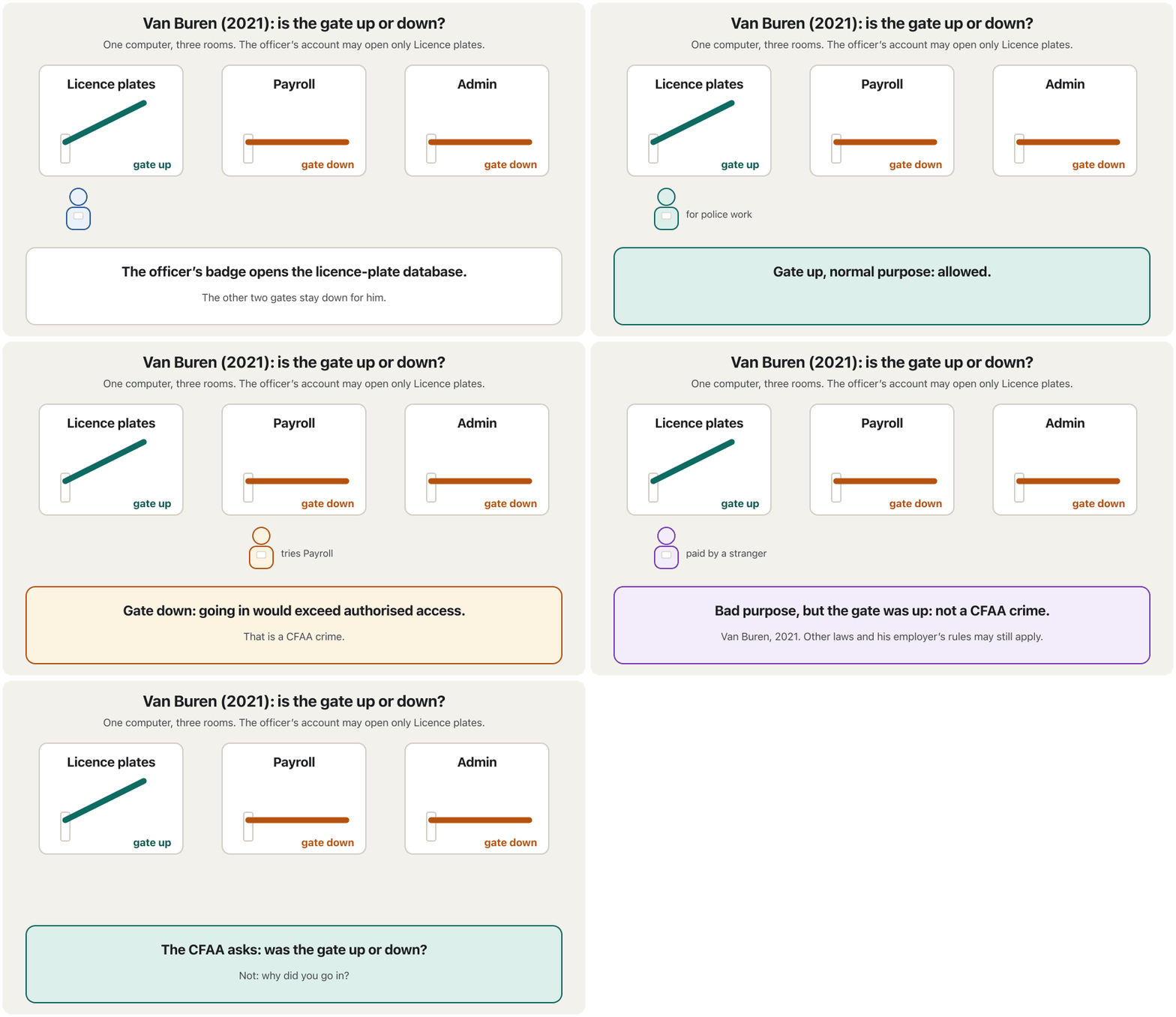
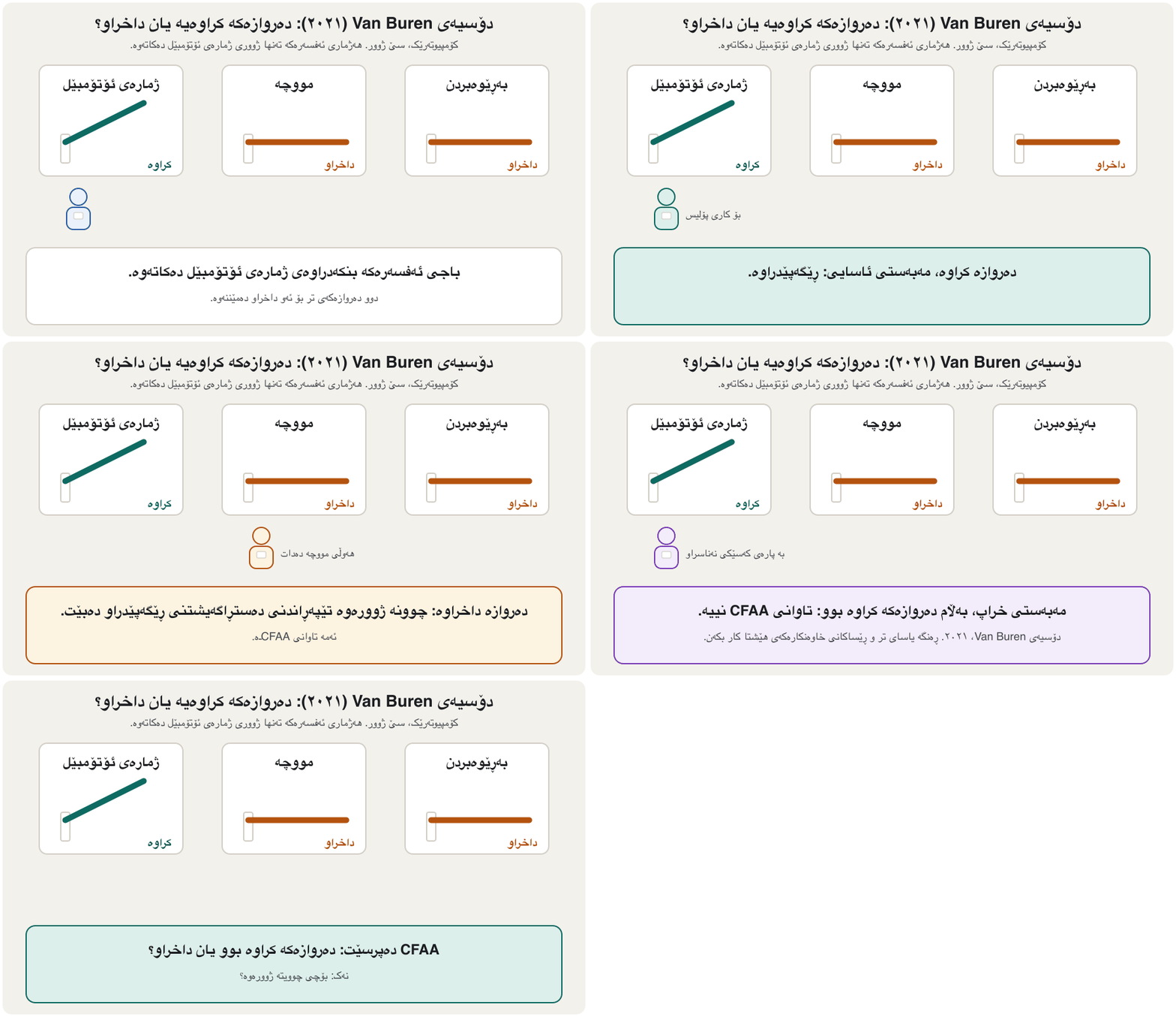
In Van Buren v. United States (3 June 2021) the US Supreme Court finally explained 'exceeds authorised access'. A police sergeant in Georgia was allowed to search a licence-plate database for police work. In an FBI sting, he searched it for a man who paid him. He was convicted under the CFAA, but the Supreme Court overturned the conviction by 6 votes to 3.
لە دۆسیەی Van Buren v. United States (٣ی حوزەیرانی ٢٠٢١)دا دادگای باڵای ئەمریکا لە کۆتاییدا «تێپەڕاندنی دەستڕاگەیشتنی ڕێگەپێدراو»ی ڕوون کردەوە. ڕێگە بە ئەفسەرێکی پۆلیس لە ویلایەتی جۆرجیا درابوو بۆ کاری پۆلیس لە ژمارەی ئۆتۆمبێلدا بگەڕێت. لە پلانێکی FBIـدا، بۆ پیاوێک گەڕا کە پارەی پێدابوو. بەپێی تاوانبار کرا، بەڵام دادگای باڵا بە ٦ دەنگ بەرامبەر ٣ تاوانبارکردنەکەی هەڵوەشاندەوە.
The majority held that you 'exceed authorised access' only when you enter parts of a computer — files, folders or databases — that are off-limits to you.
زۆرینەی دادوەرەکان بڕیاریان دا کە تەنها کاتێک «دەستڕاگەیشتنی ڕێگەپێدراو تێدەپەڕێنیت» کە بچیتە ناو ئەو بەشانەی — ، بوخچەکان یان — کە بۆ تۆ قەدەغەن.
Criticism: when is a law too broad?ڕەخنە: یاسا کەی زۆر فراوانە؟
Is the gate up or down?دەروازەکە کراوەیە یان داخراو؟
The Court's test is about gates. Think of a computer as a building with many rooms (files, folders, databases). The question is only: was the gate to this room up (open to you) or down (closed to you)? Entering a room whose gate is down is a crime. Entering a room you are allowed into, even for a bad reason, is not a CFAA crime — although it may break other laws or your employer's rules.
پێوەری دادگاکە دەربارەی دەروازەکانە. وەک باڵەخانەیەک بهێنە بەرچاوت کە چەندین ژووری هەیە (، بوخچەکان، ). پرسیارەکە تەنها ئەمەیە: ئایا دەروازەی ئەم ژوورە بۆ تۆ کراوە بوو یان داخراو؟ چوونە ژوورێک کە دەروازەکەی داخراوە تاوانە. چوونە ژوورێک کە ڕێگەت پێدراوە، تەنانەت بۆ مەبەستێکی خراپ، تاوانی نییە — هەرچەندە ڕەنگە یاسای تر یان ڕێساکانی خاوەنکارەکەت بشکێنێت.
Criticism: when is a law too broad?ڕەخنە: یاسا کەی زۆر فراوانە؟
2022: a safer place for good-faith security research٢٠٢٢: شوێنێکی سەلامەتتر بۆ توێژینەوەی ئاسایشی بە نیەتپاکی
On 19 May 2022 the US Justice Department changed its charging policy. Federal prosecutors should not charge good-faith security research under the CFAA. Good-faith research means accessing a computer only to test, investigate or fix a security flaw, in a way that avoids harm to people, and using what you learn mainly to make systems safer. The policy also lists acts that should not be charged as 'exceeding authorised access', such as making a dating profile look better than reality, using a false name on a social network, or checking sports scores on a work computer against company policy.
لە ١٩ی ئایاری ٢٠٢٢دا وەزارەتی دادی ئەمریکا سیاسەتی تۆمەتبارکردنی گۆڕی. داواکارانی گشتیی فیدراڵی نابێت توێژینەوەی بە نیەتپاکی بەپێی تۆمەتبار بکەن. توێژینەوەی بە نیەتپاکی واتە دەستڕاگەیشتن بە تەنها بۆ تاقیکردنەوە، لێکۆڵینەوە یان چاککردنی ئاسایش، بە شێوەیەک کە زیان بە خەڵک نەگەیەنێت. هەروەها دەبێت ئەوەی فێری دەبیت بە شێوەیەکی سەرەکی بۆ سەلامەتترکردنی سیستەمەکان بەکار بهێنرێت. سیاسەتەکە هەروەها ئەو کارانە دەژمێرێت کە نابێت وەک «تێپەڕاندنی دەستڕاگەیشتنی ڕێگەپێدراو» تۆمەتبار بکرێن، وەک جوانتر پیشاندانی پرۆفایلێک لە ماڵپەڕێکی ناسینی هاوسەردا لەوەی ڕاستییەکەیەتی، بەکارهێنانی ناوی ساختە لە ، یان سەیرکردنی ئەنجامی یارییەکانی وەرزش لەسەر کار بە پێچەوانەی ڕێسای کۆمپانیا.
The United Kingdom: the Computer Misuse Act 1990بەریتانیا: یاسای خراپبەکارهێنانی کۆمپیوتەر (١٩٩٠)
The United Kingdom passed the Computer Misuse Act in 1990, four years after the CFAA. It is short and is built as a ladder: each section adds a more serious intention or result, and a heavier maximum penalty.
بەریتانیا لە ساڵی ١٩٩٠دا دەرکرد، چوار ساڵ دوای . کورتە و وەک پەیژەیەک دروست کراوە: هەر بەشێک مەبەست یان ئەنجامێکی گەورەتر و زۆرترین سزای قورستر زیاد دەکات.
The United Kingdom's main computer-crime law (1990). It punishes unauthorised access to computer material, access with intent to commit further crimes, acts that impair a computer (such as DDoS attacks) and making or supplying tools for these crimes.
یاسای سەرەکیی بەریتانیایە بۆ تاوانی (١٩٩٠). سزای بۆ ناوەڕۆکی دادەنێت، هەروەها دەستڕاگەیشتن بە مەبەستی تاوانی تر، ئەو کارانەی تێک دەدەن (وەک ) و دروستکردن یان دابینکردنی ئامراز بۆ ئەم تاوانانە.
| Sectionبەش | Offenceتاوان | Maximum prisonزۆرترین زیندان |
|---|---|---|
| 1 | Unauthorised access to computer material — you must know the access is not allowed بۆ ناوەڕۆکی — دەبێت بزانیت کە دەستڕاگەیشتنەکە ڕێگەپێنەدراوە | 2 years٢ ساڵ |
| 2 | Section 1 with intent to commit a further crime, such as fraud (even if that crime never happens)بەشی ١ بە مەبەستی تاوانێکی تر، وەک فێڵکردن (تەنانەت ئەگەر ئەو تاوانە هەرگیز ڕوو نەدات) | 5 years٥ ساڵ |
| 3 | Unauthorised acts that impair a computer — malware, deleting data, DDoS attacksکاری بێ کە تێک دەدات — ، سڕینەوەی ، | 10 years١٠ ساڵ |
| 3ZA | Unauthorised acts causing, or risking, serious damage (added in 2015)کاری بێ کە دەبێتە هۆی زیانی گەورە یان ئەو زیانە (لە ٢٠١٥ زیاد کرا) | 14 years; life if human welfare or national security is seriously harmed١٤ ساڵ؛ هەتاهەتایی ئەگەر ژیانی خەڵک یان زیانی گەورەی پێبگات |
| 3A | Making, supplying or obtaining tools for these crimes — believing they will be used for crime; owning a tool alone is not an offenceدروستکردن، دابینکردن یان وەرگرتنی ئامراز بۆ ئەم تاوانانە — بە باوەڕی ئەوەی بۆ تاوان بەکار دەهێنرێت؛ تەنها هەبوونی ئامرازێک تاوان نییە | 2 years٢ ساڵ |
The United Kingdom: the Computer Misuse Act 1990بەریتانیا: یاسای خراپبەکارهێنانی کۆمپیوتەر (١٩٩٠)
Who the Act reaches, and a reform on the wayیاساکە کێ دەگرێتەوە و هەموارێک لە ڕێگادا
Two details matter. First, the Act applies when there is a significant link with the UK: the attacker, the target computer or a server on the way is there. Second, an employee who goes beyond limits that the employer has clearly set can commit a section 1 offence — so British law can reach some insider cases that the CFAA no longer covers after Van Buren.
دوو وردەکاری گرنگن. یەکەم، یاساکە کاتێک کار دەکات کە پەیوەندییەکی گرنگ بە بەریتانیاوە هەبێت: ، ئامانج یان لە ڕێگادا لەوێ بێت. دووەم، کارمەندێک کە لە سنوورێک تێدەپەڕێت کە خاوەنکارەکە بە ڕوونی دایناوە دەتوانێت تاوانی بەشی ١ ئەنجام بدات — بۆیە یاسای بەریتانی دەتوانێت هەندێک دۆسیەی ناوخۆیی بگرێتەوە کە دوای Van Buren ئیتر نایانگرێتەوە.
Three laws side by sideسێ یاسا لە تەنیشت یەکەوە
The three texts were written in different places and times, but they share the same core: entering without permission, damaging systems, and dealing in hacking tools or stolen passwords are crimes almost everywhere.
ئەم سێ دەقە لە شوێن و کاتی جیاوازدا نووسراون، بەڵام هەمان کرۆکیان هەیە: چوونە ژوورەوە بێ ، زیانگەیاندن بە سیستەمەکان و مامەڵەکردن بە ئامرازی هاککردن یان دزراو نزیکەی لە هەموو شوێنێک تاوانن.
| Questionپرسیار | Budapest Convention | US CFAACFAAـی ئەمریکا | UK Computer Misuse Act بەریتانیا |
|---|---|---|---|
| What it isچییە | International treaty (2001)پەیماننامەی نێودەوڵەتی (٢٠٠١) | National law (1986)یاسای نیشتیمانی (١٩٨٦) | National law (1990)یاسای نیشتیمانی (١٩٩٠) |
| Entering without permissionچوونە ژوورەوە بێ | Illegal accessدەستڕاگەیشتنی نایاسایی | Unauthorised access; exceeding authorised access؛ تێپەڕاندنی دەستڕاگەیشتنی ڕێگەپێدراو | Section 1بەشی ١ |
| Damaging systems, DDoSزیانگەیاندن بە سیستەم، | Data and system interferenceدەستکاریی و تێکدانی سیستەم | Causing damageزیانگەیاندن | Sections 3 and 3ZAبەشەکانی ٣ و 3ZA |
| Hacking tools, stolen passwordsئامرازی هاککردن، دزراو | Misuse of devicesخراپ بەکارهێنانی ئامراز | Trafficking in access credentialsبازرگانی بە | Section 3Aبەشی 3A |
| Highest penaltyقورسترین سزا | Set by each countryهەر وڵاتێک خۆی دیاری دەکات | Life, if death is causedهەتاهەتایی، ئەگەر ببێتە هۆی مردن | Life, for serious harm to welfare or national securityهەتاهەتایی، بۆ زیانی گەورە بە ژیانی خەڵک یان |
| Protection for researchersپاراستن بۆ توێژەران | Left to each countryبۆ هەر وڵاتێک جێهێڵراوە | Prosecutors' policy since 2022سیاسەتی داواکاری گشتی لە ٢٠٢٢ـەوە | Planned reform (2025–2026)هەمواری پلاندانراو (٢٠٢٥–٢٠٢٦) |
The law at home: Iraq and the Kurdistan Regionیاسا لە وڵاتی خۆمان: عێراق و هەرێمی کوردستان
What applies where most of our students live? Only what reliable sources confirm, as of October 2026:
لەو شوێنەی زۆربەی خوێندکارانمان تێیدا دەژین چی کار پێدەکرێت؟ تەنها ئەوەی سەرچاوە متمانەپێکراوەکان پشتڕاستی دەکەنەوە، تا تشرینی یەکەمی ٢٠٢٦:
- Iraq has no dedicated cybercrime law in force. A Combating Cybercrimes Bill (32 articles) had its first reading in parliament on 6 July 2026, but as of October 2026 it had not passed — it is still a bill, not a law. Its long history is on the next screen.
- Meanwhile, general laws are used. Courts apply older laws, mainly the Penal Code of 1969 — on fraud, threats, defamation and so on — to crimes committed with computers.
- The Kurdistan Region has its own law: Law No. 6 of 2008 on preventing the misuse of telecommunication devices. It punishes using a phone, e-mail or the Internet to threaten or insult people, to spread fabricated news, or to publish private information that harms someone. Reported penalties are six months to five years in prison or a fine of one to five million Iraqi dinars.
- Iraq is not a party to the Budapest Convention, and it had not signed the new UN convention either, so cross-border cooperation depends on other agreements.
- عێراق هیچ یاسایەکی تایبەتی بۆ نییە کە کاری پێبکرێت. پڕۆژەیاسای بەرەنگاربوونەوەی (٣٢ ماددە) لە ٦ی تەممووزی ٢٠٢٦دا یەکەم خوێندنەوەی لە پەرلەمان بۆ کرا، بەڵام تا تشرینی یەکەمی ٢٠٢٦ پەسەند نەکرابوو — هێشتا پڕۆژەیاسایە، نەک یاسا. مێژووە درێژەکەی لە پەڕەی داهاتوودایە.
- لەم ماوەیەدا یاسا گشتییەکان بەکار دەهێنرێن. دادگاکان یاسا کۆنترەکان، بە تایبەتی یاسای سزادانی ١٩٦٩ — دەربارەی فێڵکردن، هەڕەشە، ناوزڕاندن و هتد — بۆ ئەو تاوانانە بەکار دەهێنن کە بە ئەنجام دەدرێن.
- هەرێمی کوردستان یاسای خۆی هەیە: یاسای ژمارە ٦ی ساڵی ٢٠٠٨ بۆ ڕێگریکردن لە خراپ بەکارهێنانی ئامێرەکانی پەیوەندیکردن. سزای بەکارهێنانی مۆبایل، یان دەدات بۆ هەڕەشەکردن لە خەڵک یان سووکایەتیپێکردنیان، بۆ بڵاوکردنەوەی ، یان بۆ بڵاوکردنەوەی زانیاریی تایبەتی کە زیان بە کەسێک دەگەیەنێت. سزا ڕاپۆرتکراوەکان شەش مانگ تا پێنج ساڵ زیندانن یان غەرامەیەکی یەک تا پێنج ملیۆن دیناری عێراقی.
- عێراق بەشدار نییە لە و پەیماننامە نوێیەکەی نەتەوە یەکگرتووەکانیشی واژوو نەکردبوو، بۆیە هاوکاریی لەگەڵ وڵاتانی تر پشت بە ڕێککەوتنی تر دەبەستێت.
The law at home: Iraq and the Kurdistan Regionیاسا لە وڵاتی خۆمان: عێراق و هەرێمی کوردستان
A long road: Iraq's draft cybercrime lawڕێگایەکی درێژ: پڕۆژەیاسای تاوانی سایبەریی عێراق
Iraq's lawmakers have tried to pass a cybercrime law for fifteen years. A draft 'information crimes' law was first sent to parliament in 2011 and withdrawn in 2013. New versions were read in 2019 and in November 2020. In February 2021 parliament paused the bill until it was amended, after human-rights organisations warned that its vague wording could be used to punish free expression. The new Combating Cybercrimes Bill read on 6 July 2026 drew the same criticism from rights groups and journalists.
یاسادانەرانی عێراق پانزە ساڵە هەوڵ دەدەن یاسایەکی دەربکەن. پڕۆژەیاسایەکی «تاوانەکانی زانیاری» یەکەم جار لە ٢٠١١دا نێردرا بۆ پەرلەمان و لە ٢٠١٣دا کشێنرایەوە. وەشانی نوێی لە ٢٠١٩ و لە تشرینی دووەمی ٢٠٢٠دا خوێندرانەوە. لە شوباتی ٢٠٢١دا پەرلەمان پڕۆژەکەی ڕاگرت تا هەموار بکرێت، دوای ئەوەی ڕێکخراوەکانی مافی مرۆڤ ئاگاداریان کردەوە کە دەربڕینە ناڕوونەکانی دەتوانرێت بۆ سزادانی ئازادیی ڕادەربڕین بەکار بهێنرێت. پڕۆژەیاسا نوێیەکەی بەرەنگاربوونەوەی کە لە ٦ی تەممووزی ٢٠٢٦دا خوێندرایەوە هەمان ڕەخنەی لە ڕێکخراوەکانی مافی مرۆڤ و ڕۆژنامەنووسانەوە بەر کەوت.
In the Kurdistan Region, journalists' groups have criticised the use of the 2008 law in press cases, which they say belong under the region's 2007 journalism law. How laws fit into a country's whole defence is explained in Legal measures.
لە هەرێمی کوردستان، گرووپەکانی ڕۆژنامەنووسان ڕەخنەیان لە بەکارهێنانی یاسای ٢٠٠٨ لە دۆسیەکانی ڕۆژنامەگەریدا گرتووە، کە دەڵێن دەبێت لە ژێر یاسای ڕۆژنامەنووسیی ٢٠٠٧ی هەرێمدا بن. یاسا چۆن بەشێکە لە هەموو بەرگریی وڵاتێک لە ڕێکارە یاساییەکاندا ڕوون کراوەتەوە.
The law at home: Iraq and the Kurdistan Regionیاسا لە وڵاتی خۆمان: عێراق و هەرێمی کوردستان
Where to report a cybercrimeتاوانی سایبەری لە کوێ ڕاپۆرت بکەیت
If a cybercrime happens to you — threats, blackmail, a stolen account, fraud — first follow the general steps in What to do: do not reply, save the evidence, block and report. Then make an official complaint:
ئەگەر بەسەرت هات — هەڕەشە، بارمتەگرتن، دزینی هەژمار، فێڵ — سەرەتا هەنگاوە گشتییەکانی چی بکەیت جێبەجێ بکە: وەڵام مەدەرەوە، بەڵگەکان پاشەکەوت بکە، بلۆک بکە و ڕاپۆرت بکە. پاشان سکاڵایەکی فەرمی تۆمار بکە:
- The police. In the Kurdistan Region you can complain at the nearest police station or Asayish (security) office. Bring your evidence — screenshots that show the date, time and account name — and your ID.
- Helpline 119. The Interior Ministry's Directorate for Combating Violence against Women and Families runs a free, 24-hour line for threats, blackmail and other violence against women and families, including abuse online.
- The platform. Report the account in the app too; platforms can remove posts and close accounts faster than courts.
- Your bank. If money or a card is involved, call your bank at once on the number printed on your card.
- پۆلیس. لە هەرێمی کوردستان دەتوانیت لە نزیکترین بنکەی پۆلیس یان نووسینگەی ئاسایش سکاڵا تۆمار بکەیت. بەڵگەکانت — کە ڕێکەوت، کات و ناوی هەژمارەکە پیشان دەدەن — و ناسنامەکەت لەگەڵ خۆت ببە.
- هێڵی ١١٩. بەڕێوەبەرایەتیی بەرەنگاربوونەوەی توندوتیژی دژی ئافرەتان و خێزان، سەر بە وەزارەتی ناوخۆ، هێڵێکی بێبەرانبەر و ٢٤ کاتژمێریی هەیە بۆ هەڕەشە، بارمتەگرتن و توندوتیژیی تر دژی ئافرەتان و خێزانەکان، لەوانە ئازاردانی ئۆنلاین.
- پلاتفۆرمەکە. لە ئەپەکەشدا هەژمارەکە ڕاپۆرت بکە؛ پلاتفۆرمەکان دەتوانن پۆست لابەرن و هەژمار دابخەن، خێراتر لە دادگا.
- بانکەکەت. ئەگەر پارە یان کارت تێدایە، دەستبەجێ بە ژمارەی سەر کارتەکەت پەیوەندی بە بانکەکەتەوە بکە.
What this means for you as a studentئەمە بۆ تۆ وەک خوێندکارێک چ واتایەکی هەیە
The details differ from country to country, but a few rules keep you safe almost everywhere:
وردەکارییەکان لە وڵاتێکەوە بۆ وڵاتێکی تر جیاوازن، بەڵام چەند ڕێسایەک نزیکەی لە هەموو شوێنێک بە سەلامەتی دەتهێڵنەوە:
- Practise only on systems you own or on legal training labs built for practice.
- Get written permission before any test of someone else's system, with a clear scope and dates — see penetration testing.
- An open door is not an invitation. Finding a default password or an unprotected admin page does not give you the right to go in.
- Never share, buy or sell passwords or access to other people's accounts.
- Never pay for a DDoS 'booter' or any 'hacking service' — the customer commits a crime too.
- Report what you find, privately and politely, to the owner or a CERT — and do not ask for money in return.
- تەنها لەسەر ئەو سیستەمانە ڕاهێنان بکە کە هی خۆتن یان لەسەر تاقیگە یاساییەکانی ڕاهێنان کە بۆ ڕاهێنان دروست کراون.
- پێش هەر تاقیکردنەوەیەکی سیستەمی کەسێکی تر وەربگرە، بە سنوور و ڕێکەوتی ڕوون — بڕوانە تاقیکردنەوەی دزەکردن.
- دەرگای کراوە بانگهێشتنامە نییە. دۆزینەوەی یان پەڕەیەکی بەڕێوەبردنی نەپارێزراو مافی چوونە ژوورەوەت پێنادات.
- هەرگیز یان دەستڕاگەیشتن بە هەژماری کەسانی تر بڵاو مەکەرەوە، مەیکڕە و مەیفرۆشە.
- هەرگیز پارە بە «booter»ـی یان هەر «خزمەتگوزارییەکی هاککردن» مەدە — کڕیارەکەش تاوان دەکات.
- ئەوەی دەیدۆزیتەوە ڕاپۆرت بکە، بە نهێنی و بە ڕێزەوە، بۆ خاوەنەکەی یان — و لە بەرامبەردا داوای پارە مەکە.
Common mistakesهەڵە باوەکان
| Mistakeهەڵە | Why it is wrongبۆچی هەڵەیە | Correct ideaبیرۆکەی ڕاست |
|---|---|---|
| 'I didn't break anything, so it isn't hacking.'«هیچ شتێکم نەشکاند، کەواتە هاککردن نییە.» | The crime is entering without permission, not breaking a lockتاوانەکە چوونە ژوورەوەیە بێ ، نەک شکاندنی قوفڵ | Ask: was I allowed into this system or this part of it?بپرسە: ئایا ڕێگەم پێدرابوو بچمە ناو ئەم سیستەمە یان ئەم بەشەی؟ |
| 'Unauthorised means I am not the owner.'«بێ واتە من خاوەنەکەی نیم.» | Permission matters, not ownership گرنگە، نەک خاوەندارێتی | Users of labs and cafés are authorised; owners can still set limitsبەکارهێنەرانی تاقیگە و کافێکان ڕێگەپێدراون؛ خاوەنەکان دەتوانن سنوور دابنێن |
| 'Breaking a website's terms of service is a CFAA crime.'«شکاندنی مەرجەکانی بەکارهێنانی تاوانی .» | Van Buren (2021) and the 2022 policy say noVan Buren (٢٠٢١) و سیاسەتی ٢٠٢٢ دەڵێن نەخێر | The CFAA asks whether the gate was down, not why you went in دەپرسێت ئایا دەروازەکە داخراو بوو، نەک بۆچی چوویتە ژوورەوە |
| 'CFAA penalties stop at 20 years.'«سزاکانی لە ٢٠ ساڵدا دەوەستن.» | Attacks that cause death can bring life imprisonment کە دەبنە هۆی مردن دەتوانن زیندانی هەتاهەتایی بهێنن | 1 → 5 → 10 → 20 years → life, by offence١ ← ٥ ← ١٠ ← ٢٠ ساڵ ← هەتاهەتایی، بەپێی تاوانەکە |
| 'Good intentions make any test legal.'«نیەتی باش هەموو تاقیکردنەوەیەک یاسایی دەکات.» | The 2022 policy is US-only and excludes extortion; most countries have no such ruleسیاسەتی ٢٠٢٢ تەنها بۆ ئەمریکایە و بارمتەگرتن ناگرێتەوە؛ زۆربەی وڵاتان ڕێسای وایان نییە | Get written permission firstسەرەتا وەربگرە |
| 'Iraq has no cybercrime law, so hacking is allowed there.'«عێراق یاسای نییە، بۆیە هاککردن لەوێ ڕێگەپێدراوە.» | General criminal laws still apply, and the Kurdistan Region has the 2008 lawیاسا گشتییەکانی تاوانکاری هێشتا کار دەکەن و هەرێمی کوردستان یاسای ٢٠٠٨ی هەیە | Treat every system you do not own as off-limits unless you have permissionهەموو سیستەمێک کە هی تۆ نییە وەک داخراو مامەڵە بکە مەگەر هەبێت |
Exercisesڕاهێنانەکان
Rezan lives in London. He guesses a classmate's social-media password, reads her private messages and then deletes some of her photos. Name the offences under the UK Computer Misuse Act and under the Budapest Convention's list, and say what changes when he deletes the photos.
ڕێزان لە لەندەن دەژی. هاوپۆلێکی پێشبینی دەکات، نامە تایبەتییەکانی دەخوێنێتەوە و پاشان هەندێک لە وێنەکانی دەسڕێتەوە. تاوانەکان بەپێی بەریتانیا و بەپێی لیستی ناو ببە، هەروەها بڵێ کاتێک وێنەکان دەسڕێتەوە چی دەگۆڕێت.
Hintئاماژە
Think of the ladder: section 1 → 3.
بیر لە پەیژەکە بکەرەوە: بەشی ١ ← ٣.
Show answerوەڵامەکە پیشان بدە
Reading the messages: unauthorised access — Computer Misuse Act section 1 (up to 2 years); 'illegal access' in the Budapest list. He knew the account was not his, so he knew the access was not allowed.
خوێندنەوەی نامەکان: — بەشی ١ی (تا ٢ ساڵ)؛ «دەستڕاگەیشتنی نایاسایی» لە لیستی بوداپێستدا. دەیزانی هەژمارەکە هی خۆی نییە، کەواتە دەیزانی دەستڕاگەیشتنەکە ڕێگەپێنەدراوە.
Deleting the photos: now he also changes data without permission — section 3 (up to 10 years); 'data interference' in the Budapest list. The more harm he causes, the higher the section and the penalty. (In the United States the same acts would fall under the CFAA's unauthorised-access and damage provisions.)
سڕینەوەی وێنەکان: ئێستا هەروەها بێ دەگۆڕێت — بەشی ٣ (تا ١٠ ساڵ)؛ «دەستکاریکردنی » لە لیستی بوداپێستدا. هەتا زیانی زیاتر بگەیەنێت، بەش و سزاکە بەرزتر دەبنەوە. (لە ئەمریکا هەمان کار دەکەوێتە ژێر بڕگەکانی و زیانگەیاندنی .)
Hana works at a clinic's reception. Her account lets her open patient records to book appointments. One evening she opens the record of a famous singer who visited the clinic, just to read it. Is this a CFAA crime after Van Buren? Could it be different in the UK? What other rules does it break?
هانا لە پێشوازیی نۆرینگەیەک کار دەکات. ڕێگەی پێدەدات تۆماری نەخۆشەکان بکاتەوە بۆ دانانی نۆرە. ئێوارەیەک تۆماری گۆرانیبێژێکی بەناوبانگ دەکاتەوە کە سەردانی نۆرینگەکەی کردووە، تەنها بۆ خوێندنەوەی. ئایا دوای Van Buren ئەمە تاوانی ؟ ئایا لە بەریتانیا دەکرێت جیاواز بێت؟ چ ڕێسایەکی تر دەشکێنێت؟
Show answerوەڵامەکە پیشان بدە
CFAA: probably not. The patient records were an area her account could open (the gate was up). Van Buren says misusing allowed access for a bad purpose is not 'exceeding authorised access'.
: ڕەنگە نەخێر. تۆماری نەخۆشەکان ناوچەیەک بوو کە هەژمارەکەی دەیتوانی بیکاتەوە (دەروازەکە کراوە بوو). Van Buren دەڵێت خراپ بەکارهێنانی دەستڕاگەیشتنی ڕێگەپێدراو بۆ مەبەستێکی خراپ «تێپەڕاندنی دەستڕاگەیشتنی ڕێگەپێدراو» نییە.
UK: it can be different. Prosecution guidance says an employee who goes beyond limits clearly set by the employer can commit a section 1 offence. If the clinic's rules said 'open records only for booking', she may be guilty.
بەریتانیا: دەکرێت جیاواز بێت. ڕێنمایی داواکاری گشتی دەڵێت کارمەندێک کە لە سنوورێک تێدەپەڕێت کە خاوەنکار بە ڕوونی دایناوە دەتوانێت تاوانی بەشی ١ ئەنجام بدات. ئەگەر ڕێساکانی نۆرینگەکە گوتبێتیان «تۆمارەکان تەنها بۆ نۆرە بکەرەوە»، ڕەنگە تاوانبار بێت.
Either way she breaks health-privacy law (for example HIPAA in the US, data-protection law in the UK and EU) and her employer's rules, and she can lose her job. Same act, different criminal answers — but never an ethical one.
لە هەردوو حاڵەتدا یاسای تەندروستی دەشکێنێت (بۆ نموونە HIPAA لە ئەمریکا، یاسای لە بەریتانیا و یەکێتیی ئەوروپا) و ڕێساکانی خاوەنکارەکەی، هەروەها دەکرێت کارەکەی لەدەست بدات. هەمان کار، وەڵامی تاوانکاریی جیاواز — بەڵام هەرگیز کارێکی ئەخلاقی نییە.
Soran, who lives in Erbil, receives threatening messages from an unknown account on a messaging app. Which law in this lesson most likely applies, and what are the right first steps?
سۆران، کە لە هەولێر دەژی، نامەی هەڕەشەئامێز لە هەژمارێکی نەناسراوەوە لەسەر نامەناردن وەردەگرێت. کام یاسای ئەم وانەیە زیاتر ئەگەری هەیە کار بکات؟ یەکەم هەنگاوە ڕاستەکان چین؟
Show answerوەڵامەکە پیشان بدە
Threats sent with a phone or the Internet are among the acts punished by the Kurdistan Region's Law No. 6 of 2008 on the misuse of telecommunication devices (this is general information, not legal advice).
هەڕەشەی ناردراو بە مۆبایل یان لەو کارانەیە کە یاسای ژمارە ٦ی ٢٠٠٨ی هەرێمی کوردستان دەربارەی خراپ بەکارهێنانی ئامێرەکانی پەیوەندیکردن سزای دەدات (ئەمە زانیاریی گشتییە، نەک ڕاوێژی یاسایی).
- Keep the evidence: do not delete the messages; take screenshots that show the date, time and account name.
- Do not reply angrily and do not try to 'hack back' — that would be a crime of your own.
- Block and report the account in the app, and report the threats to the police.
- بەڵگەکان بپارێزە: نامەکان مەسڕەوە؛ بگرە کە ڕێکەوت، کات و ناوی هەژمارەکە پیشان بدات.
- بە تووڕەیی وەڵام مەدەرەوە و هەوڵی «هاککردنی بەرامبەر» مەدە — ئەوە تاوانێکی خۆت دەبێت.
- هەژمارەکە لە بلۆک بکە و ڕاپۆرتی بکە، هەروەها هەڕەشەکان بە پۆلیس ڕاپۆرت بکە.
Summaryپوختە
- Computer-crime laws decide which acts are crimes, set penalties, give police powers and enable cooperation across borders.
- The key idea is permission (authorisation), not ownership.
- The Budapest Convention (2001; 82 parties by 2026; Iraq not a party) gives countries the same list of crimes, police powers and a 24/7 network.
- The CFAA (US, 1986) covers unauthorised access, data theft, fraud, damage, password trafficking and extortion; penalties run from 1 year to life. Van Buren (2021) limits 'exceeding authorised access' to areas that were closed to you; since 2022 good-faith research is not charged.
- The Computer Misuse Act (UK, 1990) is a ladder: s1 access (2 y), s2 further crime (5 y), s3 impairing, e.g. DDoS (10 y), s3ZA serious damage (14 y / life), s3A tools (2 y).
- Iraq has no dedicated cybercrime law in force (drafts since 2011; a new bill had its first reading in July 2026); general laws apply, and the Kurdistan Region uses Law No. 6 of 2008 on the misuse of telecommunication devices.
- یاساکانی دیاری دەکەن کام کار تاوانە، سزا دادەنێن، دەسەڵات بە پۆلیس دەدەن و هاوکاریی نێوان وڵاتان ئاسان دەکەن.
- بیرۆکە سەرەکییەکە ، نەک خاوەندارێتی.
- (٢٠٠١؛ ٨٢ وڵات تا ٢٠٢٦؛ عێراق بەشدار نییە) هەمان لیستی تاوان، دەسەڵاتی پۆلیس و تۆڕێکی ٧/٢٤ دەداتە وڵاتان.
- (ئەمریکا، ١٩٨٦) ، دزینی ، فێڵ، زیانگەیاندن، بازرگانی بە و بارمتەگرتن دەگرێتەوە؛ سزاکان لە ١ ساڵەوە تا هەتاهەتایین. Van Buren (٢٠٢١) «تێپەڕاندنی دەستڕاگەیشتنی ڕێگەپێدراو» سنووردار دەکات بۆ ئەو ناوچانەی بۆ تۆ داخراو بوون؛ لە ٢٠٢٢ـەوە توێژینەوەی بە نیەتپاکی تۆمەتبار ناکرێت.
- (بەریتانیا، ١٩٩٠) پەیژەیەکە: بەشی ١ دەستڕاگەیشتن (٢ ساڵ)، ٢ تاوانی تر (٥ ساڵ)، ٣ تێکدان وەک (١٠ ساڵ)، 3ZA زیانی گەورە (١٤ ساڵ / هەتاهەتایی)، 3A ئامراز (٢ ساڵ).
- عێراق هیچ یاسایەکی تایبەتی نییە کە کاری پێبکرێت (پڕۆژە لە ٢٠١١ـەوە؛ پڕۆژەیەکی نوێ لە تەممووزی ٢٠٢٦دا یەکەم خوێندنەوەی بۆ کرا)؛ یاسا گشتییەکان کار دەکەن و هەرێمی کوردستان یاسای ژمارە ٦ی ٢٠٠٨ی خراپ بەکارهێنانی ئامێرەکانی پەیوەندیکردن بەکار دەهێنێت.
What question decides whether access is a crime under these laws?چ پرسیارێک بڕیار دەدات کە دەستڕاگەیشتنێک بەپێی ئەم یاسایانە تاوانە؟
Whether you had permission (authorisation) from whoever controls the system to enter it, or that part of it.
ئایا هەبوو لەو کەسەی سیستەمەکەی بە دەستە بۆ چوونە ناوی، یان ناو ئەو بەشەی.
What did Van Buren v. United States decide?دۆسیەی Van Buren v. United States چی بڕیار دا؟
'Exceeds authorised access' means getting information from parts of a computer that are off-limits to you; using allowed access for a bad purpose is not, by itself, a CFAA crime.
«تێپەڕاندنی دەستڕاگەیشتنی ڕێگەپێدراو» واتە بەدەستهێنانی زانیاری لەو بەشانەی کە بۆ تۆ قەدەغەن؛ بەکارهێنانی دەستڕاگەیشتنی ڕێگەپێدراو بۆ مەبەستێکی خراپ بە تەنها تاوانی نییە.
Which section of the Computer Misuse Act covers DDoS attacks?کام بەشی یاسای خراپبەکارهێنانی کۆمپیوتەر هێرشی ڕێگەگرتنی دابەشکراو لە خزمەتگوزاری دەگرێتەوە؟
Section 3 — unauthorised acts that impair the operation of a computer (up to 10 years).
بەشی ٣ — کاری بێ کە کارکردنی تێک دەدات (تا ١٠ ساڵ).
Does the lack of a dedicated cybercrime law in Iraq make hacking legal?ئایا نەبوونی یاسایەکی تایبەتی تاوانی سایبەری لە عێراق هاککردن یاسایی دەکات؟
No. General laws on fraud, threats and damage still apply, the Kurdistan Region has its 2008 law, and attacks on foreign servers break other countries' laws.
نەخێر. یاسا گشتییەکانی فێڵ، هەڕەشە و زیانگەیاندن هێشتا کار دەکەن، هەرێمی کوردستان یاسای ٢٠٠٨ی هەیە و بۆ سەر دەرەوە یاسای وڵاتانی تر دەشکێنن.
Lesson complete!وانەکە تەواو بوو!
Well done. Review the key terms, then go on to the next lesson.دەستخۆش. سەیرێکی زاراوە سەرەکییەکان بکەرەوە، پاشان بڕۆ بۆ وانەی داهاتوو.
Key termsزاراوە سەرەکییەکان
AI in Cybersecurity: Bias, Privacy, Surveillance and Deepfakesژیریی دەستکرد لە ئاسایشی سایبەردا: لاسەنگی، تایبەتێتی، چاودێری و دیپفەیکەکان
Related lecturesوانە پەیوەندیدارەکان
- Responsible Disclosure and Bug Bountiesئاشکراکردنی بەرپرسیارانە و خەڵاتی دۆزینەوەی باگ
- Europe's GDPR: Rights, Breach Notification and FinesGDPRـی ئەوروپا: ماف، ئاگادارکردنەوەی دزەکردنی دراوە و سزای دارایی
- Health Data and National Rules: HIPAA and China's Cybersecurity Lawدراوەی تەندروستی و یاسا نیشتیمانییەکان: HIPAA و یاسای ئاسایشی سایبەری چین
- AI in Cybersecurity: Bias, Privacy, Surveillance and Deepfakesژیریی دەستکرد لە ئاسایشی سایبەردا: لاسەنگی، تایبەتێتی، چاودێری و دیپفەیکەکان
- Malware: Viruses, Worms, Trojans, Ransomware and Spywareنەرمەواڵەی زیانبەخش: ڤایرۆسەکانی کۆمپیوتەر، کرمەکان، ئەسپەکانی ترۆیا، نەرمەواڵەی بارمتەگر و نەرمەواڵەی سیخوڕی
- Digital Citizenship: Footprints, Netiquette and Cyberbullyingهاووڵاتیبوونی دیجیتاڵی: شوێنپێ دیجیتاڵییەکان، ئادابی ئینتەرنێت و ئازاردانی سایبەری
- How Countries Protect Themselves: Iraq and Kurdistan Todayوڵاتان چۆن خۆیان دەپارێزن: عێراق و کوردستان ئەمڕۆ
References and further readingسەرچاوەکان و خوێندنەوەی زیاتر
- Council of Europe: Papua New Guinea becomes the 82nd Party to the Convention on Cybercrime (6 May 2026)
- Wikipedia: Budapest Convention on Cybercrime (dates, offences, procedural powers, protocols)
- Wikipedia: United Nations Convention against Cybercrime (adoption 2024, Hanoi signing 2025, entry-into-force rule, criticism)
- Cornell LII: 18 U.S. Code §1030 — Fraud and related activity in connection with computers (CFAA)
- Cornell LII: Van Buren v. United States, 593 U.S. ___ (2021)
- Morrison Foerster: Justice Department revises cyber crime charging policy to shield good-faith security research (May 2022)
- Wikipedia: United States v. Swartz
- Crown Prosecution Service: Computer Misuse Act — legal guidance
- Recorded Future News: UK plans for cybercrime law reform offer limited protections (21 May 2026)
- CyberUp Campaign: King's Speech commitment to update the Computer Misuse Act (May 2026)
- MENA Rights Group: Iraqi parliament must withdraw draft cybercrime law (2019)
- Human Rights Watch: Iraq — parliament suspends draconian cybercrimes bill (7 May 2021)
- Human Rights Watch (Arabic): Iraq's draft cybercrimes law, November 2020 reading
- PUKmedia: Iraqi parliament resumes legislative term, reviews cybercrime and minors bills (6 July 2026)
- Rudaw: Iraq making headway on long-shelved, controversial cybercrime bill (7 July 2026; 32 articles; courts rely on the 1969 Penal Code)
- Journal of Babylon Center for Humanities Studies 16(5), 2026: The crime of inciting immorality via social media (Kurdistan Law No. 6 of 2008; no specific Iraqi IT-crime law)
- Peregraf: The Kurdistan Region's 'misuse of communication devices' law and journalists (31 Aug 2021)
- Channel8: Metro Center — bypassing press law for telecom statute (22 June 2026)
- UN Treaty Collection: United Nations Convention against Cybercrime — status (96 signatories, 3 parties; checked 25 Oct 2026)
- Kurdistan24: New '119' helpline for gender-based violence victims in Kurdistan (2018; Interior Ministry directorate, 24 hours)
- Shafaq News: Al-Sulaymaniyah violence hotline logs 1,600 calls in six months (24 Sep 2026; free 24-hour 119 line, online abuse among the reports)
This lecture is a first edition. The Kurdish text and terminology are waiting for review by Kurdish IT teachers.ئەم وانەیە چاپی یەکەمە. دەقە کوردییەکە و زاراوەکانی چاوەڕێی پێداچوونەوەی مامۆستایانی کوردی بواری IT ن.