Chapterبەش 1 · Lectureوانە 1.1
What Is Information Technology?تەکنەلۆژیای زانیاری چییە؟
The first lesson of the course: what IT and ICT mean, the five elements of every information system, where IT works in Kurdistan today, why digital literacy matters, and how this course connects to Technical English, Logic Design, Programming and the other CêIT courses.
یەکەم وانەی کۆرسەکە: IT و ICT واتایان چییە، پێنج توخمەکەی هەموو ، IT لە کوردستانی ئەمڕۆدا لە کوێ کار دەکات، بۆچی گرنگە و ئەم کۆرسە چۆن بە ئینگلیزیی تەکنیکی، دیزاینی ، و کۆرسەکانی تری CêITـەوە دەبەسترێتەوە.
What you will learnچی فێر دەبیت
- Explain in your own words what IT and ICT mean.
- Name the five elements of an information system and find them in a real example.
- Describe where IT is used in schools, hospitals, banks and government offices.
- Say what digital literacy is and why it must stay up to date.
- Find your way through the nine chapters of this course and its links to other CêIT courses.
- بە وشەی خۆت ڕوونی بکەیتەوە IT و ICT واتایان چییە.
- پێنج توخمەکەی بژمێریت و لە نموونەیەکی ڕاستەقینەدا بیاندۆزیتەوە.
- باس بکەیت IT لە قوتابخانە، نەخۆشخانە، بانک و فەرمانگە حکومییەکاندا لە کوێ بەکار دێت.
- بڵێیت چییە و بۆچی دەبێت نوێ بمێنێتەوە.
- ڕێگای خۆت لە نێوان نۆ بەشەکەی ئەم کۆرسە و بەستەرەکانی بۆ کۆرسەکانی تری CêIT بدۆزیتەوە.
IT is all around youتەکنەلۆژیای زانیاری لە هەموو شوێنێکی دەوروبەرتە
Think about your morning. Your phone alarm woke you up. You checked the university website for your timetable. You paid at a shop with a bank card, and the cashier scanned each item. Every one of these small moments used computers, programs, a network and the people who look after them. Together, these are called information technology, or IT for short.
بیر لە بەیانییەکەت بکەرەوە. ئاگادارکەرەوەی مۆبایلەکەت بەئاگای هێنایت. سەیری زانکۆکەت کرد بۆ خشتەی وانەکانت. لە دوکانێک بە کارتی بانک پارەت دا و فرۆشیارەکە هەموو کاڵایەکی سکان کرد. هەر یەکێک لەم ساتە بچووکانە ، ، و ئەو کەسانەی ئاگایان لێیانە بەکار هێنا. ئەمانە هەموو پێکەوە پێیان دەوترێت ، یان بە کورتی IT.
This first lesson answers three questions. What exactly is IT? Which parts does every IT system have? And how will this course teach it to you, step by step?
ئەم یەکەم وانەیە وەڵامی سێ پرسیار دەداتەوە: بە وردی چییە؟ هەر سیستەمێکی IT چ بەشێکی هەیە؟ ئەم کۆرسە چۆن هەنگاو بە هەنگاو فێرت دەکات؟
What does information technology mean?تەکنەلۆژیای زانیاری واتای چییە؟
The use of , and to store, process, send and protect . People usually say IT; schools often say ICT (information and communication technology).
بەکارهێنانی ، و بۆ هەڵگرتن، چارەسەرکردن، ناردن و پاراستنی . خەڵک زۆرجار دەڵێن IT و قوتابخانەکان زۆرجار دەڵێن ICT (تەکنەلۆژیای زانیاری و پەیوەندییەکان).
The course material gives three definitions. They describe the same field from different sides:
کەرەستەی کۆرسەکە سێ پێناسە دەدات. هەر سێکیان باسی هەمان بوار دەکەن، بەڵام لە سێ لاوە:
- IT as work (the definition used by Cisco): IT is the design, development, implementation, support and management of computer hardware and software applications.
- IT as a tool: IT is a technology that helps people to produce, change, store and communicate information.
- The two together (the course summary): IT is the design, management and support of computer hardware and application software, used to produce, change, store and communicate information.
- IT وەک کار (پێناسەکەی کۆمپانیای Cisco): بریتییە لە دیزاینکردن، گەشەپێدان، دامەزراندن، پشتگیری و بەڕێوەبردنی و .
- IT وەک ئامراز: تەکنەلۆژیایەکە کە یارمەتی خەڵک دەدات بەرهەم بهێنن، بیگۆڕن، هەڵیبگرن و بیگوازنەوە.
- هەردووکیان پێکەوە (پوختەی کۆرسەکە): IT بریتییە لە دیزاینکردن، بەڕێوەبردن و پشتگیریی و کە بۆ بەرهەمهێنان، گۆڕین، هەڵگرتن و گواستنەوەی بەکار دەهێنرێن.
What information technology means: using computers, software and networks to store, process and share information, and how hardware differs from software.
چییە: بەکارهێنانی ، و بۆ ، و هاوبەشکردنی ؛ هەروەها جیاوازیی و .
Plays 0:26–2:57: the definition, data processing and storage, IT in business, hardware and software. Stops before the US salary talk and the course advert.
لە 0:26 تا 2:57 پەخش دەبێت: پێناسەکە، و ، لە بازرگانیدا، و . پێش باسی مووچە لە ئەمریکا و ڕیکلامی کۆرسەکە ڕادەوەستێت.
What does information technology mean?تەکنەلۆژیای زانیاری واتای چییە؟
Five kinds of IT workپێنج جۆری کاری IT
The first definition lists the jobs of IT people. The table shows what each verb means in a real place: a college that wants students to register for courses online.
یەکەم پێناسە کارەکانی خەڵکی IT دەژمێرێت. خشتەکە پیشانی دەدات هەر یەکێک لەم کارانە لە شوێنێکی ڕاستەقینەدا واتای چییە: کۆلێژێک کە دەیەوێت قوتابییەکانی بە ئۆنلاین بۆ وانەکان ناو تۆمار بکەن.
| IT workکاری IT | What it meansواتای چییە | At the collegeلە کۆلێژەکەدا |
|---|---|---|
| Designدیزاینکردن | plan the system before building itپلاندانانی سیستەمەکە پێش دروستکردنی | decide which pages, servers and network the registration needsبڕیاردان لەسەر ئەو لاپەڕە، و ناوتۆمارکردنەکە پێویستیەتی |
| Developmentگەشەپێدان | build it: write and test the programsدروستکردنی: نووسین و تاقیکردنەوەی | programmers write the registration app ناوتۆمارکردن دەنووسن |
| Implementationدامەزراندن | put it into useخستنەگەڕی بۆ بەکارهێنان | install it on the servers and open it to all students لەسەر و کردنەوەی بۆ هەموو قوتابییان |
| Supportپشتگیری | help the people who use itیارمەتیدانی ئەو کەسانەی بەکاری دەهێنن | the help desk answers a student who cannot log in وەڵامی قوتابییەک دەداتەوە کە ناتوانێت بچێتە ژوورەوە |
| Managementبەڕێوەبردن | keep it running, safe and up to dateبە کارپێکراوی، پارێزراوی و نوێیی هێشتنەوەی | update the software, make backups every night, control who can see marks ، هەموو شەوێک، کۆنترۆڵکردنی ئەوەی کێ دەتوانێت نمرەکان ببینێت |
What does information technology mean?تەکنەلۆژیای زانیاری واتای چییە؟
IT and ICTIT و ICT
You will also meet the name ICT, information and communication technology. The course defines it as technology that uses computing together with fast communication links to send information from one place to another.
ناوی ICTـش دەبینیت، واتە . کۆرسەکە بەم شێوەیە پێناسەی دەکات: تەکنەلۆژیایەکە کە لەگەڵ هێڵی پەیوەندیی خێرا بەکار دەهێنێت بۆ ناردنی لە شوێنێکەوە بۆ شوێنێکی تر.
The extra C stands for communication. Communication technology means the devices and systems that carry information over long distances, through cables, radio waves or light: mobile networks, Wi-Fi, fibre-optic cables, satellites and the internet.
ئەو Cـیەی زیاد کراوە واتە پەیوەندی (communication). تەکنەلۆژیای پەیوەندی بریتییە لەو ئامێر و سیستەمانەی بۆ شوێنە دوورەکان دەگوازنەوە، لە ڕێگەی کێبڵ، شەپۆلی ڕادیۆ یان ڕووناکییەوە: ، Wi-Fi، ، مانگە دەستکردەکان و .
A video lesson recorded in Sulaimani and watched live by students in Duhok needs both halves: computers to record and play it, and communication links to carry it. Because such links cross the world in less than a second, people say the world has become a global village, an idea made famous by the Canadian writer Marshall McLuhan in the 1960s. A family in Duhok can see and talk to relatives in Germany every evening, as if they lived in the next street.
وانەیەکی ڤیدیۆیی کە لە سلێمانی تۆمار دەکرێت و قوتابیانی دهۆک ڕاستەوخۆ سەیری دەکەن پێویستی بە هەردوو بەشەکەیە: بۆ تۆمارکردن و لێدانی و هێڵی پەیوەندی بۆ گواستنەوەی. لەبەر ئەوەی ئەم هێڵانە لە کەمتر لە چرکەیەکدا هەموو جیهان دەبڕن، خەڵک دەڵێن جیهان بووەتە گوندێکی جیهانی (global village). ئەم بیرۆکەیە نووسەری کەنەدی مارشاڵ مەکلوهان لە ساڵانی 1960دا ناوداری کرد. خێزانێک لە دهۆک دەتوانێت هەموو ئێوارەیەک خزمەکانی لە ئەڵمانیا ببینێت و قسەیان لەگەڵ بکات، وەک ئەوەی لە کۆڵانی تەنیشتیان بژین.
Today almost every computer is connected, so the two names are used for nearly the same thing. Schools and ministries often say ICT; companies and universities usually say IT. This course says IT.
ئەمڕۆ نزیکەی هەموو پەیوەستە، بۆیە ئەم دوو ناوە بۆ نزیکەی هەمان شت بەکار دەهێنرێن. قوتابخانە و وەزارەتەکان زۆرجار دەڵێن ICT؛ کۆمپانیا و زانکۆکان زۆرجار دەڵێن IT. ئەم کۆرسە دەڵێت IT.
The five elements of an information systemپێنج توخمەکەی سیستەمێکی زانیاری
IT is used to build information systems. An information system collects, stores, processes and shares information for a person or an organisation. A computer alone is not an information system. The course names five elements that must work together:
IT بۆ دروستکردنی بەکار دەهێنرێت. کۆدەکاتەوە، هەڵی دەگرێت، چارەسەری دەکات و بۆ کەسێک یان دامەزراوەیەک دابەشی دەکات. بە تەنها نییە. کۆرسەکە ناوی پێنج توخم دەبات کە دەبێت پێکەوە کار بکەن:
A system that collects, stores, processes and shares for a person or an organization. It has five parts: , , , people and procedures.
سیستەمێکە کە کۆدەکاتەوە، هەڵی دەگرێت، چارەسەری دەکات و دابەشی دەکات بۆ کەسێک یان دامەزراوەیەک. پێنج بەشی هەیە: ، ، ، خەڵک و ڕێکارەکان.
| Elementتوخم | What it isچییە | At a pharmacyلە دەرمانخانەیەکدا |
|---|---|---|
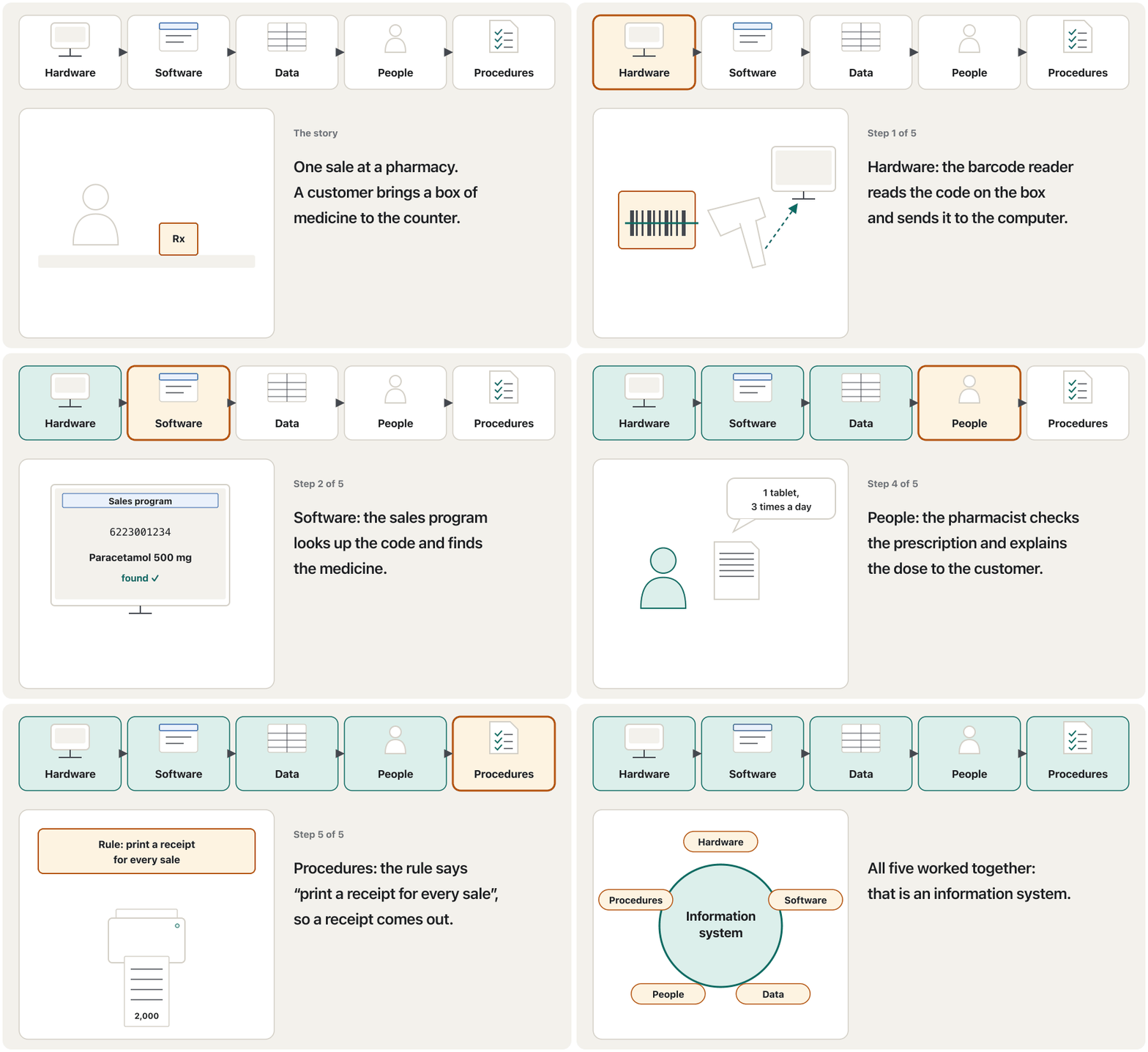
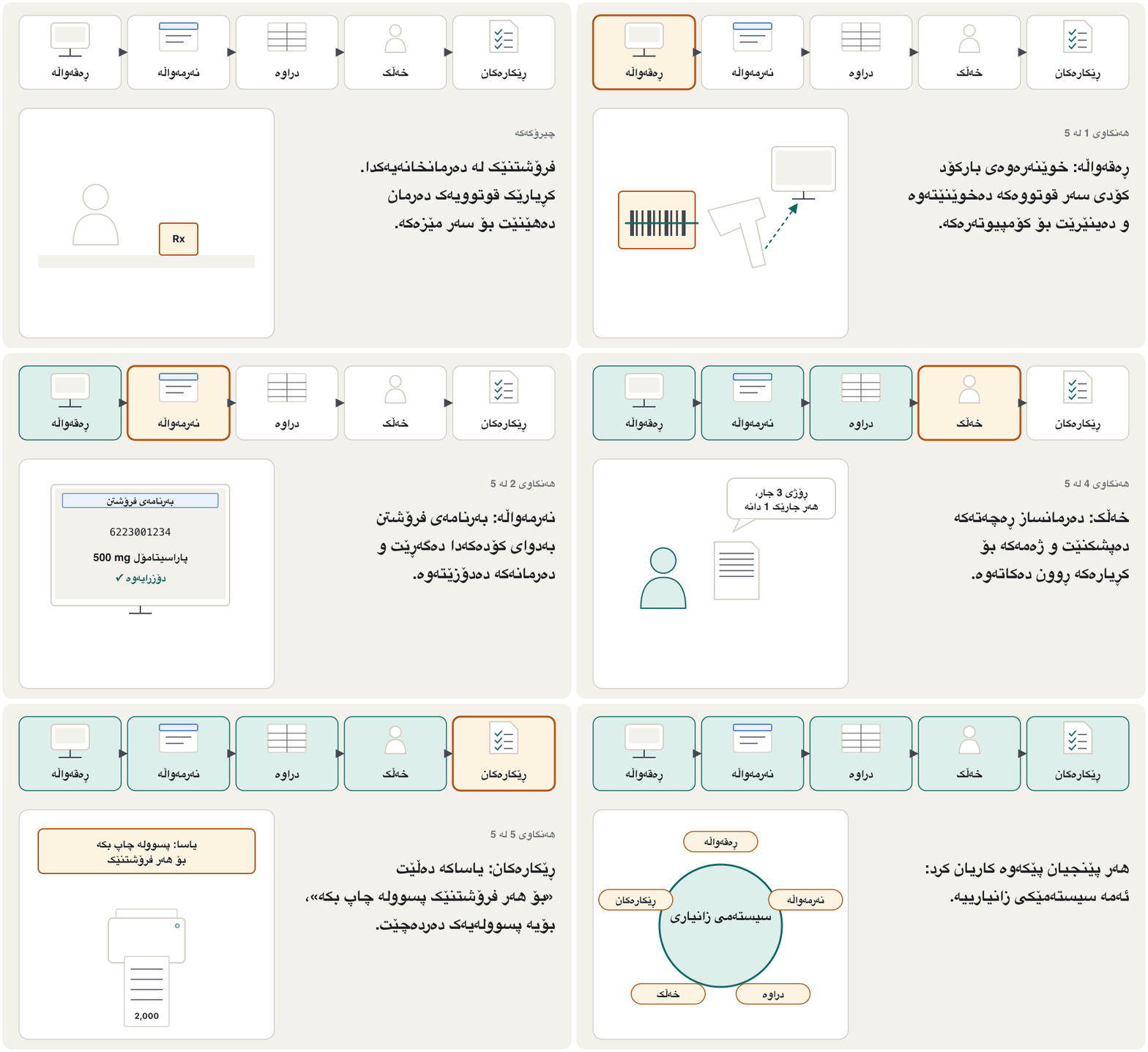
| 1. Hardwareیەکەم: | the machines you can touchئەو ئامێرانەی دەتوانیت دەستیان لێ بدەیت | the computer, the barcode reader, the receipt printer، ، پسوولە |
| 2. Softwareدووەم: | the programs that tell the hardware what to do کە بە دەڵێن چی بکات | the sales program فرۆشتن |
| 3. Dataسێیەم: | the raw facts the system works withئەو ڕاستییە خاوانەی سیستەمەکە کاریان لەسەر دەکات | medicine names, prices, how many boxes are on the shelfناوی دەرمانەکان، نرخەکان، چەند قوتو لەسەر ڕەفەکەیە |
| 4. Peopleچوارەم: خەڵک | the users and the staff who run and support the system و ئەو کارمەندانەی سیستەمەکە بەڕێوە دەبەن و پشتگیریی دەکەن | the pharmacist, the customer, the IT technician who fixes the printerدەرمانساز، کڕیار، تەکنیکاری IT کە چاک دەکاتەوە |
| 5. Proceduresپێنجەم: ڕێکارەکان | the rules and steps people followئەو یاسا و هەنگاوانەی خەڵک پەیڕەویان دەکەن | “print a receipt for every sale”, “make a backup every night”«بۆ هەر فرۆشتنێک پسوولەیەک چاپ بکە»، «هەموو شەوێک بکە» |
The five elements of an information systemپێنج توخمەکەی سیستەمێکی زانیاری
One sale, five elementsیەک فرۆشتن، پێنج توخم
Now watch the five elements work together in one sale at the pharmacy.
ئێستا سەیری پێنج توخمەکە بکە کە لە یەک فرۆشتندا لە دەرمانخانەکەدا پێکەوە کار دەکەن.
Think of a busy tea house in the bazaar. It has equipment (the samovar, the glasses), a way of working (how tea is brewed), facts to keep track of (who ordered what, who has paid), people (the owner, the waiter, the customers) and rules (“wash every glass”, “pay at the counter”). Take away any one of them and the tea house stops working well. An information system has the same five kinds of parts.
بیر لە چایخانەیەکی قەرەباڵغی ناو بازاڕ بکەرەوە. ئامێری هەیە (سەماوەر، ئیستیکان)، شێوازێکی کارکردنی هەیە (چۆن چا دەکرێت)، ڕاستییەکی هەیە کە دەبێت ئاگای لێ بێت (کێ چی داوا کردووە، کێ پارەی داوە)، خەڵکی هەیە (خاوەنەکەی، کرێکارەکە، میوانەکان) و یاسای هەیە («هەموو ئیستیکانێک بشۆ»، «لە سەر مێزەکە پارە بدە»). هەر یەکێکیان لاببە، چایخانەکە بە باشی کار ناکات. هەمان پێنج جۆر بەشی هەیە.
Where the analogy stops workingسنووری ئەم نموونەیە
A tea house keeps most of its facts in the waiter's memory, and they are forgotten by evening. An information system keeps its data exactly and for years — but only if its procedures, such as backups, are followed.
چایخانە زۆربەی ڕاستییەکانی لە یادی کرێکارەکەدا هەڵدەگرێت و تا ئێوارە لەبیر دەچن. خۆی بە وردی و بۆ ساڵانێک هەڵدەگرێت، بەڵام تەنها ئەگەر ڕێکارەکانی، وەک ، پەیڕەو بکرێن.
The five elements of an information systemپێنج توخمەکەی سیستەمێکی زانیاری
When one element failsکاتێک توخمێک تێک دەچێت
The five elements depend on each other. Look at what happens when one of them fails at the pharmacy:
پێنج توخمەکە پشت بە یەکتر دەبەستن. سەیر بکە چی ڕوو دەدات کاتێک یەکێکیان لە دەرمانخانەکەدا تێک دەچێت:
- Hardware: the power goes off and there is no backup power, so no sale can be recorded.
- Software: after a bad update the sales program will not start.
- Data: someone typed 20,000 instead of 2,000 dinars, so every receipt is wrong.
- People: a new worker was never shown how to use the program and sells the wrong medicine.
- Procedures: nobody made backups, so when the disk breaks, a year of sales records is lost.
- : کارەبا دەبڕێت و کارەبای یەدەگ نییە، بۆیە هیچ فرۆشتنێک تۆمار ناکرێت.
- : دوای خراپ، فرۆشتن دەست بە کار ناکات.
- : کەسێک لە جیاتی 2,000 دینار نووسیویەتی 20,000، بۆیە هەموو پسوولەیەک هەڵەیە.
- خەڵک: کارمەندێکی نوێ هەرگیز فێری بەکارهێنانی نەکراوە و دەرمانی هەڵە دەفرۆشێت.
- ڕێکارەکان: کەس نەکردووە، بۆیە کاتێک دیسکەکە تێک دەچێت، تۆماری فرۆشتنی ساڵێک لەناو دەچێت.
IT in Kurdistan todayتەکنەلۆژیای زانیاری لە کوردستانی ئەمڕۆدا
Computers are everywhere, and so are the information systems built with them. Here are four places in any Kurdish city where IT does important work every day:
لە هەموو شوێنێکن؛ ئەو کە پێیان دروست دەکرێن لە هەموو شوێنێکن. ئەمە چوار شوێنە لە هەر شارێکی کوردستاندا کە IT هەموو ڕۆژێک کاری گرنگی تێدا دەکات:
| Placeشوێن | What IT does thereIT لەوێ چی دەکات |
|---|---|
| Schools and universitiesقوتابخانە و زانکۆکان | students register and see their results online; teachers share lessons and video classes; the office keeps every student's recordقوتابییان بە ئۆنلاین ناو تۆمار دەکەن و ئەنجامەکانیان دەبینن؛ مامۆستایان وانە و پۆلی ڤیدیۆیی دابەش دەکەن؛ نووسینگە تۆماری هەموو قوتابییەک هەڵدەگرێت |
| Hospitals and clinicsنەخۆشخانە و کلینیکەکان | patient records, lab results and X-ray images are stored and shared between doctors; appointments are booked by phone or onlineتۆماری نەخۆشەکان، ئەنجامی تاقیگە و وێنەی تیشکی X هەڵدەگیرێن و لە نێوان پزیشکەکاندا دابەش دەکرێن؛ ژوان بە تەلەفۆن یان ئۆنلاین دیاری دەکرێت |
| Banks and moneyبانک و پارە | bank cards, ATMs, mobile banking apps and electronic salary payments all run on networked computersکارتی بانک، ئامێری ATM، بانکی مۆبایل و دانی مووچە بە شێوەی ئەلیکترۆنی هەموویان لەسەر پەیوەستکراو بە کار دەکەن |
| Government servicesخزمەتگوزارییە حکومییەکان | more and more forms, bills and records are handled online; ID cards and passports carry a chip that a computer readsفۆرم، پسوولە و تۆماری زیاتر و زیاتر بە ئۆنلاین ئەنجام دەدرێن؛ کارتی ناسنامە و پاسپۆرت تێدایە کە دەیخوێنێتەوە |
| Shops and the bazaarدوکان و بازاڕ | barcode readers, card machines, stock lists and delivery apps، ئامێری کارت، لیستی کاڵا و گەیاندن |
Digital literacy: keep learningخوێندەواریی دیجیتاڵی: بەردەوام فێر بە
Technology changes quickly: new phones, new apps, new kinds of attack. To stay digitally literate you must keep up with these changes. The course explains digital literacy as having current knowledge and understanding of computers, mobile devices, the web and the technologies around them.
تەکنەلۆژیا بە خێرایی دەگۆڕێت: مۆبایلی نوێ، نوێ، جۆری نوێی هێرش. بۆ ئەوەی بپارێزیت، دەبێت لەگەڵ ئەم گۆڕانکارییانەدا بڕۆیت. کۆرسەکە بەوە ڕوون دەکاتەوە کە زانین و تێگەیشتنی نوێت هەبێت دەربارەی ، ئامێرە مۆبایلەکان، و ئەو تەکنەلۆژیایانەی دەوریان داوە.
The knowledge and skills to use computers, phones, the and other digital tools well and safely. Technology keeps changing, so you must keep learning to stay digitally literate.
زانین و کارامەییە بۆ بەکارهێنانی کۆمپیوتەر، مۆبایل، و ئامرازە دیجیتاڵییەکانی تر بە باشی و بە سەلامەتی. تەکنەلۆژیا بەردەوام دەگۆڕێت، بۆیە دەبێت هەمیشە فێر ببیت تا خوێندەوارییە دیجیتاڵییەکەت بپارێزیت.
The American Library Association adds an important part: digital literacy is the ability to use technology to find, judge, create and communicate information. So it is not only knowing which button to press. It is also knowing whether what you read is true and whether a page is safe.
کۆمەڵەی کتێبخانە ئەمریکییەکان بەشێکی گرنگ زیاد دەکات: توانای بەکارهێنانی تەکنەلۆژیایە بۆ دۆزینەوە، هەڵسەنگاندن، دروستکردن و گەیاندنی . کەواتە تەنها زانینی ئەوە نییە کە پەنجە بە کام دوگمەدا بنێیت. هەروەها زانینی ئەوەیە کە ئایا ئەوەی دەیخوێنیتەوە ڕاستە و ئایا لاپەڕەیەک سەلامەتە.
- You check a news post with a second, trusted source before you share it.
- You notice that a “bank” message asks for your card number and you do not reply.
- You can make a clear document, send it as a PDF and keep a backup copy.
- You learn the new version of an app when it changes, instead of giving up.
- پێش ئەوەی هەواڵێک بڵاو بکەیتەوە، بە سەرچاوەیەکی دووەمی متمانەپێکراو دەیپشکنیت.
- تێبینی دەکەیت کە نامەیەکی «بانک» داوای ژمارەی کارتەکەت دەکات و وەڵامی نادەیتەوە.
- دەتوانیت بەڵگەنامەیەکی ڕوون دروست بکەیت، وەک PDF بینێریت و کۆپییەکی هەڵبگریت.
- کاتێک دەگۆڕێت، فێری وەشانە نوێکەی دەبیت، لە جیاتی ئەوەی واز بهێنیت.
Why does it matter? Study, work, banking, health and government services are moving online. A person who cannot use them safely is left behind — and a person who uses them carelessly can lose money or data.
بۆچی گرنگە؟ خوێندن، کار، بانک، تەندروستی و خزمەتگوزارییە حکومییەکان بەرەو ئۆنلاین دەچن. کەسێک کە نەتوانێت بە سەلامەتی بەکاریان بهێنێت لە دواوە دەمێنێتەوە، هەروەها کەسێک کە بە بێ ئاگایی بەکاریان بهێنێت دەکرێت پارە یان لەدەست بدات.
How this course is organisedئەم کۆرسە چۆن ڕێکخراوە
The course has nine chapters. It starts with the big ideas, opens the computer to see what is inside, follows the data in and out, and ends with networks, the internet, the cloud and solving problems. Each chapter builds on the one before it.
کۆرسەکە نۆ بەشی هەیە. بە بیرۆکە گەورەکان دەست پێ دەکات، دەکاتەوە بۆ بینینی ناوەوەی، شوێن دەکەوێت کاتێک دێتە ژوورەوە و دەچێتە دەرەوە و بە ، ، هەور و کۆتایی دێت. هەر بەشێک لەسەر بەشی پێشووی خۆی بنیات دەنرێت.
| Chapterبەش | Titleناونیشان | You will learnفێری چی دەبیت |
|---|---|---|
| 1 | Computers and ITکۆمپیوتەرەکان و IT | what IT and a computer are, IT jobs, strengths and limits, types of computersIT و چین، کارەکانی IT، خاڵە بەهێز و لاوازەکان، جۆرەکانی |
| 2 | Inside the computerناوەوەی کۆمپیوتەر | the parts, the CPU, how a program runs, bits and bytes, memory, ports, building a PCپارچەکان، CPU، چۆن کار دەکات، و ، ، دەروازەکان، پێکەوەنانی |
| 3 | Input and outputنێوخستە و دەرخستە | keyboards, touch, scanners, screens and printers، دەستلێدان، ، و |
| 4 | Storageخەزنکردن و ئامێرەکانی | hard disks, SSDs, flash, optical discs, storage for organisationsدیسکی ڕەق، SSD، فلاش، ، بۆ دامەزراوەکان |
| 5 | Software and working smarterنەرمەواڵە و کارکردنی زیرەکانەتر | operating systems, apps and files, using Windows, shortcuts, the command line, word processing, spreadsheets، و ، بەکارهێنانی Windows، کورتەڕێکان، ، نووسینی دەق و |
| 6 | Networks and communicationڕایەڵەکان و پەیوەندی | network hardware, cables and Wi-Fi, how data travels (modes, switching, protocols), network types and shapes, IP addressesئامێرەکانی ، کێبڵ و Wi-Fi، چۆن دەگوازرێتەوە (، و )، جۆر و شێوەکانی ، |
| 7 | Using the internet: search and e-mailبەکارهێنانی ئینتەرنێت: گەڕان و ئیمەیڵ | how search engines find and rank pages, how e-mail travels and how to spot fake mail چۆن پەڕەکان دەدۆزنەوە و ڕیزیان دەکەن، چۆن دەگات و چۆن ساختە بناسیتەوە |
| 8 | The cloud and emerging technologiesهەور و تەکنەلۆجیا نوێیەکان | cloud computing, cloud storage and new technologies: IoT, VR/AR, robots and blockchain، و تەکنەلۆجیا نوێیەکان: ، /، و |
| 9 | Keeping computers runningکارپێکردنی بەردەوامی کۆمپیوتەرەکان | installing and setting up Windows, and a step-by-step method for solving problems و ڕێکخستنی Windows، هەروەها ڕێگایەکی هەنگاو بە هەنگاو بۆ |
How this course is organisedئەم کۆرسە چۆن ڕێکخراوە
The goals of the course and where you meet themئامانجەکانی کۆرسەکە و لە کوێ پێیان دەگەیت
The original course listed its objectives as a list of skills. Here they are again, each with the lesson where CêIT teaches it. A goal that another CêIT course teaches better is linked there, so nothing is taught twice.
کۆرسە ڕەسەنەکە ئامانجەکانی وەک لیستێک لە کارامەیی نووسیبوو. لێرەدا دووبارە هاتوونەتەوە و لە تەنیشت هەر یەکێکەوە ئەو وانەیە نووسراوە کە CêIT تێیدا فێری دەکات. ئەو ئامانجەی کۆرسێکی تری CêIT باشتر فێری دەکات بەستەری بۆ ئەوێ دانراوە، بۆ ئەوەی هیچ شتێک دوو جار فێر نەکرێت.
| After the course you can…دوای کۆرسەکە دەتوانیت… | Whereلە کوێ |
|---|---|
| explain why digital (computer) literacy is vital to success todayڕوونی بکەیتەوە بۆچی بۆ سەرکەوتن لە جیهانی ئەمڕۆدا گرنگە | this lessonئەم وانەیە |
| define a computer and describe how data and information are related پێناسە بکەیت و پەیوەندیی نێوان و باس بکەیت | What is a computer?کۆمپیوتەر چییە؟ |
| describe the five components of a computerپێنج پێکهاتەکەی باس بکەیت | The parts of a computer systemپارچەکانی سیستەمی کۆمپیوتەر |
| discuss the advantages and disadvantages of computers for usersباسی سوود و زیانەکانی بۆ بکەیت | What computers do well and where they fall shortکۆمپیوتەرەکان لە چیدا باشن و لە کوێدا کەم دەهێنن |
| define a network and name the benefits of sharing resources on it پێناسە بکەیت و سوودەکانی هاوبەشکردنی سەرچاوەکان لەسەری بژمێریت | Types of networksجۆرەکانی ڕایەڵە |
| discuss the uses of the internet and the World Wide Webباسی بەکارهێنانەکانی و بکەیت | The Internet and the Web (Web Programming); search engines and e-mail (Chapter 7)ئینتەرنێت و وێب ( وێب)؛ بزوێنەرەکانی گەڕان و ئیمەیڵ (بەشی 7) |
| tell system software from application software لە جیا بکەیتەوە | Software and operating systemsنەرمەواڵە و سیستەمەکانی وەگەڕخەر |
| compare the types, sizes and jobs of computersجۆر، قەبارە و کارەکانی بەراورد بکەیت | Types of computersجۆرەکانی کۆمپیوتەر |
| describe the role of each element of an information systemڕۆڵی هەر توخمێکی باس بکەیت | this lessonئەم وانەیە |
| explain how home, small-office, mobile, power and enterprise users work with computersڕوونی بکەیتەوە پێنج جۆرەکەی (ماڵ، نووسینگەی بچووک، مۆبایل، بەهێز و دامەزراوە گەورەکان) چۆن کار بە دەکەن | Types of computersجۆرەکانی کۆمپیوتەر |
| discuss how society uses computers in education, finance, government, health care, science, publishing, travel and manufacturingباس بکەیت کۆمەڵگە چۆن بەکار دەهێنێت لە پەروەردە، دارایی، حکومەت، تەندروستی، زانست، بڵاوکردنەوە، گەشت و پیشەسازیدا | this lesson and where computers are usedئەم وانەیە و کۆمپیوتەر لە کوێ بەکار دێت |
How this course is organisedئەم کۆرسە چۆن ڕێکخراوە
The five wider aims of the moduleپێنج ئامانجە گشتییەکەی مۆدیولەکە
The module also had five wider aims. CêIT meets them like this:
مۆدیولەکە پێنج ئامانجی گشتیتریشی هەبوو. CêIT بەم شێوەیە پێیان دەگات:
- A broad foundation of computing knowledge and skills — this whole course.
- Written and spoken communication about computing and other matters — the Technical English course, for example its lessons on technical writing and presentations and meetings.
- The information needs of organisations, their types, and how IT runs through them — information systems, IT in Kurdistan and IT jobs.
- The kinds of software and what they can do — Chapter 5, starting with Software and operating systems.
- Skills with general software, especially databases and spreadsheets — word processing, spreadsheets, the Microsoft PowerPoint and Microsoft Access courses and the Database Administration course.
- بناغەیەکی فراوان لە زانین و کارامەیی — هەموو ئەم کۆرسە.
- پەیوەندیی نووسراو و زارەکی دەربارەی و بابەتی تر — کۆرسی ئینگلیزیی تەکنیکی، بۆ نموونە وانەکانی و پێشکەشکردن و کۆبوونەوە.
- پێداویستییەکانی دامەزراوەکان بە ، جۆرەکانیان و چۆن IT بە ناویاندا تێدەپەڕێت — سیستەمەکانی زانیاری، IT لە کوردستان و کارەکانی IT.
- جۆرەکانی و توانایەکانیان — بەشی 5، بە نەرمەواڵە و سیستەمەکانی وەگەڕخەر دەست پێ دەکات.
- کارامەیی لە گشتییەکاندا، بە تایبەتی و — نووسینی دەق، بەرنامە خشتەییەکان، کۆرسەکانی Microsoft PowerPoint و Microsoft Access، هەروەها کۆرسی بەڕێوەبردنی بنکەدراوە.
How this course is organisedئەم کۆرسە چۆن ڕێکخراوە
The course and today's IT certificatesکۆرسەکە و بڕوانامە ئەمڕۆییەکانی IT
Employers around the world recognise a few beginner IT certificates. CompTIA Tech+ (exam FC0-U71, from July 2024) is for people taking their first step into IT; it replaced the older CompTIA ITF+. CompTIA A+ (exams 220-1201 and 220-1202, from March 2025) is for IT support and help desk jobs. This course covers much of their content, and the other CêIT courses cover the rest:
خاوەنکارەکان لە سەرانسەری جیهاندا چەند بڕوانامەیەکی سەرەتایی IT دەناسن. CompTIA Tech+ (تاقیکردنەوەی FC0-U71، لە تەمموزی 2024ـەوە) بۆ ئەو کەسانەیە کە یەکەم هەنگاو بەرەو IT دەنێن؛ جێگەی CompTIA ITF+ـی کۆنتری گرتەوە. CompTIA A+ (تاقیکردنەوەکانی 220-1201 و 220-1202، لە ئاداری 2025ـەوە) بۆ کارەکانی پشتگیریی IT و . ئەم کۆرسە بەشێکی زۆری ناوەڕۆکەکەیان دەگرێتەوە و کۆرسەکانی تری CêIT بەشەکەی تری دەگرنەوە:
| CompTIA Tech+ area (share of the exam)بەشی CompTIA Tech+ (پشکی لە تاقیکردنەوەکە) | Where in CêITلە کوێی CêIT |
|---|---|
| Tech concepts and terminology (13 %)چەمک و زاراوە تەکنیکییەکان (13 %) | Chapters 1–2 of this course; number systems in Logic Designبەشەکانی 1–2ی ئەم کۆرسە؛ سیستەمەکانی ژمارە لە دیزاینی لۆجیکی دیجیتاڵ |
| Infrastructure (24 %)ژێرخان (24 %) | Chapters 2, 3, 4, 6 and 8 of this courseبەشەکانی 2، 3، 4، 6 و 8ی ئەم کۆرسە |
| Applications and software (18 %) و (18 %) | Chapter 5 of this courseبەشی 5ی ئەم کۆرسە |
| Software development concepts (13 %)چەمکەکانی گەشەپێدانی (13 %) | Fundamentals of Programmingبنەماکانی بەرنامەسازی |
| Data and database fundamentals (13 %)بنەماکانی و (13 %) | Database Administrationبەڕێوەبردنی بنکەدراوە |
| Security (19 %)بواری (19 %) | Cybersecurityکۆرسی ئاسایشی سایبەر |
How this course is organisedئەم کۆرسە چۆن ڕێکخراوە
A+ in more detail, and ICDLA+ بە وردی و ICDL
CompTIA A+ goes deeper into the same ground. Core 1 covers mobile devices, networking, hardware, virtualization and cloud computing, and hardware and network troubleshooting — the largest part, 28 %. Core 2 covers operating systems, security, software troubleshooting and operational procedures. Troubleshooting is so important that this course ends with a whole chapter on it.
CompTIA A+ قووڵتر دەچێتە ناو هەمان بابەتەکان. Core 1 باسی ئامێرە مۆبایلەکان، ، ، و دەکات، هەروەها و کە گەورەترین بەشە (28 %). Core 2 باسی ، ، و ڕێکارەکانی کار دەکات. هێندە گرنگە کە ئەم کۆرسە بە بەشێکی تەواو لەسەری کۆتایی دێت.
For everyday office skills there is another well-known certificate: ICDL, the International Certification of Digital Literacy (in Europe it used to be called ECDL, the European Computer Driving Licence). It is made of short modules, for example using a computer and managing files, working online, word processing and spreadsheets, and it is offered in more than 100 countries. Many colleges and institutes teach their computer-skills classes from ICDL modules.
بۆ کارامەییە ڕۆژانەکانی نووسینگە بڕوانامەیەکی تری ناسراو هەیە: ICDL، واتە International Certification of Digital Literacy (لە ئەوروپا پێشتر ناوی ECDL بوو: European Computer Driving Licence). لە چەند مۆدیولێکی کورت پێک دێت، بۆ نموونە بەکارهێنانی و ڕێکخستنی ، کارکردن بە ئۆنلاین، نووسینی دەق و . لە زیاتر لە 100 وڵاتدا پێشکەش دەکرێت. زۆر کۆلێژ و پەیمانگە وانەکانی کارامەیی لەسەر مۆدیولەکانی ICDL دەڵێنەوە.
How IT connects to the other coursesIT چۆن بە کۆرسەکانی ترەوە دەبەسترێتەوە
IT is the meeting point of the other CêIT courses. This course explains the ideas; the other courses take some of them much further. When a lesson here reaches one of these topics, it links to the right lesson instead of repeating it.
IT خاڵی یەکگرتنەوەی کۆرسەکانی تری CêITـە. ئەم کۆرسە بیرۆکەکان ڕوون دەکاتەوە؛ کۆرسەکانی تر هەندێکیان زۆر دوورتر دەبەن. کاتێک وانەیەک لێرەدا دەگاتە یەکێک لەم بابەتانە، لە جیاتی دووبارەکردنەوەی بەستەری وانە گونجاوەکە دادەنێت.
| Courseکۆرس | What it addsچی زیاد دەکات | Start hereلێرەوە دەست پێ بکە |
|---|---|---|
| Technical Englishئینگلیزیی تەکنیکی | the English words and sentences for every topic of this course, for example the jobs of IT peopleوشە و ڕستە ئینگلیزییەکانی هەموو بابەتێکی ئەم کۆرسە، بۆ نموونە کارەکانی خەڵکی IT | Computers around us, Jobs and careers in ITکۆمپیوتەرەکان لە دەوروبەرماندا، کار و پیشەکانی IT |
| Logic Designدیزاینی | why computers use only 0 and 1, number systems and logic gates — the maths inside the CPUبۆچی تەنها 0 و 1 بەکار دەهێنێت، سیستەمەکانی ژمارە و : بیرکاریی ناو CPU | Analog and digital signalsئاماژەی ئەنالۆگ و دیجیتاڵ |
| Fundamentals of Programmingبنەماکانی | writing your own programs, in Pythonنووسینی خۆت بە Python | What is programming?, Welcome to Pythonبەرنامەسازی چییە؟، بەخێربێیت بۆ Python |
| Database Administrationبەڕێوەبردنی | storing and managing data in databasesهەڵگرتن و بەڕێوەبردنی لە | Welcomeبەخێربێیت |
| Cybersecurity | protecting computers, networks and data from attacksپاراستنی ، و لە هێرش | What is cybersecurity?ئاسایشی سایبەر چییە؟ |
| Web Programming وێب | how the internet and the web work, and building websites و چۆن کار دەکەن و دروستکردنی | The Internet and the Webئینتەرنێت و وێب |
| Artificial Intelligence | programs that search, reason and learn کە دەگەڕێن، بیر دەکەنەوە و فێر دەبن | What is AI?ژیریی دەستکرد چییە؟ |
How to study this courseچۆن ئەم کۆرسە بخوێنیت
The course gives three pieces of advice. They are worth following in every course:
کۆرسەکە سێ ئامۆژگاری دەدات. شایەنی ئەوەن لە هەموو کۆرسێکدا پەیڕەو بکرێن:
- Improve your English. Most manuals, error messages and help pages are in English. Use the EN or Both switch on this site to read the English text, and practise with the Technical English course.
- Understand; do not memorise. Ask why something works. Try to explain each screen to a friend in your own words, and answer the quick checks before you move on.
- Study a little every day. Follow the lessons day by day instead of leaving them for the night before the exam. Short, regular practice is remembered much longer.
- ئینگلیزییەکەت باشتر بکە. زۆربەی ڕێنماییەکان، پەیامی هەڵەکان و لاپەڕەکانی یارمەتی بە ئینگلیزین. دوگمەی EN یان Both لەم ماڵپەڕەدا بەکار بهێنە بۆ خوێندنەوەی دەقە ئینگلیزییەکە و بە کۆرسی ئینگلیزیی تەکنیکی ڕاهێنان بکە.
- تێبگە؛ لەبەری مەکە. بپرسە بۆچی شتێک کار دەکات. هەوڵ بدە هەر شاشەیەکی وانەکە بە وشەی خۆت بۆ هاوڕێیەک ڕوون بکەیتەوە و پێش ئەوەی بڕۆیتە پێشەوە وەڵامی پرسیارە خێراکان بدەرەوە.
- هەموو ڕۆژێک کەمێک بخوێنە. ڕۆژ بە ڕۆژ وانەکان بخوێنە، لە جیاتی ئەوەی بۆ شەوی پێش تاقیکردنەوە جێیان بهێڵیت. ڕاهێنانی کورت و بەردەوام زۆر زیاتر لە بیر دەمێنێت.
How to study this courseچۆن ئەم کۆرسە بخوێنیت
Books and resources, then and nowکتێب و سەرچاوەکان، ئەوکات و ئێستا
The course material listed these books (2005–2012). The last two come from an earlier diploma course on the same subject and are about IT and society:
کەرەستەی کۆرسەکە ئەم کتێبانەی ناو بردبوو (2005 تا 2012). دوانی کۆتایی لە دیپلۆمێکی کۆنتری هەمان بابەتەوە هاتوون و دەربارەی IT و کۆمەڵگەن:
- D. Anfinson and K. Quamme, IT Essentials: PC Hardware and Software Companion Guide, 3rd ed., Cisco Press, 2008, and the web course IT Essentials by Cisco Systems (2007).
- B. A. Forouzan, Data Communications and Networking, 4th ed., McGraw-Hill, 2007.
- G. Brown and D. Watson, IGCSE Information and Communication Technology, 2012.
- S. Gray, Information Technology in a Global Society for the IB Diploma, 2011: how IT changes people's lives, work and society.
- F. Bott, Professional Issues in Information Technology, BCS, 2005: the law, ethics and professional duties of IT people.
- D. Anfinson و K. Quamme، IT Essentials: PC Hardware and Software Companion Guide، چاپی سێیەم، Cisco Press، 2008، لەگەڵ کۆرسی ئۆنلاینی IT Essentialsـی Cisco Systems (2007).
- B. A. Forouzan، Data Communications and Networking، چاپی چوارەم، McGraw-Hill، 2007.
- G. Brown و D. Watson، IGCSE Information and Communication Technology، 2012.
- S. Gray، Information Technology in a Global Society for the IB Diploma، 2011: IT چۆن ژیان، کار و کۆمەڵگە دەگۆڕێت.
- F. Bott، Professional Issues in Information Technology، BCS، 2005: یاسا، ئەخلاق و ئەرکە پیشەییەکانی خەڵکی IT.
Common mistakesهەڵە باوەکان
| Mistakeهەڵە | What is trueڕاستییەکە |
|---|---|
| “IT means fixing computers.”«IT واتە چاککردنەوەی .» | Fixing is only one part (support). IT also means designing, building, installing and managing systems.چاککردنەوە تەنها بەشێکە (پشتگیری). IT دیزاینکردن، دروستکردن، دامەزراندن و بەڕێوەبردنی سیستەمەکانیشە. |
| “An information system is just a computer.”« تەنها .» | It has five elements: hardware, software, data, people and procedures.پێنج توخمی هەیە: ، ، ، خەڵک و ڕێکارەکان. |
| “IT and ICT are completely different subjects.”«IT و ICT دوو بابەتی بە تەواوی جیاوازن.» | ICT stresses communication links, but today the two names mean almost the same thing.ICT جەخت دەخاتە سەر هێڵەکانی پەیوەندی، بەڵام ئەمڕۆ ئەم دوو ناوە نزیکەی هەمان واتایان هەیە. |
| “Digital literacy means knowing how to use social media.”« واتە زانینی بەکارهێنانی .» | It means finding, judging, creating and sharing information safely — and keeping that knowledge up to date.واتە دۆزینەوە، هەڵسەنگاندن، دروستکردن و دابەشکردنی بە سەلامەتی، هەروەها نوێ هێشتنەوەی ئەو زانینە. |
| “Once I learn a program, I am done.”«کە یەک جار فێری بووم، تەواو.» | Programs and devices change every year. IT people keep learning all their working life. و ئامێرەکان هەموو ساڵێک دەگۆڕێن. خەڵکی IT بە درێژایی ژیانی کارکردنیان بەردەوام فێر دەبن. |
Exercisesڕاهێنانەکان
A university uses an online system for course registration. Name one example of each of the five elements of this information system.
زانکۆیەک سیستەمێکی ئۆنلاین بۆ ناوتۆمارکردنی وانەکان بەکار دەهێنێت. بۆ هەر یەکێک لە پێنج توخمەکەی ئەم نموونەیەک بنووسە.
Show answerوەڵامەکە پیشان بدە
| Elementتوخم | Exampleنموونە |
|---|---|
| Hardware | the university's servers, the students' phones and laptops, the network cables and Wi-Fi زانکۆ، مۆبایل و قوتابییان، کێبڵ و Wi-Fiـی |
| Software | the registration website and the database program behind it ناوتۆمارکردن و ئەو لە پشتییەوەیە |
| Data | student numbers, course codes, timetables, the number of seats in each classژمارەی قوتابییان، کۆدی وانەکان، خشتەی کات، ژمارەی کورسی لە هەر پۆلێکدا |
| Peopleخەڵک | students, the registration office, the IT staff who run the systemقوتابییان، نووسینگەی ناوتۆمارکردن، ئەو کارمەندانەی IT کە سیستەمەکە بەڕێوە دەبەن |
| Proceduresڕێکارەکان | “register before the deadline”, “a class closes when it is full”, “back up the database every night”«پێش دواوادە ناو تۆمار بکە»، «پۆل کاتێک پڕ دەبێت دادەخرێت»، «هەموو شەوێک بکە» |
Match each task to one kind of IT work — design, development, implementation, support or management: (a) installing the new exam system on every computer in the exam hall; (b) planning how many servers a new hospital needs; (c) writing the code of a library app; (d) showing a new teacher how to upload marks; (e) checking every night that the backups worked.
هەر ئەرکێک بە جۆرێکی کاری IT ببەستەوە: دیزاینکردن، گەشەپێدان، دامەزراندن، پشتگیری یان بەڕێوەبردن: (أ) سیستەمی نوێی تاقیکردنەوە لەسەر هەموو لە هۆڵی تاقیکردنەوەدا؛ (ب) پلاندانان بۆ ئەوەی نەخۆشخانەیەکی نوێ چەند پێویستە؛ (ج) نووسینی کۆدی کتێبخانە؛ (د) پیشاندانی ئەوەی بە مامۆستایەکی نوێ کە چۆن نمرەکان بار بکات؛ (هـ) پشکنینی هەموو شەوێک کە ئایا سەرکەوتوو بوون.
Show answerوەڵامەکە پیشان بدە
- (a) implementation; (b) design; (c) development; (d) support; (e) management.
- (أ) دامەزراندن؛ (ب) دیزاینکردن؛ (ج) گەشەپێدان؛ (د) پشتگیری؛ (هـ) بەڕێوەبردن.
The course summary ends with a list of abbreviations you will meet in this course. Write the full name of each one, then check the answer to see which lesson teaches it: IT, ICT, IPOS, CPU, CU, ALU, RAM, ROM, SRAM, DRAM, BIOS, GHz, VR, GPS, DV, CD, DVD, QR code, RFID, LCD, CRT, HDTV, DTV.
پوختەی کۆرسەکە بە لیستێک لە کورتکراوەکان کۆتایی دێت کە لەم کۆرسەدا دەیانبینیت. ناوی تەواوی هەر یەکێکیان بنووسە، پاشان سەیری وەڵامەکە بکە بۆ ئەوەی بزانیت کام وانە فێری دەکات: IT، ICT، IPOS، CPU، CU، ALU، RAM، ROM، SRAM، DRAM، BIOS، GHz، VR، GPS، DV، CD، DVD، QR code، RFID، LCD، CRT، HDTV، DTV.
Show answerوەڵامەکە پیشان بدە
Some answer keys “expand” words that are not abbreviations, or expand them wrongly. What is right for each? (a) internet; (b) chat; (c) Gbps and GB/s; (d) DVD.
هەندێک وەڵامنامە وشەگەلێک «دەکەنەوە» کە نین، یان بە هەڵە دەیانکەنەوە. بۆ هەر یەکێکیان ڕاستییەکە چییە؟ (أ) internet؛ (ب) chat؛ (ج) Gbps و GB/s؛ (د) DVD.
Show answerوەڵامەکە پیشان بدە
- (a) Internet is a short form of internetwork, a network of networks. It is not made from the first letters of other words, so “Interconnection of Network” is wrong.
- (b) Chat is an ordinary English word for talking in a friendly, informal way. It is not an abbreviation.
- (c) Gbps means gigabits per second; GB/s means gigabytes per second. A small b is a bit, a capital B is a byte, and 1 byte = 8 bits, so 1 GB/s = 8 Gbps. See Bits, bytes and storage units.
- (d) DVD stands for digital versatile disc (the older name was digital video disc), not “digital video desk”.
- (أ) Internet شێوەی کورتکراوەی internetworkـە، واتە لە . لە پیتی یەکەمی چەند وشەیەک دروست نەکراوە، بۆیە «Interconnection of Network» هەڵەیە.
- (ب) Chat وشەیەکی ئاسایی ئینگلیزییە بە واتای قسەکردنی دۆستانە و نافەرمی. نییە.
- (ج) Gbps واتە گێگابیت لە چرکەیەکدا؛ GB/s واتە گێگابایت لە چرکەیەکدا. bـی بچووک و Bـی گەورە . هەر 8 ، بۆیە . سەیری بیت، بایت و یەکەکانی خەزنکردن بکە.
- (د) DVD کورتکراوەی digital versatile discـە (ناوە کۆنەکەی digital video disc بوو)، نەک «digital video desk».
IT joins computing and communication. Give two everyday examples in which a computer needs a communication link, and two in which communication needs a computer.
IT کارکردنی و پەیوەندی پێکەوە دەبەستێت. دوو نموونەی ڕۆژانە بنووسە کە تێیاندا پێویستی بە هێڵی پەیوەندییە و دوو نموونە کە تێیاندا پەیوەندی پێویستی بە هەیە.
Show answerوەڵامەکە پیشان بدە
- Computing needs communication: a card payment in a shop (the card machine must reach the bank's computers to check the account); a map app (it downloads maps and traffic over mobile data).
- Communication needs computing: a video call (computers at both ends turn picture and sound into data and back); a mobile network (computers in every mast and exchange send each call and message the right way).
- Other good answers: email, online exams, cloud storage, streaming a football match.
- پێویستی بە پەیوەندییە: پارەدان بە کارت لە دوکانێکدا (ئامێری کارتەکە دەبێت بگاتە بانک بۆ پشکنینی هەژمارەکە)؛ نەخشە (نەخشە و دۆخی هاتوچۆ لە ڕێگەی دادەبەزێنێت).
- پەیوەندی پێویستی بە هەیە: پەیوەندیی ڤیدیۆیی (لە هەردوو لاوە وێنە و دەنگ دەکات بە و دووبارە دەیگەڕێنێتەوە)؛ ( لە هەموو دەکەڵ و ناوەندێکدا هەر پەیوەندی و نامەیەک بە ڕێگای دروستدا دەنێرن).
- وەڵامی باشی تر: ، تاقیکردنەوەی ئۆنلاین، ، سەیرکردنی ڕاستەوخۆی یارییەکی تۆپی پێ.
You get this SMS: “Your bank card is blocked. Click the link and enter your card number and PIN to open it.” What should a digitally literate person do, and why?
ئەم نامەیە بە SMS بۆت دێت: «کارتی بانکەکەت داخراوە. لەسەر بەستەرەکە بکە و ژمارەی کارت و PINـەکەت بنووسە بۆ کردنەوەی.» کەسێکی خاوەن دەبێت چی بکات و بۆچی؟
Show answerوەڵامەکە پیشان بدە
- Do not click the link and do not type any card number or PIN. Banks do not ask for your PIN by message.
- Check the story through a channel you already trust: the phone number on the back of your card, the bank's official app, or a visit to the branch.
- Warn your family: the same message is usually sent to many people. You will learn more about such tricks in the Cybersecurity course.
- لەسەر بەستەرەکە مەکە و هیچ ژمارەی کارت یان PINـێک مەنووسە. بانکەکان بە نامە داوای PIN ناکەن.
- چیرۆکەکە لە ڕێگەیەکەوە بپشکنە کە پێشتر متمانەت پێی هەیە: ژمارە تەلەفۆنی پشتی کارتەکەت، بانکەکە یان سەردانی لقەکە.
- ئاگاداری خێزانەکەت بکەرەوە: هەمان نامە زۆرجار بۆ زۆر کەس دەنێردرێت. لە کۆرسی زیاتر دەربارەی ئەم فێڵانە فێر دەبیت.
Summaryپوختە
- IT is the design, development, implementation, support and management of computer hardware and software — the technology that produces, changes, stores and communicates information.
- ICT adds the communication links; today IT and ICT mean almost the same.
- An information system has five elements: hardware, software, data, people and procedures. If one fails, the whole system suffers.
- Schools, hospitals, banks, government offices and shops in Kurdistan all depend on information systems.
- Digital literacy means up-to-date knowledge and the ability to find, judge, create and share information safely.
- This course has nine chapters and links to Technical English, Logic Design, Programming, Databases and Cybersecurity instead of repeating them.
- بریتییە لە دیزاینکردن، گەشەپێدان، دامەزراندن، پشتگیری و بەڕێوەبردنی و : ئەو تەکنەلۆژیایەی بەرهەم دەهێنێت، دەیگۆڕێت، هەڵی دەگرێت و دەیگوازێتەوە.
- ICT هێڵەکانی پەیوەندی زیاد دەکات؛ ئەمڕۆ IT و ICT نزیکەی هەمان واتایان هەیە.
- پێنج توخمی هەیە: ، ، ، خەڵک و ڕێکارەکان. ئەگەر یەکێکیان تێک بچێت، هەموو سیستەمەکە زیانی پێ دەگات.
- قوتابخانە، نەخۆشخانە، بانک، فەرمانگە حکومییەکان و دوکانەکانی کوردستان هەموویان پشت بە دەبەستن.
- واتە زانینی نوێ و توانای دۆزینەوە، هەڵسەنگاندن، دروستکردن و دابەشکردنی بە سەلامەتی.
- ئەم کۆرسە نۆ بەشی هەیە و لە جیاتی دووبارەکردنەوە بەستەر بۆ ئینگلیزیی تەکنیکی، دیزاینی ، ، و دادەنێت.
What are the five kinds of IT work in Cisco's definition?پێنج جۆرەکەی کاری IT لە پێناسەکەی Ciscoـدا چین؟
Design, development, implementation, support and management.
دیزاینکردن، گەشەپێدان، دامەزراندن، پشتگیری و بەڕێوەبردن.
Name the five elements of an information system.پێنج توخمەکەی سیستەمی زانیاری بژمێرە.
Hardware, software, data, people and procedures.
، ، ، خەڵک و ڕێکارەکان.
Why must digital literacy be kept up to date?بۆچی دەبێت خوێندەواریی دیجیتاڵی نوێ بکرێتەوە؟
Because technology keeps changing: new devices, new programs and new kinds of attack appear every year.
چونکە تەکنەلۆژیا بەردەوام دەگۆڕێت: هەموو ساڵێک ئامێر، و جۆری نوێی هێرش دەردەکەون.
Lesson complete!وانەکە تەواو بوو!
Well done. Review the key terms, then go on to the next lesson.دەستخۆش. سەیرێکی زاراوە سەرەکییەکان بکەرەوە، پاشان بڕۆ بۆ وانەی داهاتوو.
Key termsزاراوە سەرەکییەکان
IT Jobs and the Skills They Needکارەکانی IT و ئەو کارامەییانەی پێویستیانە
Related lecturesوانە پەیوەندیدارەکان
- Computers Around Usکۆمپیوتەرەکان لە دەوروبەرماندا
- Jobs and Careers in ITکار و پیشە لە بواری IT
- IT Jobs and the Skills They Needکارەکانی IT و ئەو کارامەییانەی پێویستیانە
- What Is a Computer? Data, Input, Processing, Outputکۆمپیوتەر چییە؟ دراوە، نێوخستە، چارەسەرکردن، دەرخستە
- Analog and Digital Signalsسیگناڵەکانی ئەنالۆگ و دیجیتاڵ
- What Is Programming?بەرنامەسازی چییە؟
References and further readingسەرچاوەکان و خوێندنەوەی زیاتر
- CompTIA Tech+ (FC0-U71): exam domains and launch date
- CompTIA A+ Core 1 (220-1201): exam domains and job roles
- CompTIA A+ Core 2 (220-1202): exam domains
- Harvard CS50's Understanding Technology (archived course): units
- Wikipedia: Information technology (definition; Leavitt and Whisler, 1958)
- Wikipedia: Information system (components)
- American Library Association: Digital literacy
- ICDL Foundation: About ICDL (International Certification of Digital Literacy)
- Wikipedia: Global village (Marshall McLuhan, 1962 and 1964)
This lecture is a first edition. The Kurdish text and terminology are waiting for review by Kurdish IT teachers.ئەم وانەیە چاپی یەکەمە. دەقە کوردییەکە و زاراوەکانی چاوەڕێی پێداچوونەوەی مامۆستایانی کوردی بواری IT ن.