Chapterبەش 5 · Lectureوانە 5.1
Shifting Graphsکشانەوەی هێڵکاری
How adding a constant outside or inside a function slides its graph up, down, left or right without changing its shape: and , why inside moves left, combined shifts and the vertex, and the seven exercises of the notes with drawn answers.
چۆن زیادکردنی لە دەرەوە یان ناوەوەی هێڵکارییەکەی بۆ سەرەوە، خوارەوە، چەپ یان ڕاست دەخزێنێت بەبێ گۆڕینی شێوەکەی: و ، بۆچی لە ناوەوە بۆ چەپ دەبات، تێکەڵ و ، لەگەڵ حەوت ڕاهێنانەکەی تێبینییەکان بە وەڵامی کێشراو.
What you will learnچی فێر دەبیت
- Shift a graph up or down by adding a constant to the output.
- Shift a graph left or right by adding a constant to the input, and explain why the sign works the other way round.
- Find the new vertex, starting point, asymptote, domain and range after a shift.
- Read a combined shift from a formula.
- هێڵکارییەک بە زیادکردنی بۆ بەرز یان نزم بکەیتەوە.
- هێڵکارییەک بە زیادکردنی بۆ بۆ چەپ یان ڕاست ببەیت و ڕوونی بکەیتەوە بۆچی نیشانەکە بە پێچەوانەوە کار دەکات.
- ، خاڵی دەستپێک، ، و نوێ دوای بدۆزیتەوە.
- تێکەڵی لە فۆرمولەیەکەوە بخوێنیتەوە.
Moving a graph without changing its shapeجوولاندنی هێڵکارییەک بەبێ گۆڕینی شێوەکەی
You already know the shapes of the basic graphs: the V of , the parabola , the curves and (graphs of basic functions). A small change in the formula moves such a graph to a new place. A change of the formula that moves, stretches or flips a graph is called a transformation; the simplest one is a shift, which slides the whole graph without changing its shape.
شێوەی هێڵکارییە بنەڕەتییەکان دەزانیت: Vـی ، ، چەماوەکانی و (هێڵکاریی نەخشەی بنەڕەتی). گۆڕانێکی بچووک لە فۆرمولەکەدا ئەو جۆرە هێڵکارییە دەبات بۆ شوێنێکی نوێ. گۆڕینی فۆرمولە بە شێوەیەک کە هێڵکارییەک بجوولێنێت، درێژی بکاتەوە یان وەریبگێڕێت پێی دەوترێت ؛ سادەترینیان ، کە هەموو هێڵکارییەکە دەخزێنێت بەبێ ئەوەی شێوەکەی بگۆڕێت.
Moving a graph without changing its shape: moves it up c units, moves it right c units ().
جوولاندنی هێڵکارییەکە بەبێ گۆڕینی شێوەکەی: c یەکە بەرزی دەکاتەوە و c یەکە بۆ ڕاستی دەبات ().
To shift the graph of you add a constant in one of two places: outside f (to the output) or inside f (to the input). Outside moves the graph up or down; inside moves it left or right.
بۆ لە یەکێک لە دوو شوێندا زیاد دەکەیت: دەرەوەی f (بۆ ) یان ناوەوەی f (بۆ ). دەرەوە هێڵکارییەکە بەرز یان نزم دەکاتەوە؛ ناوەوە بۆ چەپ یان ڕاست دەیبات.
Up and down: and سەرەوە و خوارەوە: و
shifts the graph of f up c units, and shifts it down c units. Adding c to the right-hand side adds c to every output. Each point of the graph moves straight up to ; subtracting c moves it straight down to .
f c یەکە بەرز دەکاتەوە و c یەکە نزمی دەکاتەوە. زیادکردنی c بۆ لای ڕاستی فۆرمولەکە c بۆ هەموو زیاد دەکات. هەر خاڵێکی ـی هێڵکارییەکە ڕاستەوخۆ بەرز دەبێتەوە بۆ ؛ کەمکردنەوەی c ڕاستەوخۆ دای دەبەزێنێت بۆ .
A shop raises every price by 250 dinars. The new price list is "old price + 250": each item keeps its place on the shelf, but every price is 250 higher. That is exactly : the same x, a bigger output.
دوکانێک هەموو نرخێک 250 دینار بەرز دەکاتەوە. لیستی نرخی نوێ «نرخی کۆن + 250»ـە: هەر کاڵایەک لە شوێنی خۆی لەسەر ڕەفەکە دەمێنێتەوە، بەڵام هەموو نرخێک 250 زیاترە. ئەمە ڕێک ـە: هەمان x و گەورەتر.
Where the analogy stops workingسنووری ئەم نموونەیە
Prices are only whole dinars; a graph shift works for every real x.
نرخەکان تەنها دیناری تەواون؛ بۆ هەموو xـێکی ڕاستی کار دەکات.
Left and right: and چەپ و ڕاست: و
shifts the graph left c units, and shifts it right c units. This time the constant is added to x, inside f. Each point moves sideways: to for and to for . Notice the direction: a plus sign inside moves the graph to the left.
هێڵکارییەکە c یەکە بۆ چەپ دەبات و c یەکە بۆ ڕاست. ئەم جارە بۆ x زیاد دەکرێت، لەناو fـدا. هەر خاڵێکی بە لادا دەجوولێت: بۆ لە ـدا و بۆ لە ـدا. سەرنجی ئاراستەکە بدە: نیشانەی کۆ لە ناوەوە هێڵکارییەکە بۆ چەپ دەبات.
Trigonometric graphs move by the same rule: cosine is sine shifted to the left, (The graphs of sine and cosine).
هێڵکاریی و بە هەمان یاسا دەجووڵێن: هەمان کە بەرەو چەپ جووڵێنراوە، (هێڵکاریی ساین و کۆساین).
Left and right: and چەپ و ڕاست: و
Why does inside move the graph left?بۆچی لە ناوەوە هێڵکارییەکە بۆ چەپ دەبات؟
Ask: where does the new function do what the old one did at ? For the special moment is (the vertex). For the inside becomes 0 when . So the vertex is reached 2 units earlier, to the left. In general, at the input x gives the value that f gave at : every value arrives c units sooner.
بپرسە: لە کوێدا ئەو کارە دەکات کە کۆنەکە لە ـدا دەیکرد؟ بۆ ساتە تایبەتەکە ـە (). بۆ ناوەوەی کاتێک دەبێتە 0. کەواتە 2 یەکە زووتر دەگەینە ، لە لای چەپ. بە گشتی، لە xـدا ئەو بەهایە دەدات کە f لە ـدا دەیدا: هەموو بەهایەک c یەکە زووتر دێت.
A tea house usually opens at 10:00, and its busiest hour is 13:00. Tomorrow it opens 2 hours earlier, so everything happens 2 hours sooner: the busiest hour is 11:00. If is today's number of customers at time t, tomorrow's is : at 8:00 tomorrow it is as busy as at 10:00 today. A "" inside, and the whole graph moves left, to earlier times.
چایخانەیەک بە ئاسایی کاتژمێر 10:00 دەکرێتەوە و قەرەباڵغترین کاتی 13:00ـە. سبەینێ 2 کاتژمێر زووتر دەکرێتەوە، بۆیە هەموو شتێک 2 کاتژمێر زووتر ڕوو دەدات: قەرەباڵغترین کات 11:00 دەبێت. ئەگەر ژمارەی میوانەکانی ئەمڕۆ بێت لە کاتی tـدا، هی سبەینێ ـە: کاتژمێر 8:00ی سبەینێ هێندەی 10:00ی ئەمڕۆ قەرەباڵغە. «» لە ناوەوە و هەموو هێڵکارییەکە بۆ چەپ دەڕوات، بۆ کاتی زووتر.
Where the analogy stops workingسنووری ئەم نموونەیە
Real days are never exact copies of each other; a shifted graph is an exact copy.
ڕۆژە ڕاستەقینەکان هەرگیز ڕێک وێنەی یەکتر نین؛ هێڵکاریی کشاوە وێنەیەکی ڕێکە.
All four shifts togetherهەر چوار کشانەوەکە پێکەوە
The notes call shifts up and down vertical shifts, and shifts left and right horizontal shifts. Here they are side by side, for :
تێبینییەکان بە سەرەوە و خوارەوە دەڵێن ستوونی و بە چەپ و ڕاست دەڵێن ئاسۆیی. ئەمانە لە تەنیشت یەکترن، بۆ :
| Formulaفۆرمولە | Where is c?c لە کوێیە؟ | Movementجووڵە | A point goes toخاڵی دەچێت بۆ |
|---|---|---|---|
| outsideدەرەوە | up c (vertical)c بۆ سەرەوە (ستوونی) | ||
| outsideدەرەوە | down c (vertical)c بۆ خوارەوە (ستوونی) | ||
| insideناوەوە | left c (horizontal)c بۆ چەپ (ئاسۆیی) | ||
| insideناوەوە | right c (horizontal)c بۆ ڕاست (ئاسۆیی) |
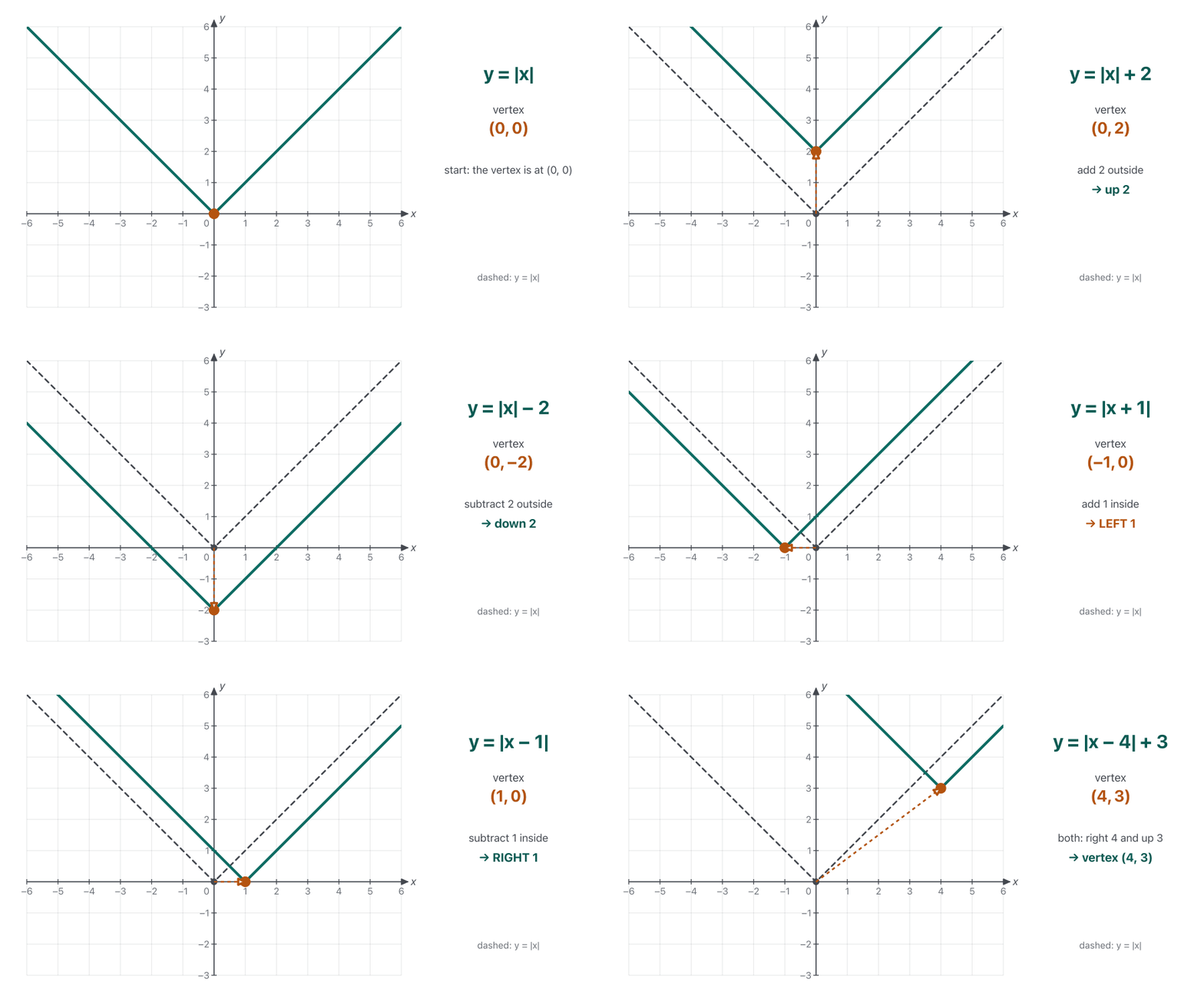
Moving a graph up, down, left and right, then stretching, shrinking and reflecting it, shown on the basic graphs.
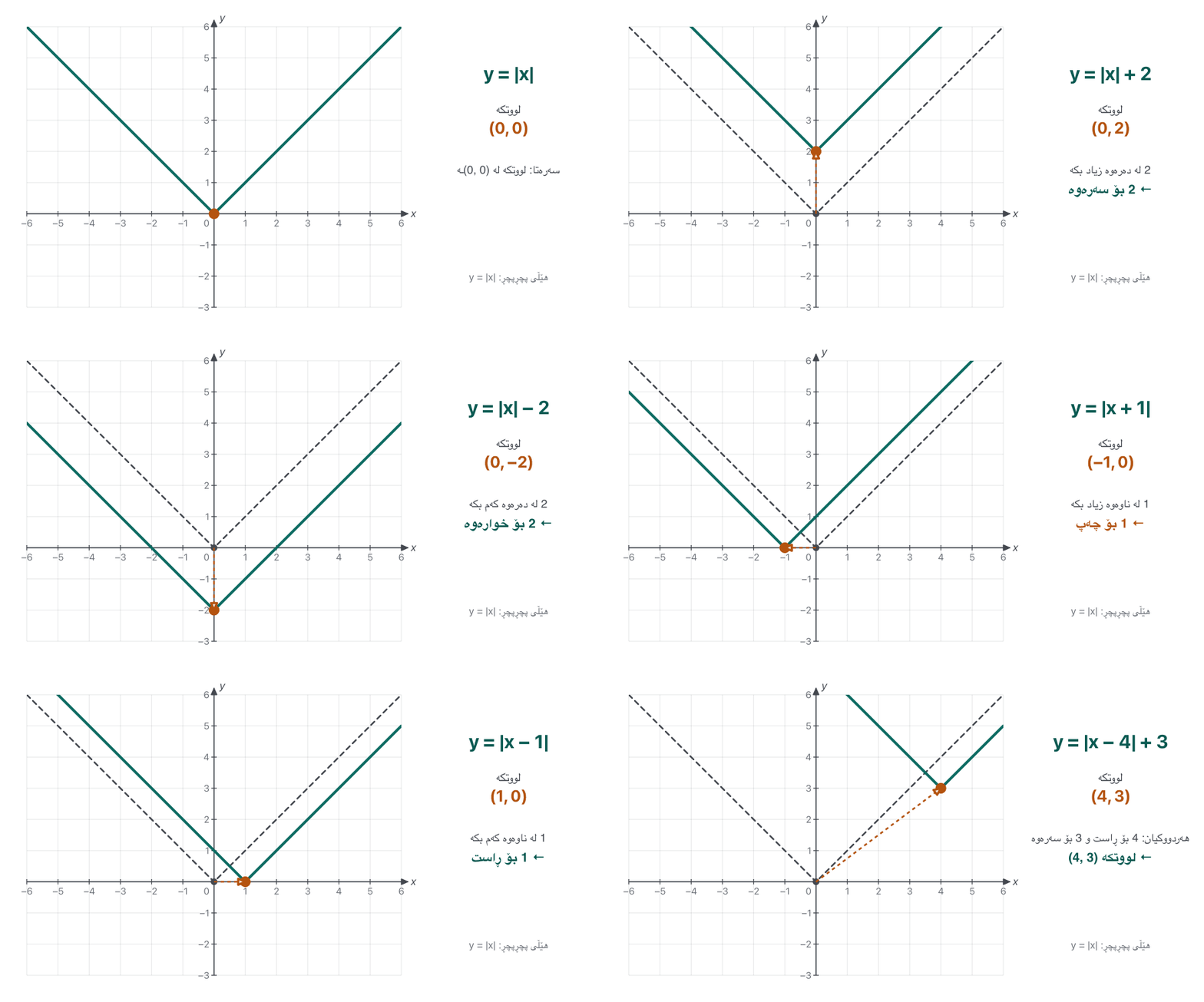
جووڵاندنی بۆ سەرەوە، خوارەوە، چەپ و ڕاست، پاشان ، و ، لەسەر هێڵکارییە بنەڕەتییەکان.
Watch 0:00–2:51: vertical shifts (x² + 2), then horizontal shifts ((x + 2)²: plus inside moves left).
لە 0:00 تا 2:51 سەیر بکە: ()، پاشان (: + لە ناو کەوانەدا هێڵکارییەکە بەرەو چەپ دەبات).
Two shifts at onceدوو کشانەوە پێکەوە
A formula can contain both kinds of shift. In the inside part moves the graph right h, the outside part moves it up k, and every point goes from to . A negative h means left, a negative k means down. The two moves do not disturb each other, so you may do them in either order.
فۆرمولەیەک دەتوانێت هەردوو جۆری لەخۆ بگرێت. لە ـدا بەشی ناوەوە هێڵکارییەکە h بۆ ڕاست دەبات، بەشی دەرەوە k بۆ سەرەوە و هەموو خاڵێک لە ـەوە دەچێت بۆ . hـی سالب واتە چەپ، kـی سالب واتە خوارەوە. دوو جووڵەکە کار لە یەکتر ناکەن، بۆیە دەتوانیت بە هەر ڕیزبەندییەک ئەنجامیان بدەیت.
- Read the insideناوەوە بخوێنەوە
For : , so : 3 left.
بۆ : ، بۆیە : 3 بۆ چەپ.
- Read the outsideدەرەوە بخوێنەوە
outside: : 1 down.
لە دەرەوە: : 1 بۆ خوارەوە.
- Move the key pointخاڵە سەرەکییەکە بجوولێنە
The vertex of goes to . Check: . Draw the same V from there.
ـی دەچێت بۆ . پشکنین: . لەوێوە هەمان V بکێشە.
Exercises from the notes (1–4)ڕاهێنانەکانی تێبینییەکان (1–4)
The notes list seven functions as "Example and H.W." For each one, name the basic graph, describe the shift, and find a key point. Try them before you open the answers.
تێبینییەکان حەوت وەک «نموونە و ئەرکی ماڵەوە» دەنووسن. بۆ هەر یەکێکیان هێڵکارییە بنەڕەتییەکە ناو ببە، وەسف بکە و خاڵێکی سەرەکی بدۆزەوە. پێش کردنەوەی وەڵامەکان هەوڵیان بدە.
Describe the graphs of (1) (2) (3) (4) .
هێڵکارییەکانی (1) (2) (3) (4) وەسف بکە.
Hintئاماژە
Outside the basic function: up or down. Inside, next to x: left or right, with the opposite sign.
لە دەرەوەی : سەرەوە یان خوارەوە. لە ناوەوە، لە تەنیشت x: چەپ یان ڕاست، بە نیشانەی پێچەوانە.
Show answerوەڵامەکە پیشان بدە
| Function | Basic graphهێڵکاریی بنەڕەتی | Shift | Key point, domain, rangeخاڵی سەرەکی، ، |
|---|---|---|---|
| up 33 بۆ سەرەوە | vertex ; range ؛ | ||
| down 33 بۆ خوارەوە | centre ; domain and range ناوەند ؛ و | ||
| right 44 بۆ ڕاست | starts at ; domain لە ـەوە دەست پێدەکات؛ | ||
| left 55 بۆ چەپ | vertical asymptote ; domain ستوونی ؛ |
In (3) the shift changes the domain: needs . In (4) the forbidden input moves with the graph: has no value at 0, has none at .
لە (3)ـدا دەگۆڕێت: پێویستی بە هەیە. لە (4)ـدا قەدەغەکراو لەگەڵ هێڵکارییەکە دەجوولێت: لە 0دا بەهای نییە، لە ـدا.
Exercises from the notes (1–4)ڕاهێنانەکانی تێبینییەکان (1–4)
Exercises from the notes (5–7)ڕاهێنانەکانی تێبینییەکان (5–7)
Describe the graphs of (5) (6) (7) .
هێڵکارییەکانی (5) (6) (7) وەسف بکە.
Show answerوەڵامەکە پیشان بدە
| Function | Basic graphهێڵکاریی بنەڕەتی | Shift | Key pointخاڵی سەرەکی |
|---|---|---|---|
| right 4 and up 74 بۆ ڕاست و 7 بۆ سەرەوە | vertex ; range ؛ | ||
| up 22 بۆ سەرەوە | centre ناوەند | ||
| down 2 (or right 2: the same line)2 بۆ خوارەوە (یان 2 بۆ ڕاست: هەمان هێڵ) | crosses the axes at and لە و ـدا دەبڕێت |
(7) is a nice surprise: can be read as (the line moved down 2) or as (moved right 2). For a line of slope 1 both moves give the same line.
(7) سەرسوڕهێنەرە: دەکرێت وەک بخوێنرێتەوە (هێڵی 2 بۆ خوارەوە) یان وەک (2 بۆ ڕاست). بۆ هێڵێک بە 1 هەردوو جووڵەکە هەمان هێڵ دەدەن.
Common mistakesهەڵە باوەکان
| Mistakeهەڵە | Correctڕاست |
|---|---|
| " moves right 2."« 2 بۆ ڕاست دەڕوات.» | Plus inside moves left: the vertex is at .کۆ لە ناوەوە بۆ چەپ دەبات: لە ـدایە. |
| " and are the same."« و وەک یەکن.» | At : but . Outside is vertical, inside is horizontal.لە : بەڵام . دەرەوە ستوونییە، ناوەوە ئاسۆیی. |
| Forgetting that the domain moves: " starts at 0."لەبیرکردنی ئەوەی دەجوولێت: « لە 0ـەوە دەست پێدەکات.» | It starts at ; the domain is .لە ـەوە دەست پێدەکات؛ ـە. |
| Leaving the asymptote of at .هێشتنەوەی لە . | Everything moves 5 left, the asymptote too: .هەموو شتێک 5 بۆ چەپ دەڕوات، : . |
| Writing as "".نووسینی وەک «». | is a horizontal shift (left 3); at it gives 16, not 4. ئاسۆییە (3 بۆ چەپ)؛ لە ـدا 16 دەدات، نەک 4. |
Summaryپوختە
- Outside (to the output): up c, down c. These are vertical shifts.
- Inside (to the input): left c, right c. These are horizontal shifts, and the sign works the other way round.
- : every point moves from to ; the vertex of is .
- A shift never changes the shape, but it moves everything: the vertex, the starting point of a root, the asymptote, and the domain or range.
- دەرەوە (بۆ ): c بۆ سەرەوە، c بۆ خوارەوە. ئەمانە ستوونین.
- ناوەوە (بۆ ): c بۆ چەپ، c بۆ ڕاست. ئەمانە ئاسۆیین و نیشانەکە بە پێچەوانەوە کار دەکات.
- : هەموو خاڵێک لە ـەوە دەچێت بۆ ؛ خاڵی ـە.
- هەرگیز شێوە ناگۆڕێت، بەڵام هەموو شتێک دەجوولێنێت: ، خاڵی دەستپێکی ڕەگ، و یان .
Where is the vertex of ?لووتکەی لە کوێیە؟
At : 1 left and 4 up.
لە : 1 بۆ چەپ و 4 بۆ سەرەوە.
What is the domain of ?بواری چییە؟
: the graph of moved 2 left.
: 2 بۆ چەپ.
Why does move left?بۆچی بۆ چەپ دەڕوات؟
At the input x it already gives the value that f gives at , so every value arrives c units earlier.
لە xـدا ئەو بەهایە دەدات کە f لە ـدا دەیدات، بۆیە هەموو بەهایەک c یەکە زووتر دێت.
Videoڤیدیۆ
Watch a videoسەیری ڤیدیۆیەک بکە
A video that viewers liked a lot and praised in their comments, chosen for this lesson.ڤیدیۆیەک کە بینەران زۆریان پێ خۆش بووە و لە کۆمێنتەکانیاندا ستایشیان کردووە، بۆ ئەم وانەیە هەڵبژێردراوە.
In Kurdish: moving the graph of a function up, down, left and right (translations), as in the Grade 12 book, chapter 1 lesson 3.
بە کوردی: جووڵاندنی بۆ سەرەوە، خوارەوە، چەپ و ڕاست ()، وەک کتێبی پۆلی 12، بەشی 1، وانەی 3.
Sorani, Grade 12 chapter 1 lesson 3 'جێگۆڕکێی نەخشەکان' (translations of functions).
بە سۆرانی، پۆلی 12، بەشی 1، وانەی 3: «جێگۆڕکێی » ( ).
Lesson complete!وانەکە تەواو بوو!
Well done. Review the key terms, then go on to the next lesson.دەستخۆش. سەیرێکی زاراوە سەرەکییەکان بکەرەوە، پاشان بڕۆ بۆ وانەی داهاتوو.
Key termsزاراوە سەرەکییەکان
Stretching, Compressing and Reflecting Graphsدرێژکردنەوە، پەستاندن و وێنەدانەوەی هێڵکاری
Related lecturesوانە پەیوەندیدارەکان
References and further readingسەرچاوەکان و خوێندنەوەی زیاتر
This lecture is a first edition. The Kurdish text and terminology are waiting for review by Kurdish IT teachers.ئەم وانەیە چاپی یەکەمە. دەقە کوردییەکە و زاراوەکانی چاوەڕێی پێداچوونەوەی مامۆستایانی کوردی بواری IT ن.